KLAS Contact

Contact KLAS
Contact KLAS
 2026 BEST IN KLAS
Preferences
Related Series

2020

2018

2012

Clinical Mobility Shared Smart Devices 2024
How Well Do Retail & Commercial-Grade Devices Meet Healthcare-Specific Needs?

Author
Paul Hess

Author
Paul Warburton
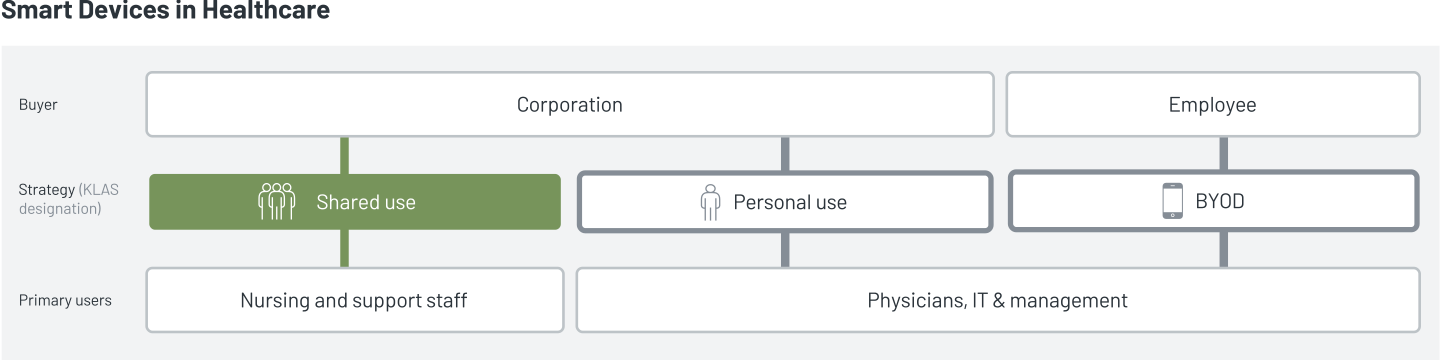
Healthcare organizations are continually expanding their use of smart devices, but their unique needs for durability, healthcare-centric workflows, and low costs can present challenges for both users and the organizations purchasing the devices. While many healthcare organizations opt for BYOD programs in specific departments, several are adopting shared smart device programs. Based on interviews from 80 healthcare organizations using such programs,† this report examines (1) smart device vendors’ market penetration and ability to meet healthcare needs and (2) customer satisfaction with vendors who have sufficient performance data.
† KLAS specifically asked interviewed organizations about their shared smart device programs. Some respondents may also utilize corporate-issued personal-use devices.
MARKET INSIGHTS
Apple Used Broadly by Healthcare Organizations; Samsung Growth Slows
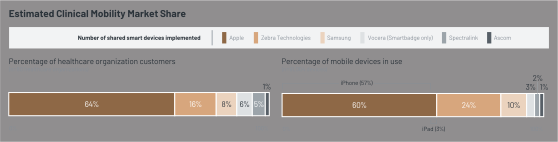
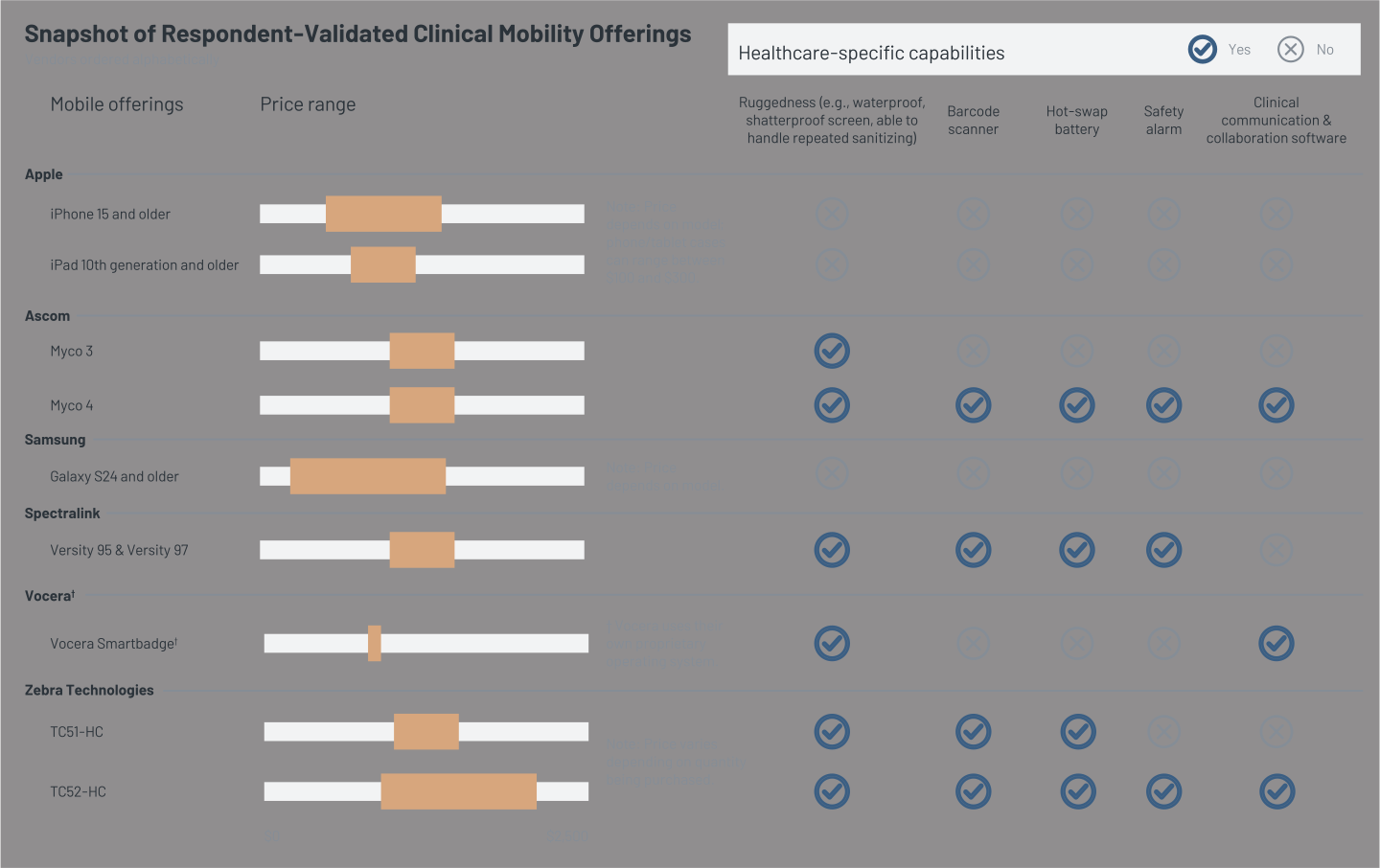
The majority of interviewed healthcare organizations use the Apple iPhone and/or iPad for their shared smart devices. Even though the devices aren’t built for healthcare needs, respondents say they chose Apple because (1) the devices work well with mobile device management solutions, (2) the majority of their employees prefer and already leverage Apple outside of work, and (3) many IT vendors enable their solutions to work with Apple before other operating systems. In particular, the iPhone is widely adopted, as most clinicians prefer using a smartphone while they walk through the hospital. Samsung’s market share has remained low, as organizations want to purchase devices that their users are already familiar with. Additionally, when organizations consider Android offerings, they often select purpose-built options. Since KLAS last reported on shared smart devices, Zebra Technologies’ market share has grown thanks to extensive purchases from several large health systems, who cite the devices’ rugged features and cross-industry footprint as reasons for selection.
Ascom, Spectralink & Zebra Technologies Seen as Expensive Options for Healthcare-Specific Capabilities
Clinicians, especially nurses, see ruggedness as an essential quality in their smart devices, as phones and tablets have to frequently be sanitized and survive drops. Commercial-grade vendors Ascom, Spectralink, and Zebra Technologies offer sturdy devices that include barcode scanners and staff duress buttons. In general, interviewed organizations note that healthcare-specific capabilities come at an additional cost, making devices from these three vendors more expensive than other retail options. Zebra Technologies’ strong clinical mobility market presence is bolstered by their large customer bases for other offerings, such as printers and scanners, which are used by healthcare organizations across the US. Most Zebra devices are purchased through resellers, which offer the devices at significant discounts compared to the retail price. Ascom and Spectralink are primarily rolled out in nursing departments, as other departments don’t need the durability these devices provide. Respondents report that Ascom’s older Android-based offering, Myco 3, doesn’t provide all needed healthcare-specific capabilities; their newer Myco 4 offering does have those capabilities but has not yet been widely adopted. The Vocera Smartbadge also offers rugged features but at a cheaper price, though respondents note they lack the larger screen of a smartphone.
PERFORMANCE INSIGHTS
KLAS has performance data for the following vendors: Apple and Zebra Technologies.
Healthcare Organizations Using Apple iPad Are Most Highly Satisfied; iPhone Provides Strong Camera but Weak Battery Life
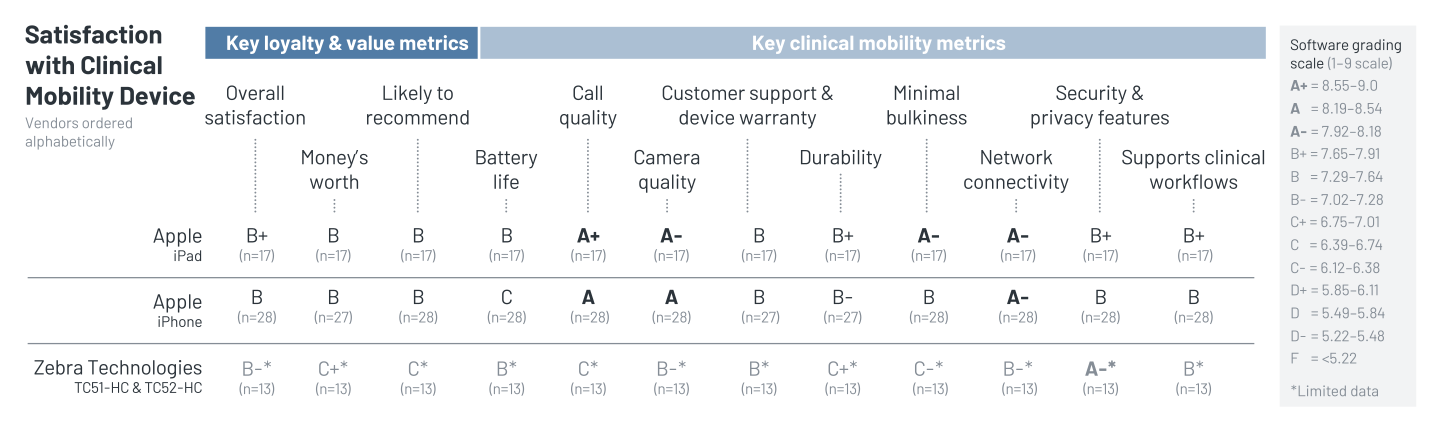
Healthcare organizations using Apple smart devices are highly satisfied thanks to the strong quality, good connectivity, and easy-to-use iOS. Apple iPad customers highlight how the size of the tablets improves the EHR’s usability; bulkiness is also seen as minimal, with users appreciating the iPad’s lightness compared to laptops. Respondents would like improved integration with other healthcare solutions (e.g., patient monitors, alarm middleware) as well as lower prices, noting that iPads are more expensive than other tablets. The Apple iPhone’s high-quality camera is a major benefit for clinicians documenting patient health statuses via pictures or videos. While the phones lack rugged features, organizations usually address durability challenges by purchasing cases to protect the devices; some cases can also address the lack of a hot-swap battery by extending the battery life, though these types of cases are more expensive. The biggest limitation for respondents using the iPad and/or iPhone is the lack of support and device warranties from Apple; although both are available, the services are quite costly. Additionally, as Apple is a large retail company, they don’t necessarily focus on developing needed healthcare-specific capabilities.
Zebra Technologies* Provides Strong Security & Privacy Features; Customers Say TC52-HC’s High Cost Impedes Value
Zebra Technologies* customers appreciate that the devices are built to be durable and functional, highlighting the native barcode scanner and strong security and privacy features. Many respondents are in the process of switching from the TC51-HC to the TC52-HC, which has more healthcare-specific features (e.g., safety alarm). Respondents validate the TC52-HC as the most-expensive option in this report, leading some to try to save money by rolling out the devices only to areas that need additional ruggedness and barcode features. In terms of challenges, respondents note that the devices’ durability makes them slightly bulkier than other retail phones. Many also report that the speaker grills are easily clogged; this known issue of the TC51-HC was reportedly resolved in the TC52-HC, but some respondents using the newer model still experience this challenge.
*Limited data
Bottom Lines for Other Validated Vendors
Vendors who are measured by KLAS but currently have insufficient performance data
Ascom Myco 3 & 4
New Myco 4 device is able to integrate with monitoring software and other healthcare solutions, supporting alerts and notifications for users. Ascom devices are primarily designed for nursing and support teams.
Samsung Galaxy
Healthcare customers appreciate the low cost, small device size, and cross-industry adoption. Growth among healthcare customer base has slowed due to Apple’s broader market penetration and users’ lack of familiarity with Android.
Spectralink Versity 95 & 97
Versity 95 is chosen for its sleek design and ruggedness in healthcare settings. Most customers deploy the device primarily for nursing staff.
Vocera Smartbadge
Primarily used by nursing staff, who value the hands-free Smartbadge; device is also small and can be clipped to user’s uniform. Vendor also offers a suite for clinical communication and collaboration software.
About This Report
This report examines vendor market share in the clinical mobility shared smart device space. Additionally, to understand how customer satisfaction with vendor performance in several areas key to the clinical mobility market, KLAS asked interviewed participants the following questions listed below. The data was collected over the last 12 months.
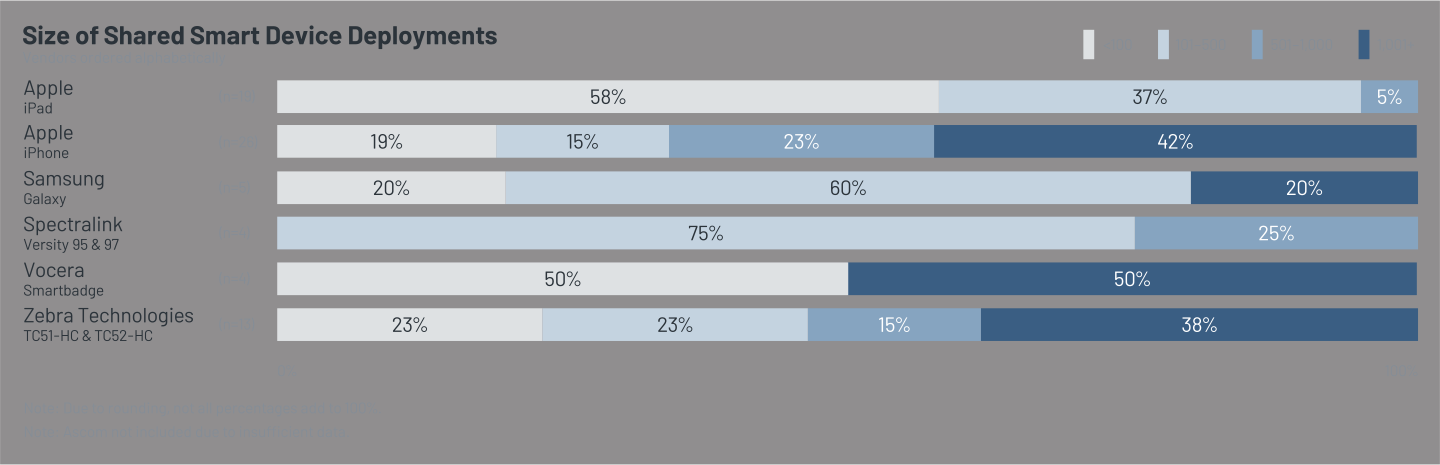
- How many shared smart devices has your organization deployed?
- What was the average price per device?
- Why did your organization choose your specific device vendor?
- How satisfied are you overall with your vendor/devices?
- Do you get your money’s worth from your devices?
- How likely are you to recommend your device vendor?
- How satisfied are you with your device in the following areas?
- Battery life
- Call quality
- Camera quality
- Customer support and device warranty
- Durability
- Interoperability
- Minimal bulkiness
- Network connectivity
- Security and privacy features
- Support of clinical workflows
Sample Sizes
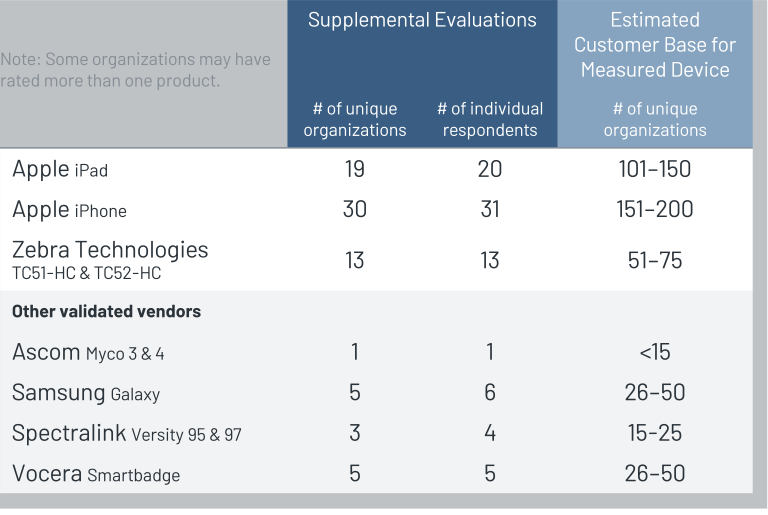 Unless otherwise noted, sample sizes displayed throughout this report (e.g., n=16) represent the total number of unique customer organizations interviewed for a given vendor or solution. However, it should be noted that to allow for the representation of differing perspectives within any one customer organization, samples may include surveys from different individuals at the same organization. The table below shows the total number of unique organizations interviewed for each vendor or solution as well as the total number of individual respondents.
Some respondents choose not to answer particular questions, meaning the sample size for any given vendor or solution can change from question to question. When the number of unique organization responses for a particular question is less than 15, the score for that question is marked with an asterisk (*) or otherwise designated as “limited data.” If the sample size is less than 6, no score is shown. Where textual content relies on limited data, the vendor name is marked with an asterisk. Note that when a vendor has a low number of reporting sites, the possibility exists for KLAS scores to change significantly as new surveys are collected.

Writer
Natalie Hopkins

Designer
Breanne Hunter

Project Manager
Andrew Wright
This material is copyrighted. Any organization gaining unauthorized access to this report will be liable to compensate KLAS for the full retail price. Please see the KLAS DATA USE POLICY for information regarding use of this report. © 2026 KLAS Research, LLC. All Rights Reserved. NOTE: Performance scores may change significantly when including newly interviewed provider organizations, especially when added to a smaller sample size like in emerging markets with a small number of live clients. The findings presented are not meant to be conclusive data for an entire client base.