KLAS Contact

Contact KLAS
Contact KLAS
 2026 BEST IN KLAS
Preferences
Related Series

2025

2024

2023

2022

Global Summit 2026

Author
Eder Lagemann

Author
Jonathan Christensen
In June 2026, KLAS convened our fifth annual Global Summit. Held in Dubrovnik, Croatia, this summit brought together 120 executives from healthcare delivery organizations, software vendors, and consulting firms to discuss the technology areas of most significant investment priority for healthcare organizations around the world.†
AI continued to top the list of priorities and was the main focus of the summit’s tabletop discussions. Drawing on insights shared during these discussions as well as on data collected from provider attendees in a pre-summit survey, this overview explores attendees’ thoughts on AI governance, best practices for incorporating AI into clinical pathways, and current/future plans for AI adoption.
† Investment priorities were identified through responses to KLAS’s annual global HIT trends survey. Results of this survey can be found in the recent 2026 Global HIT Trends report.
Formal AI Governance Not Yet a Reality for Most Healthcare Organizations
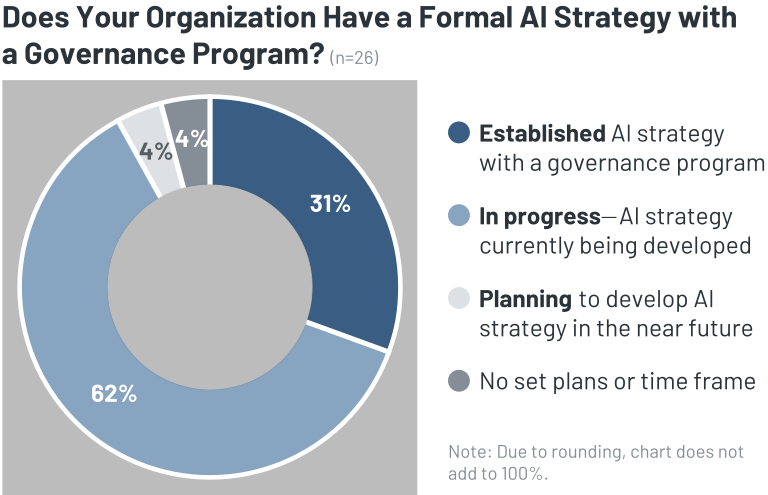
Prior to the summit, attendees from healthcare delivery organizations were asked about the status of AI governance at their organization. About half of those surveyed responded, and of these, only 31% report having a formal AI strategy with a governance program already in place. These organizations include some of the most advanced organizations within their respective countries, indicating that full-scale governance is still in a fledgling state. The largest portion of respondents (62%) report that their organizations are actively working to develop AI strategies and governance.
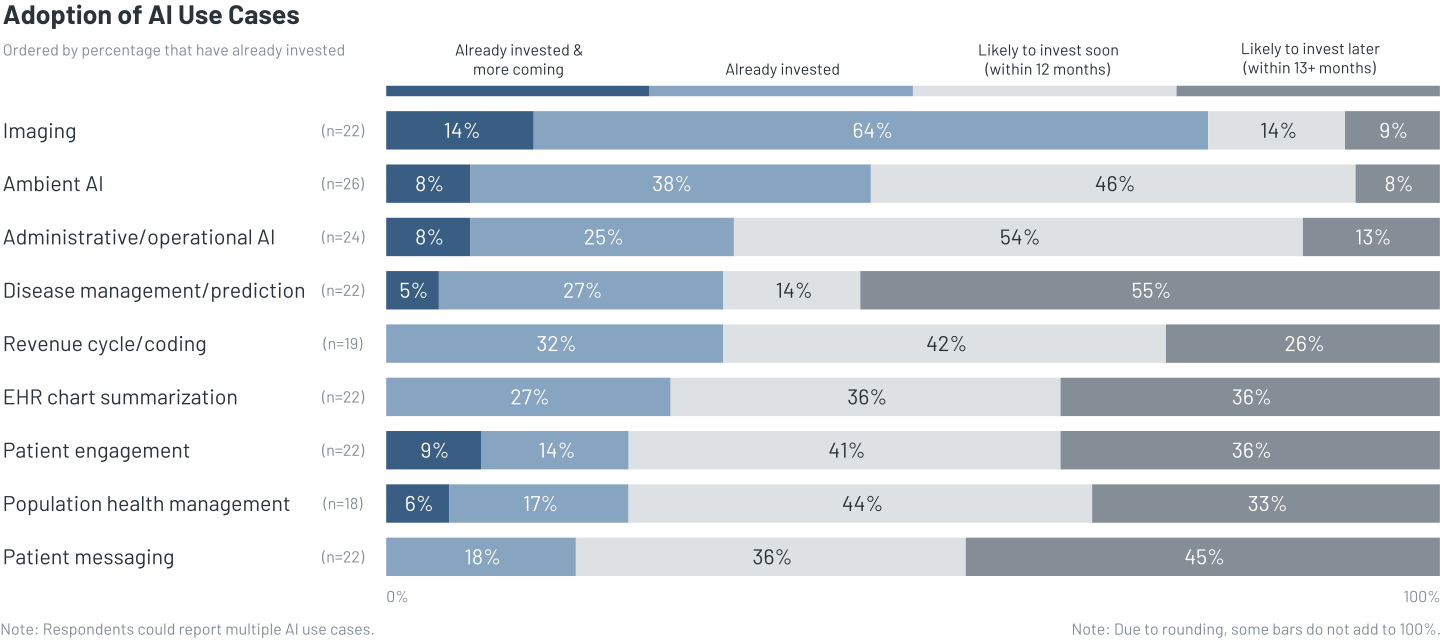
Though governance programs are still in development, a large percentage of organizations report having adopted some form of AI, imaging AI being the most commonly reported. Adoption of AI in other forms is more limited, though nearly 50% of respondents have invested in ambient AI. Given that several of the responding organizations are among the most advanced university health systems in their respective countries, it stands to reason that adoption among other types of healthcare organizations is likely much lower. Beyond imaging AI and ambient AI, around a quarter of organizations are using AI for various operational, administrative, or clinical use cases.
Building Strong AI Governance for the Healthcare Environment
During the summit, KLAS held two tabletop discussions to dive into some of the most salient questions around AI governance and adoption. These next sections summarize key points from those discussions.
What Makes a Strong AI Governance Program?
Strong AI governance programs are executive sponsored, include leadership from multiple disciplines, and are focused on enterprise priorities. Importantly, the conversation around AI should not be a hammer in search of a nail. Don’t start with the question, “Where can we use AI?” Start with a defined care, access, quality, documentation, or workforce problem and then determine whether AI is the right intervention. One attendee captured the distinction well: “The [AI programs] that work well have a very clear goal.”
Key Traits of Successful AI Governance

Executive sponsorship with funding authority: AI governance cannot be delegated to IT alone. It must encompass leaders from all areas of the organization, including clinical, digital, operational, financial, privacy, security, and safety teams. For example, one participant described an AI board that included nursing, medical, informatics, and CIO leadership and stressed that CFO involvement was also essential: “Without the CFO, we can’t do anything.”

Clinical and operational ownership: Service-line leaders should help define a use case, present it for review, and own adoption and outcomes. This keeps AI from becoming a technology project detached from the teams it is intended to help.

A proportionate risk model: Not all tools require the same review burden. Low-risk administrative or internal productivity tools can move through a more agile pathway, while AI tools that could influence diagnoses—e.g., AI tools for clinical decision support, imaging, or other clinical pathways—should undergo much stronger vetting, including clinical safety case, evidence review, and an ongoing monitoring plan.
A warning: Clinicians will seek their own tools if governance is too slow or purely prohibitive. One attendee said, “The problem used to be shadow IT. Now it’s shadow AI.” Strong programs should have a visible intake route, educate staff on safe AI use, and offer approved alternatives rather than simply saying no.

Success metrics that were defined before deployment: Strong governance programs establish baselines before the AI is deployed, and they define what improvement should look like—such as reductions in admissions, missed findings, documentation burden, and time to care or improvements in clinician retention and the patient experience. Attendees cautioned against setting productivity-only ROIs: “People don’t want to do more things. They want to do better things.”

Governance that continues after approval: Many participants feel that organizations currently spend too much effort on upfront evaluation and implementation and too little effort on ongoing safety and monitoring. As one attendee put it, “We’re spending so much time on intake and implementation and not enough time on what it really takes to operationalize safety.” While post-deployment monitoring remains immature, it should be included in the solution plan before go-live, not just as an afterthought.
Vetting AI Vendor Claims Before Formal Governance Review
Healthcare organizations should employ a front-end triage process to vet vendor AI solutions before committing scarce clinical, IT, and governance resources to full review. The first question is whether the tool addresses a real and prioritized healthcare problem and whether the organization has an owner, workflow, and funding path to support it. Healthcare organizations then look for evidence in several areas:
- Clinical relevance and workflow fit: The tool must improve the actual care or operational process—not add a second review step, an extra screen, or new documentation burden. In imaging, for example, this means evaluating not only algorithm performance but also how findings fit into existing radiology workflows.
- Real-world proof points: Healthcare organizations want vendors to provide peer-reviewed evidence, advice from other customers, reference sites, comparative data, and—in higher-risk use cases—retrospective validation or testing against local historical cases.
- Local validation where necessary: Small pilots remain useful when they answer a specific question: Does this work with our patients, clinicians, data, and workflow? Attendees warn against repeating such pilots broadly once the technology has already been proven elsewhere.
- Integration and data controls: Healthcare organizations want vendors to demonstrate integration in a sandbox or real environment, not merely claim API compatibility. Considerations such as data sovereignty, cybersecurity, privacy, consent, medical-device status, and interoperability are treated as early feasibility checks.
- Commercial and organizational viability: Given the many early stage AI firms in the market, health systems must assess whether potential vendor partners have the leadership, funding, support model, and long-term road map to remain viable. One attendee’s simple question was: “How long will they be around?”

What Differentiates Credible Vendors from Less Viable Options?
Credible vendors are specific, transparent, and willing to share the work and risk of adoption. They can explain how the model is trained, what it can and cannot do, the evidence behind its claims, how it integrates, and the local configuration and change management it will require.
The expectation from healthcare organizations is not for vendors to arrive with a generic AI pitch. Credible vendors help define the problem, understand the clinical setting, and can explain why their approach fits that organization. A strong vendor stance was summarized by one attendee as: “We don’t know your exact problem, but we have skills to diagnose and solve challenges in this area. Can we work with you?” This contrasts with vendors who imply they can solve every problem. Vendors that are candid about limitations, safety boundaries, cost, and implementation effort are more likely to be trusted.
Ensuring Accountability for AI Investment Decisions
Attendees’ preferred accountability model is distributed accountability with centralized oversight. Generally, a single chief AI officer, CIO, or clinical executive should not personally own every AI decision. A central steering group or digital health committee should set the enterprise strategy, prioritize investment, define risk thresholds, and ensure consistent standards. However, the service line that receives the benefit should own the business case and operational results. For example, if ambient documentation is intended to improve the physician experience or increase appointment capacity, the clinical service line should own those outcomes. This structure typically includes:
| Role | Areas of ownership |
|---|---|
| Executive sponsors | Set priorities, approve funding, and resolve tradeoffs |
| Clinical/service-line leader | Owns the use case, adoption, workflow redesign, and clinical value |
| IT and digital teams | Own integration, architecture, support, and technical feasibility |
| Privacy, security, legal, data, and clinical safety leaders | Own their respective risk controls |
| Central governance body | Ensures consistent standards, prevents duplicate purchases, and makes escalation or stop decisions |
| Vendors | Share responsibility for technical performance, evidence, product changes, monitoring support, and remediation |

Expanding AI from Operational Use to Clinical Support
AI must address a clearly defined care-pathway problem and generate meaningful outcomes—not merely automate a task or generate an alert.
Healthcare organizations need a defined action pathway after AI identifies risk or disease; prediction without a clear next step in the clinical pathway does not improve care.
Clinical, operational, informatics, quality, and safety leaders must jointly design the use case, ownership, inclusion criteria, and success measures.
The underlying workflow and data foundation must be ready. AI cannot resolve fragmented records, unclear handoffs, or a poorly designed pathway.
The tool needs credible evidence of benefit, including sensitivity, specificity, repeatability, and local validation for the organization’s patient population and workflow.
AI must preserve clinician usability and efficiency, fit naturally into care delivery, and support (not replace) clinical judgment and accountability.
2026 Summit Attendees
Healthcare Organization Attendees
Adrian Jimenez, SM, SOIN, Costa Rica
Alieke Smid, Manager, Amsterdam UMC, Netherlands
Anna Hawksley, Programme Director, NHS, England
Arnaud Hansske, CMIO, GHICL, France
Ashwin Pinto, Chief Clinical Informatics Officer, University Hospital Southampton, England
Augustine Amusu, CIO, Mediclinic Middle East, UAE
Benedict Tan, Group Chief Digital Strategy Officer & Chief Data Officer, Singapore Health Services, Singapore
Benita Butler, EMR Director, Royal Melbourne Hospital (Parkville Precinct), Australia
Beverley Bryant, Chief Digital Officer, Dorset Providers, England
Bruno Campos, Head of Information Systems Hospital da Luz, Luz Saude—DSTI, Portugal
Cliff Bucknall, Chief Medical Officer, HCA Healthcare UK, England
Courtney Hancock, VP; Chief of Staff to the President & CEO, Tampa General Hospital, USA
David Vieira, Head of IT, Luz Saúde, Portugal
Debbie Loke, Chief Digital Officer, University Hospitals Derby and Burton NHS Trust, England
Dušan Trifunovic, Chief Physician, Department of Acute and Emergency Medicine, Eichsfeld Klinikum, Germany
Elena Sini, CIO, GVM Care & Research Group, Italy
Erik Sköldenberg, CMIO, Regional Council of Stockholm, Karolinska University Hospital, Sweden
Fábio de Cerqueira Lario, CMIO, Sírio-Libanês, Brazil
Fahad Bindayel, Business Development Executive Advisor, King Faisal Specialist Hospital & Research Center, Kingdom of Saudi Arabia
Francesca De Giorgi, CIO, Research Hospital Istituto Besta, Italy
Francisco Fukuda, CMIO, RedSalud, Chile
Glen Shortt, Executive Lead, Data and Digital Health, Health Shared Services Alberta, Canada
Gürhan Zincircioglu, CMIO, Tire State Hospital, Türkiye
Guru Sivaraman, Director ICT/CIO, University Hospital Zurich, Switzerland
Ian Hogan, CDIO, Leeds and York Partnership NHS Foundation Trust, England
Jacques Rossler, CIO, Hôpital Universitaire de Bruxelles, Belgium
James Friend, Director of Digital Strategy and Digital Transformation, NHS England—London Region, England
Jared Sebhatu, CEO & Co-Founder, digital health transformation eG, Germany
Jason Bradley, Chief Digital and Data Officer, Countess of Chester Hospital, England
Jessica Wilson, Director, Health Discipline Practice & Chief Health Discipline Informatics Officer, CHEO, Canada
Jocelyn Palmer, Programme Director—OneLondon, NHS London, England
John Couris, President & CEO, Tampa General Hospital, USA
Julian Gully, CIO, IDX Group, Australia
Karim Jessa, CMIO, SickKids, Canada
Lee Burry, Assistant Deputy Minister, New Brunswick Department of Health, Canada
Louise Clarkson, CNIO, Blackpool Teaching Hospital, England
Luke Readman, Director of Digital Transformation, NHSE, England
Mahmood Adil, Clinical Professor (Healthcare Innovation), Qatar University, Qatar
Mansour Al-Swaidan, Deputy CIO, King Faisal Specialist Hospital and Research Centre, Kingdom of Saudi Arabia
Marco Foracchia, CIO, Azienda USL di Reggio Emilia, Italy
Marco Venditti, CIO, Fondazione Policlinico Universitario Campus Bio-Medico, Italy
Martin Trelcat, CEO, GHICL, France
Matea Deliu, Chief Clinical Information Officer, Bromley Healthcare, NHS South East London ICB, England
Matt Gardner, Deputy Chief Digital Information Officer, Manchester University NHS Foundation Trust, England
Matthew Connor, Chief Digital Information Officer, University Hospitals of Liverpool Group, England
Michael Stickel, CMIO, Insel Gruppe, Switzerland
Monique Duffy-Brogan, Chief Digital Information Officer, Pennine Care Foundation Trust, England
Peter Gocke, Chief Digital Officer, Charite—Universitätsmedizin Berlin, Germany
Philippe Vandenbergh, CMIO, CHU St. Pierre, Belgium
Ravinder Sahota, Group Chief Information Officer, The Dudley Group NHS Foundation Trust and Sandwell and West Birmingham NHS Trust, England
Rhidian Bramley, Consultant Radiologist & Clinical AI Lead, The Christie NHS Trust & Greater Manchester Cancer Alliance, England
Rizwan Malik, Consultant Radiologist, Royal Bolton NHS Foundation Trust, England
Rob Lee, Vice President of Digital Health & CIO, Sunnybrook Health Sciences Centre, Canada
Sarah Barr, Chief Digital Information Officer, The Clatterbridge Cancer Centre NHS, England
Sarah Muttitt, VP & CIO, The Hospital for Sick Children & UHN, Canada
Shah Islam, President, UKIO, England
Sridhar Redla, Consultant Radiologist & Chair, AI Clinical Implementation Group, Princess Alexandra Hospital & Image East, England
Tugba Sönmez, Deputy Head of the Technology Management Department, University Hospital Mannheim, Germany
Will Goodwin, Regional Director of Digital Transformation, NHS England, England
Yaron Denekamp, CMIO, Clalit Health Services, Israel
Vendor/Firm/Investor Attendees
Alexander Ryan, Director, Business Development,
Hyland Healthcare
Andrea Sowitch, Global Director Customer Engagement, Sectra
Andy Smith, VP of Global Partnerships, DeliverHealth
Anjum Ahmed, Chief Medical Officer, AGFA HealthCare
Chris Scarisbrook, Deputy Managing Director, Sectra
Christopher Brice, EMEA Healthcare Director,
Hyland Healthcare
Collin Henderson, Country Manager UK & Ireland, InterSystems
Damien De Greef, Director Global Business Operations Diagnostic Imaging IT, Dedalus
Dan Prescott, VP, Nordic Global
Dan Warner, President, Enterprise, Commure
Dannyielle Blanchard, VP, Epic
Dario Arfelli, Head of Product, Imaging Informatics, Philips
Darren Owen, Commercial Director, RLDatix
David Hulse, Sales Director, Rhapsody
David Montano, Clinician Productivity Solutions Manager, Solventum
David Pellegrin, Market Development Manager Digital Health, Roche
Emily O’Sullivan, EHR Partner, EY Ireland
Erin O’Halloran, General Manager & Vice President, Oracle Health Canada
Giso Langer, Global Head of Product Engineering & Technology, Dedalus
Harm Mescher, EVP International, uPerform
Helen Waters, Executive Vice President & COO, MEDITECH
Ian Shakil, Chief Strategy Officer, Commure
Jacques Baudin, Head of Go-to-Market & Customer Success EMEA-LATAM, Roche
Jane Dwelly, Vice President, CHIME
Jeroen Kolen, Senior Director, Nordic Global
Jessica Fowler, Market Development Leader, Roche
Judy Smith, COO, Ethical Healthcare Consulting
Kate Shields, Senior Advisor, Egress (Stalis)
Kelly Conklin, Chief Clinical and Chief Customer Officer, PerfectServe
Kieran Bamber, Healthcare Director, Tanium Inc
Krishna Singh, BDM—Health Data & AI, AWS
Lorena Diaz Palle, Sponsorship Director, Informa
Lorna McArthur, Clinical Executive Manager, InterSystems
Luc Colle, Sales Director EMEA-APAC, Healthcare Division, BARCO
Maggie Anderson, Commercial Account Manager, AMD
Marie Ekström Trägårdh, Global President, Sectra
Mark Hutchinson, Executive VP—EMEA, Altera
Mercedes McCoy, VP, Epic
Miroslav Koncar, Chair, HL7 Croatia
Nasser Shehata, CEO, Health Insights Asia
Paul Bonnett, General Manager, Vidal Vademcum Spain SA
Phillipa Winter, Chief Technologist, CDW
Pieterjan Ghekiere, EMEA Partner Manager—Manager Southern Europe, BARCO
Raquel Podadera, Global Chief Marketing Officer, Dedalus
Richard Pugmire, CEO, Answer Digital
Roberto Anello, Regional President & Managing Director, Northern Europe, AGFA HealthCare
Sandip Kaur, Head of Healthcare, Answer Digital
Scott Andrew, Healthcare Industry Director, Dell
Simon Chassain, International & Partnership Director, Enovacom, an Orange Business company
Simon Philip Rost, Chief Marketing & Strategy Officer,
GE HealthCare
Sriram Venkatasubramaniam, Solutions & Service Leader, Radiology Informatics, Philips
Steph Berry, Customer Experience, Philips
Terri Graves, Executive Strategist, Solventum
Terri LeFort, President, International, Nordic Global
Thomas Webb, Founder, Ethical Healthcare Consulting
Tomaž Gornik, Co-Chair, openEHR
Tracey Watson, CEO, Ethical Healthcare Consulting
Véronique Lessens, Global Head of Strategy, Marketing & Communication, AGFA HealthCare

Writer
Elizabeth Pew

Designer
Natalie Jamison

Project Manager
Evan Young
This material is copyrighted. Any organization gaining unauthorized access to this report will be liable to compensate KLAS for the full retail price. Please see the KLAS DATA USE POLICY for information regarding use of this report. © 2026 KLAS Research, LLC. All Rights Reserved. NOTE: Performance scores may change significantly when including newly interviewed provider organizations, especially when added to a smaller sample size like in emerging markets with a small number of live clients. The findings presented are not meant to be conclusive data for an entire client base.