KLAS Contact

Contact KLAS
Contact KLAS
 2026 BEST IN KLAS
Preferences
Related Series

2026

2024

2023

2022

KLAS Global Summit 2025
Organizations Investing in AI & the EHR to Improve the Clinician Experience

Author
Eder Lagemann

Author
Jonathan Christensen
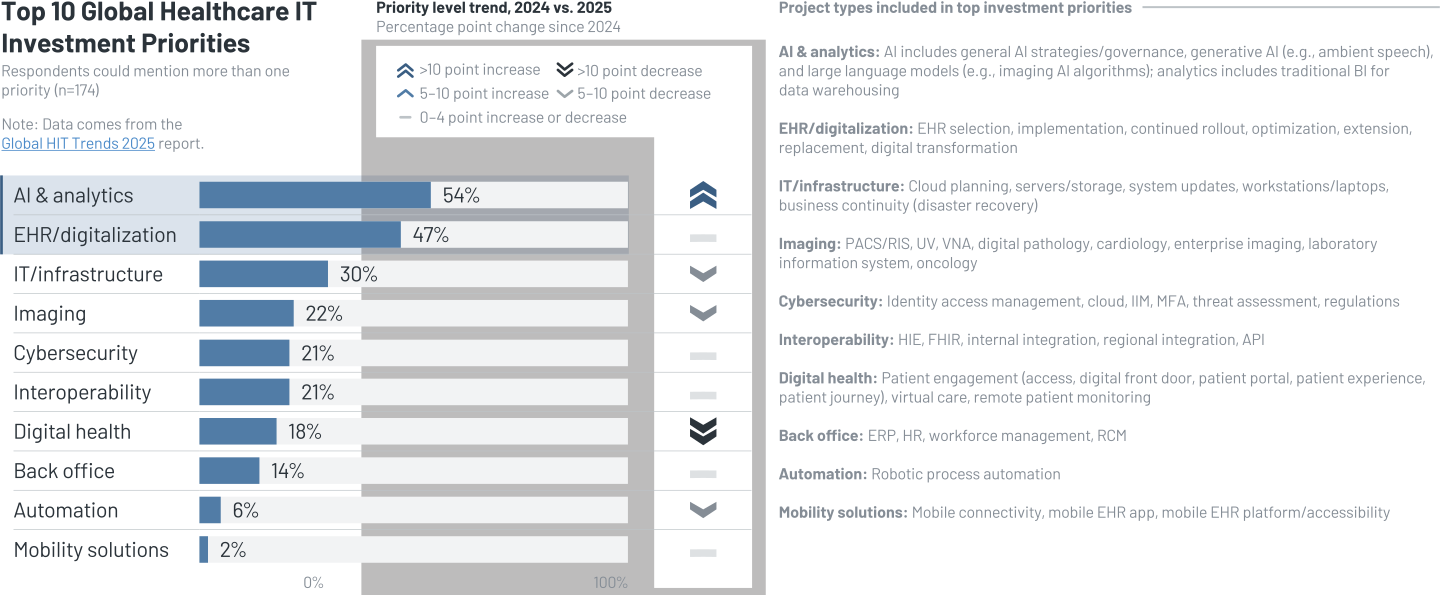
In June 2025, KLAS hosted our annual Global Summit on the southern coast of Greece. Over 130 executives (including healthcare, vendor, and consultant representatives from 33 countries) came together to discuss industry trends and the areas of most significant investment in healthcare, identified by responding healthcare organizations in the recent Global HIT Trends 2025 report. Specifically, the top two investment priorities and, thus, the focus of the summit were (1) AI and its most promising use cases and (2) EHR digitalization and optimization and the resulting impact on clinician burnout. This report highlights key insights from discussions and panels on these two topics, including relevant takeaways and best practices from KLAS Arch Collaborative data.
Artificial Intelligence
AI at the Forefront of Healthcare Organizations’ IT Investment Priorities
Due to the rapid expansion of AI technology, investment in AI and analytics has jumped to healthcare organizations’ number-one priority—up from sixth in 2023 and third in 2024 (seen in the Global HIT Trends 2025 report). Healthcare organizations feel AI has the potential to substantially impact many of their workflows. At the summit, attendees discussed the AI use cases they feel show the most promise—especially ambient speech, imaging AI, and other forms of generative AI.
Ambient Speech
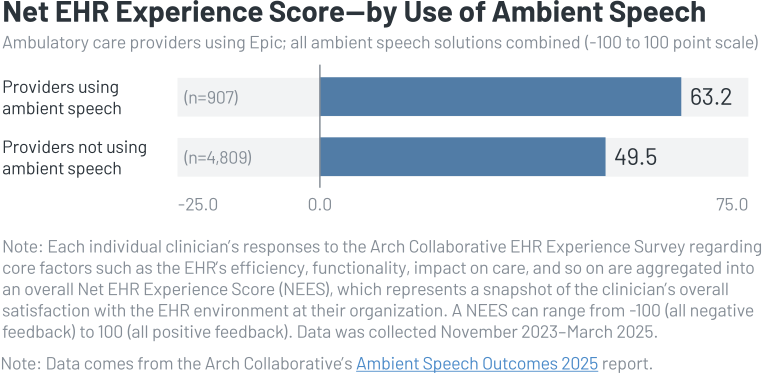
Healthcare organizations across the globe are generally most excited about ambient speech’s potential to reduce documentation burdens, which can lead to increased clinician satisfaction and decreased burnout. The KLAS Arch Collaborative has started measuring the impact of ambient speech on clinician satisfaction, and initial findings have validated the promise of these solutions for ambulatory care. Along with other benefits, ambient speech users report higher EHR satisfaction than peers who don’t use ambient speech. (See KLAS’ Ambient Speech Outcomes 2025 report for more insights.)
Ambient speech has been most widely adopted in English-speaking countries (e.g., the US, Australia, England). Europe has also seen early adopters of ambient speech technology in areas like Belgium, France, Germany, the Netherlands, and Scandinavia. While adoption is lagging in other regions (e.g., Asia, Latin America, the Middle East), healthcare organizations in these areas still express interest in the technology.
As healthcare organizations work to expand or implement ambient speech technology, they need to ensure a strong infrastructure—specifically, strong EHR integration is critical to maximizing the value of ambient speech solutions rather than just shifting work to medical secretaries due to a lack of confidence in the AI tools. Additionally, regulations on the use of AI and ambient speech will be key considerations as development continues. For example, in the UK, the NHS recently clarified regulations for using cloud-based ambient voice technology to ensure compliance with privacy laws.
Imaging AI
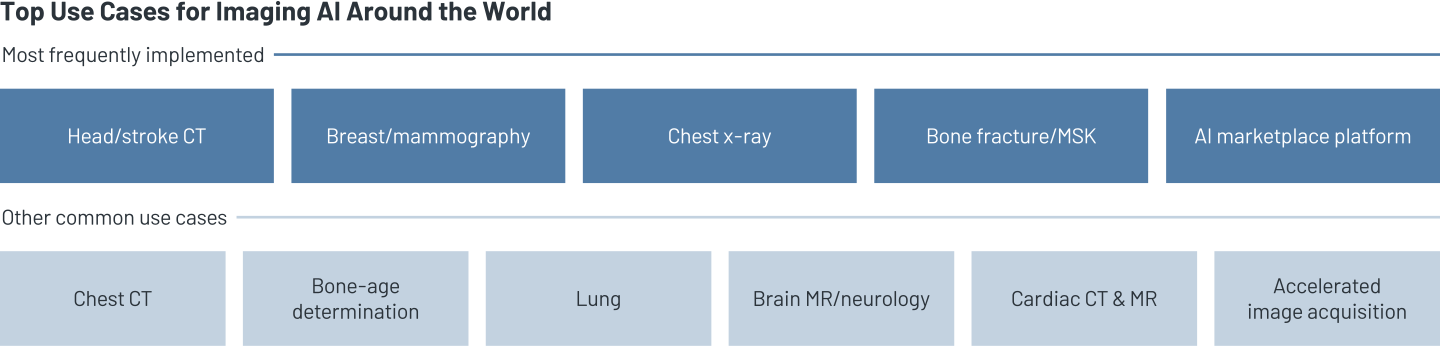
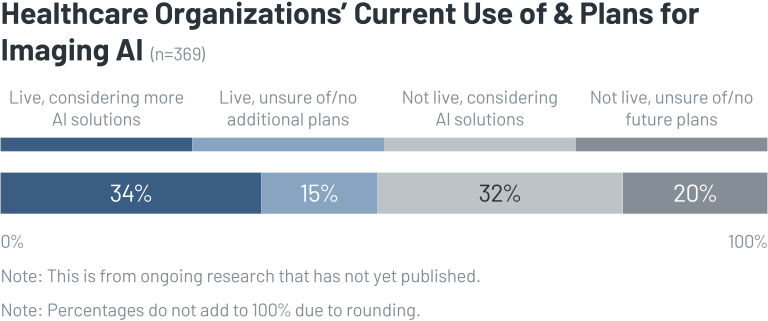 Globally, nearly 50% of healthcare organizations report using some type of AI for imaging, with organizations in Europe ahead of other non-US regions in AI adoption, followed by those in Asia/Oceania and Canada. Some of the earliest AI use cases in healthcare were flagging critical results in screenings for breast cancer, coronary heart disease, and strokes—unsurprisingly, these AI use cases currently have the highest adoption. Other commonly adopted use cases include chest x-rays and bone-fracture detection. Moving forward, healthcare organizations are looking for AI platforms that will allow them to consolidate solutions and ease workflows. (For more information, see upcoming report on Global AI imaging.)
Other AI Use Cases
Beyond ambient speech and imaging AI, attendees from healthcare organizations identified other AI use cases that show high promise for healthcare:

Clinical
- Decision support
- Clinical-deterioration prediction (e.g., sepsis, kidney failure), allowing for early intervention and reduced ICU admissions
- Diagnosis of rare, long-persisting conditions
Across these use cases, AI functions not as a replacement for care but as a clinical accelerator, enabling faster, more precise, and more structured decision-making.

Financial
- Clinical documentation improvement (CDI)
- Automation to expedite prior authorization and patient intake processes
- Coding optimization and claims automation, including AI-generated preliminary billing codes
- Tools that flag missing documentation (e.g., omitted ejection fraction data in heart failure cases) in real time—these often contribute to increased billing accuracy, reduced revenue leakage, and stronger audit resilience
- Risk stratification for value-based care, improving resource allocation and reimbursement predictability
While financial ROI remains difficult to quantify in some health systems, the organizations that align AI implementations with reimbursement priorities are realizing the most promising outcomes.

Operational
- Workflow automation (especially for radiology)
- Appointment optimization
- Command center intelligence to manage patient throughput, discharge planning, and real-time risk surveillance
- Predictive models to anticipate no-shows and double bookings to mitigate waitlist capacity (especially in Canada and Australia)
- Emerging tools like ambient sensing—through wearables and in-room devices—are being piloted to detect fall risks or respiratory decline in high-risk populations
The unifying theme across operational efforts is that AI enhances visibility, prioritization, and time savings without demanding new clinical staffing resources—a critical need given global clinician shortages. In some cases, things monitored may overlap with clinical use cases, but these focus on non-clinical resources to mitigate risk.

Patient Engagement
- Language processing tools to support multilingual consultations, reducing misunderstandings and improving access to care
- AI-driven decision-making aids to help patients understand treatment options, risks, and outcomes
- Automated messaging in secure messaging platforms to triage and respond to low-acuity patient messages (e.g., medication refills, symptom checks, lab results), freeing up clinical resources for higher-touch needs
AI efforts around patient engagement are focused on reducing response times and better involving patients in their care.
AI Insights from Summit Breakout Discussions
For Healthcare Organizations
Stronger organizational governance and ownership are needed to drive broader AI adoption. There is often a disconnect between how IT leadership and departmental staff understand and evaluate AI and approach its implementation into daily routines. For AI adoption to be sustainable, organizations need a strong governance strategy that allows for the exploration of AI solutions as well as long-term support to ensure solutions can be maintained and integrated into workflows.
For Vendors
Healthcare organizations’ AI expectations for vendors (including individual AI vendors, vendors with third-party aggregator platforms, or vendors with core systems that integrate or provide native AI solutions) continue to evolve—moving from simply wanting the existence of an AI widget or algorithm to wanting more guidance validating, testing, and implementing the AI functionality. Summit attendees emphatically stated they want more guidance from vendors to shorten the adoption curve and integrate the AI solutions into their clinician workflows. Platform vendors offering a marketplace need to identify and share the most impactful algorithms for driving efficiency and outcomes. The focus shouldn’t be on the quantity of integrated algorithms but instead on providing integrated algorithms that will drive appropriate value and minimize validation time.
For AI solutions, data sovereignty is a must, and transparency is key. To build trust with healthcare organizations, vendors must clearly articulate how data is handled; offer transparency into model behavior, accuracy tracking, and liability assumptions; and commit to providing long-term support. There is a strong desire for clear communication and robust post-implementation monitoring that will lead to better trust and end-user adoption.
AI pricing must be predictable, especially as usage grows. Healthcare organizations are wary of cost spirals when AI is deployed at scale and want to avoid fragmented point solutions that create technical overhead and governance headaches.
Beyond AI, How Are Organizations Driving Efficiency & Reducing Cost?
Healthcare organizations often prioritize AI due to its potential to reduce costs. Still, adoption is early, so at the summit, attendees discussed other methods being used to streamline operations and reduce costs. The most frequently mentioned initiatives are listed below. Ultimately, these grounded, infrastructure-focused efforts are helping health systems absorb financial pressures while laying the foundation for longer-term digital transformation, including deeper AI adoption.
Common Non-AI Initiatives to Reduce Costs
Consolidating office space
Eliminating low-use software licenses
Reducing duplicate diagnostic testing
Workflow standardization
Shared services
Contract rationalization
Patient self-scheduling
Enterprise process mapping
Automated analytics dashboards
Virtual care models (e.g., telehealth, home-based services, remote patient monitoring) to offload pressure on inpatient settings and avoid unnecessary admissions
Process improvement/care pathway redesign by using data already available to streamline workflows before introducing new technologies
Optimizing staffing and scheduling (e.g., nurse-to-patient ratio alignment, automated scheduling, lean process redesign) to reduce overtime and deploy staff more effectively
Refining vendor and software procurement strategies to bring in more shared-risk agreements and outcomes-based pricing
EHRs & Digitalization
Organizations Seek to Optimize Their EHRs, as Clinician Burnout Remains a Pervasive Problem Across the Globe
EHR digitalization and optimization are the second-highest investment priority for global healthcare organizations. Many have yet to deploy an EHR, so the initial step of implementation is currently a top priority. In regions where EHR adoption rates are relatively higher (e.g., Canada, the Middle East, and Northern and Western Europe), organizations are more focused on EHR optimization and reducing the documentation burden that often leads to clinician burnout. At the summit, discussion centered around EHR optimization.
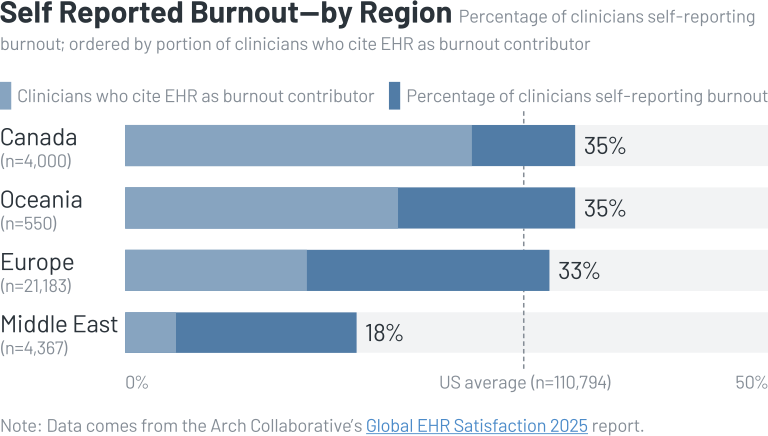
About one-third of clinicians whose EHR satisfaction has been measured via the KLAS Arch Collaborative† report some degree of burnout, with more than half citing the EHR as a contributor. Specifically, clinicians also often cite message burden as a main factor in their burnout, a concern that is likely to grow as patients continue wanting more caregiver interaction. As a result, when optimizing their EHR, organizations are seeking strategies that will ease their clinician workflows, ultimately leading to less burnout and turnover.
† The Arch Collaborative is a group of healthcare organizations committed to improving the EHR experience through standardized surveys and benchmarking. To date, over 300 healthcare organizations have surveyed their end users and over 600,000 clinicians have responded.
Organizations Need to Build a Framework to Improve Clinician EHR Satisfaction
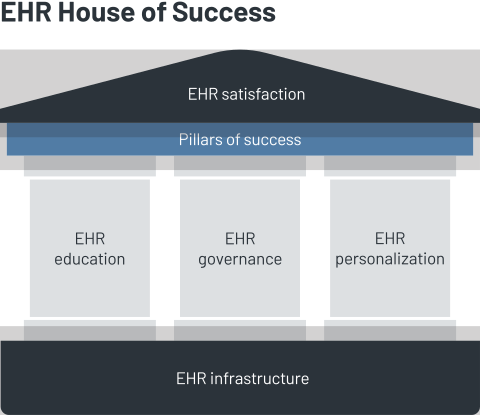
By examining validated experiences and best practices, the Arch Collaborative has identified clear strategies for improving the clinician EHR experience and lessening burnout. The EHR House of Success is a framework that shows that EHR satisfaction is ultimately built on a strong technological infrastructure and bolstered by a culture that fosters EHR education, governance, and personalization. At the summit, strategies to reduce burnout and build on the House of Success were discussed, focusing specifically on EHR infrastructure, education, and governance. These principles apply to organizations who are just embarking on an EHR implementation as well as those who are many years into their EHR journey.
First: Fortify Your EHR’s Technical Foundation
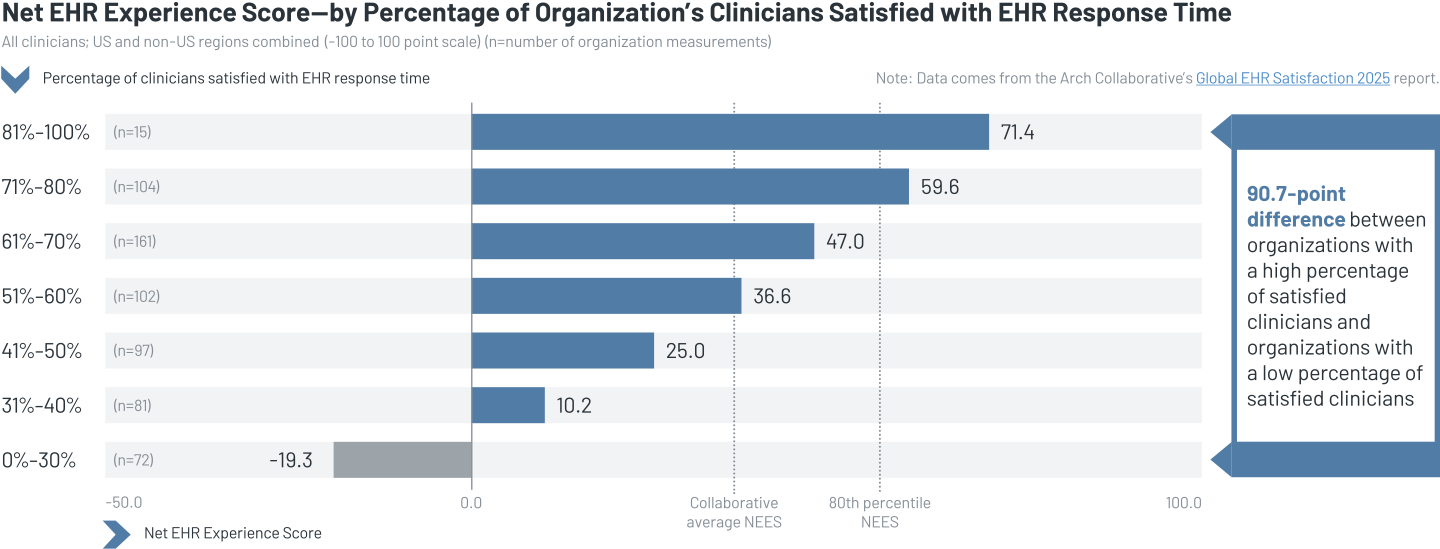
Organizations need to first ensure a strong foundation and infrastructure for their EHR, including factors that impact its speed and reliability. A strong infrastructure has the potential to substantially impact clinician satisfaction—organizations in which over 81% of clinicians are satisfied with the EHR response time report a mean Net EHR Experience Score (NEES) of 71.4 (on a scale of -100 to 100); conversely, organizations in which less than 30% of clinicians are satisfied with the EHR response time report a NEES of –19.3.
Best Practices
- IT should collaborate with clinicians to ensure a reliable infrastructure: High-performing sites conduct joint clinician-IT rounding, turning anecdotal complaints into measurable tickets.
- Define and publish service-level agreements: Leading organizations codify end-user response-time targets and post real-time dashboards in clinical areas.
- Plan for downtime versus just reacting to it: Organizations that rehearse downtime scenarios have higher levels of clinician trust when unexpected downtime inevitably occurs.
- Institute rolling hardware refreshes: Budgeting for EHR-compliant workstations every four to five years eliminates hidden latency caused by aging devices.
- Measure and share satisfaction data: Clinician perception does not always match quantitative data. If a clinician views the EHR as slow (even if data shows 99.5% uptime or screen load times of less than two seconds), their perception becomes the reality, dragging down their satisfaction.
Second: Invest in Robust, Workflow-Centric Education
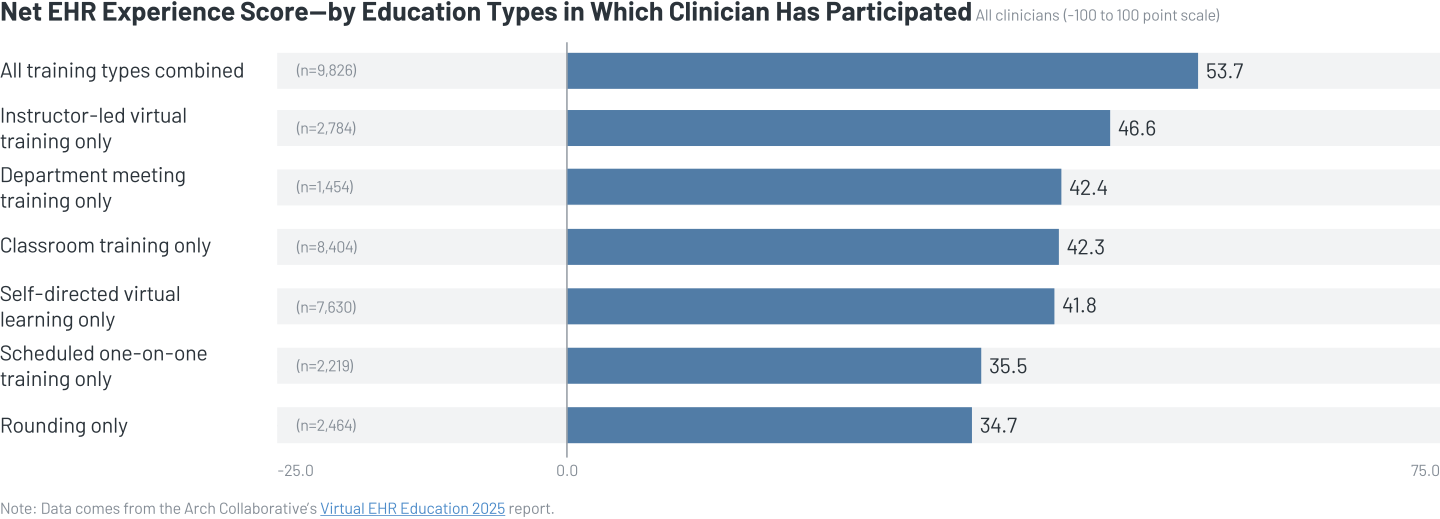
After organizations complete their initial measurement with the Arch Collaborative, the first change they most commonly embark on is to enhance their EHR training. If an organization can offer only one type of training, virtual education is the most scalable. Still, the data shows that offering multiple training types is most impactful—clinicians exposed to multiple modalities of instruction achieve higher EHR satisfaction than those who are trained via any single modality.
Best Practices
- Prioritize convenience: Centralize content in a searchable learning management system; build micro videos (less than three minutes) that clinicians can use when needed in real time; schedule sessions across day, swing, and night shifts.
- Build with workflow in mind: Leverage specialty-specific patient scenarios; secure senior-clinician endorsements; protect paid time for training.
- Create an engagement engine: Use peer testimonials, gamified challenges, and leaderboards to sustain momentum.
- Plan for longevity: Refresh modules quarterly; mine help-desk tickets to identify content gaps; provide tiered remediation pathways for persistent low performers.
Third: Elevate the Clinical Voice Through Effective Governance
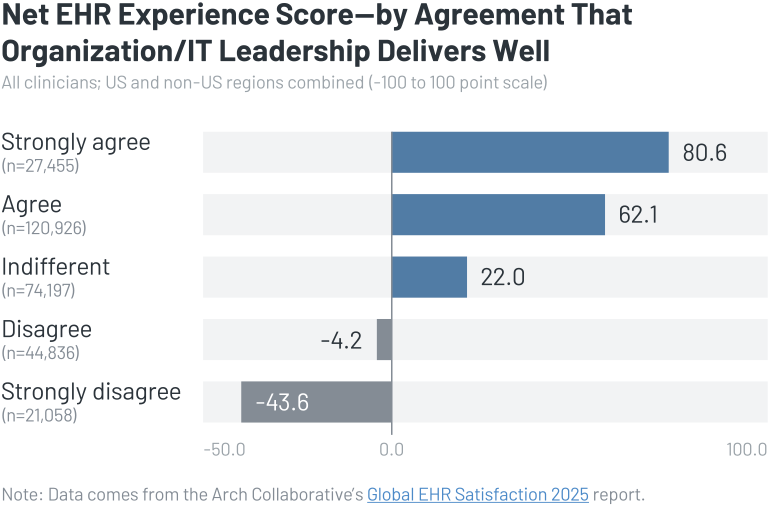
Governance—soliciting clinical feedback, setting up clear channels for updates, and designing with clinical workflows in mind—is the final step discussed at the summit for building strong EHR satisfaction. Clinicians who strongly agree that their IT leadership listens report an average NEES that is 124.2 points higher than that of clinicians who strongly disagree. Collectively, the best practices below transform governance from a compliance checkbox into a strategic lever for satisfaction and safety.
Best Practices
- Build a multidisciplinary executive committee: The committee should be led by a senior physician, a senior nurse, and the CIO and be chartered to approve priorities, funding, and risk thresholds.
- Have operational subcommittees: These are specialty councils (e.g., for radiology, ambulatory care) empowered to test upgrades in sandbox environments, evaluate change impact, and nominate superusers.
- Provide a transparent communication loop: This includes role-tailored briefings, in-EHR pop-ups, and end-of-shift huddles that articulate the why, what, and how of releases.
- Offer real-time support and feedback: Rover squads (IT analysts and clinical informaticists) should frequently round, both during upgrades and throughout normal business to learn common workflow complaints and build solutions into their optimization road map. Offer post-go-live pulse surveys to feed continuous-improvement sprints.
EHR Personalization Is Another Key Step
While not discussed in detail at the summit, EHR personalization is another key pillar of clinician EHR satisfaction. Read more insights and best practices in the recent Physician Guidebook report.
Summit Attendees
Healthcare Organizations
Mahmood Adil, Consulting, Global Clinical Data & Digital Health Lead, UAE
Jose Albillos, Hospital Universitario, Head of Radiology Department, Spain
Atif Albraiki, Dubai Academic Health Corporation, Chief Digital & AI Officer, UAE
Augustine Amusu, Mediclinic Middle East, CIO, UAE
Sarah Barr, The Clatterbridge Cancer Centre NHS, CIO & Digital Directorate Administrator, UK
Fahad Bin Dayel, King Faisal Specialist Hospital & Research Centre, Director of Applications & Health Informatics, Saudi Arabia
Adam Boulton, Royal Melbourne Hospital (Parkville Precinct), Director of EMR, Australia
Jason Bradley, Countess of Chester Hospital, Chief Digital & Data Officer, UK
Daniel Bregaglio, Johns Hopkins Aramco Healthcare, CIO, Saudi Arabia
Beverly Bryant, University Hospitals Dorset NHS Foundation Trust, Chief Digital Officer, UK
Lee Burry, New Brunswick Department of Health, Assistant Deputy Minister of Corporate Services, Canada
Bruno Campos, Luz Saúde, Head of Information Systems, Portugal
Victoria Chan, Mackenzie Health, Deputy CMIO of Digital Health Enterprise Analytics, Canada
Panos Chatziantoniou, Fakeeh.care, Group CFO, Greece
Jong-Soo (Jacob) Choi, Samsung Medical Center, CTO, Korea
Matt Connor, NHS University Hospitals of Liverpool Group, CDIO, UK
Stephen Della-Fiorentina, South West Sydney Local Health District, Director of Cancer Services, Australia
Yaron Denekamp, Clalit Health Services, CMIO, Israel
Marshall Denkinger, LUKS Gruppe, CMIO, Switzerland
Purvi Desai, Mackenzie Health, VP of Digital Health & CIO, Canada
Monique Duffy-Brogan, Pennine Care Foundation Trust, CDIO, UK
Marco Foracchia, Azienda USL di Reggio Emilia, CIO, Italy
Amy Freeman, University Hospitals of North Midlands, CDIO, UK
Jennifer Gillert, CHEO, Director of Digital Health, Canada
Peter Gocke, Charité (Universitätsmedizin Berlin), Chief Digital Officer, Germany
Rui Gomes, ULS de Coimbra, CIO, Portugal
Julian Gully, Integral Diagnostics, CIO, Australia
Adrian Harris, Royal Devon University Healthcare NHS Foundation Trust, CMO, UK
Ian Hogan, Leeds and York Partnership NHS Foundation Trust, CDIO, UK
Mubaraka Ibrahim, Emirates Health Services, Acting CIO, UAE
Karim Jessa, SickKids, CMIO, Canada
Adrian Jimenez, SOIN Soluciones Integrales, Senior Manager, Costa Rica
Peter John Forbes, National University Health System, Group Chief Digital Officer, Singapore
Aaron Jones, Sydney Local Health District, Chief Nursing & Midwifery Information Officer, Australia
Sofie Karamzalis, Royal Women's Hospital (Parkville Precinct), EMR Director, Australia
Andrew Kelly, ENHANCE Ontario, Chief Digital Officer, Canada
Philippa Kirkpatrick, NHS Southeast, South East London Integrated Care System, CDIO, UK
Heinz Koopmann-Horn, Alexianer DaKS GmbH, CIO, Germany
Amrita Kumar, HealthBay Clinics, AI Implementation Lead & Consultant Breast Interventional Radiologist, UAE
Ulla Kuukka, Oy Apotti Ab, Chief Experience Officer, Finland
Fábio de Cerqueira Lario, Hospital Sírio-Libanês, CMIO, Brazil
Rob Lee, Sunnybrook Health Sciences Centre, VP of Digital Health & CIO, Canada
Ilan Lenga, Lakeridge Health (Central East Hospitals), CIO & CMIO, Canada
Debbie Loke, University Hospitals of Derby & Burton NHS Foundation Trust, Executive CDIO, UK
Lawrence Loke, Singapore Health Services, Group CIO, Singapore
Quinn Mah, Alberta Health, Assistant Deputy Minister & CIO, Canada
Arnon Makori, Assuta Medical Centers, Director of Imaging Services, Israel
Rizwan Malik, Royal Bolton NHS Foundation Trust, Consultant Radiologist, UK
Ibrahim Mansoor, Kings College Hospital London Jeddah, Chairman of Laboratory Services, Saudi Arabia
Sarah Muttitt, SickKids, VP & CIO, Canada
Jocelyn Palmer, OneLondon, Programme Director, UK
Alec Price-Forbes, NHS England, CCIO, UK
Luke Readman, NHS Tower Hamlets Clinical Commissioning Group, CIO, UK
Sridhar Redla, Princess Alexandra Hospital NHS Trust, Consultant Radiologist & President (British Institute of Radiology), UK
Shanelle Referente, William Osler Health System, Director of HIS Training & Transformation/Analytics, Canada
Cris Ross, Mayo Clinic, Former CIO, US
Jacques Rossler, Hôpital Universitaire de Bruxelles, CIO, Belgium
Jared Sebhatu, digital health transformation eG, CEO & Co-Founder, Germany
Shankar Shridharan; Great Ormond Street Hospital for Children NHS Foundation Trust, Consultant Paediatric Cardiologist; UK Department of Health, Clinical Lead Artificial Intelligence; UK
Elena Sini, GVM Care & Research Group, CIO, Italy
Richard Slater, Rotherham NHS Foundation Trust, Consultant Surgeon & CCIO, UK
Tugba Sönmez, University Hospital Mannheim, Medical Engineer, Germany
Michael Stickel, Insel Gruppe, CMIO, Switzerland
Euchar Sultana, Ministry for Health and Active Ageing, CIO, Malta
Tamara Sunbul, Fakeeh.care, Group CIO, Saudi Arabia
Mansour Al-Swaidan, King Faisal Specialist Hospital & Research Centre, Deputy CIO, HITA, Saudi Arabia
Benedict Tan, SingHealth, Group Chief Digital Strategy Officer & Chief Data Officer, Singapore
Dušan Trifunovic, Eichsfeld Klinikum, Head of Acute & Emergency Medicine Department, Germany
Neeraja Valmiki, Emirates Health Services, Project Manager (PMO), UAE
Amanda Walker, eHealth NSW, Clinical Advisor, Australia
Grant Wallace, Peter MacCallum Cancer Centre, Clinical Informatics & Education Officer, Australia
Paul Warwick, Humber Teaching NHS Foundation Trust, Matron & Clinical Safety Officer, UK
Drew Wesley, Women's College Hospital, VP, Business, Technology and CIO, Canada
Ahmad Yahya, Saudi German Hospital KSA, Group CIO, Saudi Arabia
Marwah Younis, Canada's Drug Agency (CADTH), Advisor of Drug Programs, Canada
Demet Yuksel, Cliniques universitaires Saint-Luc, CMIO, Belgium
Gürhan Zincircioglu, Tire State Hospital, CMIO, Turkey
Vendors
Aysha Ahmad, Nordic, Director of Implementation & Support, UK
Abdullah Alrabiah, Cloud Solutions, GM of IT Business Services & PMO, Saudi Arabia
Michel Amous, InterSystems, Managing Director (EMEA), UAE
Dario Arfelli, Philips, Radiology Informatics Product Leader, Italy
Prabhu Arumugam, Amazon AWS, Clinical Innovation Lead, UK
Kieran Bamber, Tanium, Director of Strategic Accounts (UK Healthcare), UK
Alexander Berler, IHE Catalyst AISBL, Development Director, Greece
Frédéric Bern, Softway Medical, Director of International Development, France
Dannyielle Blanchard, Epic, VP, US
Paul Bonnet, Vidal Vademecum, GM, Spain
Frederik Brabant, Corti.AI, Chief Medical and Strategy Officer, Belgium
Christopher Brice, Hyland, Healthcare Director, UK
Andy Cachaldora, Dedalus, Commercial Lead (UK&I), UK
Chad Compton, Corti, Chief Revenue Officer, US
Scott Crawford, 3verest, CEO, Australia
Gaspard Desgeorge, Vidal Vademecum, Head of Sales, France
Okan Ekinci, Roche, CMIO, US
Matthieu Ferrant, Philips, Product Management Leader of Imaging informatics, Belgium
Andrea Fiumicelli, Dedalus, Chairman, Italy
Eric Grunden, Intelerad, Chief Customer Officer, US
Simon Harland, Vitro Software, VP of Sales & Marketing (Asia Pacific), Australia
Matt Heath, Softek, VP, US
Jesse Hodes, Softek, VP of Business Development, US
Dimitrios Kakoulis, Infor, Leader of Strategy Healthcare, Germany
Terri LeFort, Nordic, President of Nordic International, US
Véronique Lessens, AGFA HealthCare, Global Head of Strategy, Belgium
Mercedes McCoy, Epic, VP, US
Bill Meredith, Nordic, VP of Strategy and Transformation, Ireland
Harm Mescher, uPerform (ANCILE Solutions), SVP (EMEA & APJ), UK
Simon Omer, AGFA HealthCare, Global Chief SaaS Officer, US
Damian Pearce, Stalis (Egress Group), Chief Commercial Officer, UK
Andrea Polticchia, AGFA HealthCare, Regional President (Southern Europe), Italy
Matthew Prime, Roche, International Business Leader for CDS & Algorithms, Switzerland
Emilio Restelli, Roche, Head of GTM & Customer Success (EMEA & LATAM), Portugal
Rami Riman, InterSystems, Director of Clinical & Business Improvements, UK
Michael Ristau, Solventum, VP of Global Portfolio, UK
Simon Rost, GE HealthCare, Chief Marketing & Strategy Officer, Germany
Alexander Ryan, Hyland, Director, Spain
Chris Scarisbrick, Sectra, Deputy Managing Director, UK
Joerg Schwarz, Infor, Sr. Director of HC Data Solution, US
Nasser Shehata, Health Insights, CEO, Egypt
Judy Smith, Ethical Healthcare Consulting, COO, UK
Andrea Sowitch, Sectra, Global Director of Customer Engagement, US
Sally Thompson, Informa, Group Director, UAE
Cecilia Täkte, Cambio Healthcare Systems AB, Chief Commercial Officer, Sweden
Erik Van Hoeymissen, Solventum, Industry Relations & International Marketing, Belgium
Joanna Wardzinski, Amazon AWS, Global Healthcare Business Development Leader of Healthcare & Life Sciences, Germany
Hyacinthe Warnasuriya, GE HealthCare, GM of Customer Success, France
Tracey Watson, Ethical Healthcare Consulting, Director of Consulting, UK
Thomas Webb, Ethical Healthcare Consulting, CEO, UK
Ingrid Wistrand, Cambio Healthcare Systems AB, Chief Product Officer, Sweden
Investors
Gregory Royston, Vor Capital, Investment Analyst, UK
Sponsors
Scott Andrew, Dell Technologies, Healthcare Industry Director, UK
Gearoid Byrne, Dell Technologies, AMD BDM, UK
Pieterjan Ghekiere, Barco NV, Global Partner Manager, Belgiuim
Sarah Suraiyya, Barco, Territory Manager (UK/Ireland), UK
Phillipa Winter, CDW, Chief Technologist, UK

Writer
Carlisa Cramer

Designer
Nikki Christensen

Project Manager
Amanda Wind
This material is copyrighted. Any organization gaining unauthorized access to this report will be liable to compensate KLAS for the full retail price. Please see the KLAS DATA USE POLICY for information regarding use of this report. © 2026 KLAS Research, LLC. All Rights Reserved. NOTE: Performance scores may change significantly when including newly interviewed provider organizations, especially when added to a smaller sample size like in emerging markets with a small number of live clients. The findings presented are not meant to be conclusive data for an entire client base.