KLAS Contact

Contact KLAS
Contact KLAS
 2026 BEST IN KLAS
Preferences
Related Series

2024
Healthcare Operations Summit 2025
Change Management & Technology Can Help Resolve Long-Standing Operational Challenges

Author
Niel Oscarson

Author
Paul Warburton
Many healthcare organizations are caught in a vicious cycle: Their operations suffer due to financial constraints and limited resources, and because of those challenges, they struggle to make changes that would improve operations. More than ever, change management and technology can help organizations streamline operations and maximize resources. This opportunity was the impetus of KLAS’ second annual Healthcare Operations Summit, held in Salt Lake City, UT, in November 2025. At this event, executive representatives from nearly 60 US healthcare organizations, HIT vendors, and consulting firms came together to discuss (1) ways that change management and technology can help overcome operational challenges and (2) best practices from organizations who have successfully improved their operations. This summit overview shares key insights from those discussions as well as from a pre-summit survey.
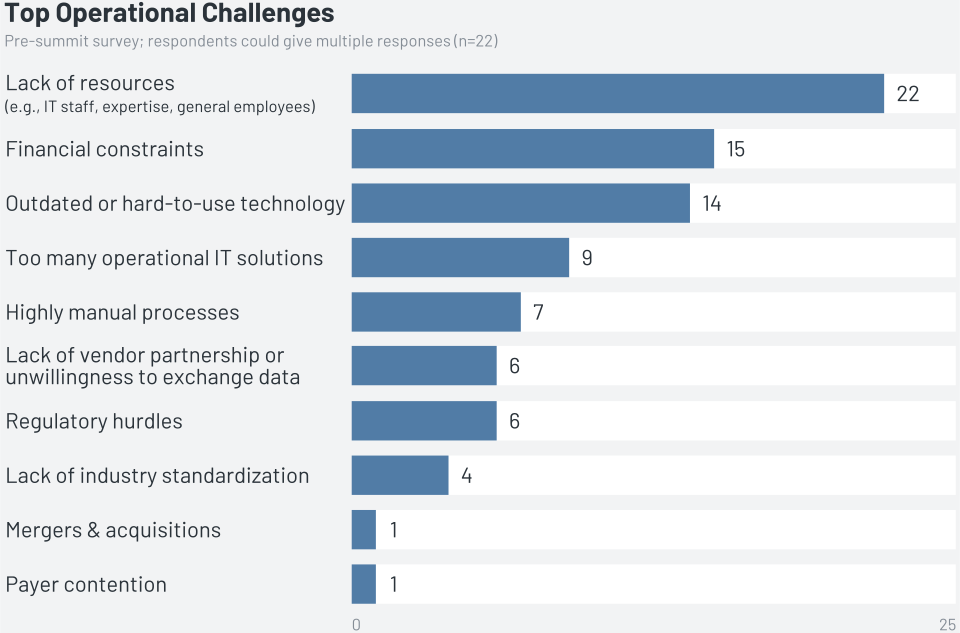
 Prior to the summit, 22 healthcare executives responded to a survey with several questions related to healthcare operations.
CHANGE MANAGEMENT & OPERATIONAL PROCESSES
Strong Change Management Is at the Heart of Successful Operations
Healthcare organizations are under increasing pressure to deliver high-quality care while reducing operational costs and complexity. Further, they need to increase operational efficiency without overwhelming their clinicians. Most organizations are being asked to do these things while also dealing with staffing shortages—in the pre-summit survey, all respondents noted a lack of resources as a top operational challenge.
At the summit, provider and vendor leaders emphasized the importance of change management—where organizational processes, culture, governance, and technology intersect—in mitigating these challenges. Poor change management has contributed to many of the operational challenges that the industry currently faces. In contrast, intentional change management leads to strong implementations, ensuring success with new operational processes or technologies.
 “The hardest part [of operations] is not the technology—it’s the people.” —Provider attendee
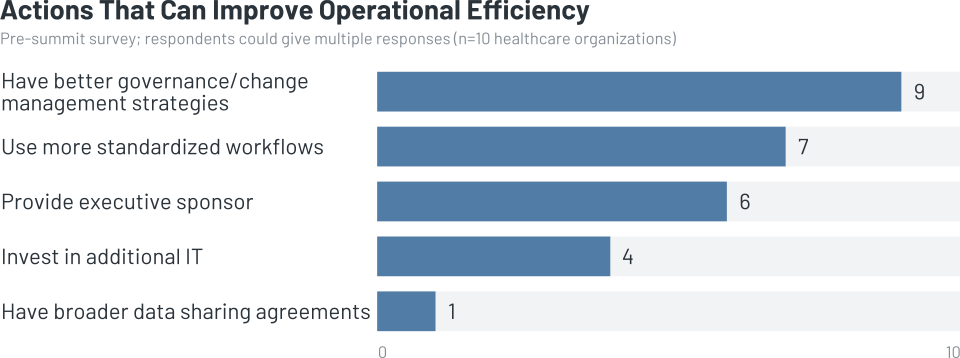
Ways to Improve Change Management
 Implementation resources: Insufficient resources are a key operational challenge, but to avoid more challenges down the road, healthcare organizations need to ensure they have enough resources to support their staff through implementations.
 Executive sponsorship: Another important element of change management is having an executive sponsor who is available to help and can speak on broader organization changes and pilots. This helps ensure that departments only do pilots that fit within the organization’s strategies. Executive sponsors should also engage midlevel leaders and establish regular meetings to communicate progress.
 Implementation playbook: Organizations should create an implementation playbook to make change management more successful for their employees. The playbook should establish key principles to govern current and future IT investments.
 Communications: Employees often feel overloaded during changes because they have to deal with disconnected communications channels, many of which are outdated and don’t yield quick insights. Push-style notifications, text messages, QR codes, and real-time chatbots are more effective avenues that facilitate faster communications.
 Standardization and governance: Within an organization, different groups can operate like individual fiefdoms with their own unique processes. This lack of standardization limits performance visibility and consistency across the enterprise. Role and process standardization enables stronger analytics, retention risk tracking, and scalability.
Change Management for AI
Not all healthcare staff is ready for or even excited about AI, making them resistant to the implementation of AI-driven processes. To build trust and increase user adoption, organizations should include clinicians and other end users in the design of AI processes alongside IT engineers.
Process changes that can increase the success of AI pilots:
- Establish the current reality and success metrics
- Include finance teams early so ROI goals are credible and measurable
- Expect some pilots to underdeliver until they have scaled
- Appropriately plan team capacity to avoid resource strain
- Define which efforts are foundational versus transformational
For more information on using AI for operational processes, see the “AI & Operational Efficiency” section further down.
Operational Processes Need to Be Enhanced Before Using Technology to Mitigate Challenges
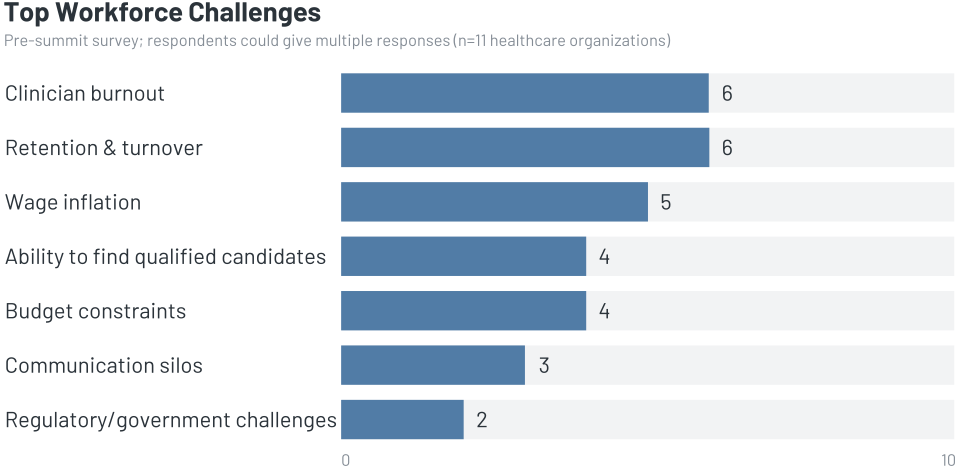 Provider and vendor leaders agree that as organizations focus on strong change management for operational efficiency, operational processes need to be fixed first; technology can be a catalyst for improvement but only when paired with clean data, standardized processes, and cultural alignment. This section highlights where summit attendees see the greatest opportunities to refine operational processes.
Challenges That Inhibit Operational Efficiency & Best Practices for Mitigating Them
 Challenge Challenge |  Best practice Best practice |
|---|---|
| Recruitment of new hires | |
| Factors that greatly limit effective hiring are skill mismatches, candidate no-shows, and overwhelming technology. | Insights from predictive analytics and AI can help organizations forecast staffing needs and ensure they market roles to tech-savvy candidates. |
| Employee retention | |
| Inconsistent employee recognition and resistance to change often lead to increased turnover rates. | To increase employee retention, people need to feel seen. Creating an engaging work environment with high trust can address employees’ psychological needs, and when effectively rolled out, recognition programs can often improve retention better than just increased compensation. Use employee/peer recognition tools (e.g., Snappy) and transparent scheduling to give staff control over their jobs and encourage them to lift others. |
| Employee burnout & satisfaction | |
| Burnout is caused by many factors, including a lack of structured recovery time for employees. | Healthcare leadership has a responsibility to step in and create structures to support employee self-care. Provider attendees reported that they successfully reduced burnout by limiting the number of shifts clinicians can take and supporting employees’ long-term goals. Programs like AI-based workload tracking and purpose-driven sabbaticals can help support staff well-being. |
| Worforce scheduling & HR processes | |
| Scheduling and HR processes can be disjointed or might not account for all relevant factors, leading to employee frustration. | Scheduling processes need to account for patient acuity, discharge timing, and other factors. Effective capacity orchestration also means avoiding conflicts (e.g., overlapping activities, testing, patient intake, discharge) during peak hours. Reducing the number of HR platforms used or moving to a unified HR platform can further streamline the user experience as well as reduce bias and manual data entry errors. |
“Workforce scheduling tends to run based on volume rather than the kinds of patients who are scheduled. Until we can include more nuance in schedules, we will continue to struggle.” —Provider attendee
What Operational Metrics Should Healthcare Organizations Track?
To drive success, organizations need to have a clear understanding of their own operational performance, but it can feel overwhelming to know which metrics should be prioritized. Many organizations use too many metrics to measure their employees and operational efficiency, and further, they often store those metrics in too many different places—preventing broader adoption of these metrics.
During the summit, attendees emphasized the importance of standardizing the number of operational metrics, focusing on the following key metrics:
- Cost-to-serve per case
- Supply cost per procedure (and variance)
- Length of stay and avoidable days
- Staff productivity, overtime, burnout, and turnover
- Coding accuracy/denials rates
- Asset loss and shrinkage
- Intake cycle time and denials
- Decision cycle time
OPERATIONAL TECHNOLOGY
Technology Can Provide Strong Outcomes in Key Operational Areas
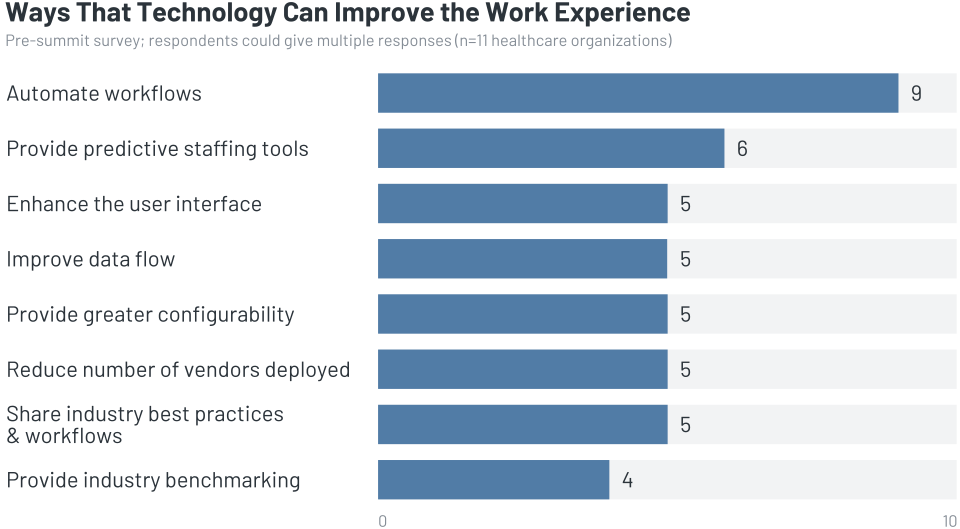 To support their operational processes, healthcare organizations turn to technology solutions that enhance, not complicate, the human work experience. Many provider attendees say they have seen strong ROI from a few key technologies. Most commonly, they report seeing financial outcomes from RTLS tools, improved efficiency and clinician well-being from ambient speech, automated ordering from RPA, and more appropriate bed utilization from patient intake management.
Key Technology Opportunities & Best Practices to Support Operations
 IT stack reduction: Healthcare organizations increasingly prioritize enterprise-first strategies to reduce integration complexity and achieve cost savings; however, they also recognize that no single platform can do everything. The most successful technology strategies focus on platform standardization and selectively include third-party solutions that can (1) offer key innovations, (2) be rolled out quickly, and (3) drive a concrete ROI.
Continuity of care: Being able to track the whole patient journey is key to delivering quality care. While some healthcare organizations can acquire primary care and post–acute care settings to better facilitate continuity of care, that is not an option for most. Using tools that leverage TEFCA or other networks is a more realistic option for organizations to achieve care continuity. These tools can help by sending event-driven notifications (e.g., for admission, transfer, or discharge) and providing handoff templates. AI can help predict future needs regarding staff and bed capacity.
Hardware/asset tracking: Healthcare organizations need to have visibility into where hardware and other assets are, and establishing a unified tracking feed will help reduce losses. Summit attendees also suggested implementing RFID for high-value items (over $25) and creating a master item list to further increase transparency.
Materials management: Several summit attendees, especially those from larger organizations, noted that using technology to streamline materials management is the biggest near-term opportunity for cost savings. By integrating supply chain data into a single ERP solution, healthcare organizations could better identify waste and make needed changes. Many also see materials management as a good use case for AI as it can eliminate preference card variations and compare contract terms year over year.
Compliance management: Workforce compliance processes are a strength for most healthcare organizations. Looking toward the future, summit attendees see compliance as a low-visibility, high-impact opportunity for automation and are considering AI-enabled systems that can further streamline regulatory complexity.
AI & Operational Efficiency
AI tools have a lot of potential to reduce friction, streamline repetitive tasks, and foster connection within operational processes—especially scheduling, patient intake, documentation, and discharge workflows. Summit attendees emphasized that AI tools need to be grounded in clean data and strong governance and that organizations should prioritize high-impact and high-value use cases.
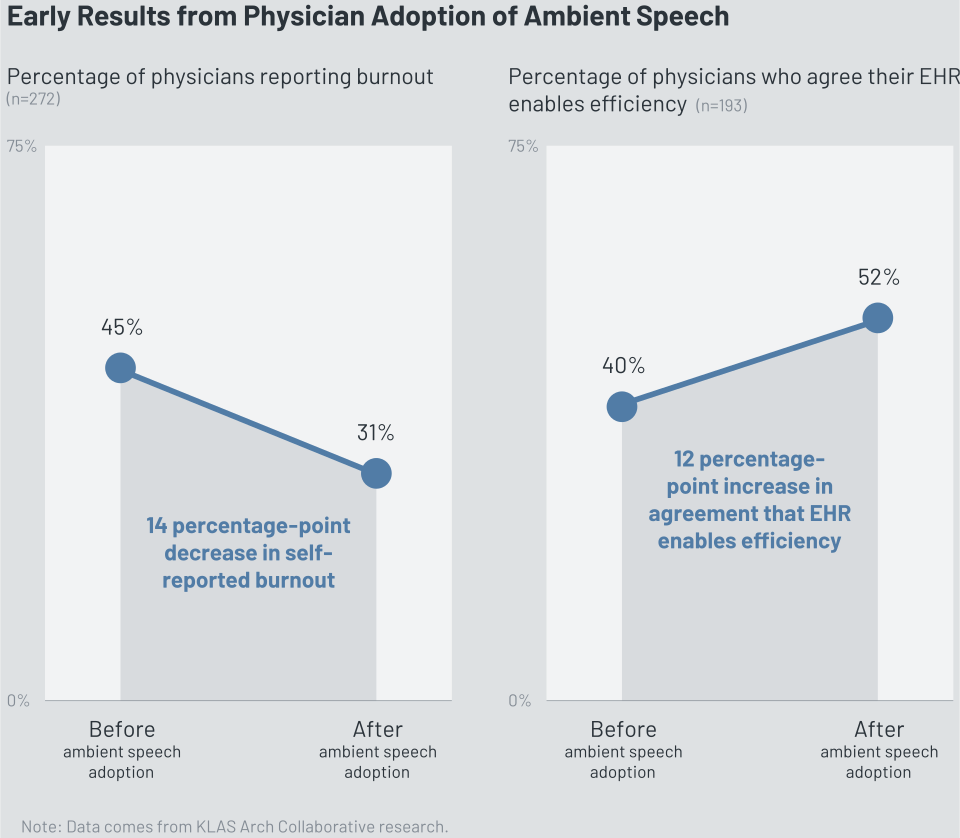
For example, some attendees reported seeing a very clear ROI from using AI for supply chain. KLAS Arch Collaborative data also shows that ambient speech is very effective at increasing documentation efficiency and reducing clinician burnout (see the following chart).
Despite its potential, AI is still inconsistently adopted, emphasizing the importance of cultural adoption and leadership readiness. Healthcare leaders must be brought into AI pilots early to build consensus, examine the current state, and ensure long-term scalability.
Technology Challenges Center on Fragmented Communications, Data & Job Structures
 Communications tools remain underdeveloped, especially when compared to other workforce technologies (e.g., compliance and quality solutions). Healthcare organizations often struggle with disconnects across employees due to using too many different communication platforms. Summit attendees expressed a strong need for tools that can enhance connection, transparency, and organizational alignment across teams.
 Fragmented data remains a major obstacle to operational progress. Organizations have too much data in too many different places, so accessing and sharing needed data (e.g., scheduling, productivity, performance) can be difficult, requiring users to jump between systems to bring everything together. Data lakes, data warehouses, and other data-mapping tools can help solve these issues. Organizations should ensure their data insights can support important decisions about staffing, workload balancing, and resource deployment.
 Job structures are often inconsistent, leading healthcare leaders at the summit to call for role standardization. Simplified role frameworks would allow IT systems to function more effectively and support workforce scalability.
Healthcare Organizations Want Prescriptive Support from EHR Vendors to Address Technology Challenges & Improve Operational Efficiency
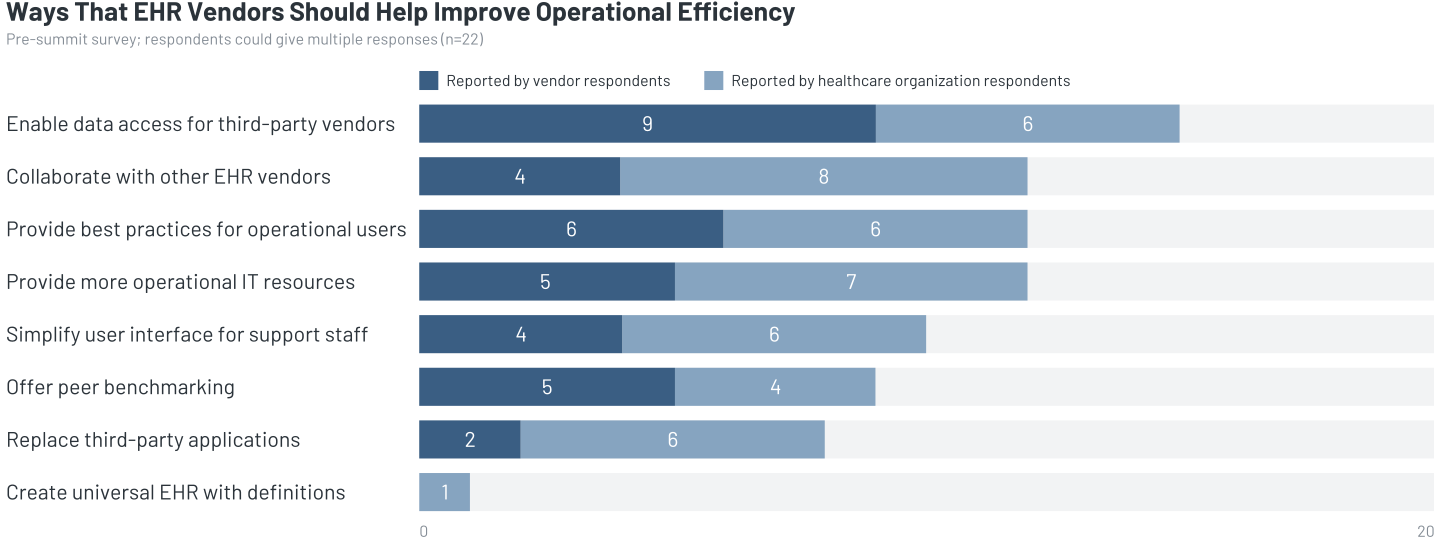
Healthcare organizations need EHR vendors that provide not only strong operational technology but also structured best practices for reducing solution complexity and user burden. Summit attendees emphasized that vendors should focus on helping their customers in the following ways:
Standardize data fields and workflows: Standardization is becoming more of a priority for healthcare organizations, as customized solutions can delay upgrades, hinder user adoption, and complicate data sharing. EHR vendors should partner with their healthcare customers and other vendors to standardize data fields and workflows so that different systems can still use the same language.
Design for workflow efficiency and time savings: Build solutions with a focus on clinician time reduction and task completion rather than clicks or features; eliminate the need for after-hours documentation.
Establish open, practical interoperability: Provide robust and well-documented APIs, support computable data (not just CCD dumps), and enable safe bolt-in partner ecosystems. Ensure data export and import processes are simple and won’t lose data.
Provide best-practice playbooks and benchmarking: Deliver prescriptive configurations, adoption scorecards, and variance insights out of the box and prior to the implementation.
Develop agentic AI with guardrails: Create order-entry, coding, and scheduling automations equipped with audit trails, human controls, and measurable ROI instrumentation.
FEDERAL IMPACTS ON HEALTHCARE OPERATIONS
Leaders Want Broader Changes That Will Facilitate Operational Efficiency in Healthcare
Leaders from US healthcare organizations and HIT vendors share a common view: Operational improvement is hindered less by limited technology and more by regulatory complexity, fragmented data, and misaligned incentives. They emphasize the need for greater simplicity, standardization, and openness, along with practical ROI measurement and intentional human involvement to guide change. As one participant said, “We need to show ROI and communicate the ROI to the right people.” Leaders want the government to cut through the noise and focus on what matters: Enforce practical interoperability, provide stable funding, and create incentives for platforms and AI that demonstrably reduce friction both at the bedside and in the back office.
Ultimately, culture still determines outcomes, making operational improvement a people and change management challenge. However, with simplified rules, open data, and greater industry awareness and benchmarking, the government can more proactively create a fertile ground for broad operational change.
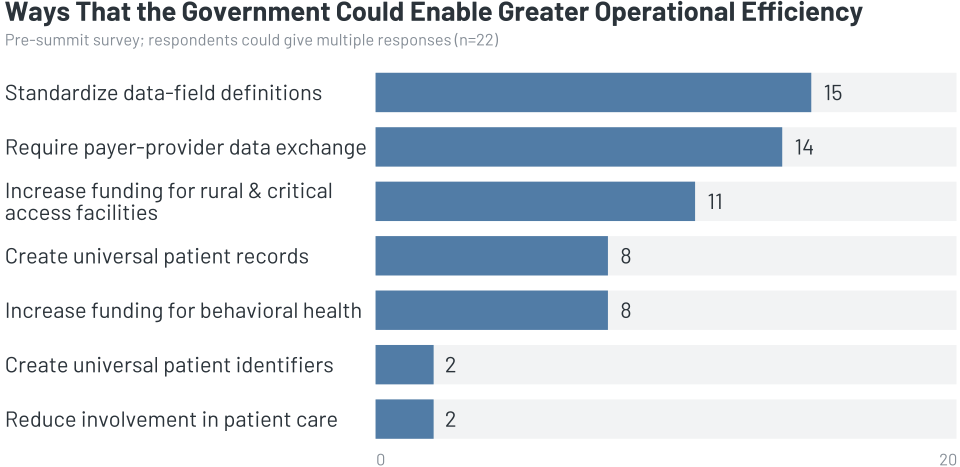
Action Items for the Government
Streamline regulatory requirements: Reduce overlapping rules (e.g., staffing, 340B), clarify reporting formats, and provide more stable funding to reduce uncertainty (e.g., government shutdown effects on Medicaid).
Enforce usable interoperability standards: Require computable, standardized data exchange (e.g., open APIs, conformance testing, performance thresholds), not just document-exchange compliance.
Mandate payer/provider data access: Ensure timely sharing of population health and risk data (including Medicare Advantage) to support operations.
Establish clear AI policy and validation requirements: Set baseline safety and validation requirements for clinical and operational AI, along with standardized disclosure/audit expectations.
Create national surge/operations visibility: Develop a federalized “air-traffic control” process (tied to CMS participation) for bed, staff, and equipment availability that regions can activate during crises.
Standardize staffing-matrix reporting: Define common formats and compliance rules so hospitals and vendors can align implementations.
SUMMIT ATTENDEES
Healthcare Organizations
Britt Berrett PhD, FACHE, Managing Director & Teaching Professor, Healthcare Leadership, Brigham Young University
Jack Bretcher, COO, PartnerMD
Chris Brisnehan, Director INFOR ERP/Labor Productivity, CHRISTUS Health (Infor Provider Partner)
Michael Brown, VP, Supply Chain, Texas Children’s Hospital
Keri Charron, VP, Primary Care and Specialty Services, Nebraska Methodist Health System
Diane Cline, COO, Hospice of Southern Kentucky
Nazanin Farhad, Director, Business Liaison, Easterseals Southern California
Mark Gryder, VP, Process Innovation, Next Level Medical
Janet Guptill, President & CEO, Scottsdale Institute
Subhas Gupta, Chair and Professor, Plastic Surgery (MD, CM, PhD, FRCSC, FACS), Loma Linda University Health
Mike Harmer, VP, ERP Digital Services, Intermountain Health (Workday Provider Partner)
Kate Katz, Principal, FMG Leading Healthcare
Heather Khan, System VP, Acute Care Quality, Endeavor Health (RLDatix Provider Presenter)
Laree LaPierre, MPH, Sr. Toxic Exposure Analyst, Federal Electronic Health Record Modernization (FEHRM) Office
John Lawley, CEO, Privia Medical Group North Texas
Lijah Lokenauth, SVP, Finance, Tampa General Hospital
Bill McGrath, CTO, Next Level Medical
Nidia Medina, CEO, Hispanic Family Counseling
Sara Meinke, Sr. Director, Enterprise Business Systems, Baptist Health Jacksonville (symplr Provider Partner)
Rod Neill, COO, Medical Group, Bon Secours Mercy Health (TeamBuilder Provider Partner)
Amy Olson, VP, Business Applications, Advocate Health Group
Connor Quiring, House Supervisor, Ogden Regional Hospital
Gagan Singh, CIO, Ascension
Leslie Smith, Chief Nursing Officer, Hospice of Southern Kentucky
Linda Stevenson, CIO, Fisher-Titus Medical Center
Bill Tayler, Academic Director and Robert J. Smith Professor, Healthcare Leadership, Brigham Young University
James Whitfill, Chief Transformation Officer, HonorHealth
HIT Vendors & Consulting Firms
August Calhoun, President, RLDatix
Trey Callahan, Operational Services, Epic
Thomas Chernetsky, Head of Engineering, LeanTaaS
Jeanette Conaway, Managing Director, PwC
Lydia Daniels, Product Informatics, Epic
Steve Fanning, SVP, Industry Strategy, Infor
Joseph Fiorentino, Partner, EY
Mark Geremia, Chief Marketing Officer, QGenda
Chris Gibson, VP, Healthcare, Oracle Health
Lisa Gulker, Chief Nursing Officer, Oracle Health
Bill Hehr, Director, Healthcare Product Strategy, Workday
David Howard, Founder & CEO, TeamBuilder
Mike Johnson, President & CEO, Multiview
Taylor Kennedy, Digital Transformation Advisor, Huron Consulting Group
John Kravitz, Analyst Relations, Workday
Matt Lemos, Account Executive, Workday
Sri Madabushi, EVP, Strategic Partnerships, IKS Health
Amy Madden, Chief Customer Officer, MD-Staff
Theresa Meadows, CIO in Residence, symplr
Ian Olson, Software Developer, Epic
Mea Parikh, VP, Marketing, TeamBuilder
John Rockwell, Associate Director, Impact Advisors
Kristin Russel, Chief Marketing Officer, symplr
Niloy Sanyal, Chief Marketing & AI Adoption Officer, LeanTaaS
Kristin Shelley, Director of Industry & Solution Strategy, Infor
Eli Shields, Managing Director, Huron Consulting Group
Richard Tom, VP Market Leader, IKS Health
Jim Wharton, Chief Product Officer, QGenda

Writer
Natalie Hopkins

Designer
Natalie Jamison

Project Manager
Sydney Toomer
This material is copyrighted. Any organization gaining unauthorized access to this report will be liable to compensate KLAS for the full retail price. Please see the KLAS DATA USE POLICY for information regarding use of this report. © 2026 KLAS Research, LLC. All Rights Reserved. NOTE: Performance scores may change significantly when including newly interviewed provider organizations, especially when added to a smaller sample size like in emerging markets with a small number of live clients. The findings presented are not meant to be conclusive data for an entire client base.