KLAS Contact

Contact KLAS
Contact KLAS
 2026 BEST IN KLAS
Preferences
Related Series

2021
Related Segments

Imaging in the Cloud 2024
Which Vendors Are Perceived as Ready for the Cloud?

Author
Monique Rasband

Author
Sidney Tate
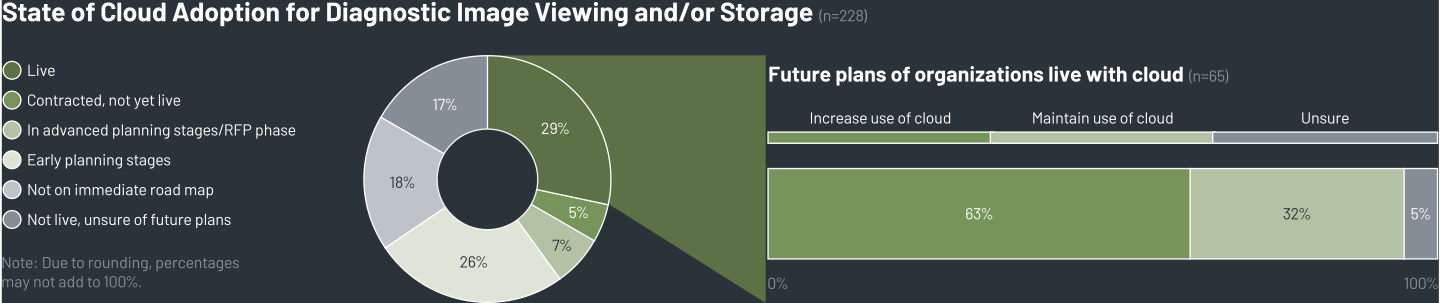
The healthcare imaging market in the US is moving to the cloud—nearly two-thirds of the 228 healthcare organizations surveyed about their cloud road map either are using the cloud for diagnostic image viewing and/or storage or are likely to start using the cloud within the next three years. As organizations transition, it is critical for them to choose a vendor that provides not only a reliable cloud solution but also strategic guidance to ensure a successful migration. Intended to help organizations considering the cloud, this report shares customer perceptions of their vendors’ readiness for the cloud, along with an overview of the state of cloud adoption in the imaging market.
 A Note about the Data: The data in this report represents customer perceptions of vendors’ cloud offerings, not a comprehensive overview of vendors’ cloud deployments. Data was collected between May 2023 and April 2024 and comes from a random sampling of healthcare organizations that KLAS interviewed about their core imaging products (PACS, VNA, and/or UV)—respondents were asked about their confidence in their vendors’ cloud strategies and what their own road maps are for the cloud. Respondents did not have to be using the cloud to provide insights, but they did have to be using a vendor’s core imaging product to share their perception of that vendor’s cloud strategy. KLAS did not provide a cloud definition for respondents, allowing them to respond based on their own understanding.
Customers Have High Confidence in Cloud Offerings from Visage Imaging & Sectra, Which Both Garner High Market Interest
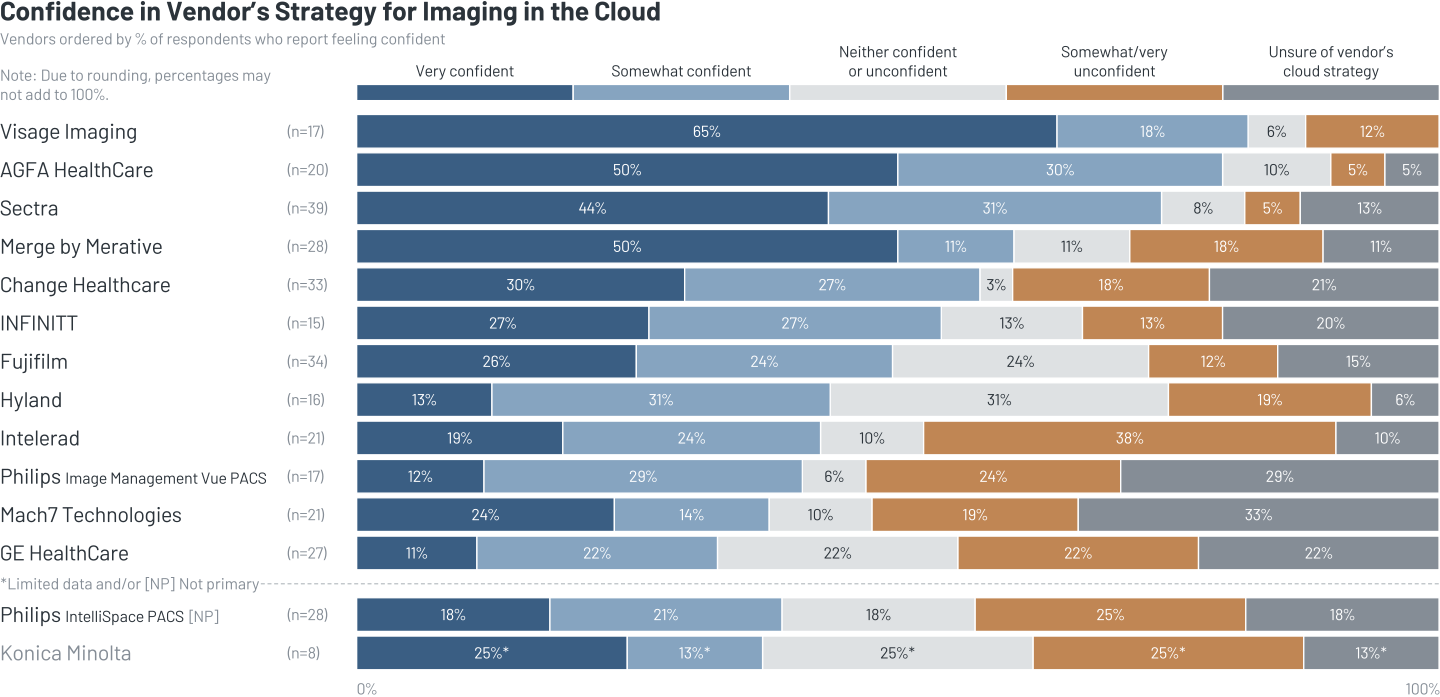
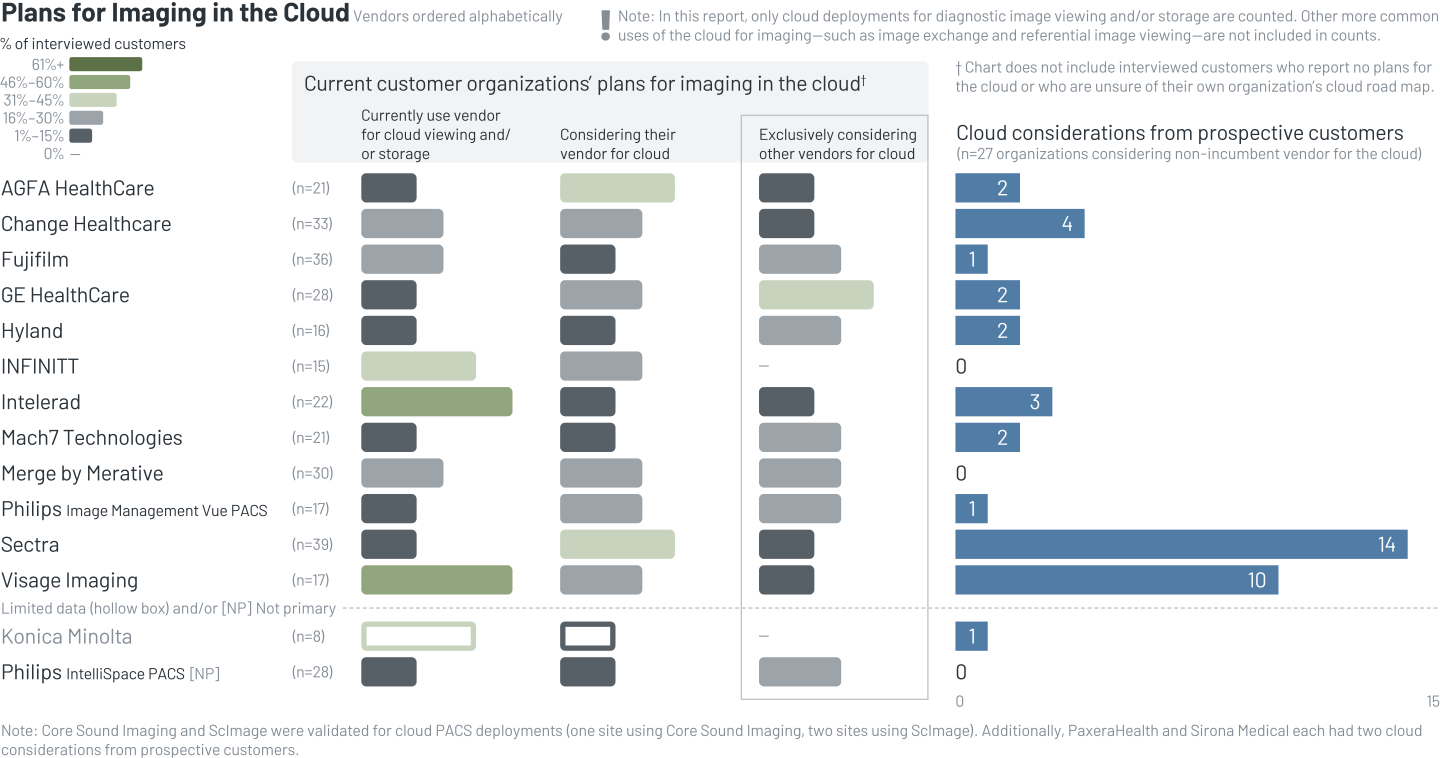
Interviewed customers of Visage Imaging frequently use the diagnostic viewer in the cloud, and the viewer is also frequently considered by large organizations looking to replace their on-premises systems (see chart on next page). Those using the viewer in the cloud report high uptime and a smooth end-user experience, and confidence in Visage Imaging’s cloud strategy is high thanks to their clear communication about the cloud, their track record of partnering with organizations, and their delivery on promises. The vendor also offers an archive in the cloud, though adoption is early. Sectra’s cloud offering (Sectra One Cloud) is gaining momentum in the US, though the number of live customers is still limited. Many current Sectra customers would consider using the offering in the future, and it has also generated significant interest outside of Sectra’s customer base. Sectra has communicated their road map to interviewed customers, who report the vendor has invested significant time and effort into developing a robust and secure cloud platform. Sectra’s history of partnership and delivery on promises have bolstered customer confidence in the vendor’s delivery in the cloud.
AGFA HealthCare & Merge by Merative Instill Confidence in Customers Thanks to Thoughtful Approach to Cloud
Interviewed AGFA HealthCare customers report notable recent improvements in the vendor’s engagement and delivery. Nearly all learned about the vendor’s cloud strategy via user group presentations or account representatives. These customers say AGFA has been methodical about understanding the challenges of moving to the cloud, testing and benchmarking their cloud platform, and collaborating with customers to ensure whatever model is deployed is right for them. These efforts have resulted in AGFA customers frequently considering the cloud and having high confidence in the vendor’s cloud strategy. Merge by Merative has a history of imaging in the cloud, and interviewed customers feel the strategy is well thought out, with various options provided for migrating to the cloud. The vendor’s strong relationships and stable products have fostered trust and confidence among customers, and several in the cloud say the offering is well managed. A small portion of customers are less confident in Merge’s cloud strategy, saying the vendor hasn’t provided sufficient details around moving to the cloud.
Many Change Healthcare, INFINITT & Fujifilm Respondents Express Confidence in Vendors’ Cloud Strategies; Other Respondents Lack Clarity
Change Healthcare has marketed their cloud offering for years. Interviewed customers generally think the acquired Nucleus.io product—rebranded as Stratus Imaging—is well suited for cloud deployments, and all six respondents in the cloud report positive experiences. That said, overall confidence is moderate—some feel concerns about cost and bandwidth haven’t been sufficiently addressed, and others have doubts due to delivery challenges and the vendor’s unclear direction for the on-premises solution. Still, a number of both current and prospective customers continue to be interested in Change Healthcare’s cloud offerings. INFINITT was early to the cloud for imaging and has a substantial customer base in the cloud that is primarily composed of small-volume organizations (see KLAS’ 2021 Imaging in the Cloud report). Interviewed customers in the cloud generally express confidence in the vendor’s strategy and feel that INFINITT hosts their platform successfully. Overall confidence among non-cloud customers is average due in large part to a number of them not having been presented with an in-depth cloud strategy. Some are unclear whether INFINITT has development plans beyond cloud hosting. Similarly, Fujifilm was early to the cloud and has numerous customers leveraging the cloud for imaging (see the 2021 report). Overall confidence in Fujifilm’s cloud strategy likewise varies due to communication gaps around their cloud strategy. Fujifilm respondents who have been educated on the vendor’s road map say the imaging expertise has boosted their confidence in the vendor. Among the six Fujifilm customers using the PACS or VNA in the cloud, half report a smooth experience, while half report some latency issues. Other customers are looking to leverage Fujifilm for disaster recovery.
Customer Perception of Intelerad’s Cloud Strategy Is Mixed; GE HealthCare Moving toward Cloud, though Many Customers Question Ability to Execute
Intelerad’s on-premises and cloud customers have mixed confidence levels regarding the vendor’s cloud strategy and below-average confidence compared to other vendors’ respondents. Those in the cloud with the InteleShare PACS/VNA (acquired from Ambra) or a hosted instance of IntelePACS tend to be small organizations, several of which have experienced downtime and slow speeds. Support difficulties in recent years have lowered customers’ overall confidence in Intelerad’s ability to support cloud deployments; however, a few organizations that have contracted for the cloud have had positive conversations with the vendor and are hopeful things will improve. GE HealthCare has started having high-level conversations about the cloud, but customers have seen few details around what a move to the cloud would entail. Though some interviewed customers note recent improvements in the vendor’s relationships, others say GE HealthCare’s track record of slow development, poor delivery, and variable support has caused them to question how soon the vendor will have a cloud offering and how well they will support it. Several customers plan to leave for other vendors’ cloud offerings.
Bottom Lines on Other Measured Vendors
Hyland: Interviewed customers feel Hyland’s cloud strategy isn’t clear due to a lack of demos and strategy discussions. Subsequently, their confidence in Hyland’s cloud strategy is mostly informed by their customer experience, which is inconsistent. Some have seen Hyland work to improve the technology, while others feel that workforce reductions have led to slow development and difficulties accessing support.
Philips: Philips gained a customer base in the cloud after acquiring Carestream, and some disaster recovery is supported in the cloud for IntelliSpace PACS customers. Most interviewed customers have little insight into Philips’ go-forward cloud strategy, despite Philips launching their cloud-based HealthSuite Imaging PACS in December 2023. Vue PACS respondents report slow development and delivery difficulties, and IntelliSpace PACS respondents are largely unsure of Philips’ broader go-forward strategy for the platform, leading to questions about how the cloud fits into the vendor’s road map.
Mach7 Technologies: A few customers who leverage Mach7 Technologies’ on-premises VNA for cloud storage say it performs well, and others feel Mach7 Technologies has shown expertise in their cloud strategy discussions. A number of customers are unclear about the vendor’s strategy for the cloud, and development and support challenges have resulted in a lack of confidence for some.
Konica Minolta: The vendor has multiple small-volume customer organizations in the cloud. Three respondents leveraging the PACS in the cloud report positive experiences. Others who aren’t in the cloud report varying levels of confidence—some are very confident in the vendor’s development, while others lack clarity and feel the cloud is more of a discussion point than a reality.
The State of Imaging in the Cloud
How Does Cloud Adoption Look Today, and Where Will It Go in the Future?
Though the market is still in its early stages, all signs point to a large increase in cloud usage for diagnostic image viewing and storage in the next three years.
What Imaging Applications/Environments Are in the Cloud Today?
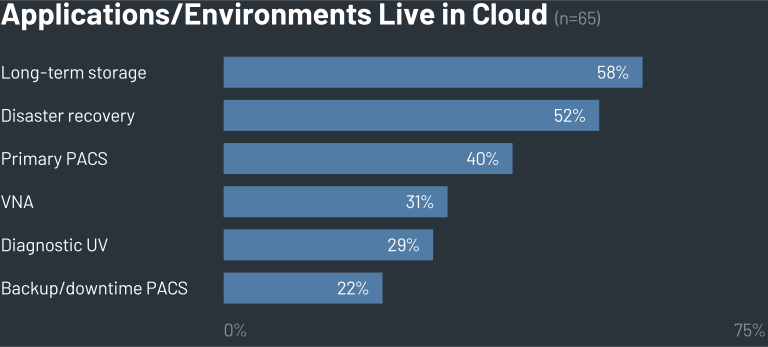
There is significant variation in how organizations store images in the cloud—some manage public cloud storage themselves while others have imaging vendors that manage storage in private or public clouds. Most respondents with a PACS or diagnostic UV in the cloud leverage a hybrid model (a mix of cloud and on-premises elements) in a hosted environment. SaaS-based offerings are early in the market, and many organizations are hesitant to go all in with the cloud without keeping some elements on-site for redundancy.
How Does Cloud Use Differ between Small & Large Organizations?
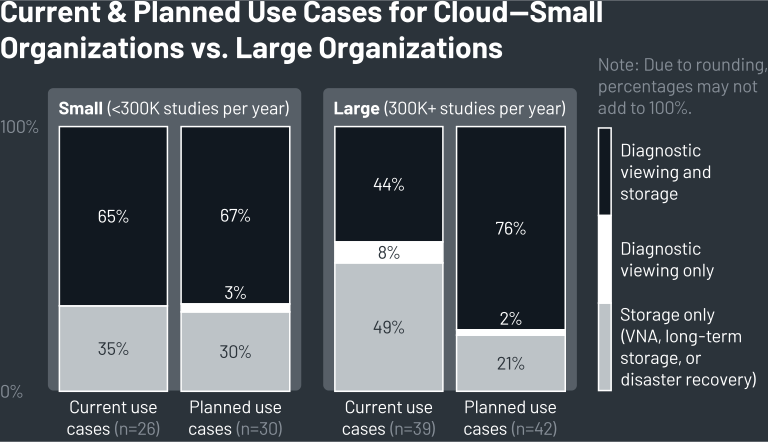
To date, diagnostic viewing in the cloud has been done mostly by smaller organizations, as larger organizations have more frequently adopted the cloud for storage. However, this trend will likely change; three-fourths of large organizations plan to leverage the cloud for diagnostic viewing in the future.
What Are Organizations’ Main Concerns with Moving to the Cloud?
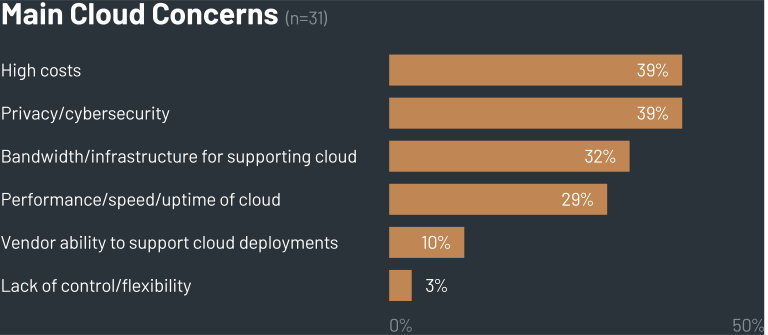 Many organizations are realizing the cloud is more expensive or the same cost as on-premises solutions; these organizations say their ROI comes from other channels such as more standardization in deployments, better ability to adopt new technology as it is developed, and decreased IT burden. Cybersecurity in the cloud is also a top concern—some see the cloud as a larger target with more centralized data from organizations. In addition, many organizations that are on the fence about moving to the cloud wonder whether they have the bandwidth to support it. These concerns highlight a need for healthcare organizations to work closely with their vendor partners to assess cloud security and test bandwidth—both efforts will help ensure success when transitioning to the cloud.
About This Report
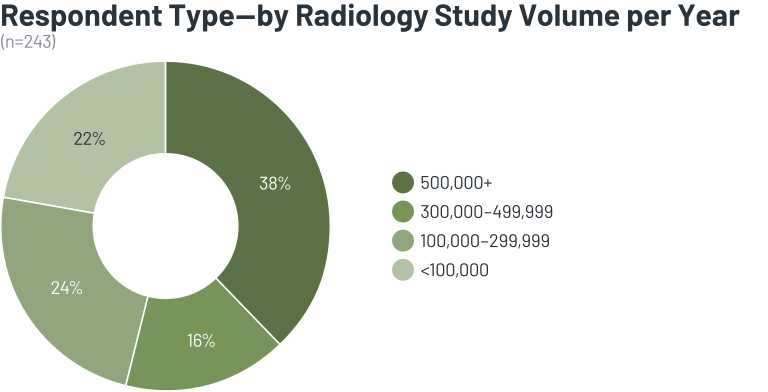
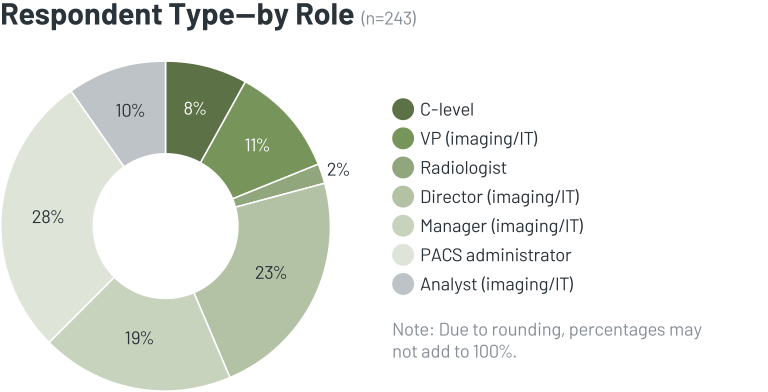
This report is a perception study designed to help readers understand healthcare organizations’ perceptions of their imaging vendors’ cloud strategies, along with organizations’ plans regarding the cloud. The data is not a comprehensive overview of vendors’ cloud deployments. Interviews were conducted between May 2023 and April 2024, during which time KLAS interviewed a random sampling of 243 organizations. Respondent organizations did not have to be using the cloud to provide insights, but they did have to be using a vendor’s core imaging product (PACS, VNA, and/or UV) to share their perception of that vendor’s cloud strategy. KLAS did not provide respondents with a cloud definition, allowing them to respond based on their own understanding.
Respondents were asked the following questions:
- Of your current core imaging vendors (supplying your PACS, VNA, and/or UV), how confident are you in their strategies for imaging in the cloud?
- What imaging solutions or environments are live in the cloud for your organization?
For those with live solutions/environments:
- Which vendor(s) supply your imaging solutions/environments in the cloud?
- Does your organization plan to decrease, maintain, or increase its use of the cloud for imaging over the next two or three years?
For those not yet live in the cloud:
- Does your organization plan to move any imaging solutions or environments to the cloud within the next three years?
- Where is your organization in the process of moving to the cloud for imaging?
- Which imaging solutions or environments do you plan to move to the cloud?
- Which vendor(s) have you considered to supply these imaging solutions/environments in the cloud?
- What are the biggest barriers your organization faces around moving your imaging solutions or environments to the cloud?
Sample Sizes
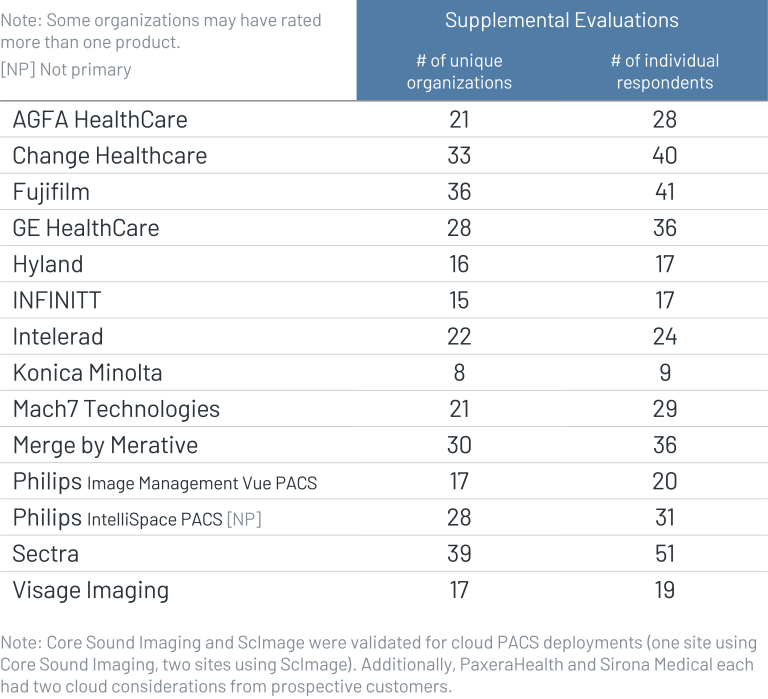
Unless otherwise noted, sample sizes displayed throughout this report (e.g., n=16) represent the total number of unique customer organizations interviewed for a given vendor or solution. However, it should be noted that to allow for the representation of differing perspectives within any one customer organization, samples may include surveys from different individuals at the same organization. The table to the right shows the total number of unique organizations interviewed for each vendor or solution as well as the total number of individual respondents.
Some respondents choose not to answer particular questions, meaning the sample size for any given vendor or solution can change from question to question. When the number of unique organization responses for a particular question is less than 15, the results are designated as “limited data.” If the sample size is less than 6, no performance data is shown. Where textual content relies on limited data, the vendor name is marked with an asterisk. Note that when a vendor has a low number of reporting sites, the possibility exists for KLAS scores to change significantly as new surveys are collected.
Product Designations Used in This Report
- Not Primary [NP]: Product that is not the vendor’s lead product in the market segment but can still be purchased and is still supported. In some cases, the product may not be actively sold in the listed market segment.

Writer
Sarah Brown

Designer
Jess Wallace-Simpson

Project Manager
Sydney Toomer
This material is copyrighted. Any organization gaining unauthorized access to this report will be liable to compensate KLAS for the full retail price. Please see the KLAS DATA USE POLICY for information regarding use of this report. © 2026 KLAS Research, LLC. All Rights Reserved. NOTE: Performance scores may change significantly when including newly interviewed provider organizations, especially when added to a smaller sample size like in emerging markets with a small number of live clients. The findings presented are not meant to be conclusive data for an entire client base.