KLAS Contact

Contact KLAS
Contact KLAS
 2026 BEST IN KLAS
Preferences
Related Series
Related Segments

Patient Education 2024
An Initial Look at Vendors Who Create & Deliver Patient Education Content

Author
Trey Dye

Author
Ciera Walker

Author
Spencer Snyder
Patient education solutions are an increasing focus for healthcare organizations looking to deliver more patient-centric care, as these solutions provide patients with crucial information to help them navigate diagnoses or upcoming procedures. While some organizations produce their own educational content that is then housed in a vendor’s solution (e.g., portal, interactive patient system), the focus of this report is on patient education vendors who create and deliver content to organizations. Generally, healthcare organizations are satisfied as they feel their vendors offer reliable, digestible content and reduce the operational burden, though the use of multiple solutions is common to meet all needs. This report—KLAS’ first focused on patient education solutions—(1) examines customer satisfaction with patient education vendors and their provided content and (2) shares insights into the patient education market.
Healthcare Organizations Name Patient Education a Priority
At the 2023 KLAS Patient & Consumer Innovation Summit, healthcare organizations identified trusted patient education as necessary for patients to maintain their health and wellness. Summit attendees built a patient engagement framework and labeled timely patient education as an essential piece. (See full framework in the Expanded Insights section in full report or in the summit overview.) At this summit, providers also named patient education as one of their priorities for investments related to patient engagement in the near future.
Established Patient Education Vendors Healthwise & Krames* Acquired by WebMD; Both Noted for Strong Written Content
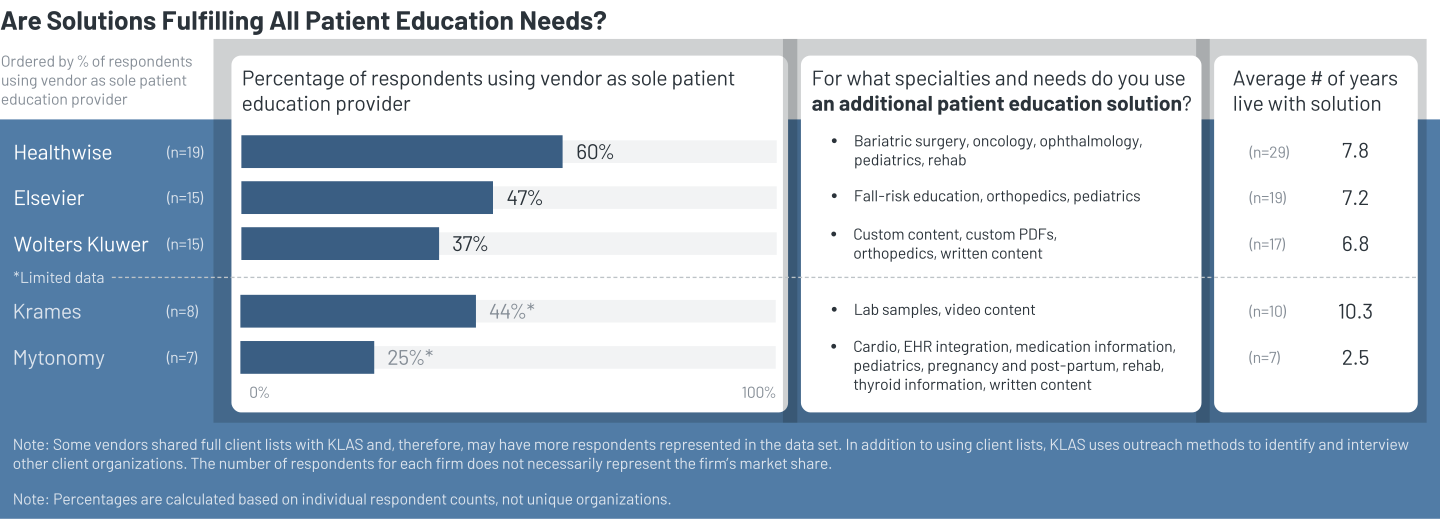
Healthwise and Krames have been established leaders in the patient education space for many years, known especially for their strong written content. In 2020 and 2024, respectively, Krames and Healthwise were acquired by WebMD to be included in their new consumer-facing resource, WebMD Ignite. (KLAS intends to validate WebMD Ignite in future research.) Healthwise—the 2024 Best in KLAS winner for patient education—is used by the widest variety of organization types, including non-hospital clients such as payers (many of whom use Healthwise as their sole patient education solution). Many respondents highlight the product’s ability to provide broad, evidence-based clinical content to people with all levels of literacy via illustrations and written materials. Though the content is noted for being strong, respondents generally say the system itself feels and looks less modern than other solutions in the market. Additionally, a few customers report that updates are cumbersome and that integrations take a long time, though they are hopeful about future developments meant to address those issues. Early feedback on the WebMD acquisition shows that one respondent anticipates more content becoming available. Krames* respondents note a good depth of content and appreciate the language options and the ability to upload custom content. For healthcare organizations with multiple patient education solutions, Krames is often looked to specifically for written content, while other vendors’ solutions are used alongside Krames to provide video content. Interviewed customers feel they receive responsive support when they bring issues to Krames, but some want the vendor to be more proactive in their communication and training suggestions. Similar to Healthwise, the Krames solution is reported to feel and look less modern than other solutions.
*Limited data
Wolters Kluwer’s Integration Offers Smooth Workflows for Sharing Content; Elsevier Provides Digestible Content for Patients
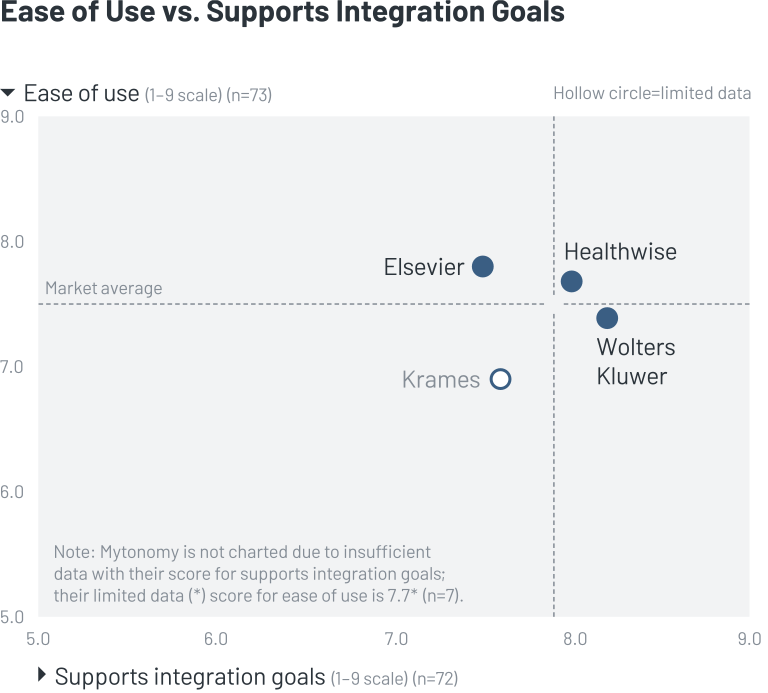 Wolters Kluwer and Elsevier are both well known for the clinician-facing content in their CDS reference tools. Wolters Kluwer’s patient education solution, UpToDate for Patient Education (formerly Emmi for Patient Education), is most often validated in use by very large organizations (1,500+ beds). Most respondents appreciate the EHR and portal integration that allows them to more easily send content to patients and track patient engagement with the content; a few note that working through the integration can initially be complex and require organizational resources. The educational videos are reported to be comprehensive without being too long, and patients give generally positive feedback about the videos via surveys included at the end of the content. Some respondents want Wolters Kluwer to provide more clarity about the state of EHR integration, the pricing structure, and their road map.
In addition to the clinician-facing content mentioned above, Elsevier is also well known as a publisher of medical content. For patient education, respondents appreciate the digestible, patient-friendly content as well as the simple, understandable language and layouts. Some respondents feel their contacts are engaged and provide strong proactive guidance, and these customers are more likely to report receiving a strong ROI. There are a few reports of turnover with account representatives as well as project delays on Elsevier’s end. Interviewed customers want improved EHR and portal integration to make sharing the content easier for patients, and there is some mixed feedback about the EHR integration’s ease of use and efficacy.
Newer Vendor Mytonomy* Known for Engaging Short-Form Video Content
A newer vendor to the patient education market, Mytonomy* is used the least as a standalone solution—many turn to the vendor specifically for their microlearning, short-form videos intended to keep audiences engaged. All respondents are satisfied with the solution, highlighting the ability to request custom vendor-created content and for providers to automatically assign content to patients. Some customers feel out of sync with Mytonomy’s timelines, either noting that Mytonomy pushes the organization faster than they are ready for or that implementations and integrations take longer than expected.
Other newer vendors include Holvan, Meducation, and Shoreline. Data for these three vendors is not currently sufficient to be included in this report, but KLAS will continue to monitor customer satisfaction and trends.
*Limited data
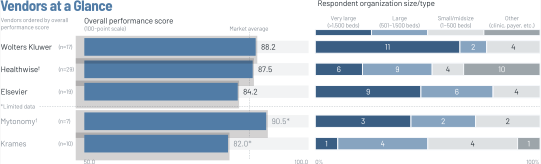
† For additional insights, see KLAS’ recently published emerging spotlight reports on Healthwise and Mytonomy.
Market Insights
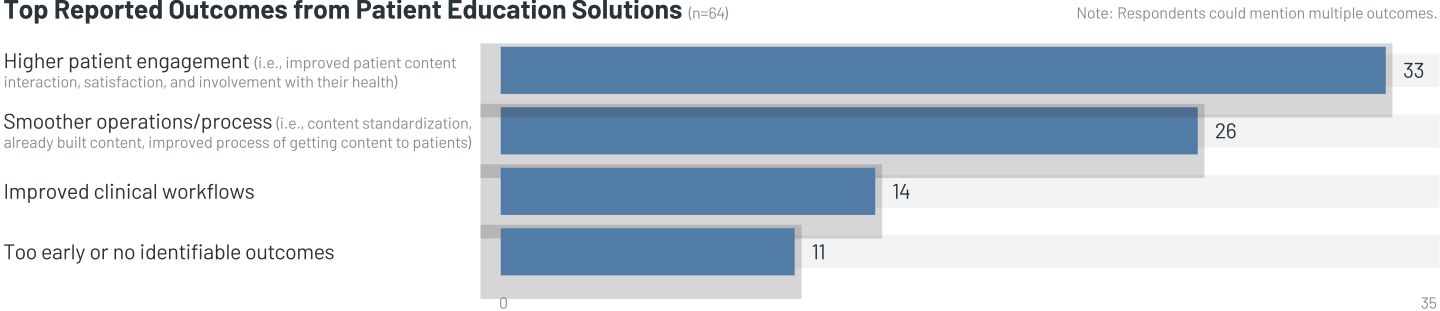
Respondents Seeing Positive Outcomes
Healthcare organizations appreciate the standardized, reliable education materials that aid patients in navigating diagnoses and procedures as well as the reduced operational burden, as organizations don’t have to build and maintain the content. Interviewed customers of all vendors report positive outcomes from their patient education solutions.
Commonly Requested Improvements
Generally, patient education solutions meet the broad education needs of healthcare organizations. Still, customers of all vendors are looking for a few common improvements:
 More specialty content (most often requested for pediatrics; other requests include bariatric surgery, oncology, ophthalmology, orthopedics, and pregnancy and postpartum care)
 More data analytics so organizations can correlate the education with the results
 More language options without hefty added expenses
The Patient’s Perspective
Through the new KLAS Patient Voice Collaborative, KLAS has begun to interview patients about their expectations for healthcare technology. Patients tend to rate education tools as a lower priority, primarily because many feel content is currently too long and not patient friendly. Despite rating it lower, patients acknowledge the importance of patient education in helping them engage in their own care. KLAS expects patient satisfaction and use to increase as vendors continue to make their solutions more digestible for patients. KLAS will continue to share insights from the patient voice at the Patient & Consumer Innovation Summit in April 2025.
Patient Education Solutions Often Part of Long-Term Plans
Almost all responding healthcare organizations anticipate keeping their patient education solution long term as they see the value of reliable, prebuilt content for patients. When compared to all KLAS-measured software solutions, patient education solutions receive a relatively high score for long-term plans.

About This Report
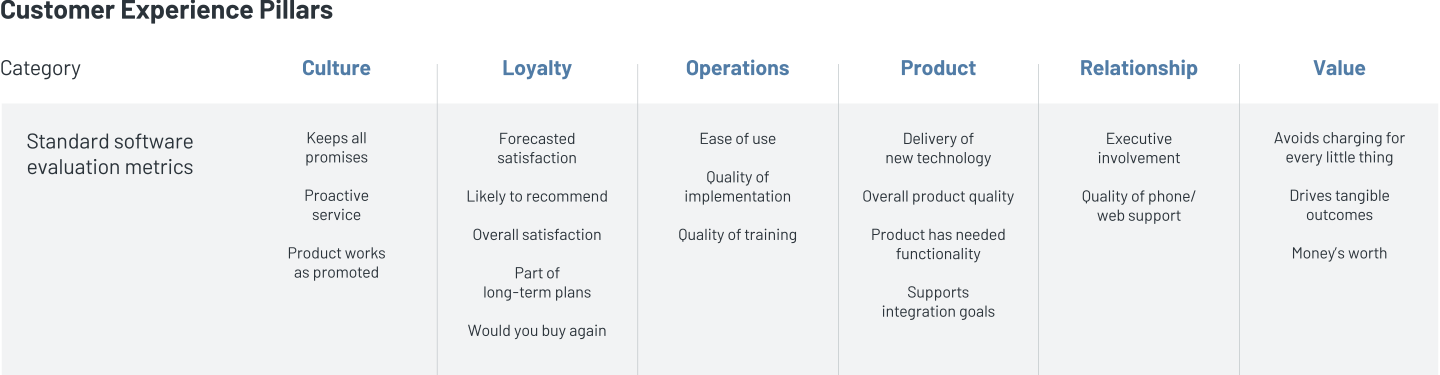
Each year, KLAS interviews thousands of healthcare professionals about the IT solutions and services their organizations use. For this report, interviews were conducted over the last 12 months using KLAS’ standard quantitative evaluation for healthcare software, which is composed of 16 numeric ratings questions and 4 yes/no questions, all weighted equally. Combined, the ratings for these questions make up the overall performance score, which is measured on a 100-point scale. The questions are organized into six customer experience pillars—culture, loyalty, operations, product, relationship, and value.
To supplement the standard evaluation, KLAS asked supplemental questions specific to the patient education market:
- Are you using any other vendors for patient education? If so, who else are you using and what are you using them for?
- What are the significant outcomes you have experienced as a result of engaging with your patient education vendor?
Sample Sizes
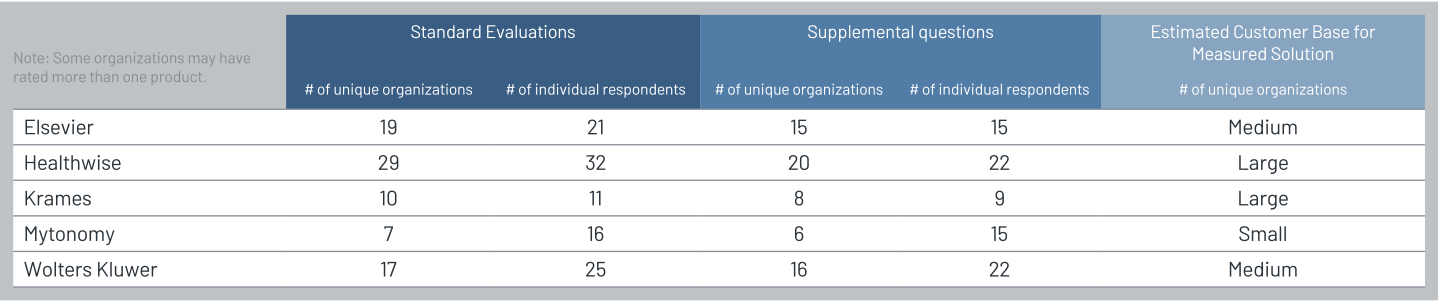
Unless otherwise noted, sample sizes displayed throughout this report (e.g., n=16) represent the total number of unique customer organizations interviewed for a given vendor or solution. However, it should be noted that to allow for the representation of differing perspectives within any one customer organization, samples may include surveys from different individuals at the same organization. Ratings from these individuals are aggregated in order to prevent any one organization’s feedback from disproportionately impacting a solution’s score. The table below shows the total number of unique organizations interviewed for each vendor or solution as well as the total number of individual respondents.
Some respondents choose not to answer particular questions, meaning the sample size for any given vendor or solution can change from question to question. When the number of unique organization responses for a particular question is less than 15, the score for that question is marked with an asterisk (*) or otherwise designated as “limited data.” If the sample size is less than 6, no score is shown. Note that when a vendor has a low number of reporting sites, the possibility exists for KLAS scores to change significantly as new surveys are collected.

Writer
Carlisa Cramer

Designer
Breanne Hunter

Project Manager
Andrew Wright
This material is copyrighted. Any organization gaining unauthorized access to this report will be liable to compensate KLAS for the full retail price. Please see the KLAS DATA USE POLICY for information regarding use of this report. © 2026 KLAS Research, LLC. All Rights Reserved. NOTE: Performance scores may change significantly when including newly interviewed provider organizations, especially when added to a smaller sample size like in emerging markets with a small number of live clients. The findings presented are not meant to be conclusive data for an entire client base.