KLAS Contact

Contact KLAS
Contact KLAS
 2026 BEST IN KLAS
Preferences
Related Series
Related Segments

Revenue Cycle Analytics 2024
Helping Revenue Cycle Leaders Harness Data to Make Informed Decisions

Author
Dustin Cragun

Author
Jennifer Hickenlooper

Author
Jaren Day
For revenue cycle leaders, it is critical to stay on top of trends in payer interactions and identify opportunities to address billing and collection inefficiencies. All healthcare organizations use RCM analytics solutions—their EHR offering, a third-party solution, or a combination of both—to comprehensively understand their RCM practices and glean actionable insights that can optimize revenue and inform decisions. Drawing from the experience of organizations using third-party tools that ingest data from multiple disparate sources, this report provides insights into the performance of three different solutions.
Why Use a Third-Party Solution?
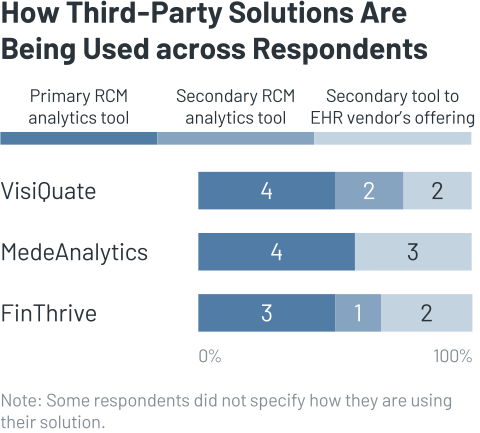
Healthcare organizations have different approaches to their RCM analytics strategy. Respondents in this study use a third-party solution because their EHR offering doesn’t meet their needs; EHR offerings often lack needed functionality (e.g., enhanced performance visualizations and customizable reporting), and it can be difficult for the EHR to aggregate data from multiple disparate sources. As a result, respondents say that their third-party solution is either their primary RCM analytics tool or used to supplement their EHR offering.
VisiQuate Consistently Drives Actionable Insights
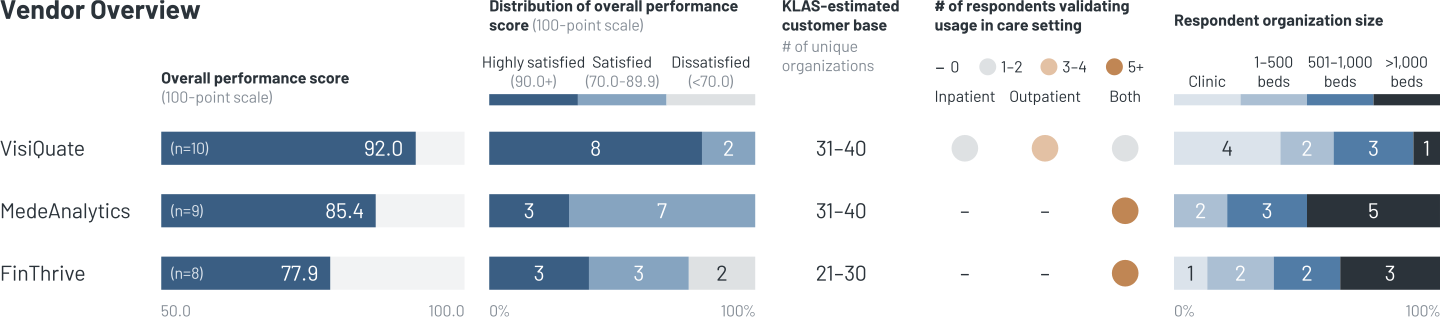
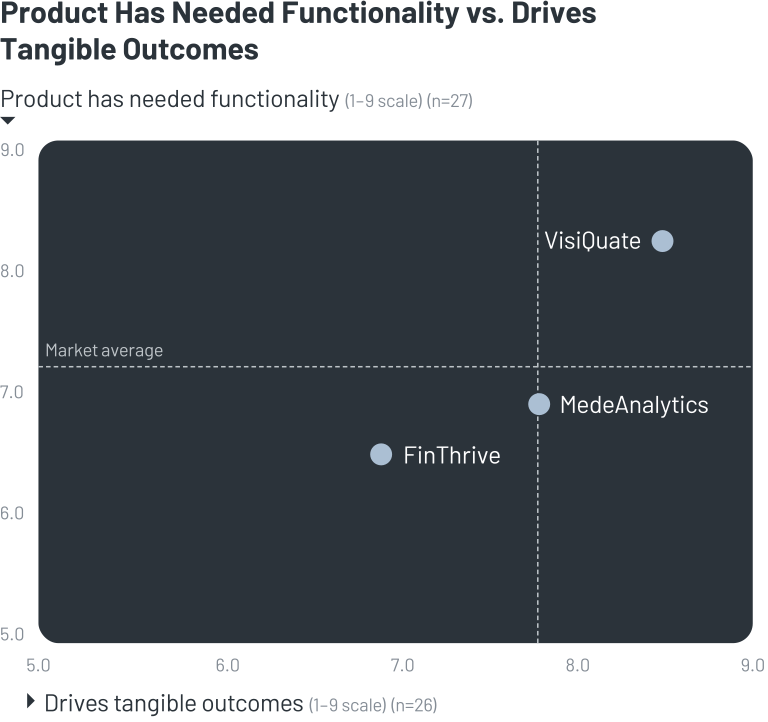
RCM analytics solutions must preserve data integrity and manage data effectively to facilitate client success. Further, organizations highly value working with vendors that can anticipate future needs and deliver new features and enhancements in response. In these areas, VisiQuate stands out. Interviewed customers consistently say the vendor’s solutions are able to combine multiple data inputs into unified dashboards and scorecards, allowing users to efficiently identify problem areas and glean actionable insights for A/R and denials management. Respondents also report that the vendor is forward-thinking and receptive to feedback, partnering with customers during product development to ensure users’ needs are met. Two respondents aren’t satisfied with the pricing model, citing incremental charges and price increases for new solution developments.
MedeAnalytics Highlighted for Usability, though Implementations/Upgrades Prove Challenging
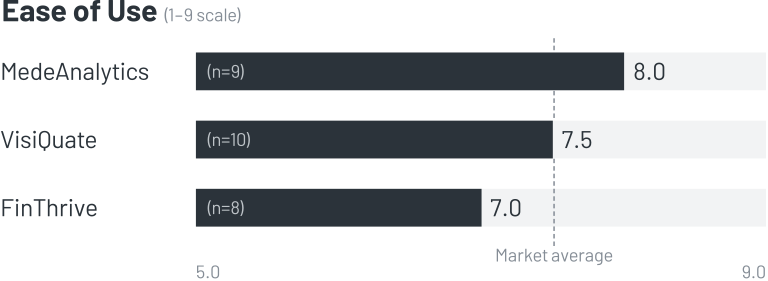
MedeAnalytics respondents highlight the solution as being easy to use. The product aggregates meaningful data, and users can create self-service dashboards and view trends to decrease denials and avoidable write-offs. In addition, the vendor creates strong partnerships with customers by adapting the product to meet organization specifications and by providing technical advisors and account representatives. Respondents’ biggest sources of dissatisfaction are the implementations and upgrades, which feel disorganized and take longer than expected.
FinThrive Respondents Report Financial Improvements; Integration & Proactivity Could Be Improved
FinThrive respondents say the tool’s data analysis capabilities are efficient and allow them to easily drill down into data. As a result, respondents have realized improved financial outcomes and operations. Still, some would like the vendor to be more proactive about identifying and resolving problems in the product. For example, a few customers report having to use manual workflows to aggregate data and would like better integration and quicker response times from the vendor.
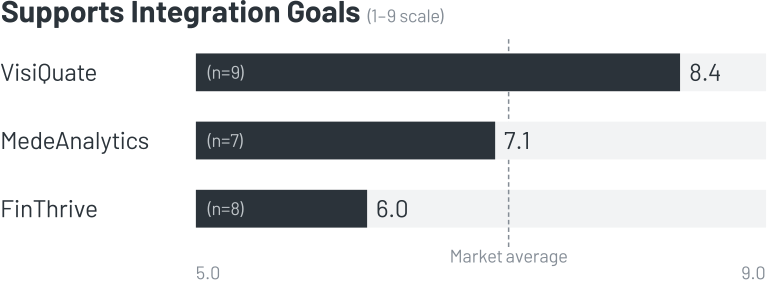
Vendor Bottom Lines
Ordered alphabetically
FinThrive

Validated capabilities
- Ad hoc reporting
- Denials management analytics
- Budget forecasting
- KPIs & trending insights
- Performance reporting metrics, performance optimization, workforce management
Validated EHR engagements
- athenahealth
- Epic
- MEDITECH
- Oracle Health (Cerner)
Vendor-reported information also validated by KLAS
FinThrive’s Analyze tool is a strategic focus for the vendor and can be used by customers to navigate complex revenue cycle environments. It provides analytic insights from the EHR, core FinThrive products (e.g., Contract Manager, Claims Manager), and other disparate sources. FinThrive offers resources to help customers work through bugs and build reports.
MedeAnalytics

Validated capabilities
- Ad hoc reporting
- Budget forecasting
- KPIs & trending insights
- Revenue & reimbursement management analytics
Validated EHR engagements
- athenahealth
- MEDITECH
- NextGen Healthcare
- Oracle Health (Cerner)
- Veradigm
- Other
Note: KLAS has validated Epic engagements outside of this report’s data collection window.
Vendor-reported information also validated by KLAS
MedeAnalytics’ healthcare-focused analytics tool runs reports that query large amounts of data from the EHR and practice management system. The results help customers make quick, informed decisions. MedeAnalytics also offers technical resources and account representatives who ensure the product meets customers’ needs. The vendor’s selling point is that the product is easy to use, and respondents validate this claim.
VisiQuate

Validated capabilities
- Ad hoc reporting
- Denials management analytics
- KPIs & trending insights
- Revenue & reimbursement management analytics
- Performance reporting metrics, performance optimization, workforce management
Validated EHR engagements
- athenahealth
- eClinicalWorks
- Epic
- MEDITECH
- Oracle Health (Cerner)
- Veradigm
- Other
Vendor-reported information also validated by KLAS
VisiQuate offers an RCM-focused data analytics system platform that identifies problem areas, allowing users to realize ROI and fulfill other needs. VisiQuate frequently develops and updates their product, working to provide advanced visualizations and deep insights that aren’t always available from EHR-embedded offerings.
About This Report
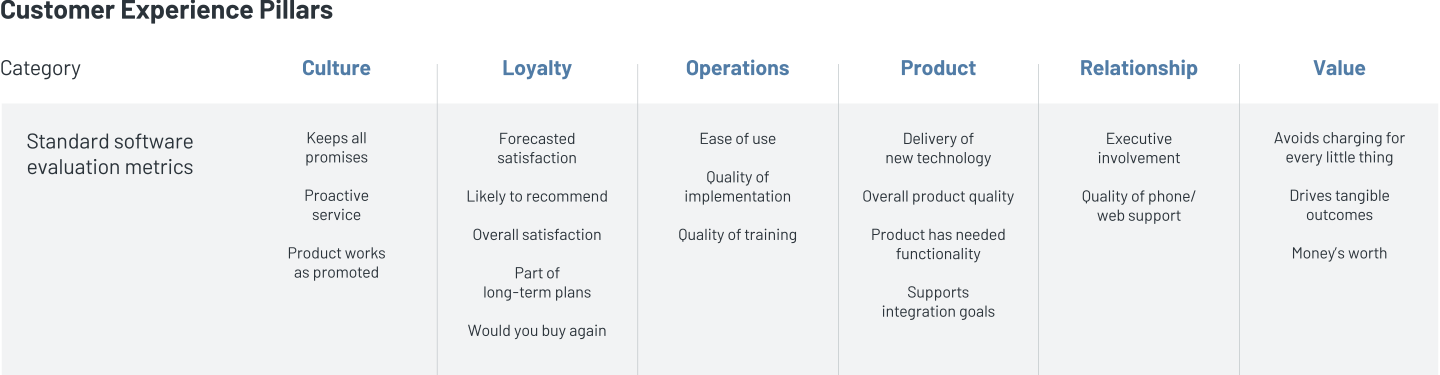
Each year, KLAS interviews thousands of healthcare professionals about the IT solutions and services their organizations use. For this report, interviews were conducted over the last 12 months using KLAS’ standard quantitative evaluation for healthcare software, which is composed of 16 numeric ratings questions and 4 yes/no questions, all weighted equally. Combined, the ratings for these questions make up the overall performance score, which is measured on a 100-point scale. The questions are organized into six customer experience pillars—culture, loyalty, operations, product, relationship, and value.
Sample Sizes
Unless otherwise noted, sample sizes displayed throughout this report (e.g., n=16) represent the total number of unique customer organizations interviewed for a given vendor or solution. However, it should be noted that to allow for the representation of differing perspectives within any one customer organization, samples may include surveys from different individuals at the same organization. The table below shows the total number of unique organizations interviewed for each vendor or solution as well as the total number of individual respondents.
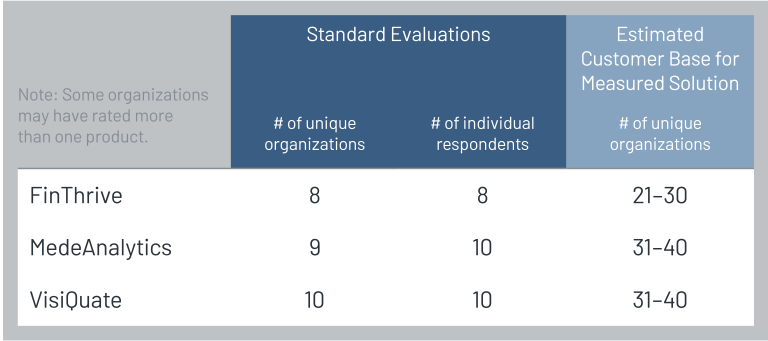
Some respondents choose not to answer particular questions, meaning the sample size for any given vendor or solution can change from question to question. When the number of unique organization responses for a particular question is less than 6, the score for that question is marked with an asterisk (*) or otherwise designated as “limited data.” If the sample size is less than 3, no score is shown. Where textual content relies on limited data, the vendor name is marked with an asterisk. Note that when a vendor has a low number of reporting sites, the possibility exists for KLAS scores to change significantly as new surveys are collected.

Writer
Sarah Brown

Designer
Bronson Allgood

Project Manager
Sydney Toomer
This material is copyrighted. Any organization gaining unauthorized access to this report will be liable to compensate KLAS for the full retail price. Please see the KLAS DATA USE POLICY for information regarding use of this report. © 2026 KLAS Research, LLC. All Rights Reserved. NOTE: Performance scores may change significantly when including newly interviewed provider organizations, especially when added to a smaller sample size like in emerging markets with a small number of live clients. The findings presented are not meant to be conclusive data for an entire client base.