KLAS Contact

Contact KLAS
Contact KLAS
 2026 BEST IN KLAS
Preferences
Related Series
Related Segments

Social Determinants of Health 2024
A Look at Vendor-Reported Capabilities

Author
Benjamin Cassity

Author
Paul Warburton

Author
Andy Paulsen
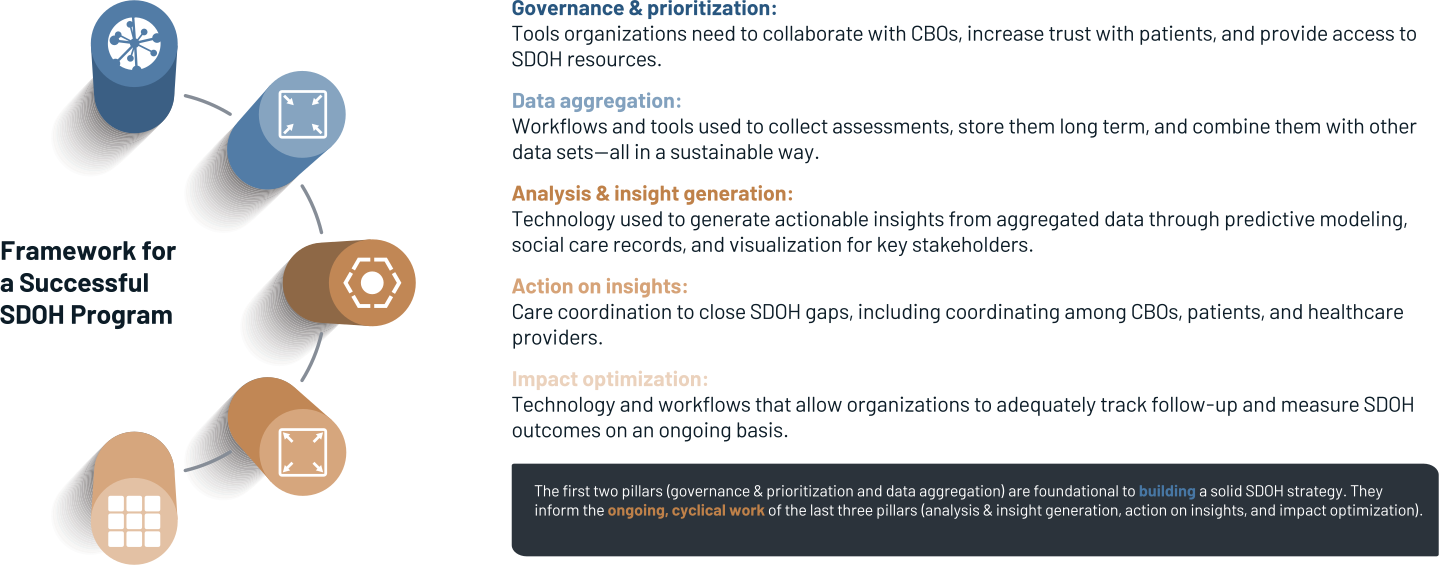
Many healthcare organizations are working to proactively address socioeconomic barriers to patients receiving needed healthcare—prompting vendors to roll out technology solutions that can collect and manage social determinants of health (SDOH) data. This report uses KLAS’ Framework for a Successful SDOH Program (introduced in this overview) to compare several SDOH vendors’ offerings and share vendors’ thoughts on how their technology is intended to help organizations achieve their SDOH goals. Note that this report is based on vendor-reported and publicly available information and does not represent any KLAS-validated performance data or other findings. Later in 2024, KLAS intends to publish a report that examines customers’ experiences with their SDOH solutions.
What Types of SDOH Technologies Are Vendors Providing?
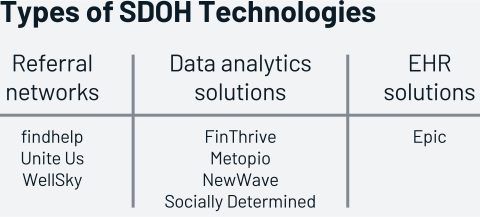 Solutions and technologies that target SDOH fall into three categories: (1) referral networks of local and national community-based organizations (CBOs) that address social needs and facilitate service requests between provider organizations and CBOs, (2) data analytics solutions that track, measure, and assess aggregated data on patients’ social needs, and (3) EHRs that gather and store SDOH assessment data. The table below shows the focus of SDOH offerings from vendors in this report.
VENDOR OVERVIEW
Epic, findhelp, Socially Determined & Unite Us Report Offering Enterprise SDOH Solutions
Epic
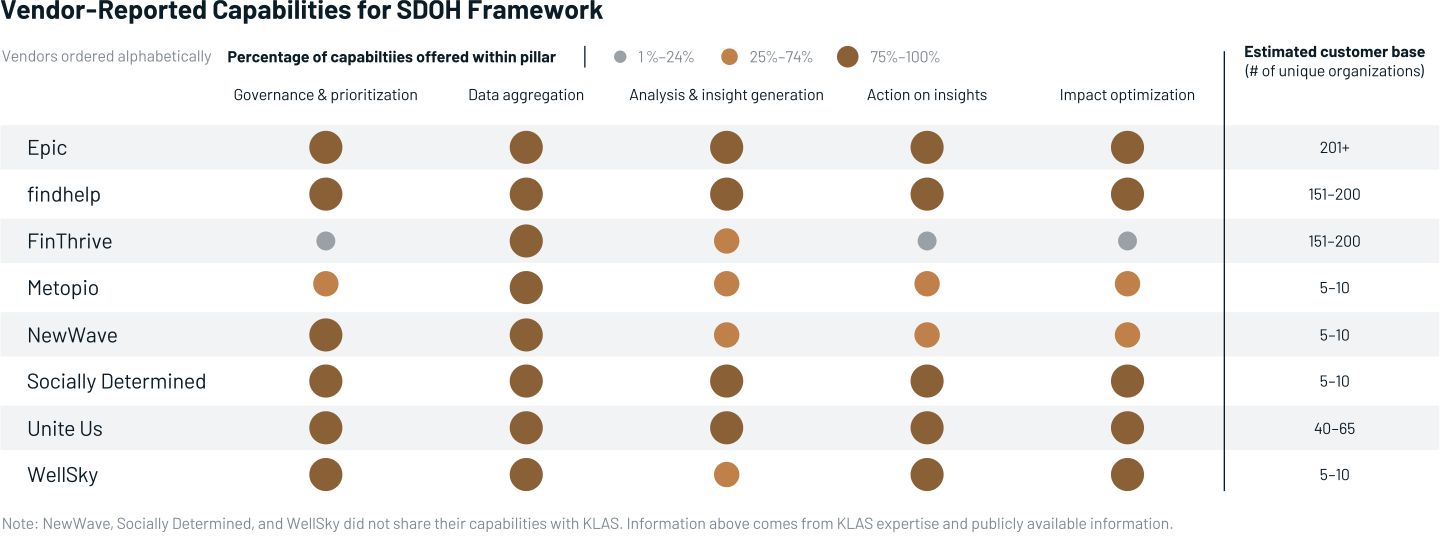
Large healthcare IT vendor with offering that is broadly deployed across the US. SDOH tools are included with other offered products. SDOH customers primarily use tools for assessments, care planning/documentation, service requests, bidirectional CBO communication, and executive dashboards. Vendor’s solution integrates with various SDOH referral networks to offer a wide range of capabilities within every pillar of the KLAS SDOH framework.
findhelp
Large nationwide CBO referral network that works with both provider organizations and government entities to close patient care gaps. SDOH customers primarily use findhelp for care planning/documentation, assessments, bidirectional CBO communication collaboration, and tracking. Vendor says they offer the majority of capabilities in every pillar of the KLAS SDOH framework.
FinThrive
RCM optimization vendor that offers tools intended to help organizations track claims and ROI. Customers seek to predict financial success for different SDOH measures they implement. FinThrive’s solution integrates with referral networks.
Metopio
Data analytics vendor that uses curated visualization tools to help customers quickly do SDOH research on their population. Metopio serves public health organizations implementing CDC recommendations for public health platforms as well as community leaders making economic development decisions based on regional health and wealth-equity data.
NewWave
Data analytics vendor focused on ingesting and organizing healthcare date from multiple sources. Customers are primarily government entities managing large quantities of data, such as CMS data.
Socially Determined
Data analytics and population health management vendor leveraging social risk scores to identify community health barriers. Vendor works with payer organizations to improve member engagement and reduce costs and also works with hospital systems to develop holistic care strategies based on community risk factors. Vendor says they offer the majority of capabilities in every pillar of the KLAS SDOH framework.
Unite Us
Large network of CBOs with provider organizations and government entities as customers. The broad technology platform can be used to screen and assess data, aggregate data, analyze needs, and coordinate care through bidirectional service-request tracking. Vendor says they offer the majority of capabilities in every pillar of the KLAS SDOH framework.
WellSky
Referral network system focusing on interoperability between different provider organizations. Vendor works with health systems and primary care providers to create visibility throughout patients’ care journeys.
SDOH FRAMEWORK INSIGHTS
Insights based on vendor-reported information
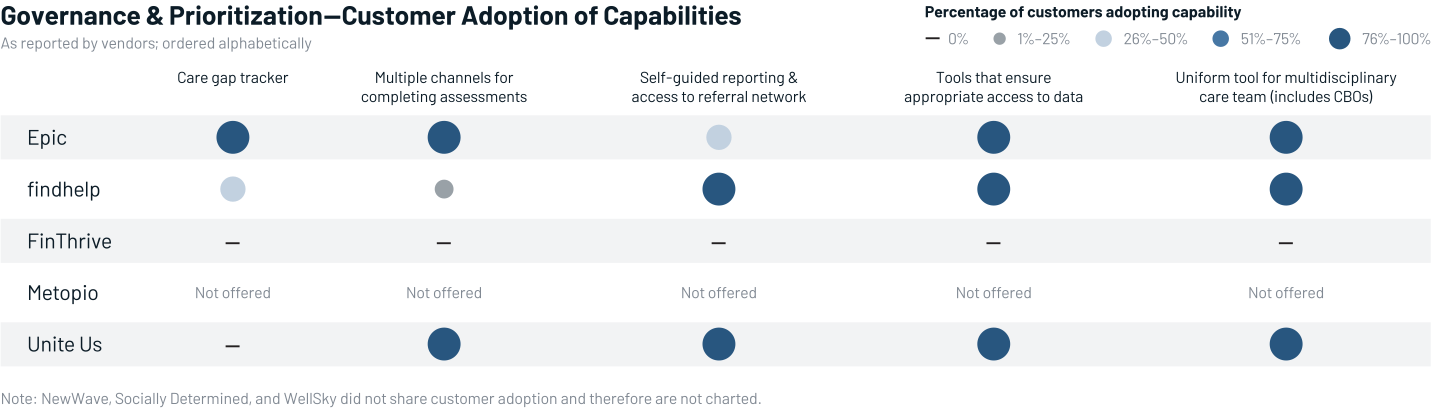
 Governance & Prioritization: Epic & findhelp Provide Care Gap Tracker to Support Governance Decisions
The governance and prioritization pillar focuses on the IT architecture provider organizations need to confidently stand up an SDOH program. Epic, findhelp, and Unite Us report that they provide various documentation tools (for different types of care providers), SDOH assessments, assessment analytics, and tools that help organizations grant appropriate data access to employees depending on their role. Only Epic and findhelp report customer adoption of their longitudinal care management tool, which helps organizations track care gaps and note how gaps are closed. Having a care gap tracker can help organizations better understand patients’ needs and improve SDOH strategies. FinThrive and Metopio say they don’t focus on helping organizations build SDOH governance; instead, they focus on supporting organizations that already have a governance program in place.
 Data Acquisition: Most Vendors Can Integrate Public & Retail Data, but Many Organizations Don’t Leverage Retail Data
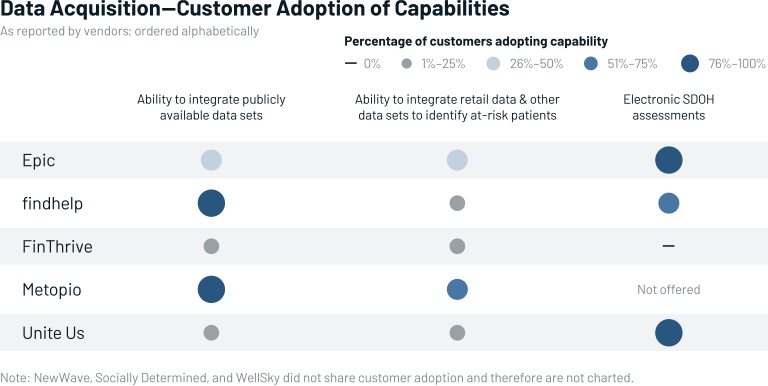 Most SDOH vendors can integrate public data (e.g., census data, county records) and retail data (e.g., credit bureau data) into their products. However, for the most part, provider organizations don’t use retail data to identify population-level needs or guide their broader SDOH strategy, as they feel they know the challenges their patient populations face. Instead, organizations typically focus on having patients fill out assessments and on compiling care plans to address specific needs. Epic reports offering assessment functionality that is already within the Epic environment. In contrast, findhelp and Unite Us assessments must be interfaced so they can be stored in patient records.
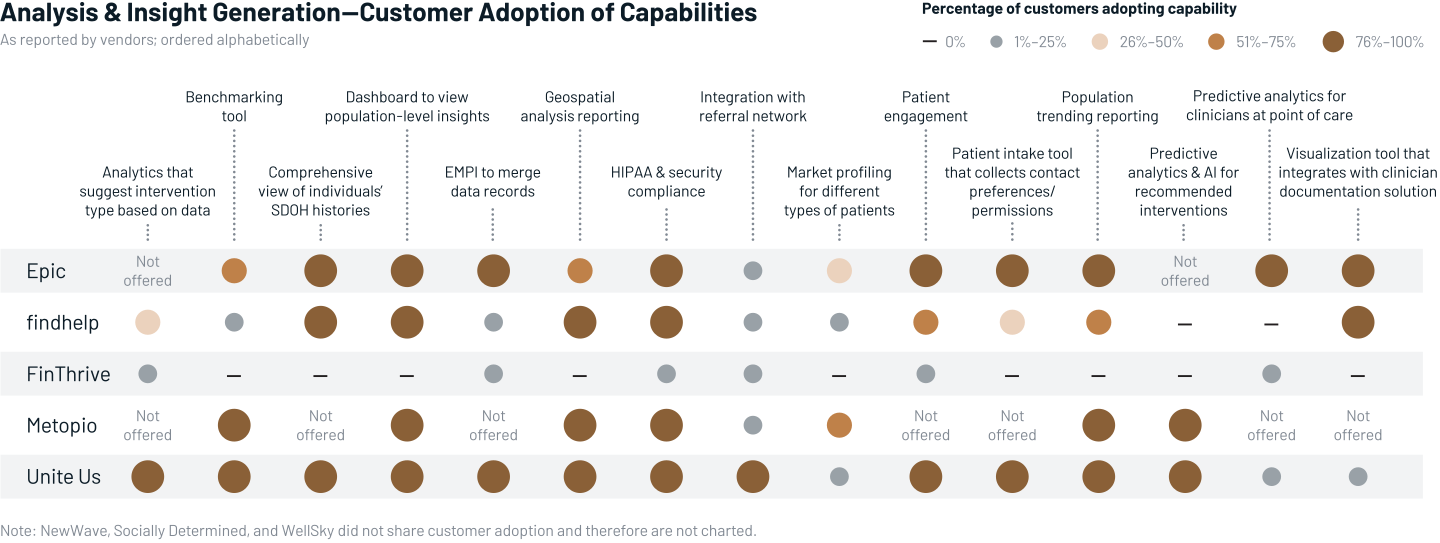
 Analysis & Insight Generation: findhelp & Unite Us Report Offering All Necessary Analytics Functionality
findhelp and Unite Us say they have developed comprehensive SDOH analytics offerings and that their population-level dashboards can drill down to patient-level details. The tools can reportedly predict the different social needs of a population, and they also provide visualization dashboards and bidirectional interfaces with CBOs to streamline data sharing. Epic reports that their data, analytics, and reporting tools allow them to support nearly all SDOH use cases. The only exception is the ability to recommend interventions, though Epic plans to release that ability in 2024. Metopio’s analytics tools are primarily focused on population-level analysis that can help guide an organization’s strategic planning. FinThrive says they help customers with tracking and with making sense of and planning for patient interventions.
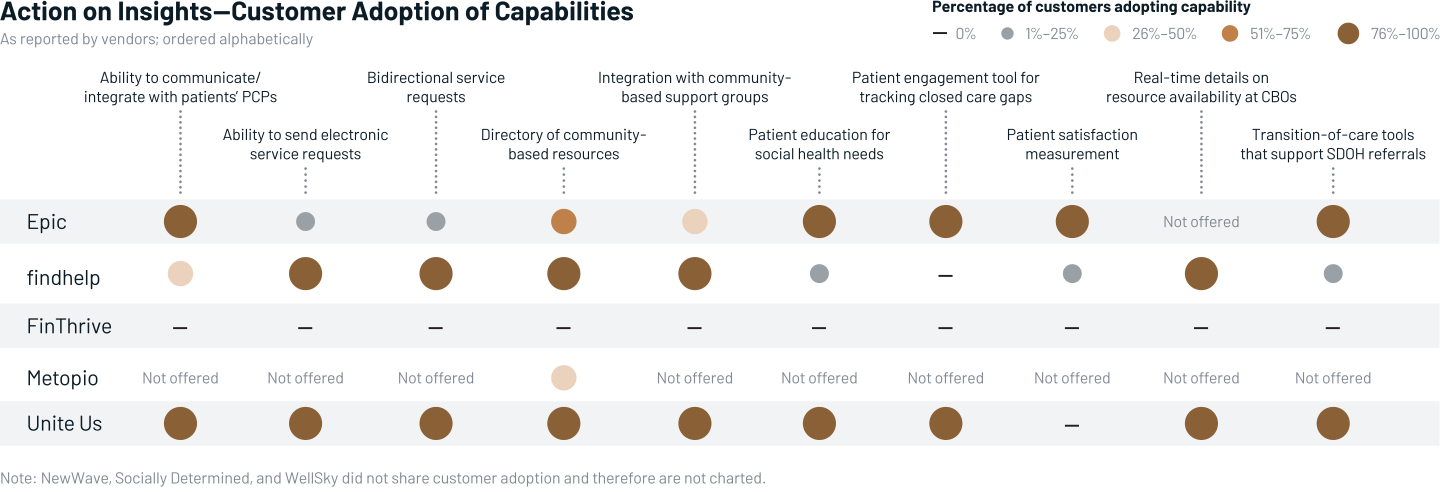
 Action on Insights: Referral Networks Provide Real-Time Insights into CBO Resources
SDOH tools in this pillar help create services requests and facilitate communication and documentation between provider organizations and CBOs. Referral networks can provide insights into CBOs and use closed-loop communication with provider organizations to follow up on service requests. As a referral network vendor, Unite Us reports offering broad referral capabilities that are highly adopted by customers. Epic says that MyChart enables communication among clinicians, provides notifications about available resources, and can close the loop on some customers’ service requests. However, deployment of the latter is much less infrequent. Still, Epic claims to offer the latest technology around interfaces and interoperability to help customers who want to drive more SDOH collaboration. FinThrive and Metopio don’t focus on this area of the framework.
 Impact Optimization: FinThrive’s Executive Dashboard Tracking Not Being Adopted
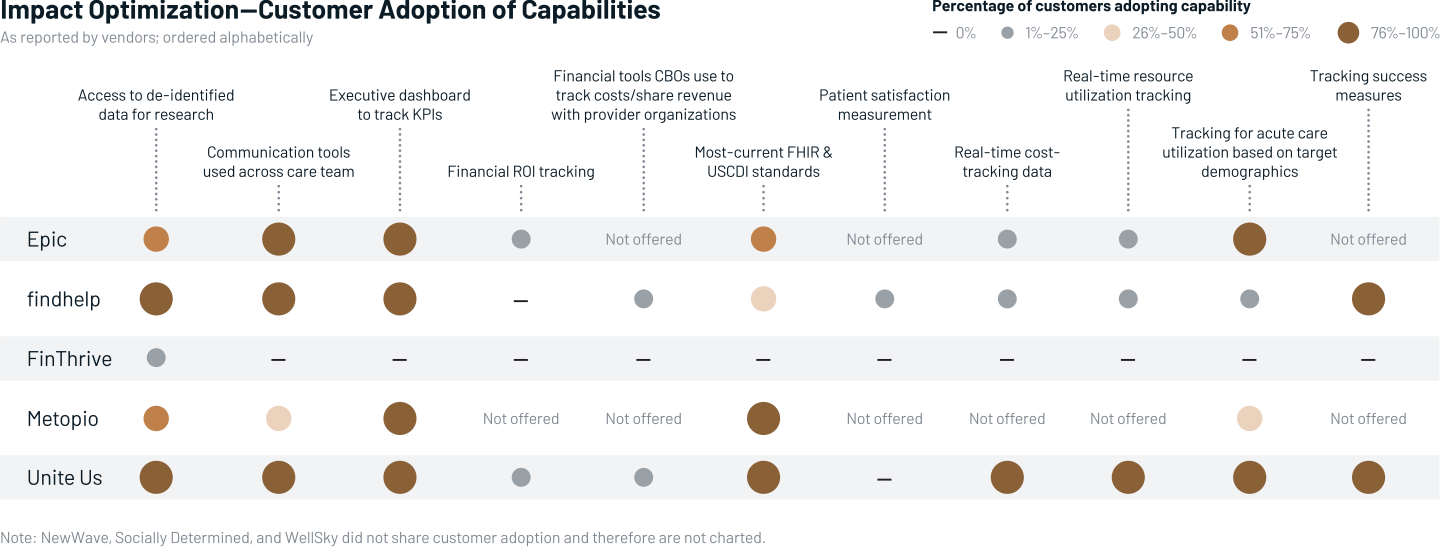
Though many healthcare organizations have built business cases for SDOH programs and are eager to demonstrate the full impact these programs can have, some worry the outcomes they have seen up to this point are not sufficient. As such, they are looking for tools that can help them track and optimize the impact on patients. Epic, findhelp, and Unite Us say they have developed tools with various tracking capabilities; however, their reported customer adoption is low for tracking capabilities around CBO resource utilization, revenue sharing, and ROI. This is partly because SDOH programs vary, depending on different healthcare organizations’ goals. Some focus on transportation while others focus on homelessness or food insecurity. Once healthcare organizations clearly define their strategy, they can find ways to track their success measures; of note, findhelp and Unite Us are the only vendors who report customer adoption of functionality for tracking success measures. Most healthcare organizations rely on their SDOH vendor for guidance in discovering what metrics should be tracked, and Metopio says they can help organizations know what population-level data to track. FinThrive is the only vendor whose customers are not adopting executive dashboard tracking, despite this being a primary focus for FinThrive.
About This Report
This study is designed to give provider organizations a clear picture of what capabilities vendors offer to meet their SDOH needs. All data comes from vendor-reported and publicly available information.

Writer
Natalie Hopkins

Designer
Breanne Hunter

Project Manager
Andrew Wright
This material is copyrighted. Any organization gaining unauthorized access to this report will be liable to compensate KLAS for the full retail price. Please see the KLAS DATA USE POLICY for information regarding use of this report. © 2026 KLAS Research, LLC. All Rights Reserved. NOTE: Performance scores may change significantly when including newly interviewed provider organizations, especially when added to a smaller sample size like in emerging markets with a small number of live clients. The findings presented are not meant to be conclusive data for an entire client base.