KLAS Contact

Contact KLAS
Contact KLAS
 2026 BEST IN KLAS
Preferences
Related Series
Related Segments

Ambulatory Pediatric Solutions 2024
How Well Are Pediatric-Specific Vendors & Broad-Specialty Vendors Addressing Customer Needs?

Author
Chris Clune

Author
Alex McIntosh

Author
Andy Paulsen
Amid changing regulations from entities like the American Academy of Pediatrics and HIPAA, pediatric clinics’ functionality needs are increasing and becoming more specific. Most ambulatory pediatric practices are small organizations with limited budgets, and they have to prioritize functionalities that are most important and forgo others to stay within budget. In addition to established pediatric-specific vendors, broad-specialty vendors are addressing this challenge by developing pediatric-specific EHRs or adapting existing platforms to cater to customer needs. Following KLAS’ 2023 report on the pediatrics market, this report examines how well pediatric-specific and broad-specialty vendors meet the unique customer needs of this niche market.
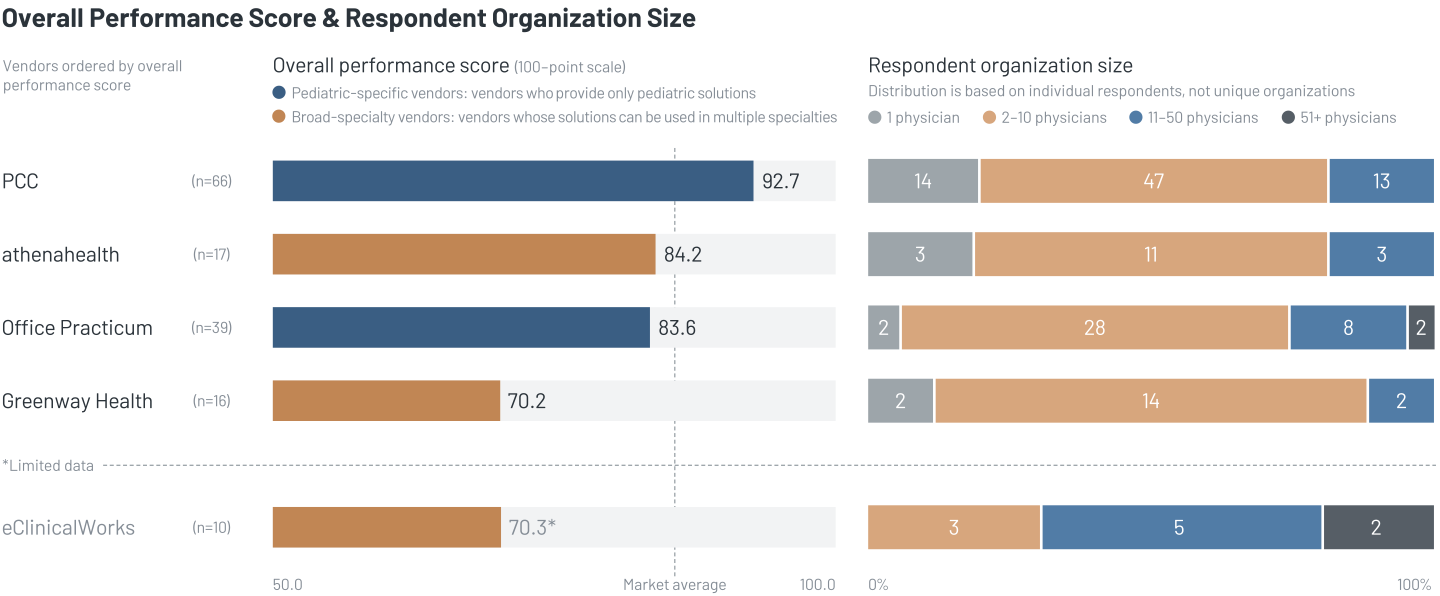
Pediatric-Specific PCC & Office Practicum Highlighted for Meeting Customer Needs
Interviewed customers of pediatric-specific PCC and Office Practicum praise the vendors’ ability to meet their specialty needs as well as provide well-developed integration with state immunization registries, which is crucial for operational efficiency. Respondents also appreciate that the solutions are geared toward patients’ parents, citing the ability to link siblings’ records into one family as well as parents’ easy access to their children’s records. PCC is commended for their expertise and advocacy program that incorporates customer feedback to address pediatric needs. Respondents highlight the comprehensive, intuitive software package and the customizable workflows that are easy for end users to learn. Office Practicum customers value the vendor for their low initial costs, regular software updates, and easy customizability. Additionally, the vendor provides out-of-the-box templates for pediatric workflows, which respondents say require fewer workarounds than broad-specialty vendors’ workflows do. While some respondents like the à la carte pricing model, others mention it leads to nickel-and-diming, decreasing their satisfaction.
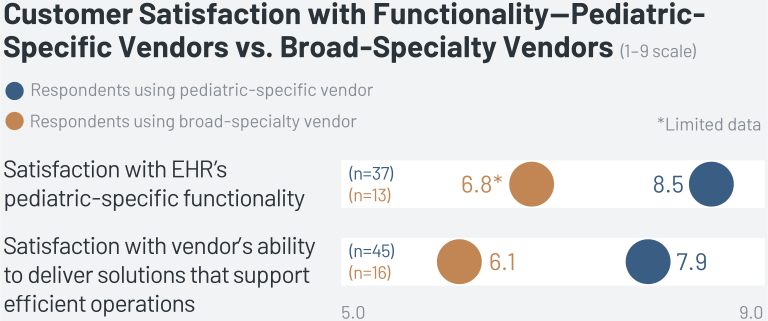
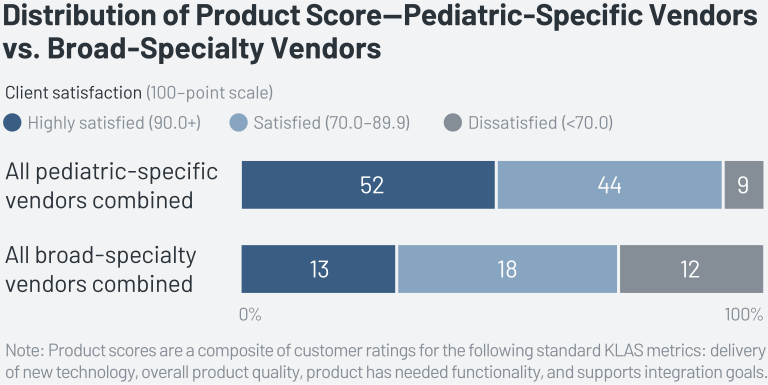
athenahealth Customers Appreciate Proactive Updates & Inclusive Pricing; Customers of Greenway Health Dissatisfied with Product Value
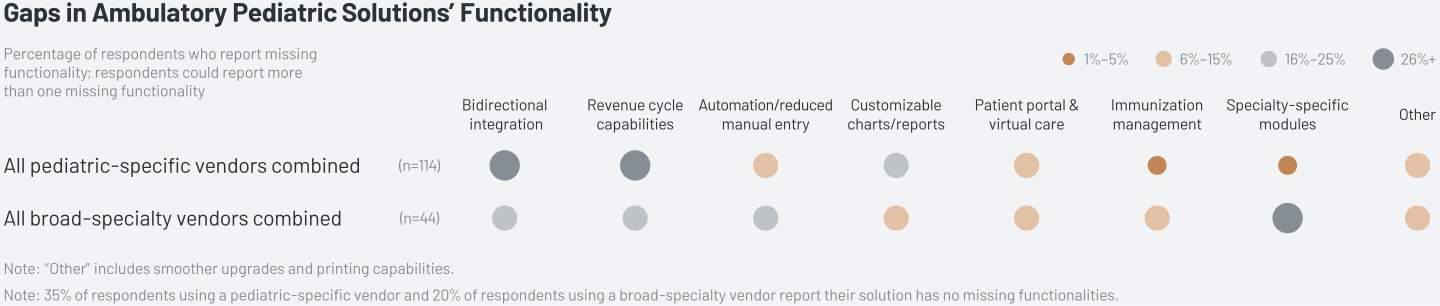
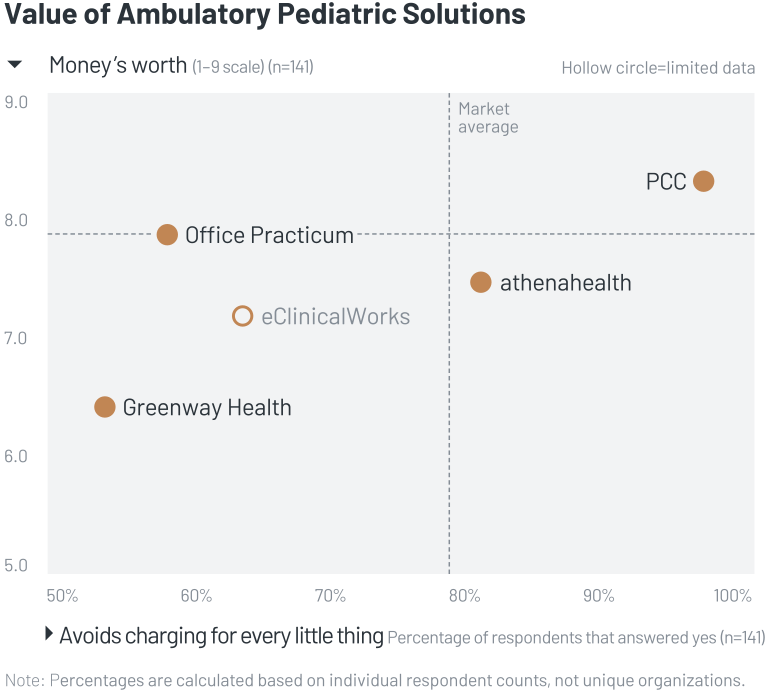 Respondents using broad-specialty vendors cite cross-platform integration and other EHR enhancements (e.g., patient portals, virtual care) as reasons for selection; however, customers don’t often see these vendors as experts in the pediatrics space and feel they lack needed functionality (e.g., ability for parents to access and link their children’s records). Customer satisfaction with athenahealth has recently increased due to the incorporation of user feedback into quarterly updates; respondents view this as the vendor proactively meeting pediatric needs, though some updates appear rushed due to bugs. In terms of overall value, athenahealth pediatric customers report high initial costs but minimal additional charges for the user-friendly platform. Some respondents note having to supplement with third-party platforms due to missing administrative functionalities. Pediatric customers of Greenway Health feel they get a comprehensive product with the billing, reporting, and care functionality they need. A few respondents state that the product’s overall value is lessened by frequent nickel-and-diming on top of the high price; they also express dissatisfaction with the lack of contract flexibility, as they are not able to immediately alter their contract when a pediatrician leaves the practice or other changes occur.
PCC & Office Practicum Customers Satisfied with Product Road Map; eClinicalWorks* Struggles to Deliver Needed Functionality
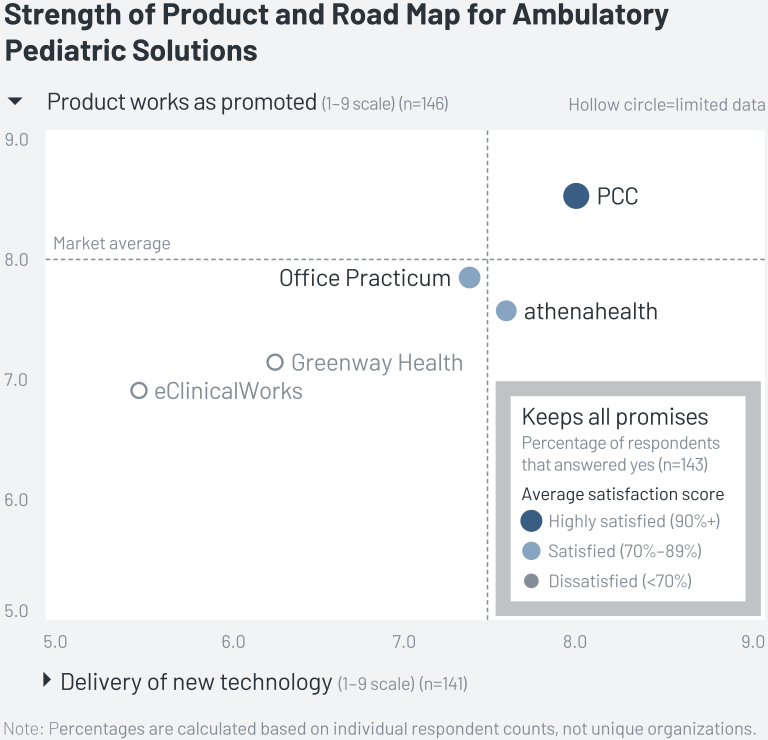 Customer trust in their vendor’s ability to keep promises is greatly affected by their satisfaction with the vendor’s product road map and ability to fill functionality gaps. Customers of PCC generally trust the vendor’s road map but feel they are less responsive to clients’ unique requests and tailored needs. They also feel the vendor prioritizes upgrading the EHR over the practice management software. Interviewed Office Practicum customers appreciate developments like new pediatric vaccine templates. Looking forward, they want a more efficient practice management workflow as well as faster integration with external vendors for exchanging specialty referrals and lab/imaging results, though optimism in the vendor’s ability to deliver these capabilities is mixed. Customers of broad-specialty vendors athenahealth and Greenway Health report wanting additional bidirectional integration capabilities. eClinicalWorks* respondents appreciate the vendor’s RCM services but say their satisfaction is lowered because of missing pediatric-specific features (e.g., growth charts for premature babies and children with Down syndrome). Interviewed customers also struggle to trust the vendor’s dedication and ability to deliver functionality due to missed deadlines and a propensity for providing temporary fixes instead of genuine improvement.
*Limited data
PCC Creates Long-Lasting Partnerships through Proactive Service; athenahealth & Greenway Health Customers Note Decline in Service Quality
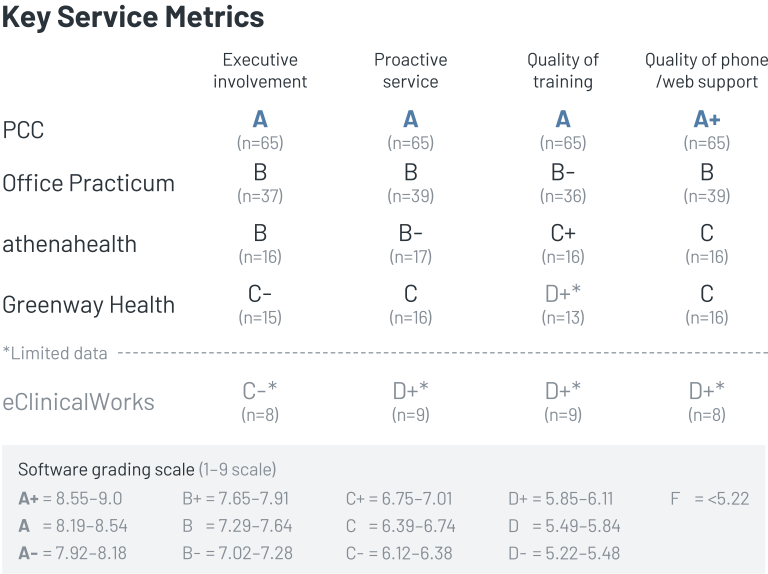 Interviewed PCC customers attribute their success to not only the pediatric-specific platform but also the vendor’s proactive service and deep industry knowledge, highlighting how PCC’s engagement and guidance helps organizations maximize product use. PCC also holds annual meetings where customers can share feedback and receive updates and training. Office Practicum is likewise praised for their pediatrics expertise and commitment to thoroughly resolving issues and supporting customers until they are satisfied. Respondents mention that the vendor’s response times are occasionally slow, requiring customers to escalate issues. Both athenahealth and Greenway Health customers report drops in service quality. athenahealth customers cite longer response times, less executive engagement, fewer meetings with account representatives, and a perceived decrease in staff quality due to turnover. Despite these challenges, athenahealth customers are still generally optimistic about the product’s future. Greenway Health respondents note the vendor has shifted to a primarily offshore service model, leading to a decrease in service quality; customers who have not opted to maintain onshore service report frustration, as they have less contact with onshore account representatives.
About This Report
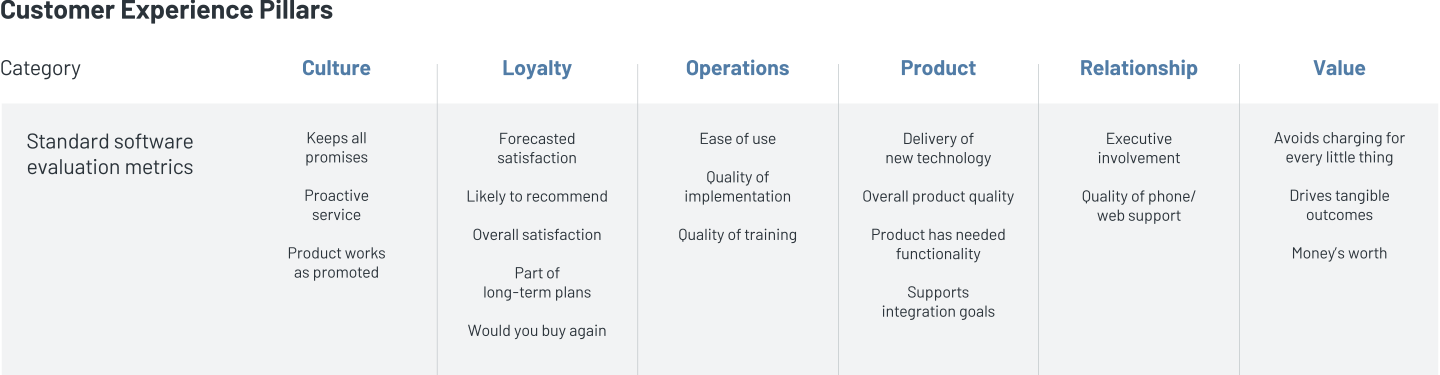
Each year, KLAS interviews thousands of healthcare professionals about the IT solutions and services their organizations use. For this report, interviews were conducted over the last 12 months using KLAS’ standard quantitative evaluation for healthcare software, which is composed of 16 numeric ratings questions and 4 yes/no questions, all weighted equally. Combined, the ratings for these questions make up the overall performance score, which is measured on a 100-point scale. The questions are organized into six customer experience pillars—culture, loyalty, operations, product, relationship, and value.
As part of the numeric evaluation, KLAS also asked the following supplemental questions specific to the ambulatory pediatric solutions market:
- How satisfied are you with your core EHR’s pediatric-specific functionality?
- How satisfied are you with your vendor’s ability to deliver solutions that help your practice run more efficiently?
- What (if any) technology is missing from your vendor’s solution?
Sample Sizes
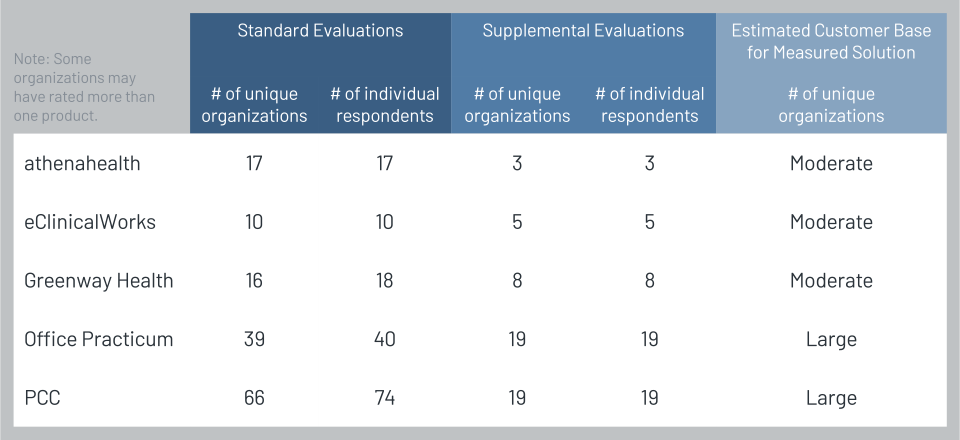
Unless otherwise noted, sample sizes displayed throughout this report (e.g., n=16) represent the total number of unique customer organizations interviewed for a given vendor or solution. However, it should be noted that to allow for the representation of differing perspectives within any one customer organization, samples may include surveys from different individuals at the same organization. The table to the right shows the total number of unique organizations interviewed for each vendor or solution as well as the total number of individual respondents.
Some respondents choose not to answer particular questions, meaning the sample size for any given vendor or solution can change from question to question. When the number of unique organization responses for a particular question is less than 15, the score for that question is marked with an asterisk (*) or otherwise designated as “limited data.” If the sample size is less than 6, no score is shown. Where textual content relies on limited data, the vendor name is marked with an asterisk. Note that when a vendor has a low number of reporting sites, the possibility exists for KLAS scores to change significantly as new surveys are collected.

Writer
Natalie Hopkins

Designer
Jessica Bonnett

Project Manager
Andrew Wright
This material is copyrighted. Any organization gaining unauthorized access to this report will be liable to compensate KLAS for the full retail price. Please see the KLAS DATA USE POLICY for information regarding use of this report. © 2026 KLAS Research, LLC. All Rights Reserved. NOTE: Performance scores may change significantly when including newly interviewed provider organizations, especially when added to a smaller sample size like in emerging markets with a small number of live clients. The findings presented are not meant to be conclusive data for an entire client base.