KLAS Contact

Contact KLAS
Contact KLAS
 2026 BEST IN KLAS
Preferences
Related Series

2020
Related Segments

Digital Fax 2023
How Are Advanced Users Moving toward Next-Generation Discrete Data Extraction?

Author
Tyson Blauer

Author
Paul Warburton
Despite the healthcare industry’s progress with interoperability (HIEs, national record exchanges, Direct Secure Messaging, APIs), healthcare organizations still heavily rely on faxing to exchange data. Faxing technology has evolved to accommodate fully digital processes, but provider organizations are looking for next-generation faxing functionality—like optical character recognition (OCR) and natural language processing (NLP)—to further automate workflows. Drawing from interviews with organizations identified by vendors as their most advanced users, this report follows up on KLAS’ 2019 report and validates what next-generation functionality vendors have deployed. It also shares market insights into the organizational effort required to maintain digital faxing and the future viability of digital faxing in healthcare.
The insights in this report are designed to help readers understand what is possible with digital faxing solutions. This data comes from a small sample of vendors’ most advanced users and should therefore not be interpreted as performance insights, rankings, or a comprehensive view of customers’ technological capabilities.
Validating Vendor Capabilities
KLAS’ Digital Fax Maturity Framework
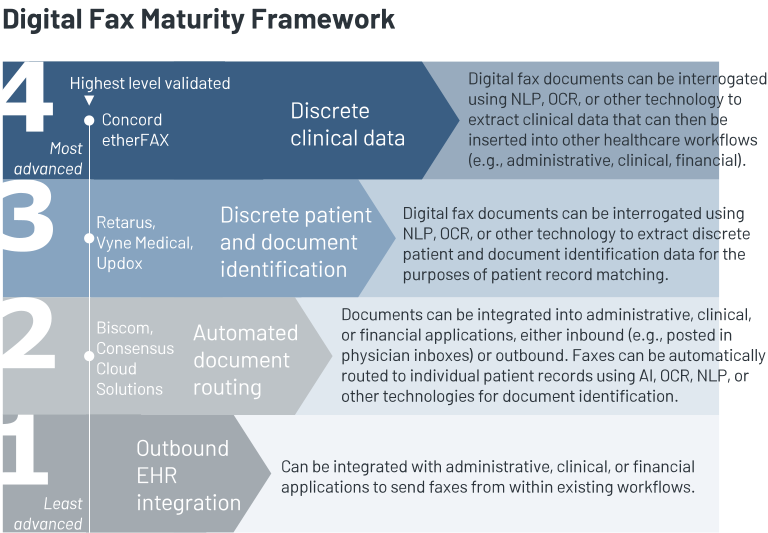
In our Digital Fax 2019 report, KLAS created a framework to describe the state of digital faxing and show where vendors’ most advanced users fell on the spectrum. The framework has since been updated to include only those capabilities that are differentiating in the industry (secure digital fax, which was included as Level 1 in the 2019 framework, is seen by respondents as a non-differentiating feature in the market and is no longer included). This report uses the updated version of the framework to show how solutions’ capabilities have progressed over the past few years and what the state of digital faxing looks like today among advanced-user respondents (most vendors have not been validated above Level 3). Further, this framework is intended to help healthcare organizations understand the benefits of strategically leveraging a digital fax solution—while there are many opportunities to streamline processes via digital fax, few organizations are taking full advantage of them.
Concord, etherFAX Surpass Others in Digital Fax Maturity; Retarus, Vyne Medical Close Behind
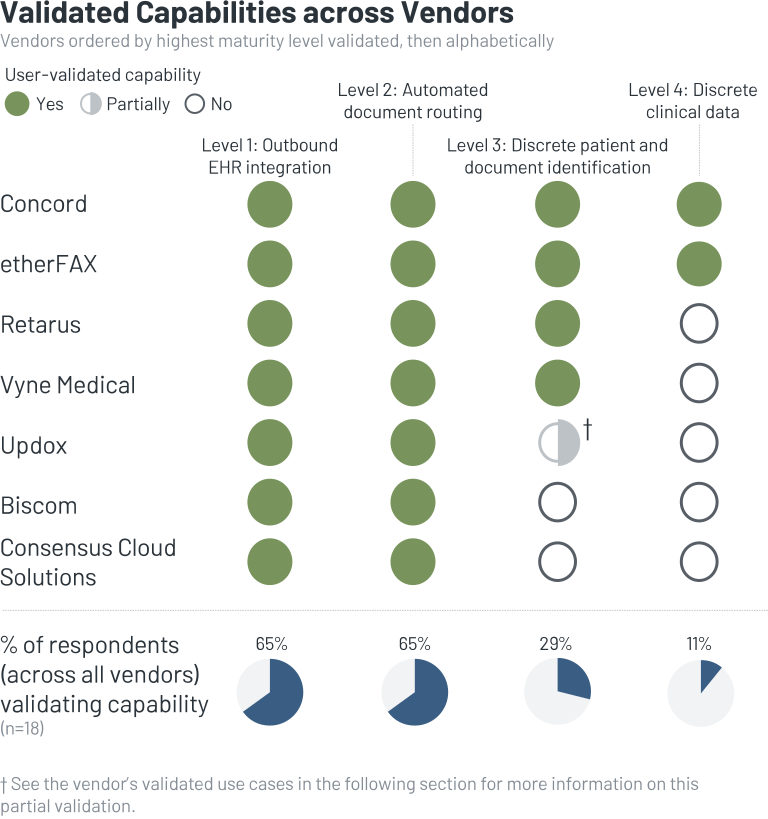
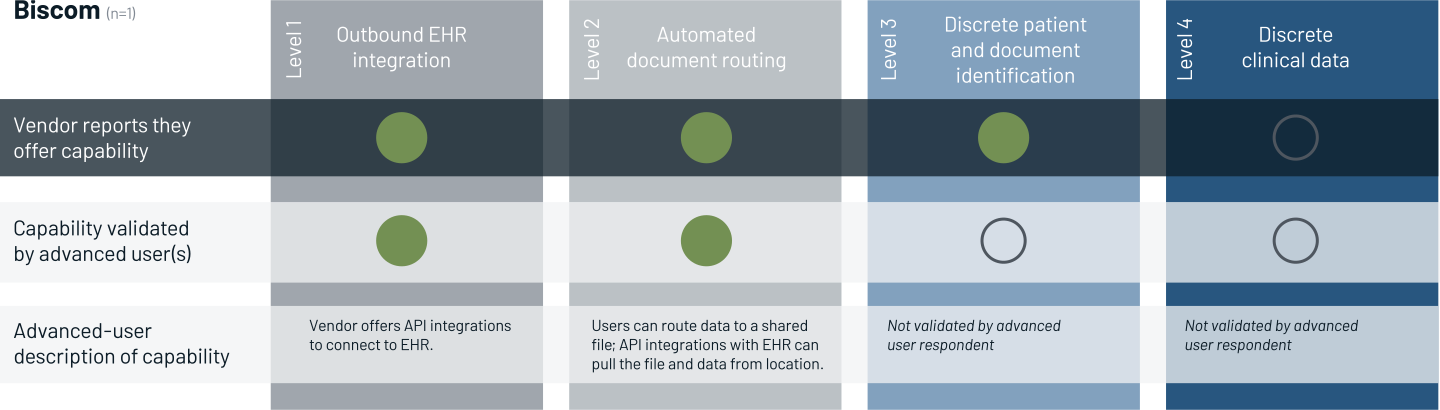
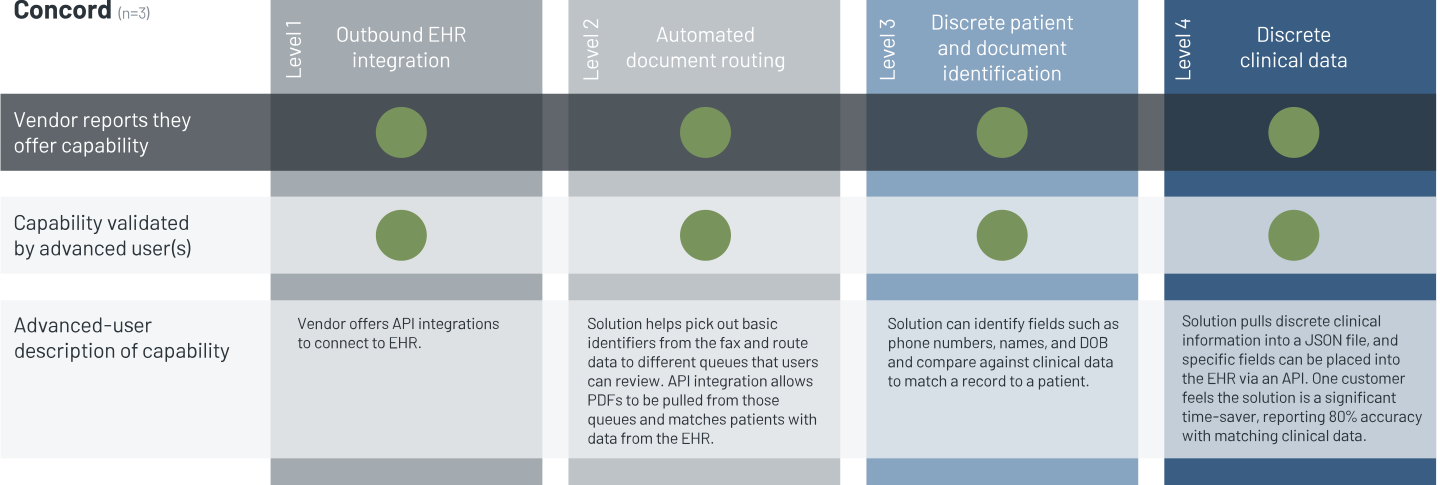
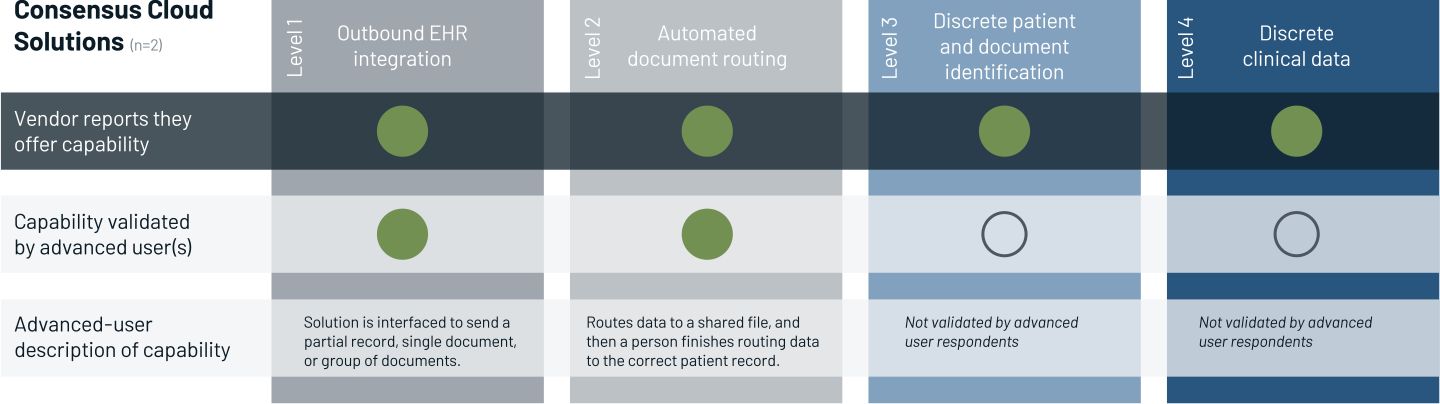
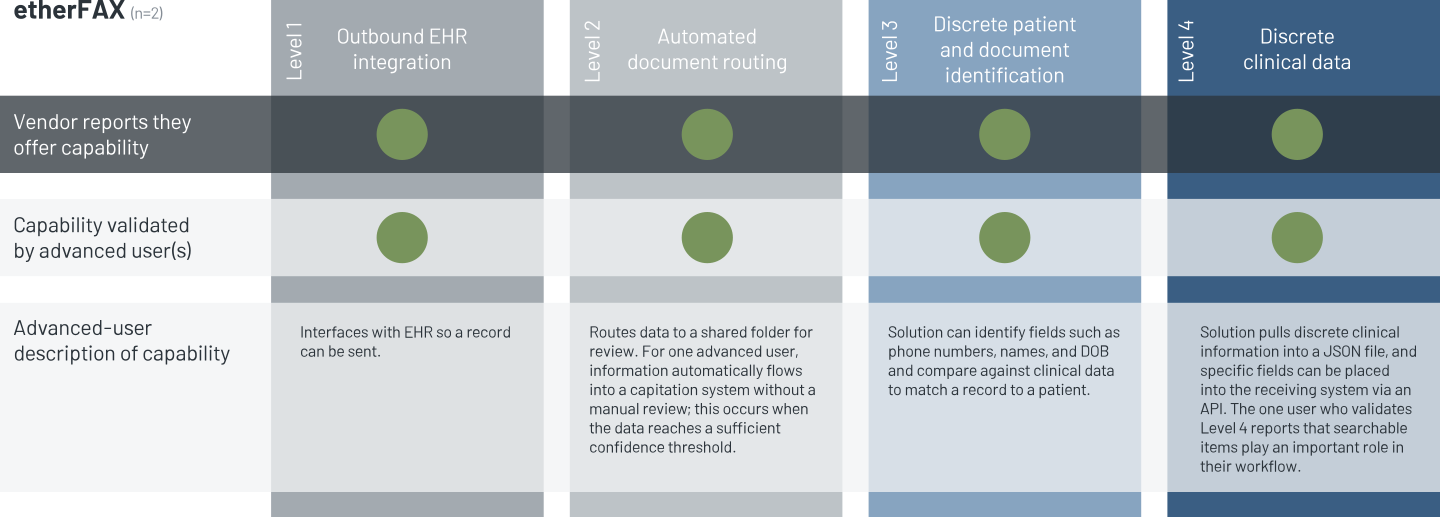
Most healthcare organizations today haven’t yet leveraged the capabilities of digital fax solutions, citing cost, the amount of effort required, and the reliability of data as reasons—and many organizations don’t even know this technology exists. However, in recent years, a handful of vendors and provider organizations have collaborated to advance digital fax solutions, hoping to streamline data sharing across the market. Of the vendors in this study, Concord and etherFAX lead the others in KLAS’ fax maturity framework. One advanced Concord user (midsize outpatient clinic) has worked with Concord to leverage the technology in a way that drives efficiency, enabling the organization to match patient records and pull discrete clinical data fields that can flow into the EHR. Similarly, an advanced etherFAX user can automatically route documents to correct patient records, extract specific clinical data from faxes, and use the data to create a longitudinal record for patients. Advanced users of Retarus and Vyne Medical use their solutions to pull discrete patient-identification information. While these vendors’ solutions can use OCR to read all text on a page, no users were validated as identifying clinical fields or routing data to the EHR; this process can be complicated and is a roadblock to customer adoption. Updox is validated as identifying patient ID information without being able to extract it. Advanced users of Biscom and Consensus Cloud Solutions report lower fax maturity levels; none of these respondents were validated by KLAS as adopting Level 3 capabilities, though they say their vendors are willing to collaborate.
Use Cases: Vendor-Reported vs. User-Validated
Vendors ordered alphabetically
“For inbound routing, we move data to a shared folder on the network automatically and drop in the image file as well as the metadata file. So we have both copies of those automatically, and then we can have an EMR record just watch that shared folder and import the records into our medical record system.” —IT manager
“The extractions of clinical data are not 100% perfect, and I don’t think the extractions will ever be perfect because the information comes in via fax. Not all of the faxes are the same, and they don’t come from the same sources. I fully accept and am comfortable with having a level of performance that isn’t at 100%. I am happy if things are performing at above 80%. The system makes our call center agents’ lives and jobs so much easier and more efficient.” —CIO
“When we are on a particular document, we click a button to fax it, and we send the document. The process is pretty simple. We can also open up a separate menu, do a custom send, attach multiple documents, and send those in bulk. If we needed to send an entire chart, not just a piece of a chart, we could do that as well. If we are sending from the system, we do not have the ability to link the fax to an email. If there were an email document as an attachment, we could theoretically do that. We have the ability to send eFaxes out as email attachments separate from the EHR system. But when sending from the EHR system, we just send the document or a grouping of documents.” —IT manager
“We make a match with the original record that triggered the fax request, and we ingest it so that it is part of our record for that member. All of those fields—like for the diagnosis and procedure codes—then become searchable items, which are super important to our workflow.” —CIO
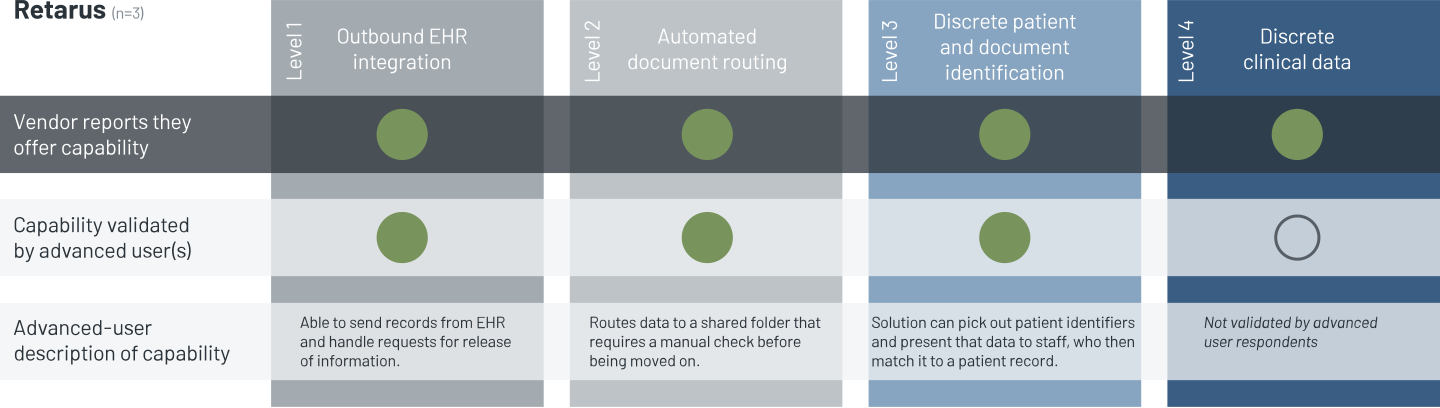
“Today with our integration with our EMR, we are able to manually fax a document from the chart. We also have our release of information functionality tied in with our EMR and Retarus’ product to the point where we can easily release documentation to different organizations or individuals.” —IT manager
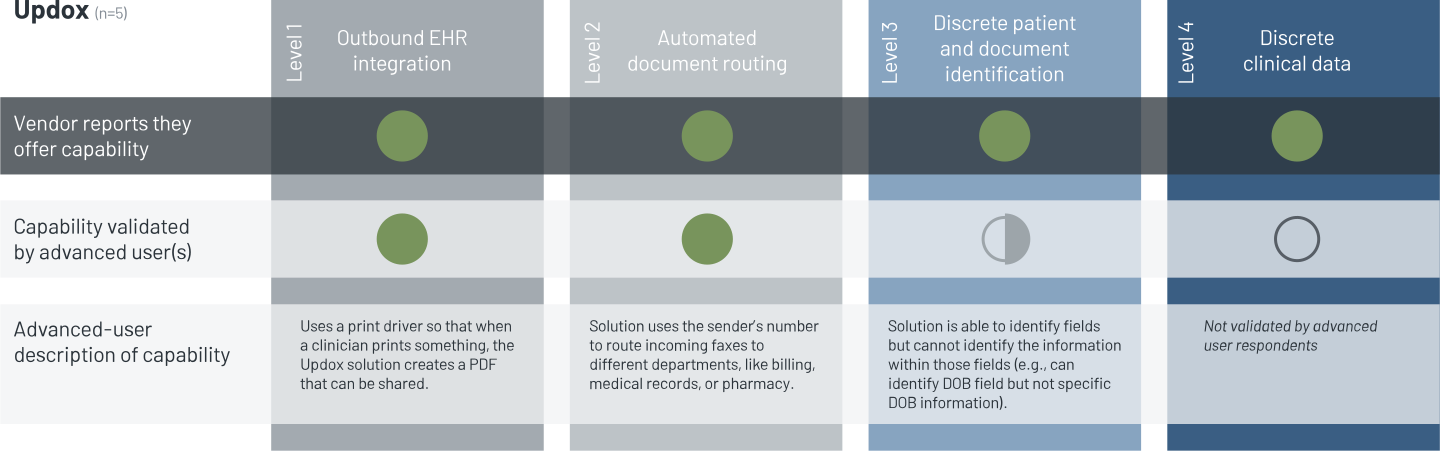
“We use some of the advanced routing features. When we identify a certain fax number that we consistently get faxes from and we know the number is another hospital, pharmacy, or insurance company, we typically can use that information to know where that fax is intended to go across our enterprise, whether the fax is for the insurance and billing department, for the medical records department, or a refill request for the clinic staff. We have the features enabled to have advanced routing based on the phone number so that the faxes go to a separate bucket that doesn’t necessarily need as much triaging and sorting.” —Director of medical records
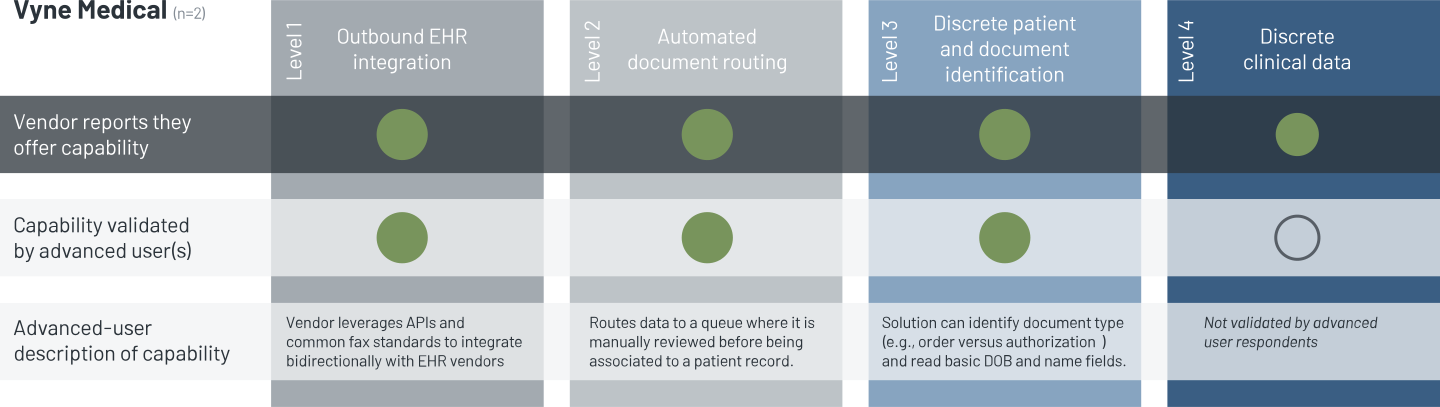
“When we set up Refyne Cloud Fax, we only programmed our instance to look at the name, date of birth, and type of document. The system knows the difference between a physician order and an authorization order, so the system just pulls the name and date of birth, and then we go and move things. We don’t have Refyne Cloud Fax turned on to extract discrete data into our records because that is part of our quality check. Refyne Cloud Fax automatically reads the fax and knows what type of document it is, but then we see which pieces we want to pull in. For example, Refyne Cloud Fax will say who the order belongs to and their date of birth, and then the system pulls up a list with all the account numbers, and we can assign the order to one of those accounts.” —Patient access manager
Market Insights
Most Respondents Want Vendors to Make Technology Easier to Roll Out
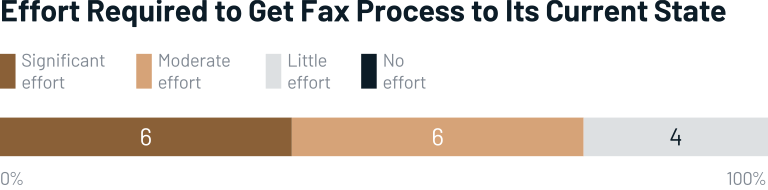 Most advanced-user respondents say their vendor is a strong, attentive partner who collaborated with them to build the solution and invited them to be alpha or beta testers. Still, respondents report some challenges with rolling out and refining their technology. Those who feel significant effort was required to establish their fax processes say the interfacing was burdensome. Multiple users also struggled to automate data-field extraction for patient identifiers and establish processes that ensure accuracy. Respondents who feel moderate effort was required say there was too much maintenance for their IT department, too much difficulty connecting with other solutions, and too much dependence on their vendor. The minority say little effort was required to refine their fax process, noting that they easily deployed their internet-based solution to replace paper processes. Of note, those who feel significant effort was required also tend to have more advanced workflows, while those who feel little effort was required often have less advanced workflows.
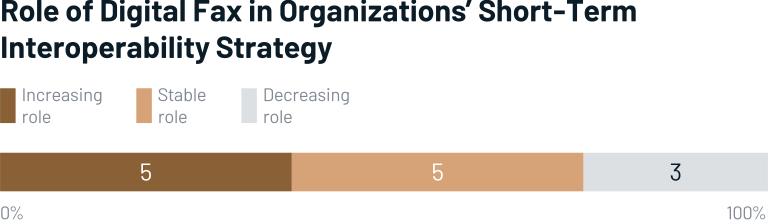
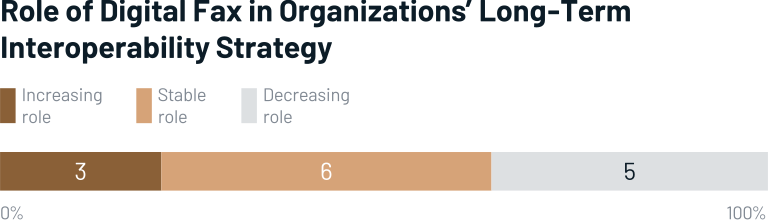
Most Advanced Users See Digital Fax as Integral Part of Their Interoperability Strategy
In general, advanced users believe their organizations will continue to leverage digital fax solutions in the future, since they heavily rely on digital fax to acquire referral data, orders, and bills. Further, they anticipate the digital fax market will grow as more healthcare organizations move from paper fax processes to digital fax solutions. The need for paper faxing is also anticipated to increase, since many organizations heavily rely on its ease of use and security. Respondents who believe digital fax’s role will decrease in the long term say FHIR, Direct messaging, and national record exchanges could potentially standardize the exchange of patient referrals between healthcare organizations and critical exchange partners. However, the general sentiment among respondents is that faxing is here to stay; thus, organizations could benefit from deploying tools that help automate and improve faxing workflows.
About This Report
This report is designed to help readers understand how the digital fax market has progressed and what it will look like in the future. To gather these perspectives, KLAS asked organizations identified by vendors as their most advanced users to respond to the following:
- What capabilities are you using from your vendor, and how would you rate those capabilities on a 1–9 scale?
- How much effort was required from your organization to get your fax process to its current state?
- What role do you expect digital fax will play in your organization’s future interoperability strategy?
Sample Sizes
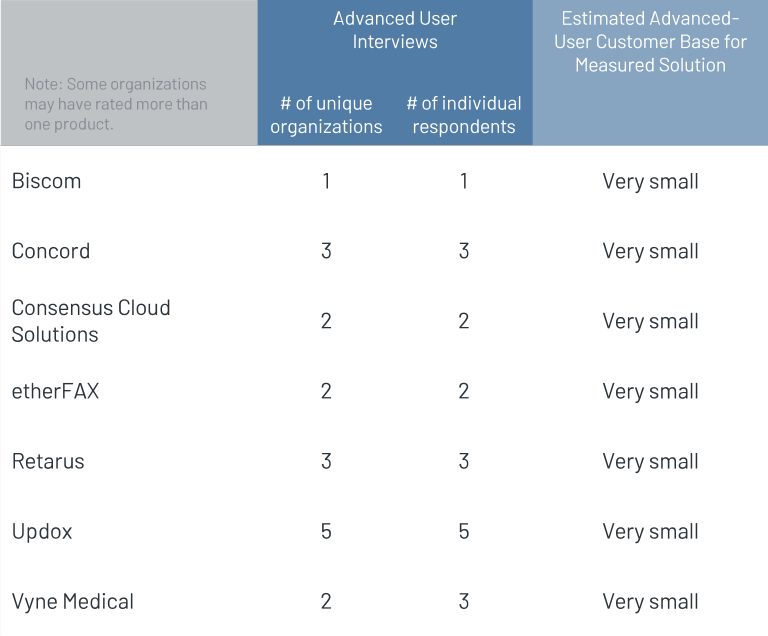
Unless otherwise noted, sample sizes displayed throughout this report (e.g., n=16) represent the total number of unique customer organizations interviewed for a given vendor or solution. However, it should be noted that to allow for the representation of differing perspectives within any one customer organization, samples may include surveys from different individuals at the same organization. The following table shows the total number of unique organizations interviewed for each vendor or solution as well as the total number of individual respondents.
Some respondents choose not to answer particular questions, meaning the sample size for any given vendor or solution can change from question to question. Note that when a vendor has a low number of reporting sites, the possibility exists for KLAS scores to change significantly as new surveys are collected.

Writer
Sarah Brown

Designer
Bronson Allgood

Project Manager
Andrew Wright
This material is copyrighted. Any organization gaining unauthorized access to this report will be liable to compensate KLAS for the full retail price. Please see the KLAS DATA USE POLICY for information regarding use of this report. © 2026 KLAS Research, LLC. All Rights Reserved. NOTE: Performance scores may change significantly when including newly interviewed provider organizations, especially when added to a smaller sample size like in emerging markets with a small number of live clients. The findings presented are not meant to be conclusive data for an entire client base.