KLAS Contact

Contact KLAS
Contact KLAS
 2026 BEST IN KLAS
Preferences
Related Series
2025

2022

2021

2019
Related Segments

Drug Diversion Monitoring 2023
New Advanced Capabilities Beginning to Show Promise

Author
Jackson Tate

Author
Jennifer Hickenlooper

Author
Lance Merrell
Drug diversion monitoring is a key area that helps healthcare organizations improve patient safety and prevent drug waste and misuse. The second generation of drug diversion monitoring solutions utilizes predictive models, artificial intelligence (AI), and machine learning (ML), and users are beginning to see outcomes such as correctly identified risks, reduced false positives, and increased efficiency. This report examines which vendors are driving outcomes, how advanced AI/ML capabilities are impacting the user experience, and how well vendors partner with and support customers.
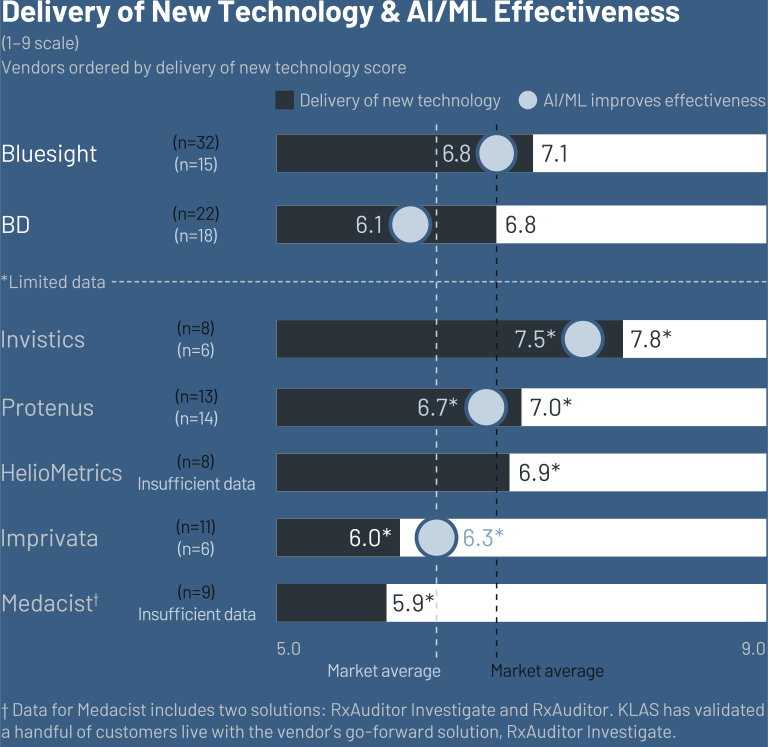
Bluesight & Protenus Customers Want Continued Development for Advanced Capabilities; Invistics’ Smaller Customer Base Seeing Success with AI
Customers’ interest in AI/ML is increasing due to the potential to improve the accuracy of risk predictions and non-compliance detection, and respondents express some optimism about these capabilities. Most interviewed Bluesight customers view the vendor as a leader in drug diversion monitoring, citing an easy-to-use solution and promising AI capabilities. Customers want Bluesight to continue to develop advanced capabilities and improve the integration and ability to digest data. Early reported outcomes associated with AI include identifying potential diversions, finding education opportunities, and supporting higher efficiency and better drug-use visibility. Initial feedback from some Protenus customers (limited data) indicates the AI models are learning and adapting to their policies and preferences; these customers report benefits like decreased false positives and more accurately identified drug waste and diversions. Other respondents have yet to see outcomes. Overall, customers say Protenus is still developing and refining their algorithms. Invistics (acquired by Wolters Kluwer in June 2023) has the smallest customer base of measured vendors, and limited data on Invistics shows customers are satisfied with AI capabilities, highlighting good risk-scoring reports and help identifying potential diversions. One respondent mentioned the AI learns from their facility and other facilities using the product and that users can customize alerts to their hospital’s needs.
Invistics & HelioMetrics Performing Well Despite Limited Market Adoption; Imprivata Customers Report Continued Struggles Post-Acquisition
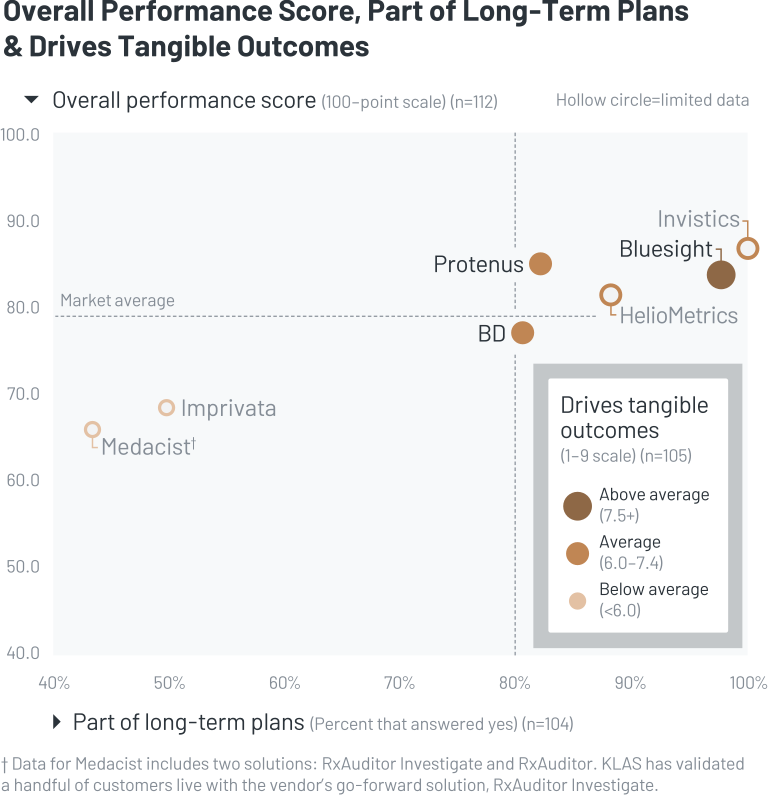
While Invistics and HelioMetrics have smaller customer bases, their customers are generally satisfied. Invistics customers (limited data) report the solution finds diversions and drives outcomes, and all respondents say it is part of their long-term plans; they are also optimistic about the future and feel the vendor listens to them. Clients want the system to be more user friendly and the reports to be more timely. HelioMetrics customers (limited data) say the product works as advertised, and 89% consider it part of their long-term plans. Respondents report the product effectively integrates outside data; a few note the amount of data can be overwhelming. Some customers want more AI/ML functionality to reduce false positives and guide users through the complex data, while others don’t feel AI/ML is necessary to achieve outcomes. As reported in KLAS’ 2022 report on drug diversion monitoring, satisfaction with the FairWarning solution dropped significantly after its acquisition by Imprivata. Since then, customer ratings have remained stagnant. Clients report some improvement to product functionality and support, but they note the vendor isn’t keeping up with advanced analytics capabilities or delivering promised features. About half of Imprivata respondents are looking to replace the solution.
Despite Advancing Integration, BD Customers Continue to Experience Functionality Challenges
BD has a large footprint in the pharmacy and medication management market, and their drug diversion monitoring solution is often selected for this reason. Customers who are most satisfied with the product appreciate the integration across BD’s suite and continued development via frequent updates; they also see the reconciliation functionality as a strength that drives outcomes (e.g., identifying potential diversions and opportunities to improve poor practice). Less-satisfied respondents are often smaller acute care customers. Overall, most respondents note the solution is newer and still has development gaps (e.g., usability, AI/analytics). Many customers also note integration challenges with pumps and purchasing data; KLAS has validated customers with BD’s new integration in procedural areas. Customers of Bluesight and Protenus report integration is advancing, though adoption of integration with purchasing and procedural data is inconsistent among both customer bases. Respondents from HelioMetrics’ (limited data) smaller customer base note the vendor’s extensive guidance helps them make the most of their data.
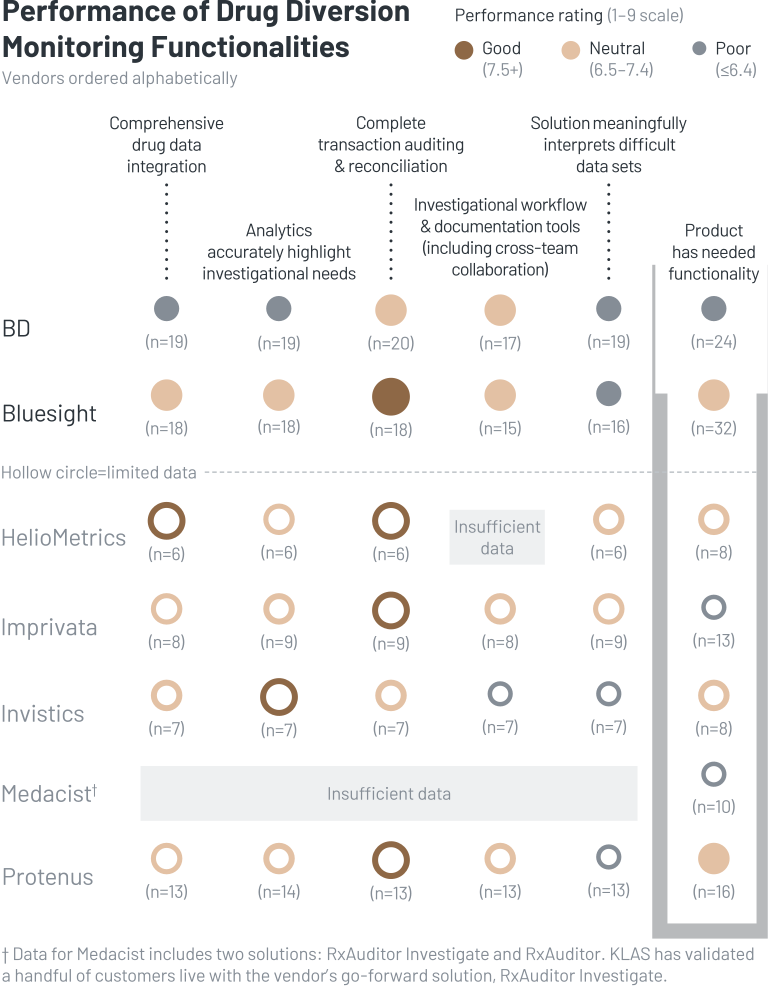
Across all measured vendors, customers report integration gaps—the largest being with purchasing, procedural, and infusions/PCA data. Most, if not all, data sources can be integrated with drug diversion monitoring systems; the difficulty lies with the availability of resources who can build the integration and workflows and the availability of expertise on how to use data sets in investigations and other diversion activities. Provider organizations making purchase decisions should evaluate (1) whether a drug diversion monitoring vendor can integrate with desired data sources, (2) whether the vendor has done the integrations before, (3) what technological and operational best practices the vendor recommends, and (4) how organizations want to use the data to improve their drug diversion program’s effectiveness.
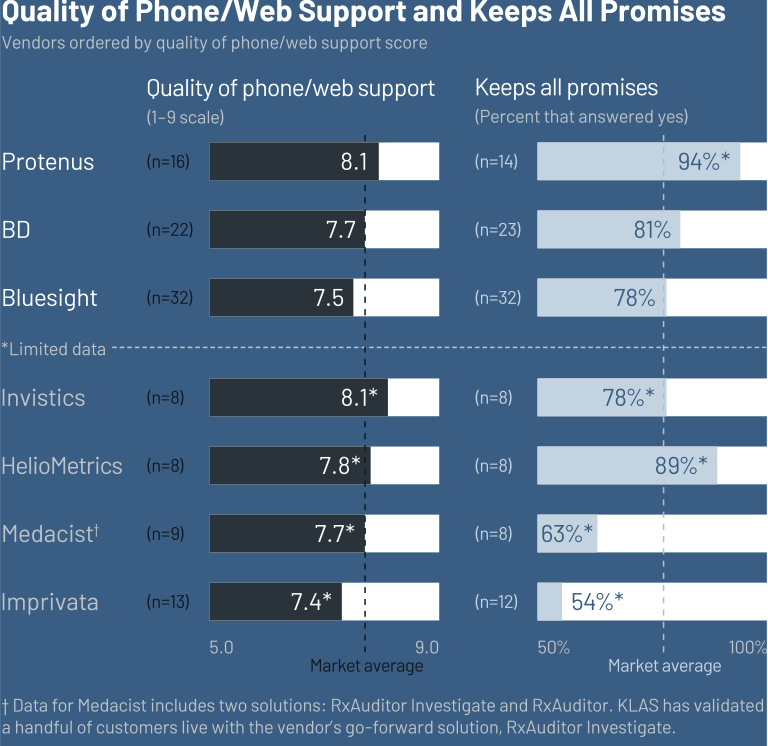
Protenus Leads in Supporting Customers and Keeping Promises; Bluesight Customers Feel Support Is Declining as Vendor Grows
Protenus is highlighted for the support they provide to customers, who describe the vendor as accommodating, proactive, and quick to respond and resolve problems. Respondents also say the high-quality support drives a sense of partnership with Protenus. Bluesight customers, who previously reported high satisfaction with support, note a recent decline; they attribute this change to the vendor struggling to scale support as they have grown, leading to increased response and resolution times and undelivered promises. Customers of Invistics (limited data) appreciate the vendor’s strong, proactive support. Respondents note they have easy access to executive leadership, leading them to feel the vendor keeps their promises. Those who don’t feel Invistics keeps all promises say the vendor overpromised on the solution’s capabilities. Medacist (acquired by Bluesight in July 2023) customers have seen improvement in support; still, only 44% of respondents say Medacist is part of their long-term plans due to most customers being live with the vendor’s legacy solution, RxAuditor. BD customers report improvements in empowered support, citing the vendor’s Insight Consultants; respondents note they want to see more proactive outreach from the vendor.
Drug Diversion Services
According to customer feedback, there is an emerging trend of customers partnering with services firms for expertise and help establishing and running drug diversion programs. Rxpert Solutions, Trexin, and Visante are examples of such firms, and KLAS will continue to monitor healthcare organizations’ interest in these services.
About This Report
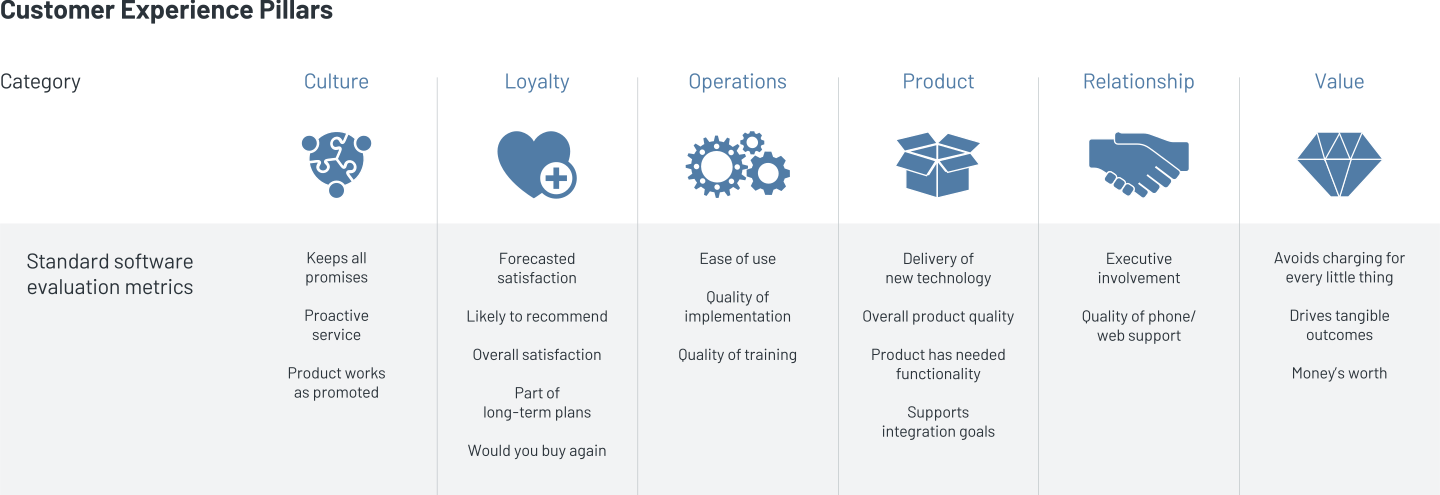
Each year, KLAS interviews thousands of healthcare professionals about the IT solutions and services their organizations use. For this report, interviews were conducted over the last 12 months using KLAS’ standard quantitative evaluation for healthcare software, which is composed of 16 numeric ratings questions and 4 yes/no questions, all weighted equally. Combined, the ratings for these questions make up the overall performance score, which is measured on a 100-point scale. The questions are organized into six customer experience pillars—culture, loyalty, operations, product, relationship, and value.
To supplement the customer satisfaction data gathered with the standard evaluation, KLAS created a supplemental evaluation to understand customer satisfaction with their vendor’s advanced AI/ML capabilities. KLAS asked interviewed participants to rate their solution’s (1) comprehensive drug data integration, (2) ability to interpret difficult data sets, (3) analytics that accurately highlight investigational needs, (4) AI/ML algorithms that improve drug diversion effectiveness, (5) investigational workflow/documentation tools, and (6) complete transaction auditing and reconciliation. Data was collected from June 2022 to June 2023.
Sample Sizes
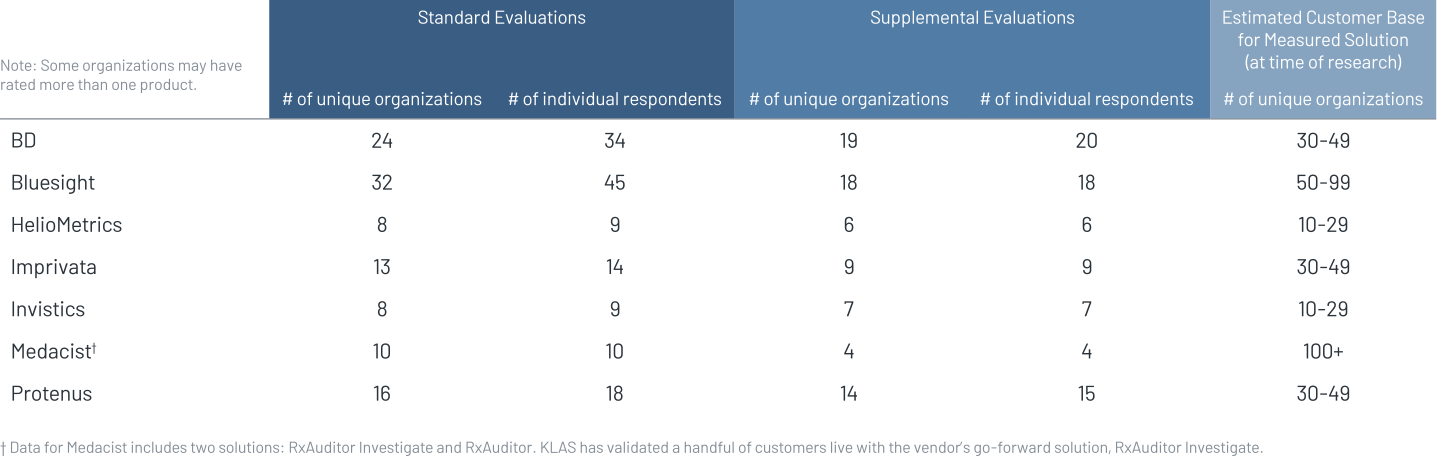
Unless otherwise noted, sample sizes displayed throughout this report (e.g., n=16) represent the total number of unique customer organizations interviewed for a given vendor or solution. However, it should be noted that to allow for the representation of differing perspectives within any one customer organization, samples may include surveys from different individuals at the same organization. The table below shows the total number of unique organizations interviewed for each vendor or solution as well as the total number of individual respondents.
Some respondents choose not to answer particular questions, meaning the sample size for any given vendor or solution can change from question to question. When the number of unique organization responses for a particular question is less than 15, the score for that question is marked with an asterisk (*) or otherwise designated as “limited data.” If the sample size is less than 6, no score is shown. Note that when a vendor has a low number of reporting sites, the possibility exists for KLAS scores to change significantly as new surveys are collected.

Writer
Natalie Hopkins

Designer
Jessica Bonnett

Project Manager
Andrew Wright
This material is copyrighted. Any organization gaining unauthorized access to this report will be liable to compensate KLAS for the full retail price. Please see the KLAS DATA USE POLICY for information regarding use of this report. © 2026 KLAS Research, LLC. All Rights Reserved. NOTE: Performance scores may change significantly when including newly interviewed provider organizations, especially when added to a smaller sample size like in emerging markets with a small number of live clients. The findings presented are not meant to be conclusive data for an entire client base.