KLAS Contact

Contact KLAS
Contact KLAS
 2026 BEST IN KLAS
Preferences
Related Series

2026
Related Segments

Enterprise Revenue Cycle Management Platforms 2023
Current Provider Experiences on the Platform Adoption Journey

Author
Dustin Cragun

Author
Ruirui Sun

Author
Jaren Day
Across the industry, provider organizations are feeling pressure from staffing shortages, payer challenges, shrinking margins, and ever-changing regulations. To ease these challenges, vendors are working to create end-to-end platforms that bridge all revenue cycle offerings, and they claim these platforms will increase operational efficiencies and reduce costs. For this report, KLAS spoke to provider organizations who have deeply adopted a vendor’s enterprise revenue cycle management offerings to get a snapshot of current customer satisfaction and examine the benefits and challenges of platform adoption.
Defining “Deep Adopters”
This report focuses on the experiences of “deep adopters” and is designed to help readers understand the benefits and challenges of a platform experience with a single vendor. Deep adopters are those with at least three technology solutions from a single revenue cycle vendor (including one front office solution, one back office solution, and a third solution of any category). Each measured vendor shared with KLAS a short list of qualifying customers, and KLAS then interviewed a sample of the organizations from each vendor’s list, comprising 31 respondents. This report should not be interpreted as a comprehensive view of customer satisfaction or adoption across the market.
Reported Pros & Cons of a Platform Approach
Many see promise in a platform approach, especially for revenue cycle management. While there are many reported benefits, potential challenges remain, and the adoption of a platform might require concessions of certain functionalities in order to realize other outcomes. Those who have made the transition to a platform have commented on several realized or potential pros and cons of this approach, as seen below.
Pros
The adoption of a vendor’s platform can offer benefits such as enhanced integration, streamlined workflows, cost efficiencies, strengthened vendor partnerships, and a consolidated tech stack.
Cons
Mentioned challenges include problems with overreliance on one vendor, slow innovation that leads to functionality gaps, and less competition that could otherwise lead to better pricing.
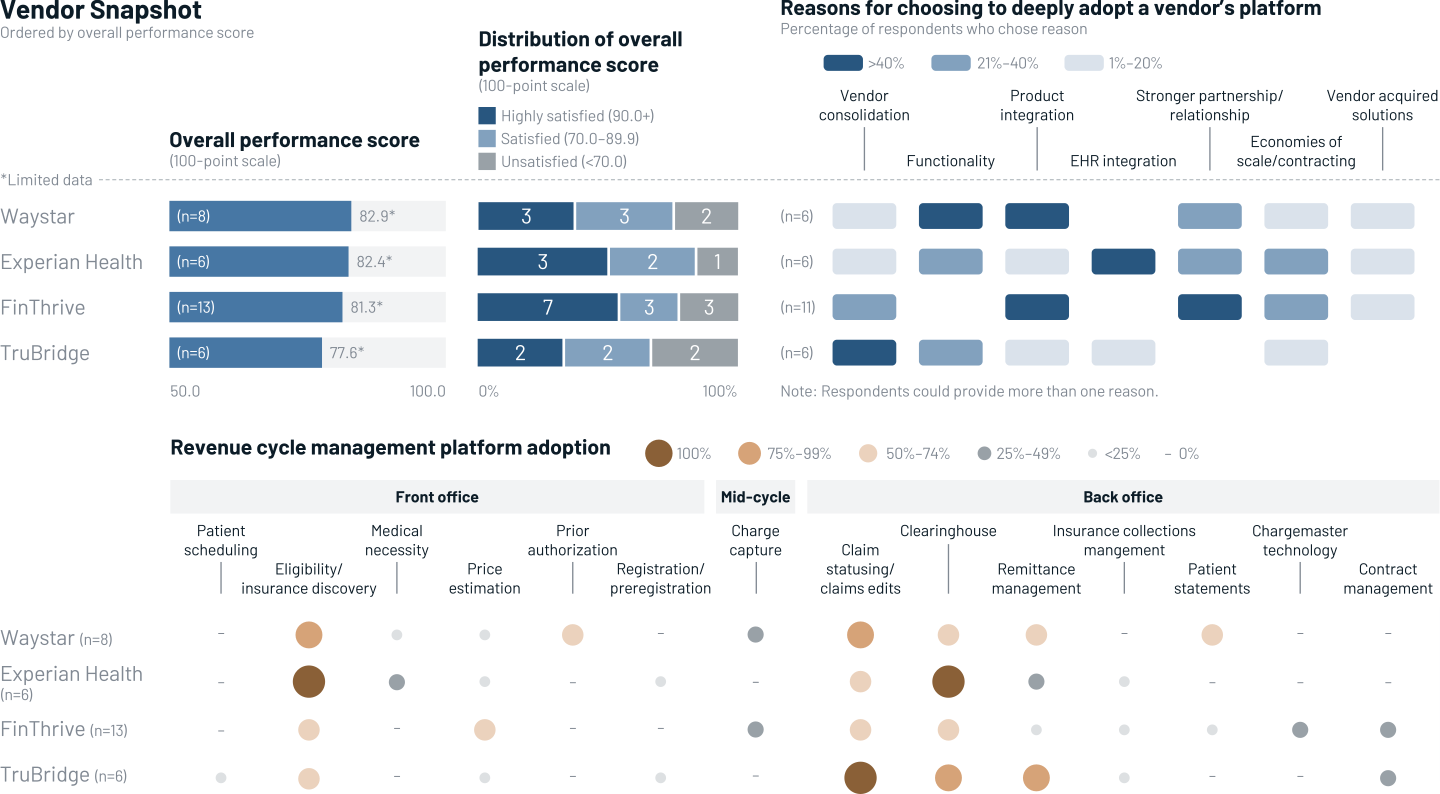
Waystar’s Product Integrations Unify Platform Experience; Experian Health’s Improved EHR Integrations Lead to High Satisfaction with Overall Functionality
 Respondents most often report choosing to implement the Waystar platform for improved functionality and product integration. Now, deep adopters of the Waystar platform report the highest overall satisfaction among respondents interviewed for this report. Interviewed customers report the integrated automation streamlines the claims-processing workflow, increases efficiency, and allows for better management of payments, denials, and rejections, along with the ability to monitor trends and payer behaviors. Waystar’s strong patient financial engagement product also drives satisfaction, as the vendor actively works to improve the features and usability. Respondents feel the vendor builds strong loyalty and partnerships by being in tune with market needs and building out a broad platform through a good balance of acquisitions and in-house development. Although some functionalities are still being developed, deep adopters are highly optimistic Waystar will deliver on their promised vision. However, deep adopters don’t feel it is economical to scale to multiple Waystar products, with a couple respondents reporting nickel-and-diming.
Many responding provider organizations chose to deeply adopt Experian Health’s platform for the EHR integration; others cited reasons such as an established vendor partnership, improved integration capabilities, and better bundled services and prices. Now using the platform, responding deep adopters are satisfied with the EHR integration, saying the connection feels seamless and improves end users’ workflows. Overall, respondents feel the products are easy to use and there is easy integration between the eligibility and claims-processing tools. Individually, the claims management and contract management products are also noted for their strong functionality. Respondents say Experian is a preferred vendor partner who excels in customer engagement and empowers account contacts to build strong relationships. Some responding deep adopters see lower value due to feeling nickel-and-dimed for each insurance-eligibility transaction. However, some respondents say they have been able to negotiate better pricing by purchasing multiple Experian products.
FinThrive Drives Loyalty by Building Strong Relationships; TruBridge Deep Adopters Report Better Value with Platform Adoption yet Remain Unsure about Long-Term Plans
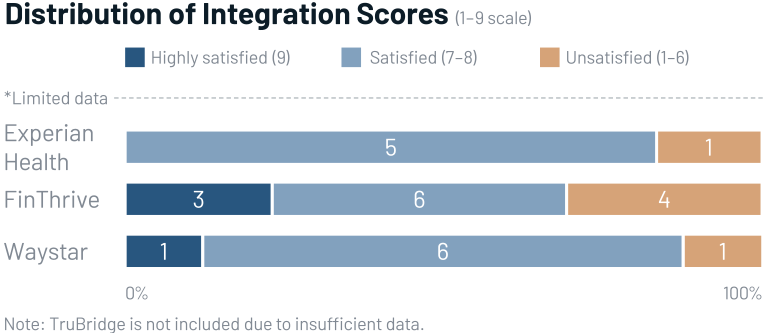
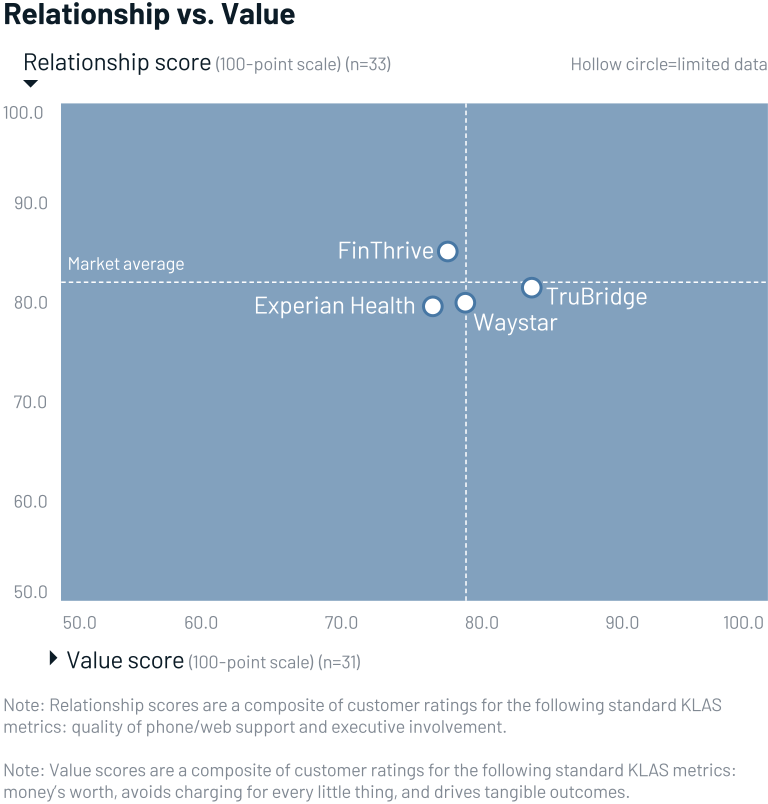 FinThrive respondents most often chose to deeply adopt the vendor’s platform because of the vendor’s ability to build strong, long-lasting relationships. Interviewed customers report a deeper partnership with the vendor because of support responsiveness and accommodation of customer needs. Along with having the highest rated relationships among deep-adopting respondents, FinThrive also has the highest rated overall product quality, helped by the strong individual chargemaster and insurance discovery solutions. Deep adopters report inconsistent experiences with FinThrive’s integration. Those satisfied with the integration report the most positive outcomes, as enhanced integration between products has improved efficiency and decreased duplicate work. These customers also note that FinThrive uses the data from integrations to strategically guide their organizations to improve outcomes. However, a couple of deep adopters want better EHR integration, noting the data exchange is slow and cumbersome and can be unreliable.
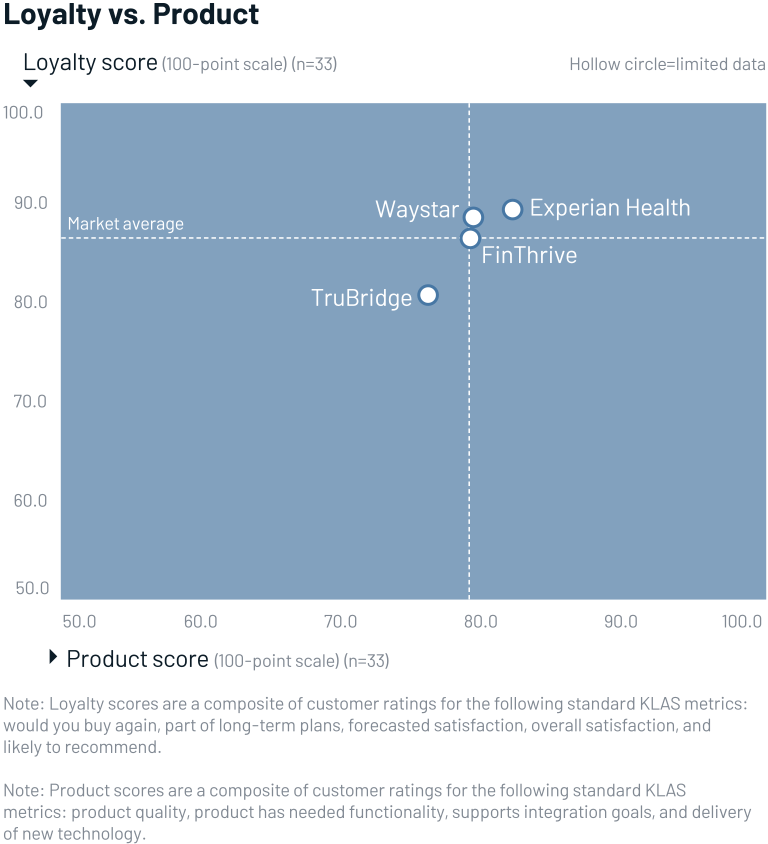
Responding deep adopters of TruBridge’s platform most often chose to adopt the platform for the benefits of vendor consolidation. Many of these customers feel the vendor stands out for their cost, specifically noting that the single bill eliminates any nickel-and-diming and that TruBridge’s value increases with the adoption of more offerings. Customers have realized benefits such as platform integration, improved collections, accelerated cash flow, and unified web support. One customer feels the vendor’s support model made consolidation easy, noting the single web-support system where organizations can connect with their contact for each piece of the platform. Respondents also say the customer service team turns around projects quickly and professionally. Still, several deep adopters aren’t sure whether the vendor is part of their long-term plans (as shown in the loyalty score above), often due to the need for a third-party solution with more user-friendly reporting and actionable insights. Responding deep adopters also mention challenges with building new functionalities and, specifically, adapting to the pricing transparency regulations. Although customers now report an improved patient estimate solution, they feel TruBridge didn’t keep all initial promises for the platform, noting that it can be inaccurate at first and challenging to set up.
About This Report
Each year, KLAS interviews thousands of healthcare professionals about the IT solutions and services their organizations use. For this report, interviews were conducted over the last 12 months using KLAS’ standard quantitative evaluation for healthcare software, which is composed of 16 numeric ratings questions and 4 yes/no questions, all weighted equally. Combined, the ratings for these questions make up the overall performance score, which is measured on a 100-point scale. The questions are organized into six customer experience pillars—culture, loyalty, operations, product, relationship, and value.
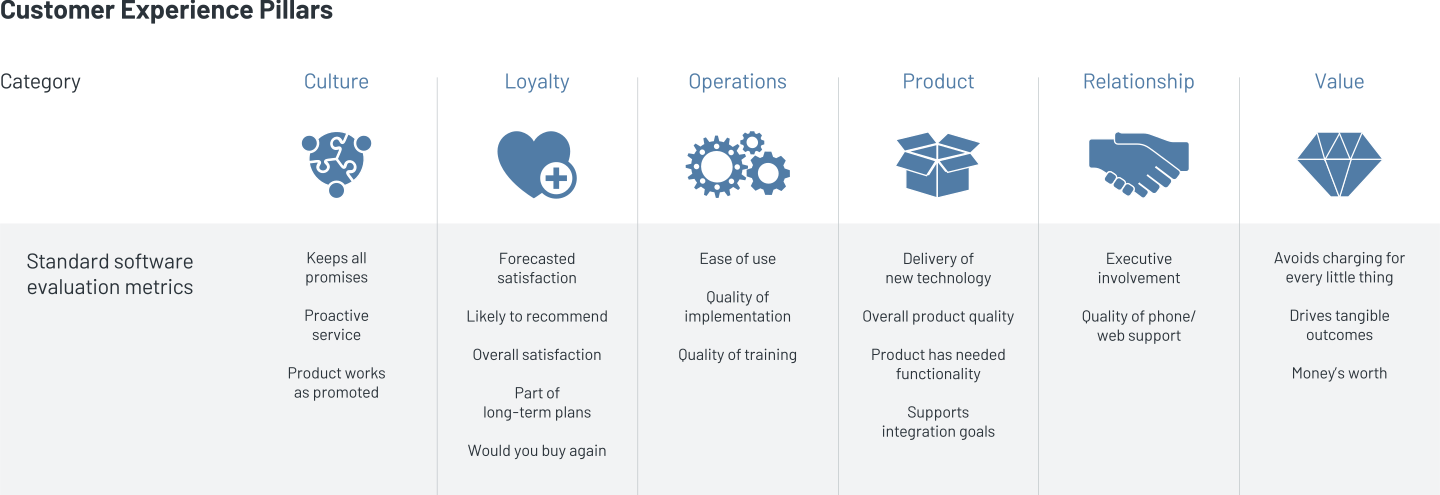
For this study, each measured vendor shared with KLAS a short list of customers who qualify as deep adopters, and KLAS then interviewed a sample of the organizations from each vendor’s list, comprising 31 respondents.
To supplement the performance data collected, KLAS also asked interviewed customers the following questions:
- Are you planning on adopting any additional revenue cycle solutions offered by your vendor?
- What benefits/outcomes, if any, have you realized from adopting multiple revenue cycle solutions from your vendor?
- What challenges, if any, have you encountered from adopting one vendor for multiple revenue cycle solutions?
- What led you to adopt multiple solutions from one vendor?
This report should not be interpreted as a comprehensive view of customer satisfaction or adoption across the market.
Sample Sizes
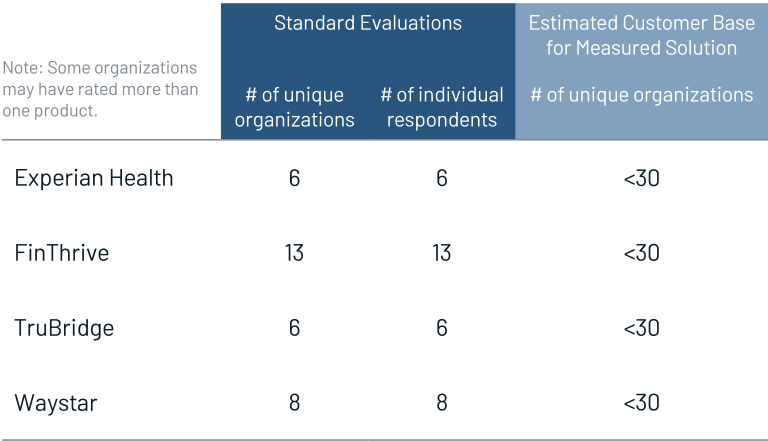 Unless otherwise noted, sample sizes displayed throughout this report (e.g., n=16) represent the total number of unique customer organizations interviewed for a given vendor or solution. However, it should be noted that to allow for the representation of differing perspectives within any one customer organization, samples may include surveys from different individuals at the same organization. The table below shows the total number of unique organizations interviewed for each vendor or solution as well as the total number of individual respondents.
Some respondents choose not to answer particular questions, meaning the sample size for any given vendor or solution can change from question to question. When the number of unique organization responses for a particular question is less than 15, the score for that question is marked with an asterisk (*) or otherwise designated as “limited data.” If the sample size is less than 6, no score is shown. Note that when a vendor has a low number of reporting sites, the possibility exists for KLAS scores to change significantly as new surveys are collected.

Writer
Carlisa Cramer

Designer
Bronson Allgood

Project Manager
Sydney Toomer
This material is copyrighted. Any organization gaining unauthorized access to this report will be liable to compensate KLAS for the full retail price. Please see the KLAS DATA USE POLICY for information regarding use of this report. © 2026 KLAS Research, LLC. All Rights Reserved. NOTE: Performance scores may change significantly when including newly interviewed provider organizations, especially when added to a smaller sample size like in emerging markets with a small number of live clients. The findings presented are not meant to be conclusive data for an entire client base.