KLAS Contact

Contact KLAS
Contact KLAS
 2026 BEST IN KLAS
Preferences
Related Series

Healthcare Operations 2023
Addressing Operational Challenges through Technology

Author
Niel Oscarson

Author
Sam Eaquinto

Author
Marcus Hadfield
Healthcare organizations face more operational challenges now than ever, so they are looking to a variety of sources to overcome barriers. Vendors of multiple solution types have an opportunity to improve their offerings to better help healthcare organizations tackle top operational challenges. For this report, KLAS spoke to 51 healthcare executives from 51 organizations to examine current operational strategies, goals, and perceived challenges as well as the role that technology plays in addressing these challenges.
Vast Majority of Organizations Lack a Sophisticated Operational Strategy
Just over 20% of respondents say their operational strategy is sophisticated (see definitions of stages in chart to the right). The remaining 80% are in planning, emerging, or maturing stages. Larger organizations are more likely to be further along, though they still note challenges and external pressures that mean their strategies must continue evolving. Midsize and smaller hospitals have a particularly large gap between operational challenges to be solved and the resources to tackle those challenges, and few of these organizations report having achieved a sophisticated operational strategy.
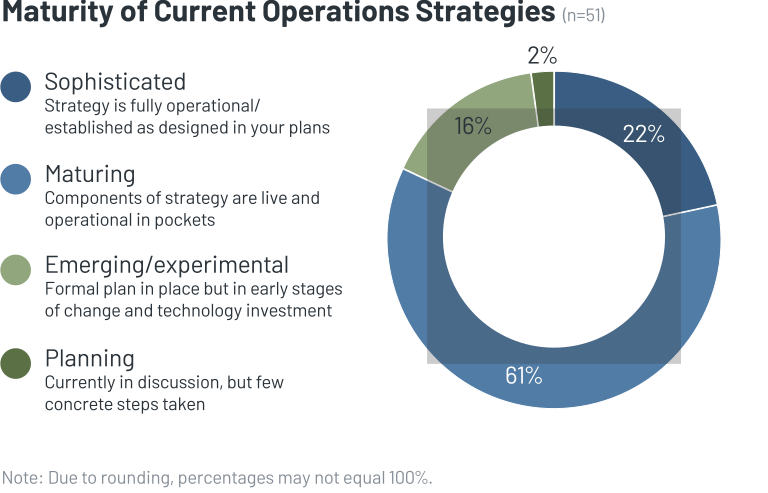
 “Our strategy is very sophisticated but is evolving. . . . Our key operational goal is to improve patient access and confusion around care delivery models.” —VP/other executive
Improving Patient Access and Engagement Is a High Priority for Organizations
Organizations hope to achieve a variety of operational goals over the next one to two years. Respondents across the board most often report wanting to engage patients and the communities they serve in innovative ways, such as digital front door solutions. Increasing efficiency in processes and workflows (i.e., automation of patient follow-up, AI deployment, improved ordering) is the next most-reported goal. Other goals mentioned by all types of respondents include increasing patient volumes and developing population health/value-based care capabilities.
What types of operational goals an organization has tend to vary depending on the organization’s size. Ambulatory organizations most often report wanting to increase efficiency and progress their population health efforts. Small organizations (25–500 beds) want to increase their patient base and diversify their patient engagement. Organizations with 501–1,000 beds want to improve their technology infrastructure, while large organizations with 1,001+ beds specifically prioritize staff retention.
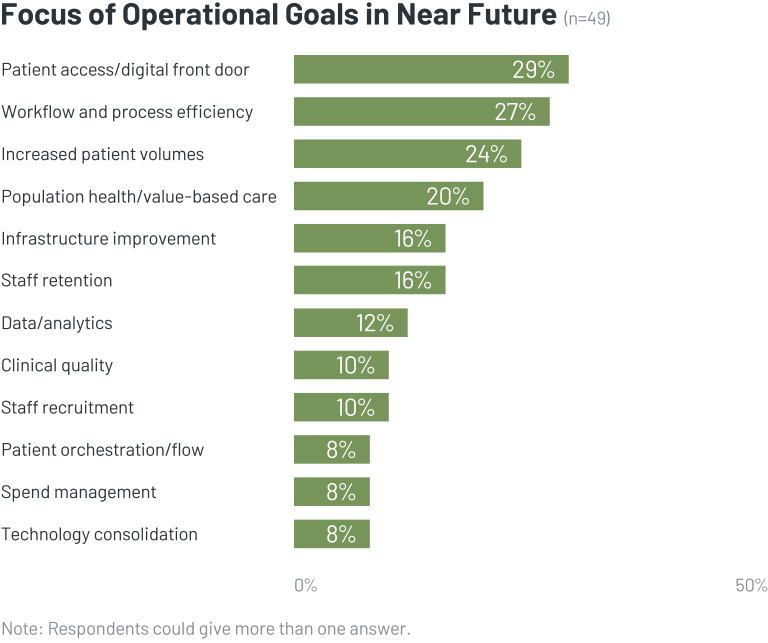
“Our board has outlined several strategic priorities. From the CIO’s perspective, some large goals are reducing redundancy, increasing uptime, and increasing patient access. There are several projects that adhere to those goals.” —CIO
Budget and Staffing Issues Are Most Prominent Current Operational Challenges
Across all bed sizes, acute care organizations cite budget constraints and staffing shortages as significant barriers to their operations and strategies. Respondents say they have intentions and goals to address problems but are often unable to do so because of the current economic environment. Organizations also mention challenges such as internal misalignment of priorities and inadequate change management practices. For ambulatory organizations, interoperability is a top operational challenge, with many respondents saying they prefer using best-of-breed solutions but lack the qualified staff and/or resources needed to successfully integrate disparate technologies. To help healthcare organizations solve operational problems, technology vendors must figure out innovative ways to reduce hospital staffing requirements and work within budget constraints.
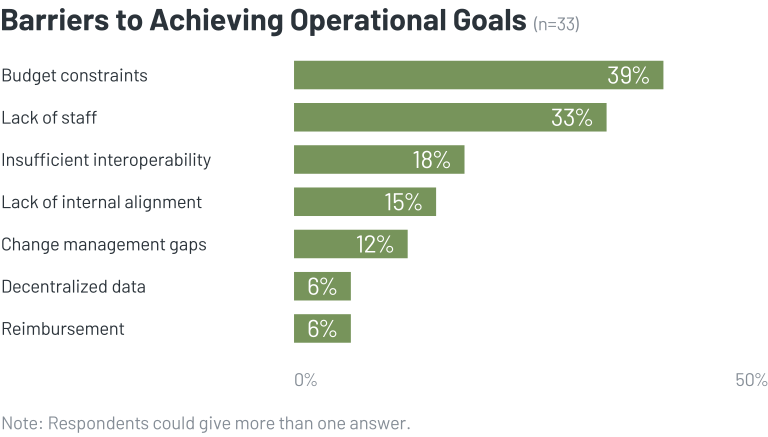
“Time, people, and money are standing in the way of us achieving our goals. We would do many things overnight if we had the funding, the people, and the time. Each of those obstacles are equal. One is not more of an obstacle than another.” —CIO
Patient-Centric Solutions Are Integral to Strategy; Technology Consolidation Is Also Top of Mind
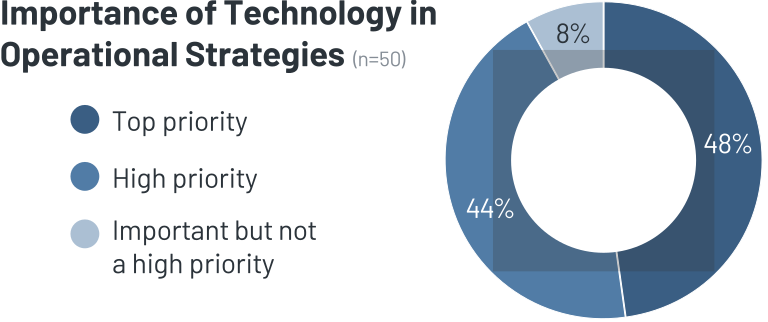
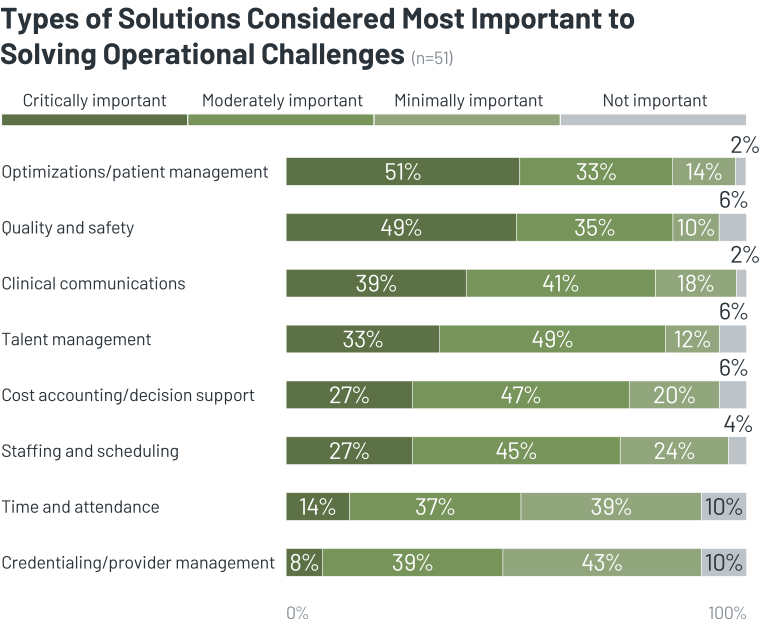
Technology is either the top priority or a high priority when addressing operational goals for over 90% of responding organizations. Large organizations (1,001+ beds) uniquely don’t rate technology as their top priority, likely a result of progress previously made in addressing operational challenges with a lot of technology and skilled staff already in place to manage the technology. When asked which solution types are most important for addressing operational challenges, respondent organizations of all sizes often report patient-centric solutions. Many specifically emphasize quality/safety solutions, pointing out they have tangible impacts on published external safety ratings and their ability to comply with current regulations. Organizations also feel that patient flow optimization solutions can address some of their operational goals, directly helping organizations facilitate a more seamless flow of patients in and out of their care while also combating staffing shortages by effectively managing physical assets.
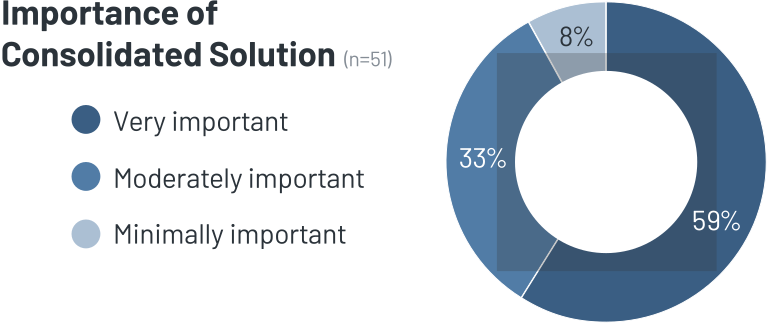
Over 90% of respondents report that technology consolidation is very or moderately important, with many noting that consolidation offers a high potential to achieve greater operational efficiency. However, many also feel that no one solution can fill all of their organizational needs, and some mention substantial cultural barriers to removing commonly used systems and implementing new systems for the sake of consolidation. Several executives feel that integration capabilities play a role in helping to address operational needs by allowing the exchange of important information between different systems without the challenges of moving to a single, consolidated platform.
Organizations Highlight ERP and Cloud Vendors as Best Enterprise Partners, Outside of EMR Vendors
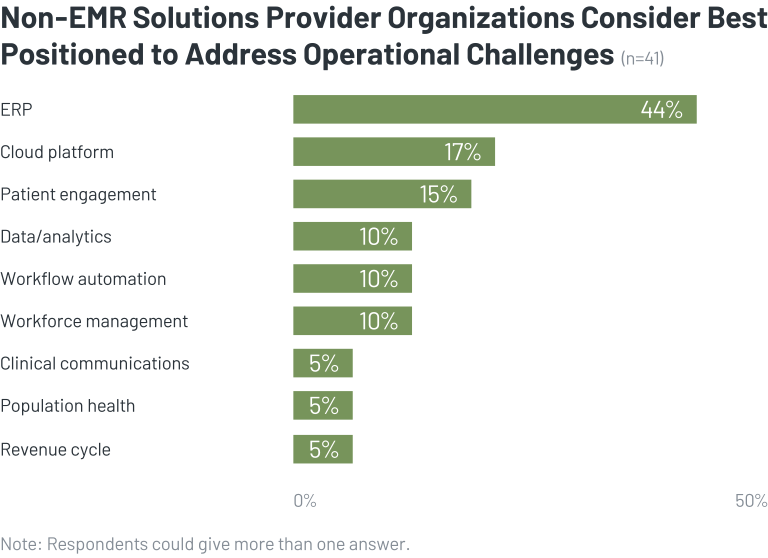
Organizations are defaulting to large enterprise systems to increase efficiency and get the most possible from one vendor relationship. When asked which types of vendors outside of EMR vendors are best positioned to be a partner in addressing operational challenges, over 40% of respondents mentioned ERP vendors due to their wide operational reach. Cloud and patient engagement vendors are also top of mind for healthcare executives looking for partners.
About This Report
This report is a perception study. KLAS spoke to 51 healthcare executives from 51 organizations to help readers understand the key strategies healthcare organizations are deploying as they combat operational challenges, and it examines how technology as a whole and technology vendors play a role. It is important to note that this report is not focused on the performance of these vendors and solutions but rather on ascertaining which are top of mind for healthcare organizations. Other firms not discussed in this report may offer similar capabilities, but healthcare organizations did not bring them up in conversations with KLAS.
KLAS created a supplemental evaluation to delve deeper into several questions specific to healthcare operations. This evaluation asked respondents the following questions:
- How would you categorize your organization’s current operations strategy?
- What specific operational goals does your organization plan to address in the next 1–2 years?
- To what extent is technology a priority in your strategy/plan to address your operational goals?
- Which healthcare IT solutions are the most important to you in solving operational challenges?
- In considering healthcare operations solutions, how important is it to have a consolidated solution?
- Aside from your EMR vendor, who is best positioned to be an enterprise partner in addressing operational challenges from an IT perspective?
- What is standing in the way of your organization addressing and achieving those operational goals?
- Outside of IT, what are you looking to or doing to address operational challenges?

Writer
Carlisa Cramer

Designer
Breanne Hunter
This material is copyrighted. Any organization gaining unauthorized access to this report will be liable to compensate KLAS for the full retail price. Please see the KLAS DATA USE POLICY for information regarding use of this report. © 2026 KLAS Research, LLC. All Rights Reserved. NOTE: Performance scores may change significantly when including newly interviewed provider organizations, especially when added to a smaller sample size like in emerging markets with a small number of live clients. The findings presented are not meant to be conclusive data for an entire client base.