KLAS Contact

Contact KLAS
Contact KLAS
 2026 BEST IN KLAS
Preferences
Related Series
Related Segments

Payer IT Consulting Services Ecosystem 2023
An Initial Look at Performance and Firm-Reported Capabilities

Author
Trent Davis

Author
Sam Eaquinto
Payer organizations are under increasing pressure to maintain regulatory compliance and ensure strong data security at a low cost; thus, they are seeking payer IT consulting firms for help with advisory services, change management, implementations, and managed services. This report—KLAS’ first in this area—defines the broad ecosystem of payer IT consulting services and examines the market through firm-reported capability sets, validations, and performance data.
Note: The next report on payer IT consulting services will further dive into customer validations of specific engagement types and outcomes.
Defining Payer IT Consulting Services
KLAS defines payer IT consulting services as any consulting service that helps payers with various technology-focused needs. This report focuses on four key areas of payer IT consulting: advisory services, process improvement/change management, implementation, and managed services.
Advisory Services
Strategic engagements such as IT assessments, IT strategic plans, system selections, pre-implementation planning, and interim IT management
Process Improvement/Change Management
A structured approach to planning, implementing, and managing organizational changes in a systematic, controlled manner with the goal of increasing the likelihood of successful adoption of new initiatives
Implementation
Projects in which firms help clients implement HIT products and provide application experts, analysts, builders, trainers, and/or project leaders
Managed Services
Outsourced engagements involving the IT department, often for application management, help desk support, and/or infrastructure support
Ecosystem Overview
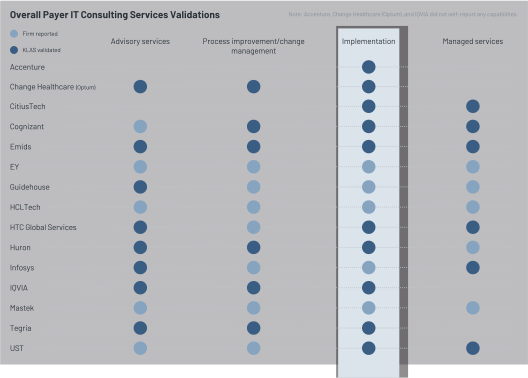
To help payer organizations quickly understand the breadth of services firms’ IT consulting offerings, KLAS has developed an overview meant to guide organizations to firms who can accommodate their specific use cases and technical requirements. Firms were asked to self-report which capabilities are available to customers today, why clients select them (see Firms at a Glance section), and for which solutions they offer implementation services. The chart to the right shows which areas have been reported by the firm and/or validated through KLAS interviews with payer organizations. See the Firm-Reported Insights section for more information on firm-identified (but not yet validated) capabilities in the advisory services and managed services spaces.
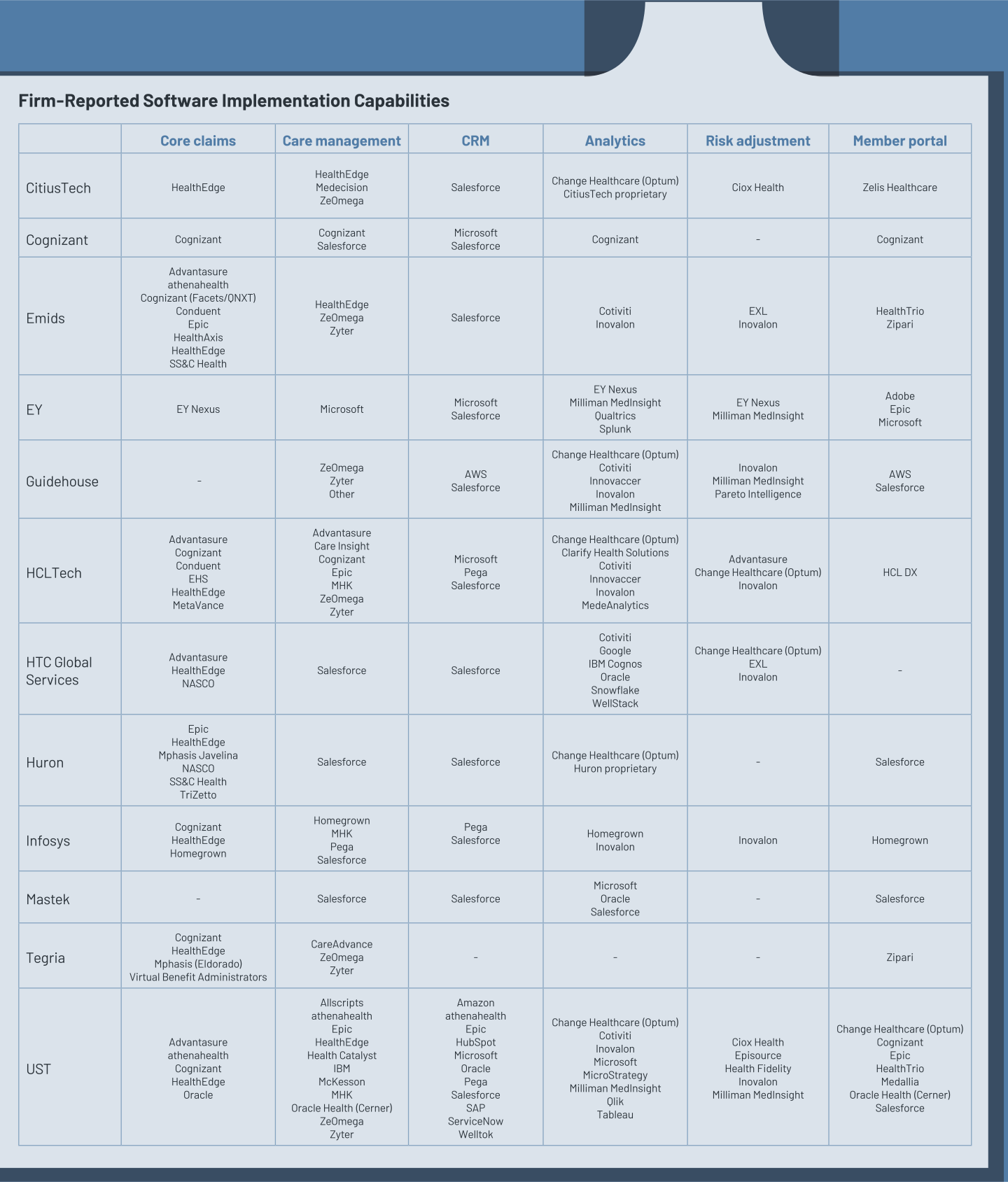
The chart below can help payer organizations identify which firms have experience implementing their chosen software solution.
Performance Insights
KLAS has performance data on the following firms: Accenture, Change Healthcare (Optum), CitiusTech, Cognizant, Emids, HTC Global Services, Huron, IQVIA, and Tegria.
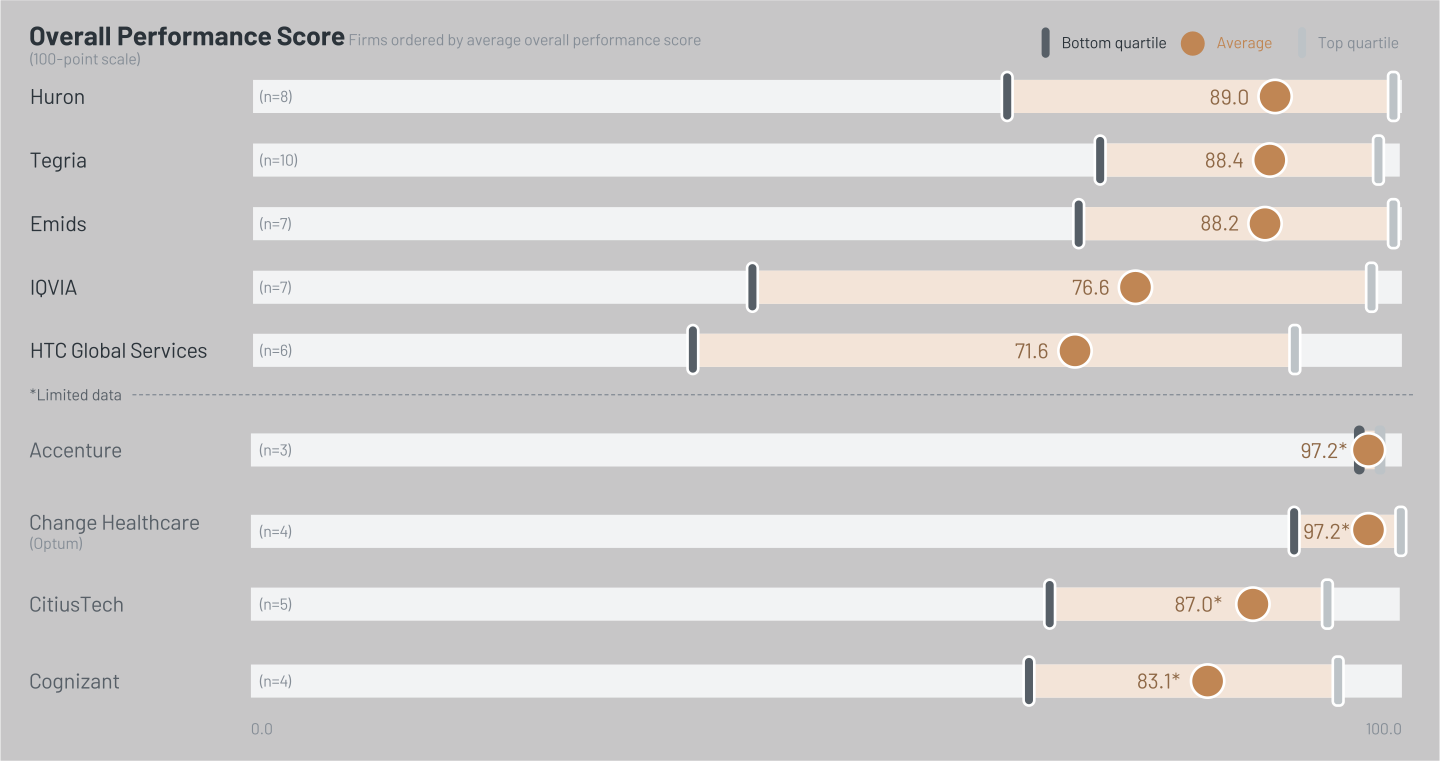
Among Fully Rated Firms, Huron, Tegria & Emids Clients Most Consistently Satisfied
Most often validated for advisory service engagements, Huron has the highest client satisfaction among fully rated firms. Respondents feel Huron excels at fostering relationships as a trusted advisor and highlight Huron’s flexibility; clients also note they don’t feel pressured to contract the firm for additional services. Similarly, Tegria clients appreciate that the firm’s partnership and strategic advice come without additional pressures or unnecessary fees, helped by the fixed-fee contracts. Respondents feel strongly that they get their money’s worth from the firm and often report engaging them for process improvement and advisory services. 2023 Best-in-KLAS winner Emids is also rated very high for money’s worth by clients. Respondents feel the firm delivers expected outcomes and provides knowledgeable resources who can fit in with the payer organizations’ employees. The majority of validated engagements for Emids involve process improvement and change management. Although data is limited for Accenture and Change Healthcare (Optum), clients from both firms report very high satisfaction. Accenture* clients say the firm’s resources are experienced and willing to take on challenging tasks to solve problems. Change Healthcare (Optum)* clients appreciate the consultants’ subject matter expertise as well as their ability to integrate into the client organization.
*Limited data
Clients Want HTC Global Services & IQVIA to Improve Bench Depth and Resource Expertise
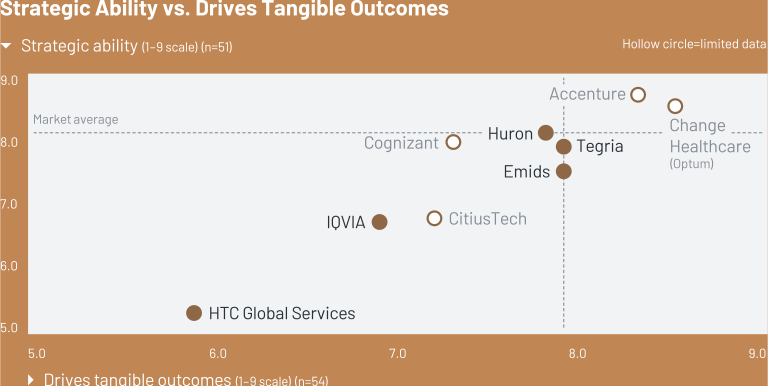 Clients of HTC Global Services and IQVIA both report relatively lower satisfaction scores for payer IT consulting services, and experiences vary depending on the organization. Some HTC Global Services clients say they don’t rely on the firm for strategic guidance or insights, as their bench tends to be smaller than other firms’ and resources may not have the necessary skill set. Reported HTC engagements include advisory services, implementation, and managed services. Even with a wide range of validated offerings, some clients consider HTC a niche firm rather than a broad player in the market, noting that HTC is proven to do well in targeted environments. Respondents also feel the firm’s senior leadership treats them professionally and fairly. The IQVIA client experience varies, largely dependent on the assigned resources. Some clients feel their resources didn’t have deep-enough healthcare and payer expertise, and others note an issue with staff consistency and turnover that led to project delays. Other clients report better experiences with their resources, saying they were personable and attentive and possessed strong industry knowledge. Validated engagements include advisory services, process improvement/change management, and implementation.
Emids
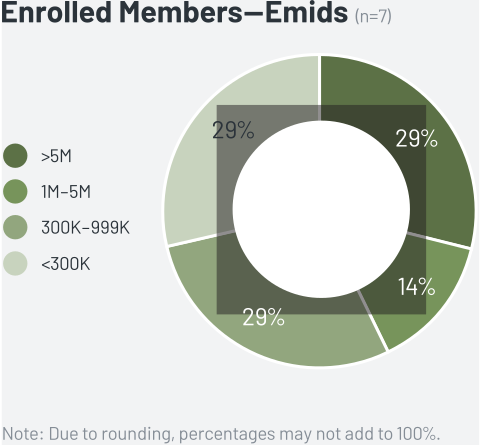
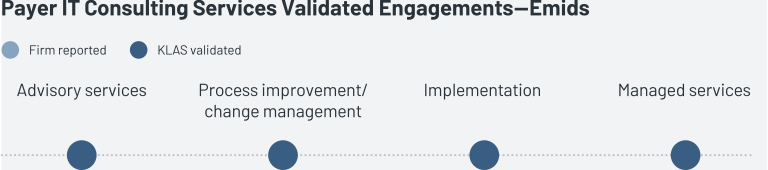

Bottom line: Clients are generally satisfied; only one scored below 80. Several feel firm provides quality, knowledgeable resources and consistently meets expectations. A less-satisfied client noted Emids’ customer service and level of attention have declined due to an acquisition. Emids has validated clients of all sizes; validated engagements often involve process improvement/change management.
Why clients select them (firm reported): People, focus, experience
HTC Global Services
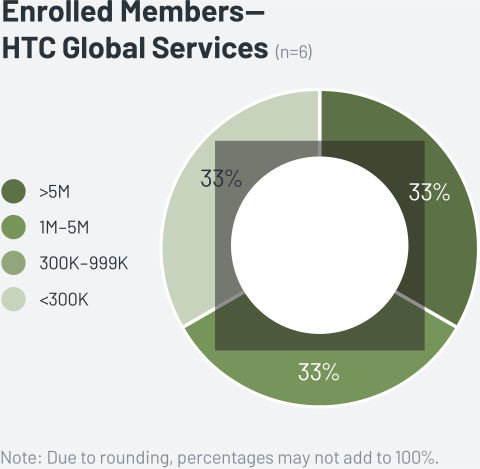
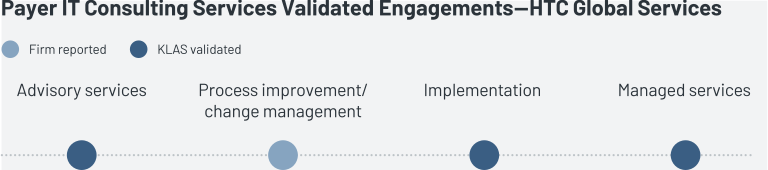

Bottom line: Client satisfaction varies, with five of the nine respondents rating below 80. Some report feeling very pleased with senior leadership and fairly priced services. Others say HTC has a relatively smaller bench and some resources with inadequate skill sets. Clients include smaller organizations (<300K enrolled members) as well as larger organizations (>5M enrolled members). Firm doesn’t provide vendor selection or interim management services within the advisory services framework; they also don’t offer risk adjustment or member portal implementations.
Why clients select them (firm reported): Customer-first mindset, approach, payer expertise
Huron
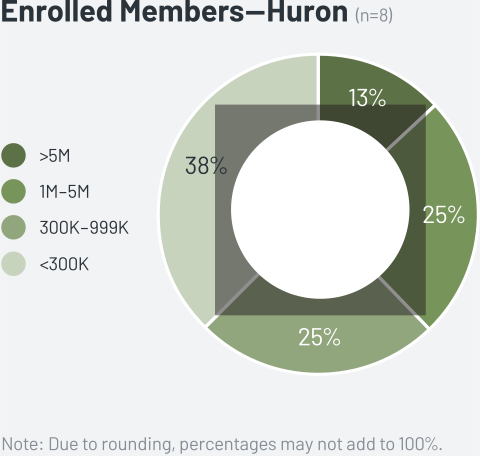
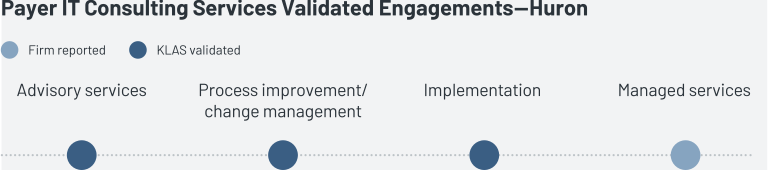

Bottom line: 75% of respondents are highly satisfied with Huron, reporting that they have strong resources and can be relied on for strategic guidance as a trusted advisor. Huron has a deep bench that allows for flexibility, and clients don’t feel pressured to make additional purchases. Responding clients are in all size ranges, but most are under 1M enrolled members. Most validated work involved advisory services.
Why clients select them (firm reported): Level of service, partnering approach with health plans, deep industry experience across digital domains
IQVIA
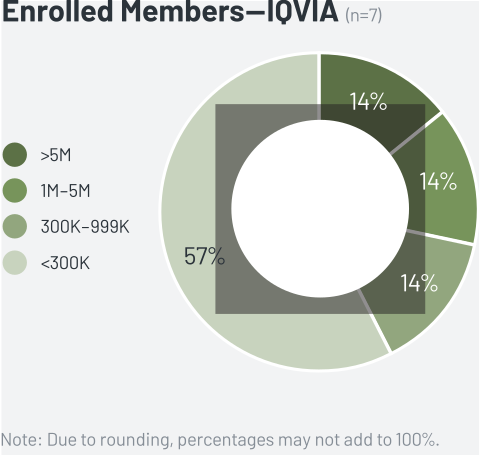
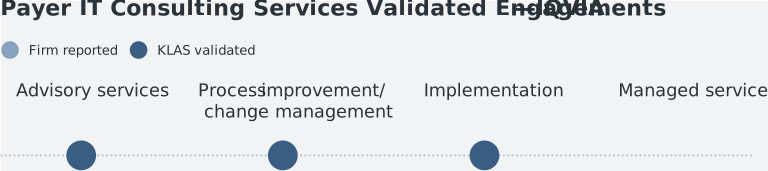

Bottom line: IQVIA client satisfaction is varied, often depending on the quality of the provided resources. Less-satisfied clients cite a lack of payer and healthcare expertise, saying issues arose when the resources didn’t know which questions to ask. Other clients describe firm as having a deep bench and competitive pricing. Most respondents were from smaller payer organizations (<300K enrolled members), though firm has clients in each size range. Most reported work was in advisory services.
Why clients select them (firm reported): IQVIA did not provide a submission to our firm questionnaire
Tegria
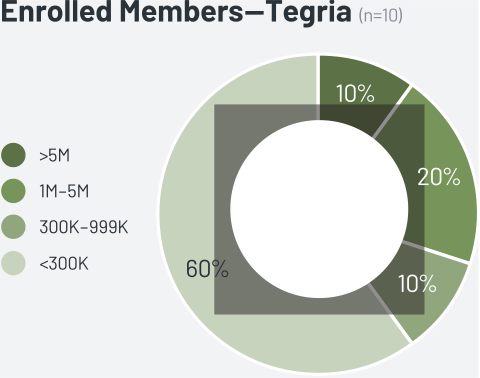
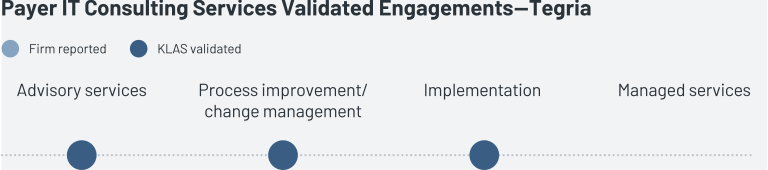

Bottom line: 60% of respondents report high satisfaction. They appreciate the firm’s good screening process, as most resources are good matches for the projects. One client felt there could have been better communication from Tegria post-implementation. Responding clients are of all sizes, but most have fewer than 300K enrolled members. Tegria doesn’t offer managed services, analytics assessment/strategy, cloud advisory/optimization, or CRM and risk adjustment implementations.
Why clients select them (firm reported): Peer recommendation, healthcare expertise, commitment to driving change
Limited Data Firms
Firms ordered alphabetically
Accenture
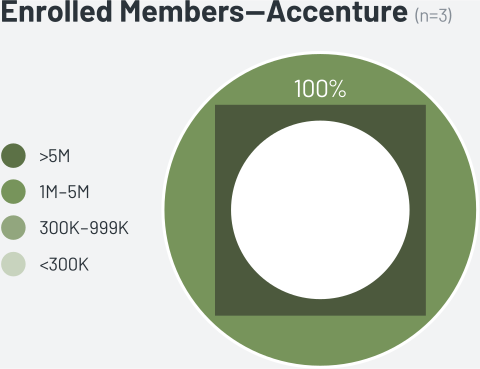
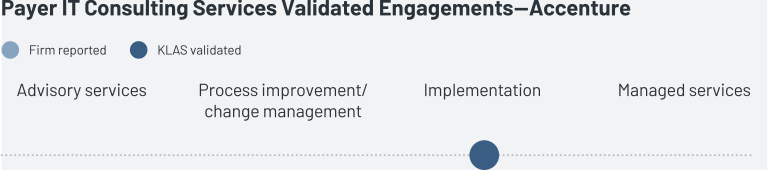

Bottom line: While the sample is limited, all three responding organizations show consistent high satisfaction with Accenture’s services. Clients praise firm for their commitment and follow-through, which allowed for successful outcomes. All validated engagements were for implementation work at payer organizations with over 1M enrolled members.
Why clients select them (firm reported): Accenture did not provide a submission to our firm questionnaire
Change Healthcare (Optum)
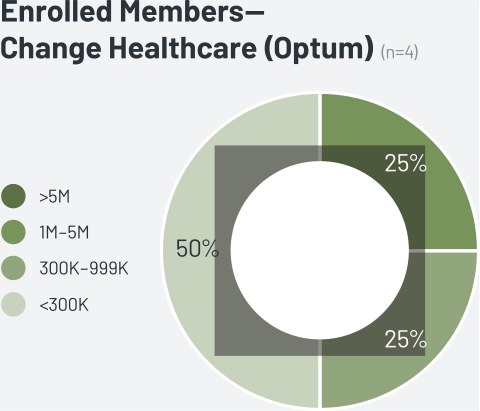
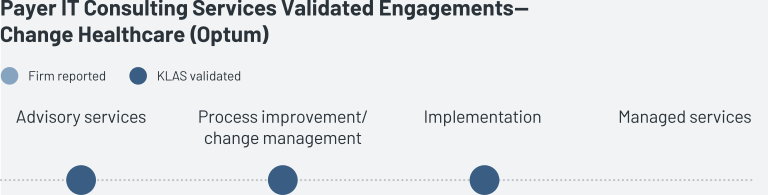

Bottom line: A limited sample of respondents all rate Change Healthcare very high. Clients are pleased with firm’s process of finding and matching qualified resources, saying the consultants are as invested as the clients’ own employees. Three of the four validated engagements were at payer organizations with fewer than 1M enrolled members; two engagements were advisory services.
Why clients select them (firm reported): Change Healthcare (Optum) did not provide a submission to our firm questionnaire
CitiusTech
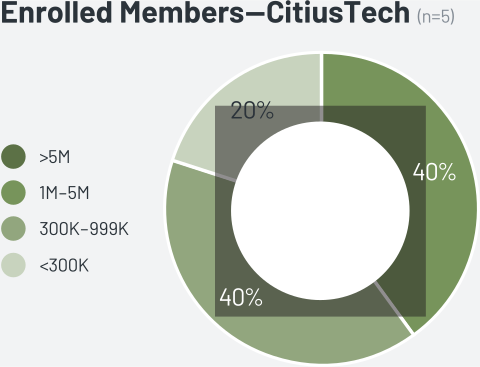
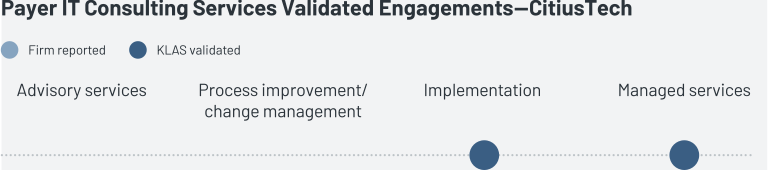

Bottom line: Three of the five responding organizations (a limited sample) are highly satisfied with CitiusTech’s performance. The firm was able to deliver on time with tight deadlines. All respondents would contract with CitiusTech again. One would like them to provide more strategic decision-making at the leadership level. With clients in multiple size ranges, 60% of validated engagements were managed services.
Why clients select them (firm reported): Healthcare expertise, interoperability capabilities, digital-first approach, utilities/accelerators
Cognizant
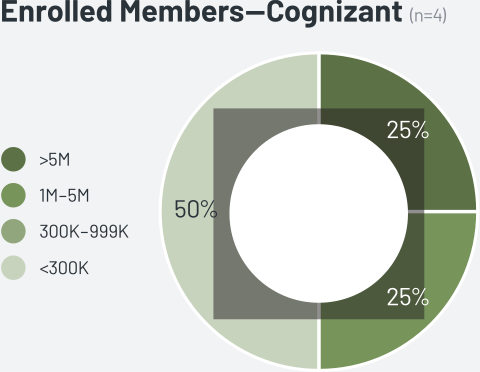
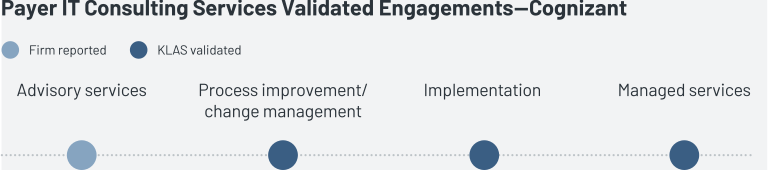

Bottom line: Client satisfaction is varied. Respondents feel firm leadership is receptive and easy to work with. One client described issues from poor project management; another mentioned silos between the product and services teams. Firm doesn’t provide vendor selection or interim management services. Firm often implements their proprietary TriZetto software, which doesn’t include a risk adjustment solution. Half of respondents had fewer than 300K enrolled members; the other half had over 1M. The validated work was divided between process improvement, implementation, and managed services.
Why clients select them (firm reported): Cognizant did not provide a response to this question
About This Report
Each year, KLAS interviews thousands of healthcare professionals about the IT solutions and services their organizations use. For this report, interviews were conducted over the last 18 months using KLAS’ standard quantitative evaluation for healthcare services, which is composed of 9 numeric ratings questions and 3 yes/no questions, all weighted equally. Combined, the ratings for these questions make up the overall performance score, which is measured on a 100-point scale. The questions are organized into five customer experience pillars—loyalty, operations, relationship, services, and value.
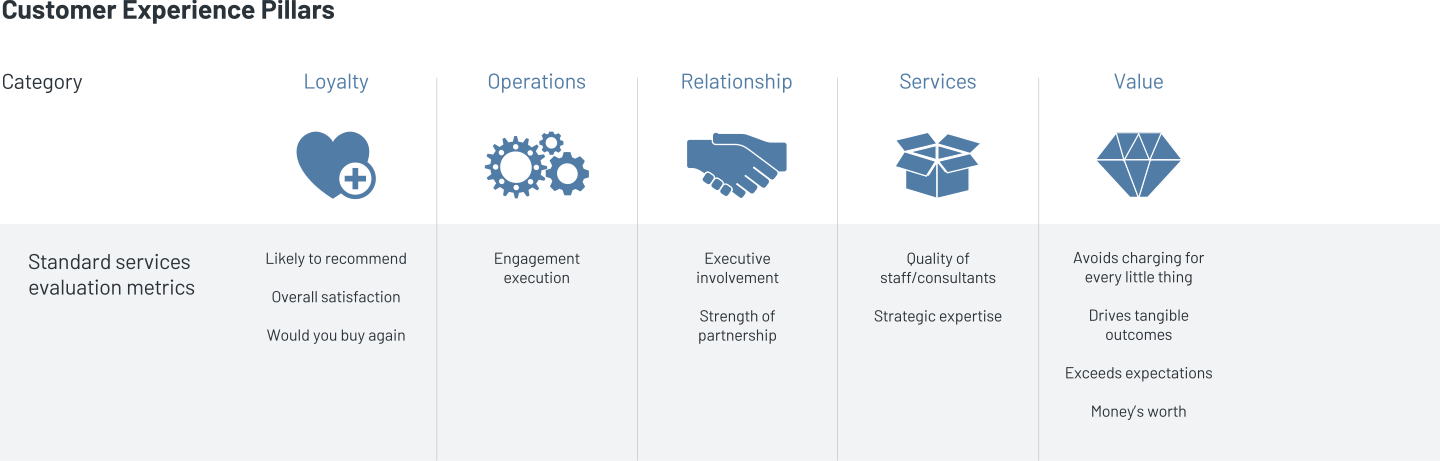
To supplement the performance data and provide a framework of the overall payer IT consulting services space, KLAS also asked the firms the following questions: (1) Why do clients typically select your firm? (2) What types of IT consulting services do you provide? (3) What types of platforms do you implement?
Sample Sizes
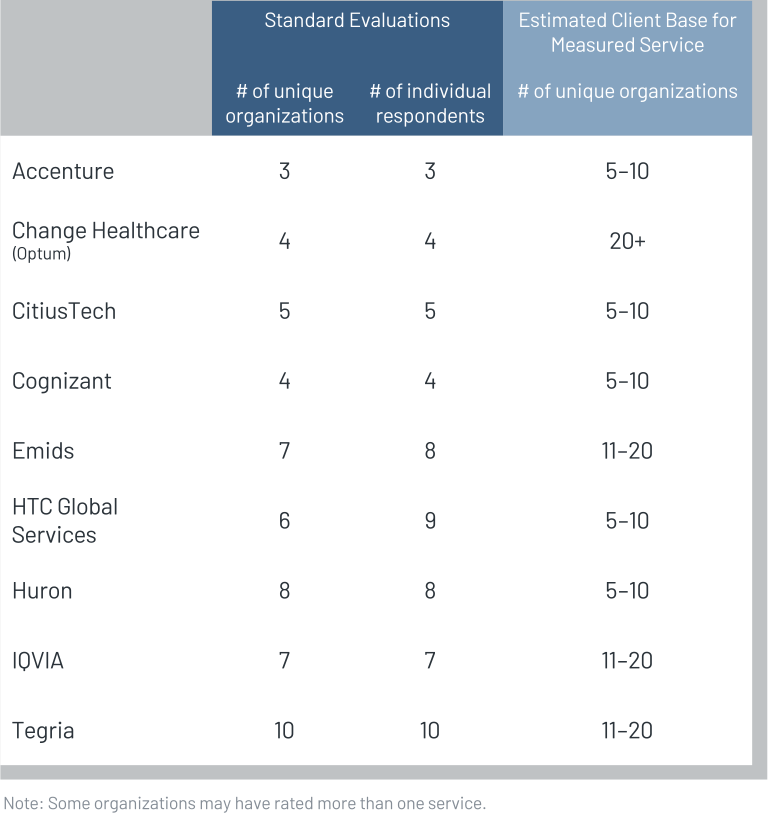 Unless otherwise noted, sample sizes displayed throughout this report (e.g., n=16) represent the total number of unique client organizations interviewed for a given firm or service. However, it should be noted that to allow for the representation of differing perspectives within any one client organization, samples may include surveys from different individuals at the same organization. The table below shows the total number of unique organizations interviewed for each firm or service as well as the total number of individual respondents.
Some respondents choose not to answer particular questions, meaning the sample size for any given firm or service can change from question to question. When the number of unique organization responses for a particular question is less than 6, the score for that question is marked with an asterisk (*) or otherwise designated as “limited data.” If the sample size is less than 3, no score is shown. Where textual content relies on limited data, the firm name is marked with an asterisk. Note that when a firm has a low number of reporting sites, the possibility exists for KLAS scores to change significantly as new surveys are collected.

Writer
Carlisa Cramer

Designer
Breanne Hunter

Project Manager
Sydney Toomer
This material is copyrighted. Any organization gaining unauthorized access to this report will be liable to compensate KLAS for the full retail price. Please see the KLAS DATA USE POLICY for information regarding use of this report. © 2026 KLAS Research, LLC. All Rights Reserved. NOTE: Performance scores may change significantly when including newly interviewed provider organizations, especially when added to a smaller sample size like in emerging markets with a small number of live clients. The findings presented are not meant to be conclusive data for an entire client base.