KLAS Contact

Contact KLAS
Contact KLAS
 2026 BEST IN KLAS
Preferences
Related Series

2025

2023
Related Segments

Ambulatory Ecosystem Veradigm Complete Look 2024

Author
Chris Clune

Author
Alex McIntosh
When making a core HIT purchasing decision, ambulatory healthcare organizations must take into account how prospective partners deliver across a variety of key technology areas beyond core EHR and PM solutions. This Veradigm “complete look” provides a high-level analysis of the key IT components that make up Veradigm’s comprehensive suite. (Other reports in the series do the same for athenahealth, eClinicalWorks, Greenway Health, and NextGen Healthcare.)
Performance & Market Share Overview—Veradigm Ambulatory Suite
Strengths
- Cloud-based services are seen as beneficial for small practices
- Mobile functionality considered a strong point of the Veradigm EHR
- Some customers report that the support team quickly responds to urgent issues
- Prescription module functionality is viewed as effective
- A few customers appreciate the EHR’s and PM’s customization options and the ability to tailor workflows to their practice’s needs
Weaknesses
- Users report the EHR is not user friendly and lacks training
- Support generally has slow response times and lacks ability to solve problems
- EHR is out of date, and system upgrades are described as problematic because they break other functionalities
- Reporting features are considered cumbersome and not sufficiently customizable
- Interoperability and connectivity issues are widespread
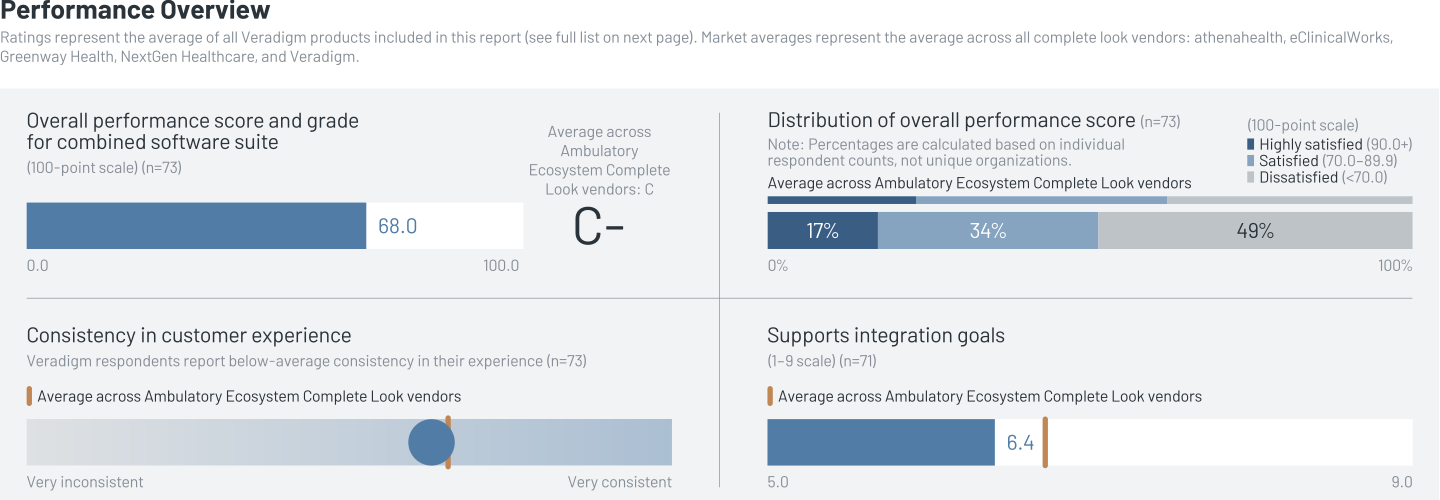
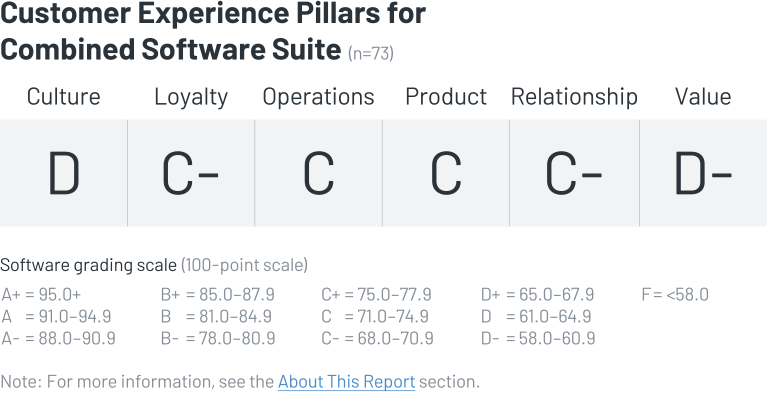
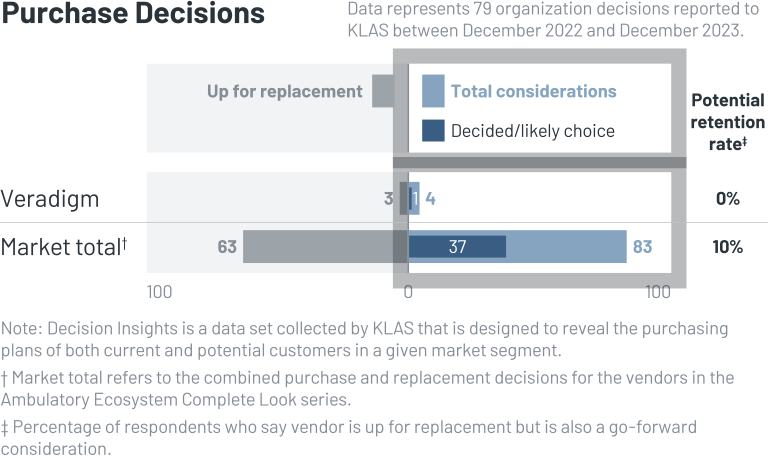
Performance Snapshot
Below are high-level summaries of how Veradigm performs in the HIT areas that ambulatory healthcare organizations most frequently consider when making an enterprise HIT decision. This is not an exhaustive snapshot of all technology areas in which Veradigm offers an HIT solution.
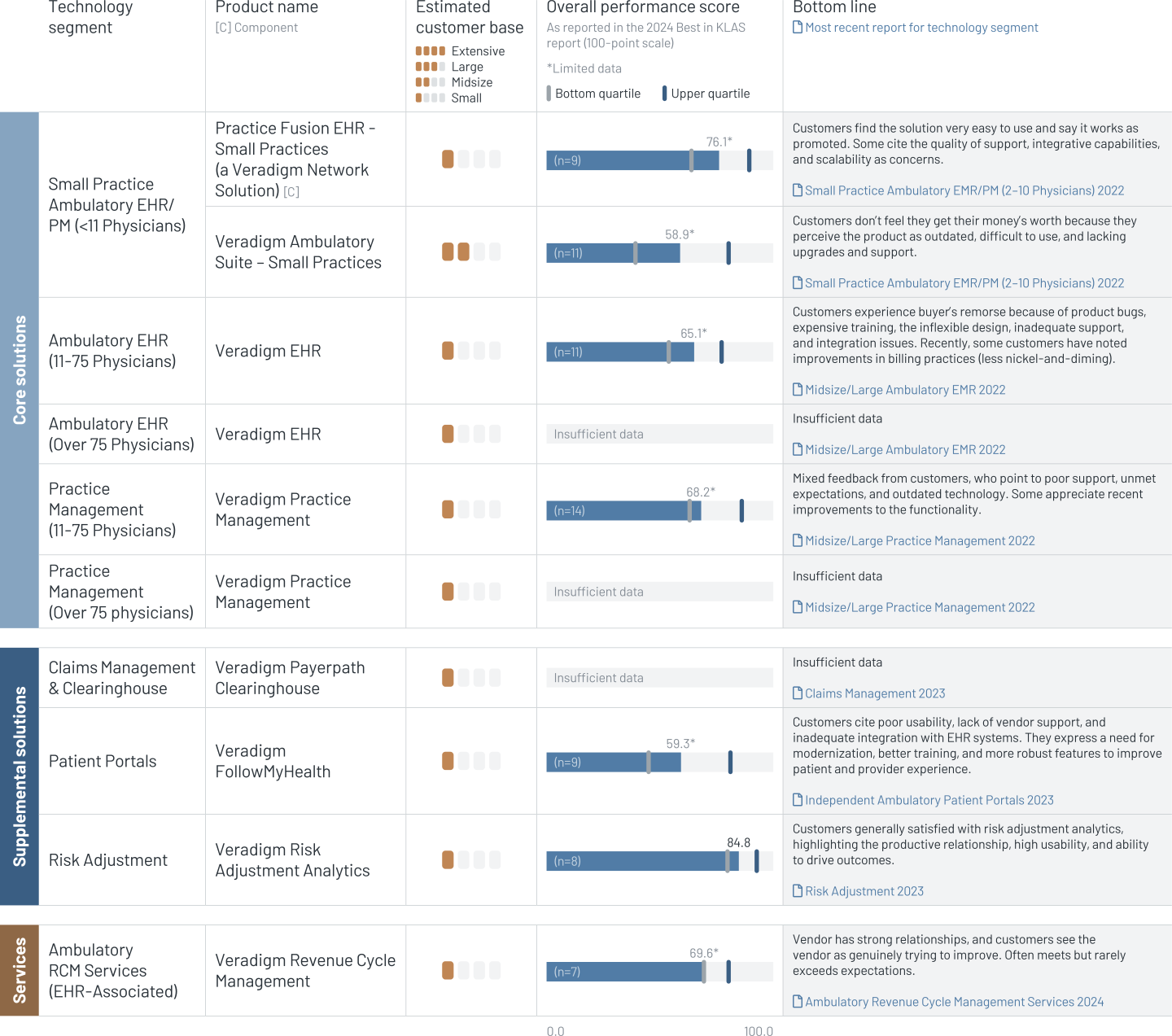
About This Report
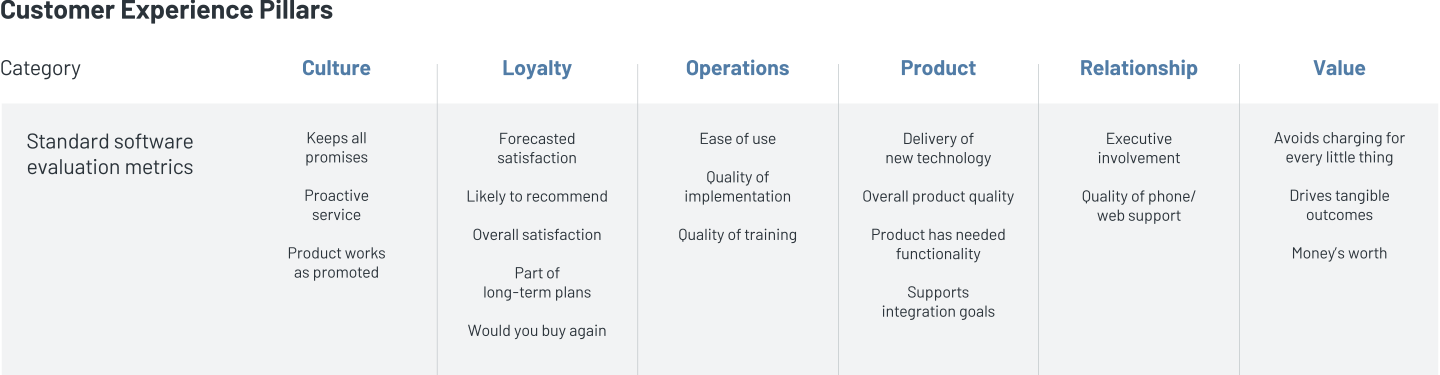
Each year, KLAS interviews thousands of healthcare professionals about the IT solutions and services their organizations use. For this report, interviews were conducted over the last 12 months using KLAS’ standard quantitative evaluation for healthcare software, which is composed of 16 numeric ratings questions and 4 yes/no questions, all weighted equally. Combined, the ratings for these questions make up the overall performance score, which is measured on a 100-point scale. The questions are organized into six customer experience pillars—culture, loyalty, operations, product, relationship, and value.
Sample Sizes
Unless otherwise noted, sample sizes displayed throughout this report (e.g., n=16) represent the total number of unique customer organizations interviewed for a given vendor or solution. However, it should be noted that to allow for the representation of differing perspectives within any one customer organization, samples may include surveys from different individuals at the same organization.
Some respondents choose not to answer particular questions, meaning the sample size for any given vendor or solution can change from question to question. When the number of unique organization responses for a particular question is less than 15, the score for that question is marked with an asterisk (*) or otherwise designated as “limited data.” If the sample size is less than 6, no score is shown†. Note that when a vendor has a low number of reporting sites, the possibility exists for KLAS scores to change significantly as new surveys are collected.
† Note that KLAS’ data thresholds are different for risk adjustment products—when the number of unique organization responses is less than 6, the score is marked as “limited data.” If the sample size is less than 3, no score is shown.
Product Designations Used in This Report
- Component [C]: Product that typically includes most but not all components that comprise a complete system or that serves only a subset of the market.

Writer
Sarah Brown

Designer
Jess Wallace-Simpson

Project Manager
Andrew Wright
This material is copyrighted. Any organization gaining unauthorized access to this report will be liable to compensate KLAS for the full retail price. Please see the KLAS DATA USE POLICY for information regarding use of this report. © 2026 KLAS Research, LLC. All Rights Reserved. NOTE: Performance scores may change significantly when including newly interviewed provider organizations, especially when added to a smaller sample size like in emerging markets with a small number of live clients. The findings presented are not meant to be conclusive data for an entire client base.