KLAS Contact

Contact KLAS
Contact KLAS
 2026 BEST IN KLAS
Preferences
Related Series

2024

2023

2023

2022

2019

2018

2017
Digital Health Investment Symposium 2025

Author
Justin Long

Author
Kevin Huang
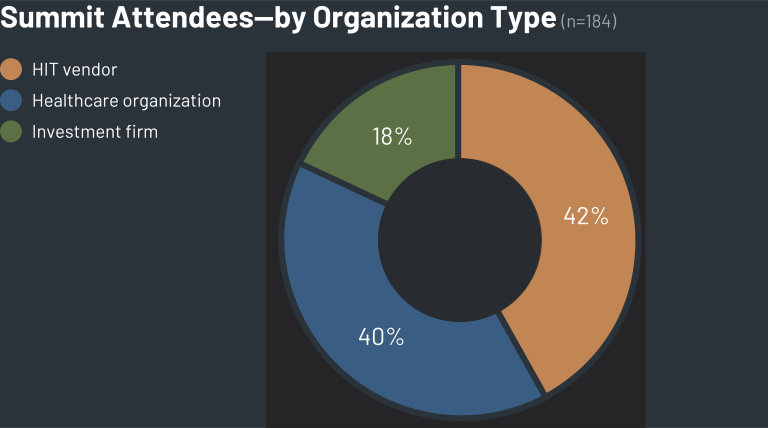
In September 2025, KLAS hosted the ninth annual Digital Health Investment Symposium (DHIS)—a creative forum for executive thought leaders to collaborate and discuss critical healthcare developments, challenges, and opportunities. This strategic retreat brought together nearly 200 representatives from healthcare organizations, HIT vendors, and investment firms. In conjunction with the event, KLAS conducted a pre-summit survey that was informed by current trends from our data and conversations with healthcare thought leaders. This event overview shares insights from both the pre-summit survey and DHIS discussions, highlighting how to navigate uncertainty amid shifting federal policies, foster strong vendor partnerships to support long-term success, and address workforce challenges through AI and other strategies.
DHIS 2025 Panel Discussions
- Executive perspectives on the current and future state of healthcare
- Healthcare AI at the inflection point
- Cloud traction in healthcare
- Emerging technology partnerships
- The future of revenue cycle management
- Cybersecurity & third-party risk

Uncertainty Around Policy Changes Is Driving Budget Cuts for Healthcare Organizations
In the last five years, the healthcare industry has seen consistent pressures and critical threats. These challenges were the central theme of DHIS 2024, which specifically discussed black swan events like COVID-19 and related aftereffects (e.g., staffing shortages, supply chain breakdowns) and how organizations can build resiliency against the unknown.
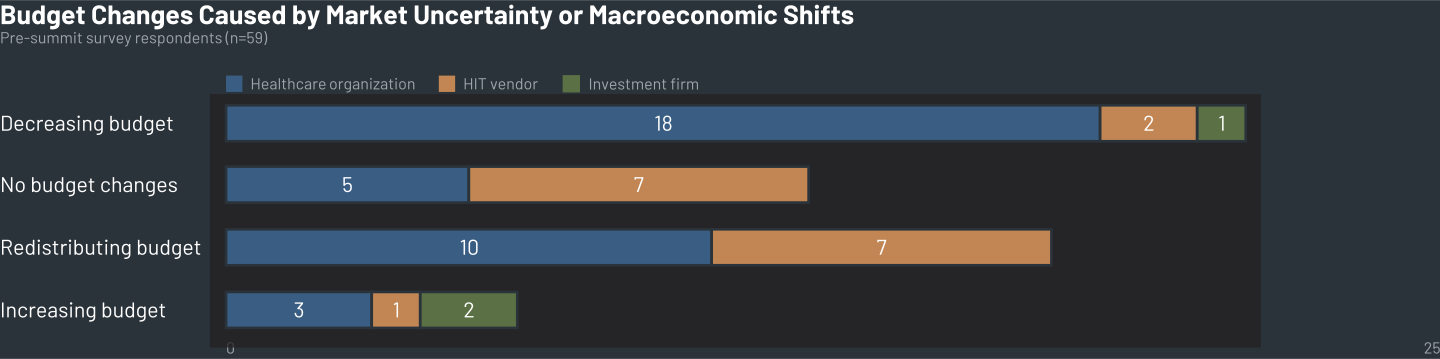
2025 has brought its own threats—chief among them is the uncertainty around shifting federal and reimbursement policies, which were a key focus of this year’s DHIS event. Summit attendees grappled with this challenge, discussing how to respond to changing policies and reduce costs while still improving patient outcomes. Compared to HIT vendors and investment firms, healthcare organizations are particularly feeling the burden of tightening margins caused by reimbursement policy changes; of the 21 pre-summit survey respondents who indicate plans to decrease their budget, 86% are healthcare organizations. However, these budget decreases do not mean that healthcare organizations aren’t investing in technology. At the summit, provider attendees emphasized that HIT investment is a key strategy to mitigate the effects of margin pressures, as they need to leverage technology to drive efficiencies and do more with less (see next section).
Key Insights from Group Discussions & Panels
- Most healthcare organizations are facing major budget cuts, hiring freezes, and strict ROI demands for any new investments. Uncertainty and fear dominate investment decision-making; survival and efficiency are top of mind.
- Smaller/rural healthcare organizations have to make difficult decisions to maintain financial health that will have significant impacts on patients’ access to care. These organizations used up many of their resources to get through the COVID-19 pandemic. In order to survive, they need to proactively engage in offensive and defensive strategies. Improvement initiatives or new solutions must either fit within the allocated budget or pay for themselves from realized cost savings.

Healthcare Organizations Need Strong Vendor Partnerships to Overcome Barriers to Innovation
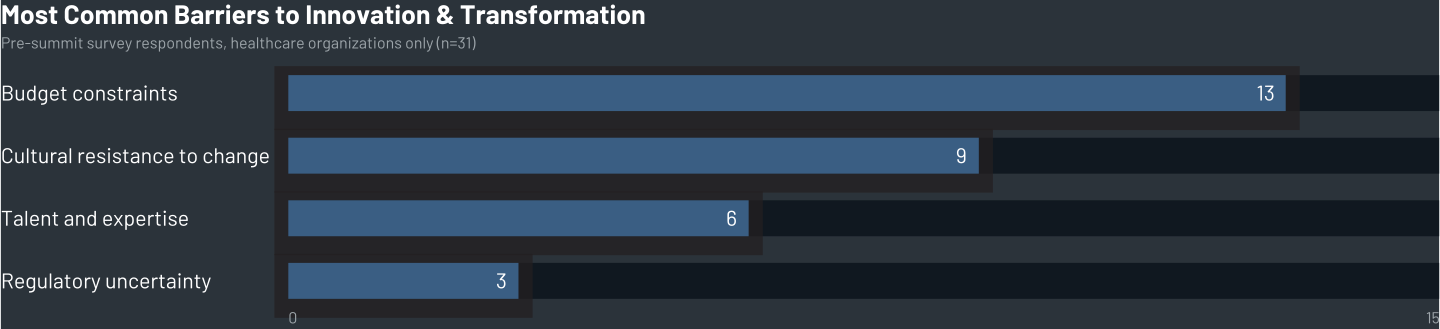
As healthcare organizations invest in technology, they must ensure their money goes toward solutions that will deliver tangible outcomes or address top priorities, as there is no room for wasted spending. Provider attendees emphasized that to maximize ROI, organizations need strong vendor partnerships. Healthcare leaders can’t evaluate or invest in all new technologies due to budget constraints, and having a strong vendor partnership can simplify decision-making and provide more immediate cost savings. In particular, healthcare organizations are looking to partner with EHR vendors and/or vendors who are willing to go at risk; while at-risk contracts are rare due to the higher cost, being willing to go at risk can help vendors build trust with provider customers. Summit attendees noted that vendors need to be cognizant of the pressures that healthcare customers are facing and be generous with their support and resources. For example, helping healthcare organizations with change management is a tangible way to strength user adoption, thus increasing the likelihood of a better ROI.
Key Insights from Group Discussions & Panels
- Start with the problem, not the solution. Understand pain points and quantify the problem and ROI. Whenever possible, vendors should help the provider make the business case to help create internal stakeholder alignment.
- Be prepared to speak to and answer tough questions for a complex set of stakeholders—from CFOs to legal teams to clinicians. This can help build internal alignment on the value the product will bring.
- Many healthcare organizations have new solutions that are stuck in “pilot purgatory” with no clear ROI or outcomes. Pilots should be a way to implement a solution supported by high stakeholder confidence rather than a way to delay making a decision. Additionally, pilots should have clear milestones and an easy path to scale or exit. If clear milestones cannot be created, the pilot may not be worth pursuing.
- Vendor partners should provide clear ROI as well as flexible, scalable pricing structures. Perpetual license fees or high up-front costs are tough sells, while creative contracting and phased outcomes–based payment models are increasingly appealing to provider customers.

Amid Workforce Challenges, AI Can Help Healthcare Organizations Increase Efficiency & Staff Experiences
In KLAS’ report Navigating the Uncertainty of Federal Policy 2025, data indicates that workforce restructuring (e.g., reallocating, hiring, or reducing staff in certain areas) is the top contingency plan as healthcare organizations seek to anticipate and combat policy shifts. While staffing challenges are not new to the healthcare industry, recent years have brought unprecedented staffing shortages in clinical and IT spaces. These shortages will only worsen over time, as reduced birth rates and an aging population in the US have resulted in fewer individuals entering the workforce—a trend that will likely continue for the foreseeable future. Consequently, healthcare organizations are prioritizing investment in their workforce to better attract, manage, and retain clinical and IT talent. AI and automation play a key part in this, as these technologies can reduce administrative work, enable staff members to focus on more important tasks, and potentially reduce the number of FTEs needed for entry-level work. For example, ambient speech solutions are proven to improve clinician satisfaction, care quality, and reimbursement by streamlining documentation workflows. While summit attendees said they feel optimistic about AI’s potential, many cautioned against deploying AI without specific outcomes in mind, especially in high-risk clinical settings, noting that AI is better served in low-risk, high-impact administrative areas (e.g., revenue cycle management).
Key Insights from Group Discussions & Panels
- Overall, AI adoption in healthcare is still early, and most organizations are figuring out best practices for AI governance.
- IT leaders shouldn’t rush to deploy half-baked AI solutions, as that can harm overall adoption in the long run. It is important to exceed expectations for end users to help with long-term adoption and outcomes at scale.
- Ambient speech adoption has been strong, in part due to the seamless fit within physicians’ existing workflows. AI solutions that require significant workflow changes are less likely to have high end-user adoption. To mitigate that, ensure that end-user stakeholders are included early in decision-making processes.
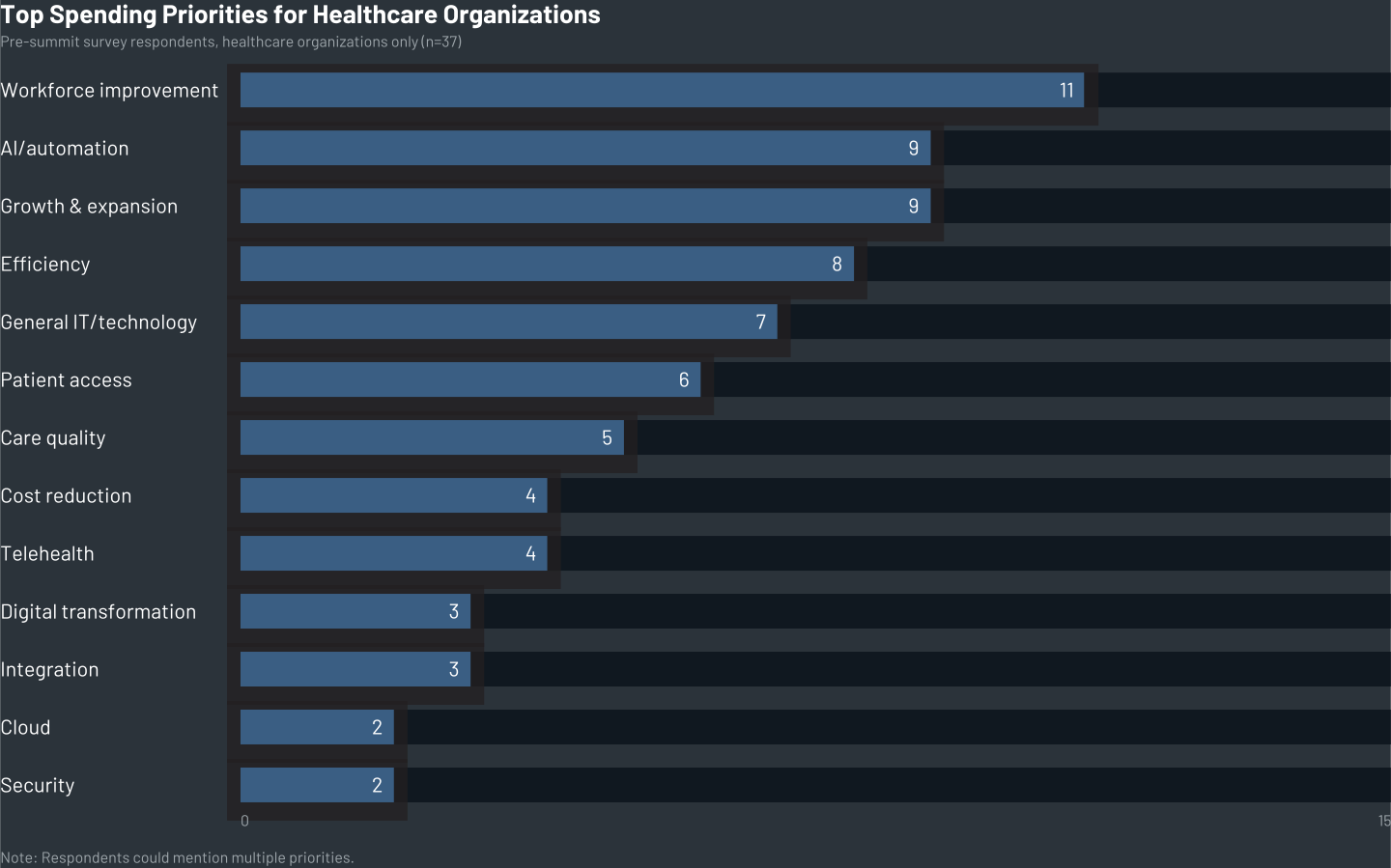
Other Insights from DHIS Conversations
Cloud Models
Adoption of the cloud and SaaS models, while slow, has been increasing as healthcare organizations look to escape costly hardware refreshes and establish more predictable operating expenses. Currently, many organizations are using a hybrid model (both cloud and on-premises). In particular, pay-for-use models can give organizations the flexibility to easily scale up and down—a major draw considering current margin pressures as well as the speed of innovation. To achieve cost savings and performance benefits from the cloud, healthcare organizations need to move beyond lifting and shifting legacy applications and consider establishing cloud-native architecture.
Cybersecurity
Healthcare cybersecurity needs to move beyond a “check-the-box” mindset and embrace ongoing monitoring. Third-party risk is unavoidable, and disruptions can shut down hospital operations, delay care, and even directly threaten patient safety. Despite this, most risk assessment solutions fail to account for how solutions are configured, integrated, or repurposed over time. AI also creates new risks to cybersecurity, emphasizing the need for strong AI governance. To mitigate these risks, healthcare organizations should maintain an up-to-date inventory of all solutions, map them to critical business functions, and regularly test business continuity and disaster recovery plans. Including HIT vendors in these efforts can help surface hidden risks and gaps.
Emerging Technology Partnerships
Healthcare organizations want broad, cross-departmental solutions that can solve multiple challenges. To achieve this, many are looking to partner with vendors to develop their emerging or innovative technologies—either through co-development agreements, shared intellectual property, or at-risk contracting. Developing technologies with a vendor partner can lead to better user education, training, and change management, setting up customers for sustained buy-in and adoption.
Revenue Cycle Management
Revenue cycle management (RCM) has historically been a difficult area due to persisting challenges with denials and ambiguous federal policies. Additionally, the number of administrative staff members required to support each clinician is a challenge that ultimately increases healthcare costs for organizations and patients. Due to the administrative nature of RCM work, there is great potential for AI to streamline tasks (e.g., reviewing unstructured documentation, navigating payer rules), thus reducing the burden on administrative staff and downstream costs for patients.
Summit Sponsors


Summit Presenters & Panelists
Thank you to all the keynote speakers, presenters, and panelists who participated in DHIS 2025.
Nana Ahwoi, Americas Consumer & Health Cybersecurity Industry Leader, EY
Jim Bohnsack, Chief Strategy & Client Officer, Aspirion
James Cannatti, Partner, McDermott Will & Schulte
John Chelico, MD, MA, FAMIA, System SVP & CMIO, CommonSpirit Health
John D. Couris, President & CEO, Tampa General Hospital
John Doyle, Global Chief Technology Officer, Microsoft
Michael Duke, Partner, Guidehouse
Robert Eardley, SVP & CIO, University Hospitals Cleveland
Dan Exley, Interim Chief Information & Innovation Officer, Sharp HealthCare
Ed Gaudet, CEO & Founder, Censinet
Michael Gleeson, Co-founder, CGO & CTO, guidehealth
Evan Goad, CFA & CGO, FinThrive
Dustin Hamilton, SVP of Product, Waystar
Curtis Hendrick, SVP of Cloud & Digital Transformation, Optimum Healthcare IT
Kamal Jethwani, MD, VP of Digital Ventures, Moffitt Cancer Center
Deepan Kamaraj, Director of Analytics & Informatics, UPMC
Naqi Khan, MD, CMIO of Healthcare Data & AI, AWS
Amit Kulkarni, CEO & Founder, Intruno
Nathalie McCaughley, President, AGFA HealthCare
Dan Nardi, CEO, Reimagine Care
Bill Phillips, COO, University Health
Chandra Prabala, Practice Leader for Cloud Advisory & Consulting, Tech Mahindra
David Sanner, CMIO, Loma Linda University Health
Aaron Shapiro, Partner, PwC
Linda Stevenson, CIO, Fisher-Titus
Andy Strunk, Principal, Accretive Edge
Emily Webber, MD, FAAP, FAMIA, CMIO, IU Health
Mark Wise, Managing Director, TripleTree
J.D. Whitlock, CIO, Dayton Children’s Hospital
Summit Attendees
Accretive Edge
AGFA HealthCare
American Medical Association
American Red Cross - UT
Andor Health
Apax Partners
Arsenal Capital Partners
ARUP Laboratories
Aspirion
athenahealth
Atrium Health
Avant-garde Health
AWS
Bailey & Company
Bain Capital
Berkshire Partners
Blackstone
Bon Secours Mercy Health
Casechek
Censinet
CenTrak
CereCore
Clarus
ClearBalance Healthcare
Cleveland Clinic
Cohen Veterans Network
CommonSpirit Health
Contra Costa Health
Corewell Health Ventures
Council Capital
CTG
Dayton Children's Hospital
Deloitte
DexCare
EBSCO
Elligint Health
Endeavor Health
Epic
Essentia Health
Evergreen Healthcare Partners
EY
FinThrive
Fisher-Titus
Frazier Capital
Fulcrum Equity Partners
GE HealthCare
General Atlantic
Good Samaritan Hospital
Great Hill Partners
Greenway Health
GrowthCurve Capital
Gryphon Investors
guidehealth
Guidehouse
GuideIT, a Perot Company
Health Catalyst
Healthrise
Henry Ford Health
Hg Capital
HHS - ONC
HonorHealth
HTC Global Services
IKS Health
Infinx
InTandem Capital Partners
Intermountain Health
Intruno
IU Health
Janus Health
Kaiser Permanente, Southern California
Kenney Consultants
Kettering Health
KKR
LateralCare
Legacy Health
LHC Group
Lindsay Goldberg
Loma Linda University Health
Luma Health
Mass General Brigham/Brigham and Women's Hospital
Massachusetts Health Data Consortium
Maverick Medical AI
MEDITECH
Medix Technology
Memorial Care Innovation Fund
Mercy
Mizuho Financial Group
Moffitt Cancer Center
Mount Sinai Health System
MultiCare
Nuance (A Microsoft Company)
Neurealm (GAVS)
Nevada Health Centers
Next Level Medical
Nordic
Northfield Hospital + Clinics
Northwestern Medicine
Optimum Healthcare IT
Orchid Black Growth Consultants
Orlando Health Ventures
Palm Beach ACO
PointClickCare
Protean BioDiagnostics
PwC
R1 RCM
Rackspace Technology
Raymond James
Red Rover Health
Regional Medical Imaging
Reimagine Care
ResMed (Brightree)
RevSpring
Rush University System for Health
Scottsdale Institute
Sharp HealthCare
Signature Performance
Sixth Street
Smart Communications
Smarter Technologies
SSM Partners
St. Luke's/Vigor Health
symplr
Tampa General Hospital
Team Rehabilitation Physical Therapy
Tech Mahindra
THL Partners
TPG Global
UChicago Medicine
UCI Health
UNC
University Health
University Hospitals Cleveland
University of Utah Health
University of Vermont Medical Center
UPMC
UVA Health
Verity Solutions
Warburg Pincus
Waystar
WCAS
Reserve Your Spot for DHIS 2026
Next year’s DHIS event will be held during September 2026 in Park City, Utah. To join the DHIS conversation and secure your spot, contact your KLAS representative or email events@klasresearch.com.

Writer
Natalie Hopkins

Designer
Kath Spencer

Project Manager
Andrew Wright
This material is copyrighted. Any organization gaining unauthorized access to this report will be liable to compensate KLAS for the full retail price. Please see the KLAS DATA USE POLICY for information regarding use of this report. © 2026 KLAS Research, LLC. All Rights Reserved. NOTE: Performance scores may change significantly when including newly interviewed provider organizations, especially when added to a smaller sample size like in emerging markets with a small number of live clients. The findings presented are not meant to be conclusive data for an entire client base.