KLAS Contact

Contact KLAS
Contact KLAS
 2026 BEST IN KLAS
Preferences
Related Series

2025

2021

2019

2013
Related Segments

End-to-End Revenue Cycle Outsourcing 2023
Pursuing Financial and Staffing Stability

Author
Mollie Hunt

Author
Sam Eaquinto

Author
Shawn Howell
Aftershocks of the COVID-19 pandemic have made it difficult for hospitals and health systems to control costs and find and retain the right staff. In an effort to achieve stability, healthcare executives are looking to external partners for help, including end-to-end revenue cycle outsourcing (RCO) firms. Though organizations have similar motivations for partnering with an RCO firm, not all firms take the same approach to meeting clients’ needs. This report examines the performance of end-to-end RCO firms, reasons provider organizations outsource their revenue cycle, why they chose the firms they did, and the models and approaches of these firms.
This report includes insights from two data sources: (1) interviews with 19 organizations regarding satisfaction with their end-to-end RCO firm over the last 12 months and (2) in-depth conversations with 8 provider executives whose organizations have announced partnerships with large end-to-end RCO firms in the past 24 months.
Performance Insights
A Note about Optum
Optum’s RCO contracts are often part of larger organizational decisions that also involve technology and services outside of RCO. As a result, Optum RCO clients have difficulty separating their specific revenue cycle experience from their broader Optum outsourcing experience. Optum is therefore excluded from the performance insights section of this report.
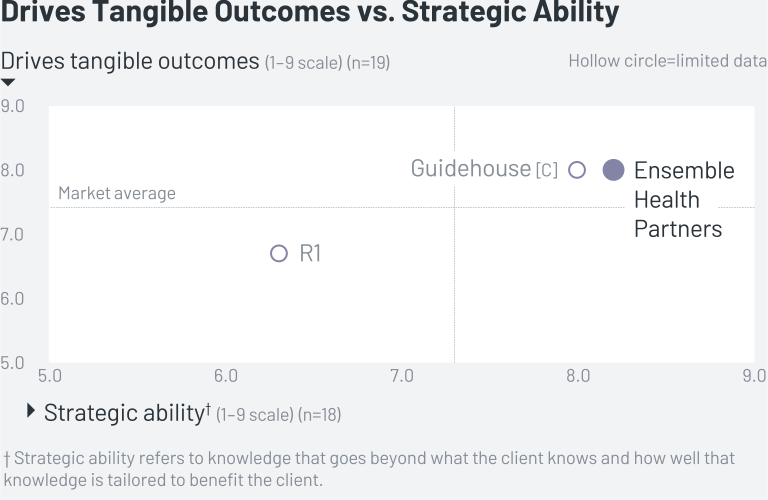
Ensemble Health Partners Drives Client Loyalty by Going Beyond Meeting Standard RCM KPIs
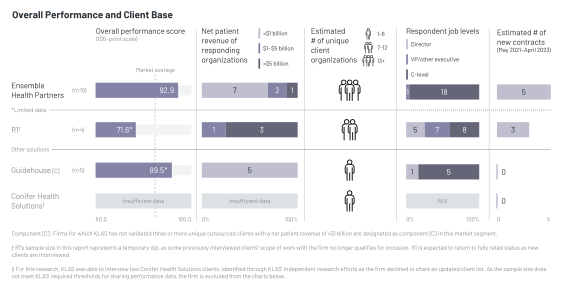
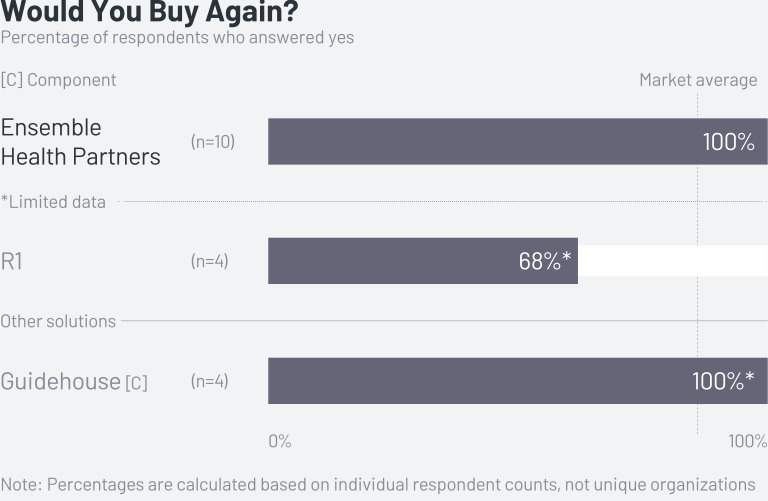
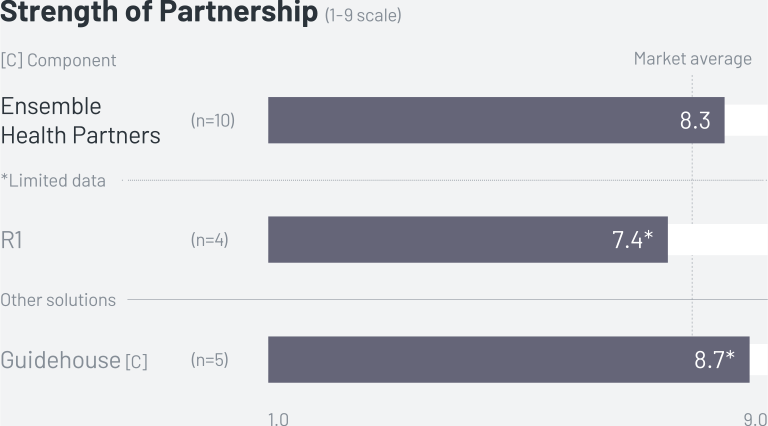
Most clients are highly satisfied with Ensemble Health Partners’ RCO services, noting that Ensemble performs day-to-day operational work well. Clients appreciate the firm’s professional, methodical approach to managing and improving revenue cycle. Additionally, respondents report that Ensemble’s executives are actively engaged in providing critical guidance to help clients solve problems upstream; the leadership is responsive to concerns and follows up with quick communication and resolution. Respondents feel that Ensemble positively impacts not only their organization’s bottom line but also their internal culture. Among the three clients who don’t feel that Ensemble exceeds their expectations, top concerns are errors on patient statements, slower-than-anticipated improvements to A/R days, and challenges with Ensemble’s communication structure. Despite these concerns, all interviewed organizations would purchase Ensemble’s services again.
 “Ensemble Health Partners gives us an outstanding partnership. They have unbelievable responsiveness and service, and they offer cutting-edge support technology and solutions. They do more than any other revenue cycle company I have ever worked with in terms of helping us solve problems upstream. They are not just doing their job on the back end; they are really trying to work collaboratively with our operators to understand and address issues that are outside of their realm because of how well they understand the business. I can’t say enough good things about the firm. They have my full endorsement.” —CEO
Guidehouse (Limited Data) Delivers Beyond Scope to Drive Outcomes for Clients
Guidehouse customers (limited data) are typically smaller organizations (less than $1B net patient revenue), and most respondents report being satisfied with the firm. Clients highlight strong partnership, saying that the Guidehouse staff treats client organizations as part of their own team. Guidehouse goes above and beyond to solve problems and to ensure clients realize tangible outcomes; multiple respondents have had experiences where Guidehouse performed out-of-scope work or absorbed extra costs. Some clients express concerns about the time needed to onboard new staff amid turnover, and one respondent reported a loss of partnership and executive involvement due to recent leadership changes.
“From a relationship standpoint, things are going great. When it comes to our revenue cycle, Guidehouse is part of the team, and that is how people see it internally and externally. I am very satisfied with the firm. When I was in a crunch, Guidehouse brought certain resources on board, and I didn’t have to pay an additional cost to set that up. So we have a true partnership with Guidehouse. They go above and beyond. We are also able to bounce ideas off of our contact from the firm, and even if what we need is outside of the revenue cycle, this person listens and will put us in touch with the right people at Guidehouse.” —CFO
R1’s (Limited Data) Largest Clients Are Most Satisfied; Others Mention Lack of Expertise and Outcomes
Experiences with R1 (limited data) vary widely between client organizations, especially depending on the respondent’s organization size and/or job level—those in the C-suite as well as those from larger organizations typically report higher satisfaction with R1’s services. Interviewed clients often report choosing R1 due to their knowledge and expertise, and nearly all respondents say the site leaders and executives are responsive and genuine in their efforts to foster strong partnerships; respondents also feel R1 generally does well with day-to-day RCM operational work. However, clients report varied experiences with the application of the vendor’s expertise and with the consistency in the quality of supervisors and frontline staff, and several respondents are looking for more proactive guidance in driving strategic improvements. Clients say R1 feels like a siloed organization, noting that communication between departments doesn’t always flow well. Additionally, respondents report inconsistent outcomes; R1’s promises of technology and expertise being employed to drive down costs and improve collections haven’t panned out for all clients, and several organizations report that R1 struggles to achieve baseline KPIs within the anticipated timeline.
“R1’s end-to-end work has been a little clunky. The handoffs aren’t always as good as they should be for their different functions within R1. . . . Things are missed and aren’t thought about critically. . . . When it comes to R1’s bread and butter, such as registering, coding, billing, and collecting, things are fine. The issue is when we get into nuances. R1 isn’t looking for other things that could potentially go amiss. Sometimes they don’t have the education to do relatively complex things. . . . There is a communication gap. R1 needs to educate their customers more on the challenges and impediments the firm faces that keep them from billing and collecting promptly. The firm needs to tell us more about what we are doing wrong. That is very important.” —CFO
RCO Market Energy
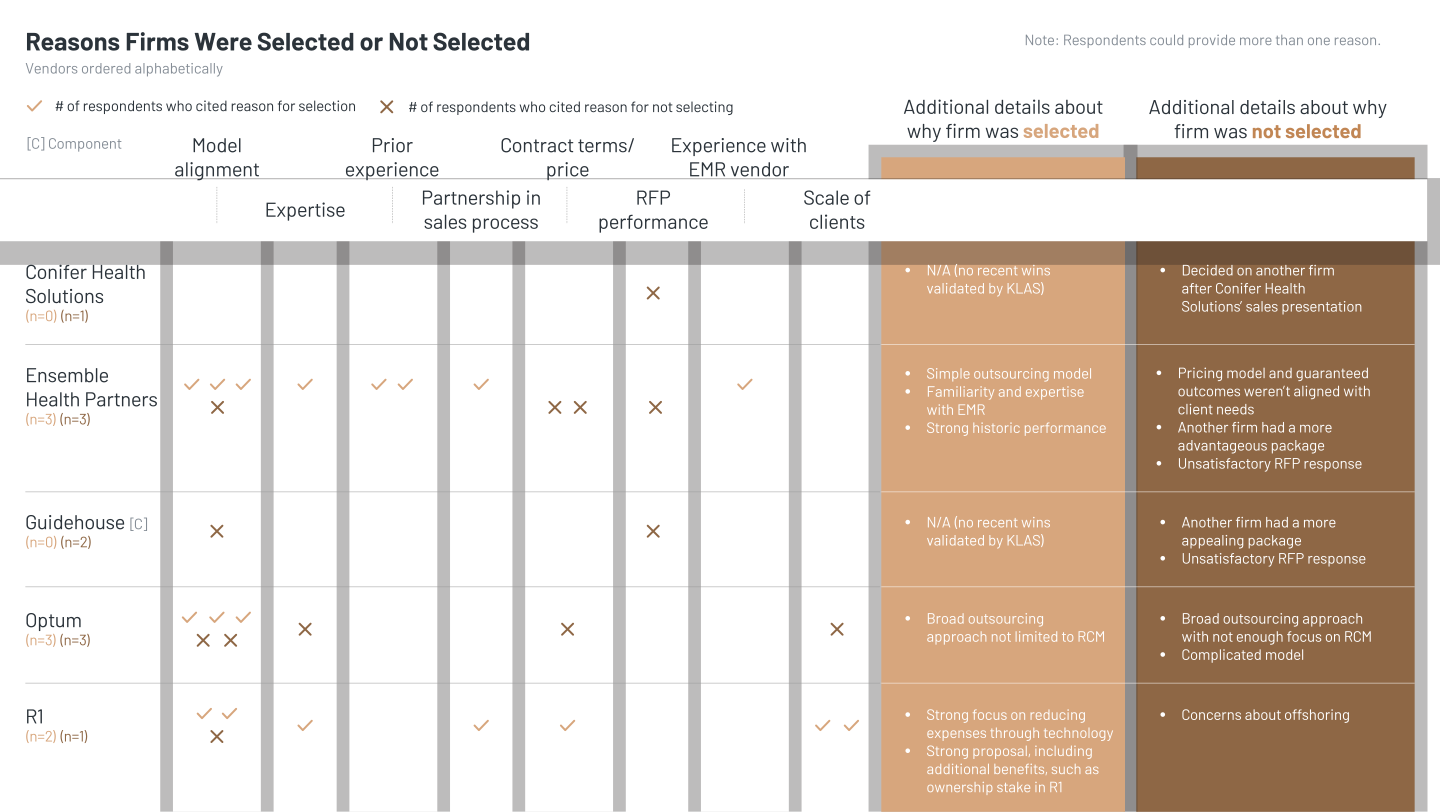
The insights in this section are from in-depth interviews with provider executives at eight organizations that have announced net-new partnerships with Ensemble Health Partners, Optum, and R1 between May 2021 and April 2023. These interviews represent the majority of decisions that have occurred in this time frame. Of the eight organizations represented, three selected Ensemble, three selected Optum, and two selected R1. Insight around Guidehouse and Conifer Health Solutions is limited in this section, as no new end-to-end partnerships were announced within the time frame.
Few Options for Internal Revenue Cycle Talent Drives Hospitals and Health Systems to Outsource
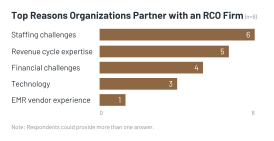 As a direct result of the COVID-19 pandemic, many health systems are looking to their RCO partners to help them achieve financial stability and manage the acquisition and retention of qualified talent. This is especially prevalent in geographic areas where the talent pool is limited. Looking beyond their immediate pandemic-related needs, organizations also feel that RCO firms allow them to tap into strong revenue cycle expertise to optimize their revenue cycle beyond what can be done internally. Some organizations also see outsourcing as a way to access technology they wouldn’t be able to acquire on their own.
Comparing Management Models
Client Descriptions of Management Models
Ensemble Health Partners
- Rebadges the whole revenue cycle department up to but not including the executive-level leaders (e.g., CFO)
- Organizes and trains staff so that they specialize in specific parts of the revenue cycle (front, middle, or back); in some cases, that requires a large transition from how client staff were previously organized
- Provides additional leadership and account representatives to oversee the work and bring revenue cycle expertise
- Holds regular meetings with committees made up of operational and strategic leaders to align on outcomes being driven relative to contract terms
Optum
- Often extends beyond revenue cycle to include services such as supply chain, analytics, care transformation, and IT
- Has a formal governance model that spans from frontline employees to the C-level, with operational staff being rebadged and high-level leadership being retained
- Details from one client: Optum establishes leadership to communicate and co-manage operational work with provider leadership; both groups meet regularly to address operational or performance issues. Firm also sets up councils by delivery area and job level to allow provider and Optum leaders to discuss partnership metrics, risks, and strategic developments
R1
- Manages departments directly after rebadging
- Provider leadership provides guidance and oversight on what to work on; R1 manages the day-to-day operational work
- Brings a holistic approach, focusing on people, processes, and technology without overemphasizing any individual element
- Details from one client: Transition was accomplished in waves—managers and supervisors transitioned as a “champion group,” and everyone else transitioned later to handle day-to-day operations
Advice from Providers Who Have Transitioned to End-to-End RCO within the Past Two Years
Firm selection
Be open and transparent with potential firms about what is important to your organization, and take sufficient time to evaluate the cultural fit while also staying open to opportunities for improvement. While cost is important, it shouldn’t be the deciding factor.
“I would tell others not to rush things. . . . Just like with recruiting providers, you really need to look for fit. You need to look for people that are going to match up well with your organization and its mission, vision, and values. People should look at cost because there was a vast difference in cost between the various companies. It wasn't that the cheapest was necessarily going to be the best, but the most expensive wasn't the best either.” —COO
Contracting
Do not underestimate the amount of time and attention that needs to be devoted to due diligence, negotiation, and gaining a crystal-clear understanding of contract terms. Take time to understand how the firm calculates their impact (e.g., revenue lift, cost savings) and compensation, and play out specific scenarios and examples to ensure alignment. Consider other vendor partners who may be impacted by the decision, and require involvement early on to avoid upstream delays (e.g., avoiding problems by involving an EMR vendor in conversations around access and data governance).
“I would warn others to be very cognizant of the contract terms. An aha moment for me is based on the way the language was written in the contract. . . . Moving forward, clients need to identify who is the culprit for causing that lift because they could easily overlook a couple of things, then correct it and claim it as a lift. Lastly, clients need to calculate the incentive structure because charges of $1 million might equate to 0 cents financially. You have to make sure the cash is in the door before you start paying them their ROI. Know what you’ve been paid and what you were supposed to be paid for the services you’ve provided.” —CFO
Announcing
Be transparent to your own employees about the current financial state of your organization and the challenges you are facing to make sure everyone is well informed and prepared.
“Transparency is probably the best approach. In a deal, there is a lot of contracting that happens, and it is not made public within the organization for a period of time. One of the things that helped us in this process was to be very transparent about the financial state of the organization so that folks were not surprised when a partnership was announced.” —VP
Rollout and onboarding
Recognize the impact of the transition on employees and the amount of HR work required. One organization reported that employees took the announcement and rollout as a sign they weren’t doing their jobs well enough, and there were resulting challenges managing perceptions. Another organization highlighted the immense lift to go through the operational and administrative process of rebadging. The chosen firm may have a playbook for rollout and onboarding, but the provider organization needs to adapt it to the local needs and constraints of their community and workforce.
“Even to this day, we are learning new things about our firm that didn’t impact the ultimate decision to do the deal, but we didn’t even know this when we were going to this deal. The amount of HR time that is necessary to do this well is something that we underestimated a little bit or didn’t understand well enough, and that was a challenge. We had to figure out how do we do all that HR work when there is so much HR work happening in the industry right now. That is a massive deal.” —VP
Impact on KPIs
One provider warned that switching revenue cycle firms can cause temporary delays in A/R and denials. Be prepared to ensure a diligent focus in those areas through the transition, and don’t be surprised if there is a step backward in performance before expected outcomes begin to be realized.
“Our auditors warned us that pretty much every time you change vendors for revenue cycle, you will have some A/R and denials creep. Be ready to ensure that those areas are being focused on as diligently as they had before, and be prepared for a little step backwards before you move forward.” —CFO
Notably, hospitals and health systems that involved third-party legal and consulting firms in their assessment, firm selection, and contracting felt that the provided expertise was well worth the money spent, resulting in a better decision than they could have made on their own. (View KLAS’ website for more insights on advisory services.)
“We used a consulting firm to help us, and they broke down the contract and pricing information so that we could understand it. I can’t imagine going through the process without that consulting firm. I am sure the relationship and contract between the parties would not be as good. The outsourcing firm is very expensive, and without those consultants, our agreement wouldn’t be as strong. We probably would have given up more than we should have.” —CFO
About This Report
The data in this report comes from two sources: (1) KLAS’ standard quantitative evaluation for healthcare services from June 2022 to June 2023 and (2) a supplemental evaluation taken by organizations who made net-new end-to-end RCO partnerships over the past 24 months.
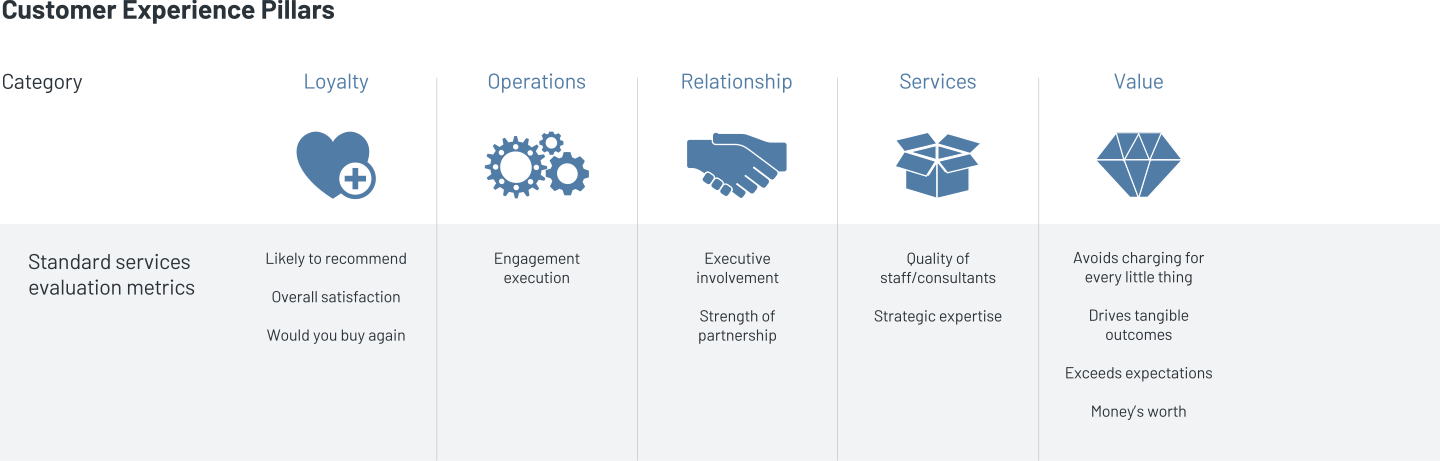
Each year, KLAS interviews thousands of healthcare professionals about the IT solutions and services their organizations use. For this report, interviews were conducted from June 2022 to June 2023 using KLAS’ standard quantitative evaluation for healthcare services, which is composed of 9 numeric ratings questions and 3 yes/no questions, all weighted equally. Combined, the ratings for these questions make up the overall performance score, which is measured on a 100-point scale. The questions are organized into five customer experience pillars—loyalty, operations, relationship, services, and value.
To supplement the customer satisfaction data gathered with the standard evaluation, KLAS also created a supplemental evaluation to delve deeper into several questions specifically related to the energy of the end-to-end revenue cycle outsourcing market. This evaluation asked respondents the following:
- What parts of the revenue cycle have you outsourced to your firm?
- What EMR does your organization use?
- Are you rebadging employees? If yes, to what extent?
- Briefly describe your firm’s management model.
- What specific challenges were you trying to address by outsourcing your revenue cycle?
- Why was now the right time for our organization to fully outsource?
- What pitfalls would you warn others about as they make the decision to outsource?
Sample Sizes
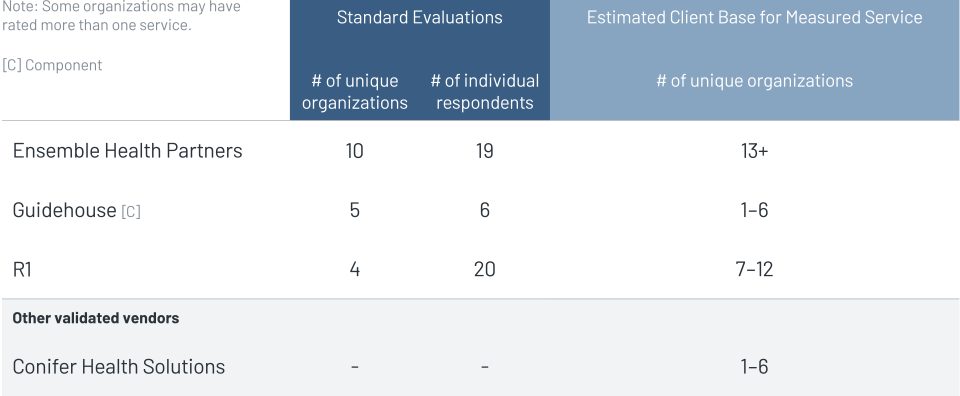
Unless otherwise noted, sample sizes displayed throughout this report (e.g., n=16) represent the total number of unique client organizations interviewed for a given firm or service. However, it should be noted that to allow for the representation of differing perspectives within any one client organization, samples may include surveys from different individuals at the same organization. The table below shows the total number of unique organizations interviewed for each firm or service as well as the total number of individual respondents.
Some respondents choose not to answer particular questions, meaning the sample size for any given firm or service can change from question to question. When the number of unique organization responses for a particular question is less than 6, the score for that question is marked with an asterisk (*) or otherwise designated as “limited data.” If the sample size is less than 3, no score is shown. Note that when a firm has a low number of reporting sites, the possibility exists for KLAS scores to change significantly as new surveys are collected.
Product Designations Used in This Report
- Component [C]: Firms for which KLAS has not validated three or more unique outsourced clients with a net patient revenue of >$1 billion are designated as component [C] in this market segment.

Writer
Carlisa Cramer

Designer
Breanne Hunter

Project Manager
Sydney Toomer
This material is copyrighted. Any organization gaining unauthorized access to this report will be liable to compensate KLAS for the full retail price. Please see the KLAS DATA USE POLICY for information regarding use of this report. © 2026 KLAS Research, LLC. All Rights Reserved. NOTE: Performance scores may change significantly when including newly interviewed provider organizations, especially when added to a smaller sample size like in emerging markets with a small number of live clients. The findings presented are not meant to be conclusive data for an entire client base.