KLAS Contact

Contact KLAS
Contact KLAS
 2026 BEST IN KLAS
Preferences
Related Series

2022

2021

2014

2011

2010

2006
Related Segments

Home Health 2024
Which Vendors Are Providing Innovation & Value in a Shifting Market?

Author
Paul Hess

Author
Paul Warburton
Over the last few years, the home health market has undergone extensive changes following mergers and acquisitions, fluctuating regulatory requirements, and shifts in the workforce. As a result, user frustration around home health solutions has increased, and home health agencies have sought greater collaboration, development, and automation from their vendors, with some customers even reconsidering their current investments. Through a look at current market share, recent purchase decisions, and customer satisfaction, this report examines which home health vendors are best meeting provider needs, developing functionality, and driving value for customers.
Market Insights
With Many Large Customers, Homecare Homebase Leads in Market Share by a Wide Margin
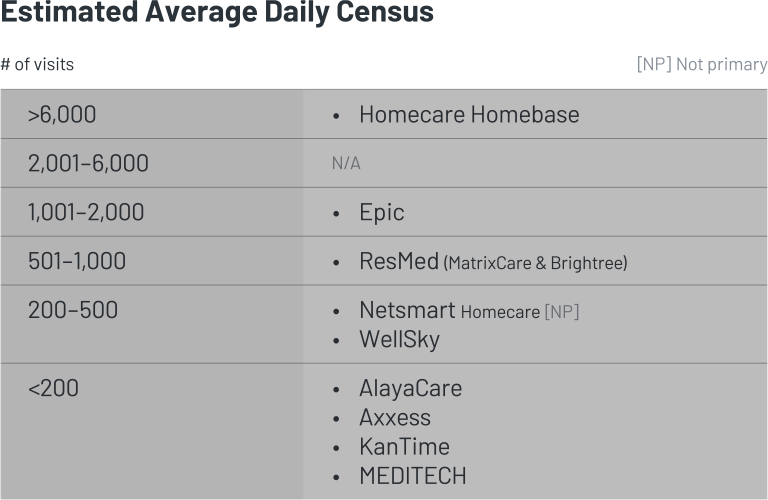
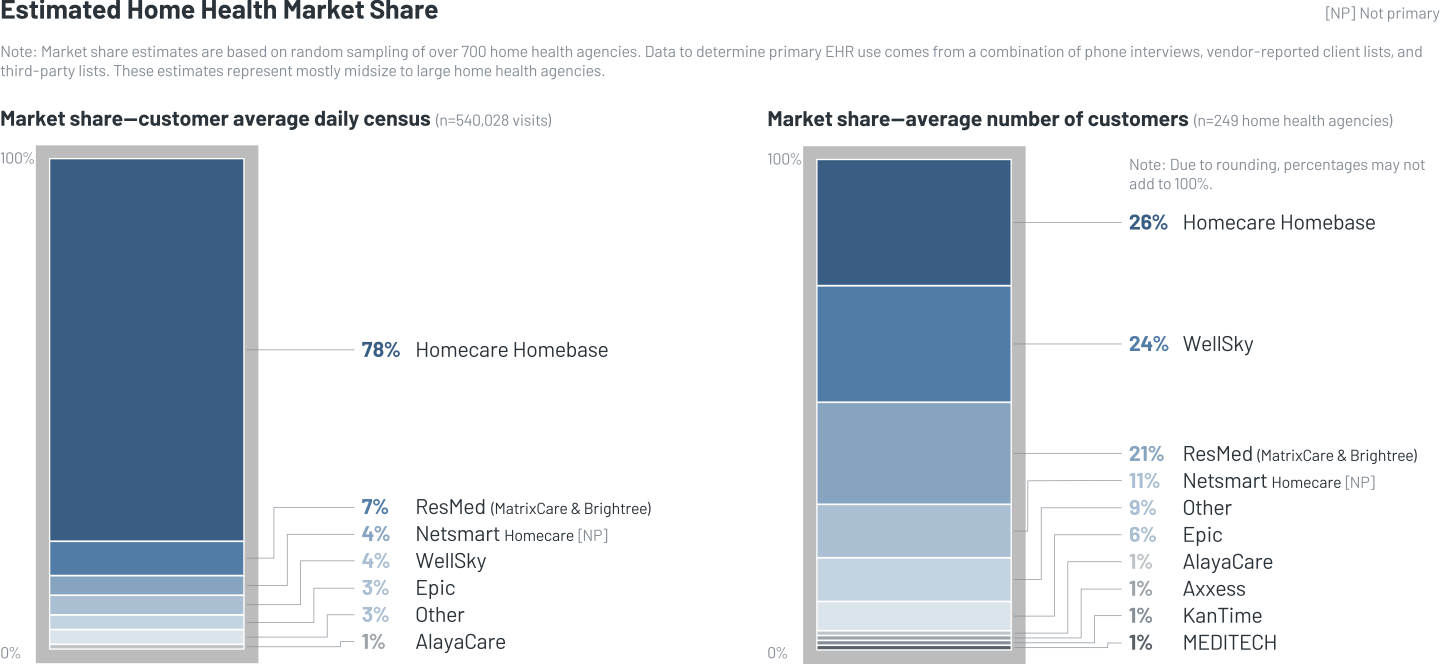
Homecare Homebase has extensive market share, with most large home health organizations relying almost exclusively on the vendor. New mergers and acquisitions among large home health organizations have contributed to that growth, increasing both the number of facilities using Homecare Homebase and the average size of their customers. Large organizations using Homecare Homebase feel the solution is key for supporting the scale and complexity of billing and financial reporting. With mostly smaller customers, Netsmart, WellSky, and ResMed (MatrixCare and Brightree)† also have sizable market share. Netsmart has acquired several platforms (e.g., Devero, Change Healthcare, Allscripts), and because the vendor hasn’t sunset the legacy products, many respondents hesitate to move to the go-forward myUnity Platform. WellSky and ResMed have each acquired one home health platform. With only one acquisition, they have been relatively more successful in maintaining one platform or migrating customers to one go-forward solution. Respondents report strong support and strategic update rollouts in these migrations.
† ResMed acquired MatrixCare and Brightree. This market share analysis looks at ResMed; later decision and performance data will look at only MatrixCare (Brightree).
Homecare Homebase & MatrixCare Most Considered for Their Stability & Consistency
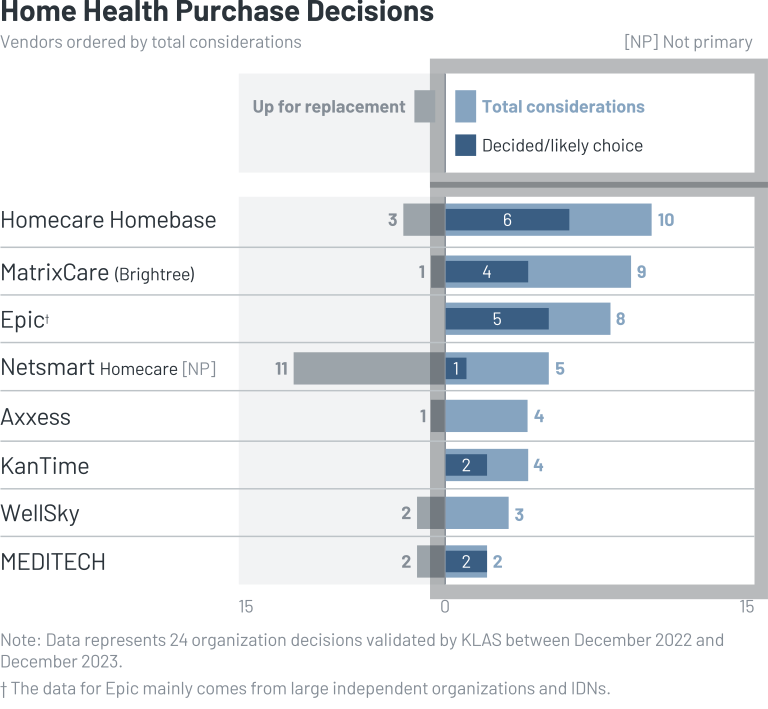
In this shifting market, many home health organizations are taking time to consider their investments. Top reasons home health organizations consider Homecare Homebase include their scalability, strong reporting, financial functionality, and ability to stay current with regulatory changes. Customer experiences are mixed, as some customers are concerned about the vendor’s slowness in addressing long-standing issues (e.g., narrow mobile functionality, bugs during upgrades) and increasing the number of preferred technology partners they collaborate with. Best in KLAS winner for large and small independent home health agencies for multiple years, MatrixCare (Brightree) is often considered thanks to IT advancements—notably improved nursing workflows, ingestion of external records into clinical workflows, and flexible end-user workflows. Customers want improvements to their workflows to make analytics and financial reporting easier. Organizations considering Epic’s home health technology are large IDNs who already use Epic technology and hope to ease their IT burden through consolidation and improved data flow from acute care organizations to home health agencies. Some end users struggle with the solution’s lack of customizability and with marrying the home health functionality with their own workflows. KanTime, WellSky, and Axxess are also considered, typically by midsize home health organizations who prioritize home health–specific functionality.
Performance Insights
KLAS has performance data on the following firms: Epic, Homecare Homebase, MatrixCare (Brightree), MEDITECH, Netsmart, and WellSky.
Homecare Homebase, Netsmart & WellSky Pricing Models Hinder Value
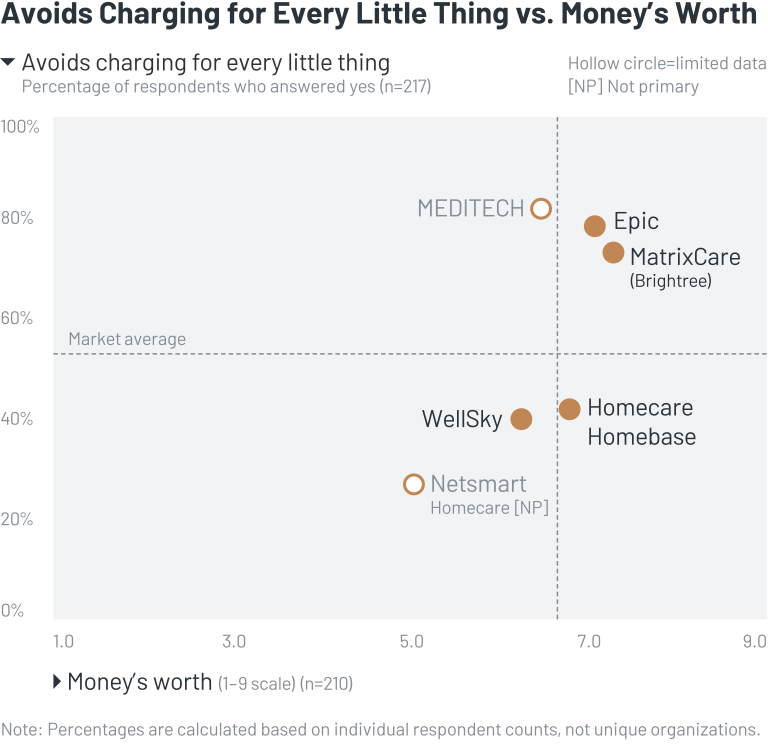
As budgets have tightened due to decreased reimbursements and increased staffing costs, some vendors have managed to deliver value through development, consolidation, and more inclusive pricing. For the price they pay, MatrixCare (Brightree) respondents appreciate the functionality they receive and feel the vendor is transparent about additional costs. Customers highlight the easy-to-use home health functionality and broad billing functionality, though some feel the billing solution could be easier to navigate. Customers of Epic report the vendor drives value through facilitating consolidation, delivering broad functionality across care settings, and providing comprehensive contracting that prevents future ad hoc charges. The vendor could enhance the value by providing more functionality to improve the in-field nursing workflows. Interviewed customers of Homecare Homebase, Netsmart, and WellSky perceive less value due to a high number of charges. All these vendors offer additional tools and capabilities, but respondents state they do not always provide inclusive billing and are not prescriptive enough up front, leaving customers with surprise bills and a less-optimized EHR. MEDITECH respondents feel they get the basic functionality the vendor offers without much nickel-and-diming but would like faster development and broader home health functionality.
For Health System–Owned Home Health Agencies, Epic Offers Broad Technology & Innovation
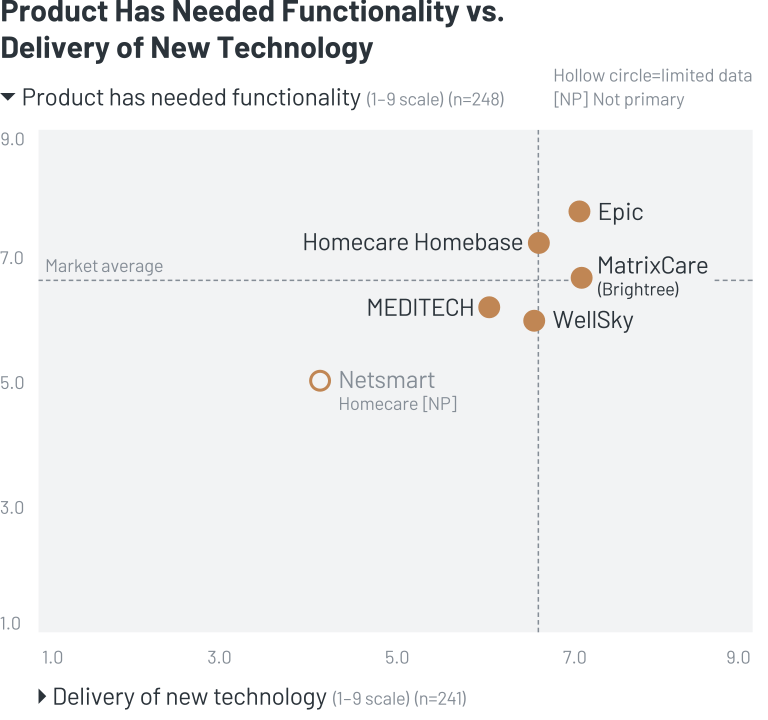
When considering investments, home health organizations are starting to prioritize more than just documentation, placing emphasis on innovation in areas such as patient engagement, clinical communications, advanced analytics, and transitions of care. Epic largely benefits from this trend, with many large health system–owned health agencies wanting to leverage only one vendor to meet all of these needs. As a result, Epic was named Best in KLAS for health system–owned agencies in 2024. Health system–owned agencies appreciate that MatrixCare (Brightree) provides documentation solutions for many areas of post–acute care. Respondents feel the vendor has consistently used customer feedback to plan their road map and upgrades to ensure they are addressing top challenges (e.g., interfacing, automation of incoming data). While interviewed MEDITECH customers appreciate the full transparency around functionality, they are concerned about the speed of innovation as well as gaps in the overall platform’s analytics, home health nursing workflows, and reporting. Still, respondents feel they receive vendor support and communication about future plans to improve and address these challenges.
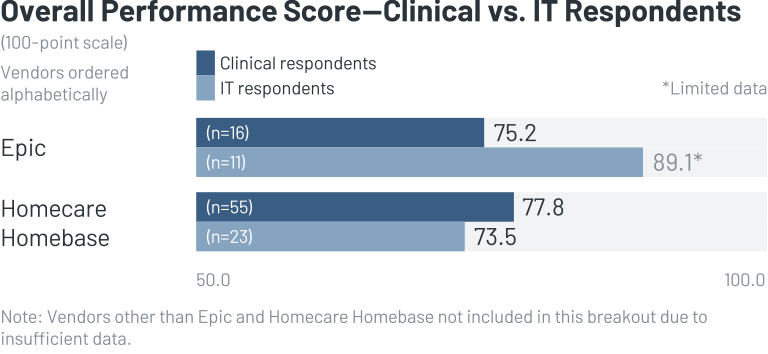
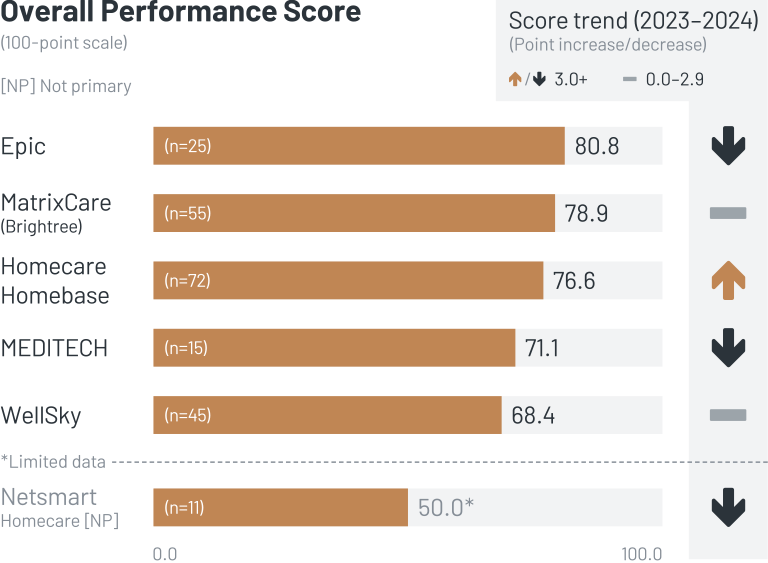
In a market with downward-trending satisfaction, Homecare Homebase has defied the trend. Though there is room for improvement, respondents report significant efforts from the vendor to improve support and communication. The vendor is noted for offering broad functionality and a comprehensive development road map. However, there remains an opportunity for increased alignment on long-standing challenges, including the slow pace of new releases and the need for improved third-party interfacing and scheduling. Customers report WellSky has worked to build out broad capabilities, though functionality gaps remain a barrier and adoption has been slow, leading to less realized value for respondents. Netsmart’s overall customer satisfaction has significantly dropped over recent years. Many respondents report a lack of regular communication about the road map and specific plans for addressing problems. The releases that do happen fail to address usability problems, leaving customers with low confidence in the vendor.
About This Report
KLAS Decision Insights Data
All references in this report to organizations’ purchasing motivations come from KLAS’ Decision Insights data. Since 2017, KLAS has been gathering information as to which vendors are being replaced, considered, and purchased and what factors drive these decisions. KLAS Decision Insights data does not represent a comprehensive census or win/loss market share study. Rather, it is intended to help organizations understand which vendors have market energy and why. The data set in this report comes from 24 organizations that are making or have recently made a home health purchase decision, validated by KLAS between December 2022 and December 2023.
KLAS Performance Data
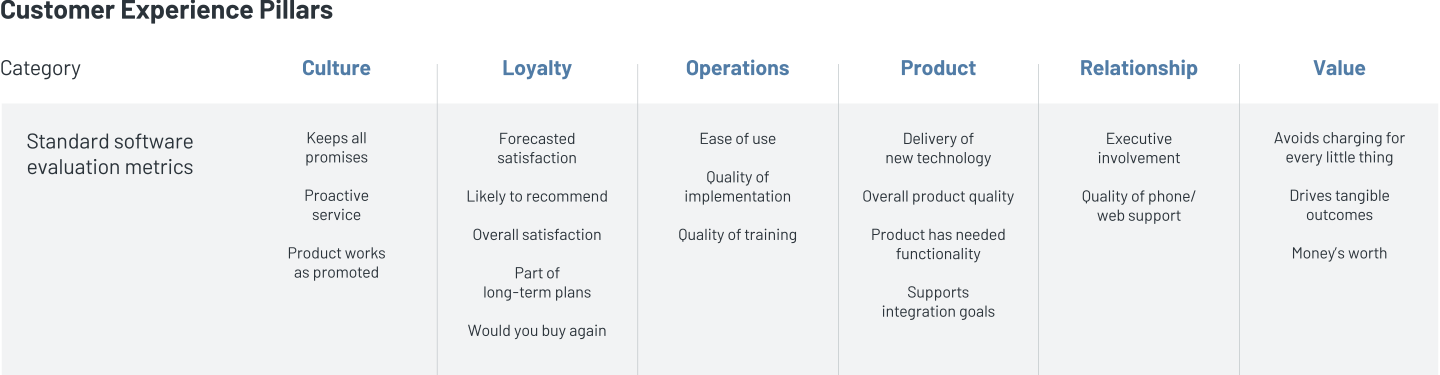
Each year, KLAS interviews thousands of healthcare professionals about the IT solutions and services their organizations use. For this report, interviews were conducted over the last 12 months using KLAS’ standard quantitative evaluation for healthcare software, which is composed of 16 numeric ratings questions and 4 yes/no questions, all weighted equally. Combined, the ratings for these questions make up the overall performance score, which is measured on a 100-point scale. The questions are organized into six customer experience pillars—culture, loyalty, operations, product, relationship, and value.
Sample Sizes
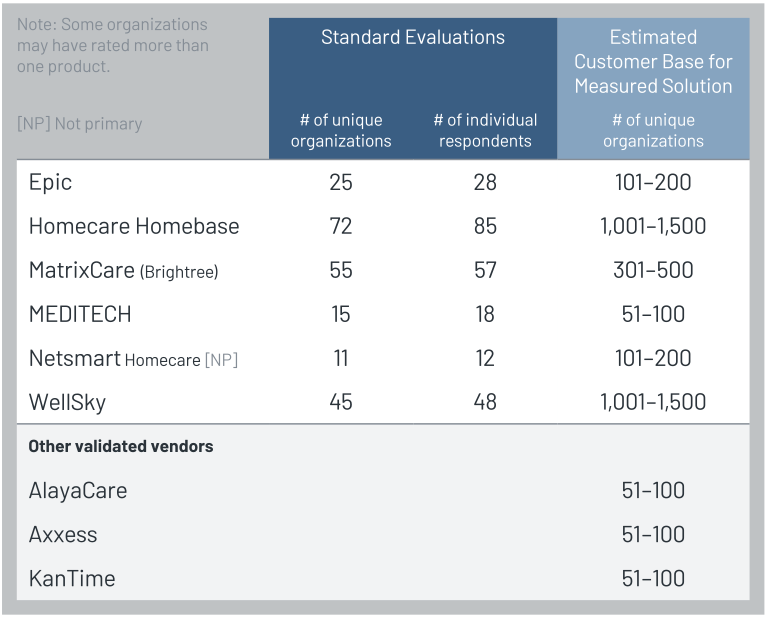
Unless otherwise noted, sample sizes displayed throughout this report (e.g., n=16) represent the total number of unique customer organizations interviewed for a given vendor or solution. However, it should be noted that to allow for the representation of differing perspectives within any one customer organization, samples may include surveys from different individuals at the same organization. The following table shows the total number of unique organizations interviewed for each vendor or solution as well as the total number of individual respondents.
Some respondents choose not to answer particular questions, meaning the sample size for any given vendor or solution can change from question to question. When the number of unique organization responses for a particular question is less than 15, the score for that question is marked with an asterisk (*) or otherwise designated as “limited data.” If the sample size is less than 6, no score is shown. Where textual content relies on limited data, the vendor name is marked with an asterisk. Note that when a vendor has a low number of reporting sites, the possibility exists for KLAS scores to change significantly as new surveys are collected.
Product Designations Used in This Report
- Not Primary [NP]: Product that is not the vendor’s lead product in the market segment but can still be purchased and is still supported. In some cases, the product may not be actively sold in the listed market segment.

Writer
Carlisa Cramer

Designer
Bronson Allgood

Project Manager
Andrew Wright
This material is copyrighted. Any organization gaining unauthorized access to this report will be liable to compensate KLAS for the full retail price. Please see the KLAS DATA USE POLICY for information regarding use of this report. © 2026 KLAS Research, LLC. All Rights Reserved. NOTE: Performance scores may change significantly when including newly interviewed provider organizations, especially when added to a smaller sample size like in emerging markets with a small number of live clients. The findings presented are not meant to be conclusive data for an entire client base.