KLAS Contact

Contact KLAS
Contact KLAS
 2026 BEST IN KLAS
Preferences
Related Series

2026

2022

US Digital Pathology 2023
A Deep Dive into Early Clinical Adopters’ Successes and Lessons Learned

Author
Eder Lagemann

Author
Sidney Tate
More healthcare organizations are evaluating digital pathology for clinical use, especially as this market’s technology continues to advance and newly developed CPT codes show promise for future reimbursements. Still, digital pathology in the US is nascent—KLAS estimates that fewer than 10% of US organizations have adopted digital pathology for clinical use, and less than 5% of cases are signed out digitally. As a result, organizations interested in digital pathology have questions about how to start and what to expect. To help provide needed insights, this report draws from interviews with 14 digital pathology pioneers who are in varying stages of their adoption journey, sharing lessons they have learned around (1) building a business case for digital pathology, (2) selecting an IMS vendor, and (3) choosing an adoption strategy. View the full report to read more from the early adopters who shared their success stories and adoption details. This is KLAS’ second report on digital pathology in the US; for the 2022 report, click here.
Building a Business Case for Digital Pathology
There is no one-size-fits-all business case for digital pathology. However, the 14 early adopters share three common business case foundations that were critical to their investment in digital pathology, with each foundation tied to expected benefits. Of note, the promise of leveraging AI to optimize workflows and enhance diagnosis underpins all three foundations, and many early adopters saw a need to adopt digital processes early and move toward primary diagnosis to be prepared to leverage AI. Now, some are beginning to use AI and see improved workflows and diagnoses, and all anticipate much more AI usage. All 14 early adopters, regardless of where they are on their digital pathology journey, have begun to see benefits from digital pathology, with deeper adopters reporting a higher rate of realized benefits on average. (Note that the business case benefits discussed below are clinically focused; the opportunity for research is often also cited by academic medical centers.)
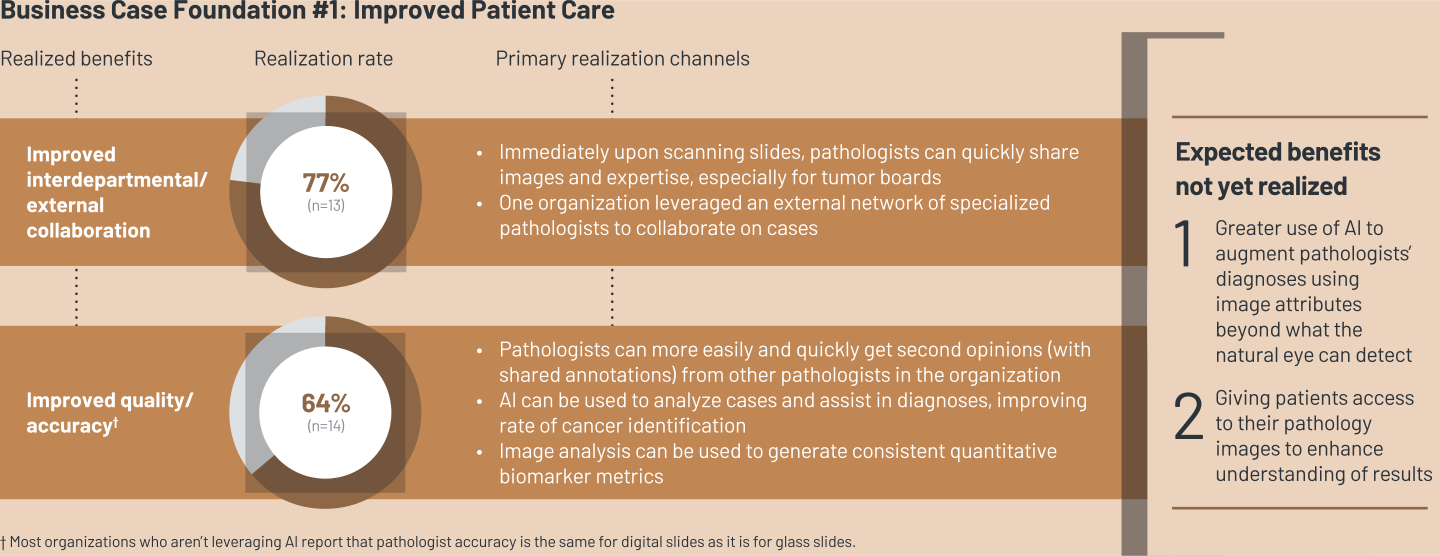
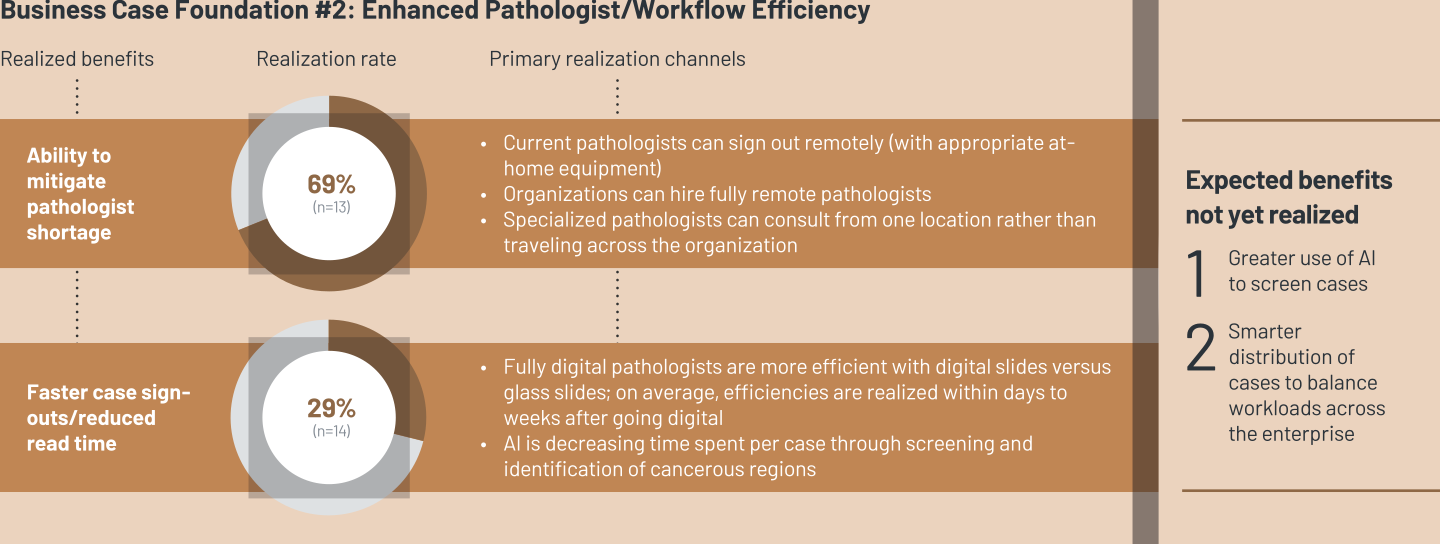
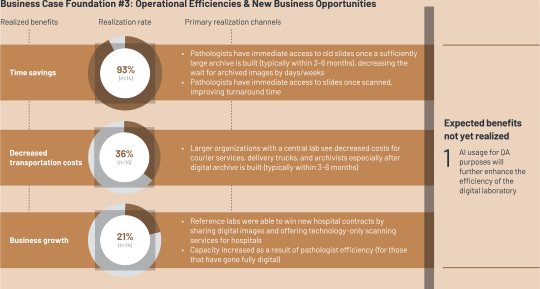
Have Early Adopters Seen Standout Success?
On average, the deeper an organization has adopted digital pathology, the greater the benefits they tend to report. Three respondents (using three separate solutions) stand out in this regard. Their pathologists switched to fully digital processes, quickly adjusted to digital sign-outs, and then saw efficiency gains of 15%–25% per case within the first six months; one organization even started seeing efficiency gains within days of pathologists going fully digital. One organization also leveraged AI to assist in cancer identification, which resulted in a higher rate of prostate cancer detection and improved survivorship for patients. Downstream revenue from improved patient care also generated a tangible ROI.
Will Cost Savings Offset the Investment in Digital Pathology?
Many early adopters assumed that ROI (i.e., hard cost savings) would not be immediate, especially since reimbursements aren’t completely established and AI is not yet widely adopted. However, they say that digital transformation is necessary to keep pace with the industry and improve patient care. For now, multiple organizations report some offset costs from decreased transportation and courier needs and improved efficiency; two report measurable cost savings from digital pathology. As CPT codes are released, organizations are optimistic that future reimbursements will mitigate costs.
Selecting the Right IMS Vendor Partner
The good news for organizations looking to adopt digital pathology is that almost all early adopters report positive experiences with their IMS vendors, who have been highly engaged, attentive to customer needs, and willing to listen to feedback and improve their systems accordingly. Key factors to consider when selecting an IMS vendor include:
LIS integration
Bidirectional LIS integration is key to successfully adopting digital pathology. It gives pathologists access to digital tools within a comfortable workflow. When considering IMS partners, ensure they either already have experience integrating with your organization’s LIS or can commit to performing the needed integration.
System openness
The field of digital pathology is constantly evolving, and most early adopters wanted an open, vendor-agnostic system that allows them to take advantage of advancements in digital pathology. Talk with potential IMS partners about their ability to integrate with different scanners and incorporate AI algorithms into the workflow.
Digital pathology experience
There are many IMS vendors to choose from, with more entering the market every year. Early adopters’ vendor partners have varying years of experience. Some adopters opted to partner with well-established vendors due to their market presence, while others chose to work with newer vendors for the promise of flexibility and customizability. All adopters wanted to ensure their vendor could provide strategic collaboration and guidance.
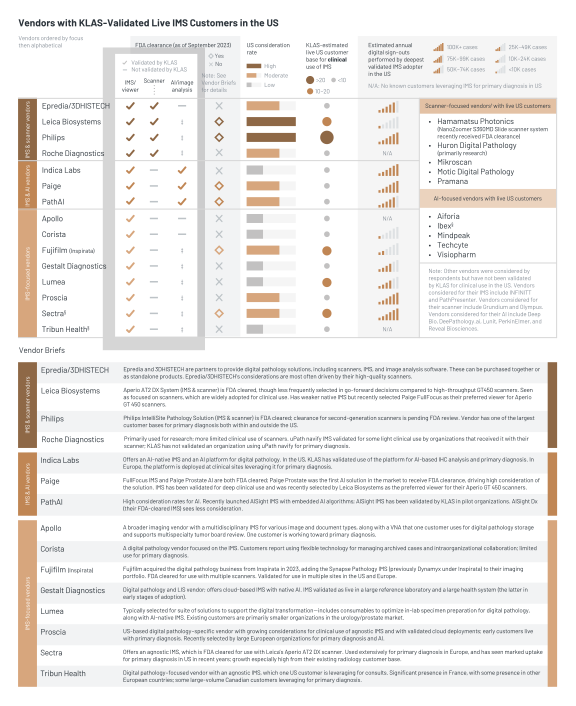
† Some scanner vendors may also offer an IMS or viewer. However, respondents considered the vendors in this group for only their scanner offering.
‡ KLAS has validated organizations using native-image analysis or AI algorithms; vendor does not offer standalone AI solution.
§ KLAS has recently published Emerging Solutions reports for both Sectra (US users) and Ibex (users in Asia, Europe, and the US); click links to view reports. KLAS also has a report about Tribun Health (users in Canada and Europe).
How Should FDA Clearance Factor into a Purchasing Decision?
Many interviewed organizations selected systems without FDA clearance, choosing a digital pathology portfolio that best fit their organization’s strategy and validating the system as a laboratory-developed test (per CAP guidelines) before using it for primary diagnosis. Most also opted for longer-than-required washout periods (exceeding two or three months) to ensure the trustworthiness of their validation results. Respondents commonly choose systems without FDA clearance because technology often advances faster than regulations. Those who selected FDA-cleared systems (e.g., Philips’ scanners and IMS, Sectra’s IMS with Leica’s AT2 DX scanners) appreciate knowing the systems have been rigorously evaluated and tested, though these organizations still independently verified the systems.
Determining the Optimal Adoption Strategy for Your Organization
Strategies for adopting digital pathology generally fall into one of two categories: (1) a phased approach, where digital pathology is adopted for limited use cases, facilities, or a subset of pathologists before deepening or broadening its use, or (2) a big-bang approach, where digital pathology is rolled out to an entire group of pathologists all at once. Both approaches have led to success for early adopters, and each has specific elements that have been critical to success.
1 Phased Approach

 Typical profile of organization leveraging approach
- Midsize or large organizations with 30+ pathologists and/or multiple hospitals
 Benefits from approach
- Pathologists’ comfort with digital pathology develops organically, leading to easier buy-in from diverse group of pathologists
- Issues are addressed in smaller group before broader rollout
- Approach requires less capital expenditure up front (organizations can begin with fewer scanners)
- Less-disruptive approach to workflows; scanning can be gradually increased
 Drawbacks from approach
- Hybrid workflows can be complicated to support (e.g., determining which slides are scanned and where glass slides are shipped)
- Multiple funding proposals may be required for strategy to progress
- Adoption can stagnate without strong plan and consistent pushing
 Steps for success
- Create a timeline to move to a fully digital workflow
- Begin by focusing on use cases that make pathologists’ work easier (e.g., giving access to old cases for comparisons and tumor boards, getting second opinions via intragroup collaboration)
- Consistently communicate about digital pathology and give pathologists exposure through training and team meetings
- Roll out primary diagnosis to select specialties or low-volume sites to work through problems before moving to a broader rollout
- Begin as broadly as possible in terms of technology investment and breadth of use cases; if a phased approach is too gradual, it can be difficult to deepen adoption and procure ongoing necessary funds
2 Big-Bang Approach

 Typical profile of organization leveraging approach
- Smaller organizations with <10 pathologists and/or a single location (one exception is a reference lab that rolled out digital sign-outs to 40 pathologists)
 Benefits from approach
- Operational efficiencies can be realized from collective transition to new workflows
- Better group learning and knowledge sharing
- Efficiency achieved more quickly and AI leveraged more quickly
- Quicker deep adoption of primary diagnosis by early adopters using this approach
 Drawbacks from approach
- Pathologists can feel pushed to go digital before feeling ready
- Less room for error when going live
- For large organizations, larger capital expenditure is required on scanners to transition all at once
 Steps for success
- Give pathologists sufficient training and time to become comfortable with and validate the system before going live
- Communicate the purpose of the transformation and the expected benefits, working toward group buy-in
- Establish a support structure post-go-live to work through any bumps
Foundational principles for both approaches
- Get buy-in from organization leadership (especially for providing necessary budgets)
- Establish strong collaboration with IT team and determine technology ownership
- Select pathologist champion(s) who can communicate the why behind the digital transformation
Other Factors to Consider for Digital Pathology Adoption
How Have Early Adopters Approached Storage for Digital Pathology?
Most early adopters have adopted or are working to implement image life cycle management for whole slide images, often with tiered storage to provide optimal image access at a lower cost. Many want to keep newer images in quick-access storage for around 90 days before moving them to tiers of slower-access storage (often in the cloud) based on factors like age or likelihood of being re-referenced. In addition to providing access to longitudinal patient case records, this method is advantageous to academic medical centers seeking to build large archives of whole slide images for research. Using a different approach, some early-adopting reference labs store digital images for around 90 days, after which images are deleted to mitigate high costs for storing large whole slide image files.
Outside of whole slide images, there is much more that can be stored for digital pathology. Some early adopters have found it advantageous to store everything pertaining to a patient’s case— including microscopic images, gross images, and scanned documents—for easy access across the organization.
How Have Early Adopters Automated Laboratory Workflows for Digital Pathology?
Beyond purchasing a scanner and IMS, organizations who have seen the most success and efficiency look to their lab to optimize workflows for digital pathology. Some transformations include the following:
- Adopting new barcodes to automate the scanning/archiving process
- Automating stainer cover slips
- Training lab technicians to ensure proper tissue alignment for scans and ensure optimal grouping for specimen shavings
- Adopting new consumables to optimize digital workflows
Want to Learn More about Early Adopters’ Successes?
View the full report to read 12 early adopters’ success stories and learn more about their approach to digital pathology adoption and the outcomes they have achieved.
Want to Learn More about Digital Pathology in Other World Regions?
See the KLAS reports linked below.
- European Digital Pathology 2021
- Global Digital Pathology 2019 and its 2020 Addendum on Tribun Healthcare
About This Report
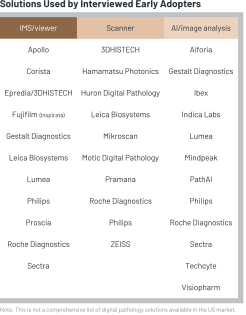 Each year, KLAS interviews thousands of healthcare professionals about the IT solutions and services their organizations use. For this report, KLAS interviewed organizations whom IMS vendors identified as their deepest adopters in the US, along with organizations identified by KLAS as digital pathology leaders in the US. In-depth interviews were conducted with these organizations between May 2023 and September 2023 to understand the details of their digital pathology journey, including their steps for building their business case, their strategy for adoption, the progression of their use cases, the successes they have seen, the partnership wins they have had with vendors, and their future plans for digital pathology. 14 total early adopters were interviewed, 12 of whom opted to allow KLAS to share their success stories in this report.
The vendors/solutions in the chart to the right are being used by at least one of the interviewed organizations in this report.

Writer
Sarah Brown

Designer
Breanne Hunter

Project Manager
Sydney Toomer
This material is copyrighted. Any organization gaining unauthorized access to this report will be liable to compensate KLAS for the full retail price. Please see the KLAS DATA USE POLICY for information regarding use of this report. © 2026 KLAS Research, LLC. All Rights Reserved. NOTE: Performance scores may change significantly when including newly interviewed provider organizations, especially when added to a smaller sample size like in emerging markets with a small number of live clients. The findings presented are not meant to be conclusive data for an entire client base.