KLAS Contact

Contact KLAS
Contact KLAS
 2026 BEST IN KLAS
Preferences
Related Series
Related Segments

Virtual Care Platforms 2024
Broad Use Cases across the Enterprise

Author
Schafer Jackson

Author
Ciera Walker
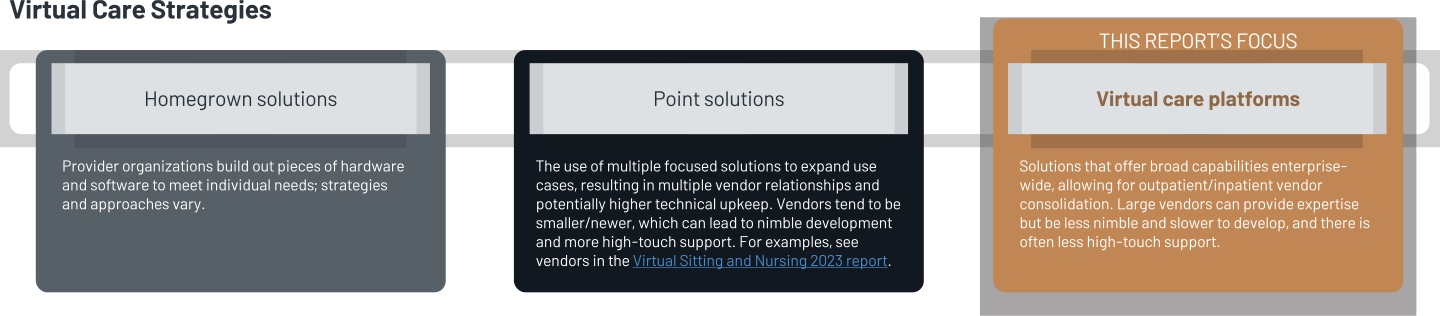
As virtual care has significantly expanded since COVID-19, provider organizations have generally solidified their outpatient virtual care strategies—leaving inpatient virtual care as the piece most impacting purchase decisions and the area with the most potential for innovation. To provide inpatient and/or outpatient virtual care, provider organizations are mainly pursuing three approaches, all of which have pros and cons: (1) homegrown solutions, (2) point solutions, and (3) virtual care platforms with broad capabilities. This report focuses on virtual care platforms, which often allow for outpatient/inpatient vendor consolidation. While many organizations are still using multiple solutions to deliver virtual care, some are moving toward total consolidation and need an enterprise solution that provides the necessary use cases for their organization. This report examines the virtual care platform market by looking at breadth of use cases as well as vendor performance, especially in terms of innovation and delivering on promises.
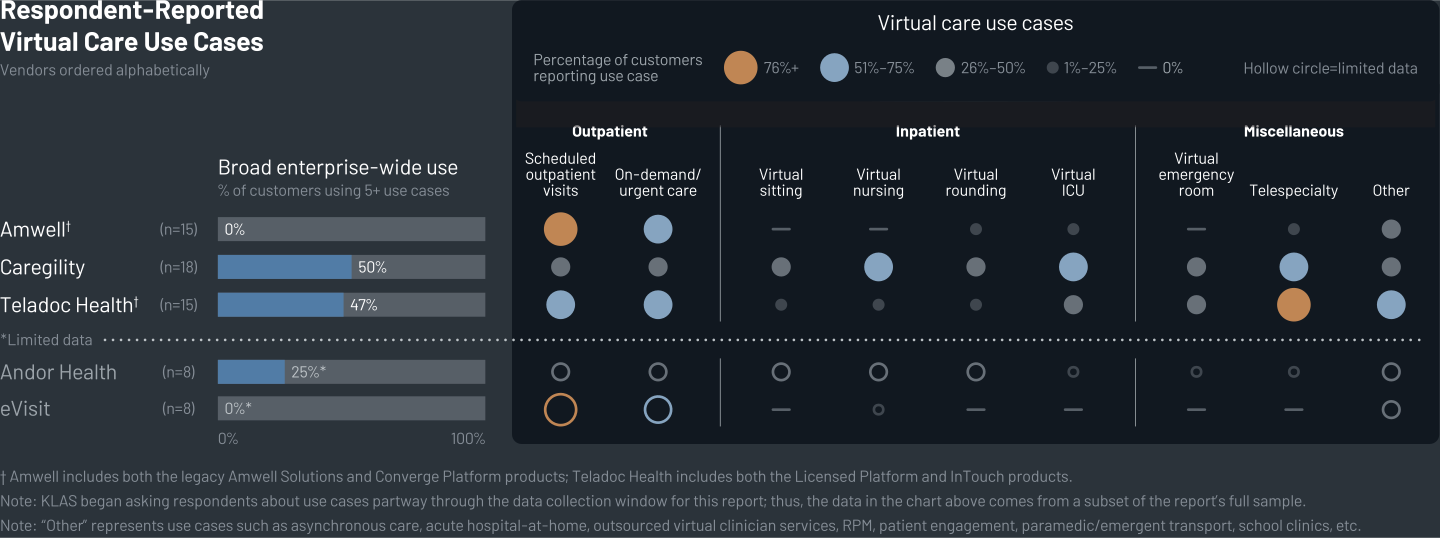
Teladoc Health & Caregility See Broad Adoption of Capabilities; Teladoc InTouch Seen as Critical Tool for Expanding Specialty Coverage, Caregility Customers Note Bumps amid Growth
Interviewed organizations report broad use of both Teladoc Health and Caregility. Teladoc Health respondents especially note the benefit of using InTouch to expand their specialist coverage when specialists aren’t readily available on-site. Some customers (especially large organizations with >500 beds) plan to expand their InTouch use cases to include sitting, rounding, and nursing. Generally, respondents see InTouch as an effective, stable clinical tool with limited downtime, saying that it improves patient outcomes by improving the timeliness of patient care or reducing the need for relocation. Some operational complaints include the solution’s cost and the need for more proactive support. Even over three years after Teladoc Health acquired InTouch Health, some acquired customers note the differences between their experience with the two vendors, saying the support now feels less nimble, less responsive, and more sales focused with the larger company. Those using Teladoc’s Licensed Platform have had varied experiences and say it is being phased out as a standalone solution and integrated into a cohesive platform.
Caregility respondents (mainly large organizations with >500 beds) report the broadest adoption of inpatient use cases, with the solution most commonly used for virtual ICU. While many still report a high level of collaboration and partnership from the vendor, overall customer satisfaction has decreased over the last two years as the vendor has grown. Some respondents cite overpromising, development delays, poor issue resolution, and the need for more robust reporting around usage and ROI metrics. Despite the dips in satisfaction, several customers express trust in Caregility and are planning to expand their use cases, especially for virtual sitting. For both Teladoc Health and Caregility, respondents who aren’t planning to expand their use cases with their vendor say cost (for both hardware and software) is top of mind, particularly for inpatient uses that require hardware endpoints.
Amwell Customers Weigh Benefits of New Converge Platform against Legacy Platform Frustrations
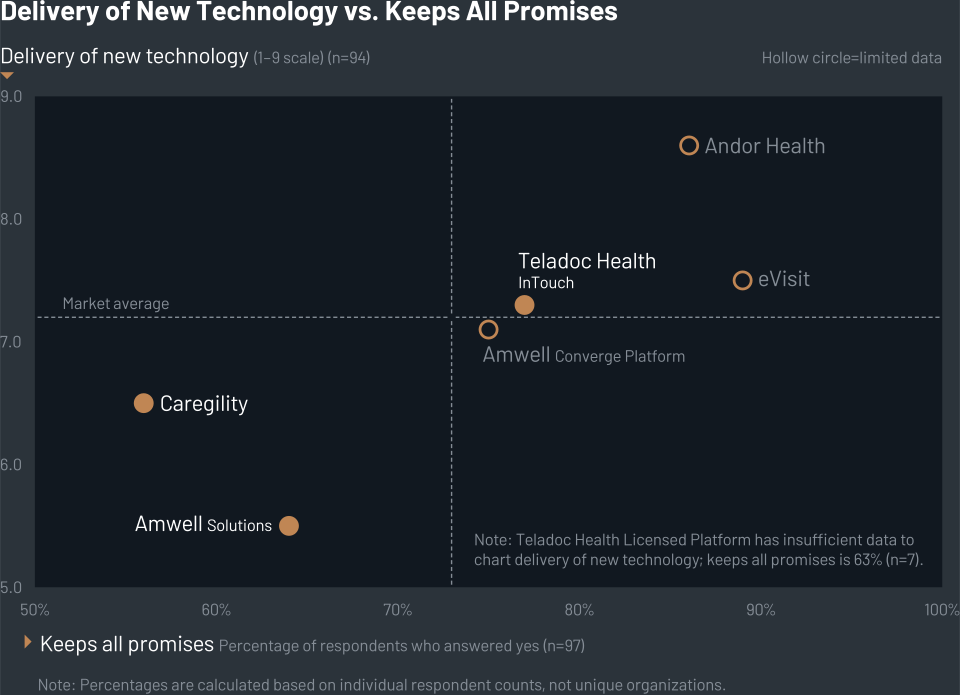 Many interviewed legacy Amwell customers continue to report issues with slow development, inadequate support, and high costs, leading some customers to replace the solution. Epic sites in particular are considering replacing Amwell and turning to Epic for their outpatient virtual care needs. Regardless of what platform they use, Amwell respondents who report plans to expand their use cases intend to do so with the vendor’s go-forward Converge Platform, with virtual nursing being the most commonly considered future use case. Over the past few years, many of the organizations choosing Converge Platform have been Oracle Health sites, in part due to the Oracle Health–Amwell partnership. (Large hospitals in the US have chosen to replace Oracle Health’s EHR; KLAS has not seen this as a significant cause for Amwell replacements, though KLAS will continue to monitor potential impact). Interviewed customers on Converge Platform tend to be more satisfied than the legacy platform customers, highlighting the EHR integration and the ability for patients to join calls via a link rather than an app download. A few Converge Platform respondents are wary due to overpromised features or project delays they experienced throughout the migration process.
Andor Health* Highlighted for Customization; eVisit* Delivers Well on Outpatient Use Cases
Interviewed Andor Health* customers report broad, flexible use cases for virtual care and patient engagement across the enterprise, highlighting the high level of customization that Andor Health offers. Most say the vendor provides highly engaged, collaborative contacts that quickly implement or develop what customers need. A few respondents question how scalable the solution can be because of the high customization. eVisit*—the 2024 Best in KLAS winner for virtual care platforms—acquired Bluestream Health in 2023, and interviewed customers are mostly clinics, with a few large organizations. Respondents most often report that their current and planned use cases for the eVisit platform relate to outpatient care; immediate plans for inpatient use cases are limited. The platform is seen as stable and generally delivers the functionality needed for straightforward outpatient use cases. Some respondents feel the solution doesn’t have the functionality needed to be used more broadly. Interviewed customers mention that the vendor’s support people, CSMs, and executives are collaborative and responsive and want to make sure the product works for customers. Still, a few note some overpromising from the vendor.
*Limited data
Large Organizations Plan to Expand into More Inpatient Use Cases
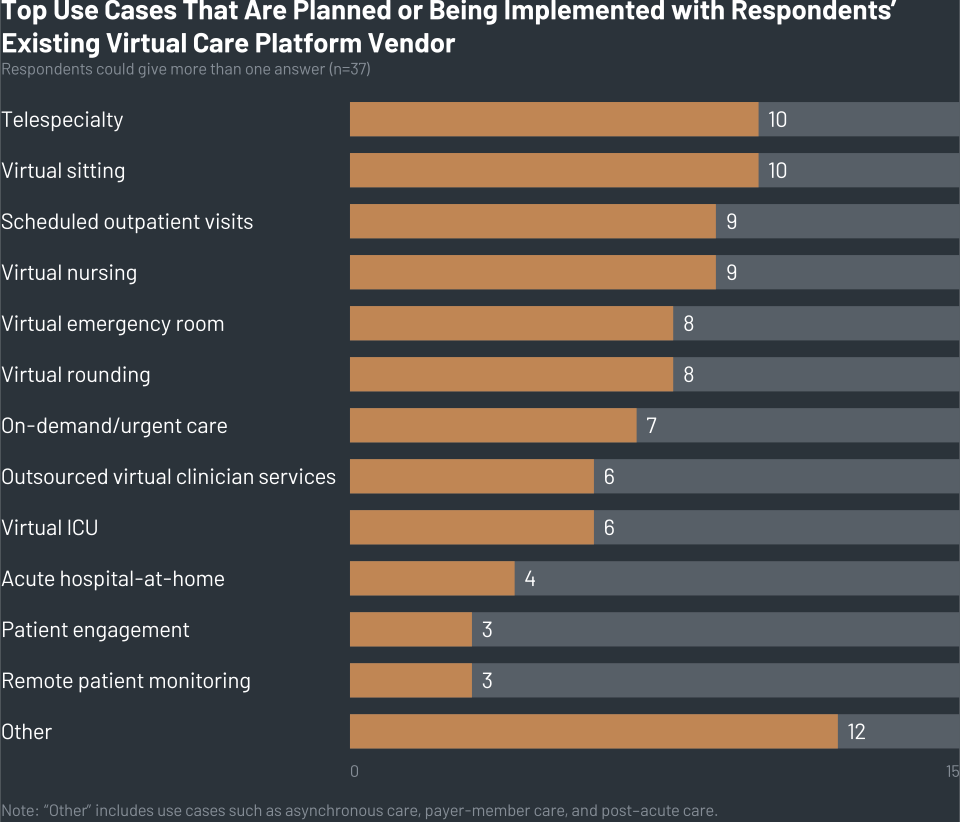
Across all virtual care platform vendors, current implementations and future plans are mainly driven by large organizations (>500 beds) expanding into inpatient use cases (most commonly virtual sitting and nursing) and/or their specialty coverage. Acute hospital-at-home programs continue to see slow adoption due to strict CMS requirements and complex logistical needs.
Vendor-Reported Use Cases
In response to growing provider demand for a broad range of virtual care use cases, KLAS invited vendors to self-report their available capabilities and customer adoption in the Telehealth & Remote Patient Monitoring Ecosystem report (published in May 2023). This Virtual Care Platforms 2024 report is the next step in validating these vendor-claimed use cases, and KLAS looks forward to further validating use cases going forward.
About This Report
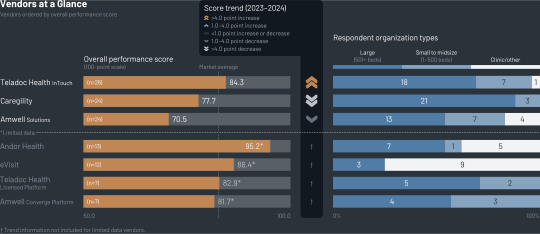
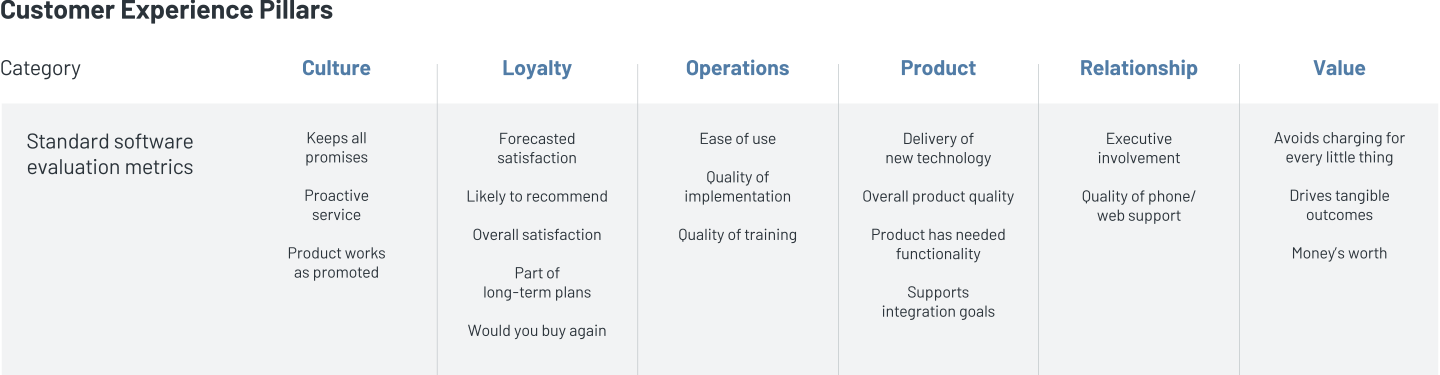
Each year, KLAS interviews thousands of healthcare professionals about the IT solutions and services their organizations use. For this report, interviews were conducted over the last 12 months using KLAS’ standard quantitative evaluation for healthcare software, which is composed of 16 numeric ratings questions and 4 yes/no questions, all weighted equally. Combined, the ratings for these questions make up the overall performance score, which is measured on a 100-point scale. The questions are organized into six customer experience pillars—culture, loyalty, operations, product, relationship, and value. Data was collected from March 2023 to March 2024.
To supplement the performance data collected, beginning in September 2023, KLAS also asked interviewed clients the following supplemental questions specific to virtual care platforms:
- Which use cases are you currently using via this virtual care solution?
- Which use cases are you implementing or planning to implement via this virtual care solution?
- Are there any reasons your organization is reducing or not expanding virtual care use cases?
Sample Sizes
Unless otherwise noted, sample sizes displayed throughout this report (e.g., n=16) represent the total number of unique customer organizations interviewed for a given vendor or solution. However, it should be noted that to allow for the representation of differing perspectives within any one customer organization, samples may include surveys from different individuals at the same organization. The table below shows the total number of unique organizations interviewed for each vendor or solution as well as the total number of individual respondents.
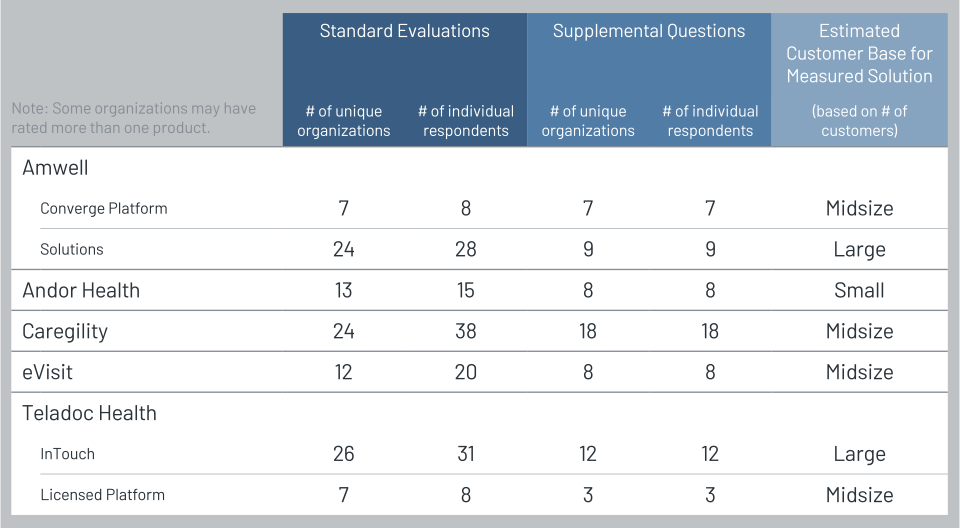
Some respondents choose not to answer particular questions, meaning the sample size for any given vendor or solution can change from question to question. When the number of unique organization responses for a particular question is less than 15, the score for that question is marked with an asterisk (*) or otherwise designated as “limited data.” If the sample size is less than 6, no score is shown. Where textual content relies on limited data, the vendor name is marked with an asterisk. Note that when a vendor has a low number of reporting sites, the possibility exists for KLAS scores to change significantly as new surveys are collected.

Writer
Carlisa Cramer

Designer
Natalie Jamison

Project Manager
Andrew Wright
This material is copyrighted. Any organization gaining unauthorized access to this report will be liable to compensate KLAS for the full retail price. Please see the KLAS DATA USE POLICY for information regarding use of this report. © 2026 KLAS Research, LLC. All Rights Reserved. NOTE: Performance scores may change significantly when including newly interviewed provider organizations, especially when added to a smaller sample size like in emerging markets with a small number of live clients. The findings presented are not meant to be conclusive data for an entire client base.