KLAS Contact

Contact KLAS
Contact KLAS
 2026 BEST IN KLAS
Preferences
Related Series

2025

2024

2022

2023 KLAS Emerging Solutions Top 20

Author
Steve Low

Author
Kyle Chilton
The partnerships that healthcare organizations make with technology vendors and services firms drive outcomes for years to come, and amid a flood of new technologies, great potential partners can be missed. In 2022, KLAS published the first Emerging Solutions Top 20 report, which showed the results of prominent members of the healthcare community reading KLAS reports on emerging technology and rating their perception of the solutions based on their potential to impact the Quadruple Aim of Healthcare: to improve outcomes, reduce the cost of care, improve the patient experience, and improve the clinician experience. The 2023 Emerging Solutions Top 20 report (1) ranks emerging solutions by their potential to disrupt the healthcare market and (2) provides insights from participating healthcare leaders into what innovation themes organizations should be aware of as they seek to provide the best patient care. For this report, 35 provider thought leaders with broad HIT experience read and rated 28 KLAS reports on emerging solutions.
The 26 emerging solutions reviewed in this report are only a sample of the emerging companies KLAS is measuring, and KLAS plans to continue publishing Top 20 reports as the range of measured companies expands. Companies that qualify for emerging solutions reports are those that have never previously been measured by KLAS and that have growing healthcare customer bases, among other considerations. If you know of another emerging HIT vendor/services firm that KLAS should research, please let us know here.

2023 KLAS Emerging Solutions Top 20
The companies ranked below are those that received the top 5 scores in relation to each Quadruple Aim; those ranked for each aim combine to make up the 2023 Emerging Solutions Top 20. In addition to being featured in this report, the top 20 emerging companies were recognized at the 2023 HLTH Conference in Las Vegas.
All comments below are from provider thought leaders who shared their perceptions of the solutions after reading the KLAS emerging solutions reports.
Report Methodology
Rankings are based on provider thought leaders’ ratings (on a 1–9 scale) of the emerging technologies’ potential to impact each arm of the Quadruple Aim. The feedback included in this report is primarily perception based; health care thought leaders, many with C-level/executive experience, shared their opinions on measured solutions after reading about customer experiences. Respondents read 8–10 reports each and are split into three groups based on whether they have a clinical, financial, or operational background. For a full list of participants, see page 5. Each solution or service eligible for this report was highlighted in a KLAS Spotlight or First Look report between June 1, 2022, and June 20, 2023, and received an overall score from customers of at least 85 out of 100.
Top 5–Improve Outcomes

“This product could have a potentially game-changing impact to help the patient post-procedure and provide meaningful information on procedure-specific patient recovery to help further guide protocols. There are many nuances to any given procedure, and post-procedure visits do not sufficiently capture more than that point in time.”

“In general, EMR workflows and functionalities have continued to fail to live up to the original promise of EMRs. I feel that in my practice and as I talk with my colleagues. TransformativeMed CORES seems to address that failure head on. Any effort to improve workflows and relieve some of the cognitive burden of navigating through an EMR workflow will have a positive impact on provider wellness and effectiveness. This will translate into patient satisfaction and better outcomes.”

“Clearstep has developed an effective, innovative patient-facing and patient-centric tool that uses AI automation for triage and patient scheduling. The tool is effective, and the company is versatile with their clients. Reductions in staff needed for nurse triage is the key ROI; however, the tool can also be effective in increasing keepage and preventing leakage. The solution has the opportunity to increase patient loyalty and ROI.”

“Current Health brings a continuous remote patient monitoring solution to healthcare systems. Patients spend most of their time at home, not at the hospital, and this solution gives healthcare professionals a clinical window into that world. Whether the solution is part of a hospital-at-home program or standalone, healthcare is moving in this direction.”

“This solution is very relevant in the current environment—the need for large data sets to train and validate AI algorithms will become increasingly important in the months and years to come. I very much like the federated approach Rhino Health is using.”
Top 5–Reduce the Cost of Care

“The potential benefits of an autonomous coding function are immense. Assuming dependent functions are structured and up-to-date and technology and processes associated with appropriate clinical documentation supporting applicable coding are correct, this solution is a noble goal. If the machine learning algorithms can effectively code for a high-dollar service line, one would assume this can cascade into every service line of the organization.”

“Obtaining patient-reported outcomes data at a large scale is very difficult; however, this data is critical for improving healthcare. Although a health system could do what this vendor does with their own EMR and patient portal, the time it would take to develop a robust system is cost and time prohibitive.”

“The ability to order directly from the supplier of choice is certainly beneficial. As drug and supply costs continue to be a key cost consideration for any health system, the ability to manage 340B-qualified pharmacy expenses is crucial. If Trulla can also effectively manage the cost/waste retention equation appropriately, there is a significant value proposition for any healthcare organization. Organizations that want to explore pricing opportunities beyond their GPO would find it extremely beneficial to be able to shop for the best price and value in a way similar to how they do on the Amazon marketplace.”
“Moving more care from the hospital to the home is essential to handle skyrocketing labor costs, staffing shortages, and patient satisfaction. Patients want to be home. This solution has great potential, especially for those populations such as CHF and COPD patients who experience high readmission rates.”

“The ability for patients to exchange information in the least stressful manner, whether that be reaching out to providers with questions or scheduling appointments, is key to improving the health of our communities. The removal of a barrier to communication will enable better patient engagement and, thus, follow-up. The issues around patient outreach and appointment scheduling have remained challenging even with the introduction of EMR platforms and other health IT solutions.”
Top 5–Improve Patient Experience

“I love the idea of AI-fueled self-triage. No one wants to go to an ER if they don’t have to, but they also don’t want to wait on hold on their phone to get direction on next steps. There are not enough nurses to support triage phone lines, so it only makes sense that AI-generated support could step in to assist.”

“This solution provides a remarkable low-tech means of improving communication between patients and caregivers. It improves the likelihood of connecting with patients without computers and smartphones.”

“A benefit is evidence-based care plans for pre- and post-procedure patient care that are electronically accessible to patients and that provide alerts to providers when expected outcome are not achieved for timely intervention. Patient education is also included. Problems to be solved include decreasing readmission rates and ED visits while improving patient experience and outcomes.”
“Current Health provides access to telehealth services and helps patients manage their chronic conditions. This can help patients avoid unnecessary trips to the doctor’s office and expensive medical bills.”

“Steer Health can improve the digital patient experience. The platform can help with recruitment, no-shows, appointing, registration, and other advanced abilities only available for health systems or clinics with web masters. Helping customers get the full value of the platform will increase Steer Health’s impact.”
Top 5–Improve Clinician Experience

“This solution simplifies the mess of data overload in all of our EMRs. Surfacing the right data to the right people is a major challenge, and this product looks very intriguing.”
“Monitoring a patient after surgery or hospitalization without phone calls or home health visits is very appealing. I am impressed that the application can be set up to guide the recovery day by day.”
“Clearstep appears to automate many of the administrative tasks that providers typically must do, such as scheduling appointments, sending reminders, and managing referrals. The system helps providers streamline their workflows and improve their operational efficiency, freeing up resources.”

“Intelligent Locations is an interesting company that offers RTLS without all the significant infrastructure requirements normally associated with a RTLS project that needs the local Wi-Fi for implementation. This is an interesting business model as traditional RTLS can be a challenge to implement because of the infrastructure work. Based on their customer comments, you can start with a small use case and scale up from there. Their scores and comments by customers are strong.”

“SocialClimb appears to help providers with exposure and alignment with the patient through social media or other online solutions. I especially like that it integrates with a practice management and a scheduling solution, albeit their own. I see this as a very innovative and effective solution with key marketing tools that can promote physicians and care services, engage with patients, and drive patients to a preferred care location.”
All Eligible Solutions
Below are all 26 solutions and services that were eligible for an Emerging Solutions Top 20 award. Each was highlighted in a KLAS Spotlight or First Look report between June 1, 2022, and June 20, 2023, and received an overall score from customers of at least 85 out of 100.
 Click on any vendor name to access their full report.
Participating Provider Thought Leaders
KLAS is grateful for the thoughtful review and engagement from the prominent healthcare thought leaders who contributed to this report.

Technology Innovation Themes
Many of the participating thought leaders who gave ratings for the Top 20 report also shared their thoughts on HIT subjects where they have expertise and passion. Among the topics covered are interoperability, AI, and staffing. Participants’ full comments on themes in technology innovation are shared below.
 Digital transformation in healthcare requires the reengineering of institutional processes and workflows to leverage the power of AI. Generative AI is proving to be instrumental in reshaping healthcare practices and improving patient-centered care. By blending digital and physical assets, healthcare institutions can shift from a pipeline model to a platform model of care that prioritizes patient needs.
To achieve successful digital transformation, we must create a new operational architecture alongside technical infrastructure. While the barriers to digital transformation are not primarily technical, existing processes need adaptation to accommodate AI integration effectively, which is our biggest challenge to adopting this technology. We need to embrace the latest changes and reconfigure operational systems and workflows to leverage the benefits of AI.
One crucial aspect is democratizing knowledge and leveraging AI tools that learn from outcomes. By doing so, healthcare professionals can make more informed decisions and improve patient care. AI tools can assist in triage, match patients with appropriate care, and even offer self-service options for patient access, enhancing the overall patient experience.
However, there are challenges to be aware of during AI integration. Checklists and rigid rules might not be flexible enough to accommodate AI, and system complexity could reduce efficiency and gains. More precise predictions from AI can introduce uncertainty into other systems, necessitating a thoughtful approach to implementation.
Addressing the issue of burnout among healthcare professionals is critical. The growing patient demand and negative margins in healthcare systems contribute to this problem. By utilizing AI and data to improve efficiency and support healthcare professionals, institutions can alleviate burnout and enhance the well-being of their workforce.
For successful digital transformation, it is essential to involve stakeholders and empower them to drive change. Collaboration between IT and clinical leaders is crucial to align technological advancements with patient care goals. Additionally, finance and governance should support innovative projects that leverage AI for improved healthcare outcomes.
To ensure responsible AI deployment, institutions must understand the principles and risks associated with AI. Attention should be given to privacy, security, fairness, and biases in AI applications. Language models like OpenAI’s can be safely deployed within healthcare institutions for the analysis of protected health information.
Looking forward, generative AI is expected to replace natural language processing in the future, further revolutionizing how AI interacts with and enhances the healthcare domain.
In conclusion, generative AI presents a plethora of opportunities for healthcare institutions to achieve digital transformation and improve patient-centered care. By embracing AI, democratizing knowledge, and fostering collaboration, healthcare professionals can drive positive change while ensuring responsible and ethical AI deployment. As AI continues to evolve, it will play an increasingly significant role in shaping the future of healthcare for the better.
 While interoperability has expanded significantly in recent years, there are many challenges yet to overcome. Through HIEs and other EMR connections, our physicians now have an abundance of data, notes, and patient history to review. However, getting to this data involves looking in multiple places in the EMR, some of which are outside physicians’ typical workflow. The review of the chart and the outside records is often disjointed and not well integrated in the EMR. The volume of data creates cognitive overload and frustration due to repetitive, duplicative information, sometimes of questionable accuracy. With the time constraints of overburdened clinicians, the inefficiencies of the review process often result in not taking the time to access the data and missing the benefits of data sharing.
To realize the benefits of interoperability—including diagnostic stewardship, seamless care for the patient, and increased safe, quality care—we need to ensure the data is presented to the clinician in a usable way within their workflow at the point of care. There is an opportunity through AI to strategically comb through the data, de-duplicate information, and highlight critical elements to guide physician decision-making. This smart view of the data in addition to careful EMR design will help us realize the full benefits of interoperability to improve care.
 Generative AI is a hot topic—our organization had 140,000 logins to ChatGPT, Bing, or Bard within 90 days of the release of ChatGPT. To ensure we consume this technology thoughtfully, we have focused initially on three concurrent efforts:
- Communication with all employees from our CEO on acceptable-use principles. A formal acceptable-use policy will follow.
- Implementing advanced website monitoring, management, and data loss protection tools with a focus on generative AI URLs.
- Implementing AI governance across our health network.
We are also keeping a close eye on plans our vendors have for embedding generative and other AI models into their applications. We believe partnering with our core vendors to embed AI into clinical and operational workflows is the most cost-effective approach and will lead to the strongest adoption.
This is only the start, as we know the risks introduced by these technologies (cybersecurity, privacy, inaccurate or biased results, copyright infringement, etc.) are large and growing. There is no doubt given the rate of change that an iterative approach and continued focus on this exciting, yet somewhat scary space are necessary.
 Like many health systems, we have utilized basic AI for years, yet the true promise of AI has remained elusive. The emergence of generative AI tools such as ChatGPT and Bard over the past year has been impressive. It gives me hope that we may be on the cusp of realizing AI’s full potential. We are partnering closely with our vendors on small pilot projects to help drive and shape how this powerful technology is deployed.
One immediate challenge is AI’s tendency to produce a biased response or “hallucinate” a false response. One approach could be to anchor the models more tightly to peer-reviewed medical literature. While medical literature is not free from bias or error, it is the bedrock of evidence-based medicine. As we improve the body of literature, the models will likewise improve. If providers could instantly access, synthesize, and apply all current medical knowledge, patient care would be revolutionized.
Collaboration between healthcare organizations, private industry, and regulatory agencies will be critical. For example, we need to settle on certain fundamental principles to reduce bias, prevent hallucinations, and enhance patient transparency, just to name a few. Rather than developing and refining these frameworks in silos, we should broadly share our thoughts and ideas to quickly move toward consensus.
Providers and patients alike are already using these tools to deliver and understand healthcare. We need to urgently educate everyone on the responsible use of generative AI to maximize the considerable benefits and minimize the potential risks.
While our initial focus is on safety, the potential for these technologies to transform healthcare is extraordinary. Whether it is concisely summarizing the enormous ocean of healthcare data we have produced, answering patients’ medical questions, developing new potential therapies, or just minimizing administrative burden, the space is evolving at light speed. Our job right now is to try to keep up with this new pace of change and guide the discussion to ensure we keep the patient at the center of everything we do.
Fundamentally, we need to understand what generative AI can do and choose what healthcare should do.
 Interoperability as defined in this discussion is the ability to work together for the greater good with other related healthcare entities. Those entities could be a faculty practice working with a hospital, or those entities could be a health system working with payers, pharmacies, the government, or another provider group.
There are multiple obstacles that still exist in each scenario today. Having worked at three different academic systems—one where negotiations happened every day, one where expectations were well defined, and one where the system worked as a whole—it is clear there is work to be done.
One area to build upon is having a strong model for financial stability, which in my current environment has allowed all areas of the organization to focus on growth. For example, our surgeons worked to understand the needs of the hospital and be more efficient in the OR and standardize equipment to reduce costs. The provider saw higher productivity and higher compensation in turn, and the hospital increased margins and overall revenue. This example succeeded due to people working through a problem using the data available and leveraging their experiences, and there was a positive result.
However, in the example above, technology slowed the positive result down. The solutions could have been faster to implement if our financial costing system had been stronger. It took sustained effort by the team to analyze costs for supplies that could have been easier if the inventory system were better. Invoices needed to be reviewed manually, costs tracked in Excel, and items standardized before comparison. These are all items a stronger system could manage for a user.
Another area to focus on is creating consistent systems. Having everyone on Epic in my current environment makes it easier to work together, support technology needs, and connect to external groups for referrals, patient transfers, and patient management. A number of small standalone groups are starting to share our Epic environment (separate and secure) so they can get the technology at a lower cost point.
My general advice would be to consider transparency a positive for growth, bring the little guys with you as they will help you grow, and keep telling people that things are stupid even while you make the stupid things more efficient (such as prior authorizations).
From a development standpoint, I am a fan of Medicare for All, assuming the program is fairly modeled. I would rather groups focus on efficiency and strengthening systems and people over negotiating, competing, and squeezing for each dollar.
 AI is important. Generative AI (GenAI) has an enormous potential to assist in healthcare. Like with any other new technology (such as the stethoscope in 1886), healthcare will learn to use AI tools to augment the clinician in caring for patients, their families, and communities. All tools that clinicians use have a risk and benefit, and most cultures allow the use of these tools to be restricted by appropriate schooling, licensing, and curation of our clinicians. As such, appropriate education and guardrails for these new AI tools will have to exist to maximize the immense potential of these tools while ensuring safe use of these tools to care for those with whom the clinicians have been entrusted.
We are beginning to use these tools for summarizing large volumes of clinical data (e.g., patient histories and prior authorizations) and automated reply suggestions for clinical questions. Another new realm for these AI tools is listening to conversations, specifically the patient-clinician encounters typically seen in our offices. These new tools will free the clinicians from focusing on the EMR and computer and allow for better patient engagement and experiences. We do, however, need to use caution in setting our expectations for how these new tools will help.
The adage of “garbage in, garbage out” from the 1960s still applies today. Knowing the limitations, knowing how to use these tools (with the emergence of the field of prompt engineering), and knowing when to use these tools will become imperative to the new generation of clinicians. But this is not new to healthcare. Many rejected the use of the stethoscope, stating that it would interfere with the patient-clinician experience by removing skin-to-skin contact and inserting a hard device between the two. We all know the outcome, and almost every user today knows the benefits, limitations, and use of the stethoscope, and we use it variably in different settings. I believe that the same will occur for GenAI and the next technology on the horizon.
 At Beacon Health System, our executive leadership has supported an aggressive vision to responsibly incorporate as many AI-driven solutions into our operations as possible. As we have been developing a strategy to deliver on this vision, we realized we have been using a variety of AI-driven applications for years. Most recently, we have implemented clinical solutions that utilize NLP and AI algorithms to suggest appropriate diagnosis codes for providers to add/reject in the patient chart. We have also begun using generative AI for creation of provider notes. With our vendor, we are discussing becoming early adopters of their next generation of fully automated note-creation technology.
Since the release of ChatGPT in late 2022, there has been an explosion of activity and interest in AI. This has sparked intense competition among the AI developers and vendors. The spirit of competition has made its way to healthcare. We are desperate for solutions to increase/maintain productivity, gain efficiencies, reduce denials, and create better access—all with fewer resources. Fortunately, these solutions are on the way. But in the race to develop and leverage this technology, it is important for us to stay mindful of what AI can and cannot do reliably. It is vital for us to understand the difference between generative AI/large language models and older forms of AI (i.e., machine learning, NLP, voice/image recognition, robotic process automation). The latter stands to provide a massive opportunity for efficiency and reduced burden of repetitive/detailed tasks. These technologies should be enthusiastically embraced and developed. While generative AI remains largely unvalidated, it also stands to disrupt our care-delivery models in ways we have yet to imagine.
Yet with all the power and promise of generative AI, we must be mindful of its potential pitfalls. Generative AI solutions must be vigorously tested and validated prior to being released at a broad scale. One of the biggest dangers of incorporating generative AI solutions in healthcare is the potential for complacency. In order to trust the output of a generative AI solution, it is imperative we understand the corpus of data from which it derives its output. It must be up-to-date. Its information management must be secure and HIPAA compliant. It must include comprehensive libraries of well-designed, peer-reviewed, evidence-based data from which mainstream medicine thought leaders derive their recommendations. It must be consistent and accurate in its conclusions and recommendations. And most importantly, we must not be complacent by trusting without verifying how it may influence our care. This will become most important when we are tired, overworked, and worn down by the pressures of meeting our patients’ needs.
In time, AI will become deeply embedded in how we deliver care. The organizations that embrace this technology as it is developing—as opposed to waiting for it to be fully mature—will have a distinct advantage. Learning to use AI as it is being developed will be our safeguard from falling behind and finding ourselves unable to catch up in this rapidly evolving landscape. We must make this journey with our eyes wide open and be ready to mitigate the many pitfalls that appear along the way.
 Generative AI is making its public appearance and is a significant disruptor to all fields and industries. Generative AI holds significant potential to revolutionize the healthcare world and be a positive disruptor if our approach is thoughtful and not impulsive or as instant as the responses that large language models provide. AI’s scope would offer solutions in various applications, such as medical image generation, drug discovery, personalized treatment plans, and research purposes. By using large data sets and powerful models, generative AI can aid in diagnosing diseases, predicting patient outcomes, enhancing medical research, improving clinical documentation, and generating comprehensive medical records. I believe its partnership with virtual reality would offer patients individualized and visually predicted outcomes that could offer a proposed reality for patients depending on which path they would like to choose for their plan of care.
I use various generative AI large-language model applications daily. I ask about a range of topics, from recipes and calculations to evidence-based practice and how to draft or edit emails. In my use, I have found the responses to be a great starting point for my research, and they remove the cognitive obstacle that one may experience when starting a project or train of thought. The responses are helpful overall; however, there are times when the responses may infringe intellectual property rights or are incorrect or biased. In the time I have used these applications, I have become more specific with my questions and set clearer criteria to help drive the responses I am looking for.
In healthcare, this is our time to correct mistakes made when moving to electronic documentation. Generative AI has the potential to remove the technostress our current platforms have placed on the clinical experts that do not have strengths or competency with technology. It also offers the opportunity for healthcare to use standardized language sets. However, the challenge of integration with EMRs is still a significant barrier, as well as privacy and security, ethical considerations, healthcare incentive, and continuous performance monitoring.
In conclusion, generative AI is an amazing tool to aid the healthcare world. People are going to use these applications for everything, so instead of putting up resistance, we need to explore how we can safely implement AI and caution end users about how to ask questions and how to confirm the results. Clinicians need to have a seat at the table to drive the work where it will be most meaningful, offer the wisdom that just because we can does not mean we should, and share our stories collaboratively.
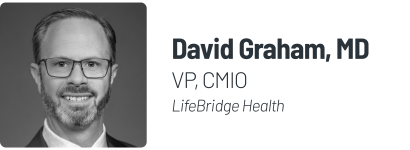 AI is clearly the new darling and potential pariah of healthcare. To be sure, it is not new in US healthcare. In varying degrees of maturity, AI has been present for many years in healthcare, with a focus on machine learning, process automation, and population management. Established models have been improving their functionality and capability to cohort similar patients, develop registries, mine EMR data, improve coding accuracy, and even do the initial read for radiologists (elevating potentially worrisome findings to the top of their queue for more timely diagnoses). Now these machine learning models have expanded rapidly with the inclusion of LLMs and generative AI. The landscape is quickly filling up with large tech giants, including Microsoft, Amazon, and Google; however, there is also a broad proliferation of small start-ups hungry to disrupt. The disruption will be felt for both the healthcare delivery models and for the tech status quo.
The excitement must be tempered with a degree of skepticism. The long-standing adage that “simply because we can do something does not mean that we should” holds firm for AI in healthcare. Health systems are rapidly developing guidelines and guardrails for the employment of generative AI in their facilities and practices. Governments, at home and abroad, are rushing to the same regulatory oversight. Though an apocalypse induced by machine-aware technology is not the inevitable end point, we much approach this explosive new technology with respect for its potential and the foresight to monitor its propagation. We humans still get to influence the evolution of generative AI in healthcare. We must enter this exciting field with eyes wide open to the bias inherent in the LLMs we are using to train our AI algorithms. We must take the time to learn how to direct the AI to the best clinical end points. Cautious approaches, though, should not hamper our efforts to gain the most advantage from this disruptive technology. The healthcare and technology leaders in this space are showing a measured approach of balancing exploitation of the possibilities with improved patient-focused outcomes as the primary motivation.
The evolution of generative AI, predictive analytics, precision medicine, and patient safety must coalesce and be guided in a unified and coordinated manner instead of being left to rampant and potentially harmful disintegration. Effective policies, regulatory oversight, and innovative care models will help to smooth the transition to a future that is coming at light speed.
 Every healthcare professional and HIT expert has envisioned a seamless plug-and-play system for exchanging and sharing patient care information across the continuum of care. While this goal was not always a mere illusion, it took until the late ‘80s for the HL7 standard to evolve into an international standard for the exchange, integration, sharing, and retrieval of electronic health information. Although this advancement made sharing easier, it often required the expertise of an integration analyst and could be quite expensive to implement. If you attend HIMSS, you will quickly notice that despite having standards in place, there are numerous different solutions, but there is no equivalent to underwriters’ laboratories in the healthcare industry for all solution providers to play or semantic interoperability to operate.
So what is the solution? Are APIs or the FHIR standard alone the answer?
Truth be told, healthcare data comprises more than it appears to; it should narrate the comprehensive story of each patient. Challenges persist in the realms of collecting data, maintaining demographic accuracy during registration, managing data duplication, and implementing efficient coding for crucial elements, all of which are pivotal in enhancing semantic interoperability. This is particularly crucial when harnessing data from various sources across healthcare providers. So data quality does matter.
Perhaps HIE/HIOs and the national networks are in a good place to improve data quality, as they do the work every day and their success depends on integrity, data homogenization, and the normalization of shared patient data. The industry is actively tackling these three elements, and many HIEs, who serve as data aggregators, have been successful.
Data exchange is especially important if we are going to make national network data meaningful. A patient’s chart comprises various types of information to maintain a comprehensive healthcare history and interactions with healthcare providers. The contents of a chart can vary depending on the healthcare setting, but typically many components don’t easily fit into the standards. Particularly difficult are progress notes, special forms, and advanced directives, not to mention the myriad of special data that makes up social determinants of health. Despite the progress made and the existence of standards, healthcare data remains messy and inconsistent, as it is not always collected and captured in the same way across different healthcare systems. This lack of uniformity poses challenges in achieving a truly seamless, interoperable data exchange environment.
The bottom line is that patient data can be dirty. The challenges and issues surrounding healthcare data have accumulated over time, including legacy historical paper, digital transformation, data silos, and data fragmentation. Overall, solving interoperability in healthcare requires a coordinated effort from everyone involved with a focus on standardization, collaboration, and the patient. As technology evolves and new challenges arise, iterative efforts to improve semantic interoperability are necessary to maintain and enhance interoperability in the healthcare industry.
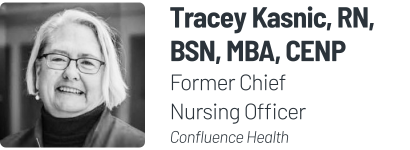 Healthcare is in a modern catch-22. Staffing shortages (nursing and ancillary support staff) existed prior to 2020 but were exacerbated by the pandemic. They are predicted to worsen in the coming years. This has forced an overreliance on travelers, which has negatively impacted most healthcare systems’ bottom line, resulting in profit margins of 2% or less. Unfortunately, this leaves very little capital for investment in some innovative technology solutions that could result in long-term savings—especially as we see days of cash on hand go down and age of plant go up. Hospital executives are looking for solid solutions that will save FTEs and money on high-cost items, such as pharmacy and supplies. In addition, there cannot be a one-size-fits-all approach, as solutions for large 500-bed facilities will not benefit small community hospitals.
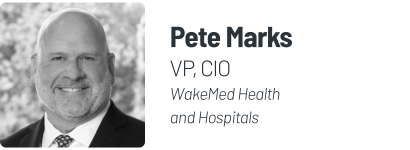 Information and analytics are the most valuable resources for getting better outcomes for patients. We have been asking people to put data into systems for the past few decades, and now we are beginning to get real value from this investment. At my organization, we are committed to continuous quality improvement using data that is focused on patient outcomes. To this end, we have measurable improvements with more than 50 patient outcomes that we utilize to improve care. The number of measures we have is not as important as the deliberate focus on incorporation of processes where the entire staff uses data to improve the utilization of the continuous PDSA method. Our end goal is to teach and train all our team on data literacy and how to continually improve outcomes.
To get to this point, an organization must make several commitments. I will not address them all, but I will cover some of the most pertinent.
It is paramount that organizations who want to utilize data commit to complete interoperability. Health organizations have a tremendous amount of data debt through the deployment of different systems where the data does not interoperate. Moreover, healthcare systems continue to purchase additional systems without addressing how the data will flow throughout their system prior to signing a contract. It is often assumed that data interoperability can be addressed after the contract. It cannot.
We took a multiprong approach to data interoperability. We focused our attention on the consolidation of applications to a few key vendors that had significant depth and breadth so we did not have to tie hundreds of systems into our data strategy. For example, for clinical or revenue cycle work, our focus is on Epic. We will bring in other applications, but we set the bar high for venturing away from Epic. This helps us integrate workflows and, just as importantly, data since it all comes from one system. We have adopted similar strategies in business applications and other key areas.
Even with this strategy, we still needed an enterprise data warehouse to merge data from different systems. We selected a vendor that had strong technology but focused on process improvement in healthcare. Our contract and continual work with them are primarily focused on bringing in different data to improve outcomes.
We also needed governance; we involved our most senior leaders in the prioritization and maturity of projects, and the effort fell on our performance improvement teams for execution and not on information services. It was key for us to utilize metrics that became goals that we reported to our board of directors. This ensured that there was support from the top of the organization and that our analytics and outcomes maturing were continually measured. Also, we executed off-site meetings with our entire C-suite so they could select the projects that were most closely tied to strategic outcomes.
We are still a work in progress, but our key strategy at WakeMed is to focus on outcomes improvement with analytics.
 As we are focusing on modernizing our core platforms (ERP/EMR) over the next 18 months, we are early in evaluating AI functionality. That noted, the repeatable and predictive processes are ripe for autonomous automation. Patient/provider communications can be preformatted for delivery back to the patient, but currently we still need an intermediary for validation of response (e.g., MyChart/ChatGPT). For most of us, there will be a preference to have functions inherent within the EMR or ERP system, such as supply chain management/procurement and functions for indirect care settings (HIM, credentialing, etc.). But questions remain on the speed to market as we monitor for the federal government’s likely involvement and stance.
We are exploring leaders such as Amazon and Microsoft for leading-edge opportunities for potential use cases. There are real possibilities. Diagnostic-related interactions with an AI model and patient are interesting, and I feel some trepidation to assure accuracy and retain the humanistic emotion of healthcare delivery. There is no doubt that AI is the future we must navigate. The optimal use of these tools as an optimizer versus a replacement function is what will be crucial in the very short years ahead. We are executing on our path to the public cloud, deploying our EMR and applicable adjacent applications. There are multiple purposes: striving for an expanding number of applications in the online marketplace, creating readily deployable future AI/ML-enabled functions, and arguably providing another layer of advanced security. We want to be positioned to maximize our investments in our core apps but also be agile enough to deliver solutions for service lines that may need an additional functionality boost for our patients and providers.
 At the University of Utah Health (UUH), we define interoperability as the seamless exchange of information between our current systems in addition to the different healthcare systems and providers. It is a critical aspect of how we deliver quality healthcare, and it holds the promise of improving patient care, enhancing efficiency, and reducing costs.
Obstacles to Interoperability at University of Utah Health:
- Fragmented health IT systems: Like many healthcare institutions, UUH has historically operated with diverse and siloed HIT systems; however, this has drastically improved in the last decade. Any system fragmentation can hinder data exchange and collaboration between different departments, leading to information gaps.
- Lack of common data standards: Variation in data formats and coding systems across different systems can impede the seamless flow of information. Without common data standards, data translation becomes cumbersome and prone to errors.
- Data privacy and security concerns: Ensuring patient data privacy and security is of utmost importance. Striking a balance between sharing data for interoperability and safeguarding patient information is a complex challenge for UUH and the healthcare industry.
- Financial and resource constraints: Implementing interoperable systems requires substantial investments in technology, staff training, and process reengineering. Limited financial and human resources can slow down progress toward full interoperability.
Overcoming Obstacles at University of Utah Health:
- Establishing a common information exchange: UUH recognizes the importance of a unified data fabric to overcome system fragmentation. It has worked toward integrating various IT systems, enabling data sharing across specialties, departments, and even with external partners.
- Adopting health data standards: Embracing common health data standards, such as HL7, FHIR, and CDA, allows UUH to ensure that data is exchanged in a consistent and meaningful way across different platforms.
- Implementing robust data governance and security measures: UUH has an established data governance committee, which works to safeguard patient data while enabling secure information exchange. This also requires that we use encryption and access controls and regularly audit our systems to monitor compliance.
- Engaging in collaborative efforts: Recognizing that interoperability is a challenge faced by the entire healthcare industry, UUH has actively participated in regional, state, and national collaborative efforts. This includes sharing best practices and learning from others to accelerate progress.
- Patient engagement and empowerment: UUH has encouraged patient engagement in their own care and data by offering access through the patient portal and providing tools that empower patients to securely share their health information with other providers, track their results, and engage via telehealth services.
Advice for Others:
- Strategic vision and leadership: Develop a clear strategic digital vision for interoperability. The foundation of our digital road map incorporates an architecture that supports interoperability.
- Collaboration and partnerships: No single organization can achieve interoperability in isolation. Collaborate with other healthcare providers, government agencies, and technology vendors to leverage expertise and resources.
- Data governance and privacy: Prioritize data governance and security measures to protect patient information while enabling data exchange. Establish policies and protocols that adhere to privacy regulations and promote trust among stakeholders.
- Standardized technology adoption: Embrace common data standards and interoperable technologies to ensure seamless data exchange. Provide a framework to constantly rationalize your portfolio to be in alignment with your digital architecture.
 Interoperability
Despite governmental efforts to have vendors comply with EMR standards, each vendor continues to capture data with different clinical terminologies. Progress has occurred with communication standards, but the fact of the matter is that until we have a standard definition of a patient’s identity due to privacy and security, we remain far from what the banking/financial sector accomplished decades ago.
Artificial Intelligence
AI/ML entries into the organization are now being introduced by the device manufacturers. An example is GI Genius for endoscopy, where scope images are routed to a data library of other images to compare/contrast for anomalies. Providers are then nudged to review for potential issues. This can be repeated for mammography screenings, lung CTs, etc. The current concern is our clinicians are not being made aware of how the data models work, and the clinicians do not know what questions they should be asking of the vendor. For example, does the data model have known biases, and what content was used to create the data model?
ML/pattern detection models have been around for quite some time, and personally I am not very concerned about the technological development in this space. Generative AI is a different topic altogether, and I believe the health industry needs some framework and guardrails. We should be developing a standards committee like what occurred for HL7.
Inpatient Quality
I was a big proponent for CMS 5 star as proxy for defining inpatient quality. In many ways, I still am. I would like to see Epic (and Cerner) produce quality reports based on these definitions and augment that information with the most recent CMS data. There are way too many hospitals doing their own thing and relying on Midas for a bunch of skewed reporting.
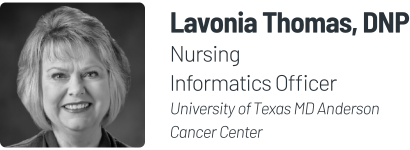 As technology expands to support the digitalization of healthcare, it is important to ensure the voices of the many users of the EMR are represented in the development. This includes the basics of the EMR, like worklists and flowsheets, to AI being designed to support patient care. The medical plan of care is executed by a number of different disciplines across the care continuum for patients. The efficiency we strive so hard to capture can only fully be realized by all those participating in care having an equal stake in developing the tools. While development of new technology is happening at a feverish pace, the haste to introduce new functionality to the market must be mitigated with a fuller understanding of the impact. It is important that a new idea be properly vetted and must begin its journey to usability; however, that course must involve a more robust assessment of the stakeholders, whether they be key players or more supportive roles. Nursing is an example of a key stakeholder and large workforce whose documentation plays a substantial role in regulatory efforts. Whether or not there is a belief that technology will impact nursing, the question of how it might should be raised early in development. Such a rigorous review would ensure other healthcare stakeholders would be included as well. Workflows are not apparent to those working outside healthcare and are only illuminated when discussing functionality with specific disciplines using operational examples.
 Isn’t there AI for that?
Written in full by human, Emily C. Webber, MD, FAAP, FAMIA
Every health leader and healthcare worker I know is being asked to do more and do it more efficiently for patients with greater needs and for less money. This results in almost every health IT leader I know being faced with the question of how to best use AI, specifically generative platforms (like ChatGPT). And there are certainly a lot of opinions.
What most of us have seen is the intention and great enthusiasm to harness these technologies to offset the most arduous parts of healthcare—repetitive administrative tasks that don’t seem to leverage the experience and knowledge of humans. For example, applying AI to the least desirable parts of the EMR seems like a slam dunk, and indeed large health IT groups announce almost weekly how they will apply AI to manage inbox messages and tasks. Those not able to implement will soon be outpaced by humans augmented with AI tools.
Most health systems already have some version of AI embedded in their systems—whether it is to manage EMR access, find documentation opportunities, or apply clinical decision support, especially in fields like radiology. More grandly, applying models to large amounts of information holds the promise of seeing insights unavailable to the human mind.
At this point, the newness of generative tools is already starting to settle somewhere between curiosity, enhanced productivity (writing letters that are supposed to sound predictable and formulaic), and urgency to adapt more rigorous and high-value AI and generative tools. Most physicians can see the opportunities immediately, and with our health systems stretched for resources, I think it is critical to maintain a rigorous skepticism about the best applications.
Even the leaders in the field are quick to remark that applications in medicine require keen evaluation to be not only value but also to be safe. For example, Lee, et. al, shows examples of the risks of generative engines (i.e., omissions, hallucinations). Physicians take an oath to first do no harm. I think that is where we are with AI, ChatGPT, and similar large language models. For real value to be realized, we have to be very thoughtful about how to determine whether we can even evaluate if the tool is mature enough to replicate or exceed human performance. Generative AI that can be trained to be as reliable as a human translator is a great example. A translator engine that is validated for medical content could help close communication gaps and enable more equitable care.
All this value is predicated on highly reliable validation by the medical community. There has never been more demand or the need to do and analyze more complex sets of data for sicker patients in a health system with decreasing resources.
 Interoperability issues continue to hinder the seamless exchange of health information among healthcare providers. One of the primary obstacles to effective EMR interoperability is the overwhelming amount of data generated and stored within these systems. The exponential growth of medical data, including clinical notes, lab results, imaging reports, and medication histories, often leads to information overload for healthcare professionals. This deluge of data makes it increasingly difficult for providers to locate relevant and actionable information when making patient care decisions.
C-CDA documents, commonly used for exchanging patient data, can contribute to the challenges of data overload. While intended to improve interoperability, they often suffer from note bloat and poor formatting. Note templates pull in reams of extraneous information from the originating site that simply gets pushed to the receiving site. Somewhere in all that data are useful tidbits of information for those with the patience and time to sift through it all.
AI technologies have the potential to significantly alleviate the problems associated with data overload and C-CDA document complexity. By leveraging AI-powered algorithms, it becomes possible to analyze vast amounts of data in real time, identify patterns, and generate concise, summarized records tailored to the specific needs of individual healthcare professionals. The current one-size-fits-all approach to interoperability assumes that all providers want to see all information. The reality of clinical practice is that providers want to see information that is relevant to their specialty and the needs of the patient at that moment.
We appear to be getting closer to the ideal state of just-in-time data summaries from large data sets. In 2020, Google announced plans to use their search algorithms to summarize medical records, and in 2022, they announced plans to start with the EMR provider MEDITECH. Tools such as ChatGPT-4 have the potential to perform this work, and we will likely see significant improvements over the next three to five years.

Writer
Carlisa Cramer

Designer
Jessica Bonnett
Project Manager
Kyle Chilton
This material is copyrighted. Any organization gaining unauthorized access to this report will be liable to compensate KLAS for the full retail price. Please see the KLAS DATA USE POLICY for information regarding use of this report. © 2026 KLAS Research, LLC. All Rights Reserved. NOTE: Performance scores may change significantly when including newly interviewed provider organizations, especially when added to a smaller sample size like in emerging markets with a small number of live clients. The findings presented are not meant to be conclusive data for an entire client base.