KLAS Contact

Contact KLAS
Contact KLAS
 2026 BEST IN KLAS
Preferences
Related Series
Related Segments

Clinician Digital Workflow 2024
Streamlining EHR Workflows with AI & Other Advanced Technologies

Author
Jackson Tate

Author
Jennifer Hickenlooper

Author
Lance Merrell
The EHR holds a plethora of information that helps healthcare organizations provide better, more-informed care, but it takes time for users to find the most relevant data for current patients. As a result, many organizations are turning to clinician digital workflow solutions, which automate and streamline clinical workflows within the EHR—primarily chart reviews, documentation, and care team coordination. Recent advancements in AI and other technology have resulted in further traction of these solutions, as organizations believe the advancements have the potential to enhance clinicians’ EHR experience. This report—KLAS’ first to focus on clinician digital workflow solutions—examines vendor performance, the solution capabilities being used, and the impact of advanced technologies on interviewed customers.
Note: Overall, interviewed customers in this market are satisfied, but since this is a developing market, the customer bases for measured solutions are fairly small. KLAS will continue to monitor customer experiences as new vendor solutions are adopted by the market.
Regard* Customers Report Smooth, Well-Supported Implementation Processes & Increased Revenue from Improved Coding & Billing
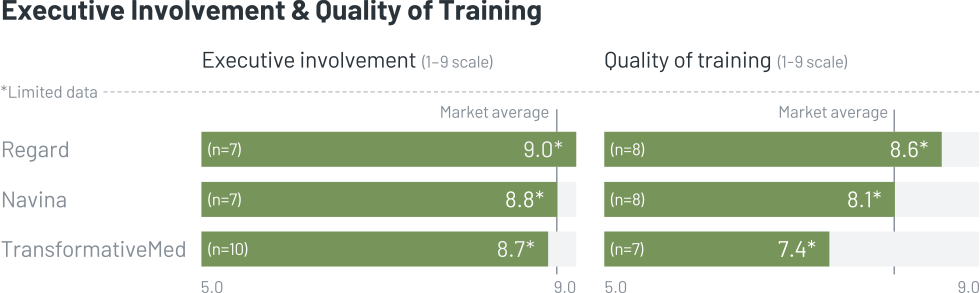
Interviewed Regard* customers feel the solution’s AI plays a large role in customer success; respondents say the AI pulls discrete data from the EHR to inform recommendations for diagnoses, and one customer even describes Regard’s solution as an AI intern that shares pertinent information. Numerous outcomes from using the solution are reported, including increased time savings and satisfaction for nurses and physicians, improved documentation accuracy, more standardized and accessible notes across the organization, improved patient safety, and a positive impact on the organization’s bottom line thanks to more accurate and complete billing. Respondents appreciate the coding improvements, though they would like more automation in this area. Additionally, respondents value Regard’s product road map and anticipate that the product’s capabilities will expand to cover additional specialties. Beyond the product, interviewed customers report a strong support experience—particularly during the implementation process—and commend the vendor for prioritizing training with robust on-site initial and ongoing sessions.
*Limited data
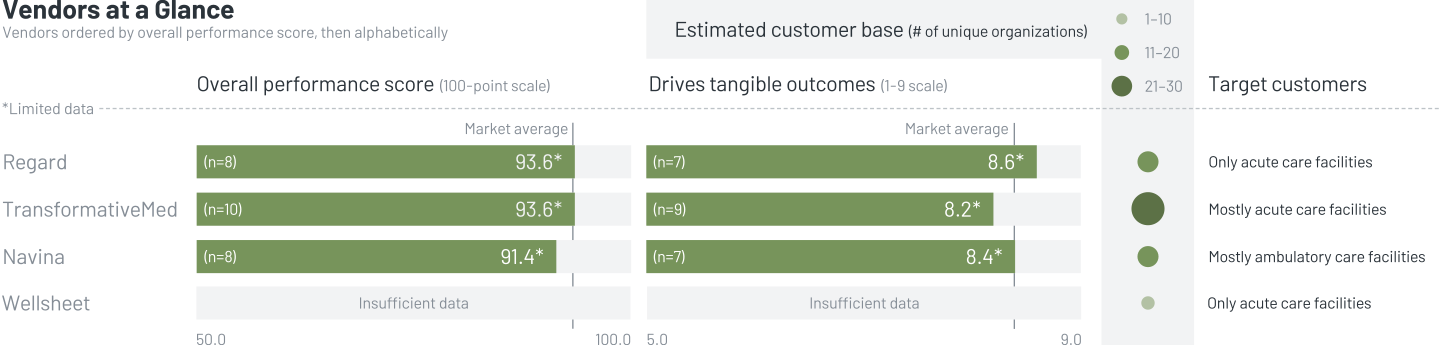
TransformativeMed* Customers Using Oracle Health’s EHR Say EHR Integration & Care Team Coordination Tools Are Strengths
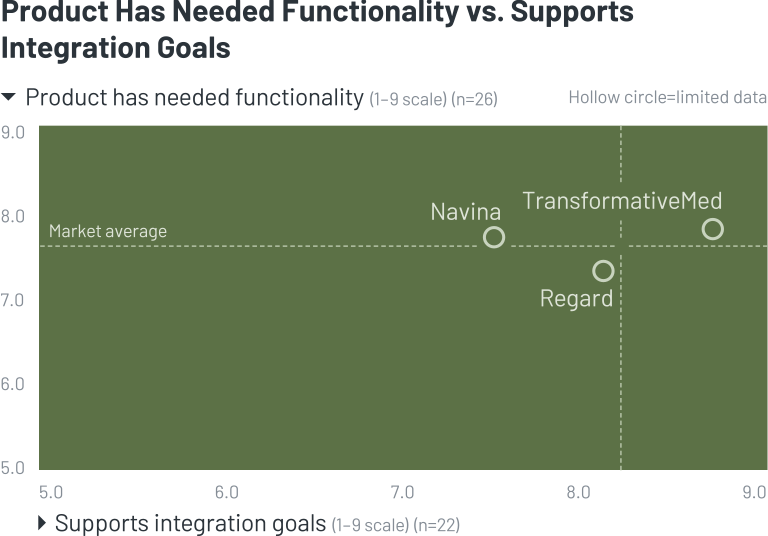 Interviewed customers of TransformativeMed* initially chose the product to support diabetes care (specifically with the insulin infusion management tool), and since then, usage has expanded into rounding and other areas. Of the vendors in this report, TransformativeMed is most broadly adopted for care team coordination capabilities, likely because the vendor mostly serves customers in acute care settings. No respondents mention using the vendor’s AI capabilities. 7 of the 10 interviewed organizations use the product with Oracle Health’s EHR—these customers report solid EHR integration; others (e.g., Epic EHR customers) are satisfied with the integration as well. Generally, respondents say TransformativeMed’s solution has helped increase consistency in patient handoffs within and across hospital departments, resulting in increased patient safety. There have also been time savings on charting and rounding. The vendor’s executives are seen as accessible, and they often work directly with customers. Although respondents view the product as easy to use, some are concerned about training quality, as the vendor’s training is relatively hands off.
*Limited data
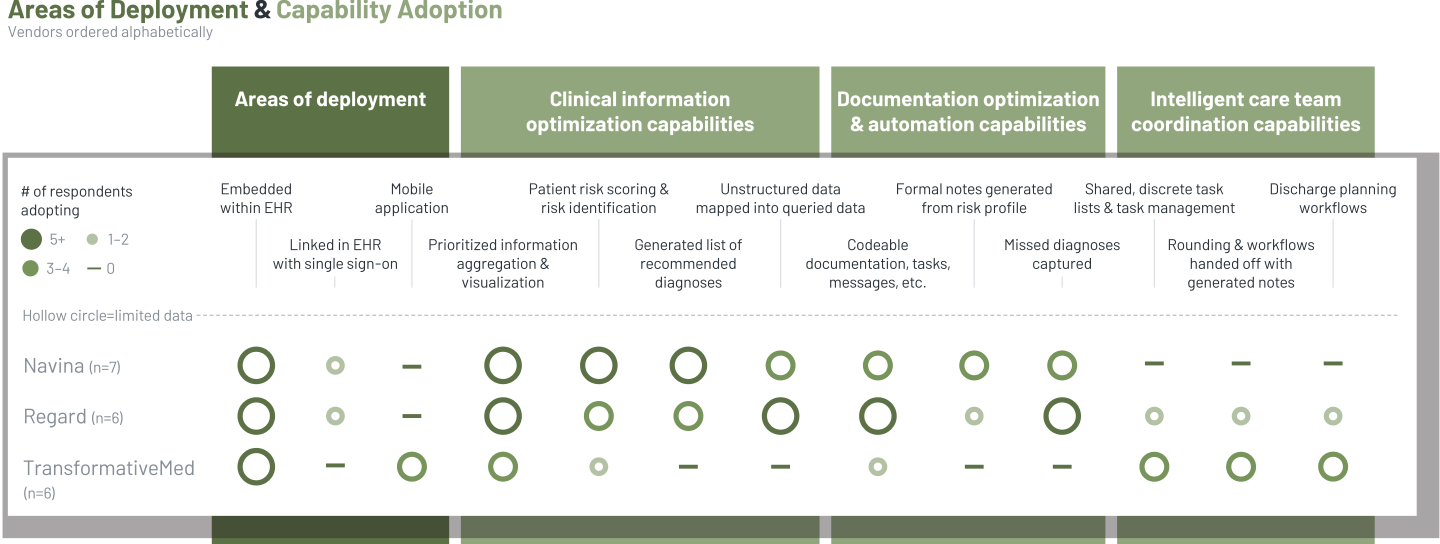
Navina* Offers Strong Support & Effective Training; Customers Appreciate AI & Would Like Further Automation
Navina* respondents highlight the solution’s AI, saying it pulls information from the EHR and presents it in an efficient way to help the organization recognize care gaps and prepare for patient visits. This helps save time for physicians and improve care quality, charting, and risk adjustment factor scores. Respondents would like Navina to continue developing AI capabilities to increase automation and expand use cases. Regarding support, Navina provides a strong experience and fosters partnerships with respondents. One notes they can easily provide feedback to the vendor via the solution, as the feedback button is directly in the workflow. Additionally, the vendor is highlighted for being responsive, solving problems quickly, and providing a good training experience. A few ambulatory care customers have concerns about the product’s cost and the weaker HIE integration they experience (compared to the strong EHR integration).
*Limited data
A Note about Wellsheet
Wellsheet is another clinician digital workflow vendor whose solution can be embedded in EHRs to display information in a way that is easier to understand. The solution has a small customer base. KLAS interviewed two Wellsheet customers for this report—both are working closely with the vendor to guide development. Due to the small sample size, no performance scores are charted for Wellsheet in this report.
About This Report
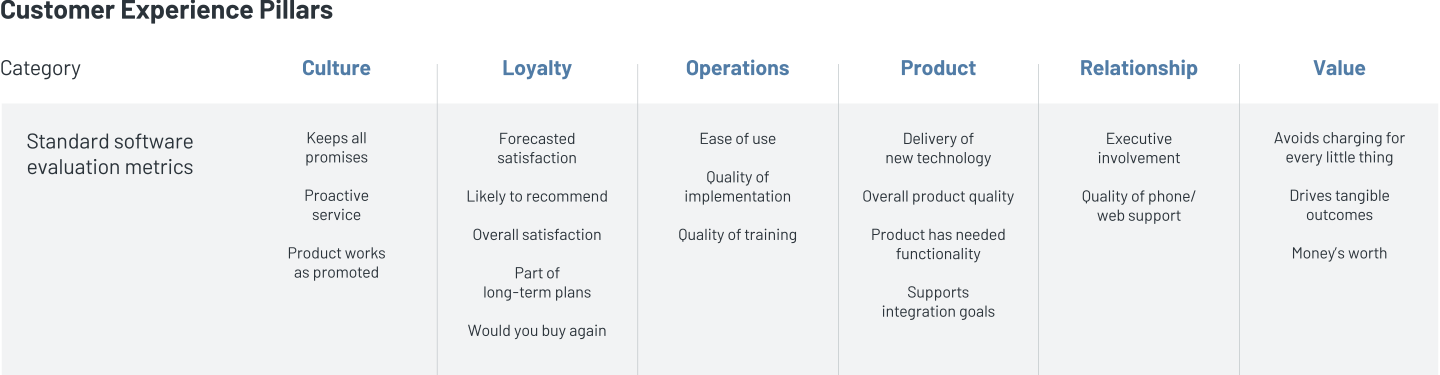
Each year, KLAS interviews thousands of healthcare professionals about the IT solutions and services their organizations use. For this report, interviews were conducted over the last 12 months using KLAS’ standard quantitative evaluation for healthcare software, which is composed of 16 numeric ratings questions and 4 yes/no questions, all weighted equally. Combined, the ratings for these questions make up the overall performance score, which is measured on a 100-point scale. The questions are organized into six customer experience pillars—culture, loyalty, operations, product, relationship, and value.
To supplement this data, KLAS also asked interviewed customers the following questions specific to their clinician digital workflow technology:
- What outcomes have you seen from using this solution?
- In which workflow environments has your solution been deployed?
- What are you using the solution’s capabilities for?
Sample Sizes
Unless otherwise noted, sample sizes displayed throughout this report (e.g., n=16) represent the total number of unique customer organizations interviewed for a given vendor or solution. However, it should be noted that to allow for the representation of differing perspectives within any one customer organization, samples may include surveys from different individuals at the same organization. The table below shows the total number of unique organizations interviewed for each vendor or solution as well as the total number of individual respondents.
Some respondents choose not to answer particular questions, meaning the sample size for any given vendor or solution can change from question to question. When the number of unique organization responses for a particular question is less than 15, the score for that question is marked with an asterisk (*) or otherwise designated as “limited data.” If the sample size is less than 6, no score is shown. Note that when a vendor has a low number of reporting sites, the possibility exists for KLAS scores to change significantly as new surveys are collected.


Writer
Sarah Brown

Designer
Breanne Hunter

Project Manager
Andrew Wright
This material is copyrighted. Any organization gaining unauthorized access to this report will be liable to compensate KLAS for the full retail price. Please see the KLAS DATA USE POLICY for information regarding use of this report. © 2026 KLAS Research, LLC. All Rights Reserved. NOTE: Performance scores may change significantly when including newly interviewed provider organizations, especially when added to a smaller sample size like in emerging markets with a small number of live clients. The findings presented are not meant to be conclusive data for an entire client base.