KLAS Contact

Contact KLAS
Contact KLAS
 2026 BEST IN KLAS
Preferences
Related Series

2026

2025

2023

2015

Global (Non-US) Healthcare IT Trends 2024
Navigating Organizational Priorities amid Labor, Budget, and Regulatory Pressures

Author
Everton Santos

Author
Jonathan Christensen

Author
Spencer Corbett
As healthcare organizations face tight labor markets, constrained budgets, staff burnout, and government regulations, their priorities and investment plans for healthcare IT are shifting. To understand these issues and resulting priorities, KLAS interviewed 219 healthcare organizations in 42 countries/territories about their priorities for IT investments, plans for leveraging the cloud, and consideration of consulting firms for future engagements. This report also examines how priorities have changed since KLAS’ previous report on these trends in 2023. (This research focuses on countries outside the US. See this report to learn more about US organizations’ investment priorities.)
Global Healthcare IT Investment Trends
Clinical Priorities: EHR/Digitalization Remains Top of Mind
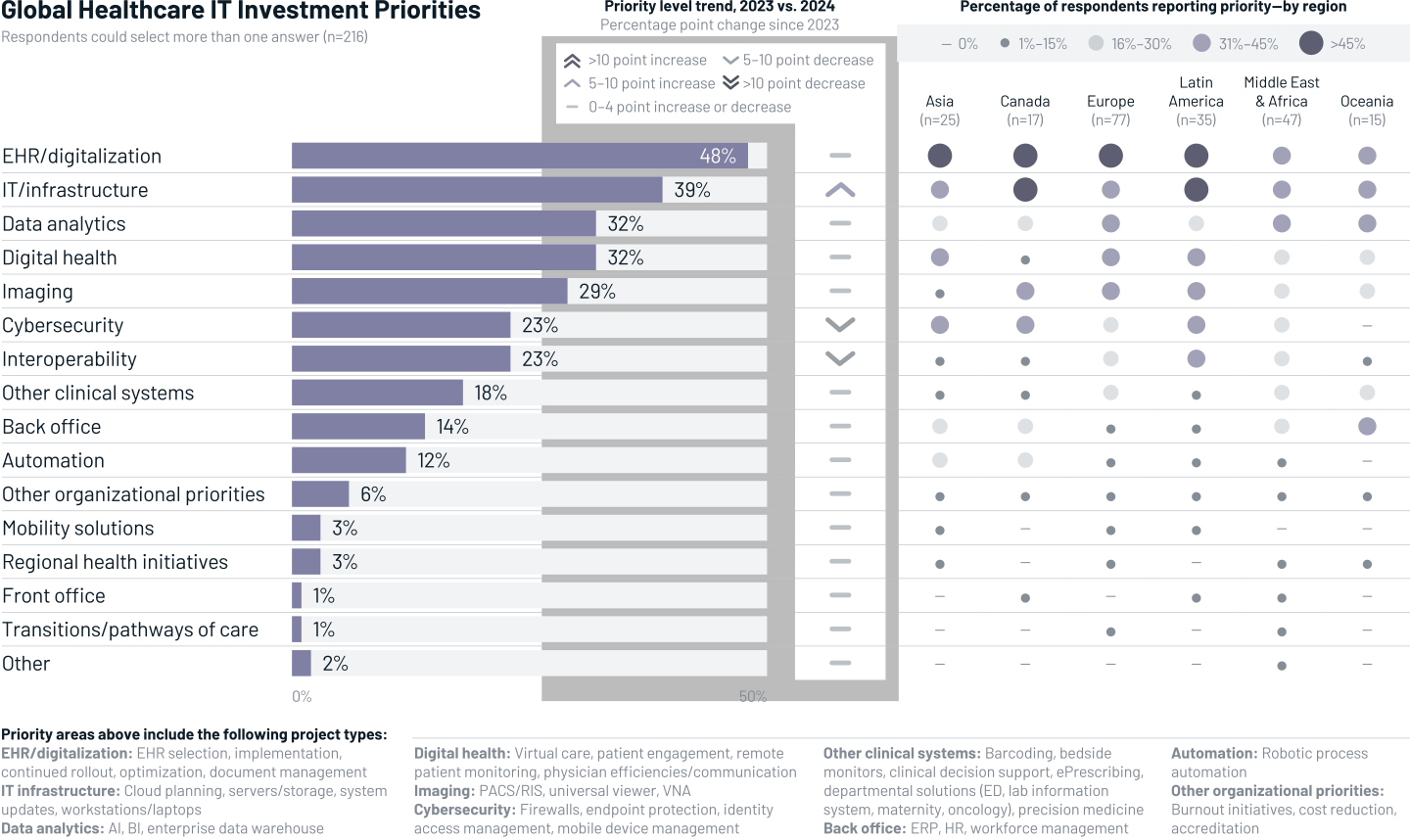
Among clinical investment priorities, EHR/digitalization projects continue to be top of mind, with nearly half of responding organizations naming them as a top priority. Of responding organizations in Asia (60% of which are in India), nearly two-thirds are prioritizing digitalization with net-new EHR implementations or EHR optimization/extension efforts. In contrast, EHR adoption is much more established in the Middle East, so these organizations are strategically homing in on data analytics, implementing AI and BI tools to optimize their robust EHR foundation. Similarly, organizations in Europe and Oceania are directing their efforts toward driving better performance, efficiency, and utility of existing data to achieve enhanced clinical and non-clinical outcomes. Digital health is still a top priority, particularly across Europe, Asia, and Latin America. Specifically, healthcare organizations are focused on virtual care—including virtual wards, remote patient monitoring, patient portals, and the digital front door—to enhance clinical efficiencies and patient satisfaction. (For deeper insights into global digital health, see this 2024 KLAS report.) Healthcare organizations in Canada and Latin America are prioritizing imaging investments, particularly PACS, radiology information systems (RIS), and enterprise imaging solutions.
Non-Clinical Priorities: Accelerating Cloud Strategy & Adoption Are Driving Focus on Infrastructure
Healthcare organizations (especially in Europe, the Middle East, and Africa) have increased their focus on IT/infrastructure as part of their preparation for the cloud. Hardware upgrades and general IT/infrastructure are a high priority in Europe, while organizations in the Middle East and Canada are prioritizing refresh initiatives (e.g., upgraded technology environments, data centers, and networks). Cybersecurity continues to be a top priority for organizations in Canada. In contrast, no organizations in Oceania list cybersecurity as a top priority; more often, they are focused on clinical priorities like EHR optimization, extension to other hospitals, and digital transformation. Organizations in Oceania also name the back office as a priority, especially ERP and RCM solutions. Interoperability has decreased in reported priority as an investment in the last year, but many respondents in Latin America and the Middle East list it as a secondary priority. Organizations in the Middle East cite the importance of internal integration, including with medical devices and pharmacy databases.
Cloud Adoption
Plans for Cloud Adoption Continue to Grow, Particularly in Canada; Cloud Maturity Still Slow, but Europe Sees Steady Adoption & Oceania Sees Jump in Early Adoption
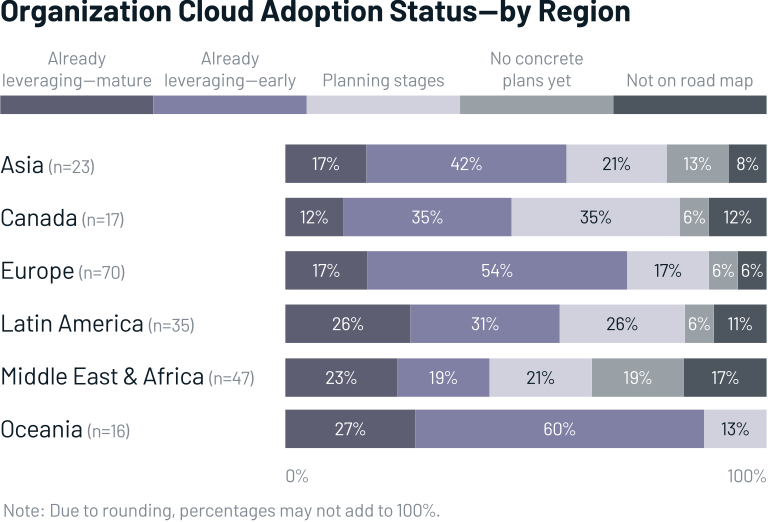 Healthcare organizations are prioritizing the cloud with an eye on its potential long-term impact on scalability, data access, collaboration, and cost efficiency. However, the drive to deeply adopt the cloud is often tempered by limited internal and/or regional infrastructure, data sovereignty issues, and budgets. Organizations making the transition try to balance these limitations by putting less commonly accessed data (i.e., data with low transaction volumes) in the cloud and keeping systems with unpredictable demand on-premises. Still, cloud adoption and maturity will likely continue to grow; at least one-third of responding organizations plan to move their EHR, ERP solution, and/or PACS to the cloud. Compared to 2023, more organizations in Canada are in the planning stages of cloud implementation. Europe sees steady cloud adoption each year, with a few more organizations indicating maturity in their cloud program. Organizations in Oceania report the most progress in moving from the planning stages to early adoption, thanks in part to statewide cloud initiatives.
Microsoft Azure Has Strongest Cloud Mindshare; AWS Seeing High Energy in Pockets of Asia and Latin America, Low in Europe and Middle East/Africa
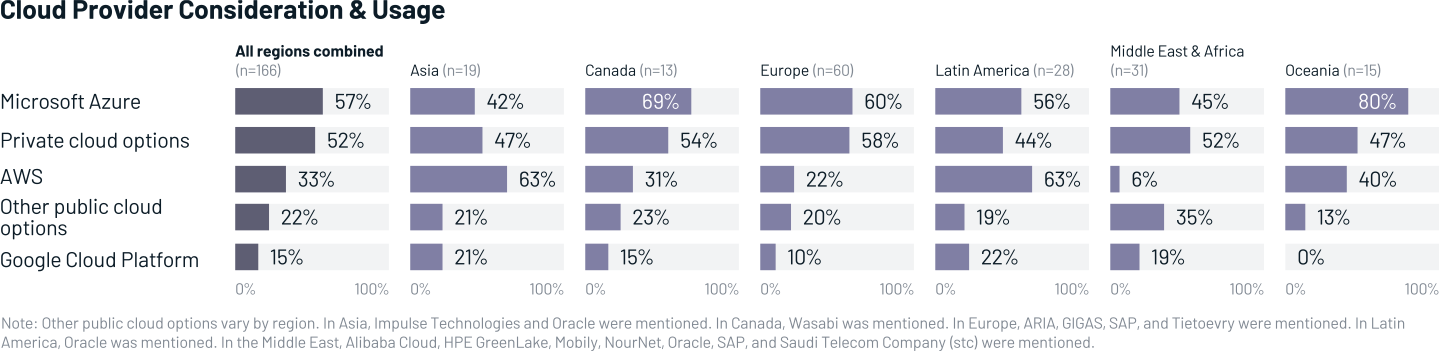
Microsoft Azure is the cloud vendor most frequently used/considered across all regions, and they are especially prevalent in Oceania, Canada, and Europe. Respondents cite previous adoption of Microsoft Office 365, familiarity with Azure, or their view of Microsoft as a natural option for cloud hosting. Amazon Web Services (AWS) is seeing increased energy in Asia, where two-thirds of organizations are considering or using the cloud provider (in 2023, they were considered by just under one-half of respondents). 75% of responding organizations in India express intentions to move critical solutions (e.g., EHR, disaster recovery, secondary solutions) to the cloud through AWS. AWS currently has relatively low consideration in Europe and the Middle East. Notably, AWS announced they will soon launch the AWS European Sovereign Cloud in Germany, and KLAS will monitor the impact on interest in Europe. Private cloud options continue to generate high interest for healthcare organizations as more software as a service (SaaS) solutions enter the market. SaaS solutions are used in all regions but are mentioned most often in Europe, where private cloud adoption is highest (over 20% of responding organizations). Organizations in the Middle East also report a higher focus on private cloud solutions because of strict data sovereignty laws. Google Cloud Platform is the third most-considered/used public cloud vendor, still falling well behind competitors. Most mentions come from Latin America, where several organizations are in the planning stages of the cloud and are hoping to implement AI/analytics. Compared to other regions, the Middle East sees the most mindshare for other public cloud offerings, largely due to the prominence of the Saudi Telecom (stc) offering in Saudi Arabia and to the lack of large players in the area other than Microsoft. In the Middle East, Oracle is the most commonly mentioned other public cloud offering; respondents highlight their OCI offering.
Note: For data on cloud adoption in the US, view reports on the KLAS website.
Consulting Firm Usage
Gartner Most Considered for Future Engagements amid Larger Trend to Keep Consulting Projects In-House
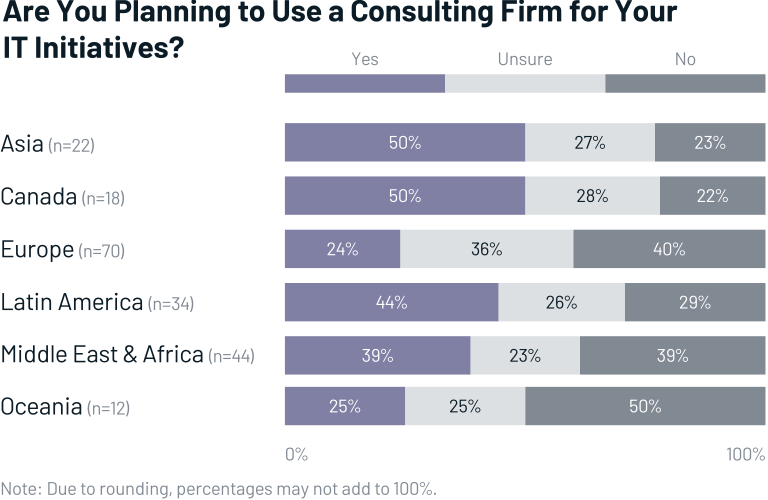
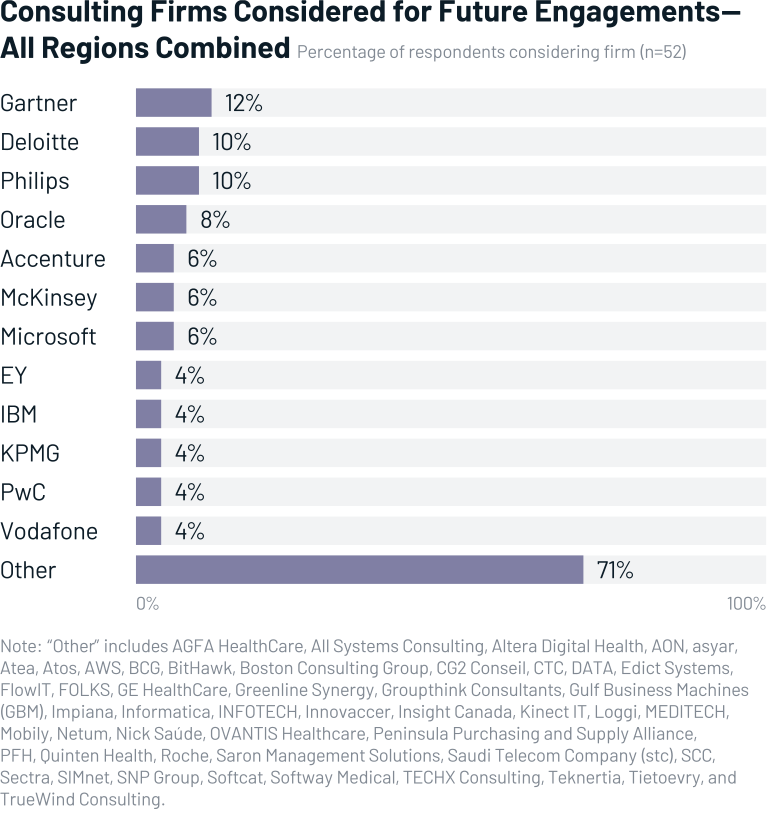
Organizations were asked what firms they would consider for future consulting engagements, and Gartner was most mentioned in all regions (with a notable lead in Europe—more specifically, the UK) except Oceania. Familiarity with the firm has led many respondents to consider Gartner for IT/infrastructure engagements related to the cloud and advisory work related to data warehouse implementations and patient engagement digital transformation. Deloitte and Philips tie for the second-most mentions for future considerations. Deloitte was mentioned in all regions except Oceania, and respondents mainly cite Deloitte’s long-term strategic planning and advisory work for IT. Philips is being considered for engagements in Latin America and the Middle East, including consulting and PACS optimization. Oracle was mentioned for their cloud expertise and ability to execute cloud projects in Latin America. In the Middle East, Oracle’s consulting team is considered for IT advisory and healthcare management services. Respondents mention Accenture and Microsoft for cloud advisory services, and Accenture is also considered for cybersecurity. With most interest from respondents in Asia, McKinsey is mentioned for technology readiness and ERP projects. The pool of other consulting firms being considered has grown since 2023—nearly half of the mentioned firms are local, specialized firms. And across multiple regions, many respondents are opting to handle projects in-house rather than hiring an outside firm, often due to budgetary constraints or not feeling like the firms could provide enough.
What Types of Services Are Respondents Considering?
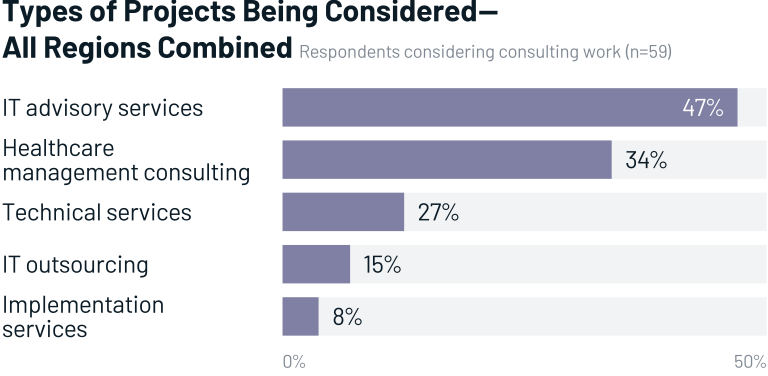 Respondents are most likely to consider consulting firms for IT advisory services—interest is particularly high in Latin America. Specifically, cloud advisory work has grown and remains the most frequently mentioned IT advisory service. Other mentioned IT advisory engagements include analytics advisory services, clinical optimization projects (EHR, PACS), and security and privacy consulting. Healthcare management consulting is the second most-mentioned service and is especially common among organizations in Europe. Responding organizations are looking for firms to provide business case assessment, business continuity planning, digital transformation consulting (particularly related to patient engagement), and projects tied to national initiatives. Technical services are mostly mentioned in connection with cloud conversion (e.g., migration, scaling, testing), interoperability, and hardware/network installation.
About This Report
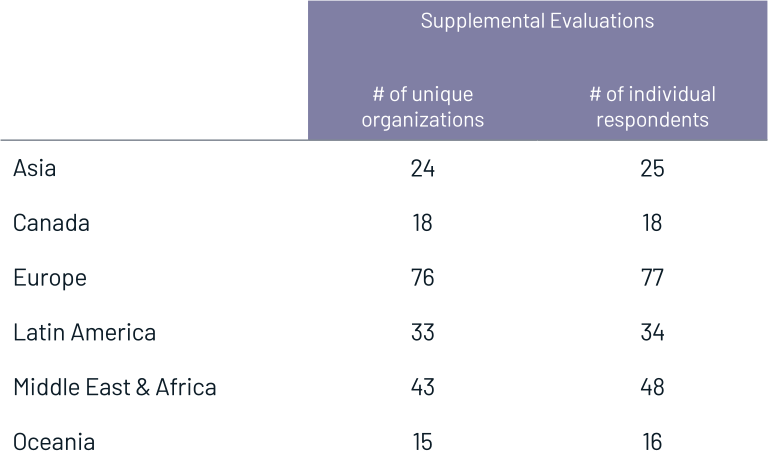
This report is a perception study designed to help readers understand how healthcare provider organizations across Asia, Canada, Europe, Latin America, the Middle East & Africa, and Oceania are prioritizing healthcare IT investments, what cloud options they are considering/using, and what consulting firms they may engage for upcoming projects. To gather these perspectives, KLAS used a supplemental evaluation to interview 253 individuals from 219 organizations in 42 countries/territories. Data was collected between January 2023 and December 2023.
Respondents were asked the following questions:
- What are the top three priority areas of IT investment for your organization/department over the next two or three years?
- What are your organization’s/department’s plans for leveraging the cloud as part of your IT strategy? How do you plan to leverage the cloud? In which cloud environments?
- Are you planning to use any consulting firms for any of your initiatives? If so, which firms and for what types of engagements?
A Note about Terminology
Though the nomenclature used to describe the core patient record used throughout a hospital varies from region to region or language to language (EHR, EPR, EMR, EPD, EPJ, DPI, KIS, HCE, PEP, etc.), the term that will be used in this research is EHR (electronic health record).
The EHR is the core record used by hospitals for day-to-day clinical tasks, such as clinical noting and documentation, ordering, results reporting, and ePrescribing. Some systems in this research may not include all of these clinical functions, but they are all viewed by their users as their core patient record. Solutions used solely for document management or scanning are excluded from this research, even though they are the primary clinical system in use at some hospitals.
Geographic Regions
The geographic regions used in this report are based—with some variation—on the United Nations’ geographic regions. Since this report excludes data from the US, the UN’s designation of Northern America has been replaced with the KLAS region of Canada. IT priorities in overseas territories are discussed in the sections for their respective geographic regions (as defined by the UN) and are not grouped into counts for the overarching country (e.g., American Samoa, Puerto Rico, Guam, Virgin Islands for the US; British Virgin Islands, Falkland Islands [Isla Malvinas], and other British Overseas Territories for the UK; French Guiana, Guadeloupe, Martinique, Mayotte, Réunion, and Saint Pierre and Miquelon for France; Curaçao for the Netherlands). Lastly, the UN’s designation of Latin America and the Caribbean has been shortened to the KLAS region of Latin America, which still includes data from the Caribbean nations. This report specifies whenever a trend applies directly to the Caribbean nations.

Writer
Carlisa Cramer

Designer
Jess Wallace-Simpson

Project Manager
Sydney Toomer
This material is copyrighted. Any organization gaining unauthorized access to this report will be liable to compensate KLAS for the full retail price. Please see the KLAS DATA USE POLICY for information regarding use of this report. © 2026 KLAS Research, LLC. All Rights Reserved. NOTE: Performance scores may change significantly when including newly interviewed provider organizations, especially when added to a smaller sample size like in emerging markets with a small number of live clients. The findings presented are not meant to be conclusive data for an entire client base.