KLAS Contact

Contact KLAS
Contact KLAS
 2026 BEST IN KLAS
Preferences
Related Series

2020
Related Segments

Latin America EHR 2024
A Look at Market Share & Vendor Performance

Author
Eder Lagemann

Author
Jonathan Christensen

Author
Spencer Corbett
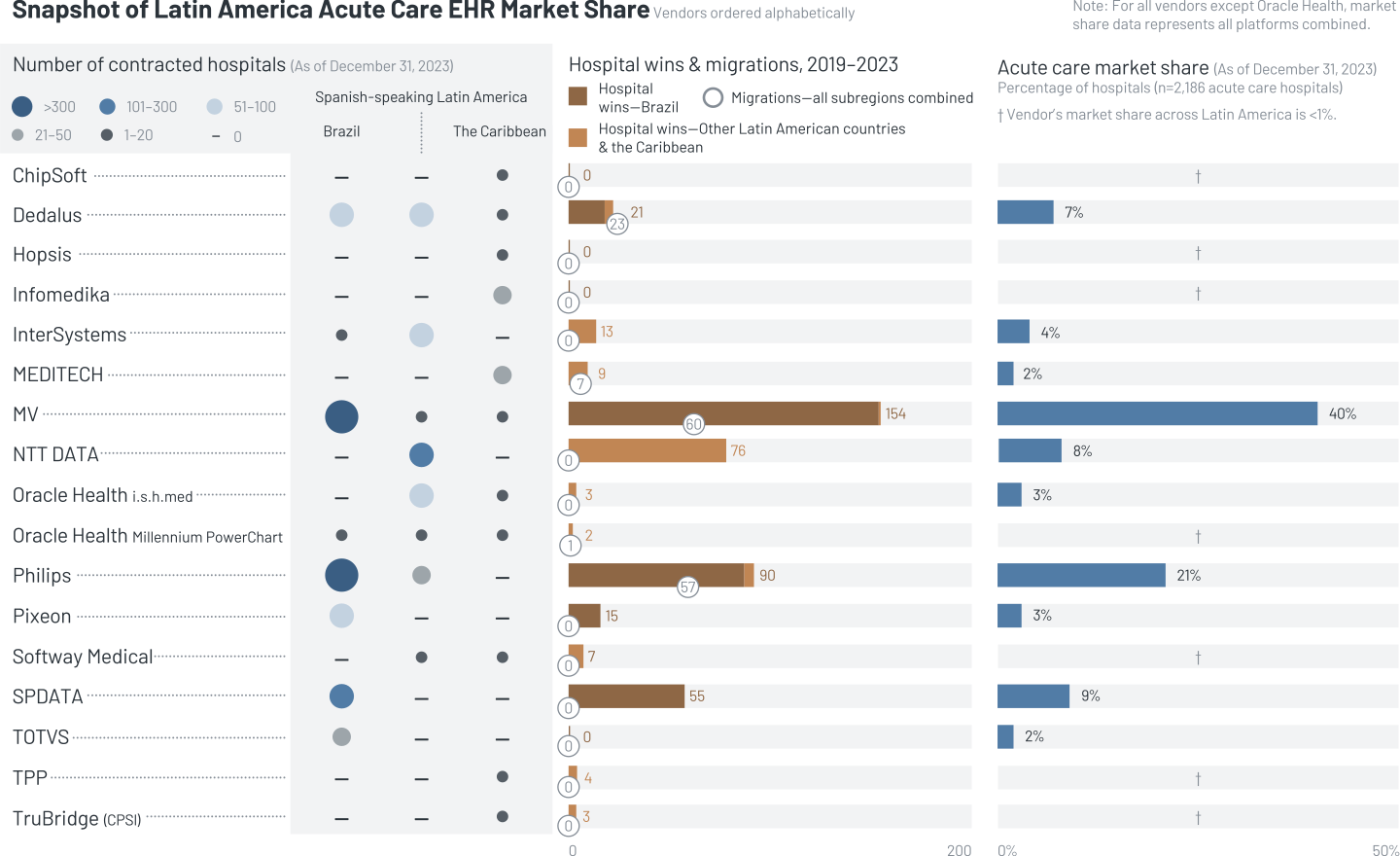
EHR purchasing in Latin America has fluctuated over the last few years, initially declining at the onset of the pandemic before rising in 2023, when the total number of acute care beds impacted by an EHR purchase decision was over 62% higher than in 2021. This report provides an update on which vendors are gaining market share and which are best meeting customers’ needs. Altogether, market share data and customer satisfaction feedback were collected from 97 respondents, representing 75 separate organizations in 12 countries and territories. In this report, market share data for Latin America is examined first, followed by customer satisfaction data (when available) in Brazil and in other countries throughout the region, collectively referred to as “other Latin American countries and the Caribbean.”
MV & Philips Continue to Grow in Brazil via New Contracts & Migrations; NTT DATA & Dedalus Increase Hospital Count through Public Health Contracts
Based in Brazil, MV had the most 2023 hospital wins of the vendors in this report and saw strong, consistent growth in Latin America year over year between 2019 and 2023. They significantly outpace other vendors, with nearly double the acute care market share of their closest competitor. MV’s customer base—which is largely in Brazil—includes both small hospitals and large multihospital groups, showcasing the vendor’s ability to meet a range of customer needs. Additionally, MV has successfully migrated 60 hospitals to SOUL in the last five years. Philips has also continued to grow and had the second highest number of wins in 2023. Though most of their growth between 2019 and 2023 occurred in Brazil, they also contracted with one hospital in Colombia and two in Mexico during that time frame. Also, more than one-third of their contracts in the last five years have come from legacy migrations. NTT DATA had the third most 2023 wins, due in large part to a contract with a provincial public health authority in Argentina that expanded their portfolio of mostly public contracts. SPDATA has seen continual growth in Brazil among smaller hospitals. In the past five years, Dedalus had two migrations, both in Panama, where a public ministry and a private group migrated to the go-forward Dedalus Care platform. The remaining vendors in this report have had relatively few wins over the last five years. MEDITECH’s wins were mostly in Puerto Rico, Pixeon’s in Brazil, InterSystems’ in Chile and Peru, and Softway Medical’s in French-speaking Martinique and French Guiana. Oracle Health had wins in five countries. Three hospitals—located in Chile, Colombia, and the Dominican Republic—selected i.s.h.med. Two hospitals in the Caribbean contracted for Millennium PowerChart, and another hospital in the Caribbean migrated to Millennium PowerChart. TPP’s wins were in Jamaica, and TruBridge (CPSI) had wins in the Caribbean. KLAS has not validated any wins for ChipSoft, Hopsis, Infomedika, or TOTVS since before 2019.
Brazil
MV & Philips Are Highest Rated in Brazil—MV Customers Note Steady Improvements; Philips’ Customer Satisfaction Remains Consistent
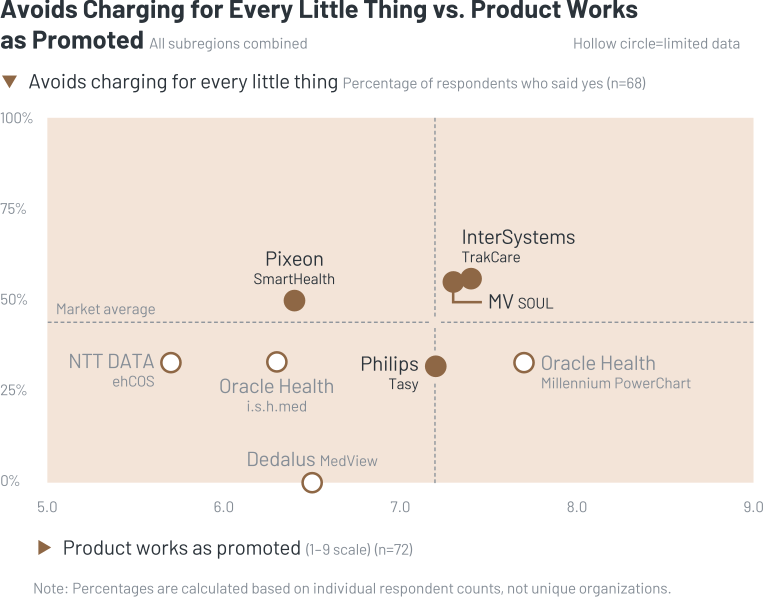
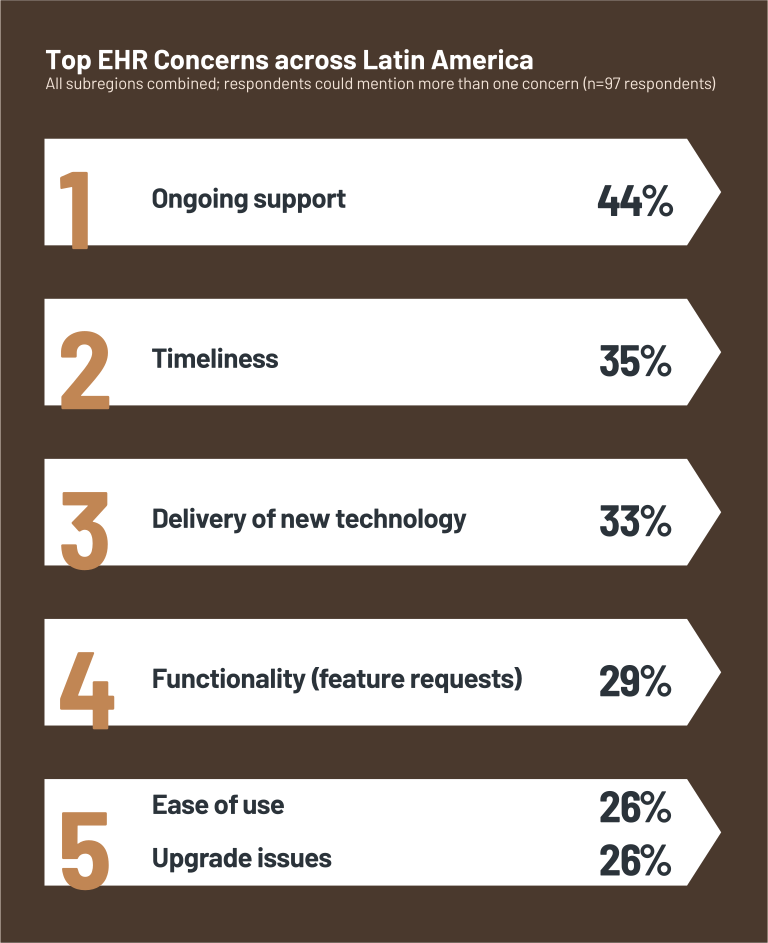
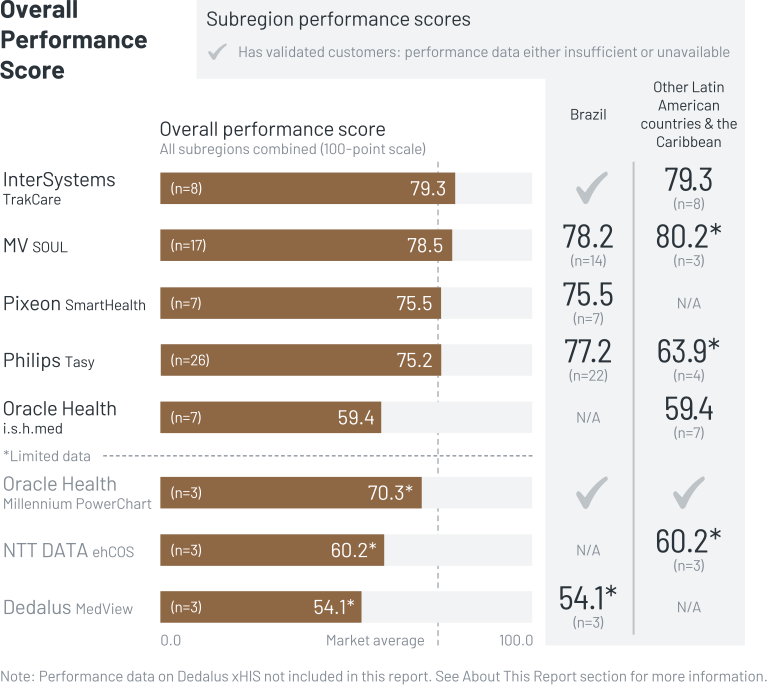 MV and Philips are the predominant players in Brazil, especially among larger health systems. Over the past two years, customer satisfaction with MV SOUL has increased. Nearly three-quarters of respondents are satisfied with their overall experience, highlighting SOUL’s stability and ability to meet local and regulatory needs. Multiple respondents also mention the ease of use, and all interviewed customers see MV as part of their long-term plans. Still, challenges with post-upgrade bugs and support are common. One-third of respondents say the fixes intended to address bugs often introduce new issues that persist until the next upgrade. The support is frequently described as inattentive and slow, and customers must follow up on resolution requests. As a result, some respondents are hesitant to upgrade to the latest version and say there are additional costs for necessary improvements. Respondents want the vendor to address these challenges by providing higher-quality software and more-responsive support. Satisfaction with Philips Tasy in Brazil has remained consistent in the last 18 months. Tasy is highlighted for its configurability, and multiple respondents would recommend the product to peers. Although bugs are often introduced from immature or insufficiently tested product fixes, respondents feel optimistic about Tasy’s potential, and they trust Philips will follow through on addressing product challenges. In contrast, some respondents are frustrated by fees for fixes they believe the vendor should automatically incorporate. An early release of the integration platform is described as incomplete, and respondents have had to manage integrations themselves. Additionally, significant support delays have diminished the value of product fixes, and the consultants assigned to service orders constantly change. Respondents also say Philips’ growth outside of Brazil and some turnover have made it harder to maintain relationships with customers. The overall performance score for Dedalus MedView* (vendor is known as DGS in Brazil) has dropped in recent years, with respondents citing unkept promises and a lack of development as Dedalus shifts their focus to the new MedView EVO platform. Respondents are hesitant to adopt this new platform because they feel the product has been tested only in European markets. Additionally, all three respondents say the vendor charges for every little thing, citing unexpected or increased costs.
*Limited data
Pixeon Delivers Value to Smaller Hospitals despite Customer Concerns about Support & Upgrades
Pixeon SmartHealth is generally used by smaller hospitals, and interviewed customers report a consistent experience over the last few years. They value the modular-based system and say it meets their needs and integrates with different departments. All respondents plan to stay with the vendor long term, and many believe the product will continually improve. The top concern among respondents is the support team taking one or two weeks to fix high-priority items. In addition, respondents say the upgrades aren’t completely ready prior to release and require more testing.
Other Latin American Countries & the Caribbean
InterSystems Customers Satisfied with Product but Experience Support Issues; Oracle Health i.s.h.med Customers Struggle Post-Acquisition
InterSystems TrakCare respondents—all located in Chile—report the product is robust, flexible, and able to meet many of their needs. Successful implementations are also a highlight, and most respondents would purchase the product again. Although the product is sometimes seen as complex (i.e., too many steps/clicks), some customers are hopeful that the mobile-enabled user interface (MEUI) will simplify the experience. Support is a top concern, with respondents mentioning development delays, unkept promises, and rising costs. All Oracle Health i.s.h.med respondents are serviced via SAP resellers, and since Oracle’s acquisition of Cerner and SAP’s announcement that they will stop supporting i.s.h.med by 2030, respondent satisfaction has dropped significantly (at least 15 points on a 100-point scale). The product does meet customer needs, particularly the billing and financial management capabilities. Additionally, the digitized workflows and support team are seen as the strongest in Latin America. Even so, interviewed customers have encountered complex integration and customization challenges, resulting in lower adoption rates and increased costs from having to use third-party solutions. Multiple respondents would like a clearer road map and improved technology, and at least half are considering leaving.
MV Has Strong Performance outside of Brazil; Philips Customer Satisfaction Significantly Declines
For the three MV SOUL* respondents located outside of Brazil, satisfaction is high. They feel MV has done a good job of localizing the solution and say the product meets most of their needs. The respondents would like faster support and higher-quality consultants. Although Philips* is noted for their executive relationships, satisfaction has dropped significantly due to issues similar to those in Brazil, only exacerbated—i.e., limited support, persistent bugs, additional charges, and local needs not being met. The decline is also due to growing pains and some turnover. NTT DATA ehCOS* is highlighted for its flexibility. However, respondents say the product underdelivers due to limited support and upgrades that hinder development. The product is also seen as complicated to use because of the numerous fields to navigate.
*Limited data
A note about Oracle Health Millennium PowerChart*
Millennium PowerChart is not actively sold in Latin America; thus, performance insights in this report are limited. The three interviewed customers are more satisfied than the i.s.h.med respondents, highlighting the account managers and the product’s quality, despite some bugs. Of note, satisfaction has gradually declined due to cost and inadequate support (e.g., customers handling implementations themselves, resolution delays for complex issues).
*Limited data
About This Report
Data for this report comes from two sources: (1) KLAS performance data and (2) KLAS market share data.
KLAS Performance Data
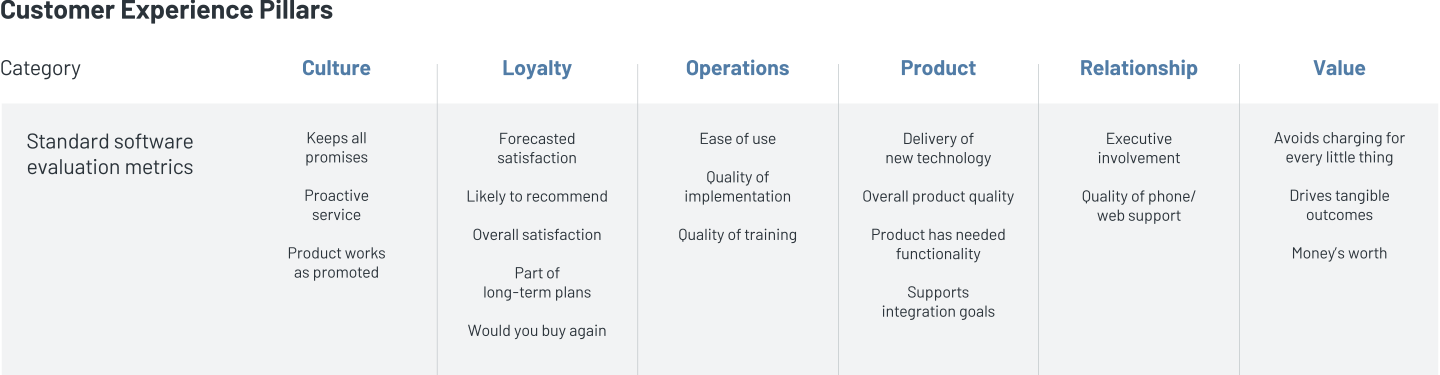
Each year, KLAS interviews thousands of healthcare professionals about the IT solutions and services their organizations use. For this report, interviews were conducted over the last 18 months using KLAS’ standard quantitative evaluation for healthcare software, which is composed of 16 numeric ratings questions and 4 yes/no questions, all weighted equally. Combined, the ratings for these questions make up the overall performance score, which is measured on a 100-point scale. The questions are organized into six customer experience pillars—culture, loyalty, operations, product, relationship, and value.
Sample Sizes
Unless otherwise noted, sample sizes displayed throughout this report (e.g., n=16) represent the total number of unique customer organizations interviewed for a given vendor or solution. However, it should be noted that to allow for the representation of differing perspectives within any one customer organization, samples may include surveys from different individuals at the same organization. The following table shows the total number of unique organizations interviewed for each vendor or solution as well as the total number of individual respondents.
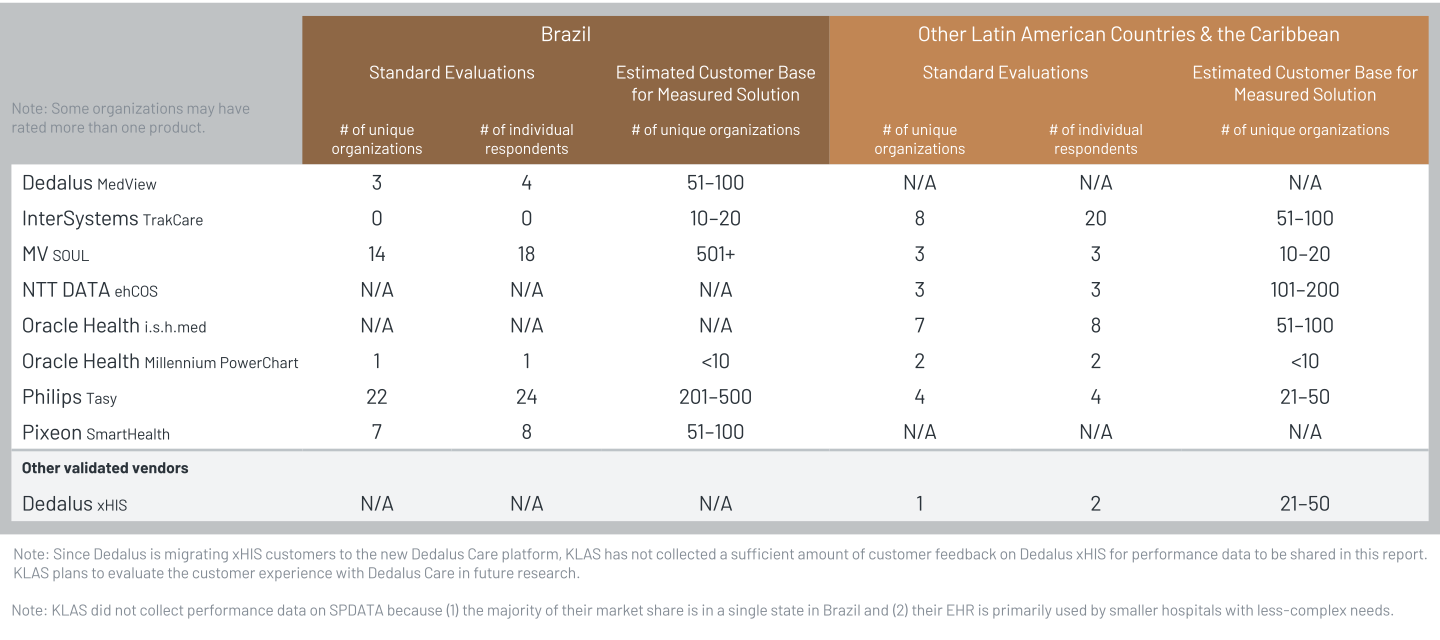
Some respondents choose not to answer particular questions, meaning the sample size for any given vendor or solution can change from question to question. When the number of unique organization responses for a particular question is less than 6, the score for that question is marked with an asterisk (*) or otherwise designated as “limited data.” If the sample size is less than 3, no score is shown. Where textual content relies on limited data, the vendor name is marked with an asterisk. Note that when a vendor has a low number of reporting sites, the possibility exists for KLAS scores to change significantly as new surveys are collected.
KLAS Market Share Data
How Is EHR Market Share Measured?
The market share data reported in this study is based on hospital EHR purchasing trends published in KLAS’ global market share reports. It indicates market share status as of December 31, 2023, and does not include details on contracts signed in 2024 (though some historical market share data was adjusted as new information came to light during KLAS’ research for this current report). A simplified version of KLAS’ market share methodology is outlined below. For the full methodology and comprehensive market share data on this and other regions, please see KLAS’ Global (Non-US) EHR Market Share 2024 report.
In this report, any given vendor’s EHR market share is defined as the total number of inpatient hospital facilities (as opposed to organizations, which may be comprised of multiple hospitals) whose most recent contract is with that vendor. For example, if a vendor signs a contract with a four-hospital organization, that vendor’s market share would increase by four. KLAS acknowledges that in some countries, the term “hospital” may be used to refer to an organization with multiple inpatient facilities. However, in this report, “hospital” is used to refer to a single inpatient facility.
At any point in time, only one company is recognized as the most recently contracted vendor for a hospital. KLAS considers a change in a hospital’s most recently contracted EHR vendor a “win” for the new vendor and a “loss” for the incumbent vendor (if one existed). In this report, a win does not depend on the legal status of a contract or on whether a provider organization is a paying customer. Additionally, while KLAS tracks vendor losses, these losses are not charted in this research since many hospitals outside the United States are moving from paper or from a conglomeration of best-of-breed departmental systems to an enterprise platform. KLAS will comment on losses in geographies where relevant.
A Note about Terminology and What Counts as an EHR
Though the nomenclature used to describe the core patient record used throughout a hospital varies from region to region or language to language (e.g., EHR, EPR, EMR, EPD, EPJ, DPI, KIS, HCE, PEP, etc.), the term that will be used in this research is EHR (electronic health record).
The EHR is the core record used by hospitals for day-to-day clinical tasks, such as clinical noting and documentation, ordering, results reporting, and ePrescribing. Some systems in this research may not include all of these clinical functions, but they are all viewed by their users as their core patient record. Solutions used solely for document management or scanning are excluded from this research even though they are the primary clinical system in use at some hospitals.
Additionally, the term “vendor” is used throughout this report to refer to the company supplying the EHR technology. KLAS recognizes that different countries may have different terminology, including “supplier.”

Writer
Sarah Brown

Designer
Breanne Hunter

Project Manager
Sydney Toomer
This material is copyrighted. Any organization gaining unauthorized access to this report will be liable to compensate KLAS for the full retail price. Please see the KLAS DATA USE POLICY for information regarding use of this report. © 2026 KLAS Research, LLC. All Rights Reserved. NOTE: Performance scores may change significantly when including newly interviewed provider organizations, especially when added to a smaller sample size like in emerging markets with a small number of live clients. The findings presented are not meant to be conclusive data for an entire client base.