KLAS Contact

Contact KLAS
Contact KLAS
 2026 BEST IN KLAS
Preferences
Related Series

2019
Related Segments

Ophthalmology 2024
Optimizing the Ophthalmology Experience through Functionality & Relationships

Author
Paul Hess

Author
Alex McIntosh
To combat a challenging financial market, ophthalmology practices are seeking EHR and practice management solutions that provide efficiencies, robust functionality, and strong ophthalmology-specific workflows. Many of these clinics also highly value their vendor relationships, where strong support and training enable the most effective use of the product and better outcomes for their practices. As a follow-up to Ophthalmology 2019, this report examines the dynamics of the ophthalmology EHR and practice management market by comparing some of the leading solutions in the market today.
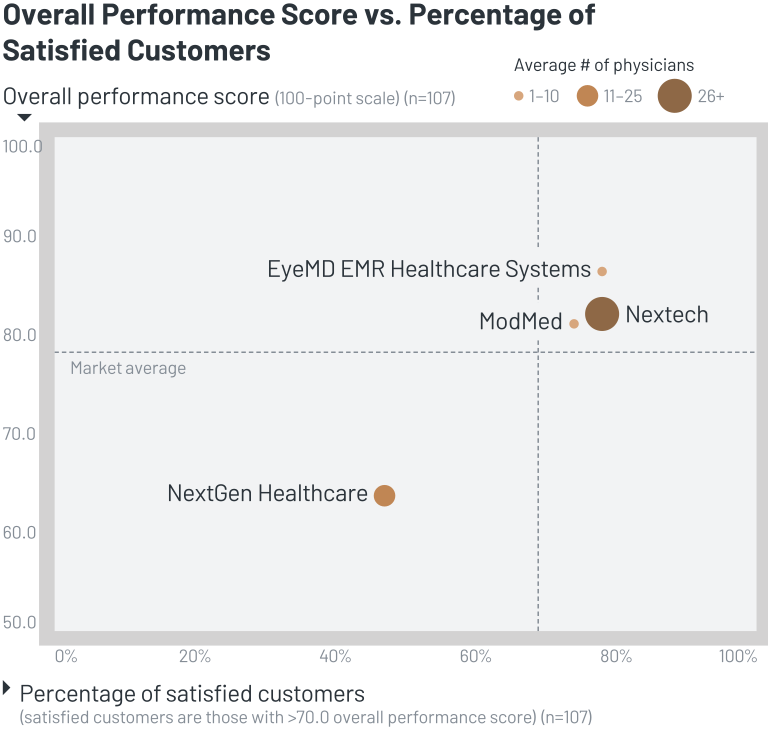
Catering to Small Practices, EyeMD EMR Healthcare Systems Leads in Overall Customer Satisfaction, Offering Strong Functionality & Workflows
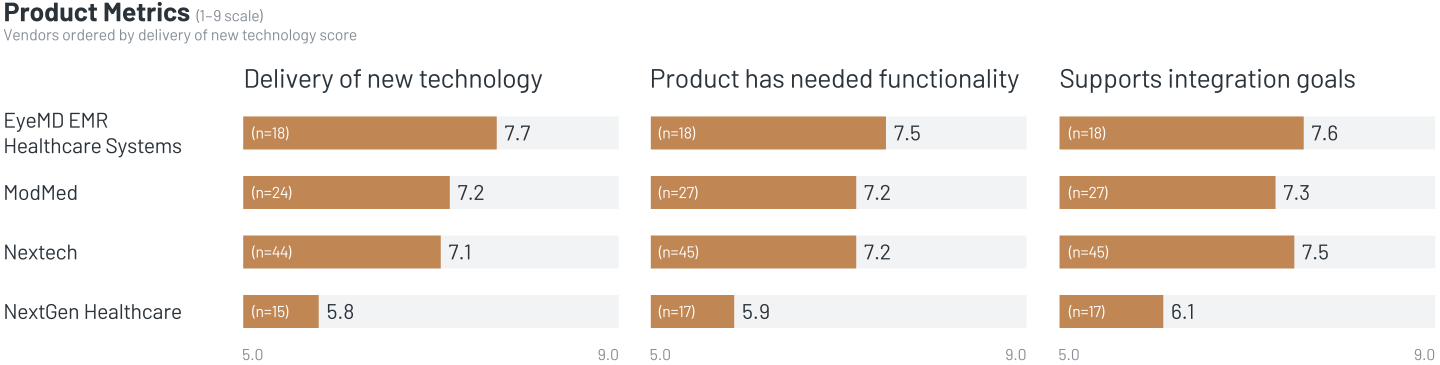
Built mainly for small practices (<11 physicians), EyeMD EMR Healthcare Systems leads in overall customer satisfaction as well as in other standard performance metrics. Their specialty focus facilitates strong partnerships where customers feel they have a voice in product development. The solution allows for efficiency by providing most, if not all, of the ophthalmology-specific functionality necessary for easy documentation. Customers also cite strengths like IRIS Registry integration and MIPS reporting. Though second in overall performance score, Nextech also has a large percentage of satisfied customers and serves a wide range of organization sizes. Respondents feel the ophthalmology product is robust, highlighting the intuitive workflows that new users can easily be trained on. Customers appreciate the system’s summary sheets, integration of patient images, and ability to improve the patient experience through real-time tracking during appointments. Even with the strong functionality, customers want more training on updates and optimization from the vendor to be able to use the software’s features to their full potential.
Interviewed ModMed customers appreciate the product’s ophthalmology focus and generally view the solution favorably. Some customers point out that the product has a high cost and isn’t able to fully meet their needs today due to problems with MIPS reporting, specific workflows, and external integration (e.g., integration with optometry prescriptions, general imaging, patient engagement tools, and patient forms). Still, many customers rate the solution high based on their perception of its potential rather than where the product is today. The majority of NextGen Healthcare respondents are dissatisfied. Respondents of all sizes report problems such as bugs, functionality misses, product stagnation, and a declining vendor relationship. Many don’t find high value in the solution and have difficulty driving meaningful outcomes. A small percentage of respondents report overall satisfaction, though none are highly satisfied.
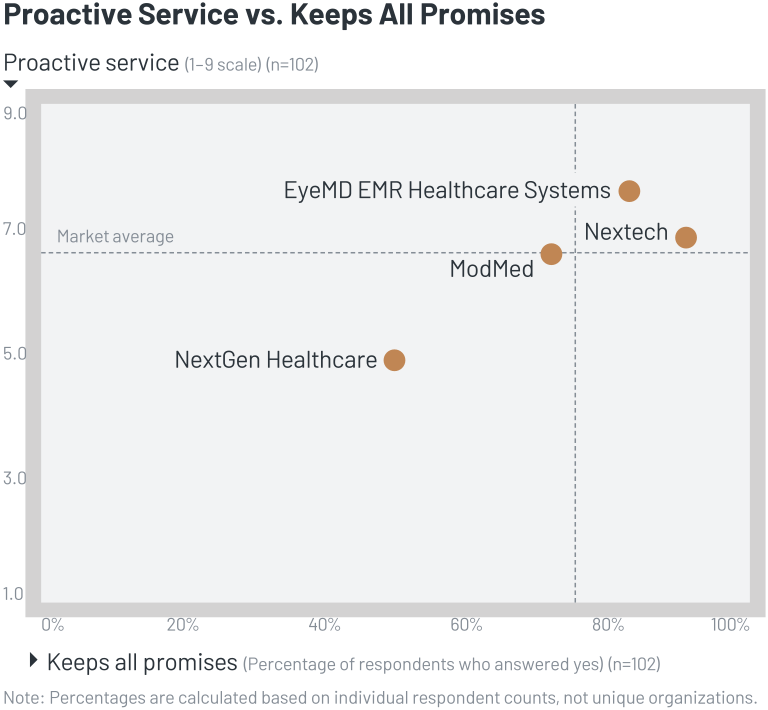
Customers Have High Confidence in Nextech’s Ability to Deliver on Promises; EyeMD’s Strong Proactivity Helps Improve Client Experience
Interviewed Nextech customers appreciate that the cloud nature of the solution allows the vendor to regularly deliver enhancements without major disruptions to day-to-day workflows. There is high confidence that Nextech will deliver on promises, even if that takes time. Some respondents feel disconnected after recent ownership changes and report Nextech could be more proactive about ensuring customers can fully optimize their use of the system. EyeMD EMR Healthcare Systems respondents appreciate the vendor’s proactivity, especially noting their training approach ensures customers have the necessary education and access to trainers. Additionally, EyeMD EMR is commended for proactively informing users about issues, resolutions, ticket follow-ups, and updates/features. Customers report mixed experiences with EyeMD EMR’s ability to keep all promises: most feel the continual developments have increased their confidence in the vendor delivering on promises, but almost half of respondents note that although the vendor provides solutions through frequent upgrades, the upgrades often introduce bugs that remain unsolved.
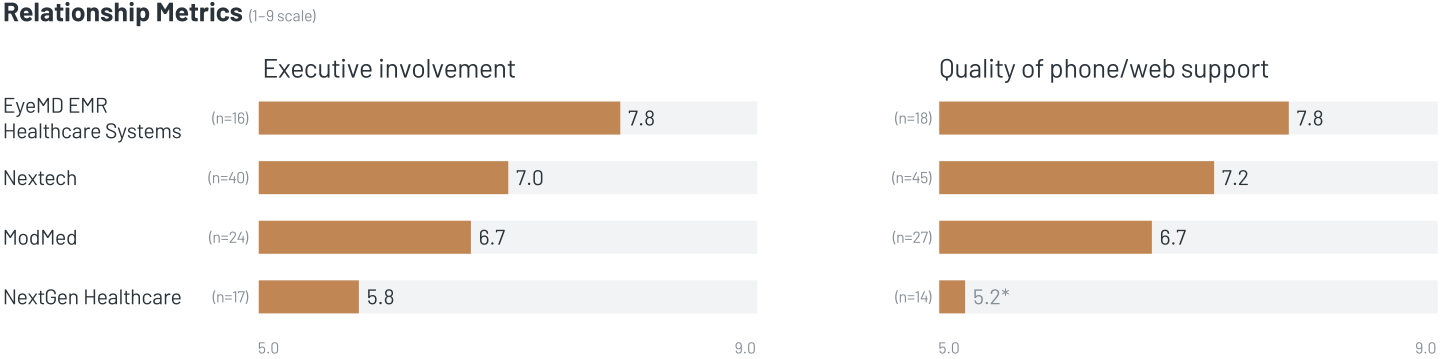
Customers Dissatisfied with Support and Relationships from ModMed and NextGen Healthcare
ModMed customers feel they receive a functional, ophthalmology-tailored solution with future potential, but their satisfaction is tempered by a lack of a strong vendor relationship. Respondents say that the vendor doesn’t provide adequate support when problems arise, citing challenges with reaching support via the phone (and having to instead submit a ticket), ineffective and untrained tier-one support representatives, slow response times and follow-up, long resolution times, and insufficient training. Since KLAS’ last ophthalmology report in 2019, NextGen Healthcare customers have experienced a sharp decline in their satisfaction with the vendor relationship. Satisfaction with the vendor’s support went from nearly 90% to 36%, and satisfaction with executive involvement went from 82% to 47%. Interviewed customers feel the changes to the support structure have left them with fewer options for resolving problems and unhelpful first-line support that leaves major issues unresolved. Customers who upgrade often have found the support especially unhelpful, as they report significant bugs that require support for resolution. Provider organizations say they used to receive good executive involvement from their account managers, but now either they don’t have an account manager or their account manager is not as helpful as they used to be.
Despite Perceived Gaps, Majority of Interviewed EyeMD EMR Healthcare Systems, ModMed & Nextech Customers Expect Their Experience to Improve
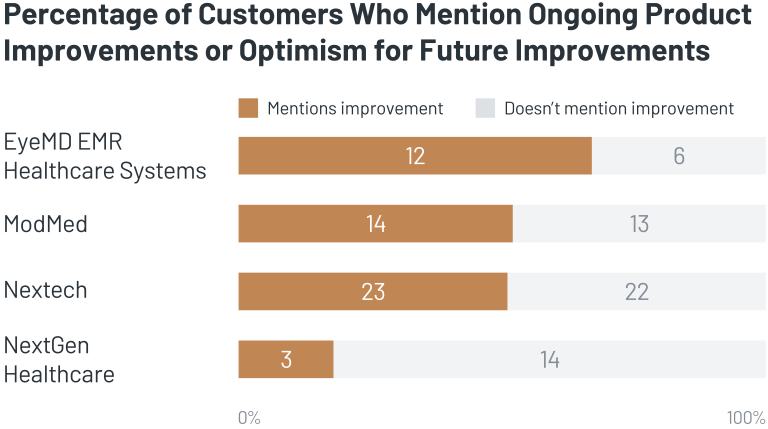 The majority of interviewed EyeMD EMR, ModMed, and Nextech customers either have reported current improvements being made or are optimistic that significant enhancements are coming in the near future. Provider organizations feel confident in these solutions due to their focuses on ophthalmology. EyeMD EMR Healthcare Systems users feel the vendor stays ahead of competition with their ophthalmology functionality, and organizations feel well prepared to take advantage of the technology due to the vendor’s willingness to extensively train customers. Nextech customers appreciate that the vendor is open to feedback and often incorporates customer suggestions into the regular updates. Provider organizations have seen the usefulness of the features they have received over time and expect continual development in the future. Respondents using ModMed say that despite some issues, the potential of the solution is strong, and they are hopeful the vendor will deliver on the potential and continue to increase the solution’s usability by further developing ophthalmology functionality, workflows, and integration. For NextGen Healthcare, without significant and meaningful product improvements and vendor communication, most interviewed customers are not overly optimistic that their experience will change anytime soon.
About This Report
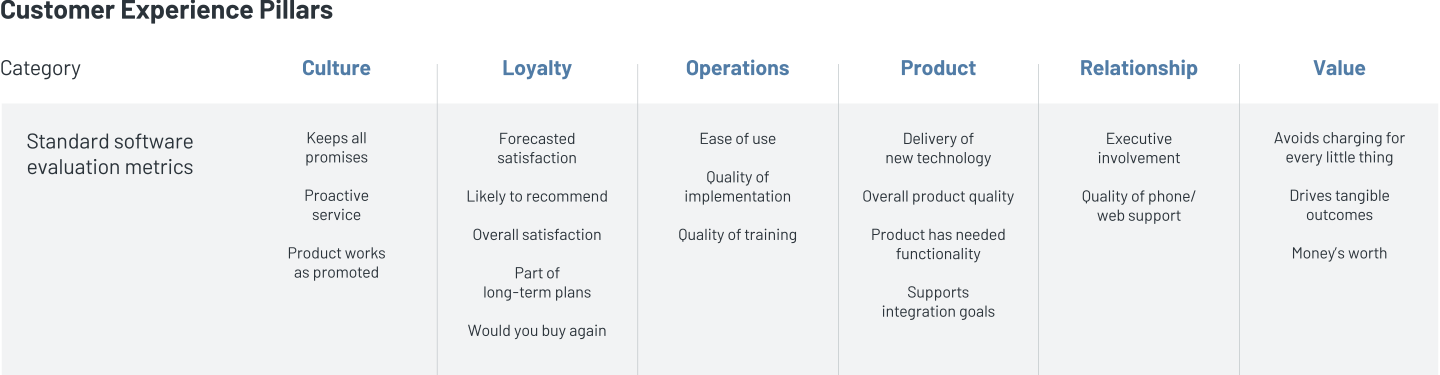
Each year, KLAS interviews thousands of healthcare professionals about the IT solutions and services their organizations use. For this report, interviews were conducted over the last 12 months using KLAS’ standard quantitative evaluation for healthcare software, which is composed of 16 numeric ratings questions and 4 yes/no questions, all weighted equally. Combined, the ratings for these questions make up the overall performance score, which is measured on a 100-point scale. The questions are organized into six customer experience pillars—culture, loyalty, operations, product, relationship, and value.
Sample Sizes
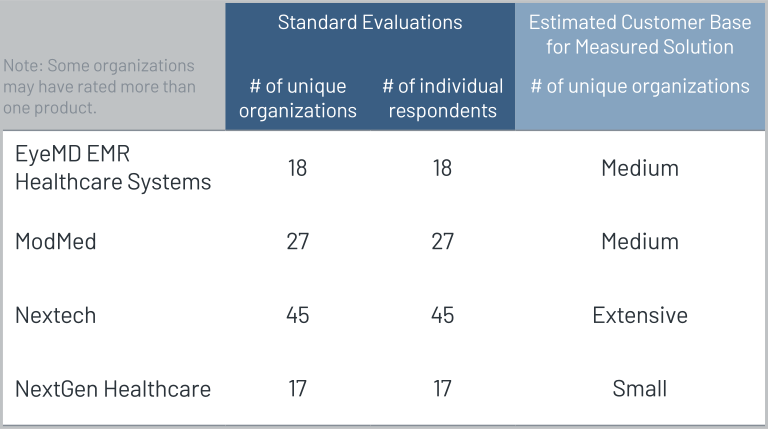 Unless otherwise noted, sample sizes displayed throughout this report (e.g., n=16) represent the total number of unique customer organizations interviewed for a given vendor or solution. However, it should be noted that to allow for the representation of differing perspectives within any one customer organization, samples may include surveys from different individuals at the same organization. The table below shows the total number of unique organizations interviewed for each vendor or solution as well as the total number of individual respondents.
Some respondents choose not to answer particular questions, meaning the sample size for any given vendor or solution can change from question to question. When the number of unique organization responses for a particular question is less than 15, the score for that question is marked with an asterisk (*) or otherwise designated as “limited data.” If the sample size is less than 6, no score is shown. Where textual content relies on limited data, the vendor name is marked with an asterisk. Note that when a vendor has a low number of reporting sites, the possibility exists for KLAS scores to change significantly as new surveys are collected.

Writer
Carlisa Cramer

Designer
Bronson Allgood

Project Manager
Andrew Wright
This material is copyrighted. Any organization gaining unauthorized access to this report will be liable to compensate KLAS for the full retail price. Please see the KLAS DATA USE POLICY for information regarding use of this report. © 2026 KLAS Research, LLC. All Rights Reserved. NOTE: Performance scores may change significantly when including newly interviewed provider organizations, especially when added to a smaller sample size like in emerging markets with a small number of live clients. The findings presented are not meant to be conclusive data for an entire client base.