KLAS Contact

Contact KLAS
Contact KLAS
 2026 BEST IN KLAS
Preferences
Related Series

2020

2018
Related Segments

Patient Intake Management 2024
Where Are Vendors Delivering Value?

Author
Adam Cherrington

Author
Ruirui Sun

Author
Spencer Snyder
Consumerism and patient-centric tools are an increasing focus in healthcare—previous KLAS research validated that patients’ top priority for patient engagement technology is the ability to schedule appointments and check in online. Patient intake management solutions offer such capabilities, among others, and can help improve patient engagement and satisfaction. These solutions experienced exponential growth during the COVID-19 pandemic, and they continue to be important as healthcare organizations work toward increased efficiency and cost savings. While all measured vendors have room to improve functionality (e.g., two-way patient texting, patient satisfaction surveys), this report validates the breadth and depth of patient intake management solutions, identifies the outcomes these solutions drive, and examines the respective merits of third-party and EHR solutions.
A Note about Component Solutions
Epic and Kyruus Health (Epion) are designated in this research as “component” solutions. In this market segment, that designation is currently given to solutions that don’t integrate with multiple EHRs (Epic only serves Epic EHR customers, and Kyruus Health mainly serves athenahealth EHR customers). However, based on feedback from multiple provider organizations, KLAS plans to define component solutions as those that do not provide a majority of needed functionalities; this change will remove the component designation from Epic and Kyruus Health in future data.
Note: KLAS has also collected a small amount of performance data for Notable, who offers multiple patient intake management capabilities. For more information on Notable’s solution, read their Emerging Insights report. Other vendors who provide patient intake management solutions include AdvancedMD, Clearwave, Modernizing Medicine, Relatient, RevSpring, and Vecna Healthcare. KLAS currently does not have enough customer feedback to share performance data for these vendors.
Phreesia Has Largest Market Share & Broadest, Deepest Adoption; Best in KLAS Winner Yosi Health Highlighted for High-Quality Support; R1 Software Improves Patient Satisfaction
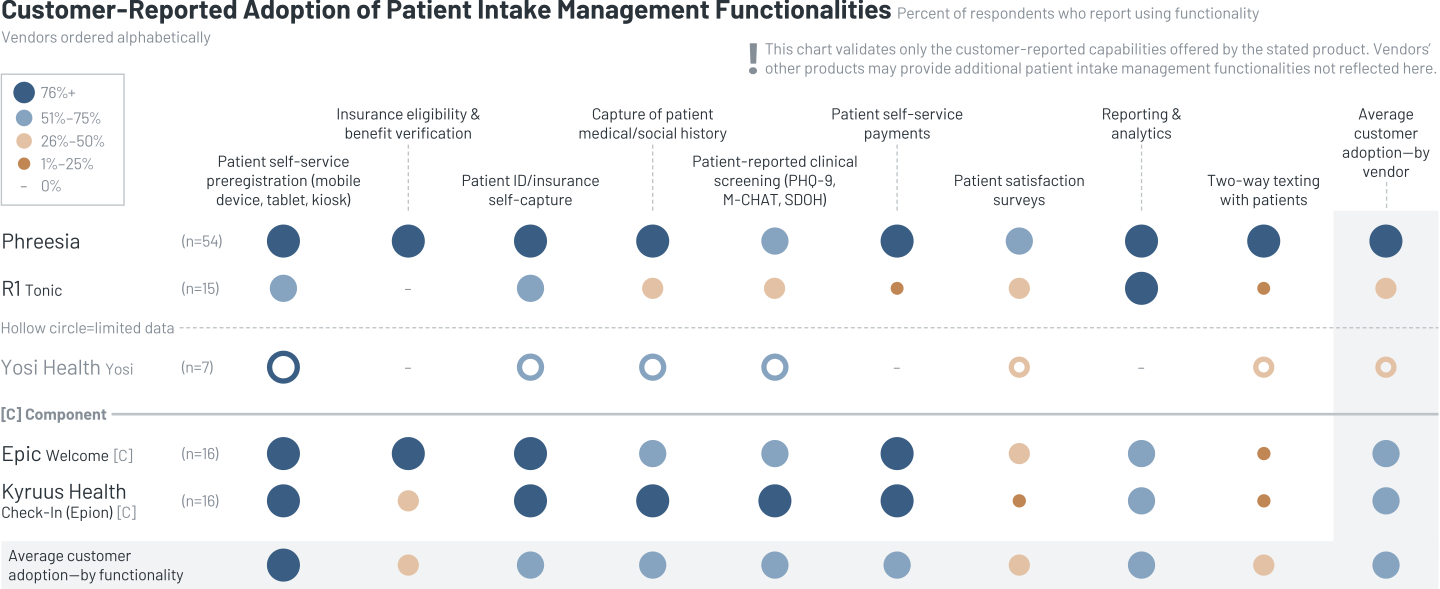
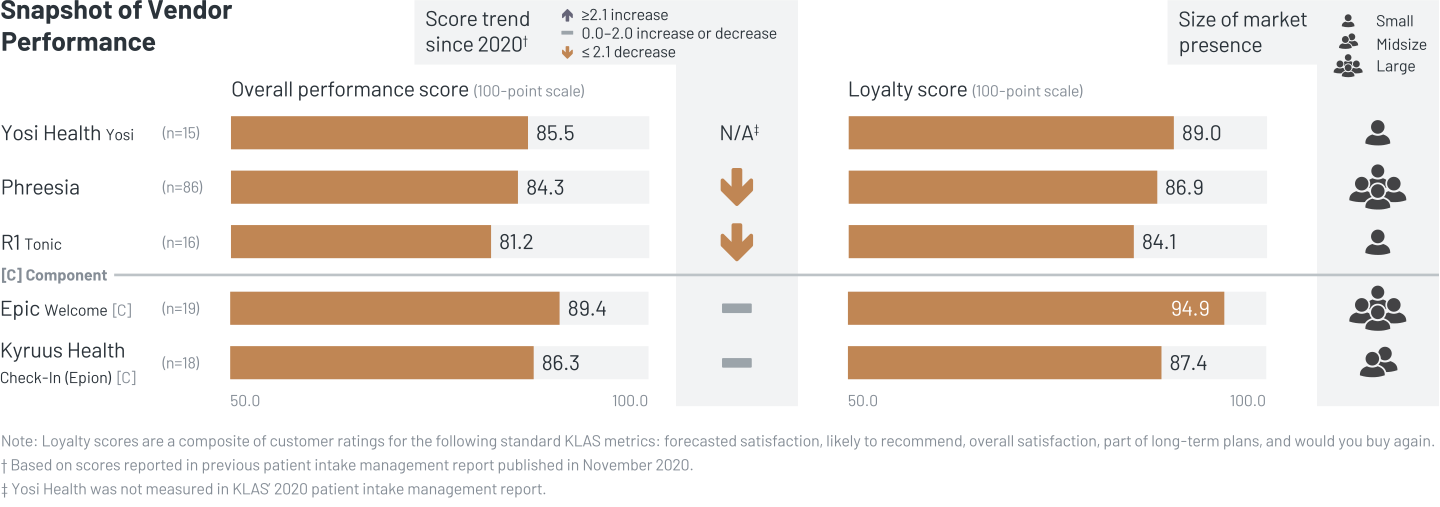
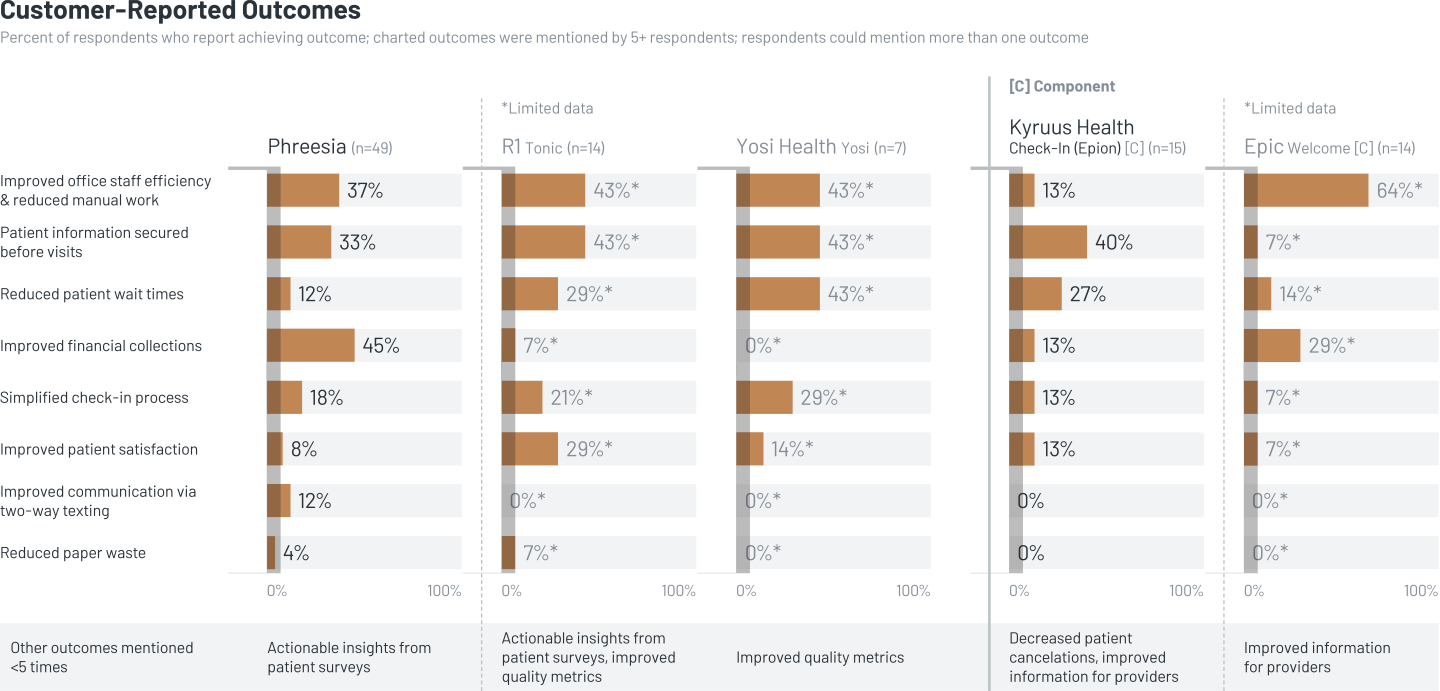
With the largest market share in this space, Phreesia has generally maintained customer satisfaction amid recent growth. The vendor also has the highest customer adoption across patient intake functionalities measured in this report; 75% of respondents use Phreesia at a broad level, with two-way patient texting being a highlight for customers and patients. These functionalities have led to tangible outcomes like reduced patient wait times and improved communication. Almost half of respondents feel that charges have increased in the last year, and others (particularly smaller organizations) note receiving inconsistent support as the vendor has grown.
Yosi Health is the 2024 Best in KLAS winner for patient intake management, and their customers praise the vendor’s high-quality support, timely resolutions, and willingness to develop customizations that meet patient and provider needs. In terms of outcomes, respondents highlight that the solution reduces manual patient intake responsibilities, enabling staff to focus more on patient care. Although data on customer adoption comes from a limited sample, respondents report strengths such as patient self-service preregistration and capture of patients’ medical/social histories. Some customers want Yosi Health to be more proactive and continue adding new developments (e.g., more language support, two-way patient texting, smoother UI).
R1 customers are the most likely to report improved patient satisfaction, driven by the product’s ease of use for patients and ability to inform care teams about patients’ health. Additionally, the vendor has the highest validated customer adoption of reporting and analytics tools. Reported outcomes include reduced paper waste and significantly reduced time spent manually entering data. R1’s overall performance score has recently trended downward, with respondents citing complex administrative functions, EHR integration issues, and insufficient support and training.
Epic & Kyruus Health (Epion) Score Highly & Have Strong Integration with Their Respective EHR Solutions
Component vendors Epic and Kyruus Health (Epion) score highly and have the second-highest breadth of adoption (with most respondents using at least 5 out of the 9 validated functionalities). Epic customers select Welcome over third-party solutions for its integration, cost, support, and overall functionality, and they report achieving positive outcomes (e.g., improved office staff efficiency and reduced manual work). Compared to other vendors’ customer bases, Epic respondents have lower satisfaction with training, noting that they need more in-depth, product-specific resources. Kyruus Health (Epion) stands out for deepest adoption of patient medical/social history capture and patient-reported clinical screenings. Customers report being able to secure necessary patient data before visits; Kyruus Health is also the only vendor to have a respondent say the solution contributed to reduced patient cancellations. Some respondents note a lack of quality, timely support and want more regular communication with CSM and executive teams.
Office Staff Efficiency & Reduced Manual Work Are Most Common Outcomes Reported by Customers
With tightening budgets, healthcare organizations need tangible outcomes to validate the success of their patient intake management solutions. Across all measured vendors, interviewed customers most commonly report outcomes related to improved office staff efficiency and reduced manual work for patient intake. For some respondents, these outcomes were anecdotal, but others measured true labor cost savings. The second-most reported outcome is the ability to secure patient information before visits, which in turn leads to improved HIPAA compliance, a higher rate of completed registration forms, and more accurate patient data.
Enhanced Functionality & Customization Are Top Reasons Customers Use Third-Party Patient Intake Management Solutions
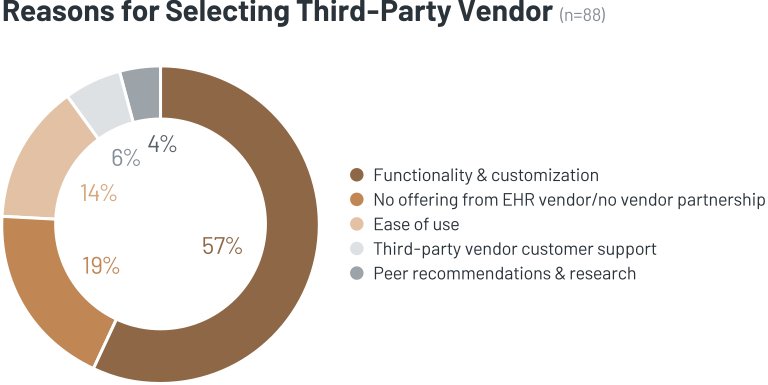
When selecting a patient intake management solution, healthcare organizations have the choice to go with either their EHR vendor or a third-party vendor. Respondents who chose a third party primarily cite enhanced functionalities as their reason for selection; examples of such functionalities include automated electronic consent forms, personalized patient surveys, customized billing and payment messages, and pre-visit forms for patients’ medical/social history. Additionally, organizations that have an EHR from Oracle Health or MEDITECH are more likely to select a third-party patient intake management solution.
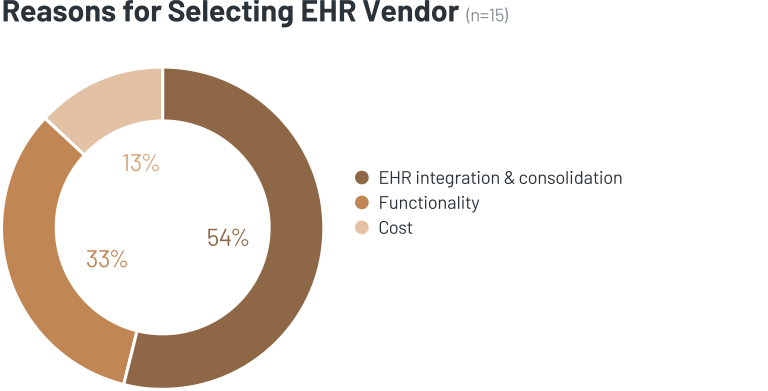
Voice of the Customer
Epic: “We adopted Welcome because we want to keep as much of our functionality inside Epic as possible. Welcome is also highly customizable, so we can push things out to patients through the kiosk or remove them when they are no longer necessary. During COVID-19, Welcome gave us the flexibility to ask specific questions to our patients and families on the kiosk with a fairly quick turnaround time.” —Coordinator
Kyruus Health (Epion): “athenahealth does not have the capability to send out social history and a number of other parts of a patient’s history via the pre-visit form that patients complete online. The vendor has been working toward that, but there are some major limitations in terms of the questionnaires we can send out. athenahealth is limited regarding what can be completed by the patient ahead of time. That is why we went with Epion Check-In.” —Analyst
Phreesia: “We went with Phreesia rather than our EHR vendor’s patient intake management solution basically for the merchant services. We wanted the ability to collect payments through the dashboard. As they have expanded their offerings, we have expanded our use of those things.” —Coordinator
R1: “Our EHR vendor does not have a solution that can be sent to patients prior to the appointments. With Tonic, patients are able to fill out their demographics, send consent forms, and take a picture of various things from the comfort of their home.” —Manager
Yosi Health: “The registration packet has the consent forms, financial forms, medical history, demographic questions, and other things that we don’t want to spend time getting during clinical interviews. Patients can fill out those things beforehand so that we can actually focus on what is going on with the patient. Having things done ahead of time puts our clinicians ahead of the appointment in a lot of ways. We can get a lot done in the chart before the patient comes in.” —Director
Vendor Bottom Lines
Vendors ordered alphabetically
Fully Rated Vendors
Phreesia

 “The vendor is constantly making updates, improvements, or efficient additions. We utilize the self-scheduling feature for flu vaccine appointments. We would normally have to handle thousands of phone calls just to make flu vaccine appointments. Phreesia has eliminated that completely. We push emails out through Phreesia, and that is super easy; we never have technical issues with that process. There is a new feature that spreads out mass emails and frees up our systems so that we don’t have jams. That feature is truly making a difference.” —Manager
 “Phreesia does not avoid charging for every little thing. They definitely have high prices for the things they are offering. There are annual pricing increases, and every single add-on product is very costly to implement. . . . For other products, we are literally paying a fraction of what we pay for Phreesia’s system. We don’t see a lot changing with Phreesia, except that we will be paying more, so our satisfaction with them will remain stagnant.” —Director
R1 Tonic

“Patients’ charts in Tonic are up front and in our faces now with the patients’ medications and problem lists. The transparency in the patient charts has been beneficial and has saved clerical and clinical time for our associates when they have been checking patients in. Patients can check themselves in now and can make their own co-pays. Our clinical staff is reviewing the questions instead of calling the patients and asking them the questions. We have also increased our co-pay collection.” —Director
“R1 did a great job in the beginning with training, but now, we struggle to get some things that we need to help our staff. This is a trying time with staff, and we have retrained people, but having things easy is the staff’s choice. With the way we have laid things out, Tonic should be very simple to use for end users, and for most of them, it is. But we still struggle with some staff who just can’t seem to understand the system.” —Director
Yosi Health Yosi

“Yosi is a great product. It is simple to use, especially for our older demographic who aren’t tech savvy. The vendor has been quick to respond and help us simplify the system’s check-in process and make that process easy and quick so that our patients can be seen. We have received nothing but compliments from patients since we updated that because things are now so much easier. The vendor’s willingness to customize the system has been huge and has made everyone happy. I have never encountered anything like that with any other vendor.” —Director
“We have had a lot of frustration with patients wanting to stop in the middle of doing an intake form or something like that and then not being able to get back into it and wondering whether we can resend it. There are also weird things where the software just isn’t always the most user friendly. The process of getting in and seeing what the patients’ answers are is a little clunky on our end. The product just doesn’t feel very polished; it feels very raw and like it still needs work.” —Manager
Component Vendors
Epic Welcome [C]
![epic welcome [c] performance scorecard](/images/report-images/2024/patient_intake_management_2024-epic_welcome_c_performance_scorecard.svg)
“Welcome is very simple and self-explanatory for our patients. It is a good product. When we first implemented Welcome, one of the components that we needed to address was a lack of staffing. We were able to implement some features of Welcome to make up for the lack of staff. Individuals could come in and check themselves in. We didn’t have to have as many front desk staff members. So Welcome provided some really great solutions for us in the self-service world.” —Director
“Epic keeps all their promises eventually; I am just not always happy with their timelines. We have gotten almost everything we have asked for, but there has to be more than one health system asking for something, so we have to get other Epic clients to tell Epic they want the development that we want too. Then once something gets on Epic’s road map, it can take a couple of years for Epic to deliver it. We would like a faster development timeline.” —VP
Kyruus Health Check-In (Epion) [C]
![kyruus health check-in (epion) [c] performance scorecard](/images/report-images/2024/patient_intake_management_2024-kyruus_health_check_in_epion_c_performance_scorecard.svg)
“The solution has improved the completion of the registration documentation, demographics, insurance information, and contact information. It has improved the patient intake forms. Family history, social history, past medical history, and all those things are done ahead of time. The product also captures the co-pay and outstanding balances, and that translates to less time at the front desk.” —Director
“We don’t have a person at Epion Health that we can contact; we talk to whoever gets the ticket when we call tech support. I went back to our initial onboarding person, and they just pushed me off. I did go back to our original salesperson at one time because of a certain billing issue, and they renegotiated it a little. But we had even set up an appointment with Epion Health at one point to go over some of our issues, and the vendor never showed up.” —Nurse practitioner
About This Report
Each year, KLAS interviews thousands of healthcare professionals about the IT solutions and services their organizations use. For this report, interviews were conducted over the last 12 months using KLAS’ standard quantitative evaluation for healthcare software, which is composed of 16 numeric ratings questions and 4 yes/no questions, all weighted equally. Combined, the ratings for these questions make up the overall performance score, which is measured on a 100-point scale. The questions are organized into six customer experience pillars—culture, loyalty, operations, product, relationship, and value.
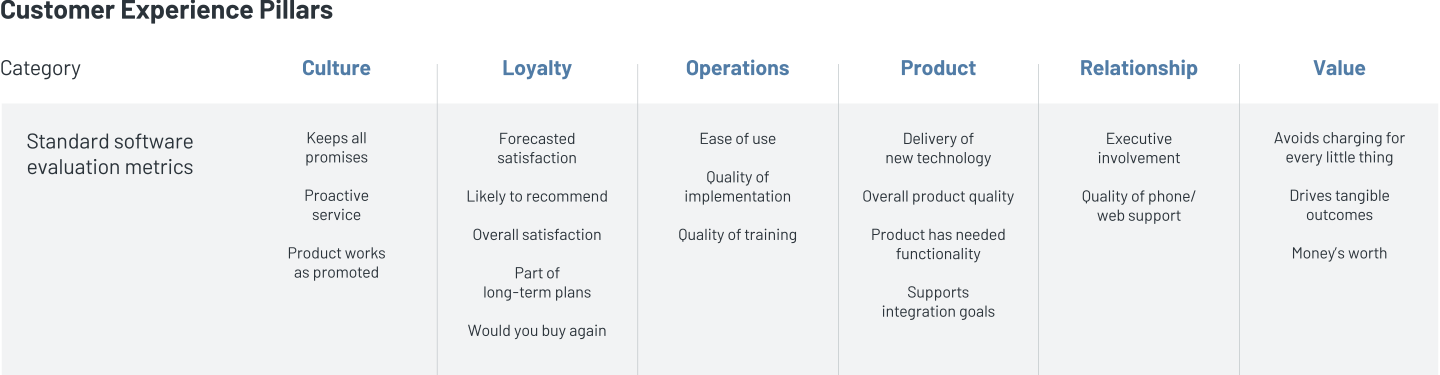
In addition to the standard numeric questions, KLAS also asked supplemental questions to gain further insights into the patient intake management market:
- Which patient intake management functionalities does your organization use today?
- What specific outcomes has your patient intake solution helped your organization achieve?
- If you use a third-party solution, why do you use it rather than your EHR vendor’s patient intake management solution?
- If you use your EHR vendor’s solution, why do you use it rather than a third-party patient intake management solution?
Sample Sizes
Unless otherwise noted, sample sizes displayed throughout this report (e.g., n=16) represent the total number of unique customer organizations interviewed for a given vendor or solution. However, it should be noted that to allow for the representation of differing perspectives within any one customer organization, samples may include surveys from different individuals at the same organization. The table below shows the total number of unique organizations interviewed for each vendor or solution as well as the total number of individual respondents.
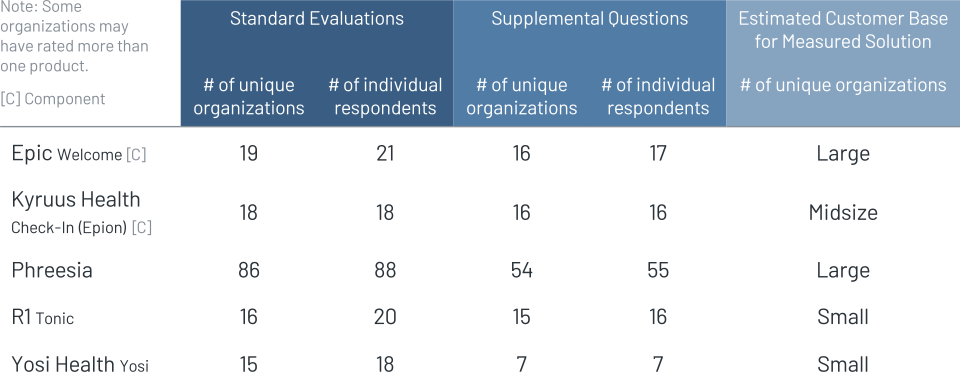
Some respondents choose not to answer particular questions, meaning the sample size for any given vendor or solution can change from question to question. When the number of unique organization responses for a particular question is less than 15, the score for that question is marked with an asterisk (*) or otherwise designated as “limited data.” If the sample size is less than 6, no score is shown. Note that when a vendor has a low number of reporting sites, the possibility exists for KLAS scores to change significantly as new surveys are collected.
Product Designations Used in This Report
- Component [C]: Patient intake management products marked as component do not integrate with multiple EHRs.

Writer
Natalie Hopkins

Designer
Bronson Allgood

Project Manager
Andrew Wright
This material is copyrighted. Any organization gaining unauthorized access to this report will be liable to compensate KLAS for the full retail price. Please see the KLAS DATA USE POLICY for information regarding use of this report. © 2026 KLAS Research, LLC. All Rights Reserved. NOTE: Performance scores may change significantly when including newly interviewed provider organizations, especially when added to a smaller sample size like in emerging markets with a small number of live clients. The findings presented are not meant to be conclusive data for an entire client base.