KLAS Contact

Contact KLAS
Contact KLAS
 2026 BEST IN KLAS
Preferences
Related Series
Related Segments

Patient Self-Scheduling 2024
An Early Look at Standalone Solutions

Author
Adam Cherrington

Author
Ciera Walker
As the digital landscape grows in healthcare and other industries, patients are expecting more seamless and convenient access to healthcare and therefore report that self-scheduling is one of their top healthcare engagement priorities. Provider organizations are responding by offering patient self-scheduling functionality to both increase patient convenience and reduce staff burden. This report focuses on five standalone patient self-scheduling solutions to understand their ease of use, why they were chosen over other types of solutions (e.g., EHR functionality), and whether they are worth the money. Additional insights about the broader patient self-scheduling market are also included.
Self-Scheduling: An Early but Broadening Market
Self-scheduling is still an early market, and provider organizations’ strategies around appointment management are built on one or more of the following options:
- Functionality from EHR vendors (commonly found in patient portal solutions)
- Patient engagement platforms with self-scheduling capabilities
- Standalone patient self-scheduling solutions
This report focuses on the performance of vendors that offer a standalone product with self-scheduling as its primary function. KLAS plans to publish reports on the complete portfolios of several patient engagement vendors, including their self-scheduling functionality.
Despite High Interest from Both Patients and Provider Organizations, Patient Self-Scheduling Still Not Widely Used
Despite previous data indicating that provider organizations intend to prioritize patient self-scheduling, the vast majority of appointments are still managed in other ways. Even among those utilizing patient self-scheduling functionality, many still manually double-check self-scheduled appointments to avoid errors.
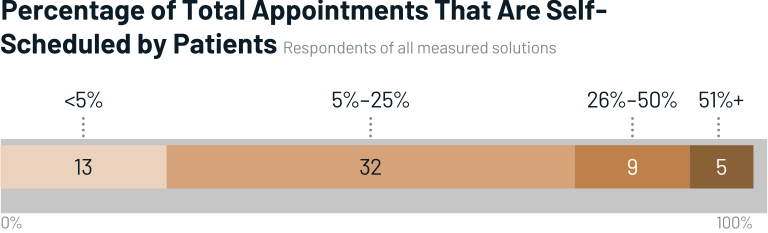
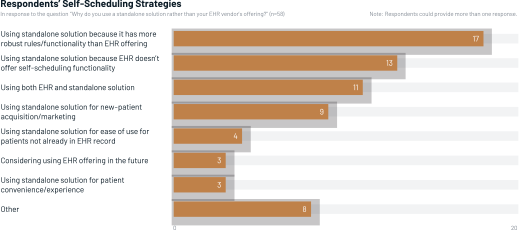
With Various Options for Self-Scheduling, Why Are Some Choosing a Standalone Solution?
As previously noted, there are three main strategies provider organizations are using to enable and optimize self-scheduling functionality. Those who choose a standalone solution over functionality offered by their EHR vendor report a variety of motivations.
Relatient’s Rules Engine Helps Respondents Streamline Complex Scheduling
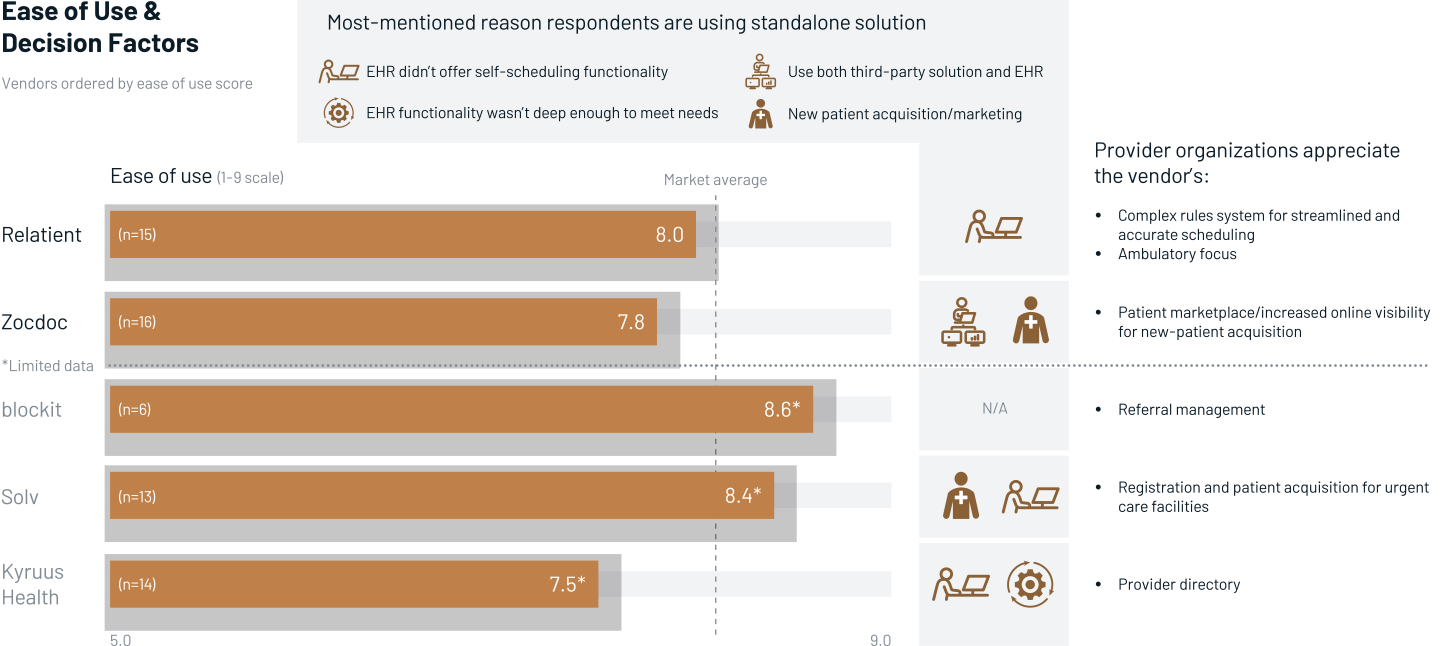
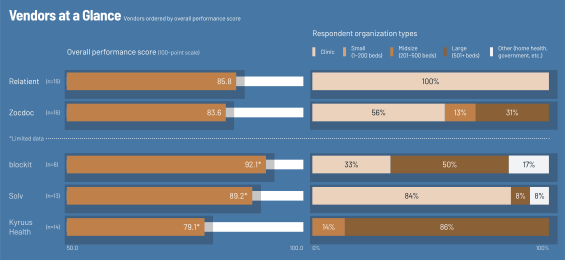
Relatient—the 2024 Best in KLAS winner for patient self-scheduling—offers various patient engagement and communication tools, with a focus on ambulatory organizations (many of whom are athenahealth customers). Many interviewed customers report working with Relatient because their EHR didn’t have deep-enough functionality. Respondents especially highlight the system’s strong rules engine (originally acquired from Radix Health); the rules automation helps address scheduling complexity, improve the accuracy of patient-scheduled appointments, and reduce staff burden from phone calls. However, some respondents mention occasional glitches and a heavy lift up front. Relatient’s overseas support people are often seen as responsive and engaged, but some customers struggle with the time zone differences.
Most of the survey respondents using Kyruus Health’s* self-scheduling solution are from large organizations that have the Epic or Oracle Health EHR. Interviewed Oracle Health customers in particular point to the Kyruus Health-Oracle Health partnership and the insufficient self-scheduling functionality in their EHR as reasons for choosing Kyruus Health. Additionally, respondents feel Kyruus Health makes self-scheduling easier for new patients not yet recorded in the EHR. Overall, customer experiences with the product are inconsistent. Satisfied respondents appreciate the vendor’s provider directory and highly responsive contacts and have seen increased patient bookings. Others feel the system requires more manual work than expected and would like more engagement from support contacts, deeper EHR integration, or increased training. Most interviewed blockit* customers speak highly of the consistent, responsive support and partnership. These respondents feel the self-scheduling functionality in the referral management platform is easy to use, mentioning outcomes such as more seamless appointment scheduling and decreased no-show rates.
*Limited data
Zocdoc Respondents Use Solution for Patient Acquisition through Online Marketplace but Struggle with Pricing Model
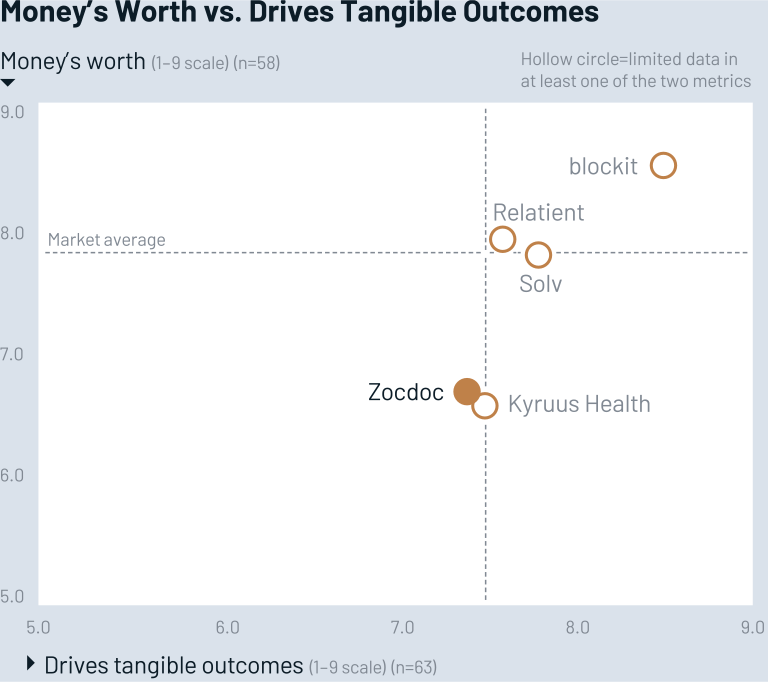 Interviewed Zocdoc customers appreciate the responsive engagement they have received from their account representatives. Additionally, respondents feel Zocdoc stands out for their ability to increase new-patient acquisition through their patient-facing marketplace, a tool that improves the online visibility of providers and allows patients to easily search for preferred times/providers. Among vendors in this report, Zocdoc has the most respondents reporting the use of both the standalone self-scheduling tool and EHR functionality to increase patient acquisition. Some struggle to realize ROI with Zocdoc’s pay-per-booking model, as they still have to pay for canceled or no-show appointments originally booked through the solution. Further, the solution isn’t reported as ideal for more-complex specialties, and noted opportunities for improvement include a faster pace of development and increased measures to prevent patient self-scheduling errors. Solv* also offers a patient marketplace but one focused on urgent care. Interviewed customers appreciate that the solution is easy to use and set up and that it collects registration/intake information and drives patients to leave reviews after appointments. Also, the vendor is seen as engaged in the success of their customers by being responsive to needs and timely in providing help. A few respondents struggle with EHR integration, though most of the frustration seems to lie with EHR functionality rather than with Solv.
*Limited data
Other Solutions with Self-Scheduling Capabilities Not Measured in This Report: Vendor-Provided Responses
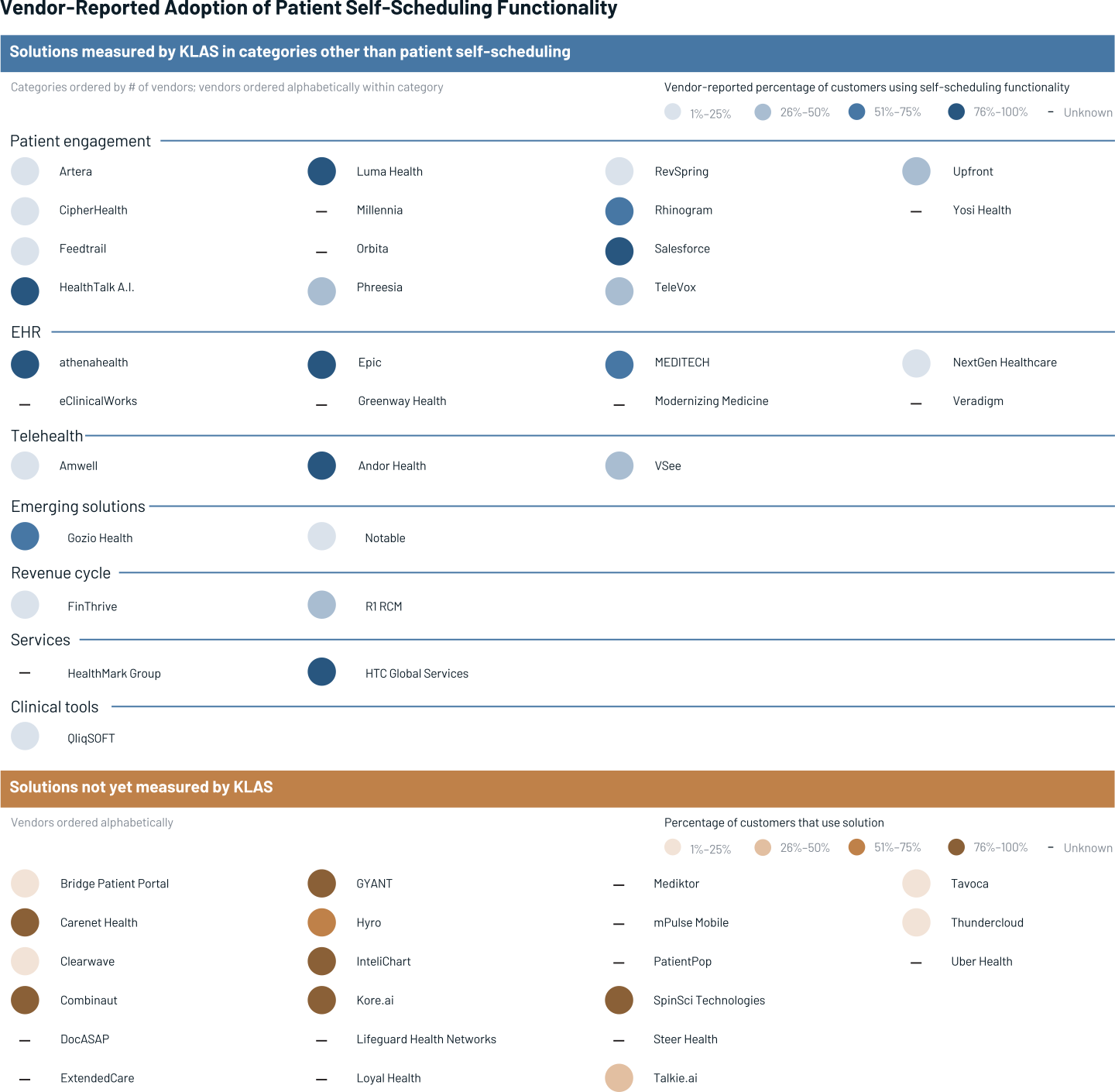
Outside of the measured standalone solutions in this report, there are many solutions that offer self-scheduling functionality—some measured by KLAS in other areas and some not yet measured by KLAS. KLAS’ research is ongoing, and as the self-scheduling space evolves, KLAS looks forward to measuring additional vendors and their solutions. In the Patient Engagement Ecosystem 2023 report, many measured and non-measured vendors self-identified their patient engagement capabilities, including the adoption of their self-scheduling functionality, as shown below.
About This Report
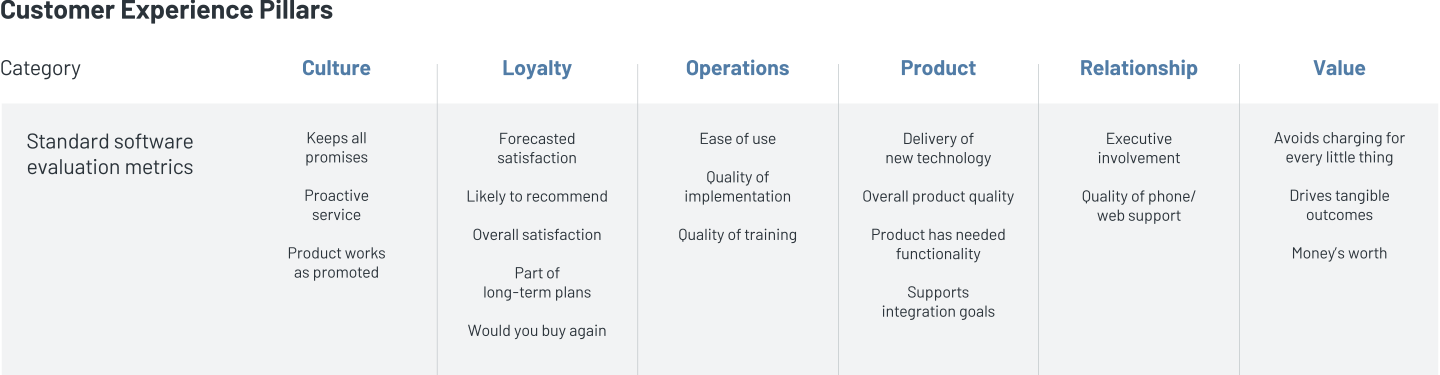
Each year, KLAS interviews thousands of healthcare professionals about the IT solutions and services their organizations use. For this report, interviews were conducted over the last 12 months using KLAS’ standard quantitative evaluation for healthcare software, which is composed of 16 numeric ratings questions and 4 yes/no questions, all weighted equally. Combined, the ratings for these questions make up the overall performance score, which is measured on a 100-point scale. The questions are organized into six customer experience pillars—culture, loyalty, operations, product, relationship, and value.
To supplement the performance data collected, KLAS also asked interviewed clients the following questions specific to patient self-scheduling:
- Approximately what percentage of total appointments are patients self-scheduling today?
- Why do you use your self-scheduling solution rather than your EHR vendor’s offering?
Sample Sizes
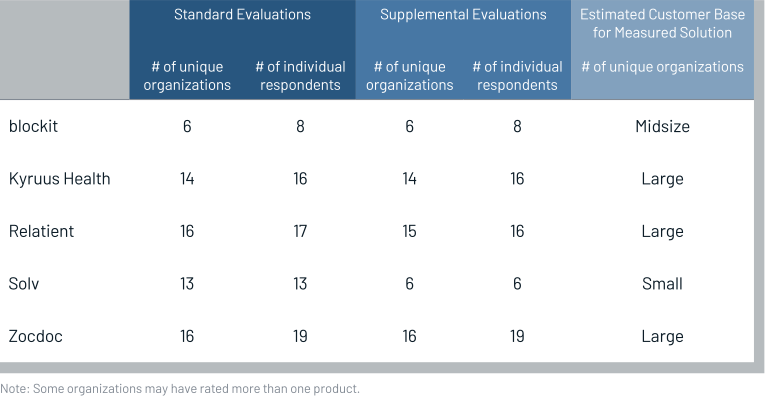 Unless otherwise noted, sample sizes displayed throughout this report (e.g., n=16) represent the total number of unique customer organizations interviewed for a given vendor or solution. However, it should be noted that to allow for the representation of differing perspectives within any one customer organization, samples may include surveys from different individuals at the same organization. Ratings from these individuals are aggregated in order to prevent any one organization’s feedback from disproportionately impacting a solution’s score. The table below shows the total number of unique organizations interviewed for each vendor or solution as well as the total number of individual respondents.
Some respondents choose not to answer particular questions, meaning the sample size for any given vendor or solution can change from question to question. When the number of unique organization responses for a particular question is less than 15, the score for that question is marked with an asterisk (*) or otherwise designated as “limited data.” If the sample size is less than 6, no score is shown. Note that when a vendor has a low number of reporting sites, the possibility exists for KLAS scores to change significantly as new surveys are collected.

Writer
Carlisa Cramer

Designer
Breanne Hunter

Project Manager
Andrew Wright
This material is copyrighted. Any organization gaining unauthorized access to this report will be liable to compensate KLAS for the full retail price. Please see the KLAS DATA USE POLICY for information regarding use of this report. © 2026 KLAS Research, LLC. All Rights Reserved. NOTE: Performance scores may change significantly when including newly interviewed provider organizations, especially when added to a smaller sample size like in emerging markets with a small number of live clients. The findings presented are not meant to be conclusive data for an entire client base.