KLAS Contact

Contact KLAS
Contact KLAS
 2026 BEST IN KLAS
Preferences
Related Series

2025
Related Segments

Patient Engagement 2023
Provider Perceptions on Technology Investment Now and in the Future

Author
Adam Cherrington

Author
Dan Czech

Author
Spencer Snyder
In an increasingly digital world, the healthcare industry continues to face increased costs and labor shortages. Patient engagement technology is top of mind for healthcare organizations as they work to improve the overall patient experience, increase volumes, cut costs, and create more provider efficiencies. In collaboration with Bain & Company, KLAS recently identified patient engagement as a top-three priority for healthcare investment. For this report, KLAS engaged with executives from 93 unique healthcare organizations to better understand perceptions of the patient engagement market, including strategies for addressing challenges and goals today, which vendors are most aligned with provider goals, and future plans for investment to improve patient engagement.
The Evolving Patient Engagement Landscape
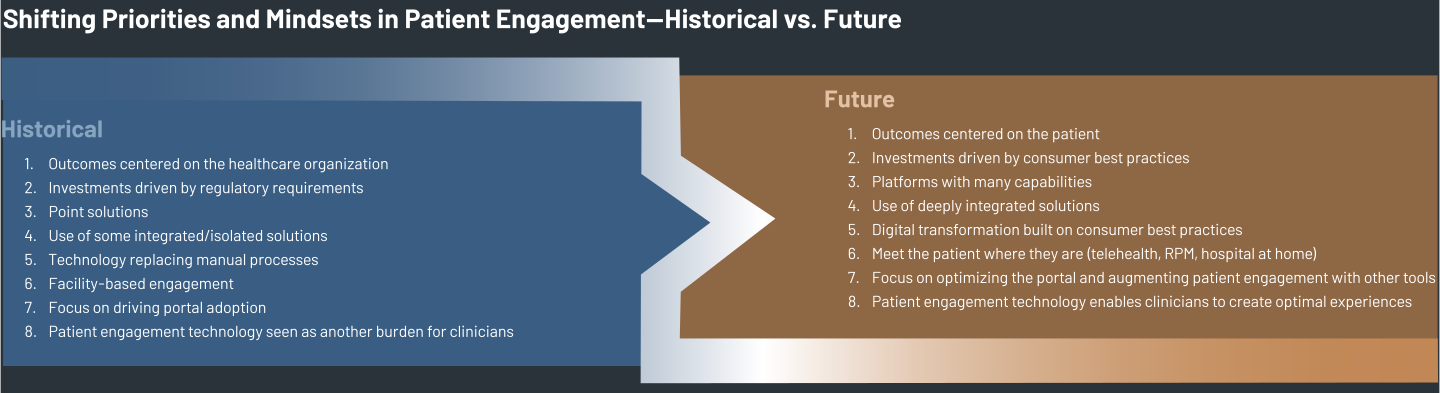
Over time and in reaction to overall changes in the industry, healthcare organizations have shifted their mindsets and strategies to be more consumer- and patient-centric. As a result, priorities and investments for patient engagement technology have also begun to shift.
Organizations Focused on Patient Access to Increase Patient Volumes and Loyalty
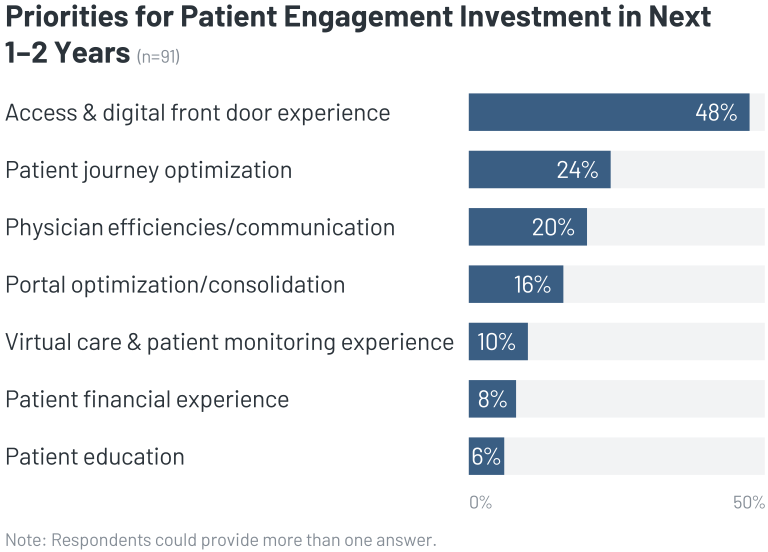
Healthcare organizations are turning to patient engagement solutions to attract new and retain existing patients, increase patient volumes, reduce no-shows, and fill last-minute cancellations. Organizations recognize the need for a convenient, frictionless experience for their patients, and investment priorities are shifting to meet that need and help organizations become increasingly patient-centric. Over the next two years, top investment priorities for patient engagement will revolve around easier patient access through self-scheduling and self-registration, which are capabilities highly desired by patients. Additionally, recognizing the clinician’s role in creating a positive patient experience, organizations are focused on solving clinician efficiency and patient communication challenges. As organizations invest in solving these challenges, they have reported potential barriers such as patients without access to proper technology as well as struggles with practitioners opening their schedules to allow for self-scheduling.
 “We are focused on access in terms of patient engagement. Whether we use the term ‘digital front door’ or ‘digital transformation’ in general, we are focused on how to make it easier for patients to get in contact with us. We want to provide more and better access at patients’ fingertips. We are focusing on how we make use of the capacity we have that goes unused, so we are getting serious about filling cancellations even when they occur at the last minute. We use patient engagement tools to keep patients up to speed and get them in as soon as we can.“ —CIO
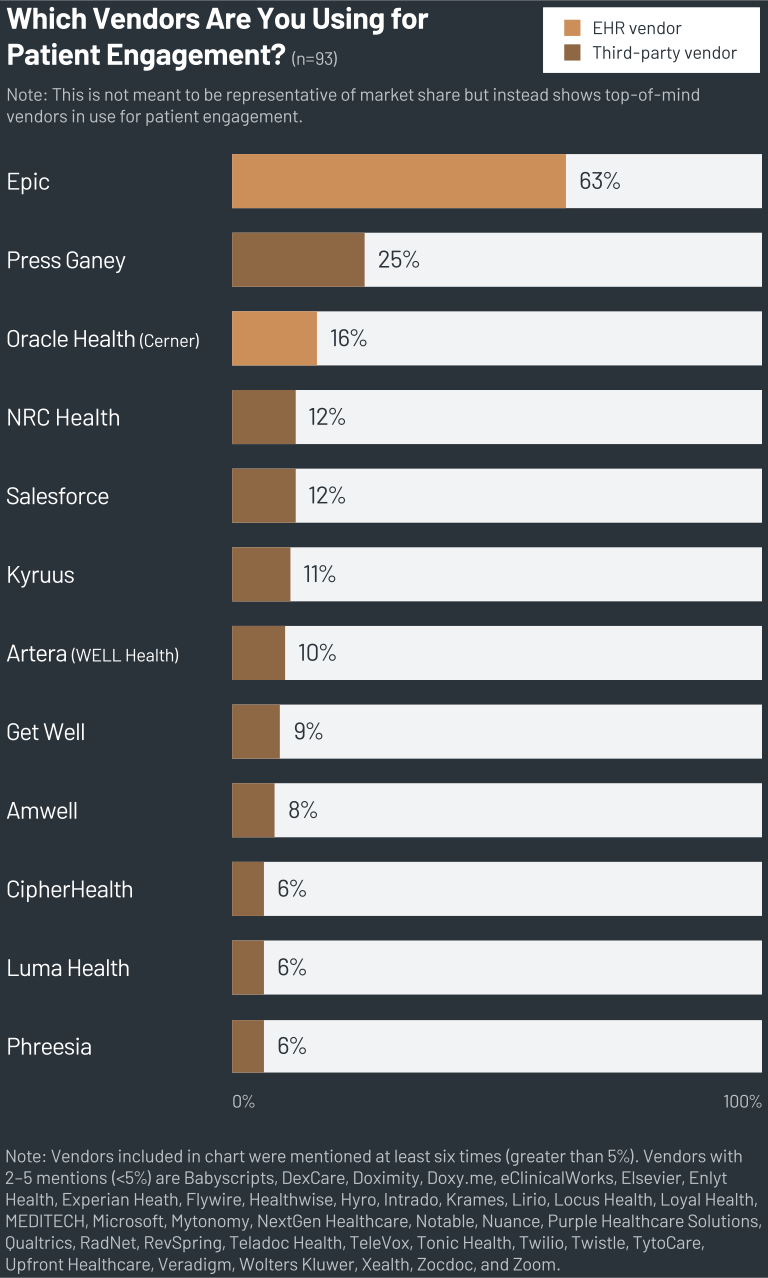
Future Plans Mirror Current Areas of Lowest Adoption; Press Ganey, NRC Health, Salesforce, Kyruus among Non-EHR Vendors Adopted Most Broadly Today
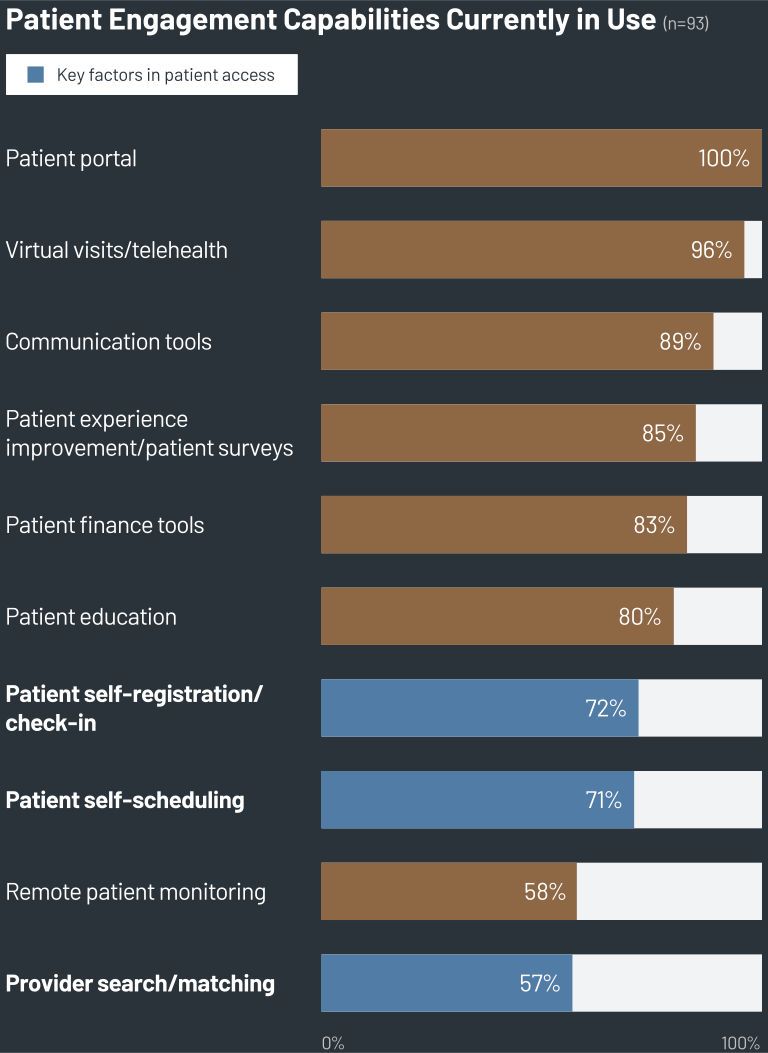
The areas in patient engagement with the lowest-reported adoption today—specifically provider search and matching, self-scheduling, and self-registration—correlate directly with organizations’ plans and priorities for future investment. Driven largely by regulatory requirements, patient portals are universally adopted, and patient experience/survey solutions are deeply adopted to aid with CAHPS and other surveys. Across the past few years, COVID-19 has driven a deep adoption of telehealth. As organizations seek to reduce no-show rates and fill appointments, communications tools have also been highly adopted; further use cases are now also being adopted to more thoroughly engage patients in their care and in payment collection.
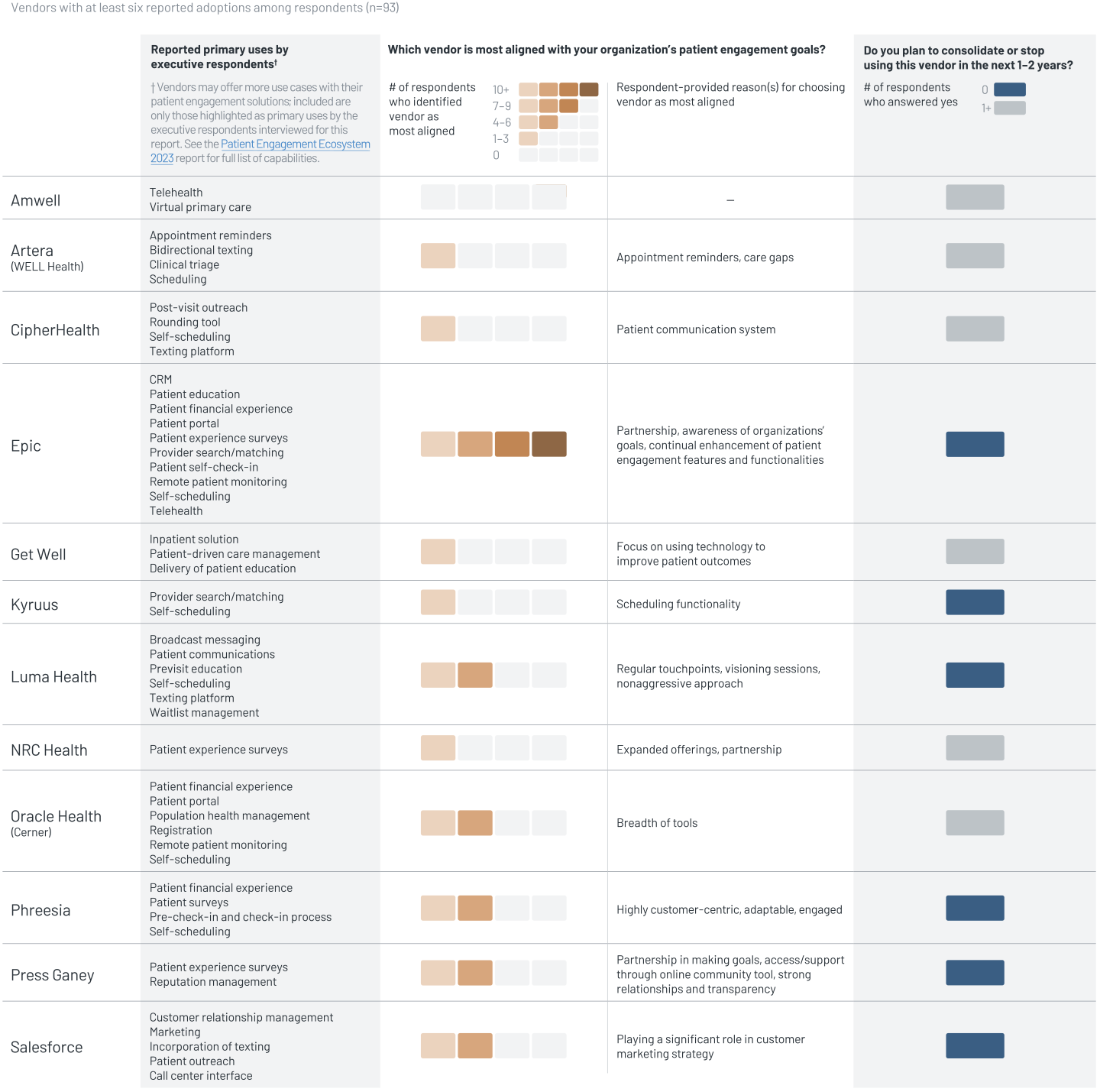
As organizations look to address their goals and challenges, they often seek solutions to (1) fill specialized needs, such as patient experience surveys or patient acquisition, or (2) meet a broad range of needs, either through their EHR vendor or a third-party vendor. Of the third-party vendors, Press Ganey, NRC Health, Salesforce, and Kyruus stand out for high adoption, with all having above 10% of interviewed organizations reporting adoption. A quarter of organizations mention using Press Ganey as their patient survey partner, with CAHPS surveys often noted as the core use. Additionally, several respondents feel Press Ganey is the vendor most aligned with their organization’s current and future plans, noting they feel a partnership in making goals, providing access/support through the online community tool, and building relationships and transparency. NRC Health customers report similar experience management use cases. Two respondents identified the vendor as being most aligned with their goals due to a strong partnership and native experience capabilities. Salesforce customers widely report adoption for CRM capabilities; a handful also mention broader usage for campaigns, marketing outreach, and patient communication. Respondents primarily use Kyruus for provider directory capabilities that enable provider search and self-scheduling.
See the vendors at a glance section for a look at other vendors commonly used by organizations to meet current patient engagement needs.
Despite Third Parties’ Increased Capabilities, EHR Vendors—Led by Epic—Remain Most Aligned with Organizations’ Patient Engagement Goals
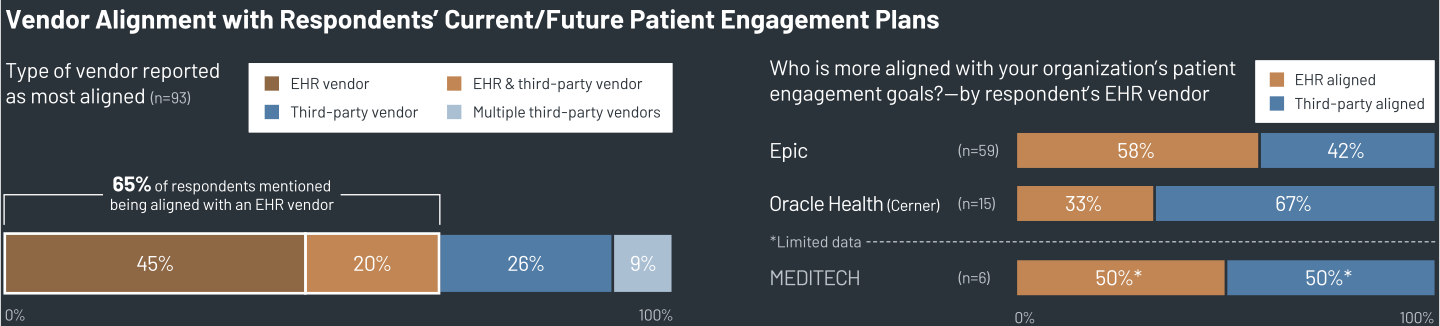
When respondents were asked which of the vendors they work with today are most aligned with current and future patient engagement plans, nearly two-thirds of executive respondents pointed to their EHR vendor or a combination of their EHR vendor and third-party solutions. Among EHR vendors, Epic has the highest percentage of their responding clients (58%) saying the vendor is the most aligned with them. Executive respondents cite Epic’s partnership, awareness of organizational goals, and continual enhancement of patient engagement features and functionalities to support patients and clinicians. Only one-third of respondents using Oracle Health (Cerner) state the vendor is most aligned with their patient engagement plans. Customers who instead cited a third party said lack of alignment with Oracle Health stems from poor innovation and insufficient expertise in patient engagement. Half of interviewed organizations using MEDITECH* consider their EHR vendor to be most aligned with their patient engagement goals. Each of the three organizations that cited MEDITECH as most aligned are small rural hospitals that plan to expand their use of MEDITECH, specifically around portal optimization.
Even while EHR vendors are most often chosen as the vendor most aligned with patient engagement goals, third-party vendors continue to play a significant role in patient engagement for about half of respondents, sometimes in conjunction with their EHR vendor. Respondents who identified a third party as their most-aligned vendor described strong strategic partnership, communication, and innovation that set these vendors apart. Many of the mentioned third-party vendors also offer broad capability sets.
*Limited data
Majority of Respondents Planning to Consolidate Patient Engagement Tech Stack, Especially Communications & Virtual Care Solutions
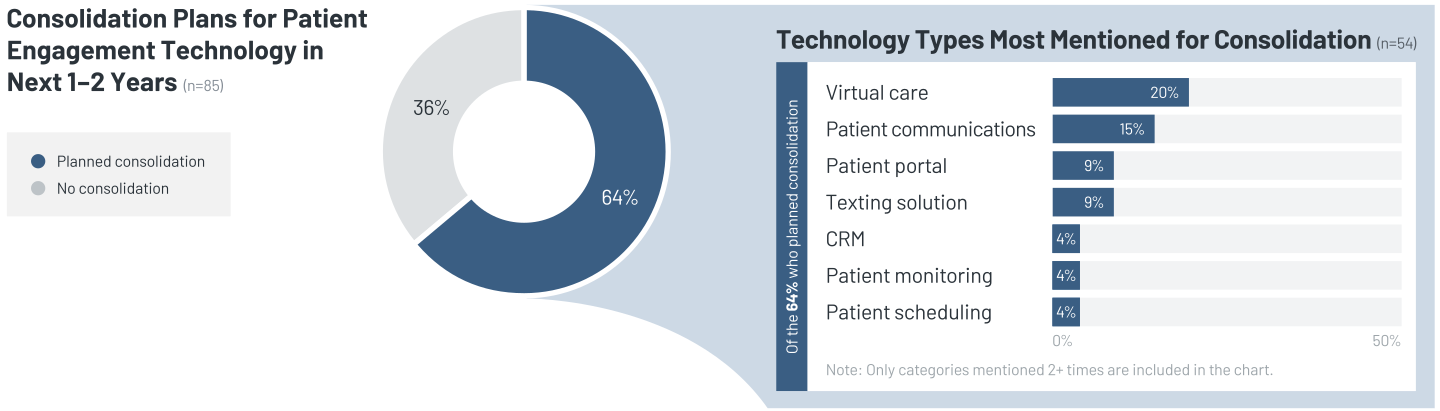
A trend toward consolidation is happening throughout healthcare. In the recent KLAS Research–Bain & Company report, two-thirds of organizations report a desire to streamline their tech stack. That trend extends into patient engagement; 64% of respondents in this report are planning to consolidate or stop using at least one of their patient engagement solutions. Organizations are most often considering consolidating solutions for virtual care, patient communications and texting, and patient portals. Those looking to consolidate virtual care platforms report that they purchased several solutions during the pandemic and are now reassessing their long-term approach. Communications and texting solutions were initially purchased for basic appointment reminders, and organizations now want deeper capabilities (e.g., self-scheduling, self-registration, payment collections) or are seeking EHR-native capabilities to consolidate the patient experience. Additionally, after consolidating the number of EHR vendors in use, organizations are planning to consolidate or are already consolidating their patient portals, with an emphasis on using one consolidated portal from their EHR vendor.
Vendors at a Glance
Note: See KLAS’ website for full performance data on patient engagement vendors.
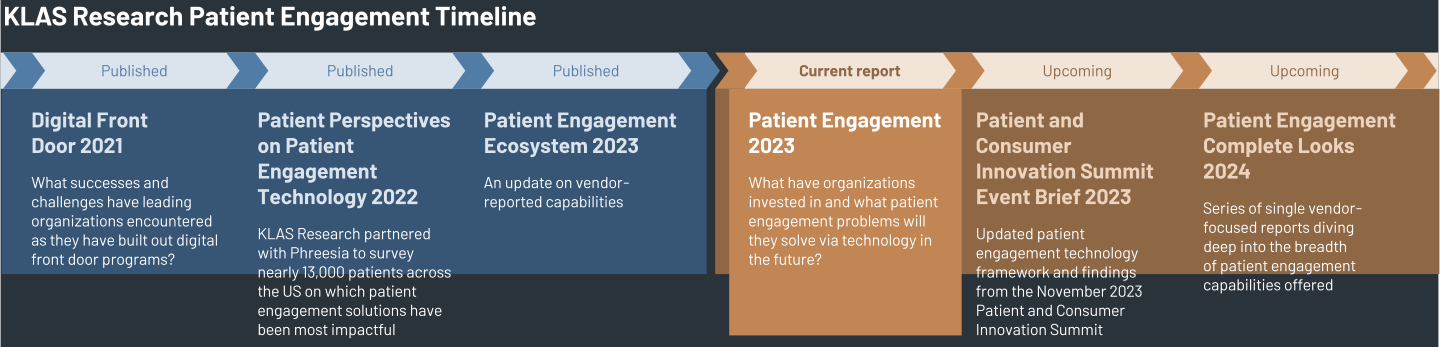
Note: View KLAS’ previous reports on Digital Front Door 2021, Patient Perspectives on Patient Engagement Technology 2022, and Patient Engagement Ecosystem 2023.
About This Report
This report is a perception study. It is designed to help readers understand the key strategies healthcare organizations are deploying as they invest in patient engagement technologies, and it examines which vendors these organizations are currently using or are considering using to help implement, monitor, and improve patient engagement. It is important to note that this report is not focused on the performance of these services and firms but rather on ascertaining which are top of mind for healthcare organizations. Other firms not discussed in this report may offer similar capabilities, but healthcare organizations did not bring them up in conversations with KLAS.
To supplement the customer satisfaction data gathered with the standard evaluation, KLAS also created a supplemental evaluation to delve deeper into several questions specific to the patient engagement market. This evaluation asked respondents the following questions:
- What patient engagement problems are you trying to solve through technology investments in the next one to two years?
- What patient engagement capabilities/technologies are you already using?
- Which vendors are you using or considering using for patient engagement and how are you using or planning to use them?
- Which patient engagement technologies, if any, do you plan to stop using or consolidate in the next one to two years?
- Which vendor do you work with today that you consider most aligned with your current and future patient engagement plans?
Sample Sizes
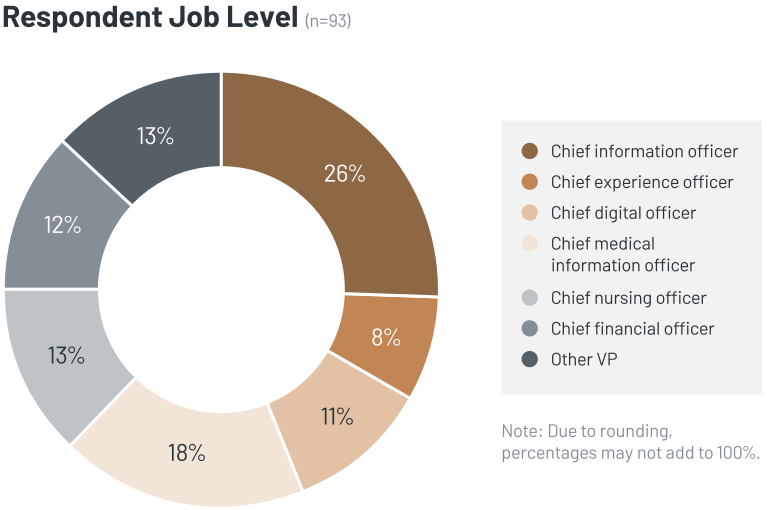 Sample sizes displayed throughout this report (e.g., n=16) represent the total number of unique customer organizations interviewed for a given vendor or solution. However, it should be noted that to allow for the representation of differing perspectives within any one customer organization, samples may include surveys from different individuals at the same organization. The table below shows the total number of unique organizations interviewed for each vendor or solution as well as the total number of individual respondents.
Some respondents choose not to answer particular questions, meaning the sample size for any given vendor or solution can change from question to question. When the number of unique organization responses for a particular question is less than 15, the score for that question is marked with an asterisk (*) or otherwise designated as “limited data.” If the sample size is less than 6, no score is shown. Where textual content relies on limited data, the vendor name is marked with an asterisk. Note that when a vendor has a low number of reporting sites, the possibility exists for KLAS scores to change significantly as new surveys are collected.

Writer
Carlisa Cramer

Designer
Jessica Bonnett

Project Manager
Andrew Wright
This material is copyrighted. Any organization gaining unauthorized access to this report will be liable to compensate KLAS for the full retail price. Please see the KLAS DATA USE POLICY for information regarding use of this report. © 2026 KLAS Research, LLC. All Rights Reserved. NOTE: Performance scores may change significantly when including newly interviewed provider organizations, especially when added to a smaller sample size like in emerging markets with a small number of live clients. The findings presented are not meant to be conclusive data for an entire client base.