KLAS Contact

Contact KLAS
Contact KLAS
 2026 BEST IN KLAS
Preferences
Related Series

2023

2021

2020
Related Segments

Risk Adjustment 2024
Need for Both Retrospective & Prospective Capabilities Remains High

Author
Bradley Hunter

Author
Jennifer Hickenlooper
As payers, provider-sponsored health plans, and provider organizations continue to grapple with economic and financial pressures, their need for risk adjustment solutions with both retrospective and prospective capabilities remains high. Solutions that provide a strong ROI and have broad capabilities are top of mind for potential customers, who often want to realize better value and consolidate solutions. To understand what factors are influencing purchase decisions and where organizations are investing, this report examines 52 risk adjustment purchase decisions validated by KLAS between June 2021 and June 2024. Satisfaction data from current customers is also included.
Risk Adjustment Market Overview
Risk Adjustment Vendor Types
 Broad retrospective vendors
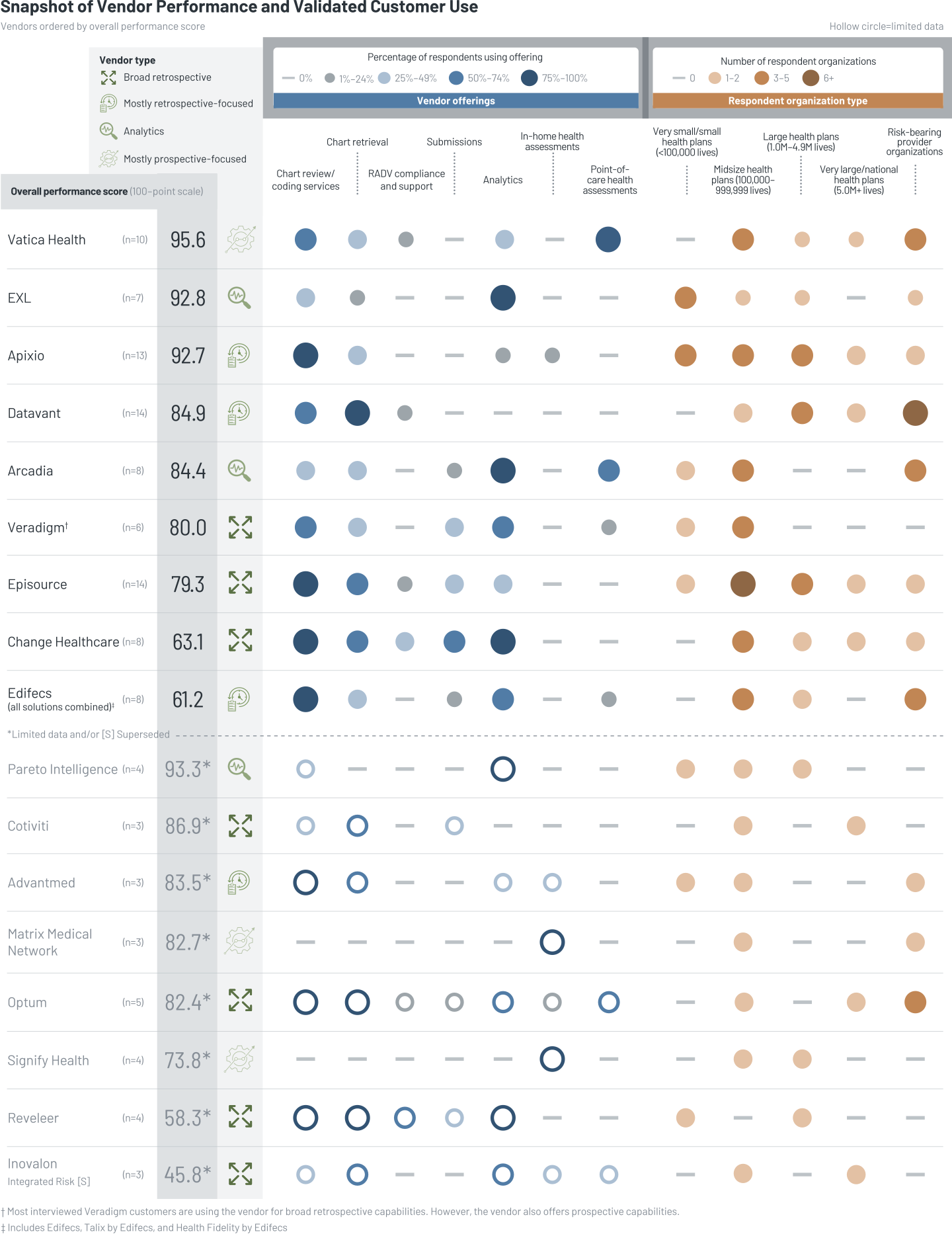
Provide a suite of retrospective risk adjustment solutions (i.e., chart review/coding services, chart retrieval, RADV compliance and support, submissions, and analytics). Vendors have many KLAS-validated customers using three or more offerings simultaneously.
 Mostly retrospective-focused vendors
Provide retrospective offerings, which can include chart review/coding services, chart retrieval, RADV compliance and support, submissions, and some analytics. These vendors’ KLAS-validated customers typically use only one or two offerings at a time.
 Analytics vendors
Offer solutions focused on retrospective and/or prospective analytics and reporting. Solutions ingest, analyze, and display results using formats like dashboards or scorecards to help non-IT users understand data.
 Mostly prospective-focused vendors
Provide functionality for in-home assessments and prospective health assessments (latter has analytics that assess patients at point of care). These vendors may offer multiple risk adjustment offerings, but KLAS-validated customers typically use only one or two offerings at a time, and most use the health assessment capabilities.
RISK ADJUSTMENT PURCHASING INSIGHTS
Functionality the Number-One Reason for Selection; Cost a Common Reason for Both Selection & Replacement
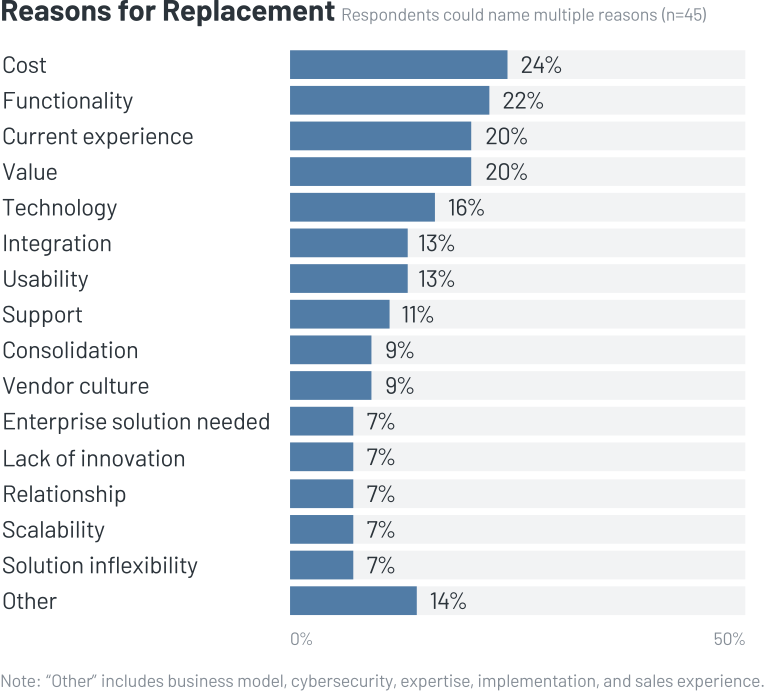
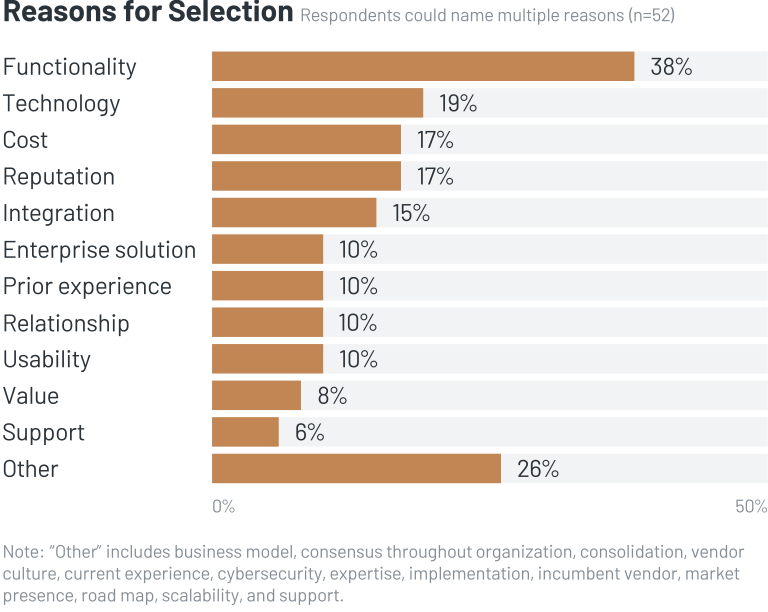
Payers, provider-sponsored health plans, and healthcare organizations feel more financially stretched than ever in today’s market, and as a result, they want risk adjustment solutions that efficiently drive outcomes and quickly deliver a positive ROI. The number-one reason a risk adjustment vendor is chosen is functionality. Organizations who mention this factor value up-to-date technology and having a product that supports their risk adjustment strategy. Potential customers also note that products with broad capabilities allow organizations to consolidate technology and vendor contracts. In contrast, solutions are often replaced due to cost, a lack of needed functionality, insufficient value, and poor user experience.
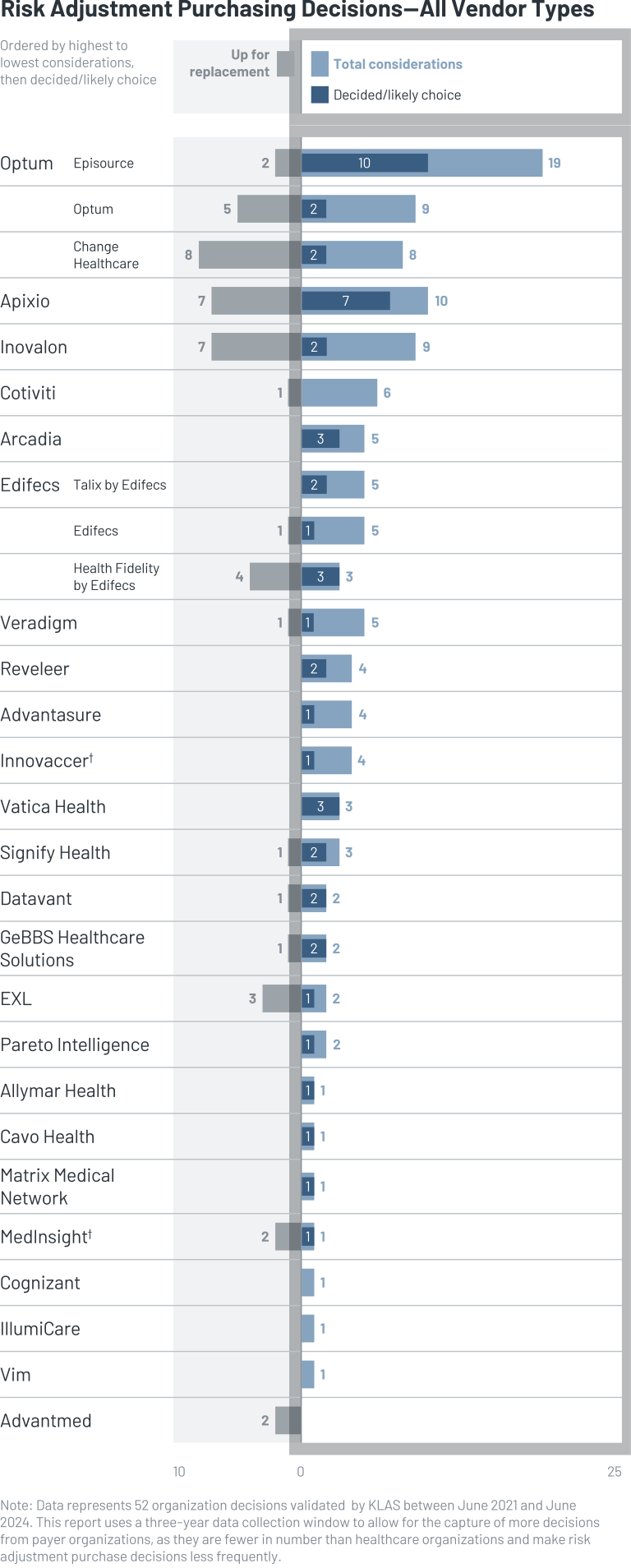
† Although Innovaccer and MedInsight primarily focus on data analytics and population health management, they are still considered by organizations looking for a risk adjustment solution. Click the links to view KLAS performance data for Innovaccer’s and MedInsight’s solutions.
BROAD RETROSPECTIVE VENDORS
Episource’s Purchase Energy Has Grown Consistently; Change Healthcare Customers Leave after Security Breach
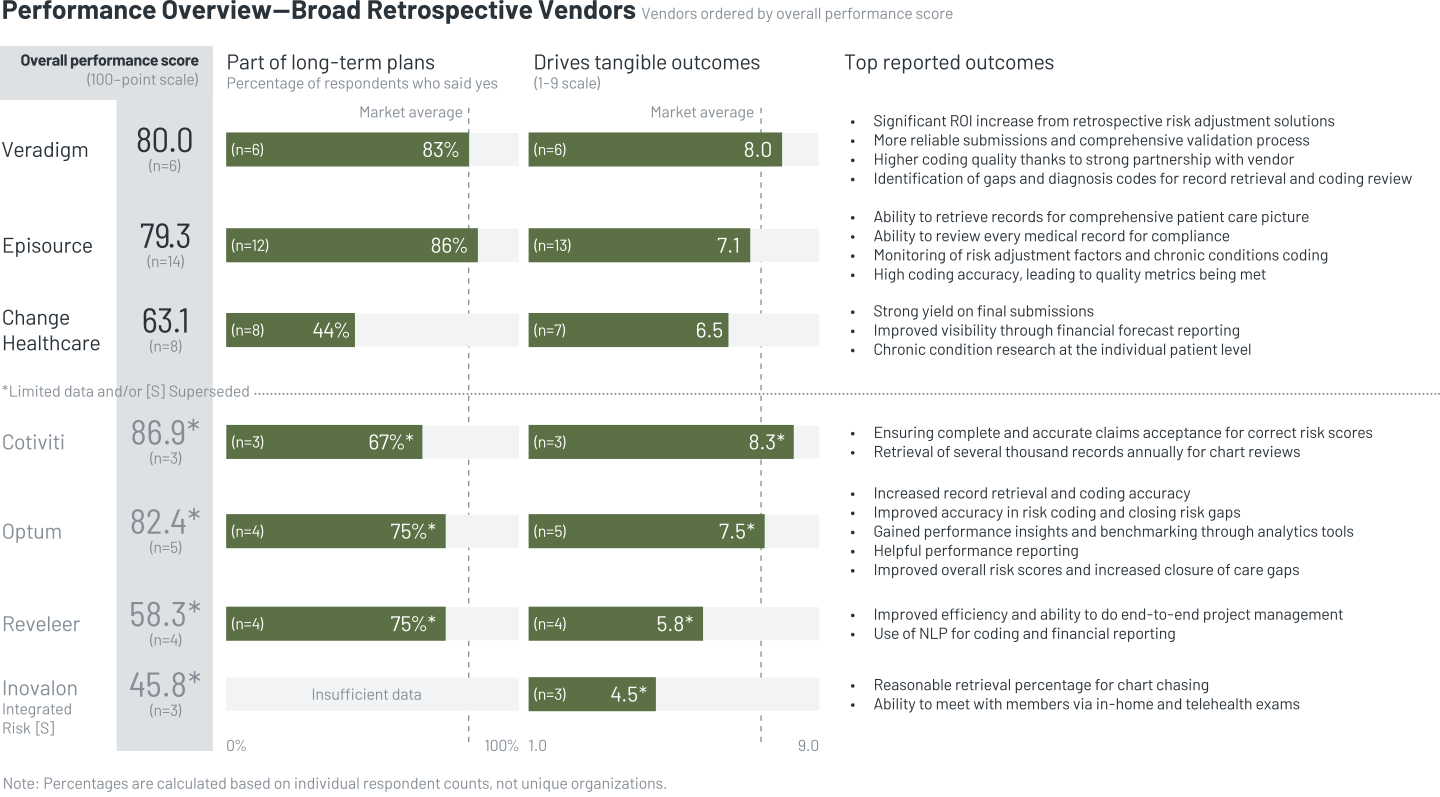
Optum has a broad range of risk adjustment solutions, including recently acquired solutions from Episource and Change Healthcare. Over the last few years, Episource has seen a consistent increase in considerations and selections; reasons for consideration/selection include broad enterprise capabilities, strong vendor reputation, and pricing structure. Among current customers, 75% of respondents are satisfied with the product and partnership. In contrast, some report misses around outcomes and support. Two interviewed customers plan to leave, mentioning quality and coding shortcomings. Optum and Change Healthcare are often considered for their broad capabilities yet are less frequently selected due to cost and integration. Both vendors were replaced by multiple interviewed customers, with respondents pointing to functionality and cost. Change Healthcare’s recent cybersecurity breach is another source of great concern, resulting in multiple interviewed Change Healthcare customers leaving to find a solution that better minimizes risk. Of note, these customers often report considering Optum’s and Episource’s products.
Inovalon* & Veradigm Considered but Chosen Less Frequently; Several Inovalon Customers Leave, Citing Unmet Expectations; Veradigm Stands Out for Submissions
In this report, purchase decisions for Inovalon* include considerations and selections of both Integrated Risk and Converged Risk. Inovalon, a large vendor in the payer market, is often considered for the broad capabilities, and two interviewed organizations selected the vendor for their analytics (e.g., risk score accuracy, quality measurement) and broad portfolio. Still, some potential customers ultimately don’t select the vendor because they perceive the capabilities as immature. All interviewed customers use the legacy Integrated Risk product, and many report is hasn’t worked as promised in the last few years. Several customers have replaced it, pointing to unresponsive support, overcharging, and lack of value. Others report being in long, difficult-to-leave contracts and scaling back their work with Inovalon to start working with other vendors. Of note, one customer reports support improvements and is optimistic about the future. Additionally, Inovalon released a new platform in March 2022 called Converged Risk—KLAS plans to evaluate customers’ experience with this in the future.
Organizations often consider Veradigm—whose solution includes technology acquired from Pulse8 and Babel Health—because of the broad retrospective and prospective capabilities offered within one platform. The interviewed organization that selected Veradigm says the vendor’s submissions expertise stood out. Those who ultimately chose other vendors say Veradigm’s coding and analytics didn’t meet expectations or sometimes duplicated work being done by other contracted vendors. Among current interviewed customers, five of the six would buy the solution again, saying the validation process for claims submissions is managed effectively. The most commonly expressed frustrations relate to reporting and dashboards (e.g., poor reliability, customizability, data quality). Cotiviti, Reveleer, and Advantasure are also considered for their broad capabilities—for more insights into purchase decisions and customer experience, see the Vendor Insights section in the full report.
*Limited data
MOSTLY RETROSPECTIVE-FOCUSED VENDORS
Apixio Selected by Multiple Organizations & Current Customers Report Improved Loyalty; Organizations That Replace Edifecs Often Cite Declining Product & Relationship Post-Acquisition
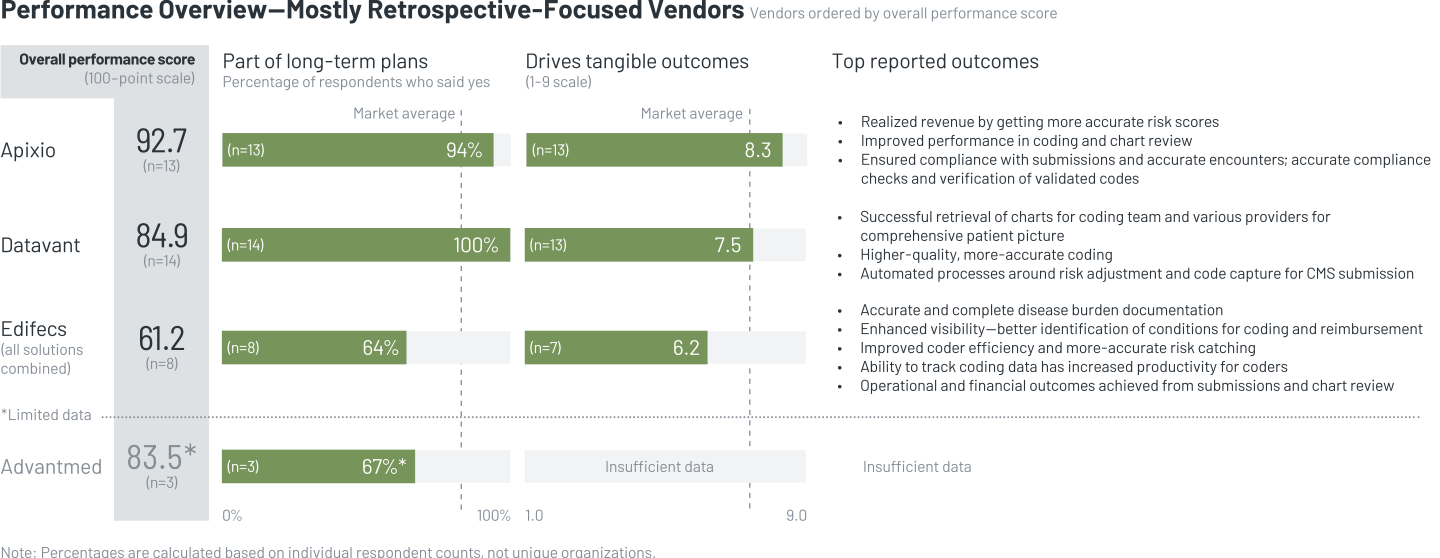
In 2021 and 2022, Apixio†—who is well known for their chart-review and coding-review capabilities—was frequently up for replacement; interviewed customers felt the solution’s retrospective capabilities were too narrow and wanted to reduce vendor contracts by going with a more comprehensive solution. Still, most of these customers appreciated Apixio’s partnership at the time. Since then, Apixio’s considerations and selections have increased as interviewed organizations have realized the solution’s value and broad capabilities. Five interviewed organizations chose Apixio in the last year thanks to the strong relationship and solution updates (including pre-visit capabilities). In particular, one organization who previously replaced Apixio has since returned, as they realized the vendor was driving outcomes necessary to their risk adjustment strategy. Generally, interviewed current customers are satisfied with Apixio, with 94% planning to stay with the vendor long term. Many appreciate Apixio’s proactivity and the executives’ strong involvement. The retrospective tools can effectively identify new diagnoses, validate claims, and ensure submission compliance.
Edifecs is frequently used for their chart-review and coding services, which include NLP capabilities and analytics. Since Edifecs acquired Health Fidelity and Talix in 2022, their purchase energy has declined. Though Edifecs’ solutions are considered, many organizations ultimately look elsewhere, as they feel other vendors have a proven ROI and stronger relationships. A few interviewed organizations have replaced the Health Fidelity solution, saying it was immature and had accuracy issues. Current customers in this report’s sample note the acquisition caused a loss of subject matter experts and a decline in product functionality. As a result, 36% say the vendor is not part of their long-term plans.
† In September 2024, Apixio was acquired by Datavant; the two vendors are measured separately in this report.
Datavant Chosen for Chart-Retrieval Expertise; Current Customers Note Easy Chart-Retrieval Process
Interviewed organizations consider and select Datavant (formerly Ciox Health) primarily for the chart-retrieval capabilities. Those who select the vendor appreciate that there are no minimum volume requirements for chart retrievals and that the vendor’s reputation is strong. 100% of interviewed customers plan to stay with Datavant for the long term. These customers most frequently use Datavant’s chart-retrieval capabilities and sometimes their chart-review and coding capabilities. Most are satisfied, noting that the vendor is flexible and willing to partner with customers to meet their needs. Datavant’s digital retrieval capabilities and their relationship with provider organizations facilitate an easy chart-retrieval process. Common concerns include increased pricing midcontract and missed promises around execution, especially for large-volume retrieval requests. Advantmed* is frequently used for chart retrieval and coding, and customer feedback about the solution is mixed. One organization is satisfied with the chart-retrieval rates, while another says the solution has bugs and breaks. Two interviewed organizations replaced Advantmed, citing poor system performance and the vendor not releasing their new platform as quickly as expected.
*Limited data
ANALYTICS VENDORS
EXL’s Analytics Facilitate Decision-Making for Customers; Arcadia Provides Retrospective & Prospective Analytics, Receives Mixed Feedback on Integration
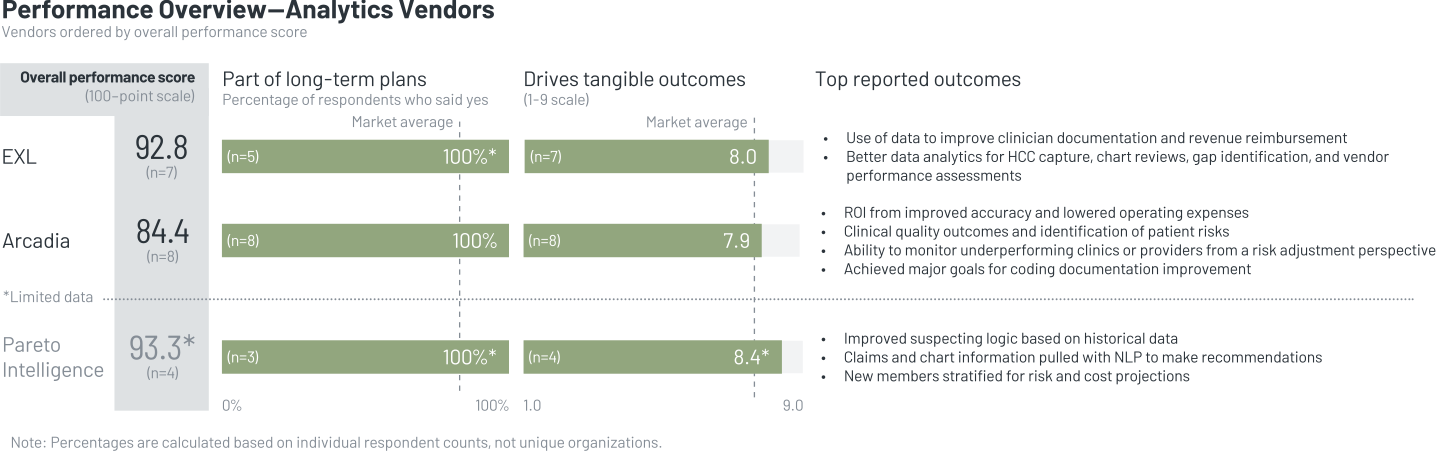
Organizations that consider EXL say the vendor is affordable and newer to the market, and one interviewed organization selected the vendor after receiving a customer recommendation. Two interviewed organizations that plan to replace EXL spent more time than expected trying to implement the solution and feel the vendor oversold its capabilities. Current customers appreciate how promptly the vendor delivers data. The analytics and day-to-day support are consistently praised, and the system is noted for its functionality and ease of use. It also supports decision-making and improves revenue reimbursement from claims management services. Mentioned opportunities for improvement include having more proactive communication, product improvements (e.g., visual appearance is seen as outdated), and integration with a wider range of EHRs, especially those from less-common vendors. Arcadia provides both retrospective and prospective analytics capabilities. Five interviewed organizations considered the vendor, and three chose them for their comprehensive product suite (includes capabilities for Medicare HCC, coding, and quality metrics). Current Arcadia users appreciate the ability to monitor performance and identify care gaps, as these functionalities improve accuracy, coding, and compliance. The reporting is also valued for its retrospective insights, along with its prospective insights at the point of care. Feedback on EHR integration is mixed. Many users have successfully integrated the solution into their workflows, which has facilitated better task execution; others believe the EHR integration is limited, saying the bidirectional write-back process needs to be improved. Additionally, some customers mention the system is clunky, has a steep learning curve, and sometimes requires workarounds due to module changes and upgrades. Regarding support, Arcadia is seen as responsive to custom requests and feedback, though respondents would like the vendor to execute tasks in a timelier manner.
The one interviewed organization that selected Pareto Intelligence* cites the solution’s ability to run analytics for their prospective risk program as their reason for selection. Another organization that considered without selecting said the product wasn’t as cohesive as others. Interviewed customers feel Pareto Intelligence is proactive, with many highlighting the vendor’s willingness to adjust pricing and provide tailored solutions with strong analytics. In particular, the vendor’s ability to ingest risk adjustment data in-house has allowed customers to manage data more effectively. A few customers note the interoperability with various EHRs could be improved.
*Limited data
Mostly Prospective-Focused Vendors
Vatica Health’s Prospective Solution Identifies Gaps at Point of Care
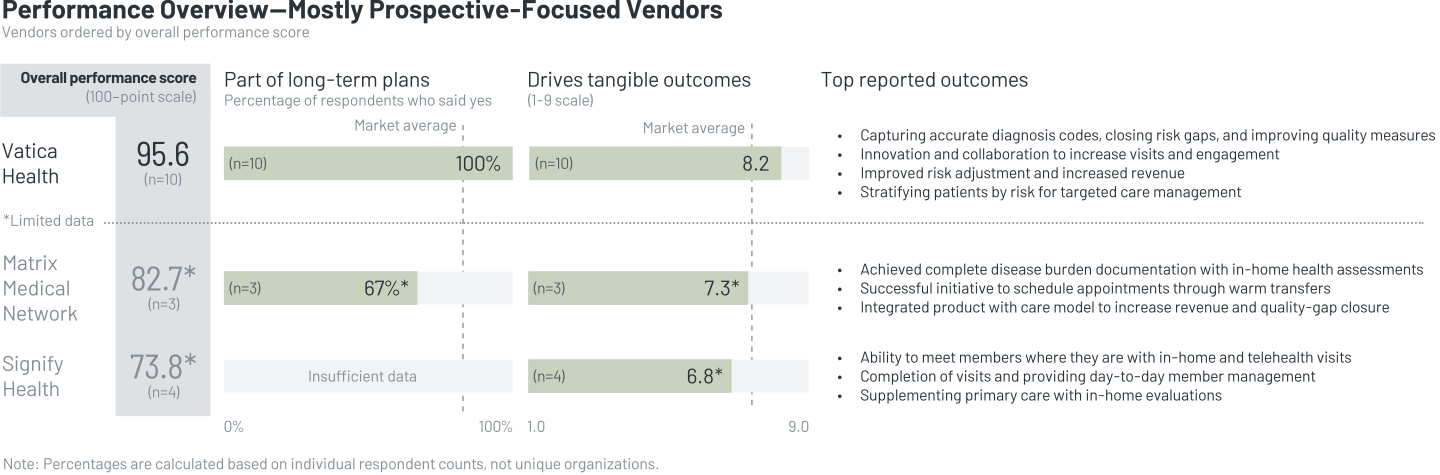
Vatica Health's solution allows providers to administer health assessments at the point of care and identify diagnosis gaps and suspected conditions. The vendor is often chosen due to their strong relationships with health plans and provider organizations. Current customers report an excellent experience, highlighting Medicare risk adjustment, coding compliance, the ease of use, and improved patient care through enhanced data retrieval and visibility. The solution is embedded in the workflow so that physicians can use it at the point of care, and this physician-centric approach facilitates the implementation and adoption of value-based care. Customer respondents say Vatica Health’s leadership and product development teams are both responsive and innovative, particularly around workflow integration. Additionally, the support and training teams are highly regarded thanks to their hands-on approach and excellent customer service.
Matrix Medical Network* & Signify Health*—Vendors Focused on In-Home Health Assessments—Close Quality Care & Risk Gaps despite Shortcomings
Both Matrix Medical Network and Signify Health are considered for their focus on in-home health assessments, as they are seen as large players in that market. One interviewed organization chose Matrix Medical Network* because they came across as a strong partner that could convert more scheduled appointments into completed assessments than the organization’s previous vendor. Current customers of Matrix Medical Network say the vendor is proactive and helps customers plan ahead to close care gaps. The vendor has a high conversion rate because they efficiently schedule and complete in-home assessments as part of customers’ outreach plans. Two customers say the vendor could advance their technology by making chart copies accessible via a portal instead of having users generate and print PDFs. Signify Health* was considered by three interviewed organizations. Two of these organizations chose the vendor because they felt Signify Health is the best at what they do. The third didn’t select Signify Health, as they wanted a broader risk adjustment solution. One interviewed organization replaced the vendor, saying conversion rates for assessments were lower than expected. Current Signify Health customers report mixed experiences. Those who are highly satisfied note the vendor helps complete assessments via in-home and telehealth visits, closing risk and quality gaps. In contrast, less-satisfied respondents are frustrated with the lack of reporting and hit-or-miss responsiveness. One smaller customer feels they aren’t receiving sufficient help, saying Signify Health neglects small customers in favor of larger ones.
*Limited data
About This Report
Data for this report comes from two sources: (1) KLAS Decision Insights data and (2) KLAS performance data.
KLAS Decision Insights Data
All references in this report to organizations’ purchasing motivations come from KLAS’ Decision Insights data. Since 2017, KLAS has been gathering information as to which vendors are being replaced, considered, and purchased and what factors drive these decisions. KLAS Decision Insights data does not represent a comprehensive census or win/loss market share study. Rather, it is intended to help organizations understand which vendors have market energy and why.
The data set in this report comes from 52 organizations that are making or have recently made a risk adjustment purchase decision validated by KLAS from June 2021 to June 2024. This report uses a three-year data collection window to allow for the capture of more decisions from payer organizations, as they are fewer in number than healthcare organizations and make risk adjustment purchase decisions less frequently.
KLAS Performance Data
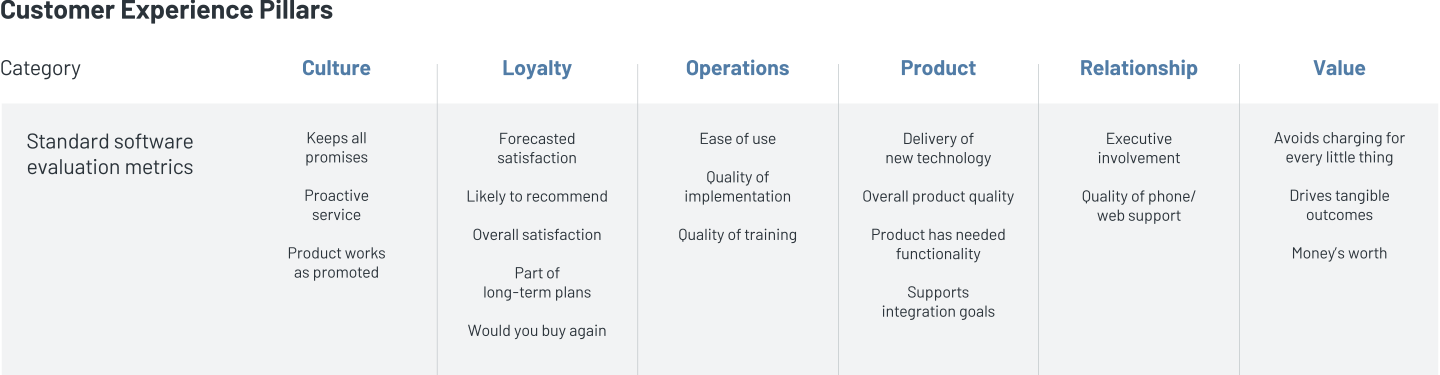
Each year, KLAS interviews thousands of healthcare professionals about the IT solutions and services their organizations use. For this report, interviews were conducted over the last 12 months using KLAS’ standard quantitative evaluation for healthcare software, which is composed of 16 numeric ratings questions and 4 yes/no questions, all weighted equally. Combined, the ratings for these questions make up the overall performance score, which is measured on a 100-point scale. The questions are organized into six customer experience pillars—culture, loyalty, operations, product, relationship, and value.
Sample Sizes
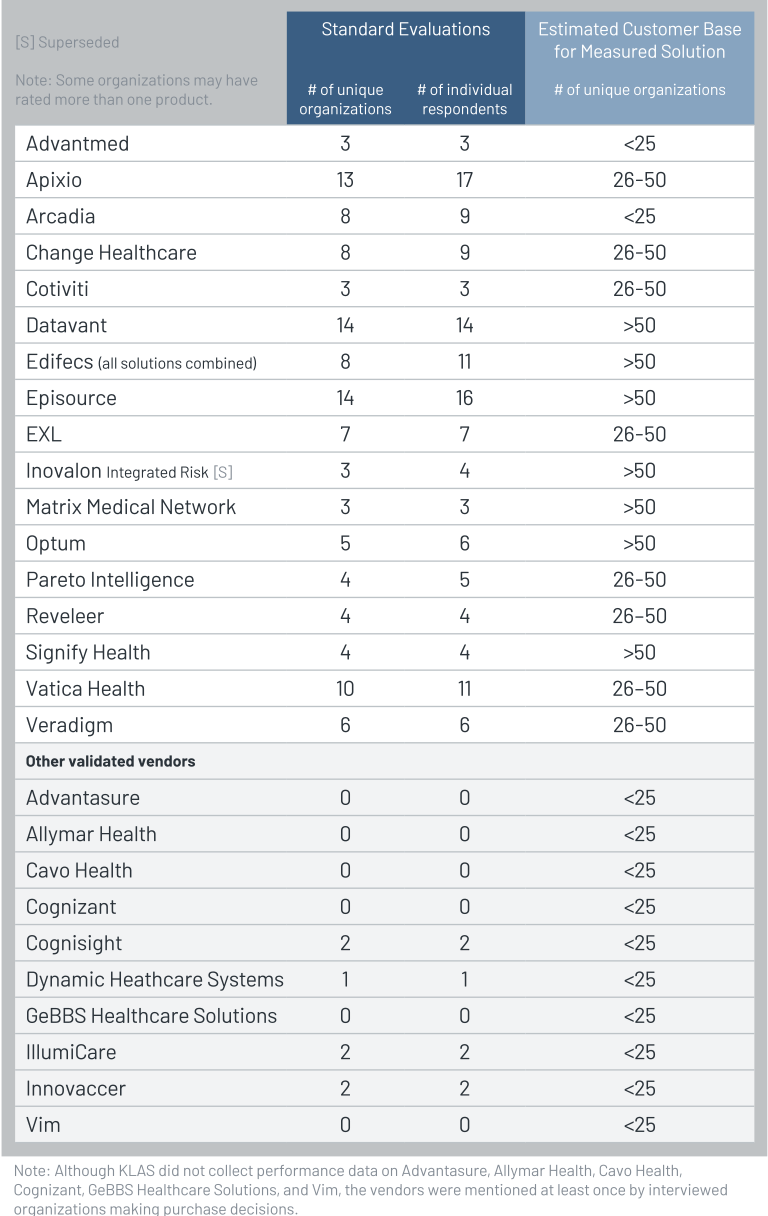 Unless otherwise noted, sample sizes displayed throughout this report (e.g., n=16) represent the total number of unique customer organizations interviewed for a given vendor or solution. However, it should be noted that to allow for the representation of differing perspectives within any one customer organization, samples may include surveys from different individuals at the same organization. The following table shows the total number of unique organizations interviewed for each vendor or solution as well as the total number of individual respondents.
Some respondents choose not to answer particular questions, meaning the sample size for any given vendor or solution can change from question to question. When the number of unique organization responses for a particular question is less than 6, the score for that question is marked with an asterisk (*) or otherwise designated as “limited data.” If the sample size is less than 3, no score is shown. Where textual content relies on limited data, the vendor name is marked with an asterisk. Note that when a vendor has a low number of reporting sites, the possibility exists for KLAS scores to change significantly as new surveys are collected.
Product Designations Used in This Report
- Superseded [S]: Legacy solutions or other solutions that are not generally marketed or whose marketing is superseded by another solution in the same category.

Writer
Sarah Brown

Designer
Breanne Hunter

Project Manager
Andrew Wright
This material is copyrighted. Any organization gaining unauthorized access to this report will be liable to compensate KLAS for the full retail price. Please see the KLAS DATA USE POLICY for information regarding use of this report. © 2026 KLAS Research, LLC. All Rights Reserved. NOTE: Performance scores may change significantly when including newly interviewed provider organizations, especially when added to a smaller sample size like in emerging markets with a small number of live clients. The findings presented are not meant to be conclusive data for an entire client base.