KLAS Contact

Contact KLAS
Contact KLAS
 2026 BEST IN KLAS
Preferences
Related Series

2026

2025

2022

2022

2021

2020

2018

2016

2016

2015

2012

2009
Related Segments

Enterprise Imaging 2024
Vendors and Providers Driving Market Progress

Author
Monique Rasband

Author
Sidney Tate
Healthcare organizations are very focused on enterprise imaging (EI) advancement. Two-thirds of the organizations interviewed by KLAS about future EI plans are likely to expand their VNA image storage or extend their universal viewer (UV) to additional service lines in the next two years. Organizations are also increasingly taking advantage of promising new technology like artificial intelligence (AI) and the cloud. Meanwhile, both vendors and healthcare organizations face budget and staffing shortages and rapidly changing market needs. This report (1) examines how vendors stack up in meeting clients’ ever-growing EI needs and (2) shares a broader analysis of progress in the EI market.
KLAS defines enterprise imaging as the ability to store and/or view images across the enterprise in one place from more than one service line and/or from multiple PACS or long-term storage solutions. This report focuses on VNA and UV solutions; data on image exchange solutions can be found on the KLAS website.
VENDOR PERFORMANCE
AGFA HealthCare Makes Relationship & Delivery Strides; Fujifilm Continues High VNA Satisfaction; Merge by Merative Customers Seeing More Engagement
AGFA HealthCare customers report the vendor has made significant improvements and stepped up as a partner in EI in the last year, resulting in AGFA HealthCare’s UV being awarded Best in KLAS in 2024. Relationships have been strengthened through engagement and strategic conversations with account managers and executives. Respondents also note that support resources are more knowledgeable and responsive and that project management is stronger during implementations and upgrades. The organizations that have moved to the most recent versions (8.2 or newer) say AGFA HealthCare is delivering on their promises and making their VNA and UV features more robust. Some customers on older versions of Enterprise Imaging express ongoing dissatisfaction from stability and functionality issues (especially with the VNA), and some feel the VNA is overly complex and difficult to learn. Still, most generally agree AGFA HealthCare is moving in the right direction. Fujifilm continues a pattern of consistent delivery, particularly to VNA customers—in 2024, Synapse VNA was awarded Best in KLAS for the fifth consecutive year. Customers report Fujifilm is continually improving their VNA with more robust image management features and better ease of use. Support personnel are knowledgeable and can quickly resolve problems, and Fujifilm executives are involved in strategic conversations with customers. With their UV (solely validated in use with Synapse PACS or VNA), Fujifilm has made less progress; while the product meets most interviewed customers’ basic needs for referential viewing, some feel it lacks the robust functionality they expect from a UV. (Continued after chart)
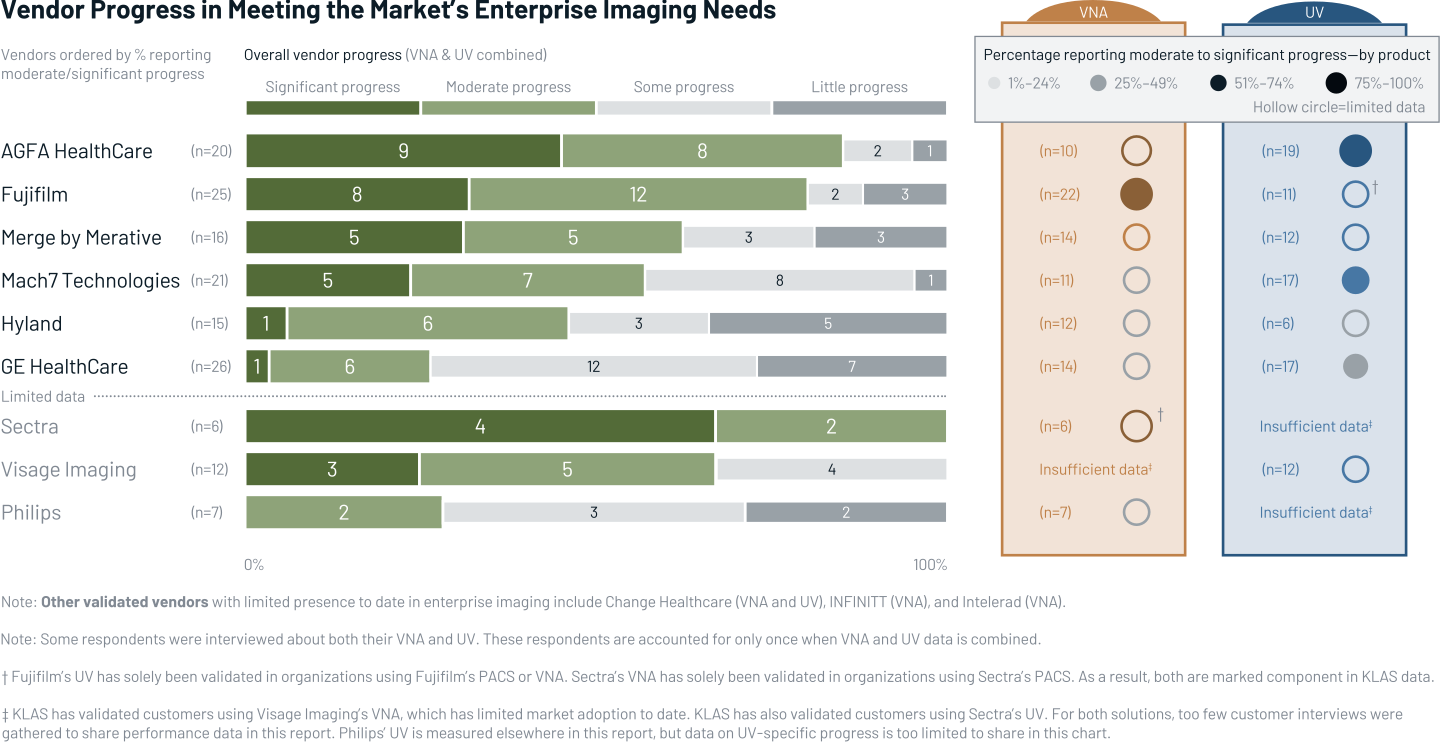
Since the spinoff from IBM, Merge by Merative customers report the vendor has significantly boosted engagement and support. Respondents cite better flexibility and communication from the Merge support team and more consistent strategic meetings with account managers and executives. Clients also highlight expanding product capabilities, improvements to the GUI, stabilization of the VNA’s back end, and more robust diagnostic features added to the UV. Smaller organizations (<500 beds) tend to have a more varied experience with support for the VNA, which some say can be difficult to use. Also, customers often say while Merge has improved, they still want to see faster technology delivery.
With Growing EI Presence, Visage Imaging Gains Traction & Drives High Satisfaction with Diagnostic Viewer; Sectra* VNA Customers Give the Platform High Marks
Visage Imaging has been rapidly gaining market share with their Visage 7 UV, most commonly used for radiology diagnostic viewing. Visage also offers a VNA, though adoption is limited; most interviewed UV customers use a third-party archive on the back end. Radiologists consistently report high satisfaction with the UV, highlighting the speed, reliability, and robust tool sets for diagnostic reading. Respondents see Visage as highly innovative with a proactive, knowledgeable support team. Broader use outside radiology is more limited, and customers want more development for other specialties. There are some reports of growing pains (e.g., slower response times and one-off delivery bumps for new customers), though overall satisfaction remains high.
Interviewed Sectra* customers using the VNA (all of whom also use Sectra PACS) are highly satisfied with the changes and innovation they have seen in the last year. Support was restructured into regional groups, resulting in closer relationships and faster turnaround times. Respondents also say Sectra has made advancements with cloud-based technology. The VNA supports a range of third-party connections across service lines, and Sectra’s diagnostic offerings for areas like digital pathology and ophthalmology are a plus for organizations that have gone all in with Sectra’s EI solutions. Sectra offers a UV (UniView), though KLAS hasn’t validated enough customers to share performance data.
*Limited data
Varied Experiences, Less Progress with GE HealthCare, Hyland & Mach7 Technologies
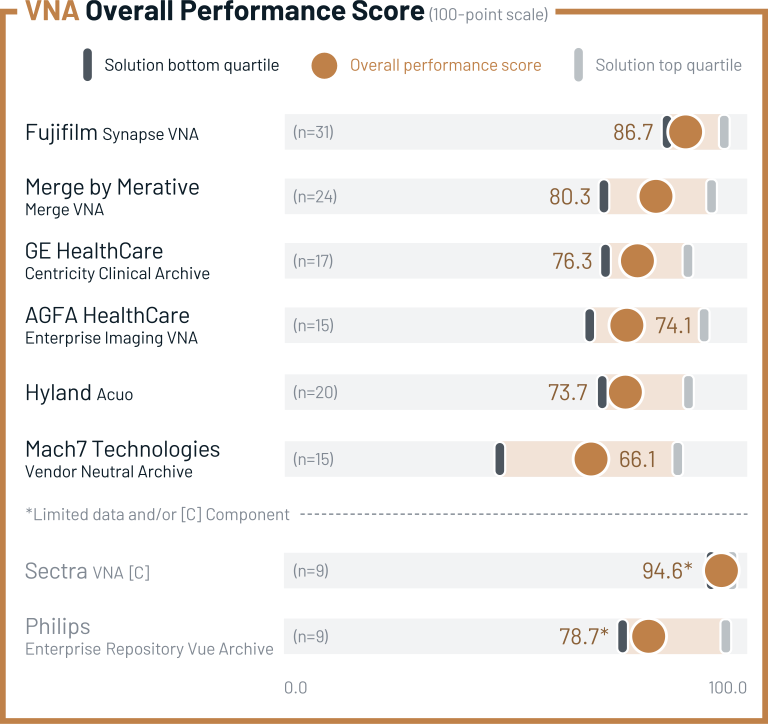
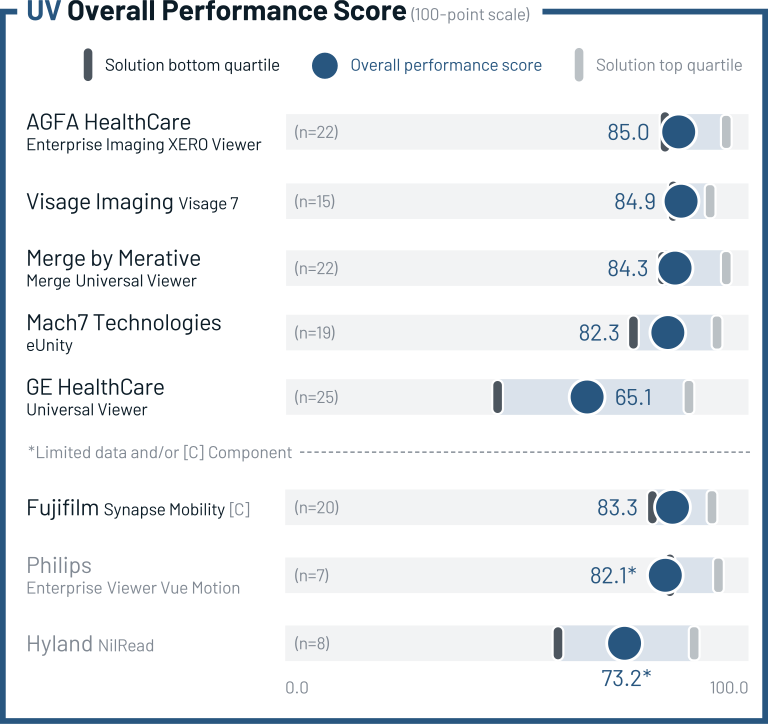
GE HealthCare has made some slow improvements in the last two years (particularly with their VNA), though the overall experience remains inconsistent (especially for the UV). Interviewed customers report efforts to improve support and say GE HealthCare’s resources are friendly, knowledgeable, and increasingly quick to respond to issues. In terms of innovation, many respondents feel GE HealthCare is too slow. Customers frequently report issues during the sales and implementation processes; upgrades are often delayed, siloed information across GE HealthCare’s teams can create gaps in communication, and unclear contracts frequently result in unexpected add-on charges. Notably, larger customers (1,000+ beds) tend to experience product issues more acutely than smaller organizations.
Following reductions in Hyland’s workforce during 2023, customers report a more variable experience. On the product side, customers feel the VNA and UV are both strong, neutral products that support organizations’ EI strategies. However, the support has grown inconsistent—some customers say Hyland remains highly engaged and responsive, while others report excessive wait times and knowledge gaps, which have resulted in some poor implementation and upgrade experiences. Respondents generally see Hyland as reactive, demonstrating little innovation, and seeming to have decreased focus on their imaging products.
Satisfaction among Mach7 Technologies’ customer base is mixed. Overall, the UV is rated higher than the VNA. Longer-term customers, often using the VNA or UV as standalone solutions, feel the products are stable, neutral, and capable of meeting their EI needs. These respondents also say that the support people have become more knowledgeable and responsive and that vendor executives have been involved in helping organizations expand their EI strategies. In contrast, a number of organizations that have gone live in the last five years—particularly those that implemented both the VNA and UV (in some instances to replace their PACS)—report poorer experiences. They cite system latency, workflow issues, and difficulty getting needed support. Across customers, Mach7 is seen as slow to innovate with the VNA, though there has been some progress in expanding UV functionality.
Interviewed Philips* customers describe their VNA and UV as reliable, easy to use, and capable of supporting images across a range of service lines. All respondents are smaller organizations that were live with the products for multiple years under Carestream before the Philips acquisition. Support, especially for the VNA, varies—some clients describe great contacts who resolve issues quickly, and others report significant delays and slow delivery of upgrades. While satisfied overall, interviewed customers feel Philips has been slow to advance the products since acquiring them from Carestream.
*Limited data
VNA and UV Usage
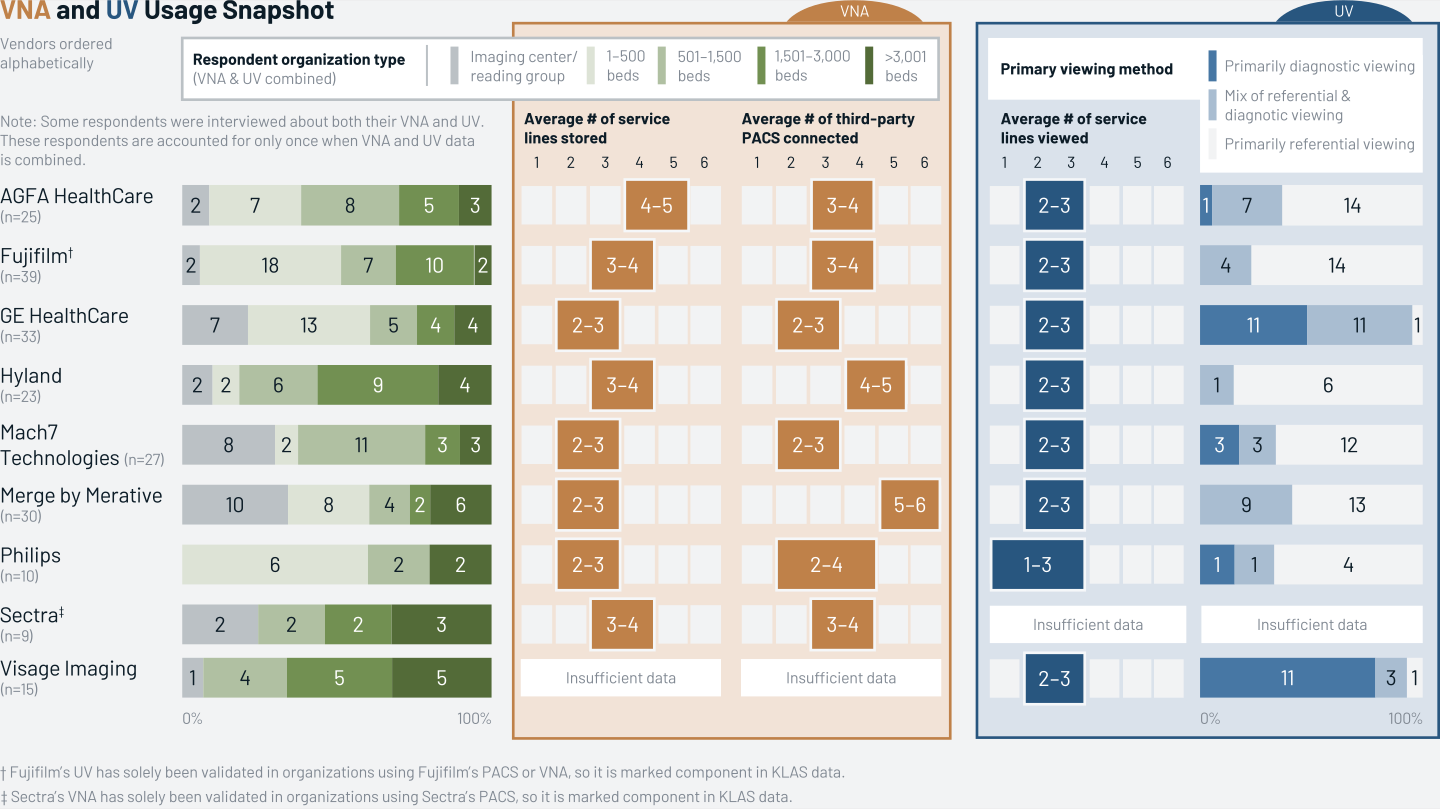
For VNA, AGFA HealthCare, Fujifilm, and Merge continue to lead the market in supporting expansive enterprise imaging strategies. AGFA HealthCare, Hyland, and Fujifilm store images from the widest range of service lines across respondents; AGFA HealthCare customers in particular have expanded their strategies in recent years. Merge stands out in the breadth of third-party PACS solutions their systems connect with. The limited number of validated Sectra* customers also store a wide range of images in the VNA.
Use of UVs differs across vendors. Visage Imaging’s and GE HealthCare’s UVs are primarily used for diagnostic reading—Visage mostly in radiology and mammography and GE HealthCare in radiology and cardiology. The AGFA HealthCare and Merge UVs are largely used referentially, though a number of customers leverage them for diagnostic reading in specific situations (e.g., remote or backup reads). Mach7 Technologies’ and Philips’* UVs are likewise primarily used referentially with limited backup use for diagnosis, though several organizations that selected Mach7’s VNA and UV to replace their PACS do use the eUnity UV for primary diagnostic reads. Fujifilm’s and Hyland’s UVs are used almost exclusively referentially by interviewed clients.
*Limited data
MARKET TRENDS
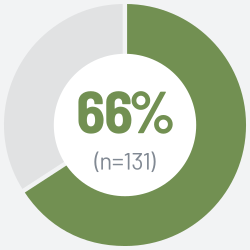 Two-thirds of interviewed organizations plan to expand their storage and/or viewing to additional service lines in the next two years. Those with plans to expand VNA storage ( 71% of respondents) are more common than those with plans to expand UV usage (54%).
Service Line Expansion and Energy
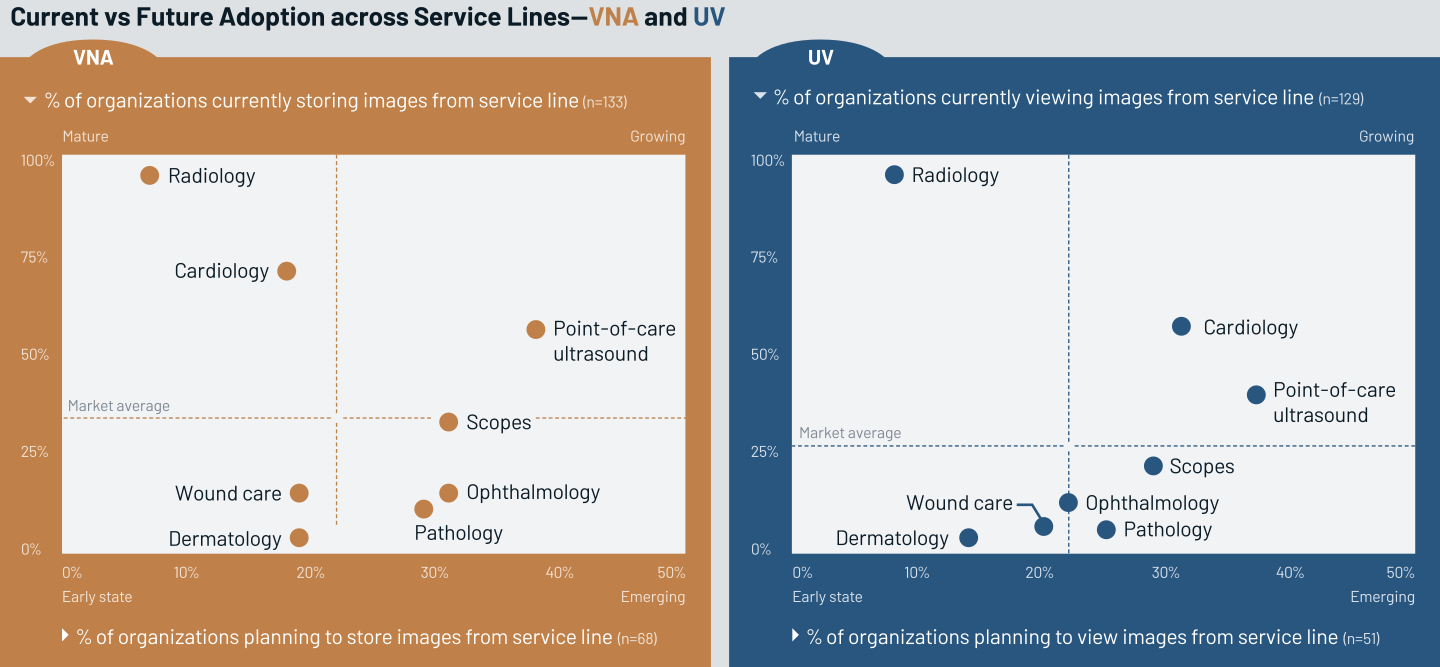
Most organizations live with EI store and view images from radiology and cardiology; many are looking to expand their viewing of cardiology to incorporate more study types. Point-of-care ultrasound (POCUS) has the highest future-looking energy, as many organizations are in early stages of incorporating POCUS images and hope to do much more in coming years. Scope imaging (GI, ENT, or surgery) currently has low EI adoption but is a high priority for future expansion. EI for pathology has gained significant interest over the last few years, though related adoption of digital pathology is still in early stages. Ophthalmology is also frequently considered for future storage expansion. Areas such as wound care, dermatology, and dental are further out in organizations’ strategies.
EI Priorities for the Next Two Years
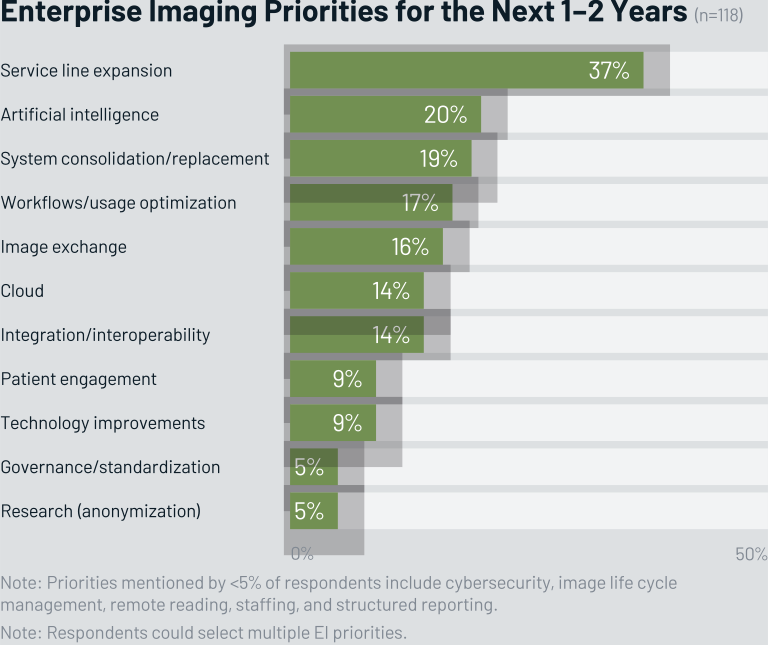
Organizations’ top EI priorities for the next two years include both expanding technologies/usage and optimizing existing tools and processes. Over one-third plan to expand across more service lines, centralizing storage and enabling broader viewing access. AI adoption was mentioned by one in five respondents, though nearly all are in early stages with their AI strategy; many are looking for marketplace solutions to ease adoption and implementation. Moving to the cloud (often for storage, with some consideration of cloud-based applications) is another top priority for organizations looking to lighten their technology footprint. Other respondents focused on optimizing workflows and system usage frequently mention the potential of workflow orchestrators/unified worklists. On the optimization side, many interviewed organizations plan to consolidate systems to simplify their technology stack. Other common priorities include improving patient image access (often through patient portal integration) and updating technology to improve performance and stability.
About This Report
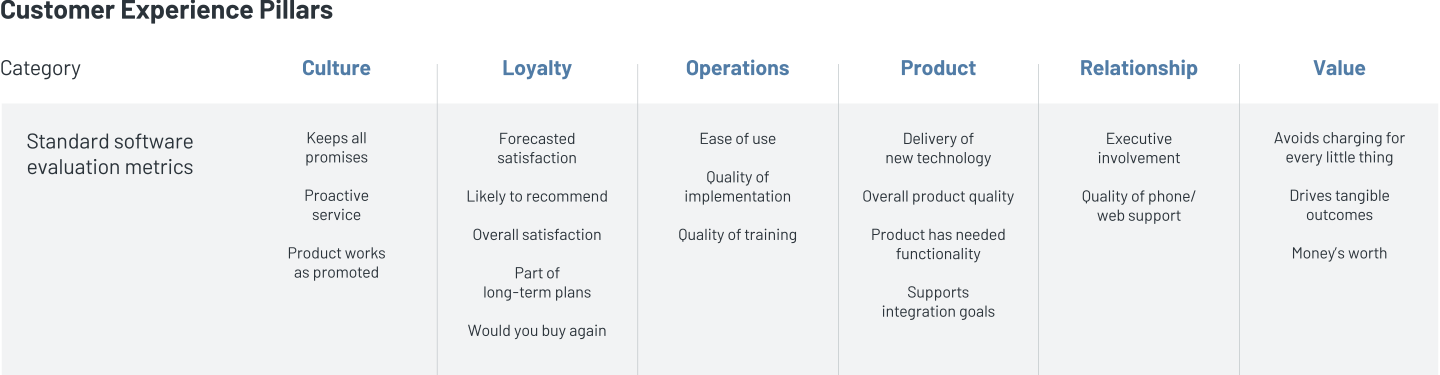
Each year, KLAS interviews thousands of healthcare professionals about the IT solutions and services their organizations use. For this report, interviews were conducted between December 2022 and December 2023 using KLAS’ standard quantitative evaluation for healthcare software, which is composed of 16 numeric ratings questions and 4 yes/no questions, all weighted equally. Combined, the ratings for these questions make up the overall performance score, which is measured on a 100-point scale. The questions are organized into six customer experience pillars—culture, loyalty, operations, product, relationship, and value.
To supplement this performance data, KLAS also asked interviewed clients the following questions specific to enterprise imaging:
- Are you planning to connect any additional service lines to your VNA or universal viewer in the next 1–2 years? If so, which?
- What other enterprise imaging problems are you trying to solve in the next 1–2 years?
- How well is your VNA/universal viewer vendor progressing to meet the market’s enterprise imaging needs?
Sample Sizes
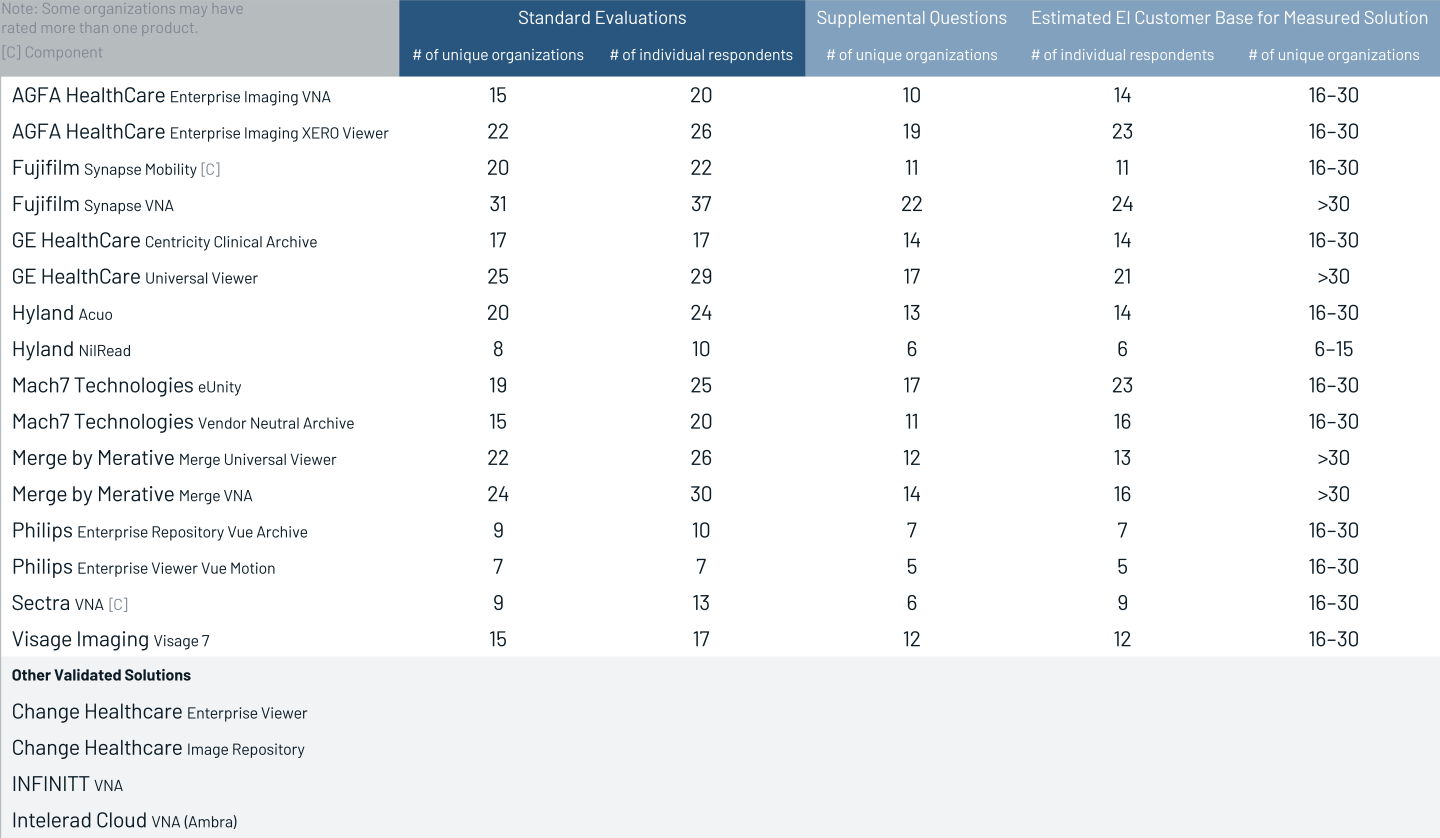
Unless otherwise noted, sample sizes displayed throughout this report (e.g., n=16) represent the total number of unique customer organizations interviewed for a given vendor or solution. However, it should be noted that to allow for the representation of differing perspectives within any one customer organization, samples may include surveys from different individuals at the same organization. The table below shows the total number of unique organizations interviewed for each vendor or solution as well as the total number of individual respondents.
Some respondents choose not to answer particular questions, meaning the sample size for any given vendor or solution can change from question to question. When the number of unique organization responses for a particular question is less than 15, the score for that question is marked with an asterisk (*) or otherwise designated as “limited data.” If the sample size is less than 6, no score is shown. Where textual content relies on limited data, the vendor name is marked with an asterisk. Note that when a vendor has a low number of reporting sites, the possibility exists for KLAS scores to change significantly as new surveys are collected.
Product Designations Used in This Report
Component [C]: Product that typically includes most but not all components that comprise a complete system or that serves only a subset of the market.

Writer
Amanda Wind

Designer
Breanne Hunter

Project Manager
Sydney Toomer
This material is copyrighted. Any organization gaining unauthorized access to this report will be liable to compensate KLAS for the full retail price. Please see the KLAS DATA USE POLICY for information regarding use of this report. © 2026 KLAS Research, LLC. All Rights Reserved. NOTE: Performance scores may change significantly when including newly interviewed provider organizations, especially when added to a smaller sample size like in emerging markets with a small number of live clients. The findings presented are not meant to be conclusive data for an entire client base.