KLAS Contact

Contact KLAS
Contact KLAS
 2026 BEST IN KLAS
Preferences
Related Series

2026

2025

2023

2022

2021

2020

2019

2018

2017

2016

2015

2014
Related Segments

Global (Non-US) EHR Market Share 2024
Large Regional Decisions Impacted a Broad Number of Hospitals

Author
Everton Santos

Author
Jonathan Christensen
Healthcare organizations across the world are continuing to prioritize EHR initiatives; although the total number of EHR purchase decisions finalized in 2023 was slightly below the average of recent years, the number of hospitals impacted by the contracts is at a five-year high thanks to several large regional decisions being finalized. In 2023, KLAS validated 186 EHR purchase decisions impacting 734 hospitals and over 128,000 beds. KLAS validated 28 different EHR vendors selected in 35 different countries and territories. Based on the validated EHR decisions, Europe and Oceania were the most active markets, followed by Latin America and Canada.
Dedalus Adds the Most Beds; Epic Has Most Hospital Wins & Largest Global EHR Market Share among Measured Vendors
Dedalus had a strong year and was selected in the largest number of contracts thanks to high energy and increased investment in the Italian market, where numerous health systems (including three large regional groups) moved to the modular C4C platform. In Latin America, the go-forward Dedalus Care platform received its first clients, including a public ministry in Panama. Across all regions, over 30,000 beds were impacted by EHR decisions in Dedalus’ favor. Epic had the most new hospital wins in 2023, thanks primarily to two contracts finalized in Canada and Australia. The state of New South Wales (NSW) contracted to implement Epic in 191 hospitals (most are replacing Oracle Health). Including their US market share, Epic now has the largest total EHR market share (by number of hospitals) of any vendor in this research. Oracle Health—who gained the third-highest number of hospitals—was selected in a relatively high number of new decisions. They continue to have a strong presence in Canada, where the province of Nova Scotia selected them, and in the UK, where several large trusts contracted with them. A large private group in the Middle East also selected Oracle Health. In Ontario, an existing MEDITECH client migrated to Expanse, and the vendor also had wins in the private sector among multihospital groups in Australia, Ireland, Kenya, and Tanzania.
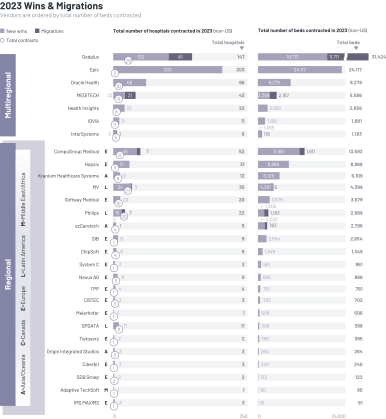
Regional Vendors CompuGroup Medical & Hopsis Saw Strong Growth in Europe; Kranium & ezCaretech Led in Asia, MV & Philips in Latin America
As in previous years, Europe led in global EHR activity due to countries like Italy and Germany increasing investment in healthcare technology. CompuGroup Medical’s strong year was driven by two large private groups selecting the EHR for rehab hospitals. Several nonprofit groups in Germany also chose medico for their acute care hospitals. Hopsis saw continued growth in their home country, France—one large territorial hospital group (GHT) selected the EHR as their go-forward solution, and two other organizations are consolidating onto the platform. In India, Kranium Healthcare Systems is establishing their presence in the EHR market, with several standalone hospitals, large hospitals, and multihospital groups selecting them. In Latin America, MV and Philips were still the most-selected vendors. MV was the most selected in Brazil, being preferred by large multihospital groups. Philips had strong consideration energy among midsize and standalone hospitals in Brazil; they were also selected by a group in Mexico, where their presence is growing. Softway Medical won two GHT contracts—one in France involving a psychiatric hospital group and one in a French Overseas Territory. Also in France, an existing GHT client of Softway chose to expand the EHR to other hospitals; smaller private hospitals also selected the vendor. ezCaretech’s cloud solution was selected by a large hospital group and two small hospitals in the vendor’s home country of South Korea. SIB won a GHT contract in a French Overseas Territory.
Europe
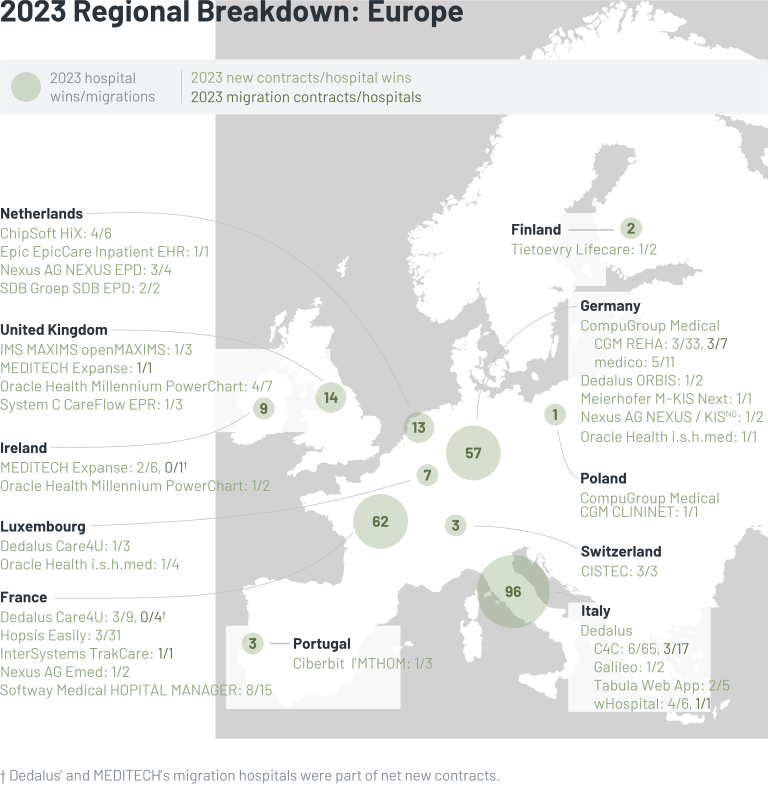
Large Decisions Finalized for Dedalus, CompuGroup Medical, Hopsis & Softway Medical
Southern Europe
Significant investment from the PNRR (Piano Nazionale di Ripresa e Resilienza) program has driven a large portion of EHR activity in Italy. KLAS validated 17 finalized contracts in favor of Dedalus. Three large regional consortia chose to move forward with the C4C platform. Several other health regions and private groups in Italy selected other Dedalus solutions like wHospital and Tabula Web App. GPI (not covered in this report) was selected as the go-forward platform in Lombardia, but this win is not charted as KLAS does not have full visibility into the number of hospitals impacted.
DACH
KLAS validated 18 EHR contracts in DACH countries. While purchase energy slowed down in the region among acute care hospitals, the rehab market was particularly active. In Germany, two large private groups selected CompuGroup Medical for their rehab hospitals, which account for most of the 40 hospitals moving to CGM REHA. Two multihospital groups and three standalone hospitals also selected medico. Three hospitals in Switzerland contracted with CISTEC. Dedalus, Meierhofer, Nexus AG, and Oracle Health were each selected once.
France
GHTs continue to significantly drive EHR activity, as over half of the hospitals impacted by purchase decisions in France are tied to a GHT. The three major GHT decisions finalized in 2023 went in favor of Hopsis. Softway Medical and Dedalus were also selected for expansions within a GHT; outside of this, most of these vendors’ purchase energy was in the private sector—a departure from previous years. Additionally, Nexus AG was selected by a small private group, and an ESPIC (établissement de santé privé d’intérêt collectif) migrated to InterSystems.
UK & Ireland
EHR investment in the UK ramped up in the past year. Although EHR consolidation across integrated care systems (ICSs) is frequently discussed, most finalized decisions were made by trusts that had no enterprise EHR in place. Of the five public trusts that made decisions, four selected Oracle Health (two will connect to instances from neighboring trusts). In Ireland, two maternity hospitals joined the Oracle Health maternity record program. MEDITECH had an active year in the private sector—two groups in Ireland and one in England selected the vendor. The other public trust in England that made a decision selected System C. A private group in England chose to extend IMS MAXIMS to three small hospitals.
Northern Europe & Benelux
The Netherlands was the most active country across Northern Europe and Benelux thanks to purchase energy from rehab groups. ChipSoft was selected by two such groups for their inpatient environment. Another two rehab groups migrated to the go-forward platform from local vendor SDB Groep (who acquired Avinty). Two acute care hospital groups also made decisions—a three-hospital group selected ChipSoft and a large university hospital selected Epic (both replacing Oracle Health i.s.h.med). In Luxembourg, due to canceled contracts with French vendor Maincare, two groups opted to revert to their existing solutions from Dedalus and Oracle Health. Additionally, a wellbeing services group in Finland chose Tietoevry.
Asia/Oceania
Epic Most Widely Contracted Vendor in Oceania after NSW Selection; Kranium & IQVIA Selected by Private/Nonprofit Groups in Asia
Oceania
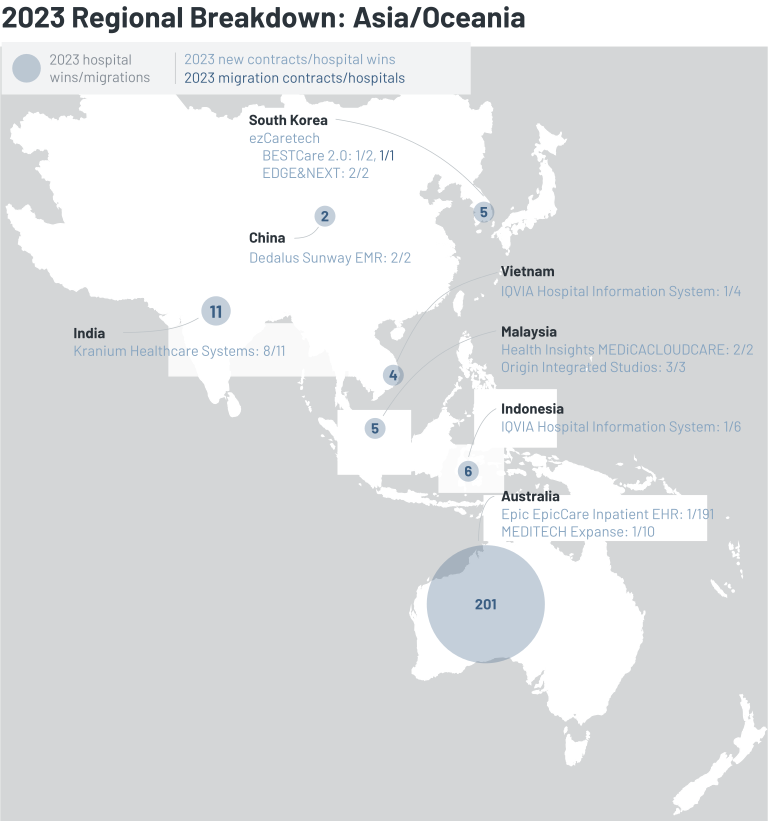
After years of low purchase energy, two large contracts finalized in Australia. The first involved NSW selecting Epic for their 191 hospitals, leading Epic to be the most widely contracted EHR vendor in the region. In the second decision, a private hospital group selected MEDITECH—more than doubling the number of Australian hospitals using the EHR. Several more decisions from large private and public groups will be finalized in the next few years.
Asia
EHR activity in Asia slowed slightly in 2023. KLAS validated 21 new contracts in the region (mostly Southeast Asia and India). Eight organizations in India—including several small standalone hospitals, multihospital groups, and facilities with over 1,000 beds—selected Kranium Healthcare Systems. Two decisions in Southeast Asia came from private multihospital groups that selected IQVIA. Additionally, multiple standalone hospitals across the region contracted with the following vendors: ezCaretech (South Korea), Dedalus (China), Health Insights (Malaysia), and Origin Integrated Studios (Malaysia). Government initiatives in countries like India and Indonesia will likely lead to increased EHR purchases in the future.
Latin America
MV & Philips Led in Brazil; Dedalus Selected in Panama & Peru
Brazil
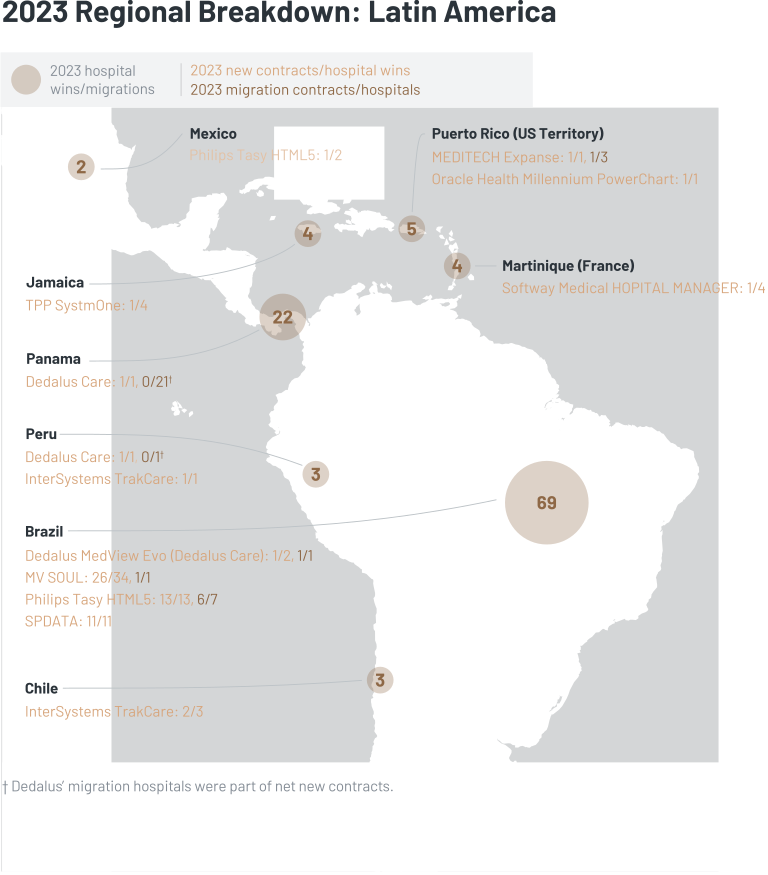
Purchase energy in Brazil has slowly increased since its decline at the onset of the pandemic. MV continues to be most frequently selected in multihospital decisions and is also widely chosen by large standalone hospitals. Philips is still selected second most frequently in the country (mostly by midsize, standalone hospitals). They continue to migrate legacy Delphi clients to the Tasy HTML5 platform. KLAS validated 11 selections for SPDATA, mostly among small hospitals (<50 beds). A couple of groups—including the vendor’s first customer in Brazil—selected the Dedalus MedView Evo platform.
Other Latin American Countries
The EHR market in other Latin American countries was more active than in years past. The largest finalized contract was for a public ministry in Panama that opted to migrate to the Dedalus Care offering; a private group in Peru also selected the platform. InterSystems’ small presence in Latin America grew thanks to contracts with private and public groups in Chile. A private group in Mexico contracted with Philips. In the Caribbean, a large public group in Martinique selected Softway Medical. In Puerto Rico, two organizations finalized contracts with MEDITECH, and a hospital selected Oracle Health. TPP signed a contract in Jamaica—the vendor’s first client in the Caribbean—for an initial rollout to four hospitals.
Canada
High Number of Hospitals Impacted by Large Decisions for Oracle Health, Epic & MEDITECH
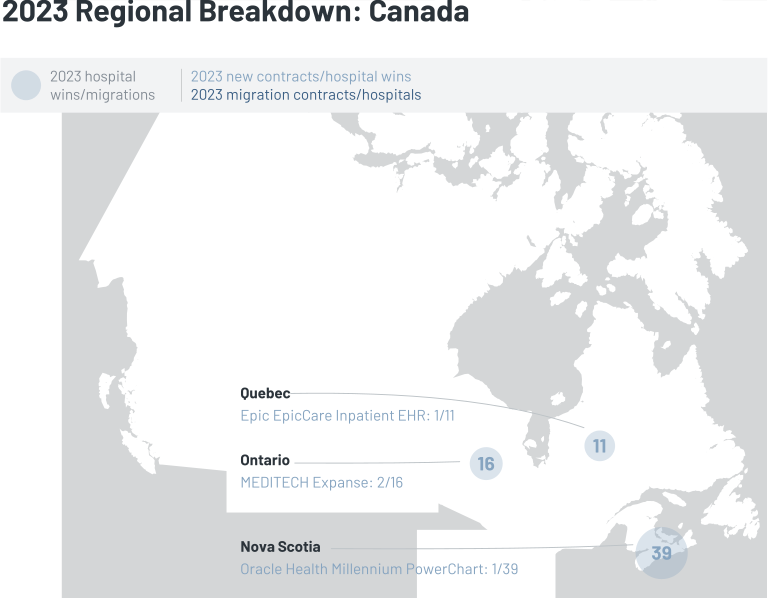
In Canada, the number of EHR contracts finalized was comparable to that of the last five years, but the number of hospitals impacted by those decisions was the highest. The largest finalized contract was in Nova Scotia, which selected Oracle Health for all hospitals in the province. In Quebec, Epic was chosen for a pilot by 11 hospitals—including two integrated health and social services centers (CIUSSSs). MEDITECH was selected by two legacy clients—(1) a large consortium of 15 hospitals that opted to migrate to Expanse and (2) a small community hospital, who is the first in Canada to deploy Expanse in the cloud via MEDITECH as a Service. In the next few years, several other large decisions in Eastern Canada will be finalized.
Middle East/Africa
Oracle Health & Health Insights Selected in Middle East; MEDITECH, SIB & Dedalus Chosen in Multihospital Decisions in Africa
Middle East
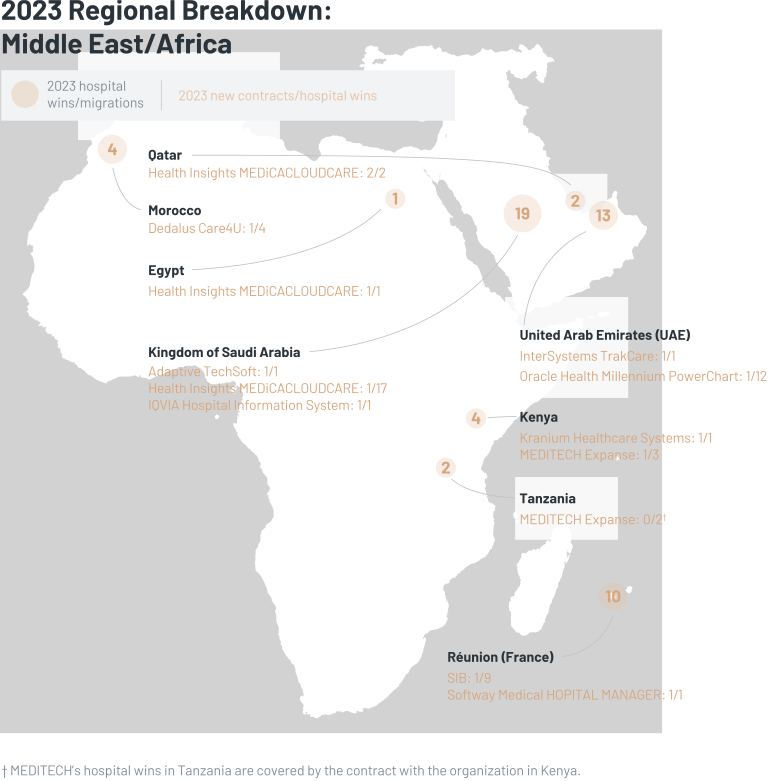
EHR activity in the Middle East was at a five-year low, with fewer than half the average annual number of finalized contracts. Health Insights was selected most thanks to a large Ministry of Health (MOH) decision in Saudi Arabia as well as contracts with small hospitals in Qatar. The largest private decision came from 12 UAE hospitals who selected Oracle Health. Adaptive TechSoft, InterSystems, and IQVIA were each selected by a standalone hospital.
Africa
In Africa, purchase energy increased. The largest decision in the region was by a GHT in Réunion that selected France-based SIB. An East African private group of five hospitals contracted with MEDITECH. Additionally, in Morocco, an existing Dedalus client chose to expand the EHR to a few small hospitals. One hospital in Kenya selected Kranium Healthcare Systems—the vendor’s first validated client outside of India.
About This Report
A Note about Terminology and What Counts as an EHR
Though the nomenclature used to describe the core patient record used throughout a hospital varies from region to region or language to language (e.g., EHR, EPR, EMR, EPD, EPJ, DPI, KIS, HCE, PEP, etc.), the term that will be used in this research is EHR (electronic health record).
The EHR is the core record used by hospitals for day-to-day clinical tasks, such as clinical noting and documentation, ordering, results reporting, and ePrescribing. Some systems in this research may not include all of these clinical functions, but they are all viewed by their users as their core patient record. Solutions used solely for document management or scanning are excluded from this research even though they are the primary clinical system in use at some hospitals.
Additionally, the term “vendor” is used throughout this report to refer to the company supplying the EHR technology. KLAS recognizes that different countries may have different terminology, including “supplier.”
How Does KLAS Measure EHR Market Share?
In this report, any given vendor’s EHR market share is defined as the total number of inpatient hospital facilities (as opposed to organizations, which may be comprised of multiple hospitals) whose most recent contract is with that vendor. For example, if a vendor signs a contract with a four-hospital organization, that vendor’s market share would increase by four. KLAS acknowledges that in some countries, such as Spain and the Netherlands, the term “hospital” may be used to refer to an organization with multiple inpatient facilities. However, in this report, “hospital” is used to refer to a single inpatient facility.
At any point in time, only one company is recognized as the most recently contracted vendor for a hospital. KLAS considers a change in a hospital’s most recently contracted EHR vendor a “win” for the new vendor and a “loss” for the incumbent vendor (if one existed). In this report, a win does not depend on the legal status of a contract or on whether a provider organization is a paying customer. Additionally, while KLAS tracks vendor losses, these losses are not charted in this research since many hospitals outside the United States are moving from paper or from a conglomeration of best-of-breed departmental systems to an enterprise platform. KLAS will comment on losses in geographies where relevant.
Hospitals that have contracted for a new EHR normally continue to use their previous system for one or more years before/after going live with a new one. During this time, the hospital might be considered a customer of both vendors, but only the most recently contracted vendor receives market share credit in this report. Likewise, there may be a space of time between when a previous vendor’s contract ends and a new contract is formalized. In these cases, the previously contracted vendor is recognized as the current vendor until the new agreement is formalized. However, provider organizations have the final say on their own status, so in rare cases when an organization has directly informed KLAS of a decision, a win might be counted before a contract is legally signed.
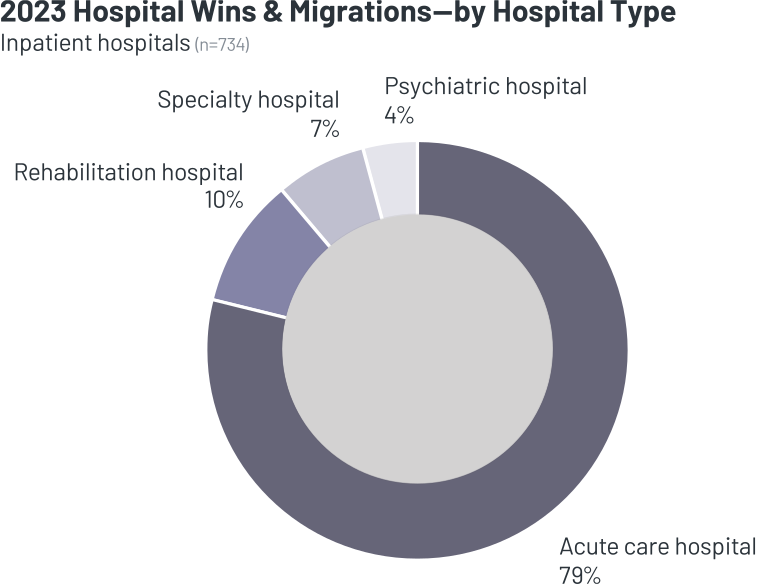 When measuring market share, KLAS counts any facility that offers inpatient services. Most of the contracts discussed in this report were made by general acute care hospitals, including community hospitals and facilities offering sub–acute or step-down care services (as long as those facilities have overnight inpatient beds). However, this research also includes some EHR decisions made by inpatient rehabilitation facilities, specialty acute care facilities (e.g., for oncology, pediatrics, or ophthalmology), and inpatient psychiatric hospitals. Outpatient facilities, urgent care centers, day hospitals, and residential treatment facilities are excluded. Below is a breakdown of 2023 EHR purchasing by hospital type.
In cases where two or more healthcare organizations join together to make an EHR purchase decision, KLAS regards the decision as a single contract even if multiple contracts are signed with each participating entity because there was a single, collective decision-making and selection process. In 2023, decisions of this nature occurred in Australia, Canada, France, Germany, and Italy.
Types of Wins
KLAS places newly contracted hospitals into various categories. Multihospital organizations and standalone hospital organizations that switch to a vendor not previously in use at the organization are counted as “net new” wins. “Add-on” wins occur when an existing customer extends their EHR contract to an additional hospital within the organization. Often, these add-on wins come about as the result of acquisitions/mergers, newly constructed hospitals, or organizations consolidating from two or more EHRs to a single solution.
Contract changes in which an organization stays with their current EHR vendor but moves to another platform from that vendor as their go-forward solution (usually requiring sizable build/implementation effort) are noted where applicable but are not included in a vendor’s overall wins. Often, these decisions are complete platform migrations, though in some cases the organization may move forward with functionality from both platforms. For simplicity’s sake, KLAS refers to all such decisions as “migrations,” regardless of whether other vendors were also considered or how competitive that decision may have been. In this report, the following vendors all had at least one customer migration: CompuGroup Medical (CGM KIMSYSTEM to CGM REHA), Dedalus (DOPASYS to Care4U; Galileo or Tabula Clinica to C4C; xHIS or MedView to Dedalus Care/MedView Evo; Argos to wHospital), ezCaretech (BESTCare 1.0 to BESTCare 2.0), InterSystems (Clinicom Médical to TrakCare), MEDITECH (C/S or MAGIC to Expanse), MV (Hospidata to SOUL MV), and Philips Tasy (Delphi-based solution to Java/HTML5 code base). Customers who upgrade their current system or re-sign with their current vendor to extend the length of their existing contract are also excluded from a vendor’s overall wins, though they are presented in the vendor’s market share counts in applicable markets.
Where Does Market Share Data Come From?
The market share data reported in this study is based on hospital EHR purchasing activity (i.e., executed contracts) that occurred 1 January–31 December 2023. The data comes from multiple sources, including publicly available information and the numerous conversations KLAS has each year with provider organizations around the globe.
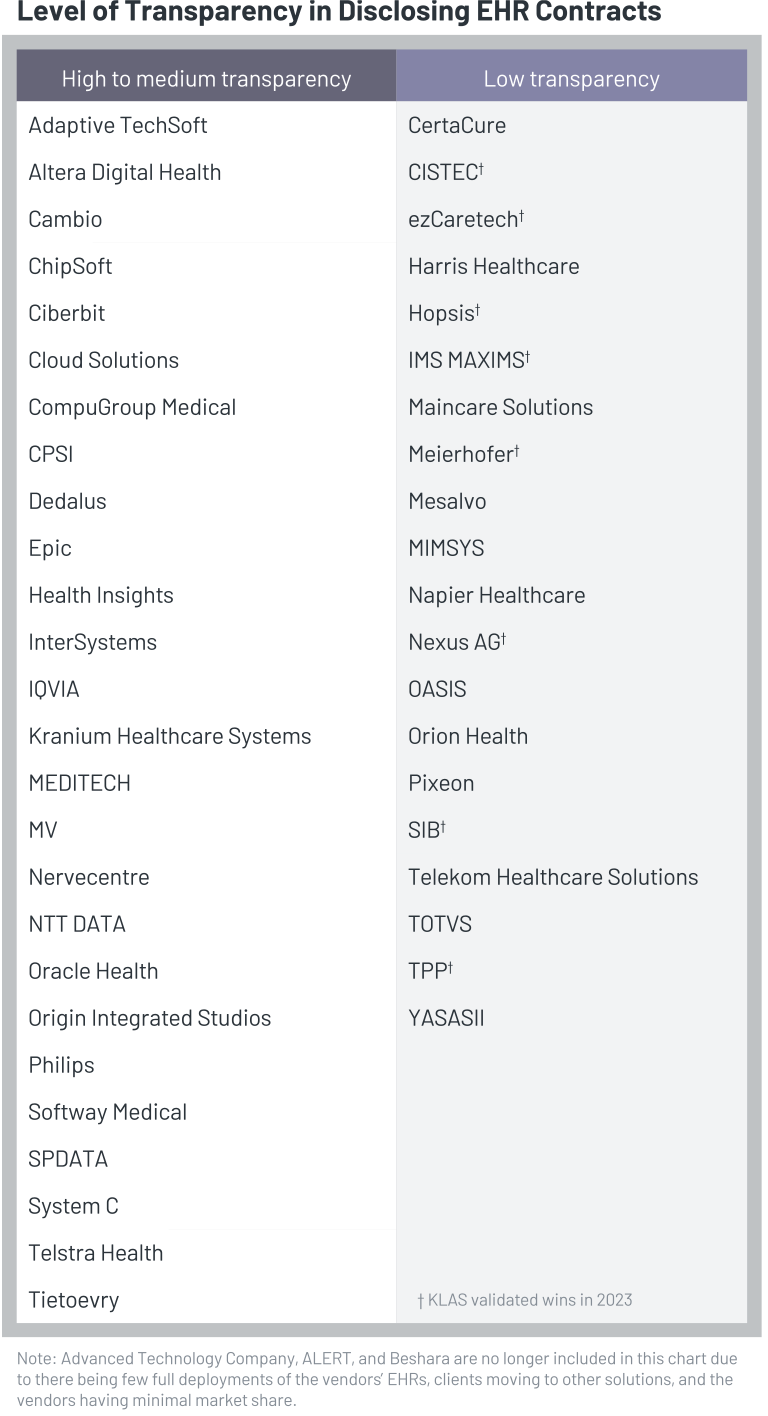
KLAS also provides vendors with the opportunity to report their annual hospital EHR wins. KLAS then validates this information with provider organizations through in-depth interviews, publicly available information, and other means. The table to the right shows vendors’ levels of transparency and disclosure of their EHR wins for 2023.
In all cases, KLAS makes a best-effort attempt to use third-party sources and our vast provider network to independently validate all recently signed EHR contracts. While KLAS believes the data in this report is directionally correct, we acknowledge that some inaccuracies may result from lack of vendor transparency or participation.
KLAS is confident that the decisions tracked in this report account for most EHR purchasing that occurred in 2023 in Canada, Europe (excluding Eastern Europe), Latin America, the Middle East, and Oceania. However, EHR purchasing in Asia involves a wide variety of vendors (especially in India and China), many of which KLAS does not currently track. KLAS therefore acknowledges that the picture given for EHR purchasing in Asia is less complete. KLAS also has less transparency into EHR purchasing happening in Africa.
KLAS’ historical global market share information is continually being updated as new information comes to light. In some cases, contracts are canceled, new vendors are chosen that were missed in previous years’ reports, hospitals close, or KLAS discovers that a contract previously recorded did not include EHR functionality. This review of the historical data necessarily results in some shifts in vendors’ overall market share numbers. In 2023, this ongoing data review resulted in notable shifts (+/- 10 or more hospitals) for Adaptive TechSoft (adjusted up in the Middle East) and Dedalus and Nexus AG (both adjusted up in Europe). Additionally, this year is the first that KLAS has included market share and recent wins for Kranium Healthcare Systems (India). As KLAS makes adjustments in market share, combines vendors’ market share based on M&A activity, or adds new vendors to the research, historical trending charts are updated accordingly. The trending charts in this report supersede trending data given in previous years’ reports.
Geographic Regions
The overarching geographic regions used in this report are based—with some variation—on the United Nations’ geographic regions. Since all EHR purchases in Northern America in the past nine years have occurred in either Canada or the United States and since this report excludes US market share data, the UN’s designation of Northern America has been replaced with the KLAS region of Canada. EHR purchases for overseas territories are discussed in the sections for their respective geographic regions (as defined by the UN) and are not grouped into counts for the overarching country (e.g., American Samoa, Puerto Rico, Guam, and the Virgin Islands for the US; British Virgin Islands, Falkland Islands [Isla Malvinas], and other British Overseas Territories for the UK; French Guiana, Guadeloupe, Martinique, Mayotte, Réunion, and Saint Pierre and Miquelon for France; Curaçao for the Netherlands; etc.). For more details on the US EHR market, please refer to KLAS’ annual US hospital EHR market share report.
Vendors that are widely considered by provider organizations in multiple regions and have a significant number of validated customers in at least two regions are labeled as “multiregional.” Vendors whose customer base is heavily skewed toward a single region are designated as “regional” and grouped by region. These designations are re-evaluated annually. In this year’s report, KLAS shifted ezCaretech to be a regional vendor (Asia), removing the vendor’s multiregional designation as they have not had significant growth outside of Asia in the past five years.

Writer
Natalie Hopkins

Designer
Breanne Hunter

Project Manager
Sydney Toomer
This material is copyrighted. Any organization gaining unauthorized access to this report will be liable to compensate KLAS for the full retail price. Please see the KLAS DATA USE POLICY for information regarding use of this report. © 2026 KLAS Research, LLC. All Rights Reserved. NOTE: Performance scores may change significantly when including newly interviewed provider organizations, especially when added to a smaller sample size like in emerging markets with a small number of live clients. The findings presented are not meant to be conclusive data for an entire client base.