KLAS Contact

Contact KLAS
Contact KLAS
 2026 BEST IN KLAS
Preferences
Related Series
Related Segments

Implementation Services for Oracle ERP 2024
Part of a Series on ERP Implementations

Author
Kaleb Harris

Author
Sam Eaquinto
As more provider organizations choose to move forward with cloud-based ERP solutions, it is critical for them to implement the solution without negatively affecting day-to-day business. To avoid challenges during implementation, organizations are partnering with firms that offer implementation leadership and business transformation services. This report examines the client experience of three firms who provide implementation services for Oracle’s ERP suite and what these firms are doing to drive success.
Note: Engagements for implementing other vendors’ ERP solutions are excluded from this research. For insights on firms who provide services for other ERP suites, see KLAS’ Implementation Services for Workday ERP report and Implementation Services for Infor ERP report.
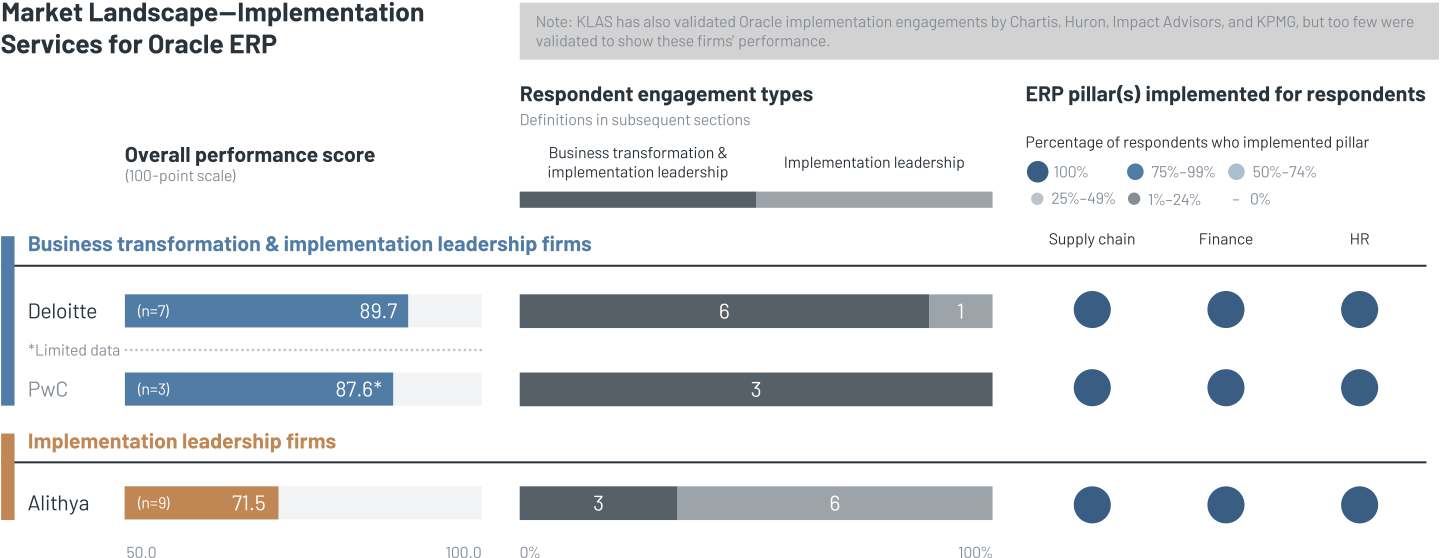
Business Transformation & Implementation Leadership Firms
Defined: Firms acting as the overall implementation leader for highly complex ERP projects. Projects require business transformation, application implementation management, and technical expertise. Engagements often span the implementation life cycle and are strategic in nature. They are typically done for larger health systems and include >10 consultants.
Deloitte Commended for Strong Partnership & Knowledge Base; PwC* Helps Clients Stay within Project Guardrails
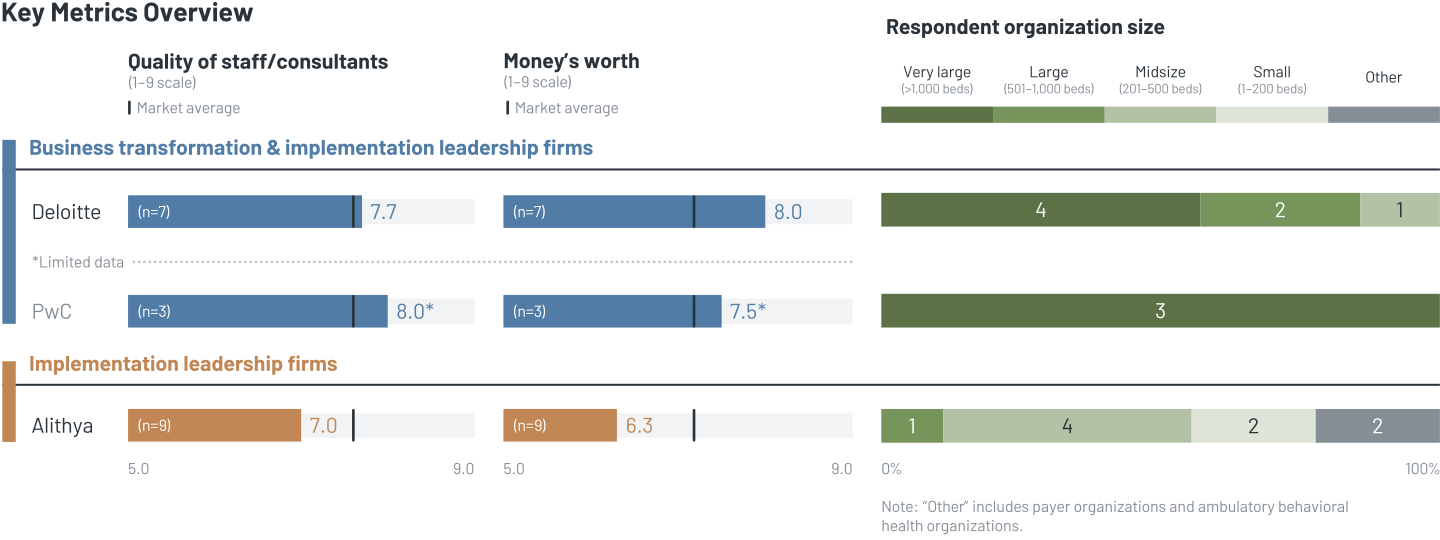
Interviewed Deloitte clients regard the firm as a top performer in the industry and report strong satisfaction. Several are very large organizations (1,001+ beds) with complex projects, demonstrating that Deloitte can successfully navigate different environments and needs. Respondents appreciate the firm’s commitment to fostering successful partnerships and strong client satisfaction. The executives stand out for their receptiveness, communication, and engagement—these attributes are seen as strengths that not only benefit current clients but also help the firm attract and retain prospective clients. Additionally, respondents say Deloitte exceeded expectations thanks to their Oracle expertise, fair pricing, and ability to consistently deliver value. All respondents would contract with Deloitte again, underscoring the firm’s ability to foster lasting relationships. Concerns include occasional turnover among project leads, Deloitte’s hands-off approach to training, and miscommunication during implementation.
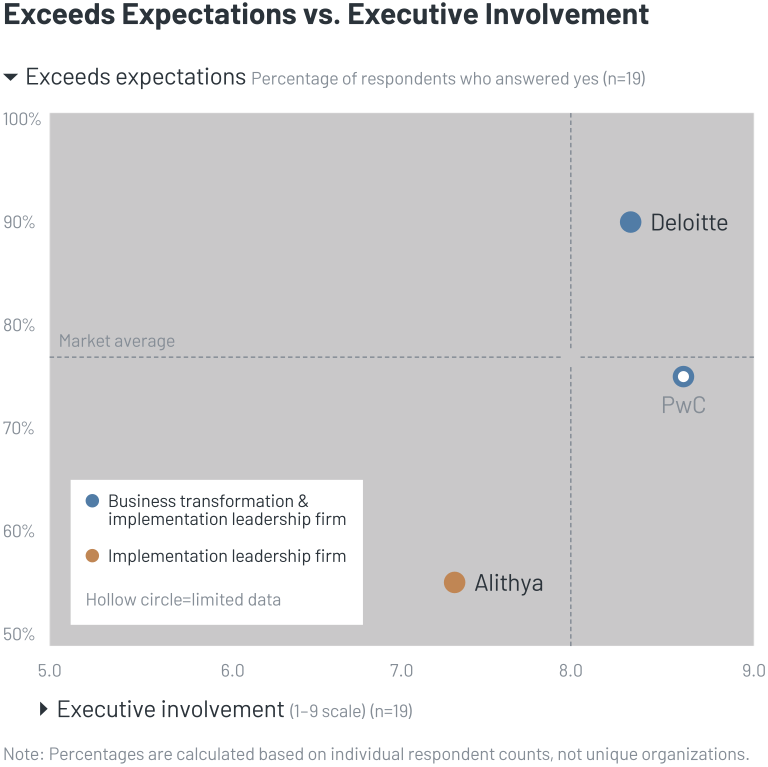 Among the three interviewed PwC* clients (all very large organizations), KLAS validated the firm’s ability to scale to meet complex needs. Two of the three interviewed clients report high satisfaction, saying the firm made helpful recommendations that allowed the organizations to successfully complete their project while keeping it within scope. The third organization reports dissatisfaction with the business case, saying they were disappointed with how PwC tried to justify the project’s value even when it didn’t meet expectations. All three highlight the firm’s strong product knowledge, engaged executives, and ERP expertise.
*Limited data
Implementation Leadership Firms
Defined: Firms engaged to provide overall project leadership/management for low- or moderate-complexity projects. Firms provide application implementation management, project management, and technical expertise. Most engagements include some change management. Typical engagements are with small/midsize health systems and include <10 consultants.
Alithya Respondents Report Inconsistent Experiences; Clients Want Firm to Better Share Best Practices
Satisfaction among Alithya respondents varies, and the firm’s performance is inconsistent across organization sizes. Client satisfaction is primarily driven by strong executive involvement (e.g., quick response times, consistent meetings). Alithya’s resources are also seen as valuable, with respondents noting the competent project leads and effective communication channels. Meanwhile, larger respondent organizations express concern with Alithya’s bench strength and lack of experience scaling to more-complex projects. A common desire among all respondents is for the firm to improve their sharing of best practices, as some clients wish they had received more-specific guidance. Additionally, there are multiple reports of the firm charging for every little thing and not providing the expected value. One-quarter of respondents would not contract with the firm again.
About This Report
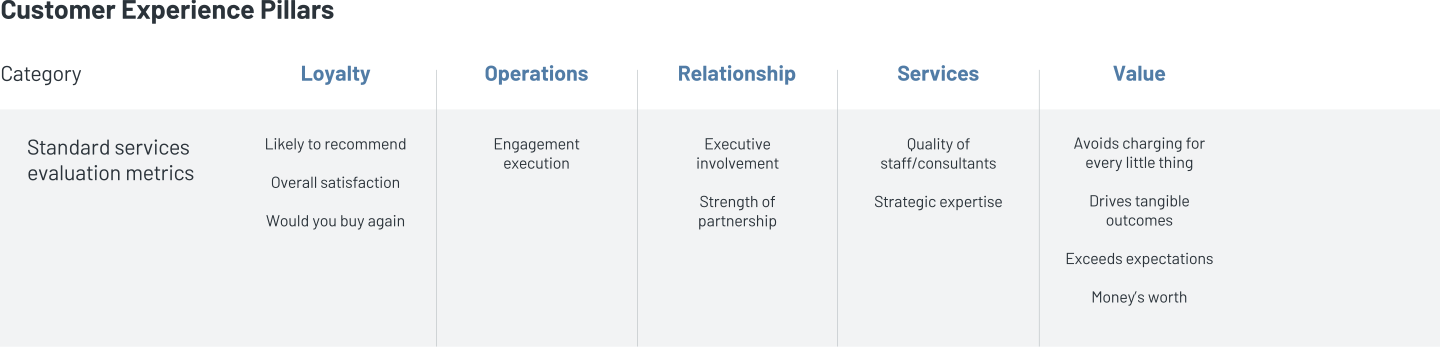
Each year, KLAS interviews thousands of healthcare professionals about the IT solutions and services their organizations use. For this report, interviews were conducted over the last 18 months using KLAS’ standard quantitative evaluation for healthcare services, which is composed of 9 numeric ratings questions and 3 yes/no questions, all weighted equally. Combined, the ratings for these questions make up the overall performance score, which is measured on a 100-point scale. The questions are organized into five customer experience pillars—loyalty, operations, relationship, services, and value.
Sample Sizes
Unless otherwise noted, sample sizes displayed throughout this report (e.g., n=16) represent the total number of unique client organizations interviewed for a given firm or service. However, it should be noted that to allow for the representation of differing perspectives within any one client organization, samples may include surveys from different individuals at the same organization. The table below shows the total number of unique organizations interviewed for each firm or service as well as the total number of individual respondents.
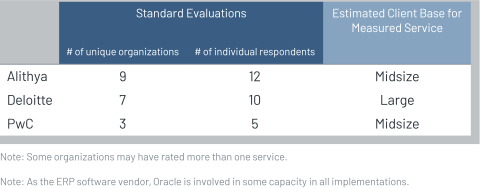 Some respondents choose not to answer particular questions, meaning the sample size for any given firm or service can change from question to question. When the number of unique organization responses for a particular question is less than 6, the score for that question is marked with an asterisk (*) or otherwise designated as “limited data.” If the sample size is less than 3, no score is shown. Where textual content relies on limited data, the firm name is marked with an asterisk. Note that when a firm has a low number of reporting sites, the possibility exists for KLAS scores to change significantly as new surveys are collected.

Writer
Sarah Brown

Designer
Breanne Hunter

Project Manager
Sydney Toomer
This material is copyrighted. Any organization gaining unauthorized access to this report will be liable to compensate KLAS for the full retail price. Please see the KLAS DATA USE POLICY for information regarding use of this report. © 2026 KLAS Research, LLC. All Rights Reserved. NOTE: Performance scores may change significantly when including newly interviewed provider organizations, especially when added to a smaller sample size like in emerging markets with a small number of live clients. The findings presented are not meant to be conclusive data for an entire client base.