KLAS Contact

Contact KLAS
Contact KLAS
 2026 BEST IN KLAS
Preferences
Related Series
Related Segments

Integrated Care 2024
How Well Do Behavioral Health Organizations Feel Vendors Support Integrated Care?

Author
Tyson Blauer

Author
Paul Warburton
Historically, behavioral health has been treated separately from primary care in the US, though many behavioral health patients have comorbidities that also require primary care. To care for patients more holistically, some behavioral health organizations have recently started to move to an integrated care model, which combines behavioral health and primary care. However, the functionality and reporting needed for behavioral health differs greatly from that of primary care, and organizations are looking for technology to help in their efforts to provide integrated care. This report examines behavioral health organizations’ plans for integrated care, which technologies are viewed as most influential, and vendors’ EHR offerings and performance in this area.
Most Behavioral Health Organizations Report Offering Some Form of Integrated Care, Limited by Vendors’ Ability to Integrate & Provide All Needed Functionality
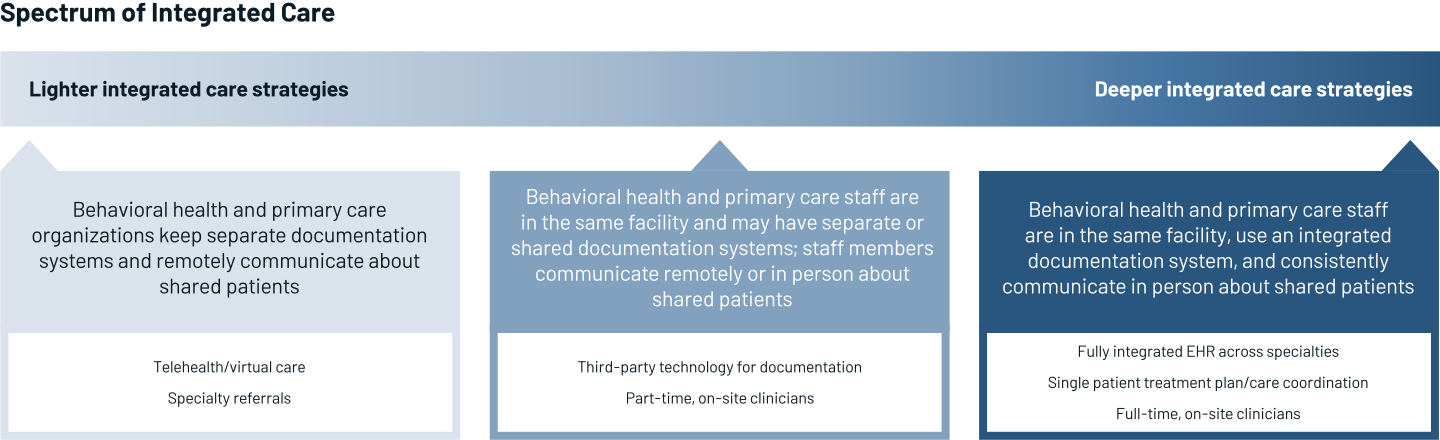
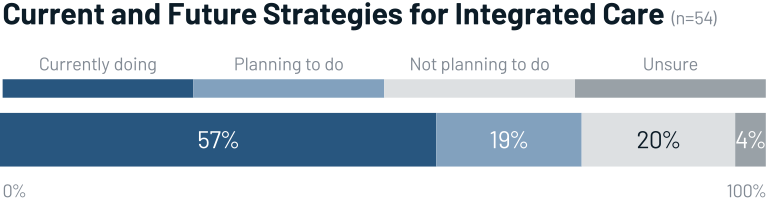
A large majority of interviewed behavioral health organizations report they either are already delivering some form of integrated care or have plans to do so in the future. Still, there is a wide spectrum of what an organization might consider integrated care, including having an on-staff nurse practitioner, trading referrals with a primary care office, or having both primary care and behavioral health staff on-site. On that spectrum, many organizations do not provide truly integrated care (using a single EHR for behavioral health and primary care) but rather provide one or two elements of integrated care. There is also a wide spectrum of how behavioral health technology can help organizations; some vendors only focus on one specialty, and some have primary care modules that their customers are using. Many respondents are concerned about how well vendors can provide EHR functionality for both mental and physical health, so they rely on integrating a third-party solution. That can result in further problems, as respondents also report their behavioral health EHR vendors struggle to maintain interfaces with third-party technology.
“We are building everything in-house to do the things our current system doesn’t do. We decided to bring these tasks in-house because the more vendors we have, the harder it is to manage them. Our current vendor is not easy to integrate with, so we end up having to have workarounds.” —Chief strategy officer
Behavioral Health Organizations Investing Most in EHR despite Average to Low Performance of Vendors
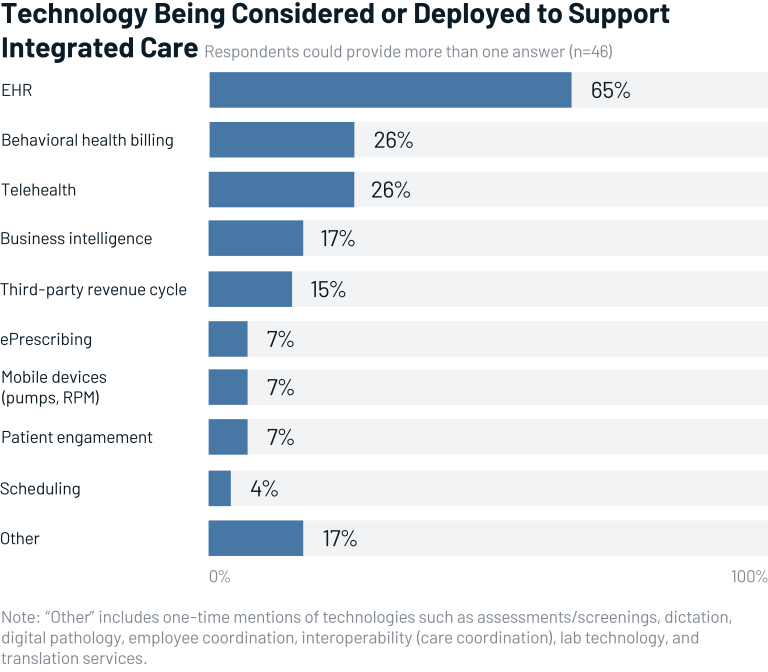
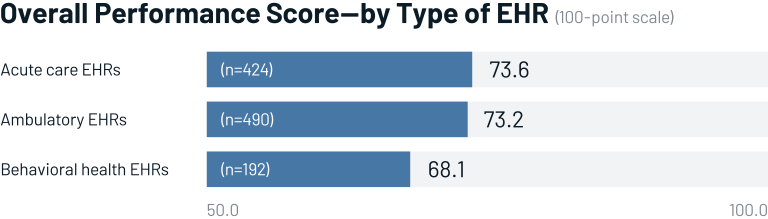
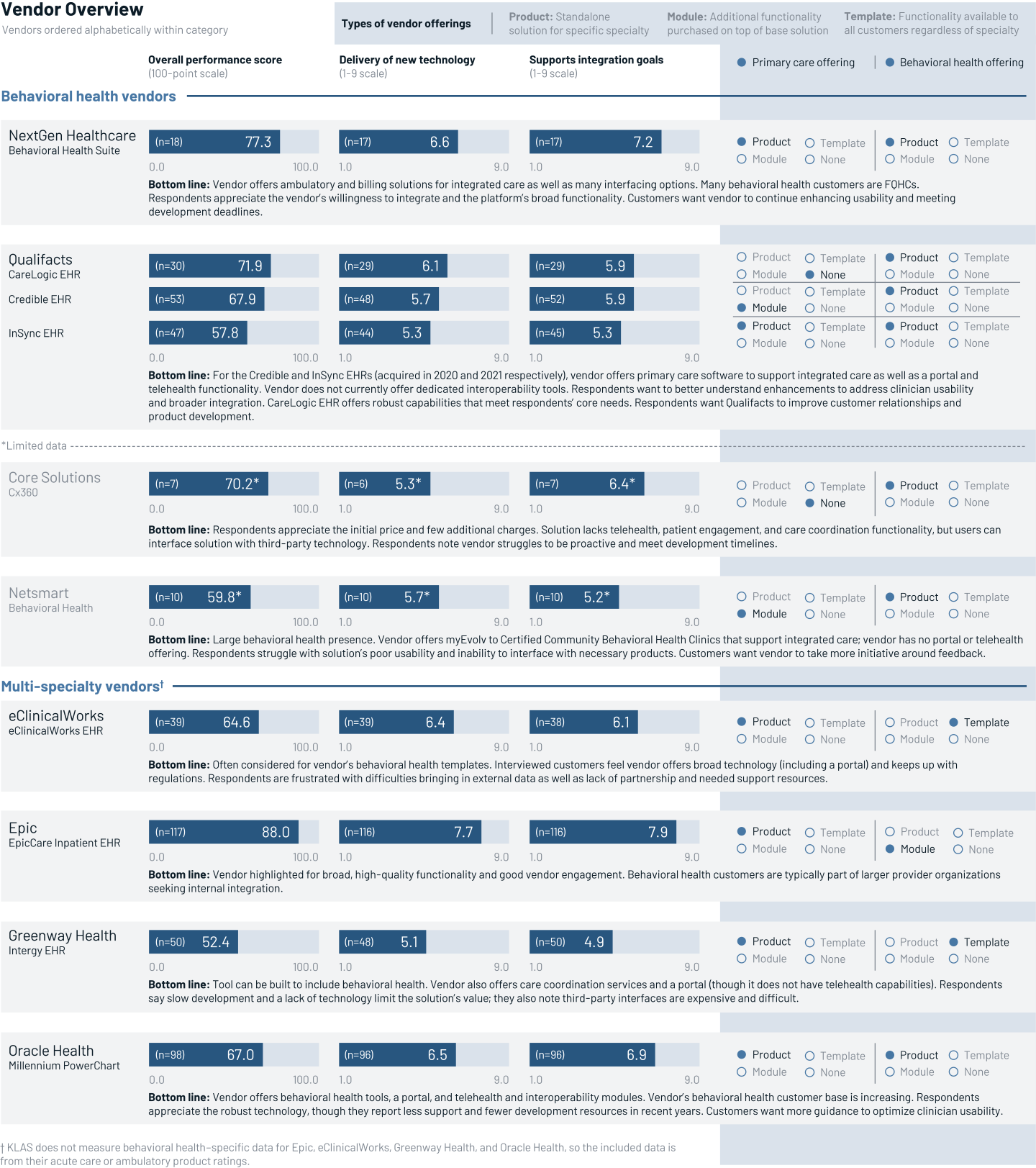
Behavioral health organizations report two main hurdles to providing integrated care: (1) acquiring an additional documentation solution for primary care and (2) achieving integration with a billing solution for reimbursements. Most respondents are investing in EHR and billing solutions to help overcome these challenges, and they report looking to their current EHR vendor to provide the tools they need. One reason for this is that some respondents worry that behavioral health vendors won’t be able to provide high-quality primary care functionality; some also feel stuck with their current EHR vendor due to tight budgets. In general, interviewed customers feel vendors measured in this report struggle to some degree to meet organizations’ functionality and integration needs. Epic customers (hospitals or facilities connected to larger health systems) and NextGen Healthcare customers (FQHCs and midsize behavioral health organizations) highlight the integration between behavioral health, primary care, and revenue cycle platforms; respondents also cite possible integration with a wide range of third-party applications. Qualifacts and Netsmart similarly offer modules for both behavioral health and primary care. These vendors have the largest number of independent behavioral health customers in this report sample, and respondents note integration challenges (e.g., cost, speed, syncing) with third-party tools and express concerns around scaling. Across vendors, many interviewed organizations still need to leverage third-party tools (i.e., telehealth, value-based care, patient engagement, RPM) to better support integrated care strategies. (For more on how third-party technologies are being used for integrated care, see below.)
Among Third-Party Technologies, Telehealth & Reporting/Screening Tools Are Used Most Often to Support Integrated Care
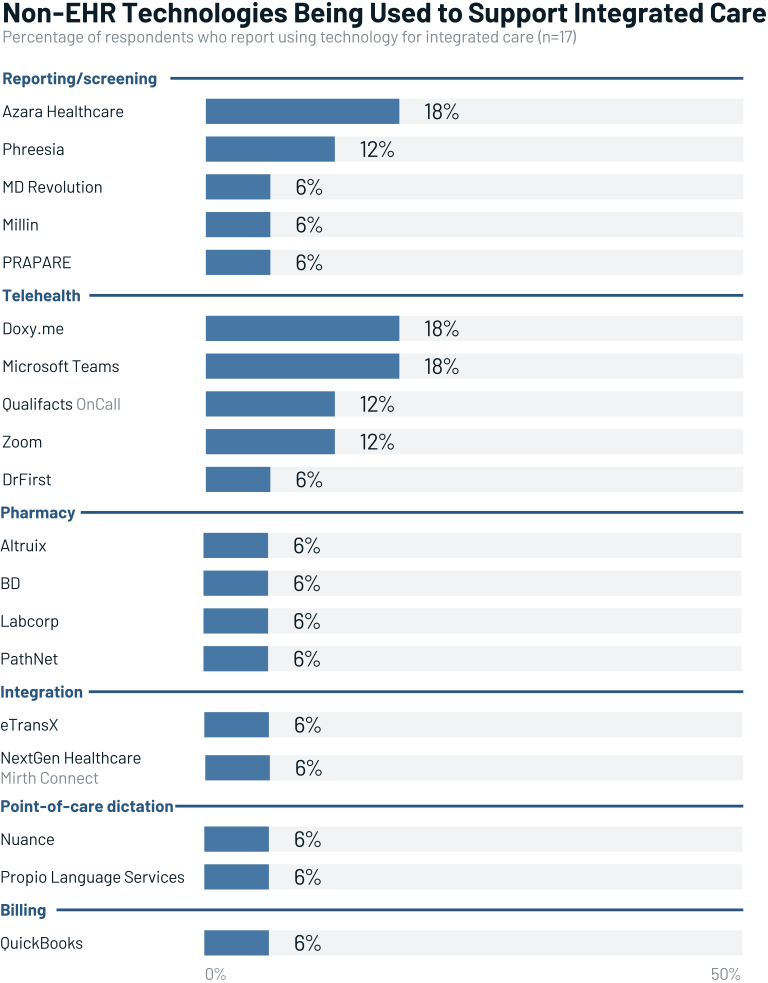
Outside of EHR solutions, some behavioral health organizations are employing third-party technologies to fill gaps in their integrated care strategies. Respondents who consider non-EHR solutions most often look to telehealth platforms and analytics solutions that support reporting and screening. Telehealth is a top consideration for behavioral health organizations and is one of the easiest ways for them to implement integrated care because patients can connect with clinicians for basic services that don’t require in-person consultations. Regarding telehealth solutions, some respondents report deploying Microsoft Teams or Doxy.me due to the ease of implementation. Solutions for reporting and screening can also benefit organizations’ integrated care needs as they help organizations tackle quality/regulatory reporting and receive HRSA funding. Respondents using a reporting/screening solution most often report using Azara Healthcare, as the population health platform can support their reporting needs and help them gain federal funding for integrated care. Other solution types that can help organizations achieve integrated care include point-of-care dictation solutions, pharmacy solutions, billing solutions, and integration tools.
Vendor Bottom Lines
The vendors in this section are currently measured by KLAS in our acute care EHR, ambulatory EHR, or behavioral health market segments. (Note this is not a comprehensive list of all vendors that can support integrated care.)
About This Report
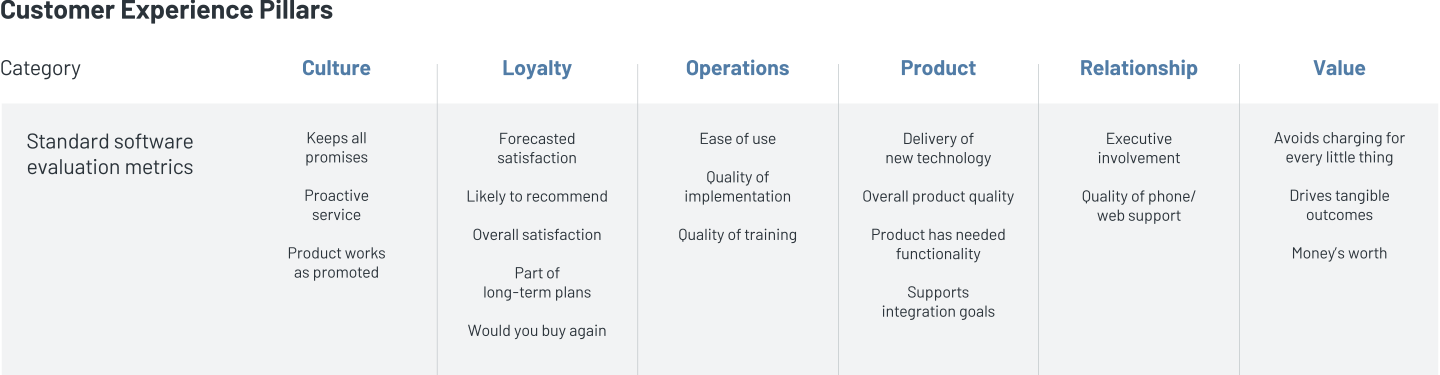
Each year, KLAS interviews thousands of healthcare professionals about the IT solutions and services their organizations use. For this report, interviews were conducted over the last 12 months using KLAS’ standard quantitative evaluation for healthcare software, which is composed of 16 numeric ratings questions and 4 yes/no questions, all weighted equally. Combined, the ratings for these questions make up the overall performance score, which is measured on a 100-point scale. The questions are organized into six customer experience pillars—culture, loyalty, operations, product, relationship, and value.
To supplement the client satisfaction data gathered with the standard evaluation, KLAS created a supplemental evaluation to ask a sample of 54 interviewed healthcare organizations about (1) their future plans for integrated care and (2) what technology/vendors they are considering or currently using to support integrated care. This data was collected from November 2023 to February 2024.
Sample Sizes
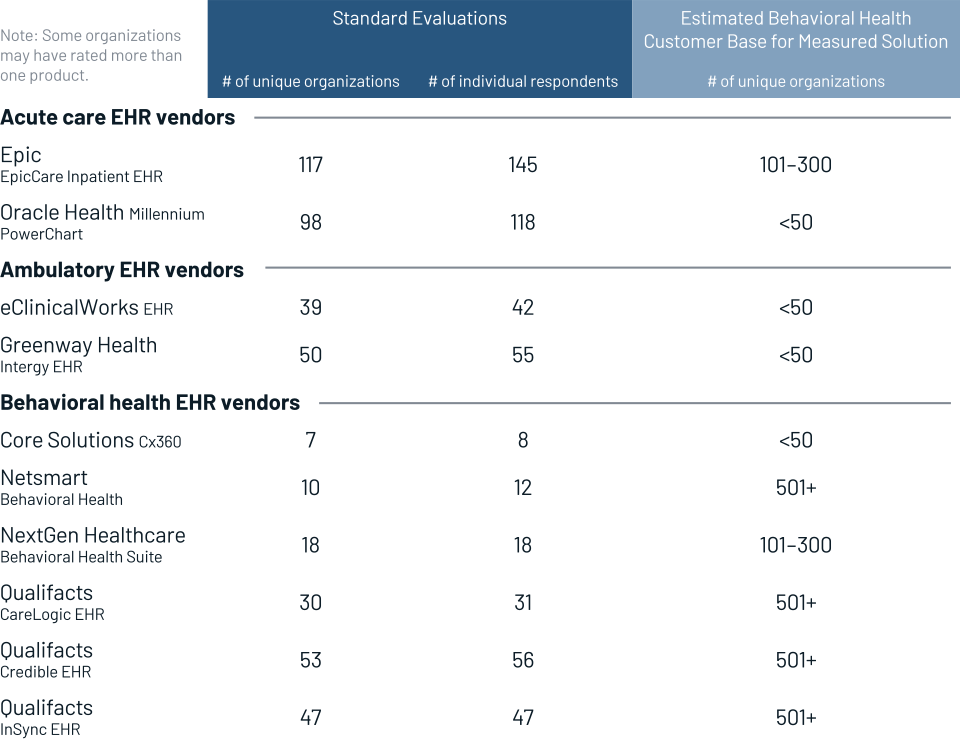
Unless otherwise noted, sample sizes displayed throughout this report (e.g., n=16) represent the total number of unique customer organizations interviewed for a given vendor or solution. However, it should be noted that to allow for the representation of differing perspectives within any one customer organization, samples may include surveys from different individuals at the same organization. The table below shows the total number of unique organizations interviewed for each vendor or solution as well as the total number of individual respondents.
Some respondents choose not to answer particular questions, meaning the sample size for any given vendor or solution can change from question to question. When the number of unique organization responses for a particular question is less than 15, the score for that question is marked with an asterisk (*) or otherwise designated as “limited data.” If the sample size is less than 6, no score is shown. Where textual content relies on limited data, the vendor name is marked with an asterisk. Note that when a vendor has a low number of reporting sites, the possibility exists for KLAS scores to change significantly as new surveys are collected.

Writer
Natalie Hopkins

Designer
Breanne Hunter

Project Manager
Andrew Wright
This material is copyrighted. Any organization gaining unauthorized access to this report will be liable to compensate KLAS for the full retail price. Please see the KLAS DATA USE POLICY for information regarding use of this report. © 2026 KLAS Research, LLC. All Rights Reserved. NOTE: Performance scores may change significantly when including newly interviewed provider organizations, especially when added to a smaller sample size like in emerging markets with a small number of live clients. The findings presented are not meant to be conclusive data for an entire client base.