KLAS Contact

Contact KLAS
Contact KLAS
 2026 BEST IN KLAS
Preferences
Related Series
Related Segments

Omnicell 2023
Understanding Customers’ Outlook on New Managed Services Model

Author
Jackson Tate

Author
Jennifer Hickenlooper

Author
Lance Merrell
In December 2022, Omnicell announced a change in their approach to working with customers that places new emphasis on having customers utilize a managed services model for all Omnicell technology. Previously, Omnicell moved singular solutions (namely their compounding robots, such as the i.v.STATION) to a managed services model, and with those changes, customers generally noted an improved experience, even with increased costs. Given the economic conditions and staffing challenges currently impacting healthcare, many customers have concerns about how Omnicell’s new focus will impact things like costs, product deployment, and staffing demands. This report provides an early look into customer confidence in and perception of the new managed services model.
This report uses two data sources from the last 12 months: (1) KLAS’ standard quantitative evaluation for healthcare software taken by 67 unique organizations and (2) a supplemental evaluation taken by 27 Omnicell customers that focuses specifically on Omnicell’s announced changes. Omnicell performance data includes six products—Inventory Management (OmniCenter and Omnicell One), IVX Workflow, OmniRx, ROBOT-Rx, XR2, and XT Automated Dispensing Cabinets.
Most Plan to Stay with Omnicell Despite Mixed Perspectives on New Managed Services Model
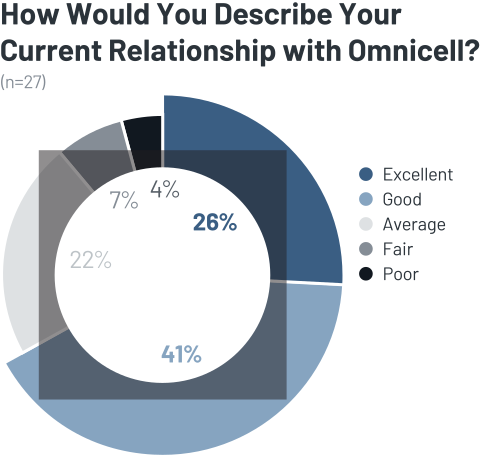
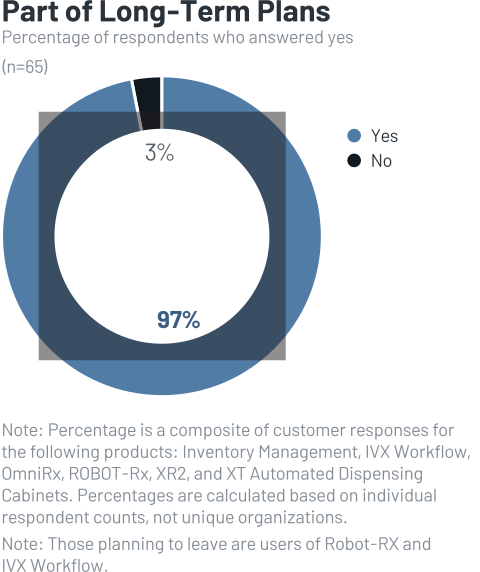
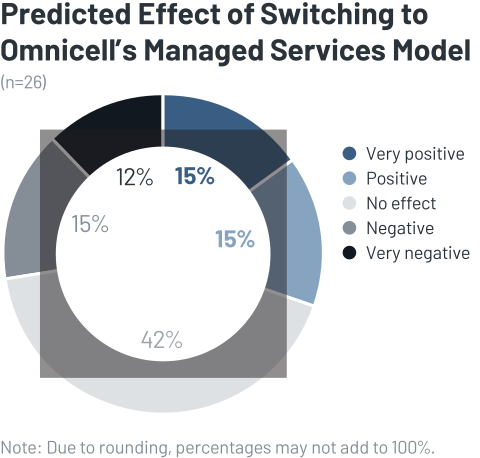
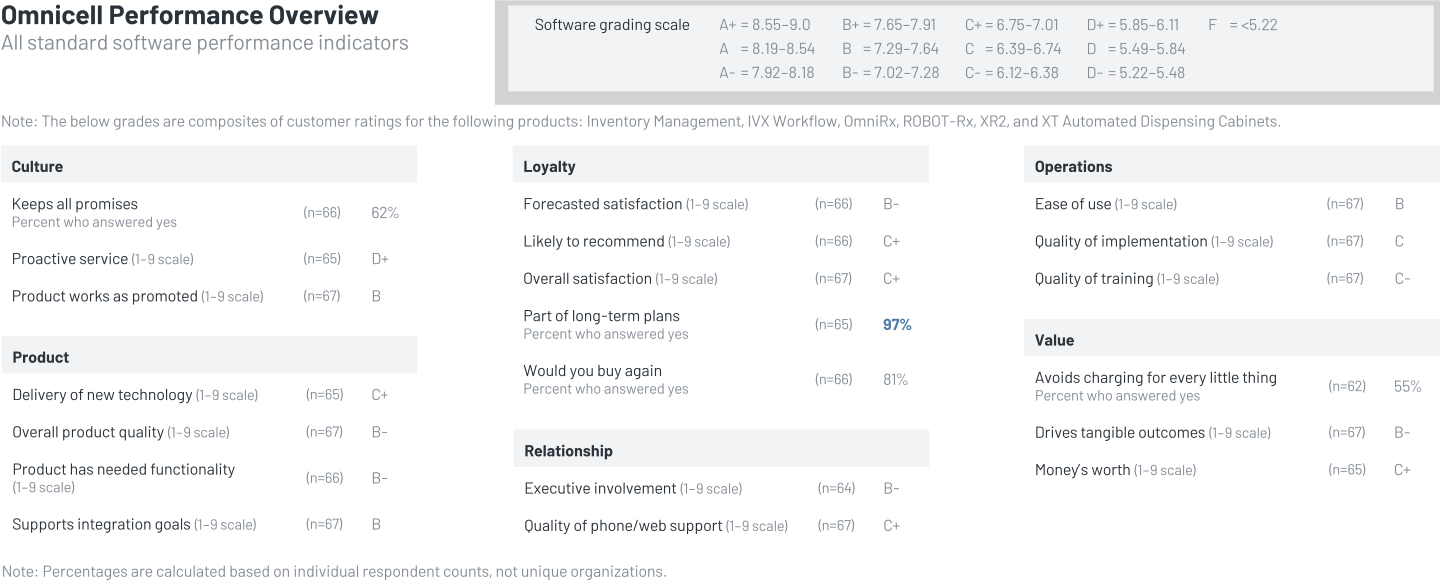
The respondents who use many Omnicell solutions are more satisfied with their current vendor relationship and more optimistic about the transition to a managed services model. The outlook among respondents using fewer Omnicell solutions is more mixed, with many customers expressing concern about the change. Just over one-fourth of respondents think the change to a managed services model will have a negative or very negative effect on their organization. Because of the change, one customer plans to discontinue the use of some Omnicell technology, and another is hesitant to bring on more Omnicell technology. Even so, 97% of respondents say the products are part of their long-term plans, and 35% plan to expand their technology footprint with Omnicell. The relatively high amount of loyalty is likely due to cabinets becoming part of many health systems’ infrastructures and organizations’ aversion to replacing established solutions (replacements would require a substantial lift, especially given the current economy).
Customers Worry the Managed Services Model Will Exacerbate Nickel-and-Diming
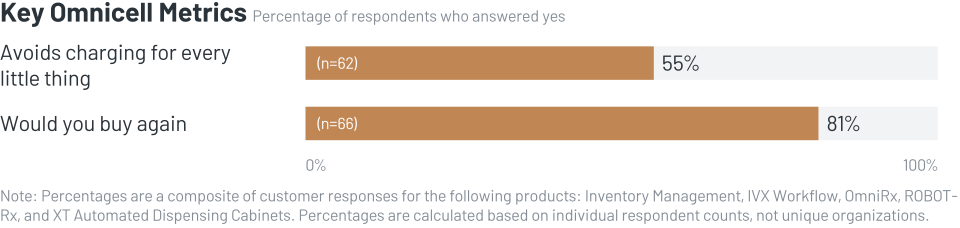
Over the last 12 months, almost half of respondents have reported feeling nickel-and-dimed by Omnicell. Now with the new model, many worry there will be additional costs and are hesitant to move forward or expand with Omnicell. A few customers validated to be on the new model cite increased costs and additional charges with the change in service. Some frustrated customers feel Omnicell should have already been providing the new model’s higher level of service without increased costs.
 “Omnicell charges for everything they do. I have numerous examples. If we want to make any modifications or add anything, the vendor has to send a support person out, and the vendor charges for that. It costs us thousands of dollars anytime someone comes out.” —Pharmacy manager
“Omnicell seems to be pivoting toward more of a service-based model where we pay for their services. It seems like Omnicell is focusing on specialty pharmacy services. Instead of selling big robotics, the vendor is leasing those, and then we pay for a tech to run them for us. My organization doesn’t want to lease anything; we want to buy our cabinets, but Omnicell doesn’t care what we want.” —Pharmacy director
Over Half of Respondents Don’t Expect Managed Services to Reduce Staffing Burdens
 Part of the proposed managed services model is an Omnicell resource dedicated to remotely managing products that historically would have been managed by a hospital employee—thus, one of the purported benefits of the model is reduced staffing requirements for customer organizations. Those most confident in the positive impact of Omnicell’s new managed services model are also most likely to believe it will help with internal staffing challenges. However, the majority of respondents doubt that the new model will meaningfully impact their staffing challenges. One customer doesn’t believe the new model will change their staffing in any way; another notes they would rather manage the technology themselves due to a previous challenging experience with Omnicell. One respondent who is on the new model says the managed services have not helped their organization’s staffing challenges.
Customer Expansion into Managed Services Will Likely Be Gradual, as Interest Varies
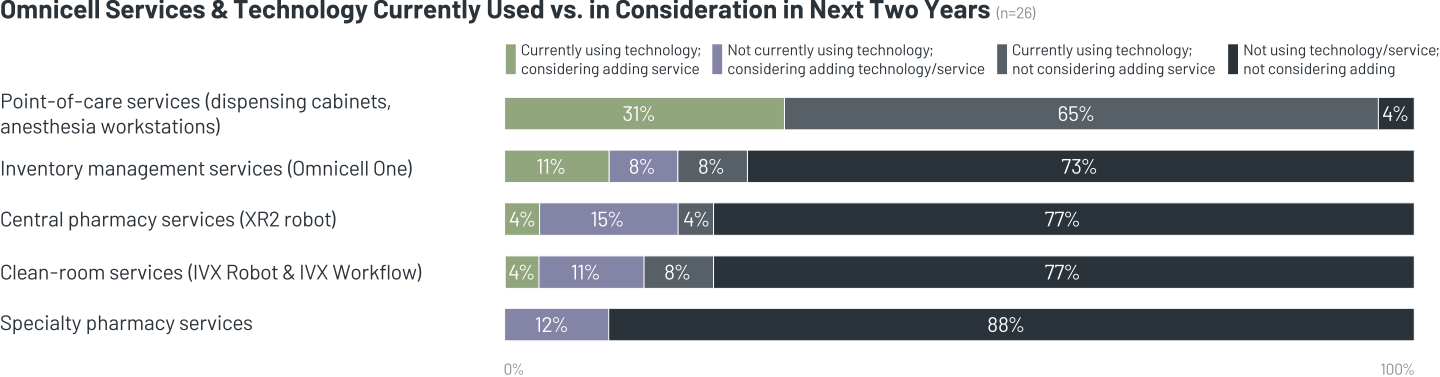
Respondent organizations’ level of interest in expanding their Omnicell footprint (through technology, services, or both) varies depending on the type of technology/service. The areas in which customers have the most plans for expansion are all well-established components of Omnicell’s catalog—central pharmacy, point of care, and inventory management. Another area of high customer interest, specialty pharmacy technology and services are relatively new to the market, and many healthcare organizations are hopeful the expansion of these offerings could provide a new source of high revenue. Specialty pharmacies have more operational requirements than standard pharmacies, so many health systems are looking to consulting firms to help them stand up these services. Though customer interest is growing, it is yet to be seen whether that will translate into further customer expansion and new contracts. Clean-room technology and services have more mixed levels of customer interest. While there is high general interest in IV workflow technology, interest in robotics remains very low. Even with Omnicell’s promise of dedicated technicians to support the robots, customers may be hesitant to expand due to limited use cases where the use of robotics makes sense over manual IV compounding. Customer satisfaction with these robots improved when Omnicell added services in 2018, but interest in expansion has remained low over time, as potential customers often haven’t been able to justify the value. Overall, 65% of surveyed customers are considering adding any type of managed service from Omnicell.
Additional Context Provided by Omnicell
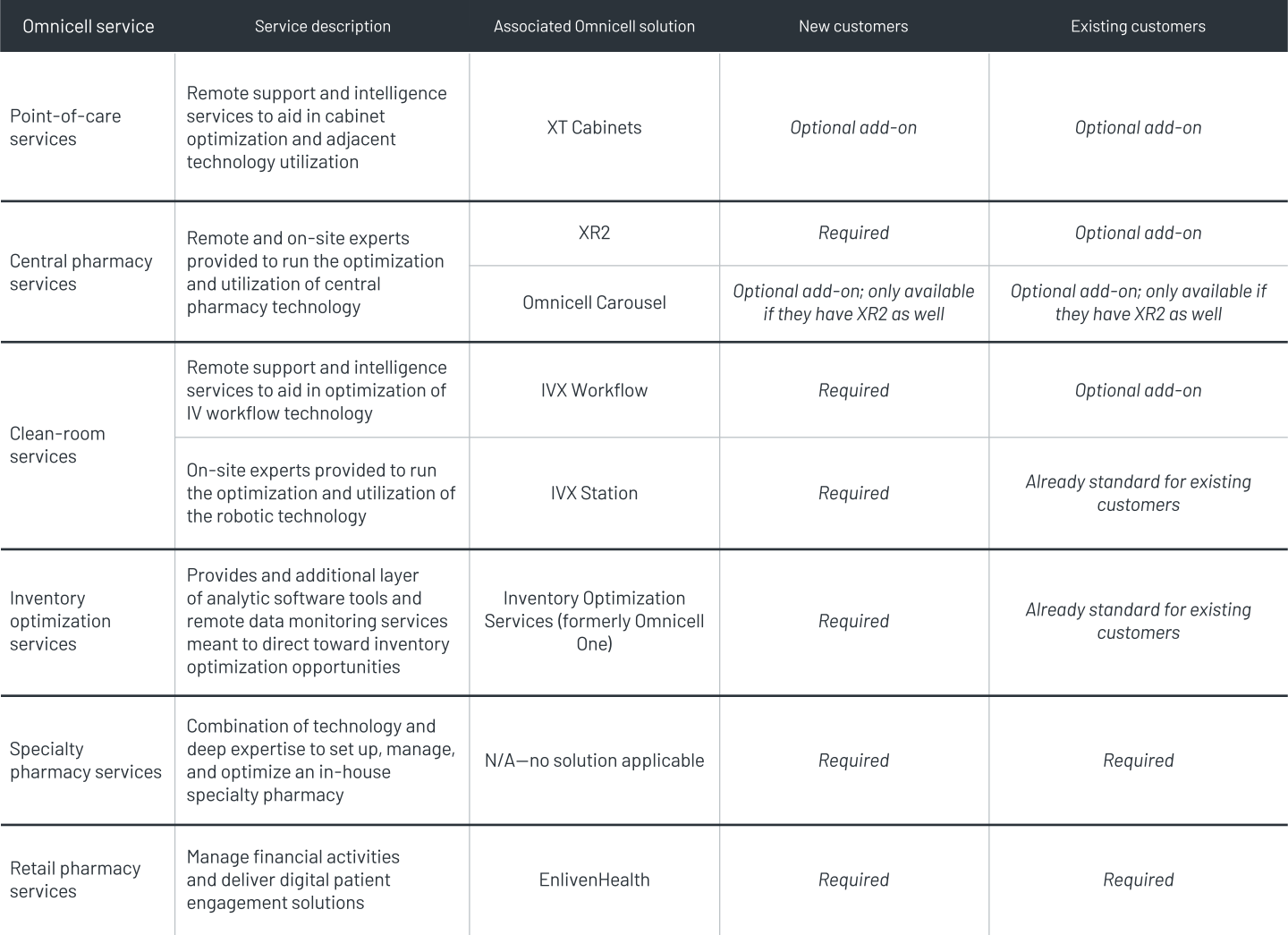
Omnicell provided the following additional context on their solutions and associated services as they move forward into their managed services model:
About This Report
This report aims to show an early look at customer perception of Omnicell’s new managed services model. This survey includes combined information from six Omnicell products—Inventory Management, OmniRx, ROBOT-Rx, IVX Workflow, XR2, and XT Automated Dispensing Cabinets. The data in this report comes from two sources: (1) KLAS’ standard quantitative evaluation for healthcare software, and (2) a supplemental evaluation aimed specifically at customer outlook on announced changes at Omnicell. Interviews were conducted over the last 12 months.
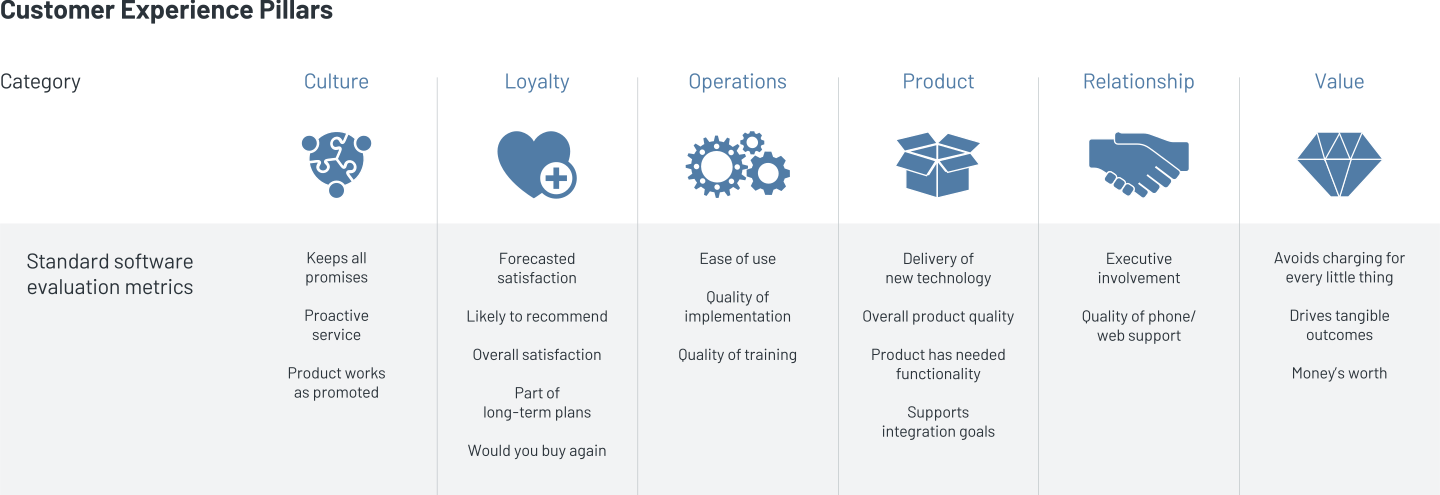
KLAS’ standard quantitative evaluation is composed of 16 numeric ratings questions and 4 yes/no questions, all weighted equally. Combined, the ratings for these questions make up the overall performance score, which is measured on a 100-point scale. The questions are organized into six customer experience pillars—culture, loyalty, operations, product, relationship, and value.
To supplement the customer satisfaction data gathered with the standard evaluation, KLAS also created a supplemental evaluation to delve deeper into customer perceptions of Omnicell’s plans to move to a managed services model. Respondents were asked the following:
- How would you categorize your relationship with Omnicell?
- In the coming two years, how would you describe the Omnicell technology footprint at your organization?
- What effect will Omnicell’s new strategy have on your organization?
- How confident are you that this strategy will reduce staffing burdens at your organization?
- Which Omnicell services will your organization consider using in the coming two years?
Sample Sizes
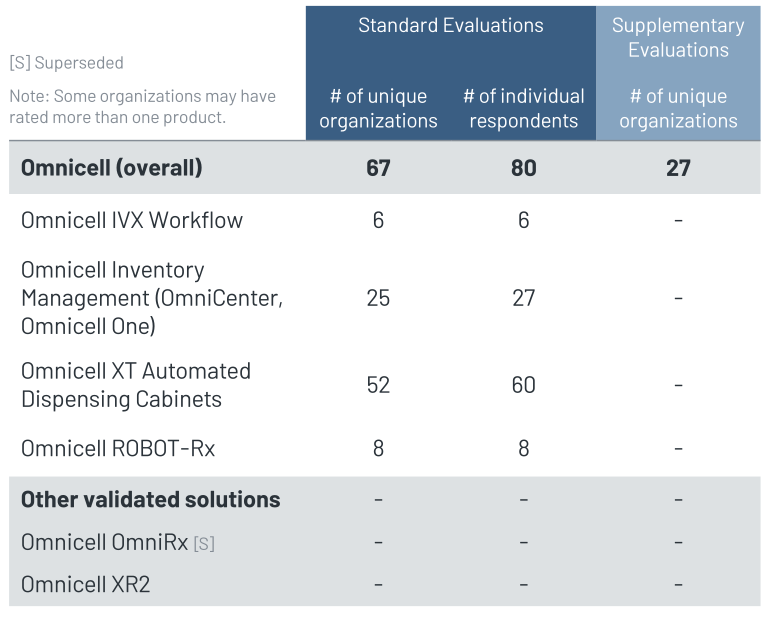
Unless otherwise noted, sample sizes displayed throughout this report (e.g., n=16) represent the total number of unique customer organizations interviewed for a given vendor or solution. However, it should be noted that to allow for the representation of differing perspectives within any one customer organization, samples may include surveys from different individuals at the same organization. The table below shows the total number of unique organizations interviewed for each vendor or solution as well as the total number of individual respondents.
Some respondents choose not to answer particular questions, meaning the sample size for any given vendor or solution can change from question to question. When the number of unique organization responses for a particular question is less than 15, the score for that question is marked with an asterisk (*) or otherwise designated as “limited data.” If the sample size is less than 6, no score is shown. Note that when a vendor has a low number of reporting sites, the possibility exists for KLAS scores to change significantly as new surveys are collected.
Product Designations Used in This Report
- Superseded [S]: Legacy solutions or other solutions that are not generally marketed or whose marketing is superseded by another solution in the same category.

Writer
Carlisa Cramer

Designer
Bronson Allgood

Project Manager
Andrew Wright
This material is copyrighted. Any organization gaining unauthorized access to this report will be liable to compensate KLAS for the full retail price. Please see the KLAS DATA USE POLICY for information regarding use of this report. © 2026 KLAS Research, LLC. All Rights Reserved. NOTE: Performance scores may change significantly when including newly interviewed provider organizations, especially when added to a smaller sample size like in emerging markets with a small number of live clients. The findings presented are not meant to be conclusive data for an entire client base.