KLAS Contact

Contact KLAS
Contact KLAS
 2026 BEST IN KLAS
Preferences
Related Series

2018
Related Segments

Population Health Management 2024
Sample of Decisions Made by Large Acute Care Organizations Center on a Few Broad Platforms

Author
Benjamin Cassity

Author
Paul Warburton

Author
Andy Paulsen
In recent years, purchasing energy in the population health management (PHM) market has cooled among large acute care organizations—only 10% of interviewed organizations report a recent or in-progress PHM purchase decision. This trend is largely the result of healthcare organizations deprioritizing initial investments in new solutions and instead focusing on cost reduction and improved ROI through vendor consolidation, better data access and utilization, and improved functionality that supports value-based initiatives (i.e., care management, whole-person care, downside risk contracts). Physician-led ACOs don’t always face the same challenges as large acute care organizations (the majority of the sample included in this data set), so they may make decisions differently. With fewer decisions being made for acute care organizations, there is greater pressure on vendors to more thoroughly prove their platform’s capabilities during the RFP process. To help healthcare organizations navigate purchasing decisions in this market, this report draws from 40 purchase decisions validated by KLAS between July 2022 and June 2024 to examine (1) which vendors’ customer bases are growing, being maintained, or decreasing amid market shifts and (2) which factors contribute to current buying energy. Satisfaction data from current customers is also included.
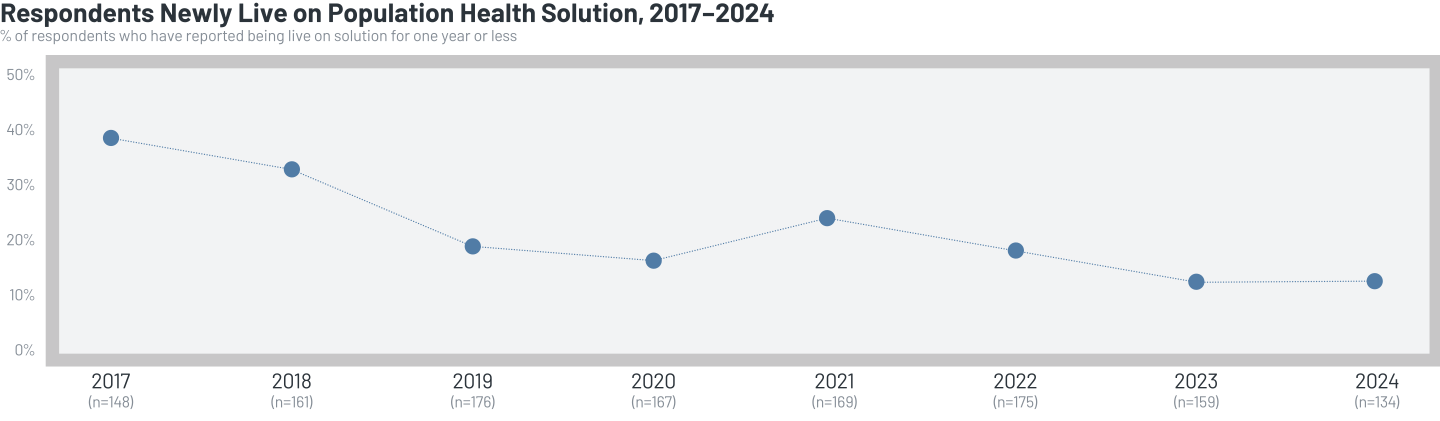
 KLAS Decision Insights data does not represent a comprehensive census or win/loss market share study. Rather, it is intended to help organizations understand which vendors have market energy and why, showing recent and future decisions. Insights from physician-led ACOs are limited in this report.
Market Energy Mostly Focused on Arcadia, Innovaccer & Lightbeam for Broad Functionality That Supports Value-Based Initiatives; Epic Considered for Consolidation
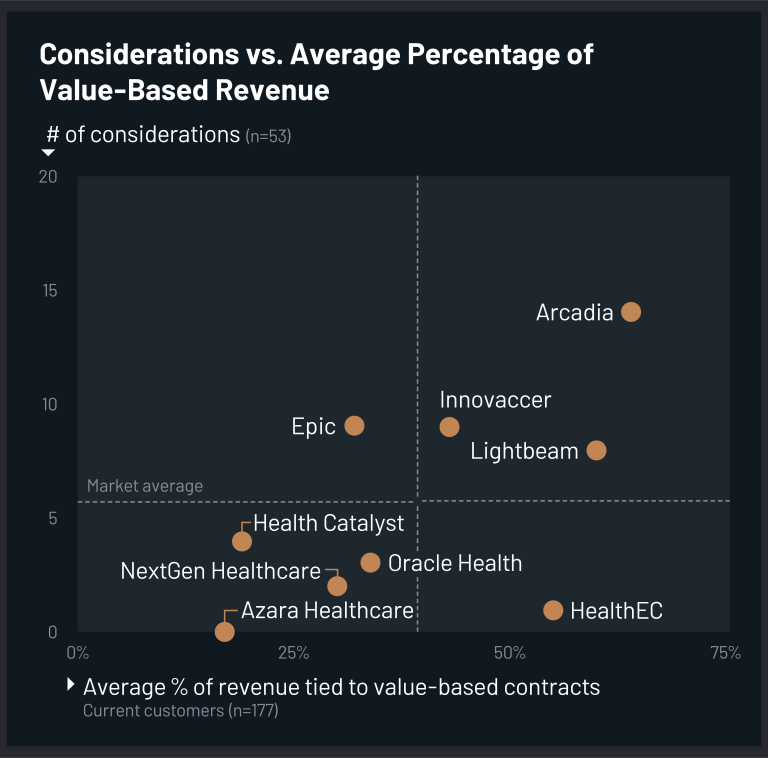
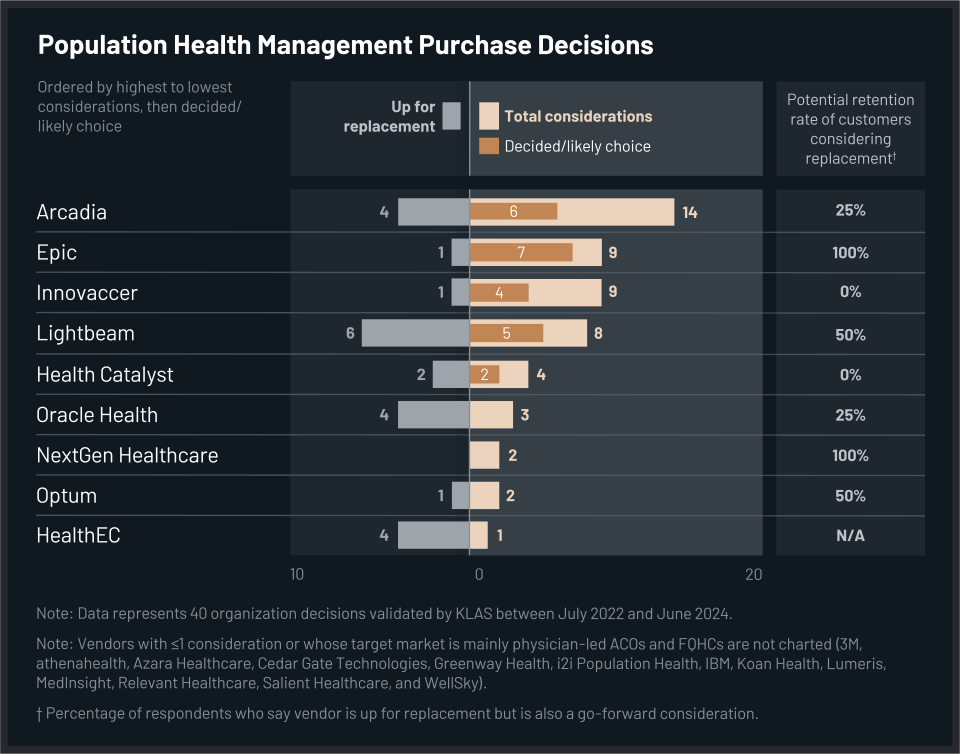 The majority of organizations making purchase decisions in this space today are investing heavily in downside risk and value-based initiatives. Due to high variability in downside risk contracts, only a few vendors offer both broad functionality and high flexibility that meet the complex needs of these organizations—as a result, considerations are largely for these vendors. Arcadia is most considered, and their interviewed customer base reports the highest average percentage of revenue tied to value-based initiatives (see chart on next page). Respondents considering Arcadia find value in the ability to aggregate clinical and claims data from multiple EHRs for custom reporting and also note how intuitively the AI capabilities manage complex risk contracts. Innovaccer is also a leader in considerations, with many respondents also noting they view Innovaccer as an industry leader in general. Organizations who selected Innovaccer cite the aggregation of multiple data sources for risk-based contracts as a main factor in their decision. KLAS has validated recent increasing interest from very large IDNs doing complex work. Additionally, Innovaccer has significant interest from physician-led ACOs, which represent a smaller percentage of respondents in this data set. Lightbeam is also frequently considered, and current customers report a high percentage of value-based revenue. Organizations who consider the vendor often highlight the robust analytics and the case-management tool that simplify the management of multiple risk contracts and referral programs, all at a reasonable cost.
Epic is the third most-considered vendor; main consideration factors are tech stack consolidation and improved data access rather than functionality for value-based initiatives. Still, many organizations who consider Epic highlight the substantial data warehouse, which reportedly helps with value-based care reporting metrics. Some organizations that consider Epic say other vendors’ solutions have more advanced technology. Among current customers, satisfaction is generally high, and many are willing to recommend the product due to the unified platform and strong support team.
Due to Lack of Optimization, Lightbeam, Arcadia, Oracle Health & HealthEC* Most Often Up for Replacement
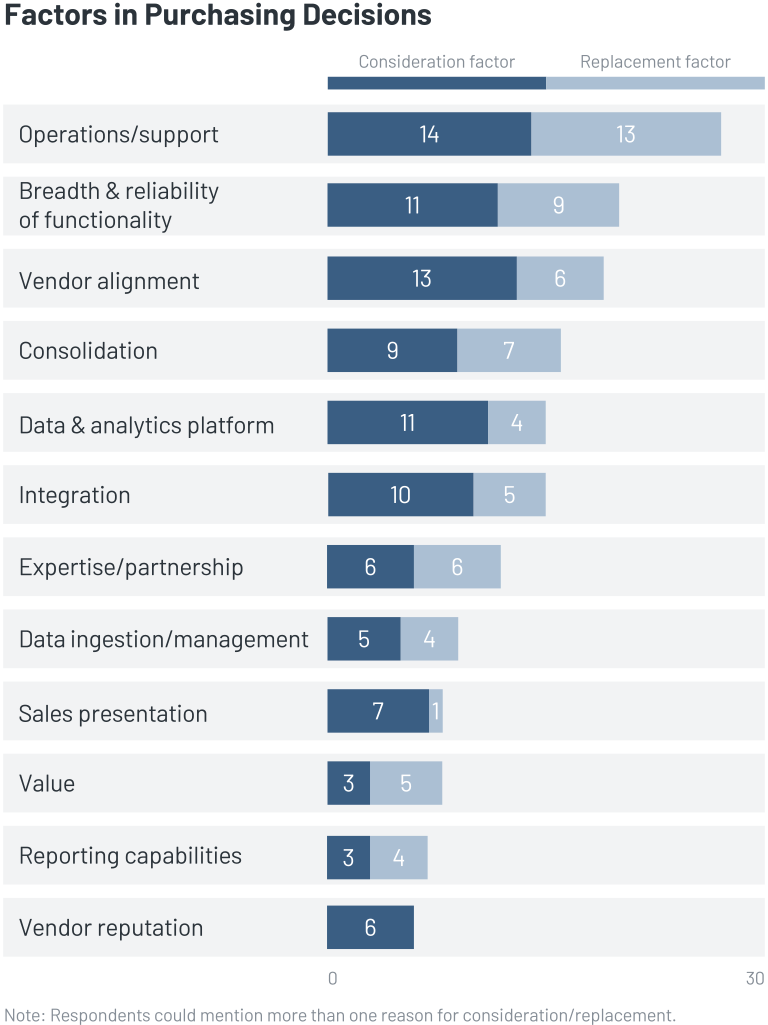 In this report, organizations cite various reasons for replacement, but the underlying problem influencing most reasons is the solution not being optimized for end users (e.g., insufficient system capabilities, lack of vendor partnership through training and support). While often considered in purchase decisions, Lightbeam is also most often up for replacement—notably, though, 50% of these respondents were still considering staying with Lightbeam and had not finalized their decision at the time of interviews. Those thinking about replacing the solution note that the lack of (1) actionable insights from the analytics dashboard and (2) full data aggregation has led to lower end-user adoption and, ultimately, lower customer loyalty. Arcadia, Oracle Health, and HealthEC* respondents often feel their solution use is not optimized due to gaps in support/training and implementation. Arcadia’s improved product stability and support have reduced the number of potential replacements—there was only one in the last year. Still, current customers want additional guidance during implementations to ensure data is integrated correctly and on time; this concern has led to lower customer loyalty, even as Arcadia is often considered in purchase decisions. Often deep adopters of value-based initiatives, Oracle Health respondents want more personalized training to optimize their solution—those considering replacing the solution feel that without this guidance, they are unable to accurately track outcomes. Interviewed HealthEC* customers report that support resources are not available for ongoing training, leading many to feel like they can’t optimize system use. As a result, they are considering other solutions.
*Limited data
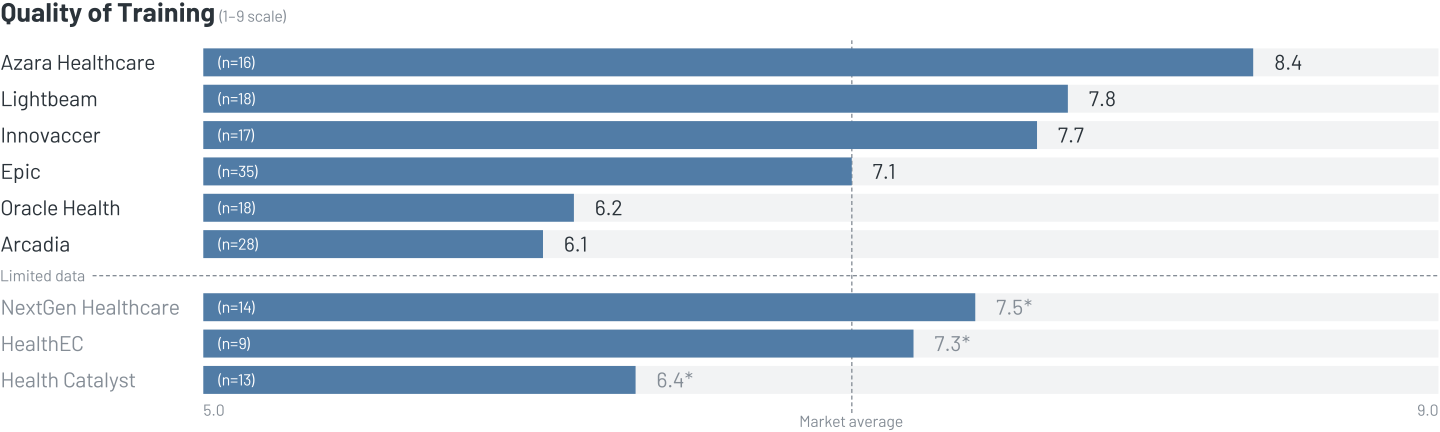
Looking Forward, Customers of Oracle Health, Health Catalyst & NextGen Healthcare* Need Improved Innovation
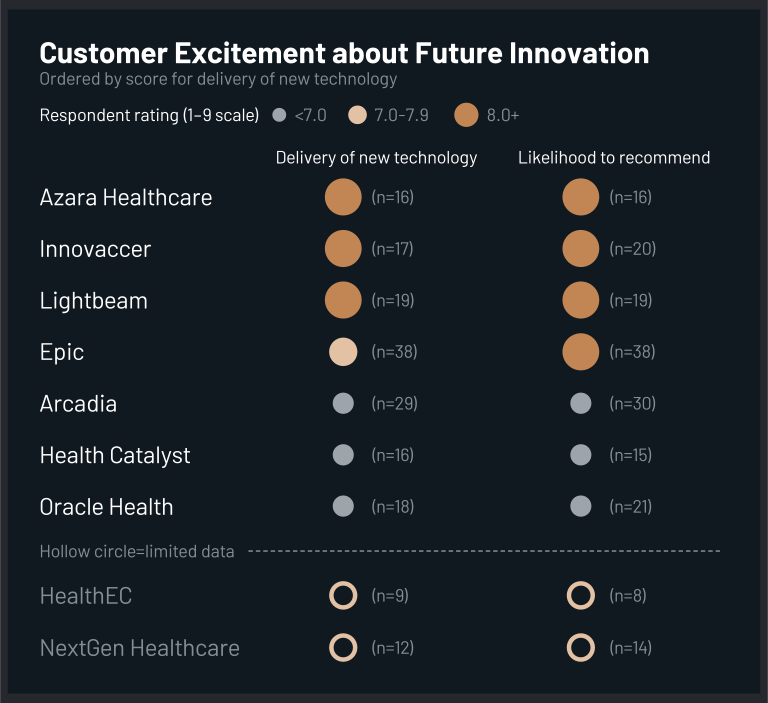 Outside of the four vendors most often considered, PHM vendors aren’t seeing much purchase energy or excitement from healthcare organizations. Still, Oracle Health, Health Catalyst, and NextGen Healthcare have well-established customer bases for their PHM systems. Many customer respondents point to development gaps that would need to be closed in order for them to be excited about and willing to recommend their respective products. Oracle Health respondents feel the vendor’s road map has stalled since the Cerner acquisition and would like the vendor to leverage new technology and enhance the UI to make data aggregation easier. Similarly, Health Catalyst respondents say there has been little communication about the vendor’s road map over the years, and the lack of reporting development makes it harder to accurately track financial outcomes. Interviewed NextGen Healthcare* customers want more end-user reporting that highlights action items in care plans as well as improved financial tracking to drive outcomes. Also of note, HealthEC* respondents’ satisfaction with the delivery of new technology has decreased in recent years, and some are less optimistic than before. Unlike the other vendors mentioned, Azara Healthcare is noted for strong communication, regular updates, and easy-to-use reporting; however, respondents want increased broad data-aggregation and care-management capabilities.
*Limited data
About This Report
Data for this report comes from two sources: (1) KLAS Decision Insights data and (2) KLAS performance data.
KLAS Decision Insights Data
All references in this report to organizations’ purchasing motivations come from KLAS’ Decision Insights data. Since 2017, KLAS has been gathering information as to which vendors are being replaced, considered, and purchased and what factors drive these decisions. KLAS Decision Insights data does not represent a comprehensive census or win/loss market share study. Rather, it is intended to help organizations understand which vendors have market energy and why. The data in this report comes from 40 organizations that are making or have recently made a PHM purchase decision validated by KLAS between July 2022 and June 2024.
KLAS Performance Data
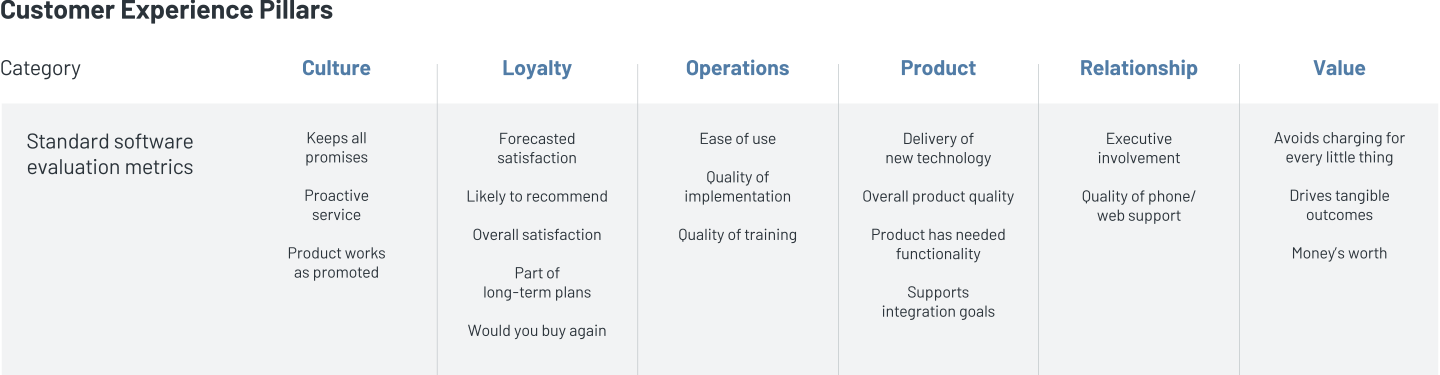
Each year, KLAS interviews thousands of healthcare professionals about the IT solutions and services their organizations use. For this report, KLAS performance data coincides with the KLAS 2024 Best in KLAS awards. Interviews were conducted from December 2022 to December 2023 using KLAS’ standard quantitative evaluation for healthcare software, which is composed of 16 numeric ratings questions and 4 yes/no questions, all weighted equally. Combined, the ratings for these questions make up the overall performance score, which is measured on a 100-point scale. The questions are organized into six customer experience pillars—culture, loyalty, operations, product, relationship, and value.
In addition to the customer satisfaction data from the standard evaluation, KLAS asked supplementary questions specific to the PHM market:
- What percentage of your overall revenue is tied to value-based contracts?
- What types of value-based contracts are you currently in?
Sample Sizes
Unless otherwise noted, sample sizes displayed throughout this report (e.g., n=16) represent the total number of unique customer organizations interviewed for a given vendor or solution. However, it should be noted that to allow for the representation of differing perspectives within any one customer organization, samples may include surveys from different individuals at the same organization. The following table shows the total number of unique organizations interviewed for each vendor or solution as well as the total number of individual respondents.
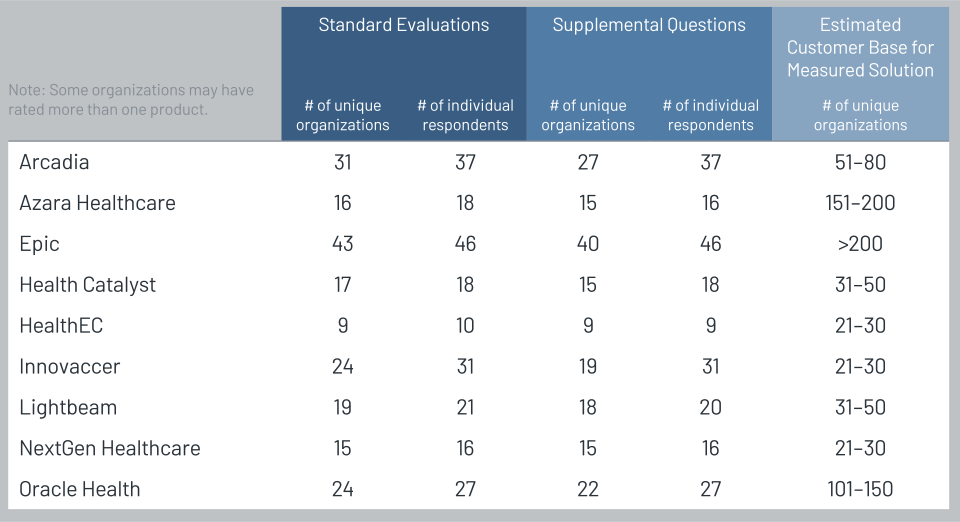 Some respondents choose not to answer particular questions, meaning the sample size for any given vendor or solution can change from question to question. When the number of unique organization responses for a particular question is less than 15, the score for that question is marked with an asterisk (*) or otherwise designated as “limited data.” If the sample size is less than 6, no score is shown. Where textual content relies on limited data, the vendor name is marked with an asterisk. Note that when a vendor has a low number of reporting sites, the possibility exists for KLAS scores to change significantly as new surveys are collected.

Writer
Carlisa Cramer

Designer
Nikki Christensen

Project Manager
Andrew Wright
This material is copyrighted. Any organization gaining unauthorized access to this report will be liable to compensate KLAS for the full retail price. Please see the KLAS DATA USE POLICY for information regarding use of this report. © 2026 KLAS Research, LLC. All Rights Reserved. NOTE: Performance scores may change significantly when including newly interviewed provider organizations, especially when added to a smaller sample size like in emerging markets with a small number of live clients. The findings presented are not meant to be conclusive data for an entire client base.