KLAS Contact

Contact KLAS
Contact KLAS
 2026 BEST IN KLAS
Preferences
Related Series
Related Segments

RTLS 2024
How Organizations Are Broadening Their Use Cases

Author
Don Seamons

Author
Jennifer Hickenlooper

Author
Dallin Seely
Historically, healthcare organizations have primarily used real-time location system (RTLS) solutions to track assets and equipment. However, with the recent advancements and improved usability of RTLS technology, many organizations are moving beyond established use cases (e.g., asset tracking) to focus on emerging use cases (e.g., hand hygiene tracking) as well. When organizations have several use cases for their RTLS technology, they see a broader set of outcomes and tend to be more satisfied with their solution. This report examines customer experiences with their RTLS vendors and shares case studies from individual organizations leveraging their RTLS technology to achieve critical outcomes.
 This report includes data from two sources: (1) customer satisfaction ratings for several key performance metrics and (2) case studies from individual organizations detailing their use cases, outcomes, and lessons learned. Summaries of the case studies are shared on the following pages. The complete case studies can be found in the full report.
Sonitor & CenTrak Broadly Validated for RTLS Use Cases & Highlighted for Accuracy; Some Sonitor Customers Want Equipment Improvements, while CenTrak Customers Report Inconsistent Delivery
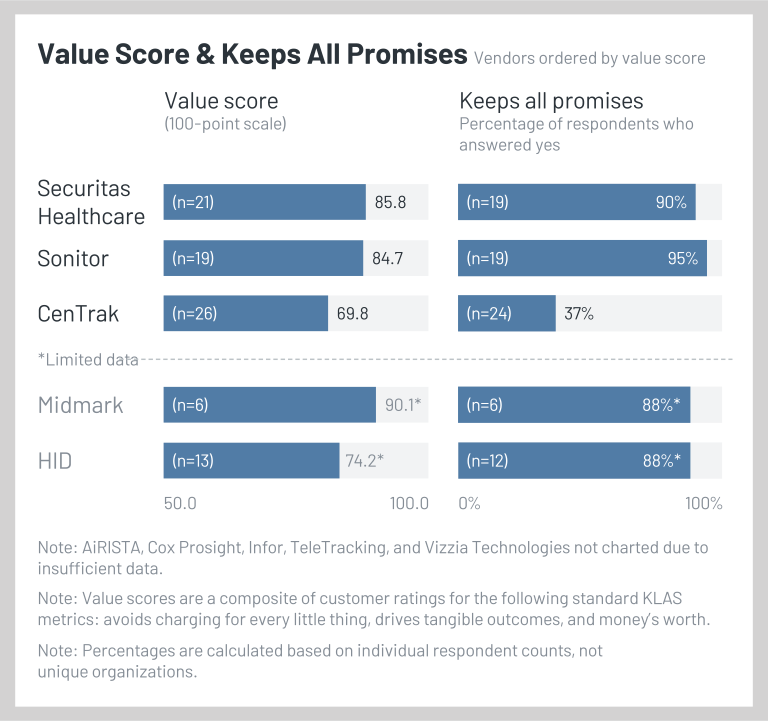
Interviewed customers of Sonitor and CenTrak report a broad range of use cases; notably, the vendors’ products are the only two validated as being used for hand hygiene tracking. Sonitor—the 2024 Best in KLAS winner for RTLS—sells equipment only (badges, infrastructure, etc.) and works with various qualified resellers that offer Sonitor’s equipment with the resellers’ software. The equipment (which uses Wi-Fi, Bluetooth Low Energy, and ultrasound technology) generally works well—it is seen as accurate and integrates well with other vendors’ software, especially nurse call systems. The ultrasound capability for room-level accuracy and the vendor’s proactive support are also noted as strengths. In contrast, respondents mention a lack of initial training, costly maintenance, and issues with battery life and equipment design (e.g., badges being too big). The solutions also sometimes require manual intervention, which respondents say is a hassle. CenTrak customers appreciate the system’s ability to provide accurate room-level and bay-level coverage via the infrared feature, which is important for tracking patients and assets. Some customers say the system is invaluable for reducing staffing overhead and improving equipment tracking. Only 37% of respondents say the vendor keeps their promises (see chart in next section), mentioning challenges like broken tracking tags, short battery life, high turnover among vendor staff, poor project management, reactive communication, and insufficient training. Still, in light of recent changes to the executive team, multiple respondents are hopeful about future improvements and the system’s potential to meet their needs. The support has also improved, with a few respondents pointing to better engagement, more resources, and a streamlined ticketing system.
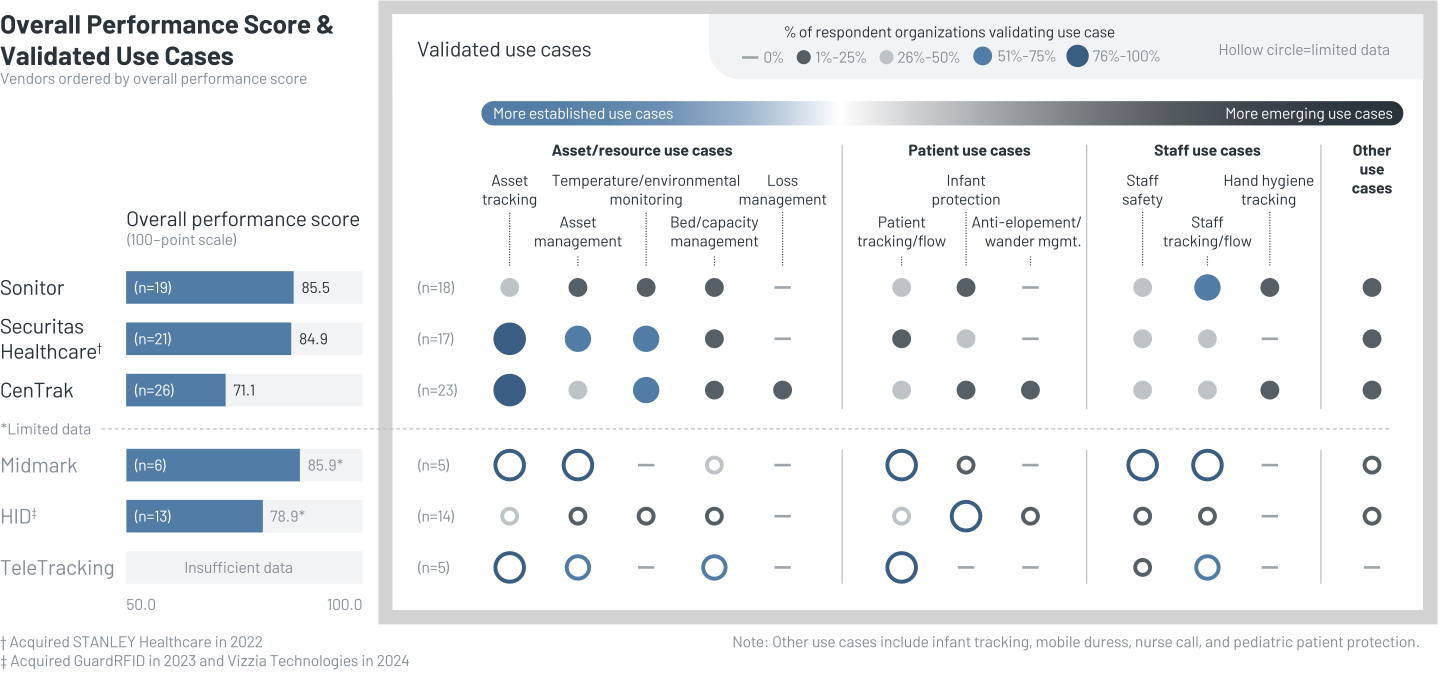

What about TeleTracking? For this report, KLAS has insufficient performance data on TeleTracking’s RTLS solution, though KLAS validated some customers’ RTLS use cases. TeleTracking primarily focuses on their command center offering, which aims to coordinate patient care, automate flow, and improve operations across care networks. The vendor has an established RTLS customer base, and the RTLS offering is intended to help with care transitions.
A note about other vendors: AiRISTA, Cox Prosight, Infor, and Vizzia Technologies are not charted due to insufficient KLAS performance data and insufficient validation data. More information about Cox Prosight and Vizzia Technologies can be found in their respective case studies.
Securitas Healthcare Highlighted for Product Quality & Driving Multiple Outcomes; Several Customers Frustrated with Cost Structure
Respondents of Securitas Healthcare (who acquired STANLEY Healthcare in 2022) appreciate the system’s broad, robust functionality and integration capabilities, saying it is a helpful tool for asset tracking, temperature monitoring, and staff safety. Reported outcomes include less time spent locating equipment, greater operational efficiency, improved compliance, cost savings, and quicker response times to staff duress and nurse calls. Some respondents also use the vendor’s infant security offering to alert staff of infant security events. There are concerns from customers about the cost structure, system management (some describe it as clunky), and tag accuracy. The training and support are also seen as lacking because respondents feel they are left to figure things out on their own.
Midmark* Highlighted for Staff Safety/Tracking, Respondents Want More Utilization Guidance; HID* Customers Value Infant Security Focus, Say Training Could Improve
 Midmark* is transitioning their software to the cloud, and respondents say the easy-to-use solution drives outcomes such as improved staff safety and tracking. The vendor is also noted for their responsive support and ability to troubleshoot problems. Respondents would like more proactive communication and a better understanding of Midmark’s road map. Additionally, they want more ongoing guidance on how to better utilize the solution. HID* has seen recent growth through the acquisition of GuardRFID in 2023 and of Vizzia Technologies in 2024 (HID and Vizzia Technologies are evaluated separately in this report). Interviewed HID customers report narrow use case adoption, as the RTLS offering primarily focuses on infant security/tracking and asset tracking. These use cases are highly valued by respondents, who say the system helps keep infants safe and protected. They also mention that the hardware is generally good quality and the system is user friendly. Many would like more onboarding and ongoing training, and there is mixed feedback about support—some note the support is responsive during the resolution process, while others experience long wait times and have difficulties getting issues resolved. Additionally, false alarms and a short battery life cause disruptions for respondents, and the cost of the system is viewed as a drawback.
*Limited data
Case Study Summaries
To more deeply explore the current state of the RTLS market, KLAS invited each vendor in this report to identify one customer organization that is making the most of the vendor’s RTLS technology (AiRISTA, Infor, and TeleTracking did not identify a customer). KLAS then interviewed these customers regarding their RTLS use cases and the outcomes being achieved. Summaries of the case studies are shared below. The complete case studies can be found in the full report. These case studies are meant to both showcase specific vendor capabilities and encourage healthcare organizations to consider how to broaden their RTLS use cases.
Vendors ordered alphabetically
CenTrak Case Study: Improving Network Infrastructure & Clinical Communications
| This organization initially implemented CenTrak to enhance their network infrastructure and clinical communication systems. Their primary focus area is staff duress, with another use case being asset tracking. The organization plans to expand their use cases to include nurse locating and proximity reporting. | Top outcomes achieved
|
 Healthcare Organization 1
Cox Prosight Case Study: Enhancing Efficiency & Allowing Nurses to Focus on Patients
| Ochsner Lafeyette General Medical Center worked with Cox Prosight to move from manual logs to an RTLS solution, which helped improve asset tracking, improve compliance with preventive maintenance schedules, and save significant time for nurses, leadership, and the transport team. Overall, the organization has enhanced their patient care and operational efficiency. | Top outcomes achieved
|
HID Case Study: Implementing Infant Security to Increase Efficiency & Provide Peace of Mind for Clinical Staff & Patients
| This organization uses HID’s solution (TotGuard Infant Security System) because of its reliability and ease of use. In addition to infant security, the solution is also used for some staff tracking. It integrates well with existing badge systems, thus reducing IT interventions. | Top outcomes achieved
|
Midmark Case Study Leveraging Integration to Improve Workflow Efficiency
| Midmark’s RTLS solution has improved operational efficiencies and driven patient care outcomes for Memorial Healthcare System. The system tracks assets and patients, helps with capacity management, and integrates with the organization’s EHR (Epic) and other systems. | Top outcomes achieved
|
Securitas Healthcare Case Study: Enterprise Licensing Leads to Significant Cost Savings
| This organization has deeply adopted the Securitas Healthcare platform and expanded their use cases significantly—use cases include asset tracking, environmental monitoring, staff duress systems, and more. The enterprise licensing model has reduced costs and allowed for widespread adoption across various departments and applications. | Top outcomes achieved
|
Sonitor Case Study: Staff Communication & Battery Management Foster RTLS Adoption
| This organization initially utilized asset tracking but has broadened their use cases using the Sonitor offering. Sonitor and the healthcare organization used both clear staff communication and a battery management program to drive adoption. The solution uses ultrasound technology and provides real-time location data that enhances the organization’s patient care and operational efficiency. | Top outcomes achieved
|
Vizzia Technologies Case Study: Infrared Technology Drives Strong Location Accuracy
| This organization uses Vizzia Technologies’ software with other vendors’ equipment. The system has been instrumental in managing logistics, compliance, and patient care. In particular, it tracks movable medical equipment (e.g., infusion pumps) that is critical for both maintenance and clinical use. | Top outcomes achieved
|
Recommendations from Successful Organizations
During the case study interviews, KLAS asked organizations about their keys to RTLS success. Impactful recommendations are listed below. Of note, these recommendations can drive success regardless of what RTLS solution is being used.

Pre-Implementation & Implementation
People, process, and adoption recommendations
- Engage all relevant stakeholders early to ensure buy-in and smooth implementation.
- Clearly communicate system benefits and functionalities to all users.
- Schedule training sessions as close to go-live as possible to help users better retain information.
- Plan for potential downtime and have contingency plans in place to minimize disruption.
- Establish clear protocols for system use and maintenance to ensure consistency.
System setup recommendations
- Conduct thorough site surveys to identify optimal locations for equipment installation.
- Thoroughly test the system before full deployment to identify and resolve issues.
- Utilize vendor support for initial setup and troubleshooting; this will help with proper configuration.
- Make sure that integration with existing systems (e.g., EHRs, security systems) is seamless.
- Double-check that all equipment (e.g., tags, exciters, repeaters) is functioning correctly.

Post-Implementation & Long-Term Success
People, process, and adoption recommendations
- Monitor system usage and performance metrics to identify areas that could be improved.
- Ensure that all relevant staff are aware of and adhere to system protocols and procedures.
- Provide ongoing training and support to help users be comfortable with the system.
- Use system data to drive process improvements and enhance operational efficiency.
- Foster a culture of continuous improvement by encouraging feedback and suggestions from users.
- Regularly review and update system documentation to reflect any changes or updates.
System maintenance recommendations
- Regularly update and maintain the system for continued reliability and performance.
- Work with the vendor to get updates and new features that can enhance system functionality.
- Conduct periodic reviews of system performance and user satisfaction to determine whether the system is meeting organizational needs.
- Implement a battery replacement program so that tags and other pieces of equipment remain operational.
About This Report
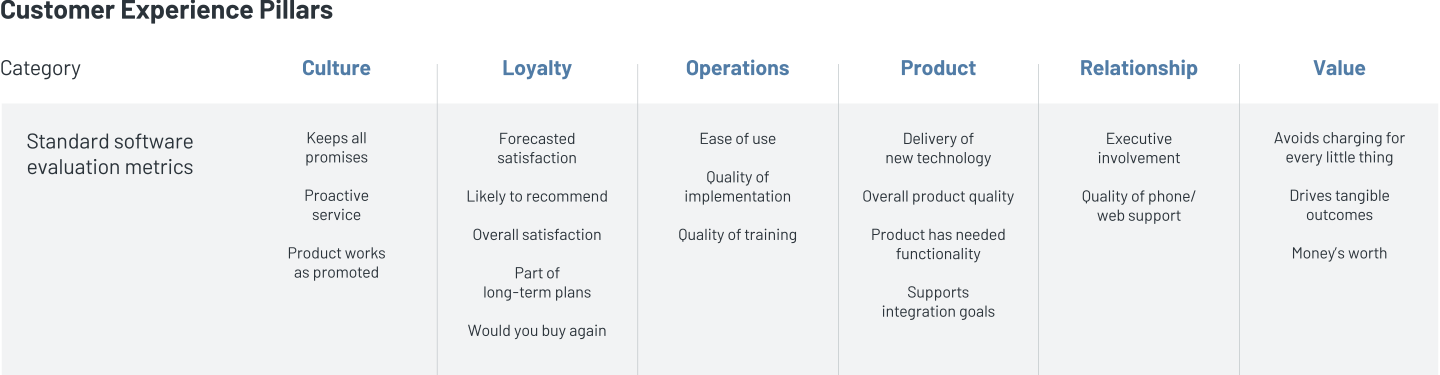
Each year, KLAS interviews thousands of healthcare professionals about the IT solutions and services their organizations use. For this report, interviews were conducted between June 2023 and June 2024 using KLAS’ standard quantitative evaluation for healthcare software, which is composed of 16 numeric ratings questions and 4 yes/no questions, all weighted equally. Combined, the ratings for these questions make up the overall performance score, which is measured on a 100-point scale. The questions are organized into six customer experience pillars—culture, loyalty, operations, product, relationship, and value.
Additionally, KLAS interviewed organizations that the vendors in this report identified as leveraging their RTLS technology to achieve critical outcomes. In-depth interviews were conducted with these organizations between May 2023 and June 2024 to understand how they are expanding use cases for their RTLS product.
Sample Sizes
Unless otherwise noted, sample sizes displayed throughout this report (e.g., n=16) represent the total number of unique customer organizations interviewed for a given vendor or solution. However, it should be noted that to allow for the representation of differing perspectives within any one customer organization, samples may include surveys from different individuals at the same organization. The following table shows the total number of unique organizations interviewed for each vendor or solution as well as the total number of individual respondents.
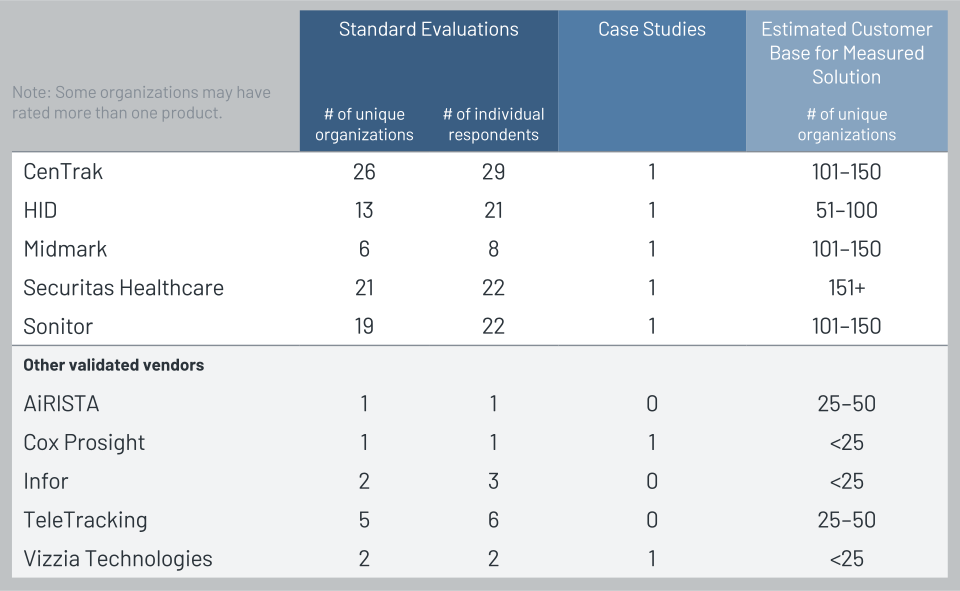 Some respondents choose not to answer particular questions, meaning the sample size for any given vendor or solution can change from question to question. When the number of unique organization responses for a particular question is less than 15, the score for that question is marked with an asterisk (*) or otherwise designated as “limited data.” If the sample size is less than 6, no score is shown. Where textual content relies on limited data, the vendor name is marked with an asterisk. Note that when a vendor has a low number of reporting sites, the possibility exists for KLAS scores to change significantly as new surveys are collected.

Writer
Sarah Brown

Designer
Nikki Christensen

Project Manager
Sydney Toomer
This material is copyrighted. Any organization gaining unauthorized access to this report will be liable to compensate KLAS for the full retail price. Please see the KLAS DATA USE POLICY for information regarding use of this report. © 2026 KLAS Research, LLC. All Rights Reserved. NOTE: Performance scores may change significantly when including newly interviewed provider organizations, especially when added to a smaller sample size like in emerging markets with a small number of live clients. The findings presented are not meant to be conclusive data for an entire client base.