KLAS Contact

Contact KLAS
Contact KLAS
 2026 BEST IN KLAS
Preferences
Related Series

SDOH Points of Light 2024
Recognizing Partnerships That Creatively Address SDOH Needs & Improve Whole-Person Care

Author
Benjamin Cassity

Author
Kyle Chilton
An individual’s health is determined by a variety of factors, including socioeconomic factors that aren’t treated or monitored within hospitals and clinics (e.g., housing, food access, language barriers, transportation). When patients struggle with these social determinants of health (SDOH), they are more likely to experience compounding health issues that require longer recovery times, increasing costs for both themselves and the healthcare system. Healthcare organizations, payer organizations, community-based organizations (CBOs), government organizations, and HIT vendors can partner to address communities’ SDOH needs and prevent patient conditions from worsening. KLAS’ SDOH Points of Light recognitions celebrate such partnerships’ successes—or “points of light”—in transforming patient and community care.
13 partnerships were given a 2024 SDOH Points of Light recognition, and their strategies and outcomes are shared in this report to highlight what is possible with deep collaboration. This Executive Insights section provides a high-level summary of the challenges the honorees tackled, the outcomes they achieved, and key lessons learned on the journey (see last page); the full report provides an in-depth case study of each collaboration.
 A note about recognition methodology: The SDOH Points of Light recognition is given to healthcare organizations, payer organizations, CBOs, government organizations, and HIT vendors who demonstrate close collaboration that leads to shared outcomes. KLAS validated each submission via a standard set of questions administered during in-depth interviews with representatives from all relevant stakeholders; these questions asked stakeholders to provide (1) an overview of the engagement, (2) engagement outcomes, (3) best practices and lessons learned, and (4) the overall impact the engagement has in the healthcare industry. Interviews were conducted from May 2024 to July 2024.

Points of Friction & the Technology Used to Address Them
The collaborations receiving 2024 SDOH Points of Light recognitions represent real progress toward tracking social needs, connecting patients with community resources, and tracking the utilization of those resources. The types of challenges these collaborations sought to address fall into eight areas, shown in the accompanying chart.
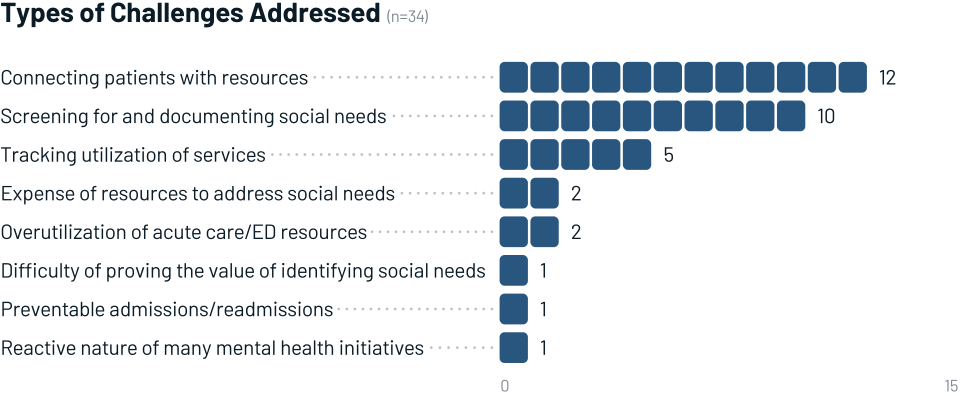
Of the eight challenges addressed, the two most common are connecting patients with resources and screening for and documenting social needs.
Connecting patients with resources is a multipronged challenge: Even when clinicians know a patient has social needs, it can be difficult for them to know what to do next. Some organizations do not have reliable data about available resources, or their referral list may be limited or outdated. Others may have a robust list, but the burden of referrals falls to physicians, requiring additional time and knowledge. Also, even when patients get connected with community resources, additional resources and infrastructure are required to close the loop so clinicians know whether their patients received aid.
Screening for social needs can be a cumbersome process: For healthcare organizations, screening for social needs is essential to having a successful SDOH program, and it is now a requirement from CMS. Healthcare organizations struggle with knowing how to capture data in an organized, useful manner without burdening clinicians with yet another task. The right technology and change management can streamline the data collection process and lead to impactful outcomes.
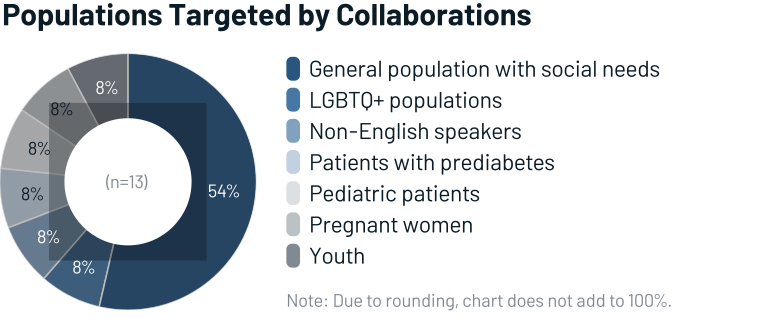
Of note, more than half of the collaborations in this report are focused on screening and referring patients from the general population. The remaining collaborations are focused on addressing the needs of specific populations (e.g., pediatric care, maternal health, LGBTQ+ care).
Variety of HIT Solutions Used to Address Points of Friction
The collaborators used a variety of software solutions to tackle the challenges they faced and created programs to collect SDOH data and connect patients with resources. KLAS’ hope is that examining these options will help other organizations identify technologies that might be helpful in their own strategies. Which option is best will largely depend on the collaborators’ resources, budget, relationship, and timeline. The table below outlines the specific challenges each group of collaborators was trying to solve, the action plan created, and the outcomes achieved.
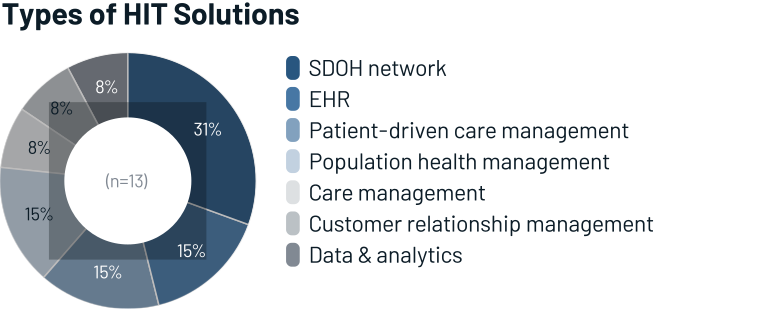
Overview of SDOH Points of Light Collaborations

Case Study 1: Identifying SDOH Needs & Connecting Patients with Resources

Inability to consistently identify the social needs of patients and connect patients with resources
 Patients are screened for social needs at several facilities; Intermountain Health has plans to expand. The number of clients served and the programs in the referral network have grown fivefold. The closed-loop referral program allows providers to know what resources patients have accessed.
Case Study 2: Reducing Readmissions with Effective Interventions

Readmissions and unplanned admissions were costly, and providers didn’t know what to do with information once risks were identified
Care coordination resource team now available to all 60 primary care teams across Corewell Health. More patients utilize resources to address social needs. Readmissions dropped from 21% to 7%. Program has expanded to focus on addressing self-management of various chronic illnesses.
Case Study 3: Implementing SDOH Surveys without Negatively Impacting Care Delivery

Needed a better understanding of patients’ social needs without requiring direct interaction with the care delivery system
More than 300,000 patients screened without impacting care delivery. Identified top SDOH needs as food, utility assistance, and general finances. Collaborators now measure how many members are connected with resources.
Case Study 4: Implementing a Screening & Referral Process for Pediatric Patients

Providing aid to pediatric patients proved difficult—CMICS didn’t have a closed-loop system for tracking SDOH needs, and the process of connecting patients with resources was complex
Screenings of pediatric patients increased to 79%. 16,000 patients with social needs were identified using ICD-10 Z codes. Volume of monthly closed-loop referrals increased from 0 to 300+ over three years. As families received assistance with social needs, pediatric patients’ health improved.
Case Study 5: Communicating with Maternal Health Patients between Appointments to Prevent Delivery-Related Complications

A significant portion of the patient population was at high risk of delivery mortality, and SDOH barriers were preventing them from attending prenatal appointments; additionally, there were opportunities to increase communication
Preterm deliveries fell by 23%. NICU admissions fell by 23%. Baby length of stay fell by 41%. Patient satisfaction increased. There was no increase in unnecessary appointments.
Case Study 6: Deploying a Diabetes Prevention Program

Millions of Americans are uNaware they have prediabetes; it was challenging for Trinity Health to collect and track data to identify patients with prediabetes and connect them with resources
Surpassed goal of enrolling 5,000 people in National Diabetes Prevention Program by 1,000. Trinity Health can access reimbursements from Medicare and Medicaid thanks to ability to collect required data in EHR.
Case Study 7: Connecting LGBTQ+ Patients with Educated & Affirming Providers

LGBTQ+ people are less likely to trust the general healthcare system and seek care due to experiences with discrimination and an inability to find affirming providers
OutCare Health’s database of affirming providers has grown from 3,000 to 4,500. Research conducted by the collaborators has increased visibility into care gaps experienced by LGBTQ+ populations.
Case Study 8: Giving Hope to Youth through Mental Health Support

The number of youth experiencing mental health issues has increased since the COVID-19 pandemic; these issues can be costly for families and caregivers, and efforts to address these needs are often reactive
81% of youth activated an account on the platform. Of that 81%, 20% had low hope scores and hadn’t been previously identified as needing assistance via school screenings. 30% of youth who activated their accounts had caregivers with unmet social needs; these caregivers were directed to community resources. Healthcare costs are expected to decrease.
Case Study 9: Creating a Community Connection Platform for Idaho Residents

Although Idaho has hundreds of nonprofit organizations and quality medical facilities, a study conducted by United Ways of Idaho found that most people didn’t know where to access community resources when they had social needs
Utilizing a customized social care referral platform has streamlined care management teams’ workflows. More than 180,000 searches have been conducted on the Findhelp platform since 2022 launch.
Case Study 10: Addressing Social Health Disparities among Medicaid Members

No uniform approach to collecting SDOH data from Medicaid members; because there was no system for connecting members with community resources, data was incomplete, and it was difficult to address social health disparities
PM Pediatric care has screened more than 19,000 families and made 9,500 referrals. Over 420 provider groups have been enrolled in the program—these groups have screened 40,700 patients and made 34,500 referrals. More CBOs have enrolled in a network of trusted partners, becoming resources that healthcare organizations can refer patients to.
Case Study 11: Using AI & Community Partners to Enhance Patient Care

No method for discovering patients’ social needs; language barriers made it difficult for Saint Peter’s University Hospital to understand and address needs; patients with unmet needs weren’t coming to hospital
Saint Peter’s University Hospital is now pinpointing the social needs of more patients. Staff productivity increased with efficient patient referrals to a food market (200 families per month) and transportation access program. Saint Peter’s University Hospital realized a 7% reduction in ED visits for screened patients compared to a matched control group.
Case Study 12: Reducing Costs by Practicing Whole-Person Care

Acute care resources were being overutilized; although physicians could identify social challenges impacting patients’ healthcare, they could not address them on their own
Greater patient engagement and access to resources that address social needs. 301 complex patients have improved their health. Readmissions decreased by 3%. Mortality rate among engaged patients decreased.
Case Study 13: Forming a Governance Committee to Address Patients’ HRSNs

High rates of ED usage/readmissions; Parkland Health needed a better way to track social needs, connect patients with resources, and track whether resources were being used
Services provided to more than 9,000 people. Fewer ED visits. Improved patient adherence to physician and medication instructions. Positive ROI and cost savings.
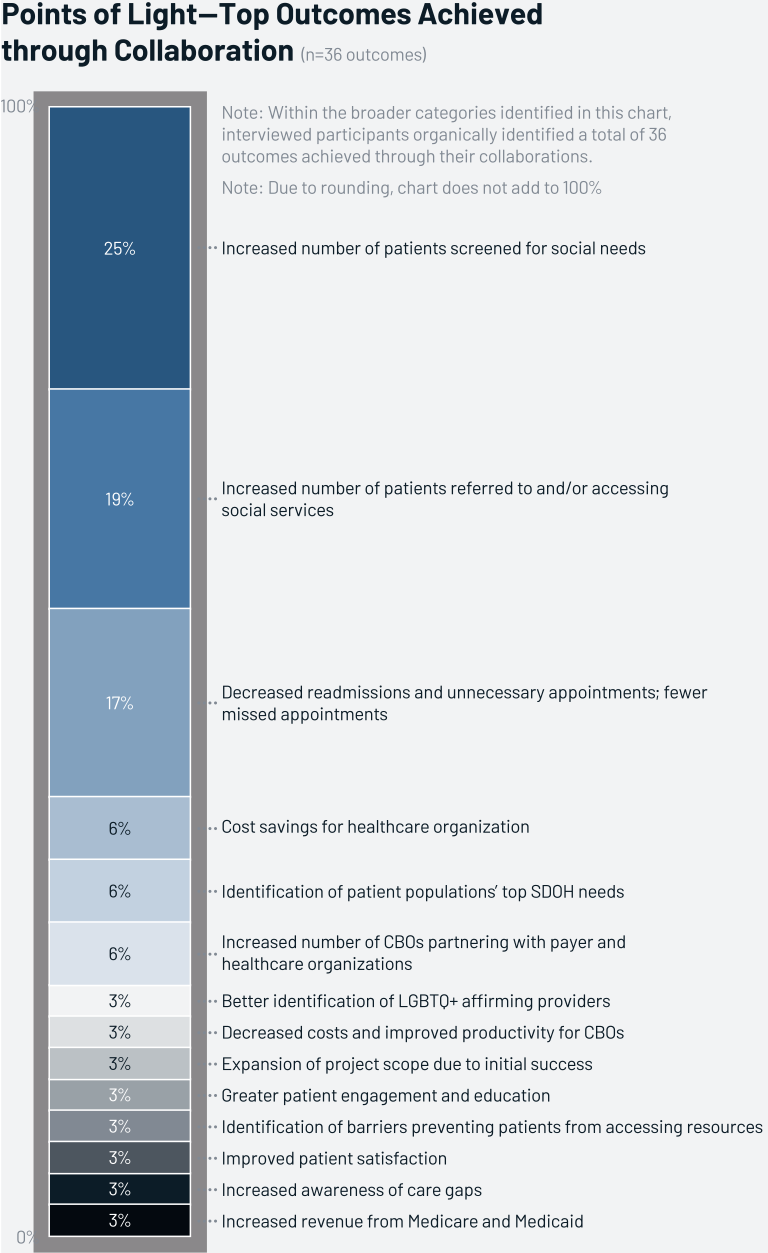
Points of Light: Most Common Outcomes Include More Patients Screened, More Patients Referred to Social Services, Improved Health Outcomes & Fewer Unnecessary Patient Visits
The collaborations highlighted in this report have achieved a variety of outcomes. The most common include:
- Increased number of patients screened for social needs: By partnering with vendors and adopting their solutions, several healthcare organizations have significantly increased the number of patients screened without burdening their clinicians with additional tasks. The technology has also helped healthcare organizations turn screening data into actionable insights.
- Increased number of patients referred to and/or accessing social services: More patients are accessing social services from community and government organizations. Vendor technology has made it easier for healthcare organizations to organize SDOH data and use it to refer patients to available resources. Many solutions have also helped establish a closed-loop referral process, allowing community and government organizations to report which patients utilized certain resources and what outcomes the patients have seen.
- Fewer unnecessary patient visits and better adherence to care plans: Addressing patients’ social needs has improved their overall health, resulting in decreased hospital readmissions and fewer ED visits. Also, patients with access to the tools and resources they need are more engaged in owning their health and have missed fewer appointments.

Key Lessons Learned
Any efforts to improve collaboration and alignment between healthcare organizations, payer organizations, government organizations, and CBOs require active participation from all stakeholders. Organizations looking to implement their own collaborations can benefit from those who have already walked the path. The collaborations examined in this report yielded many best practices, but the four key lessons outlined below emerged as the most common. Additional best practices can be found in the full case studies.

Get Internal Buy-In & Ensure Alignment
- Find individuals within your organization that will champion the initiative and map out the operational journey.
- Leaders at the healthcare organization must be invested in the project. Find leaders at the healthcare organization and the CBO who can lead out on the project and collaborate.
- Get buy-in from clinicians who want to close SDOH gaps for patients; clinicians can see positive outcomes from the project and share those with others.
- Hire quality care managers and social workers who will continually work to address patients’ SDOH needs.

Clearly Define the Problem
- Identify an issue and determine what the root of that issue is. For example, if your organization has a high readmissions rate, determine whether patients are being properly screened; whether more patient data needs to be aggregated from different hospitals, clinics, and payer organizations; or whether effective referrals are happening. Once the root of the issue has been identified, make plans to address it.
- Establish a process and infrastructure up front. To garner trust that an SDOH initiative will drive positive outcomes, organizations can’t just identify gaps—they must establish a process and infrastructure that will address the gaps and facilitate outcomes.

Leverage Partnerships
- No organization can do everything alone. Collaborators need to work together to help the greatest number of people possible.
- Be clear about intentions up front and build trust by communicating clearly with partners about what is and isn’t working.
- Addressing patients’ SDOH needs requires significant collaboration among ACOs, CBOs, and healthcare organizations. Use partnerships and resources to establish physician buy-in, train physicians, and help healthcare organizations achieve better financial and clinical outcomes. Additionally, find experienced people who can effectively manage different partnerships and contracts.
- Identify and involve internal stakeholders, including frontline workers, to drive the project. Then build and maintain trust with community workers and community members to have a successful program implementation.

Focus on Certain Populations & Learn How to Connect with Them
- Getting out into the community to learn what is needed and what has already been done can inform next steps and cultivate trust in the community.
- Listen to people from the population being affected by programs and initiatives. Their lived experience and perspective can provide guidance on how to provide access to resources.
- To reach and connect with the target population, understand how to communicate with them. Utilize a variety of communication methods, and use each patient’s preferred method if it is defined in the EHR. Use common, nonstigmatizing language when connecting with patients.
- Understand that patient situations can change overnight. Screen patients often, and allow them to retake SDOH surveys. This will help organizations more quickly identify patients with acute needs.

Writer
Sarah Brown

Designer
Jess Wallace-Simpson

Project Manager
Andrew Wright
This material is copyrighted. Any organization gaining unauthorized access to this report will be liable to compensate KLAS for the full retail price. Please see the KLAS DATA USE POLICY for information regarding use of this report. © 2026 KLAS Research, LLC. All Rights Reserved. NOTE: Performance scores may change significantly when including newly interviewed provider organizations, especially when added to a smaller sample size like in emerging markets with a small number of live clients. The findings presented are not meant to be conclusive data for an entire client base.