KLAS Contact

Contact KLAS
Contact KLAS
 2026 BEST IN KLAS
Preferences
Related Series

Snowflake in Healthcare 2023
Streamlining Data Management & Improving Operations in the Cloud

Author
Mike Smith

Author
Robbie Bullough

Author
Sam Eaquinto
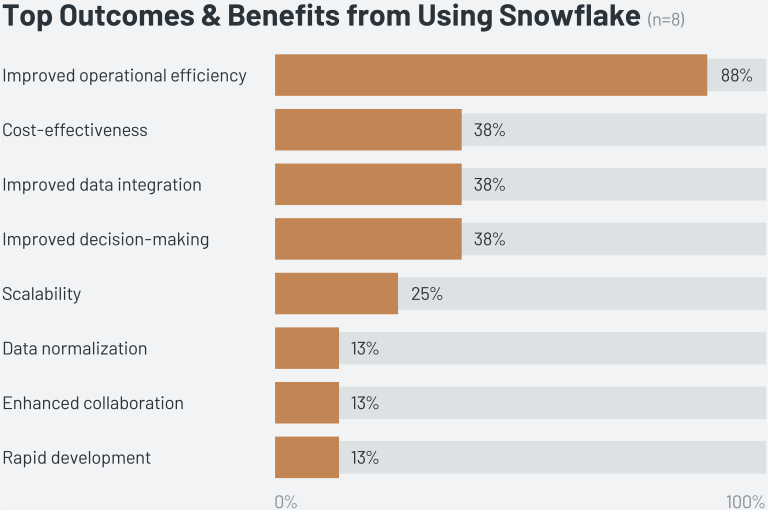
Healthcare organizations need to be able to access the right data to maintain efficient operations and provide high-quality patient care. However, gathering, integrating, and effectively using data from various sources can be complex and time consuming. To address this challenge, many organizations are turning to cloud solutions that streamline data management. Based on insights from 10 US healthcare provider organizations interviewed by KLAS between May 2023 and September 2023, this report examines the customer experience with Snowflake, including the workloads customers are using, achieved outcomes, and vendor performance.
Note: For more information on KLAS’ data collection process and report sample size, see the About This Report section.
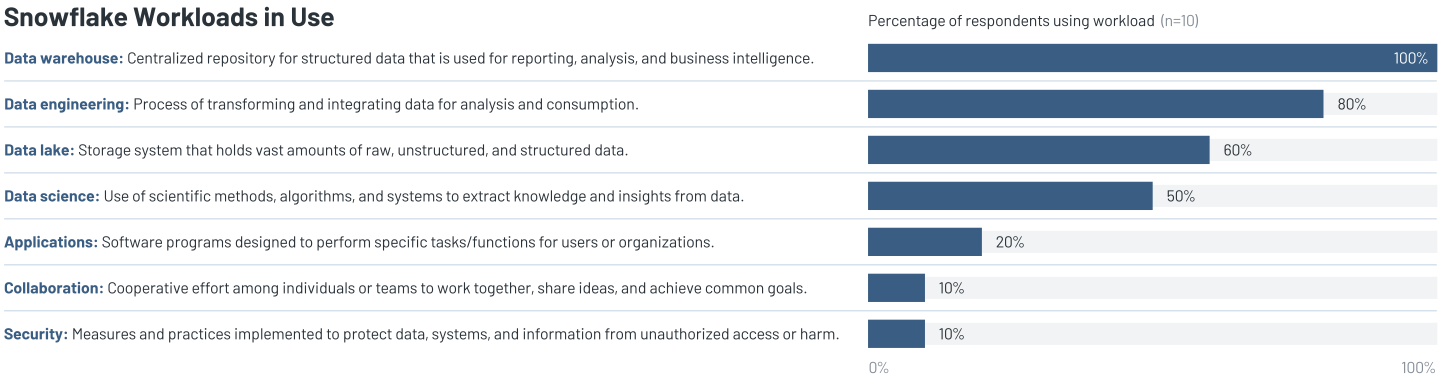
Improved Operational Efficiency Is Top Outcome; Customers Also Commonly Report Improved Data Integration, Decision-Making & Cost-Effectiveness
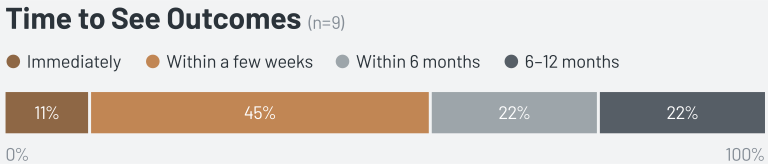
Most interviewed customers report improved operational efficiency after implementing the Snowflake Data Cloud, citing the consolidated data sources, simple maintenance and data management, and easy data loading and access. Additionally, almost 40% of respondents see improved data integration from using the Snowflake Data Cloud as their centralized data platform. Other commonly reported benefits include cost savings, scalability, and the ability to quickly analyze and gain insights into market share, profitability, and cost utilization. 56% of respondents report seeing outcomes either immediately or within a few weeks.
 “Running the data in the Snowflake Data Cloud and normalizing it into all of our downstream platforms takes a couple of hours. If we want the same data in Microsoft’s SQL Server product, that process will probably take several days.” —Director
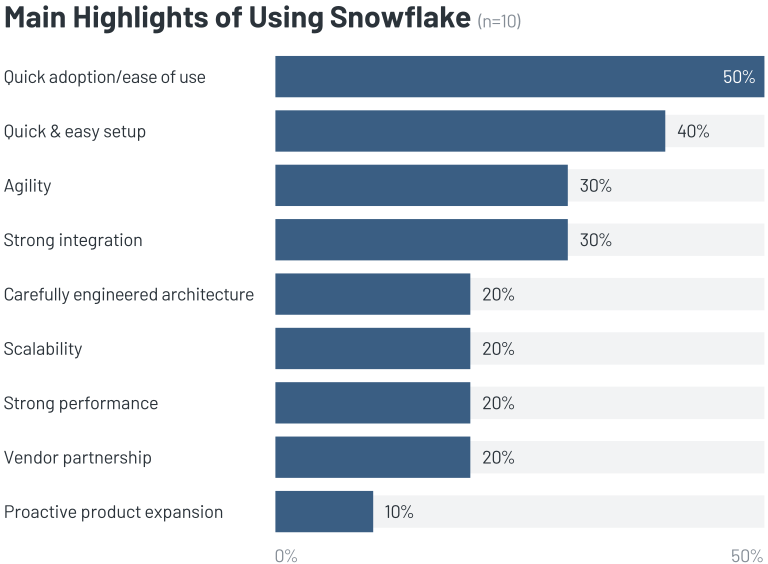
Main Highlights of Customer Experience Are Quick Adoption & Easy Setup
Snowflake customers most frequently highlight how quickly the solution can be adopted as well as its simplicity and user-friendliness, both of which contribute to high customer satisfaction. Users are often enthusiastic to learn how to use the platform as it offers new capabilities without requiring extensive training. Respondents also say that the solution’s similarity with Microsoft SQL Server facilitates quick adoption and streamlined, comprehensive data sharing. Implementations are noted for being easy and efficient, enabling some customers to be operational within minutes of going live. The solution’s agility and broad integration capabilities are also seen as highlights.
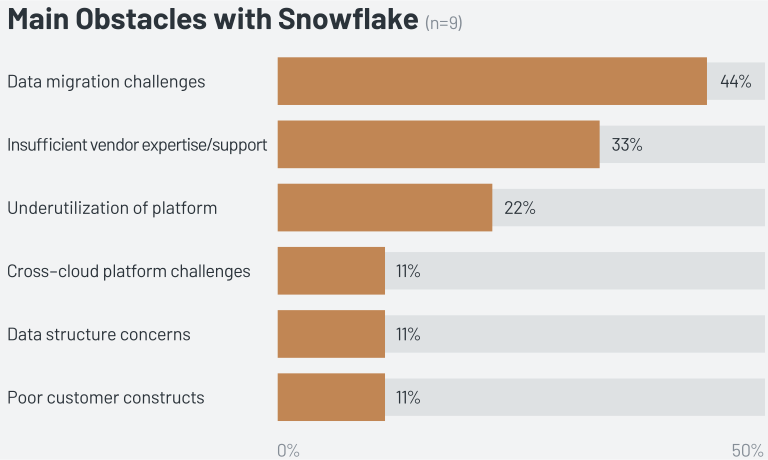
Data Migration Is the Biggest Obstacle for Healthcare Customers
Data migration is a common challenge for clients using the Snowflake Data Cloud. Healthcare organizations often use multiple third-party vendors and various data sources, and they need a consolidated tool set that supports data ingestion. While Snowflake excels in data transformation, data extraction is not their primary focus, which can make migrating databases to the Snowflake Data Cloud time consuming and difficult. Customers may potentially need to use separate extraction tools. Additionally, achieving integration with Active Directory for single sign-on can be challenging, so customers have to provide a comprehensive guide to enable users to navigate the intricacies of integration with other systems. The lack of internal expertise and guidance from Snowflake is another obstacle that some interviewed customers encounter, leading to underutilization of the platform. Customers want improved engagement and education from Snowflake to leverage the platform’s benefits fully.
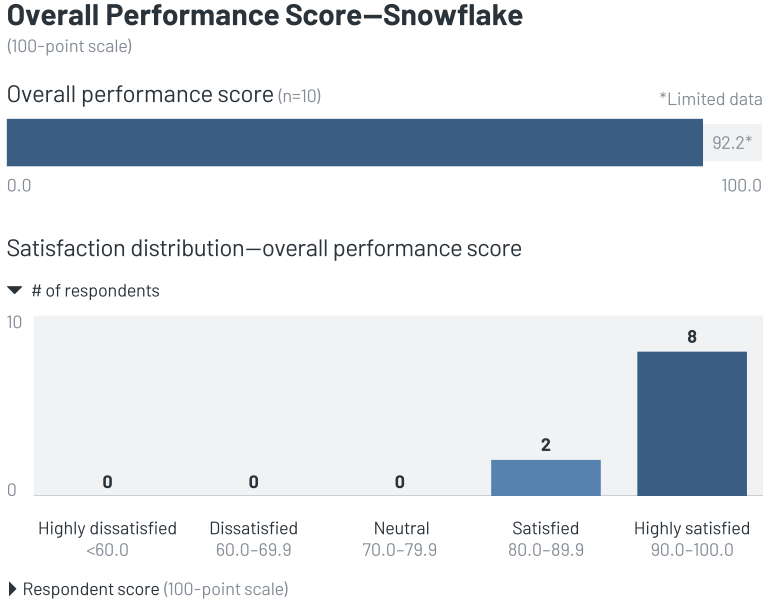
Most Respondents Are Highly Satisfied; All Would Buy Snowflake Again
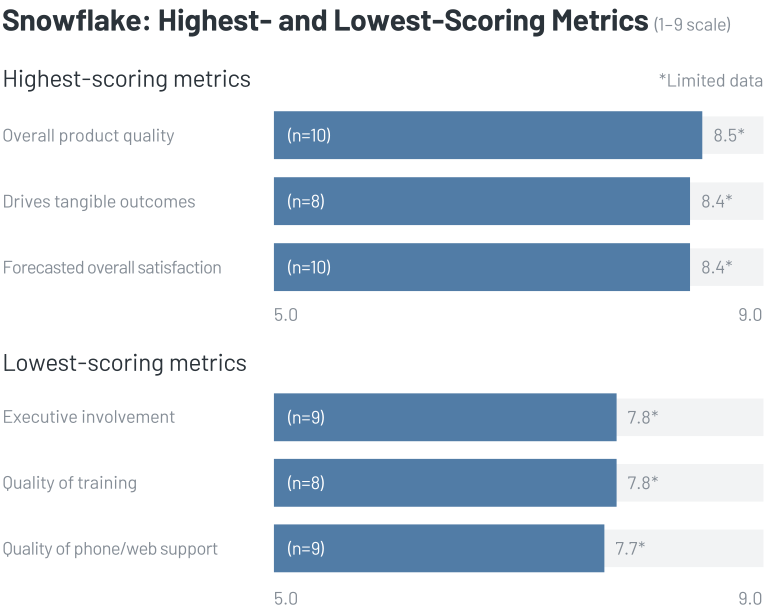
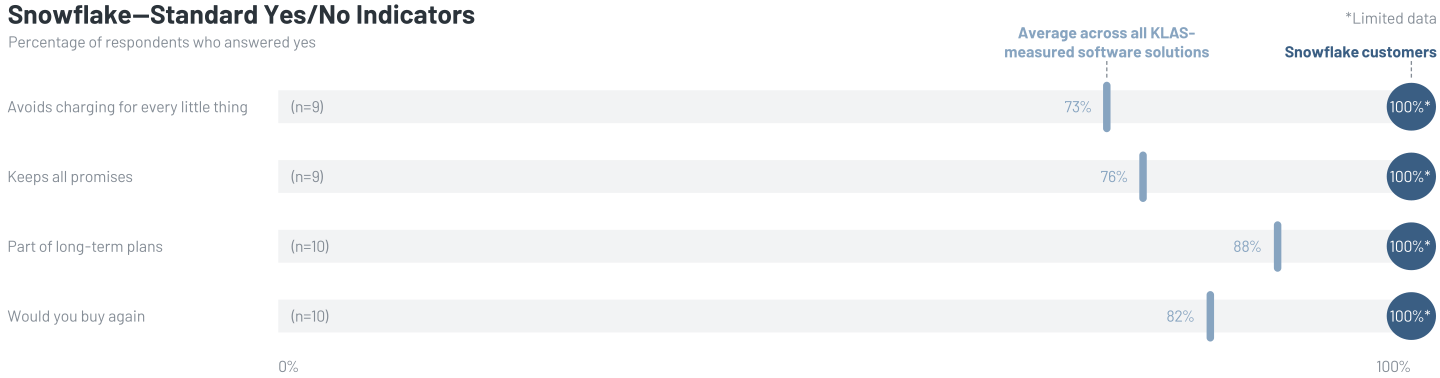
All interviewed customers using the Snowflake Data Cloud are either satisfied or highly satisfied. Respondents who rate Snowflake’s product highest cite outcomes such as data visibility, cost savings, and improved efficiency. Quality of phone/web support is the vendor’s lowest-rated metric; one respondent reports struggling with the support and feels Snowflake doesn’t provide any guidance or education. Other customers also report that the training quality can vary widely. Despite these challenges, customers appreciate the vendor’s commitment to keeping promises and providing fair pricing. All respondents consider Snowflake to be part of their long-term plans and anticipate expanding their use of the solution.
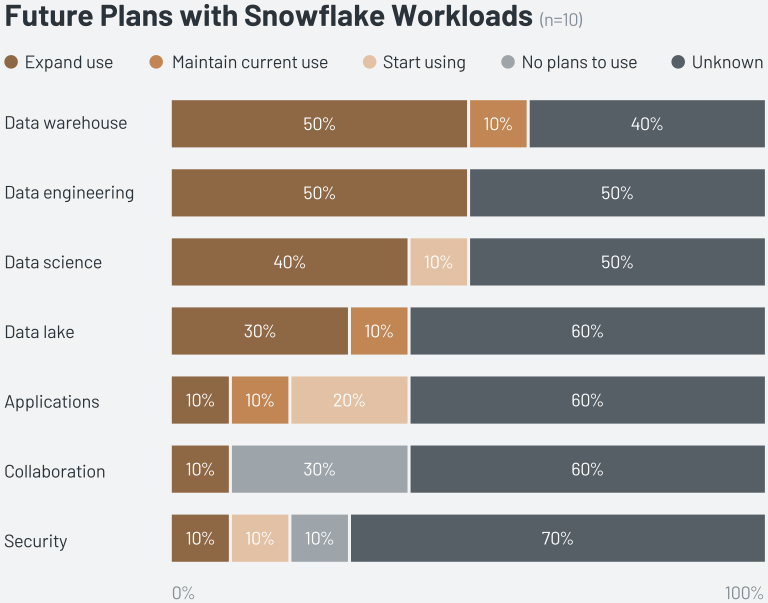
Customers’ Future Plans Center on Applications, Data Engineering & Data Science
Applications: “When the use cases warrant it, we will start looking at buying or subscribing to already built applications. . . . Snowflake’s relatively recent release of Snowpark and its data environment will definitely extend our use of the Snowflake Data Cloud so that we either use existing applications or potentially build some small, niche applications.” —Manager
Data engineering: “Our future plans with Snowflake are to continue to use their system and to grow and expand it across our organization. As we merge with additional entities and bring in their data sets, our environment is going to continue to grow. We are going to have new data sets, data models, and data sources all flowing into the Snowflake Data Cloud. The Snowflake Data Cloud is going to be the single source of truth for all of our downstream applications.” —Director
Data science: “The data science workload in the Snowflake Data Cloud is definitely very interesting to us and is something that we are looking into. Data science capabilities are way too easy with the product, so we don’t need a lot of other tools or products. We can do most of what we need to do within the platform.” —Manager
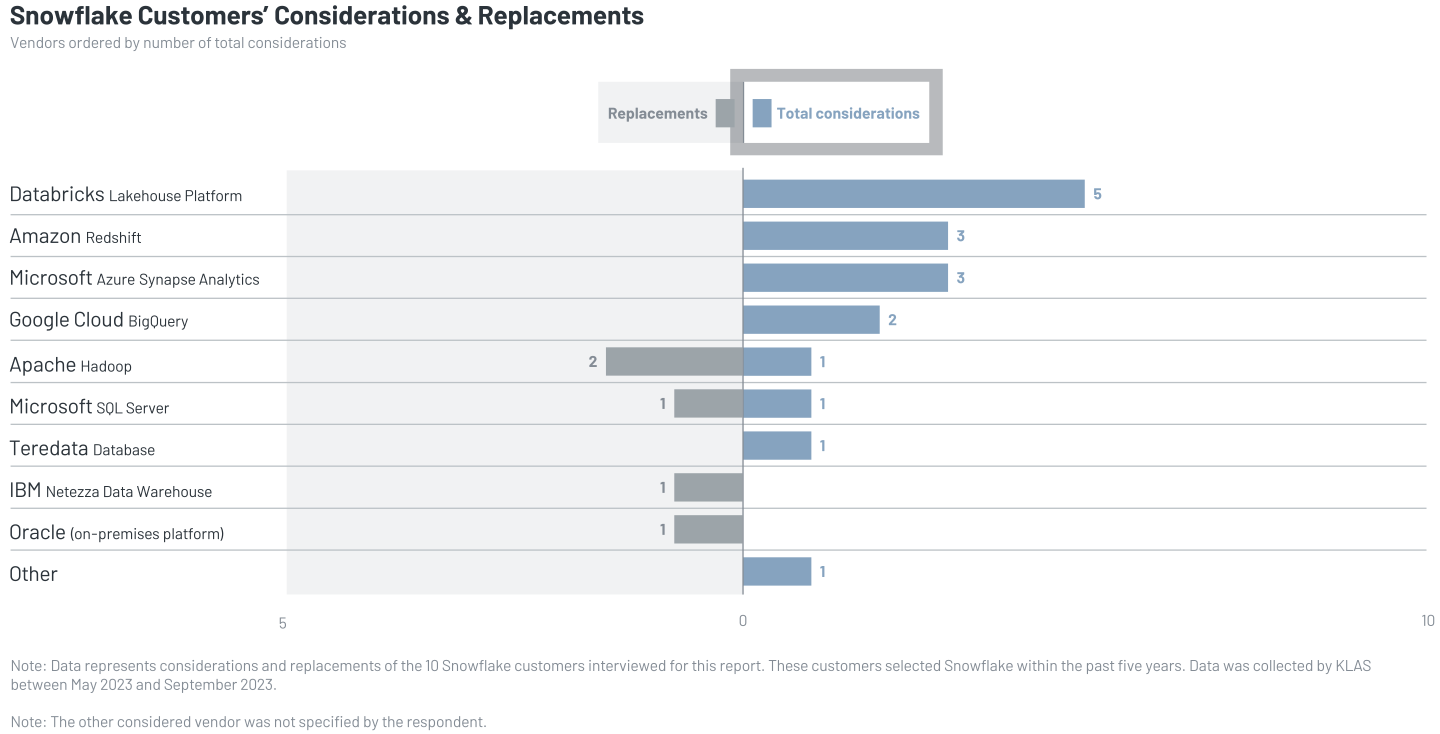
Decision Insights
The 10 Snowflake customers interviewed for this report considered several other vendors while making their purchasing decision. Databricks Lakehouse Platform was the most commonly considered alternative to Snowflake, closely followed by Amazon Redshift and Microsoft Azure Synapse Analytics. The reasons customers ultimately selected Snowflake include the technology’s scalability and usability, the vendor’s focus on the data platform, and better back-end technology. Respondents report that the Snowflake Data Cloud has effectively replaced older on-premises solutions such as Microsoft SQL Server, Apache Hadoop, IBM Netezza Data Warehouse, and Oracle.
Vendor-Provided Information: Snowflake
Target customer
Any organization looking to eliminate data silos (e.g., large IDNs, academic medical centers, small/midsize health systems, etc.)
Healthcare market
Global
Number of employees focused on healthcare
200+
Estimated healthcare revenue
$250M+ ARR
AI
Snowflake accelerates AI/ML workflows by providing one place to gain scalable, real-time access to all data (structured, semi-structured, unstructured) as well as third-party data via the Snowflake Marketplace. Additionally, Snowflake allows for models to be trained and productionized using the language of your choice via Snowpark and Snowpark Container Services. Our flexible compute architecture allows for simple, predictable scaling depending on cost/performance requirements. Snowflake provides a single platform to unify developers, ML operations engineers, and end-consumers with integrated notebooks, Snowpark ML Modeling, Snowflake Feature Store, and Model Registry.
 Snowflake Healthcare Executive Interview
Jesse Cugliotta,
Global Industry Lead for Healthcare & Life Sciences
What is your background?
I have over 20 years of experience working in data and analytics, with a specific focus on clients in the healthcare and life sciences industries. I lead a global team of sub-industry-focused subject matter experts who drive the strategy for healthcare and life sciences at Snowflake.
What should healthcare organizations know about Snowflake’s investment in and commitment to healthcare?
Our mission is to break down data silos and enable secure data collaboration across healthcare and life sciences organizations and the essential partners and technologies that support them. Snowflake’s Healthcare & Life Sciences Data Cloud is an open, interoperable ecosystem that helps provider, payer, and life sciences organizations overcome fragmented data to improve health outcomes and reduce costs—all while maintaining the highest standards of data governance and privacy.
What are Snowflake’s biggest differentiators?
With Snowflake’s Healthcare & Life Sciences Data Cloud, healthcare organizations have a single, integrated, and cross-cloud data platform that eliminates technical and institutional data silos. This will enable organizations to securely centralize, integrate, and exchange critical and sensitive data at scale. Snowflake ensures high levels of data security and governance, and our built-in capabilities and extended partner network allow organizations to better meet compliance requirements and satisfy industry regulations.
What core outcomes should healthcare customers expect from Snowflake’s solution?
Snowflake healthcare and life sciences customers realize benefits across the value chain. Common use cases include patient 360, SDOH/population health analytics, staff attrition predictions, supply chain optimization, trusted research environments, DICOM analytics, LLM-powered applications, and many others.
What is Snowflake’s revenue model?
With Snowflake, customers can turn compute resources on and off and only pay for what they use. Customers can also take advantage of cost-effective compression in Snowflake to store near unlimited amounts of data and grow their analytics infrastructure with linear cost scalability.
Platform Technology Specifications
Cloud environment
AWS, Microsoft Azure, GCP
Development platform
SQL, Python, Java, Javascript, Scala, Snowpark Container Services
Database environment
Columnar OLAB SQL
Mobile application environment
Browser based
Security platform
NIST 800-171, SOC 1 Type 2, SOC 2 Type 2, ISO 27001
Confidentiality
HIPAA, BAAs
Data encryption
AES-256 (at rest); TLS (in-transit)
Integration approach
HL7 2.x, FHIR, APIs
HITRUST certification
Yes
About This Report
Each year, KLAS interviews thousands of healthcare professionals about the IT solutions and services their organizations use. For this report, interviews were conducted between May 2023 and September 2023 using KLAS' standard quantitative evaluation for healthcare software, which is composed of 16 numeric ratings questions and 4 yes/no questions, all weighted equally. Combined, the ratings for these questions make up the overall performance score, which is measured on a 100-point scale. The questions are organized into six customer experience pillars—culture, loyalty, operations, product, relationship, and value.
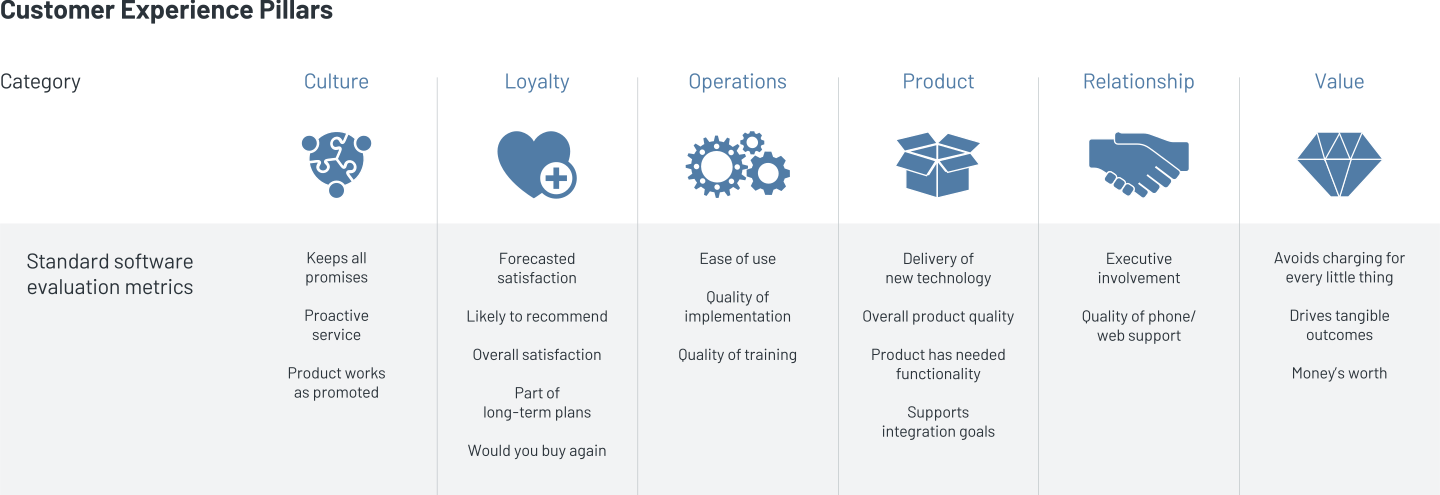
To supplement the customer satisfaction data gathered with the standard evaluation, KLAS also created a supplemental evaluation to delve deeper into several questions specific to the Snowflake Data Cloud. This evaluation asked respondents the following questions:
- What workloads are you using from Snowflake?
- What are the use cases you are using Snowflake for?
- What outcomes have you realized?
- From go-live, how long did it take you to see clinical, financial, and/or operational outcomes?
- What are the highlights of your experience with Snowflake?
- What obstacles have you encountered with Snowflake?
- How satisfied are you with Snowflake’s consumption model?
- Why did you select Snowflake? What other vendors did you replace/consider?
- What are your future plans with Snowflake?
Sample Sizes
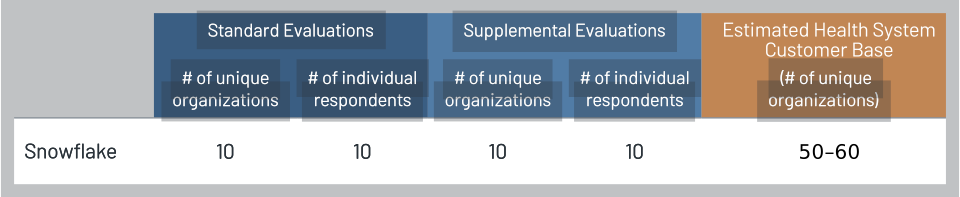
Sample sizes displayed throughout this report (e.g., n=16) represent the total number of unique customer organizations interviewed for a given vendor or solution. However, it should be noted that to allow for the representation of differing perspectives within any one customer organization, samples may include surveys from different individuals at the same organization. The table below shows the total number of unique organizations interviewed for each vendor or solution as well as the total number of individual respondents.
Some respondents choose not to answer particular questions, meaning the sample size for any given vendor or solution can change from question to question. When the number of unique organization responses for a particular question is less than 15, the score for that question is marked with an asterisk (*) or otherwise designated as “limited data.” If the sample size is less than 6, no score is shown. Note that when a vendor has a low number of reporting sites, the possibility exists for KLAS scores to change significantly as new surveys are collected.

Writer
Natalie Hopkins

Designer
Jessica Bonnett

Project Manager
Joel Sanchez
This material is copyrighted. Any organization gaining unauthorized access to this report will be liable to compensate KLAS for the full retail price. Please see the KLAS DATA USE POLICY for information regarding use of this report. © 2026 KLAS Research, LLC. All Rights Reserved. NOTE: Performance scores may change significantly when including newly interviewed provider organizations, especially when added to a smaller sample size like in emerging markets with a small number of live clients. The findings presented are not meant to be conclusive data for an entire client base.