KLAS Contact

Contact KLAS
Contact KLAS
 2026 BEST IN KLAS
Preferences
Related Series

2013
Related Segments

UK & Ireland EPR 2024
A Look into Suppliers’ Broader Portfolios

Author
Eder Lagemann

Author
Sidney Tate

Author
Spencer Corbett
Over the last five years, there has been consistent energy around EPR investment and digital transformation in the UK and Ireland—on average, at least six healthcare organisations have made an EPR purchase decision each year. Going forward, activity will likely increase amid integrated care system (ICS) alignment, as over 50 trusts will look to upgrade or deploy their first EPR over the next few years. While going through the complex decision-making process, organisations frequently look for a partner that can provide not only core documentation and ordering functionalities but also additional clinical, administrative and ancillary modules to support their digital transformation. This report includes (1) an overview of the market share and customer satisfaction with EPR suppliers in the UK and Ireland and (2) a look at suppliers’ broader portfolios, diving into the performance and adoption of modules outside of core functionality.
EPR Market Overview
Epic Leads in Customer Satisfaction; MEDITECH* & Nervecentre* Customers See Promise in Latest Versions
Epic generally drives high customer satisfaction, largely due to their prescriptive implementations and regular engagement with account managers. Though cost is seen as a barrier for some, most respondents realise value from their investment and would choose the solution again. Epic has opportunity to better localise the solution by including UK-specific clinical and reporting workflows; still, many interviewed customers acknowledge Epic is responsive to their needs. Among suppliers in this report, Epic respondents report the highest use of the EPR for core functionality (i.e., nursing/clinician documentation, lab/radiology orders, pharmacy orders), though many mention substantial initial training is required for users to be successful. Even with the necessary investment, respondents feel committed to partnering with Epic to fully integrate the solution and ensure long-term success.
Spanning both the public and private sectors, interviewed MEDITECH* customers (three on the legacy Enterprise Medical Record 6.x with plans to move to Expanse and one currently on Expanse) are highly satisfied and feel the platforms deliver high value for the price. Respondents report high use of the EPR for core functionality and particularly appreciate MEDITECH’s deep engagement with customers and their efforts to localise their products.
Local supplier Nervecentre* initially focused on selling modular functionalities in England; the first trust to select the supplier for full EPR functionality did so in 2019, and reported use of the EPR’s documentation/ordering functionality remains light among their small EPR customer base and is exclusive to inpatient settings. The three interviewed respondents appreciate the supplier's engagement and highlight that the workflows of the EPR are intuitive and well tailored to their local needs. Respondents generally want to go deeper with the system, hoping to see continued development of EPR functionality moving forward.
*Limited data
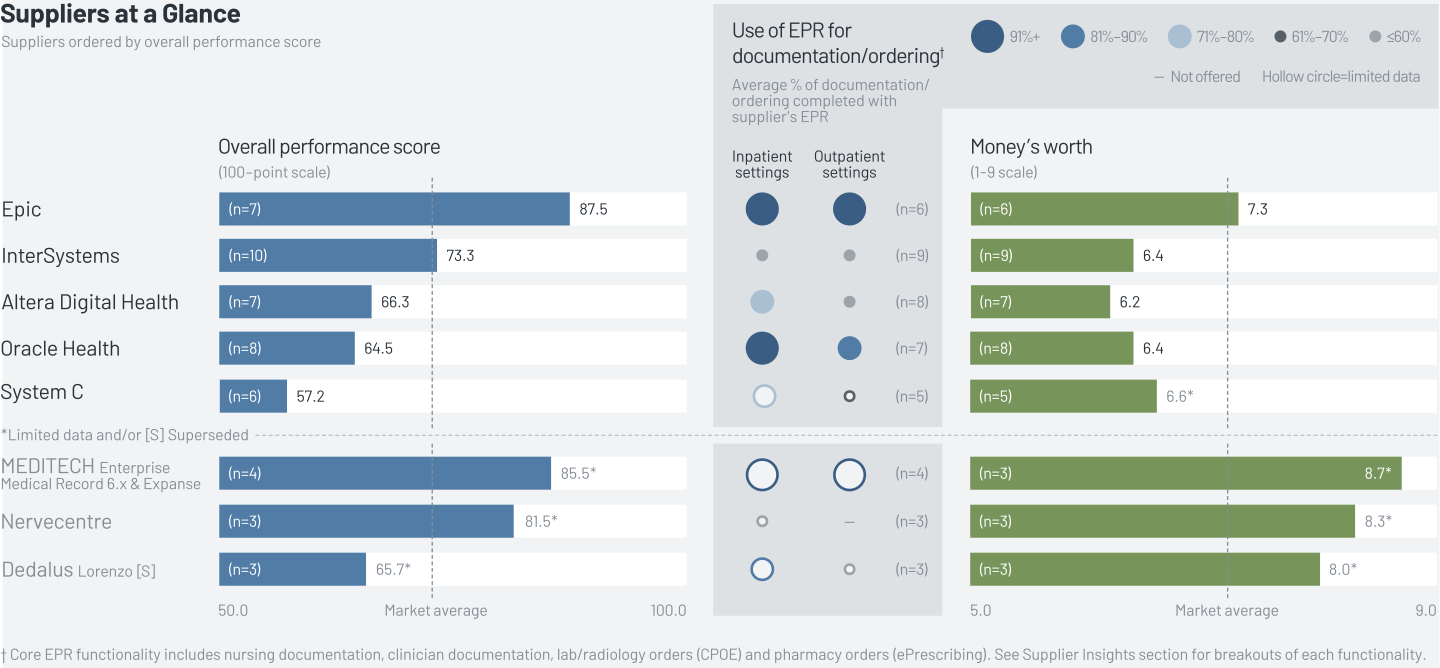
InterSystems Customer Experience Remains Consistent; Oracle Health Customers See Slower Development; System C Customers Note Performance Challenges
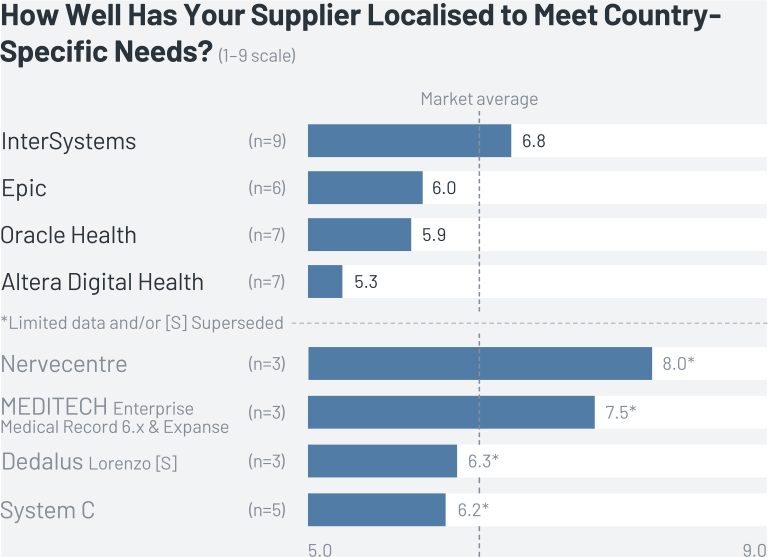 Since 2021, the InterSystems customer experience has largely remained consistent, with respondents noting slow but steady improvements, positive initial go-lives and a willingness from the supplier to localise the solution. Many interviewed customers, particularly in Scotland, find it challenging to more deeply use the solution’s core functionality due to undelivered promises, with many also reporting slow development that is not always in line with their needs. To address these challenges and drive deeper adoption, InterSystems introduced the TrakCare Advance programme; KLAS will monitor how this might impact customer satisfaction. Oracle Health has high reported usage rates of the EPR’s core functionality in both inpatient and outpatient settings. Overall customer satisfaction has dropped almost 15% since the acquisition of Cerner in 2022—respondents cite limited product development and significant challenges with the internal integration engine and recent upgrade implementations. Despite the internal integration issues, Oracle Health performs well in providing clinicians access to external sources of patient data within the core EPR; most positive feedback is centred on the integration with OneLondon.
While interviewed System C customers report low satisfaction and lighter use of the EPR’s core functionality, many feel the EPR meets their basic needs well for the price they pay. While no respondents plan to replace the system, they want faster delivery on the promised road map, reduced turnaround times on requests and the ability to better integrate with other suppliers. Altera Digital Health customer satisfaction has dropped about 10 points since the Allscripts acquisition and rebrand in 2022. Respondents have seen little meaningful product development and want improvements to the supplier’s localisation, integration and strategic guidance in driving EPR adoption. Dedalus* is in the process of introducing the ORBIS U platform to the UK, and it was selected by the first trust in the region in 2024. In conjunction, Dedalus is sunsetting the Lorenzo EPR (acquired from DXC Technology), which has had historically low customer satisfaction due to lacking development and unkept promises. Two of the three interviewed Lorenzo customers are considering moving to ORBIS U.
*Limited data
Epic, System C & Oracle Health Experience Highest Growth in Last Five Years
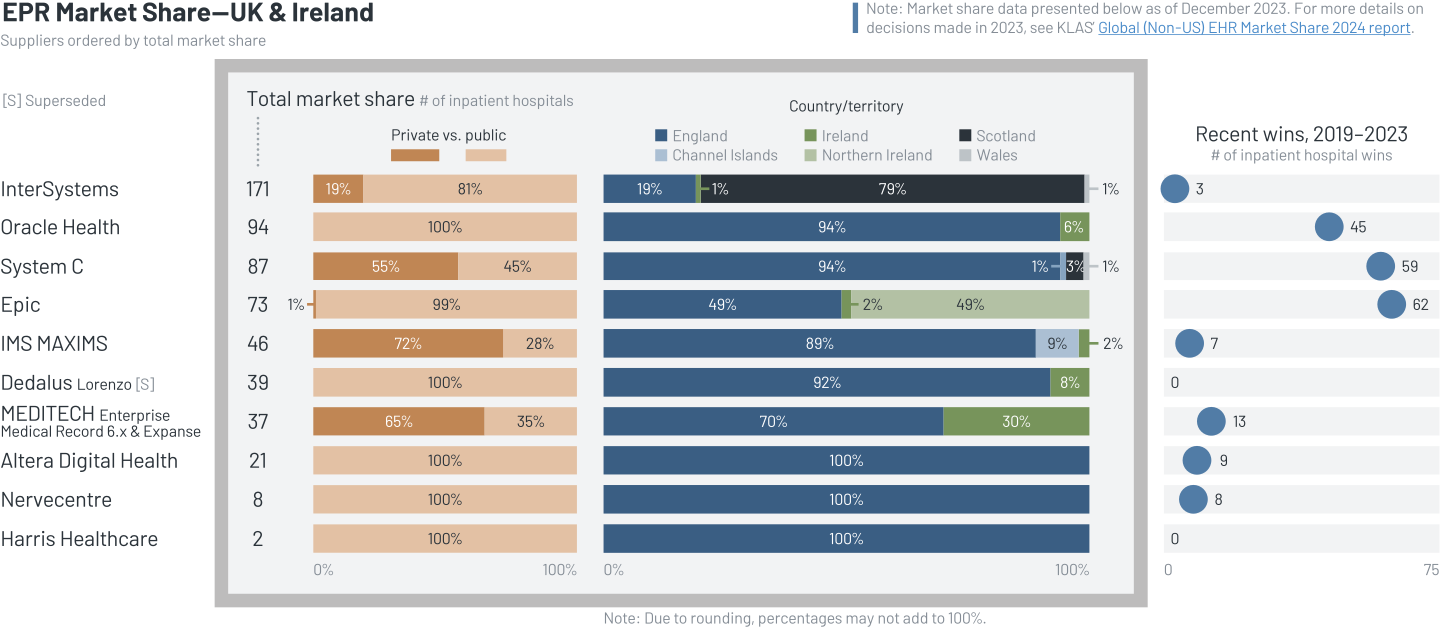
In the last five years, Epic’s presence in the UK and Ireland has more than quintupled. In 2020, 4 new wins led to an additional 49 hospitals, mostly from Northern Ireland’s HSCNI contract. Since then, Epic’s market share has grown slowly but steadily, although no trusts selected Epic in 2023. System C has a strong market presence in England, where in 2022 1 organisation implemented System C in 49 private hospitals. Outside of that contract, System C has experienced smaller but consistent growth in the public sector. Oracle Health, who has the second-largest market presence in the region overall and the largest in England, has seen the most consistent growth over the last five years. In 2023, 4 of the 5 public trusts making an EPR decision in England selected Oracle Health. MEDITECH’s regional presence has slowly but consistently grown in public/private sectors; since 2019, 7 organisations selected the go-forward platform Expanse, increasing MEDITECH’s footprint across sectors. In the last five years, 5 organisations on a legacy platform (either MAGIC or 6.x) have contracted to move to Expanse. IMS MAXIMS was chosen by 3 organisations (1 public and 2 private) since 2021. InterSystems has the largest market share in the region, due in part to their NHS Scotland contract. In the last five years, InterSystems was selected in one add-on decision in England and by 2 public hospitals in Ireland—their first EPR customers in the country. Altera Digital Health was selected by 4 trusts between 2019 and 2021. Nervecentre was selected for full EPR deployment for the first time in 2019 and has been selected by 3 trusts between 2019 and 2021. Dedalus saw no growth in 2019–2023. As they focus on introducing their new platform to the UK, KLAS validated the first selection of the ORBIS U platform in 2024.
Adoption of EPR Supplier Portfolio
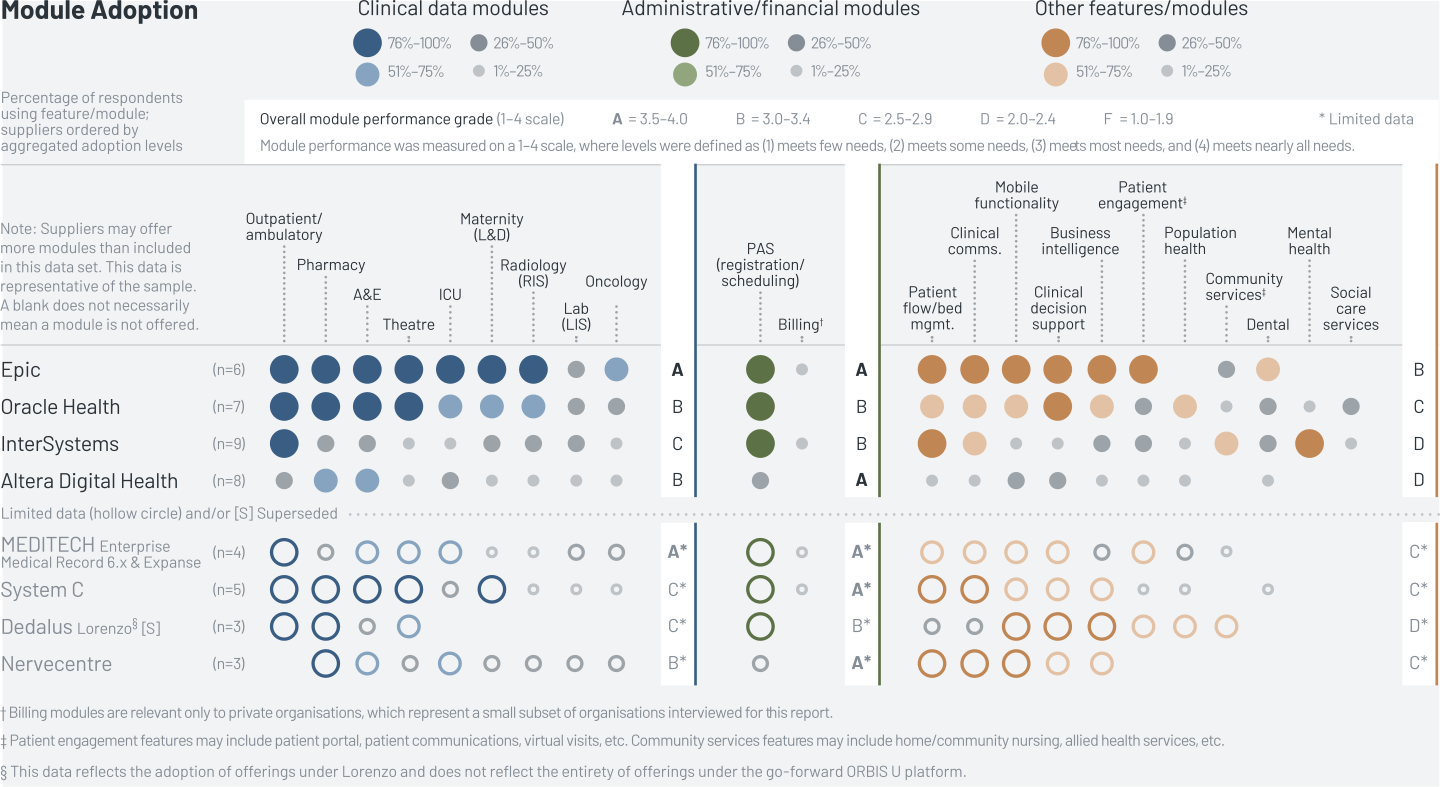
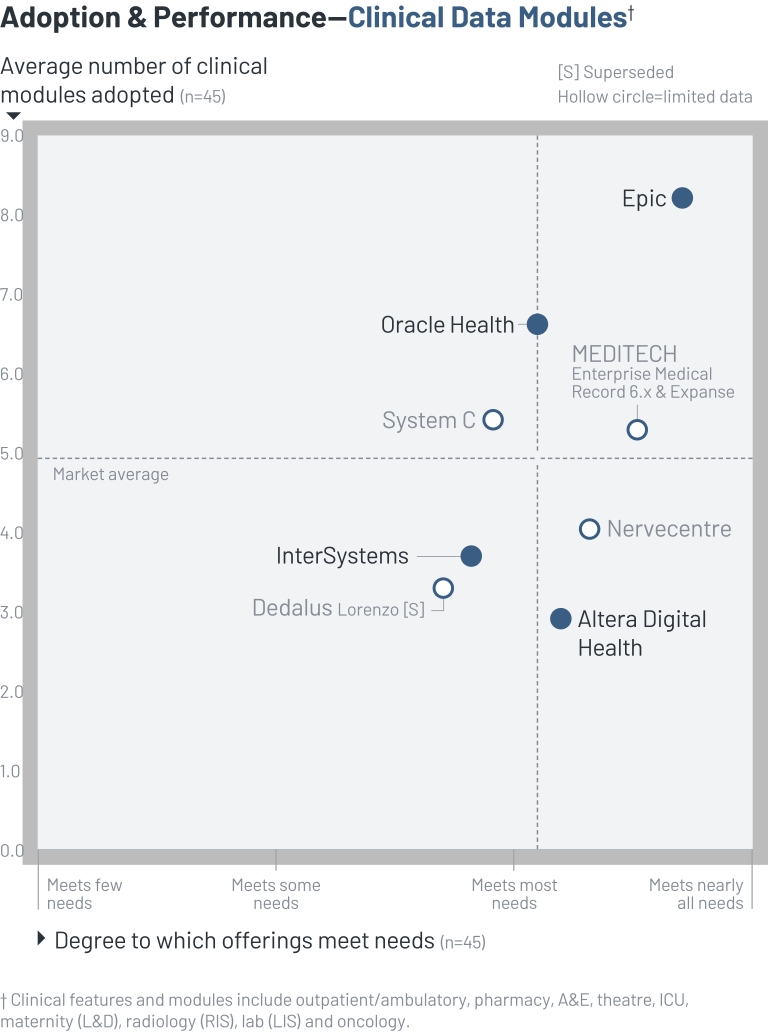
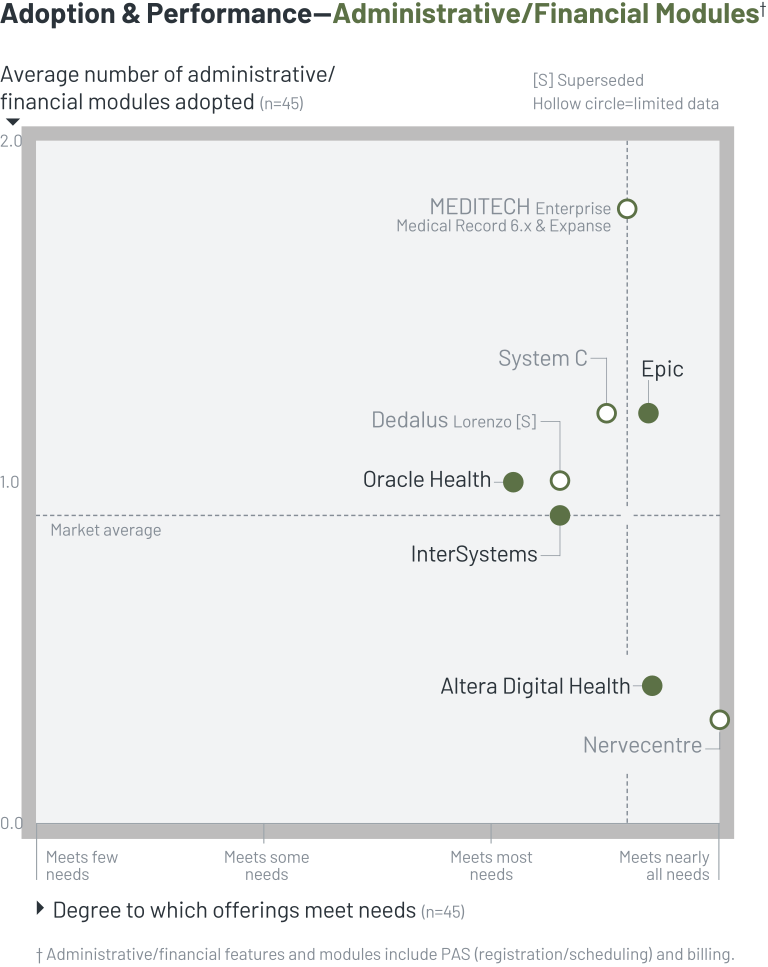
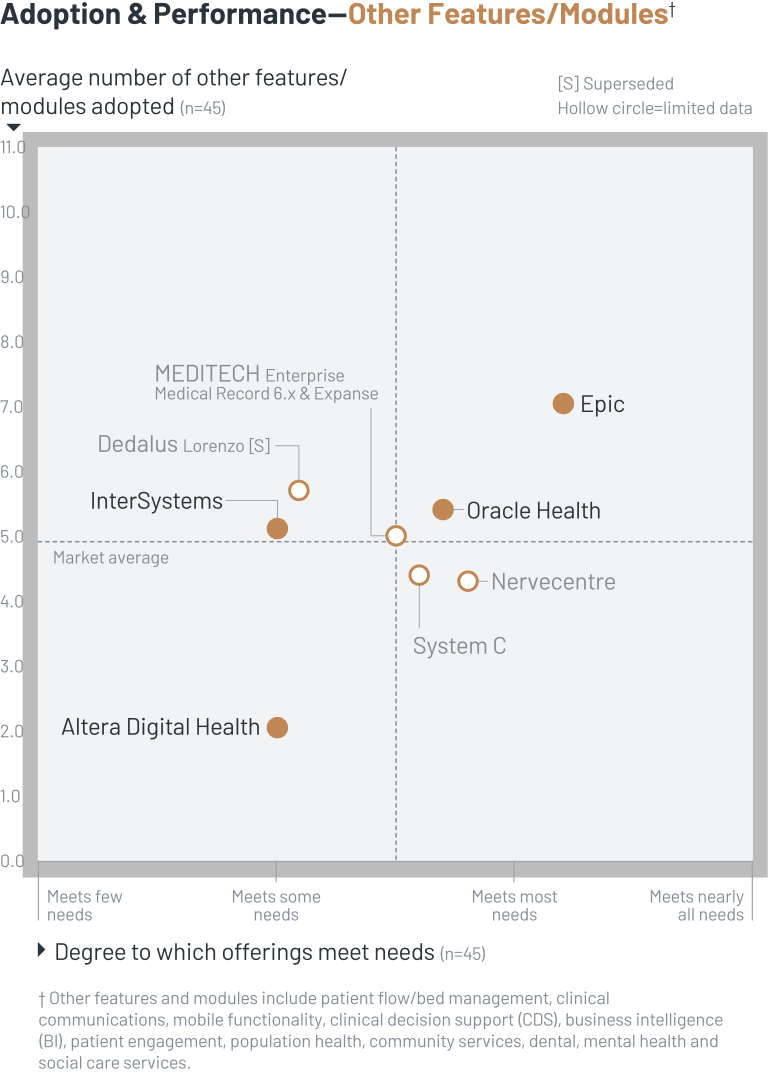
Outside of core EPR functionality (i.e., nursing/clinician documentation, lab/radiology orders, pharmacy orders), most UK/Ireland organisations adopt further clinical modules from their EPR suppliers, such as outpatient, pharmacy, A&E and theatre modules. Customer satisfaction with these modules is generally positive. Similarly, PAS modules see high satisfaction and adoption across most suppliers. Beyond clinical and administrative tools, the overall adoption and performance of other modules remain varied, particularly for non-inpatient care settings.
Epic Customers Report Strong Performance & Adoption across Portfolio; Oracle Health Also Sees Broad Adoption
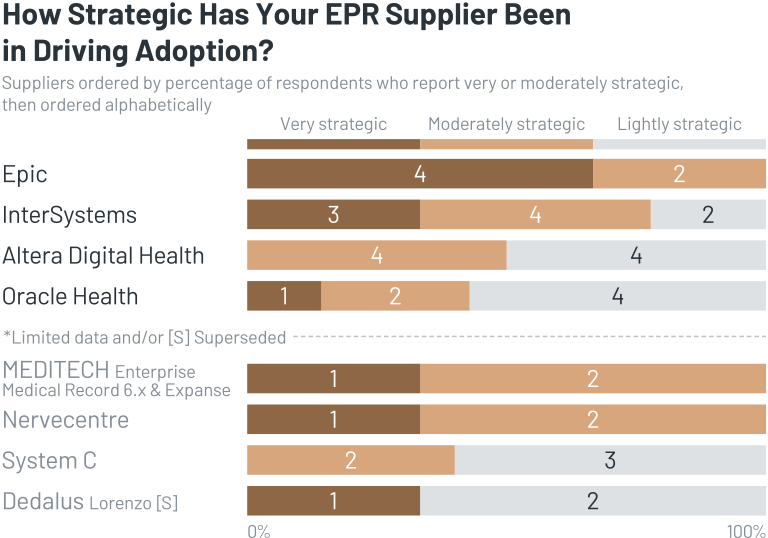
Among suppliers in this report, Epic is rated as the most strategic in driving adoption of the EPR. Epic also sees the broadest adoption of their portfolio, extending into care settings such as community services and dental. Respondents are satisfied with nearly all modules, including specialty areas such as radiology and oncology. Business intelligence is the single module that some customers would like to see improved, as several cite the need for supplementary third-party tools.
Oracle Health respondents have deeply adopted the clinical modules and PAS module and generally feel they meet nearly all needs. Customers especially highlight the A&E, patient flow/bed management and BI modules. The oncology module, clinical decision support functionality and patient engagement modules less commonly meet interviewed customers’ needs. Additionally, most respondents feel Oracle Health provides little to no strategic input to drive deeper adoption.
MEDITECH* has average adoption of most clinical modules, with respondents especially noting the outpatient module’s ability to meet most needs. Customer satisfaction is generally high with the administrative modules, but respondents would like to see improvements to the patient engagement module.
*Limited data
InterSystems Customers Report Lower Levels of Performance & Module Adoption
InterSystems respondents note a less strategic approach from the supplier that has resulted in far lighter adoption of their broader portfolio. Where adopted, modules generally perform well; customers especially feel the outpatient and patient flow offerings meet most needs. Many InterSystems offerings, such as patient engagement, are seen as less mature by respondents. While recent efforts from the supplier have resulted in gradual improvement, interviewed customers want InterSystems to improve their broader offerings. Customers highly anticipate a mobile-enabled user interface (currently in use in pilot sites) and hope it will catalyse deeper adoption by providing a smoother user experience and improved mobile functionalities. Additionally, customers in Scotland are eagerly preparing to transition to the Scottish edition of TrakCare EPR.
Most interviewed System C* customers see CareFlow as an EPR that meets basic needs. While they use it frequently for inpatient ordering and report high adoption and performance of the most common modules (e.g., A&E), digital documentation has not been deeply adopted. Respondents view System C’s PAS as strong, and the solution is frequently used for ancillary modules, such as patient flow/bed management and clinical communications.
Generally, adoption of Dedalus’* acquired Lorenzo solution, currently being sunset, has been light. However, customers report that the PAS module, which will remain in the UK market as Dedalus transitions to ORBIS U, meets most needs.
*Limited data
Altera Digital Health Customers Most Frequently Leverage Third-Party Modules; Nervecentre* Sees Low Adoption but High Performance across Modules
Altera Digital Health sees the lowest adoption of their own portfolio across nearly all modules, as most interviewed customers choose to integrate additional modules from third-party suppliers. The few native modules that are more highly adopted by Altera Digital Health's customers, such as pharmacy and A&E, meet most of their needs, though respondents broadly find the supplier’s portfolio to be less mature, especially in more ancillary areas.
The three interviewed Nervecentre* customers report below-average adoption of the clinical and PAS modules. Nervecentre began as a supplier of primarily ancillary modules before moving into the clinical EPR space, and the three interviewed customers report higher adoption of and satisfaction with their ancillary offerings—the highest adoption is for patient flow/bed management and mobile functionality. While also deeply adopted, the clinical communications tool doesn’t meet as many needs for customers, who cite a lack of clinical notes and an internal referral system that is not fully set up. The product requires significant up-front and ongoing work for respondents, who also note they have to drive the development and adoption of features on the supplier’s road map.
*Limited data
About This Report
Data for this report comes from three sources: (1) KLAS' standard quantitative evaluation for healthcare software, (2) a supplemental evaluation tailored specifically to the UK and Ireland EPR market and (3) KLAS market share data.
KLAS Performance Data and Supplemental Evaluation
Each year, KLAS interviews thousands of healthcare professionals about the IT solutions and services their organisations use. For this report, interviews were conducted over the last 18 months using KLAS’ standard quantitative evaluation for healthcare software, which is composed of 16 numeric ratings questions and 4 yes/no questions, all weighted equally. Combined, the ratings for these questions make up the overall performance score, which is measured on a 100-point scale. The questions are organised into six customer experience pillars—culture, loyalty, operations, product, relationship and value.
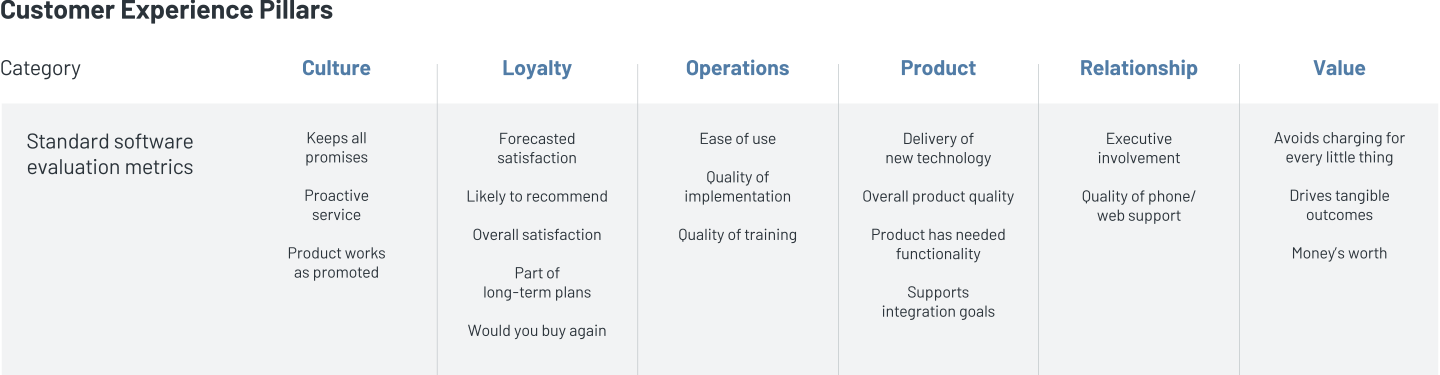
To gain deeper insights into EPR suppliers’ portfolios and performance in the UK and Ireland, KLAS additionally collected supplemental evaluations via interviews and online surveys over the last 12 months. Interviewed organisations were asked the following questions:
- Across all facilities in your organisation where your EPR is deployed, what is your estimated depth of adoption of physician documentation, nursing documentation, lab/radiology orders (CPOE) and pharmacy orders (ePrescribing) in your inpatient and outpatient departments?
- How strategic has your EPR supplier been in helping drive the adoption of your EPR throughout your organisation?
- How well has your EPR supplier localised their solutions to meet your country-specific workflows and needs (e.g., regulatory reporting, Spine connection in UK, etc.)?
- Which modules have you deployed from your core EPR supplier, and are they meeting your organisation’s needs?
- Do your clinicians currently have access to electronically shared patient data from outside sources within your core EPR? If so, how well is that outside data integrated into the clinician workflow?
Sample Sizes
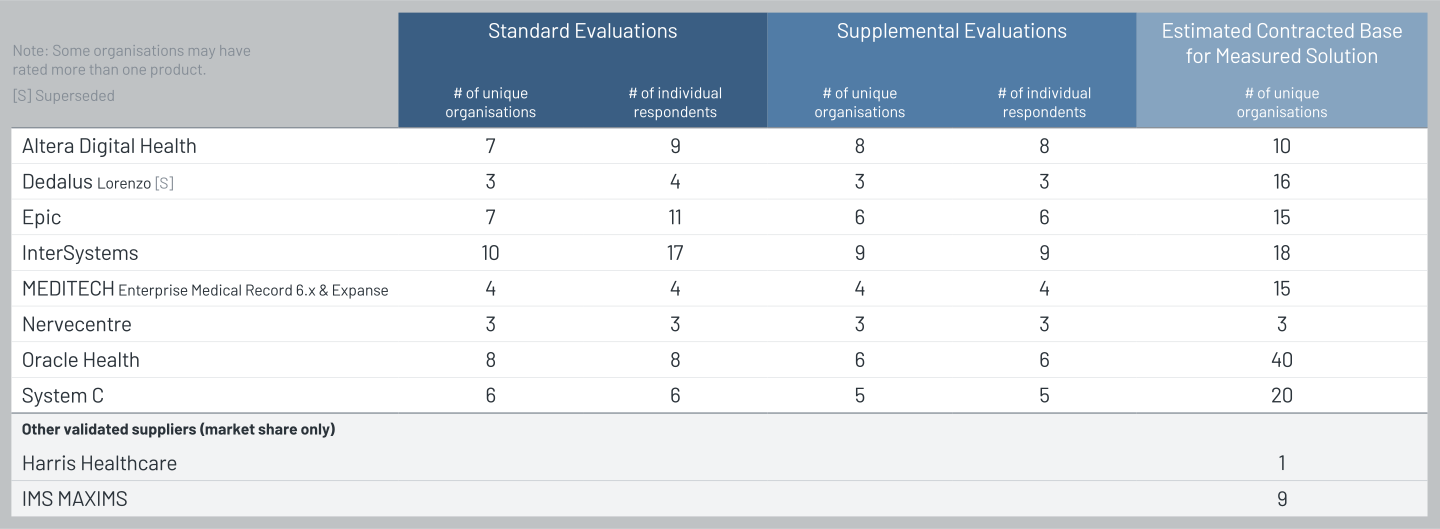
Unless otherwise noted, sample sizes displayed throughout this report (e.g., n=8) represent the total number of unique customer organisations interviewed for a given supplier or solution. However, it should be noted that to allow for the representation of differing perspectives within any one customer organisation, samples may include surveys from different individuals at the same organisation. The table below shows the total number of unique organisations interviewed for each supplier or solution as well as the total number of individual respondents.
Some respondents choose not to answer particular questions, meaning the sample size for any given supplier or solution can change from question to question. When the number of unique organisation responses for a particular question is less than 6, the score for that question is marked with an asterisk (*) or otherwise designated as “limited data.” If the sample size is less than 3, no score is shown. Where textual content relies on limited data, the supplier name is marked with an asterisk. Note that when a supplier has a low number of reporting sites, the possibility exists for KLAS scores to change significantly as new surveys are collected.
Product Designations Used in This Report
- Superseded [S]: Legacy solutions or other solutions that are not generally marketed or whose marketing is superseded by another solution in the same category.
KLAS Market Share Data
In this report, any given supplier’s EPR market share is defined as the total number of inpatient hospital facilities (as opposed to organisations, which may be composed of multiple hospitals) whose most recent contract is with that supplier. For example, if a supplier signs a contract with a four-hospital organisation, that supplier’s market share would increase by four. KLAS acknowledges that in some countries the term ‘hospital’ may be used to refer to an organisation with multiple inpatient facilities. However, in this report, ‘hospital’ is used to refer to a single inpatient facility.
Hospitals that have contracted for a new EPR normally continue to use their previous system for one or more years before/after going live with a new one. During this time, the hospital might be considered a customer of both suppliers, but only the most recently contracted supplier receives market share credit in this report. Likewise, there may be a space of time between when a previous supplier’s contract ends and a new contract is formalised. In these cases, the previously contracted supplier is recognised as the current supplier until the new agreement is formalised. However, provider organisations have the final say on their own status, so in rare cases when an organisation has directly informed KLAS of a decision, a win might be counted before a contract is legally signed.
When measuring market share, KLAS counts any facility that offers inpatient services. Most of the contracts discussed in this report were made by general acute care hospitals, including community hospitals and facilities offering sub–acute or step-down care services (as long as those facilities have overnight inpatient beds). However, this research also includes some EPR decisions made by inpatient rehabilitation facilities, inpatient psychiatric hospitals, and specialty acute care facilities (e.g., for oncology, paediatrics or ophthalmology). Outpatient facilities, urgent care centres, day hospitals and residential treatment facilities are excluded.
In cases where two or more healthcare organisations join together to make an EPR purchase decision, KLAS regards the decision as a single contract even if multiple contracts are signed with each participating entity because there was a single, collective decision-making and selection process.
Where Does Market Share Data Come From?
The market share data reported in this study is based on hospital EPR contracts that were in place (primarily) in the UK, Ireland and the Channel Islands as of 31 December 2023. The data comes from multiple sources, including publicly available information and the numerous conversations KLAS has each year with provider organisations around the globe.
KLAS also provides suppliers with the opportunity to report their annual hospital EPR wins. In all cases, KLAS makes a best-effort attempt to use third-party sources and our vast provider network to independently validate all recently signed EPR contracts. While KLAS believes the data in this report is directionally correct, we acknowledge that some variation may result from lack of supplier transparency/participation.
A Note about Terminology and What Counts as an EPR
Though the nomenclature used to describe the core patient record used throughout a hospital varies from region to region or language to language (e.g., EHR, EPR, EMR, EPD, EPJ, DPI, KIS, HCE, PEP, etc.), the term that will be used in this research is EPR (electronic patient record).
The EPR is the core record used by hospitals for day-to-day clinical tasks, such as clinical noting and documentation, ordering, results reporting, and ePrescribing. Some systems in this research may not include all of these clinical functions, but they are all viewed by their users as their core patient record. Solutions used solely for document management or scanning are excluded from this research even though they are the primary clinicalsystem in use at some hospitals.
Additionally, the term ‘supplier’ is used throughout this report to refer to the company supplying the EPR technology. KLAS recognises that different countries may have different terminology, including ‘vendor’.

Writer
Carlisa Cramer

Designer
Natalie Jamison

Project Manager
Sydney Toomer
This material is copyrighted. Any organization gaining unauthorized access to this report will be liable to compensate KLAS for the full retail price. Please see the KLAS DATA USE POLICY for information regarding use of this report. © 2026 KLAS Research, LLC. All Rights Reserved. NOTE: Performance scores may change significantly when including newly interviewed provider organizations, especially when added to a smaller sample size like in emerging markets with a small number of live clients. The findings presented are not meant to be conclusive data for an entire client base.