KLAS Contact

Contact KLAS
Contact KLAS
 2026 BEST IN KLAS
Preferences
Related Series
Related Segments

Clinical Communications Interoperability 2024
How Does Interoperability Enhance Communication among Deep Adopters?

Author
Coray Tate

Author
Paul Warburton

Author
Andy Paulsen
Provider organizations are seeking communication tools that enable interoperability with a diverse set of solutions, ultimately ensuring the right clinician gets the right information at the right time. This report looks at the interoperability capabilities of communication solutions through the lens of deeply adopting provider organizations and whether they are able to break down silos between different departments and organizations through enhanced integration. These experiences are not typical of all customers and represent the hard work of vendors and providers deeply engaged in interoperability.
Market Insights
Deep Adopters Are Enabling More Integrated Communication; IT Lift and Deployment Complexity Can Be Barriers to Consistent Adoption
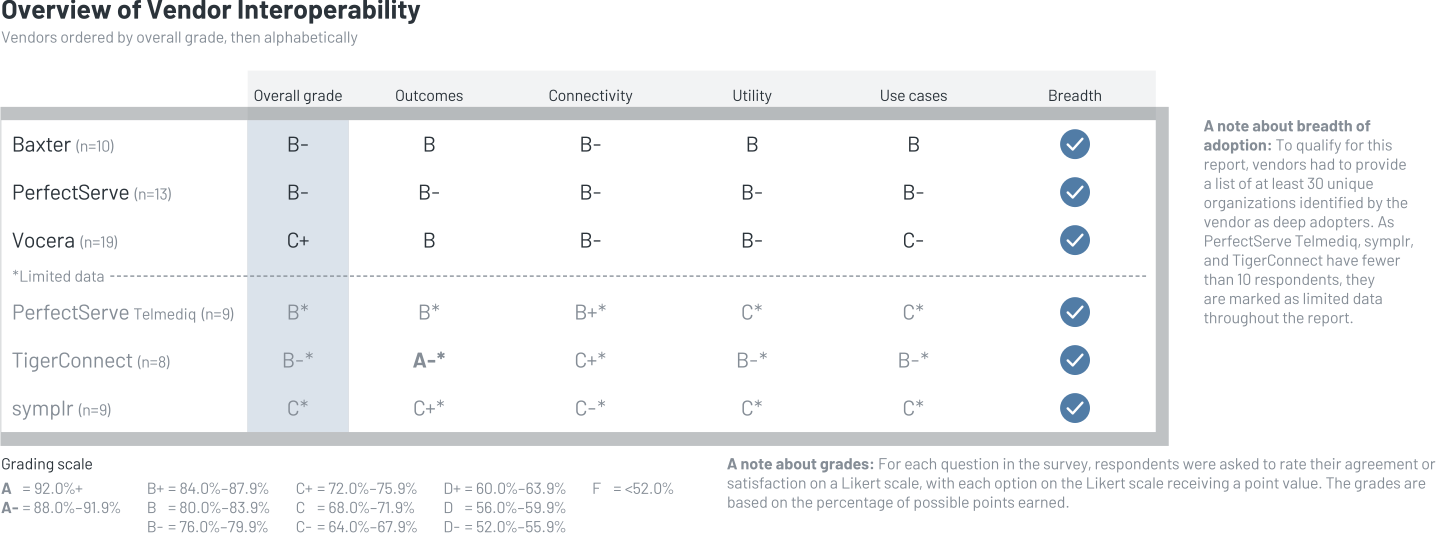
Across the board, the level of integration that respondents report varies widely, even among the most deeply engaged customers. Most respondents note at least one key interoperability challenge with their communications tools that especially impacts their use cases and outcomes, and as a result, no vendor measured in this report receives an A grade. Almost all vendors have some deep adopters reporting their progress in connectivity has outpaced their ability to impactfully use the information. Responding deep adopters feel there is tremendous change management required on their end to train on and broadly implement integrated communication tools; this leads many to limit their integrations or underutilize the integrations they have in place. Alarm management is a particularly big challenge for those interfacing with patient monitoring and other nurse-based workflow solutions.
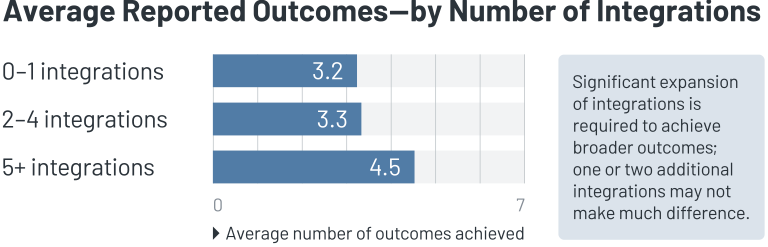
Despite these challenges, a few deep adopters are pushing forward and prioritizing broad enterprise connectivity; they frequently mention the importance of a strong vendor partnership in driving next-level adoption. Deep adopters often see immediate outcomes post-implementation because of the improved access to and responsiveness of clinicians. However, to continue driving more significant outcomes (e.g., improving throughput), provider organizations must keep building integrations and expand access to a broader range of team members (clinical and non-clinical). While many respondents have made fewer connections than they initially hoped, they plan to continue to expand interoperability to achieve their outcomes goals.
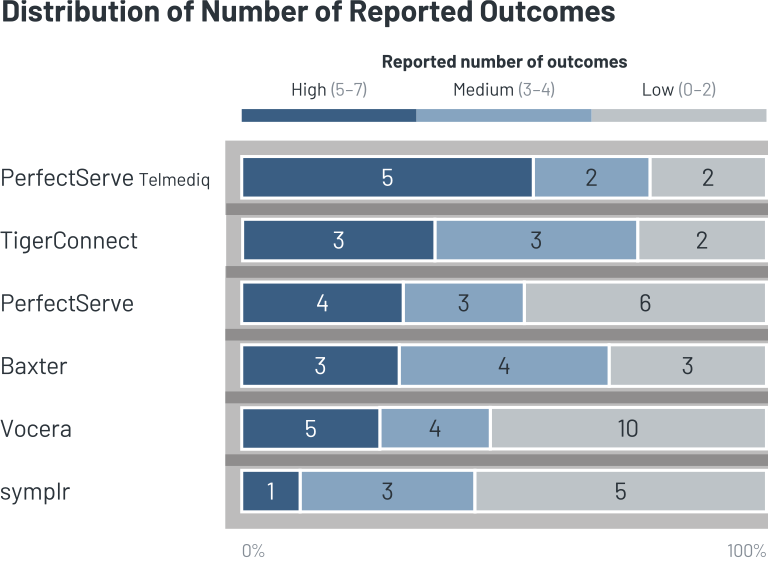
PerfectServe Telmediq* Has Highest Portion of Respondents Achieving Many Outcomes
All vendors in this report have responding deep adopters who have realized many of the seven measured outcomes. Still, there remains high variation in how well respondents feel vendors have helped them connect to third parties to realize targeted outcomes. PerfectServe Telmediq* has made consistent efforts with their customer base to spend time during implementations to understand key goals, work through technology barriers, and provide necessary training. symplr and Vocera respondents feel their vendor struggles to align with customers and thus deploy integrations that would allow for more outcomes.
*Limited data
Which Integrations Are Most Crucial to Desired Outcomes?
Trends in deep adopters’ responses show that some integrations drive better or more immediate outcomes than others. Below are common strategies and integrations deployed among 21 deep adopters who have realized five or more desired outcomes.

Vendor Insights
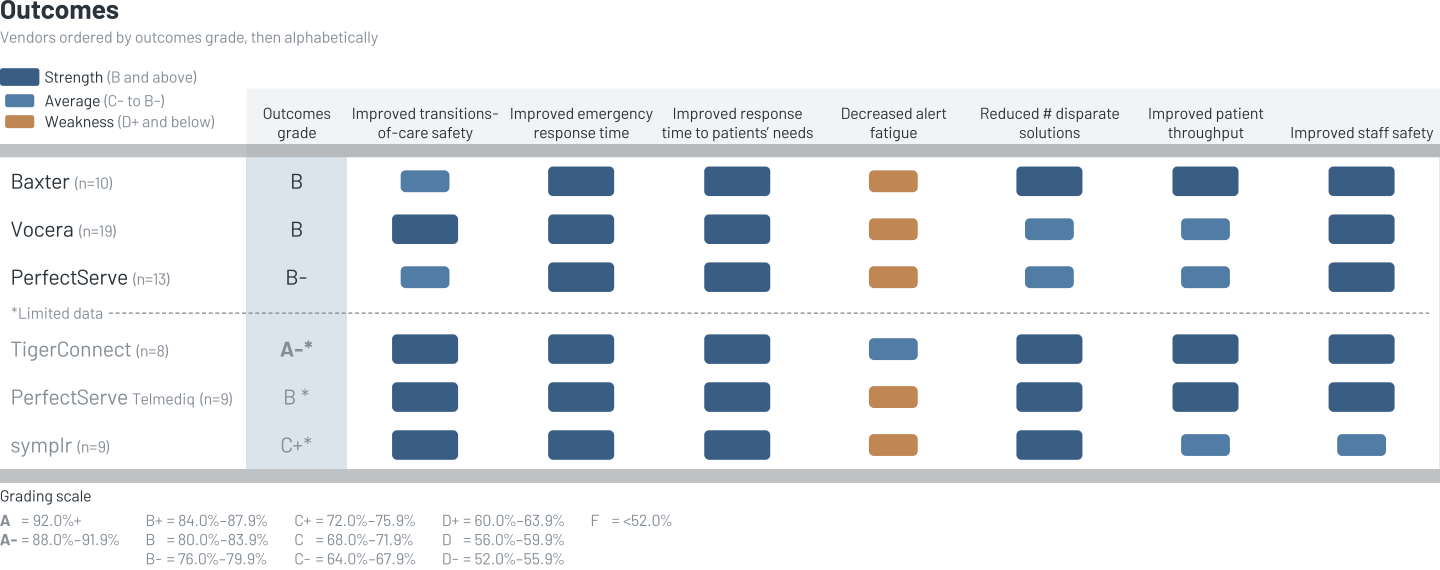
Outcomes: TigerConnect* Customers Value the Ease of Adoption & Efficiency of Messaging
Many provider organizations are prioritizing the outcomes of improved emergency response time and improved response time to patient needs—and across the board, vendors are driving these outcomes. Still, there is room for vendors to better help their organizations realize outcomes, especially around decreasing alert fatigue. TigerConnect* shows the most consistency, with respondents saying their key outcome is efficient communication for providers with the broader care team. They also value easy implementation for both patient and physician communications. Because TigerConnect has fewer customers connecting to middleware solutions, there are fewer complaints around alarm fatigue. Respondents highlight Baxter, PerfectServe (their native solution and Telmediq*), and Vocera for their ability to integrate with third-party solutions to enhance efficient communication. Still, customers want to be able to tie in more alerts, and many want guidance around appropriately managing alert volume. Interviewed symplr* customers likewise report alert fatigue and also note less confidence with the solution’s ability to enhance efficient communication. They cite two factors: insufficient EHR connections and not rolling out the tool broadly enough (i.e., to enough departments) to effectively track patients.
*Limited data
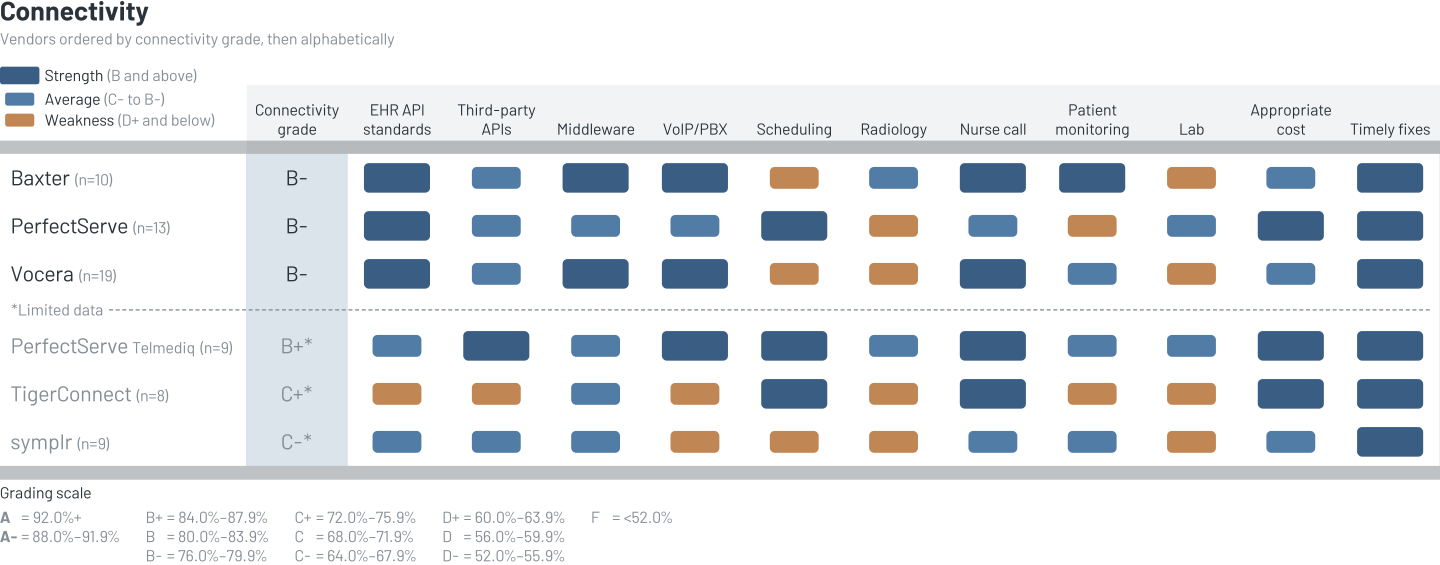
Connectivity: PerfectServe Telmediq* Supports Third-Party Connectivity without Excessive Costs
To justify the cost of interface setup and maintenance, provider organizations need to ensure connections are valuable and actually driving improved communication. PerfectServe Telmediq* respondents report being able to make more third-party API connections due to the vendor’s efforts to listen and develop meaningful connections without excessive charges. Other vendors have seen increased adoption of connections by offering proprietary tools—evidenced through Baxter’s and Vocera’s offerings of middleware and PerfectServe’s offering of Lightning Bolt Scheduling. symplr* and TigerConnect* respondents report their vendor’s pricing model has historically been a barrier to increased connections; symplr does include an integrated scheduling solution, but several deep adopters have yet to leverage or optimize their use of the tool.
*Limited data
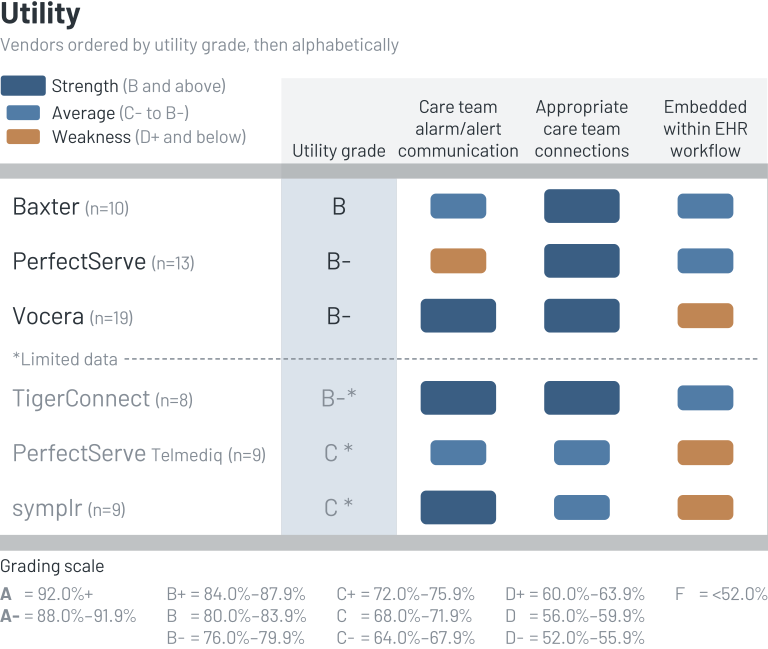
Utility: symplr*, PerfectServe Telmediq & Vocera Often Not Embedded in the EHR Workflow
Physicians want messages from clinical communications tools to be embedded in the EHR workflow to remove the need to move between multiple systems, which ultimately increases their response time to patient needs. PerfectServe, TigerConnect*, and Baxter respondents most consistently report the use of the communications tool within the EHR. Interviewed symplr* customers feel the vendor has improved their alerts/alarms but could better integrate the tool within the EHR. Vocera and PerfectServe Telmediq* respondents report integrated workflows, but some weren’t aware of the capability. On top of EHR integration, respondents also prioritize messages getting to the right clinician, and scheduling is key to making that process less manual. Interviewed PerfectServe deep adopters often leverage Lightning Bolt, the vendor’s Dynamic Intelligent Routing technology, or an interfaced third-party scheduling solution to automatically connect with the right care team member. Baxter respondents feel the vendor gets messages to the correct users by investing in end-user training and utilizing nurses for quick corrections.
*Limited data
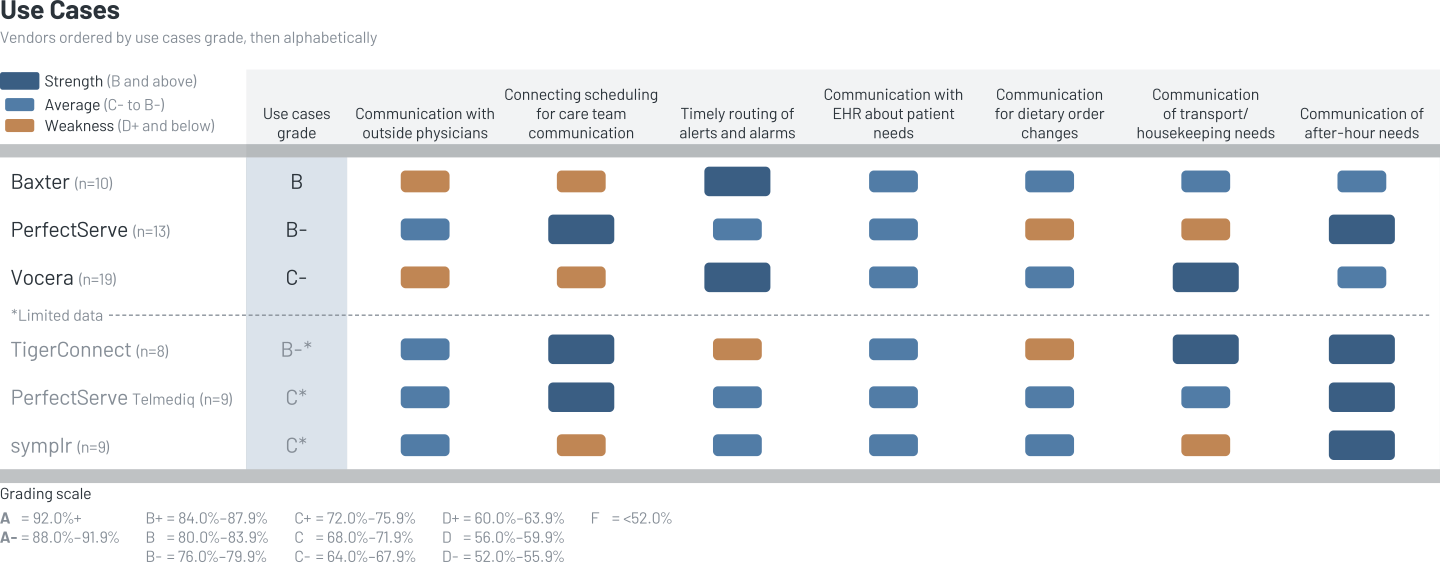
Use Cases: No Vendor Consistently Connecting across All Use Cases, But Some Deep Adopters Starting to Unify Their Communications
Many interviewed deep adopters purchased their solutions for a specific communication workflow rather than as a comprehensive, interoperable communication platform. As a result, few respondents have broadly connected their vendor’s solutions to maximize use cases while minimizing disparate systems. Still, vendors have varying strengths (in specific functionality or product offerings) that support more optimized connection. PerfectServe and TigerConnect* offer proprietary scheduling platforms, and as a result, many of their responding customers see fewer barriers to integration and have successfully navigated connectivity hurdles in sending messages to care team members. These vendors also offer after-hours call-center products with native integration. Baxter and Vocera have proprietary middleware technology, so nurse workflow technology is often a key component of customer contracts. Respondents also note Vocera’s badges are a cost-efficient way to connect with dietary teams.
*Limited data
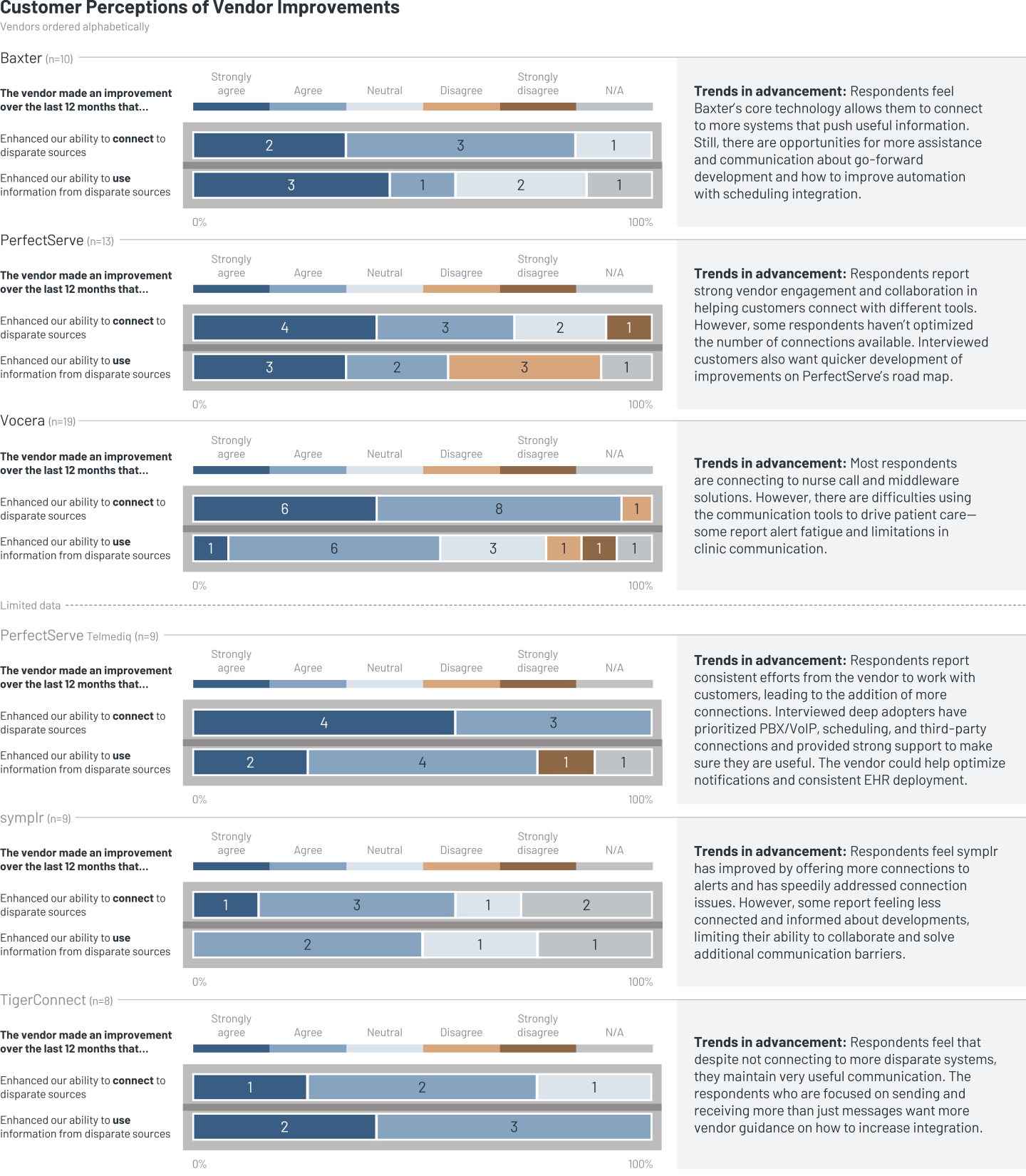
Interoperability Advancements in the Last 12 Months
Below are additional insights on how much providers feel their vendor has enhanced their capabilities in the last 12 months, including the overall push toward more advanced technology.
About This Report
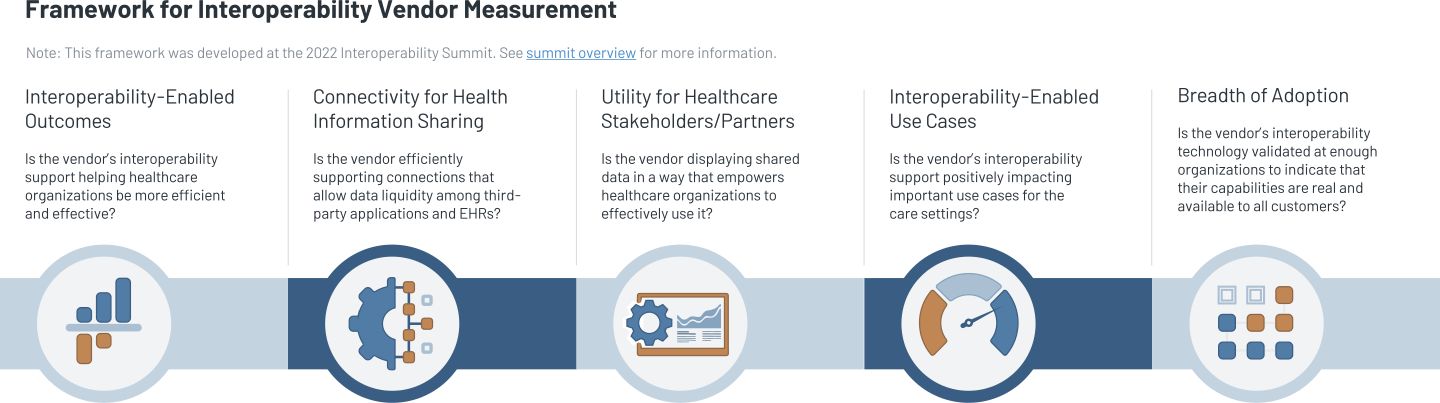
The question set used for this report was developed by healthcare leaders at the KLAS 2022 Interoperability Summit as a means for assessing EHR vendors’ progress toward enabling interoperability (read the summit overview here). For this report, KLAS conducted deep interviews with leaders from organizations who were identified by their vendors as deep adopters from March 2023 to December 2023. The findings showcase what is possible today in real care settings but may not reflect customer bases as a whole.
Respondents were asked questions about four aspects of interoperability: (1) outcomes, (2) connectivity, (3) utility, and (4) use cases. For each question in the survey, respondents were asked to rate their agreement or satisfaction on a Likert scale, with the options being Strongly Agree, Agree, Neutral, Disagree, Strongly Disagree, and N/A. Each option on the Likert scale received a point value: Strongly Agree/Agree=1, Neutral=0, Disagree/Strongly Disagree=-1. N/A responses were removed from the denominator for the questions. Based on the percentage of possible points earned, vendors received a grade in each area as well as an overall grade that represents an average of the four areas.

To qualify for this report, vendors had to provide a list of at least 30 unique organizations identified by the vendor as deep adopters.
Sample Sizes
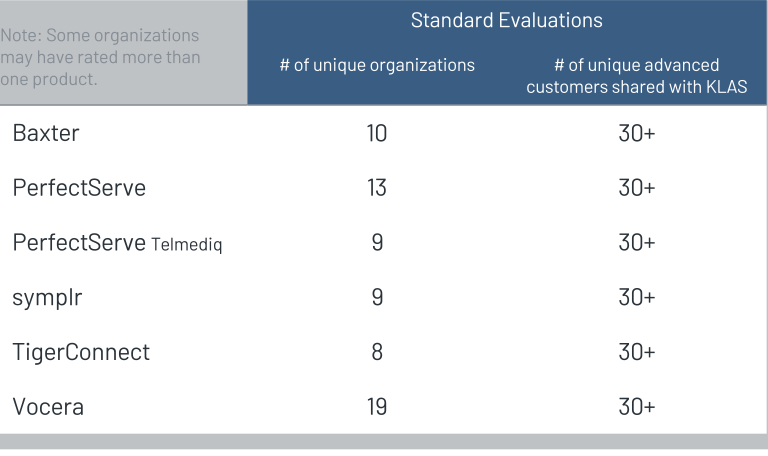
Unless otherwise noted, sample sizes displayed throughout this report (e.g., n=16) represent the total number of unique customer organizations interviewed for a given vendor or solution. However, it should be noted that to allow for the representation of differing perspectives within any one customer organization, samples may include surveys from different individuals at the same organization. The table below shows the total number of unique organizations interviewed for each vendor or solution.
Some respondents choose not to answer particular questions, meaning the sample size for any given vendor or solution can change from question to question. When the number of unique organization responses for a particular question is less than 10, the score for that question is marked with an asterisk (*) or otherwise designated as “limited data.” Where textual content relies on limited data, the vendor name is marked with an asterisk. Note that when a vendor has a low number of reporting sites, the possibility exists for KLAS scores to change significantly as new surveys are collected.

Writer
Carlisa Cramer

Designer
Jess Wallace-Simpson

Project Manager
Andrew Wright
This material is copyrighted. Any organization gaining unauthorized access to this report will be liable to compensate KLAS for the full retail price. Please see the KLAS DATA USE POLICY for information regarding use of this report. © 2026 KLAS Research, LLC. All Rights Reserved. NOTE: Performance scores may change significantly when including newly interviewed provider organizations, especially when added to a smaller sample size like in emerging markets with a small number of live clients. The findings presented are not meant to be conclusive data for an entire client base.