KLAS Contact

Contact KLAS
Contact KLAS
 2026 BEST IN KLAS
Preferences
Related Series

2020

2019
Related Segments

Data Archiving 2024
Examining the Complexity & Content of Archive Deployments

Author
Tyson Blauer

Author
Paul Warburton
Amid continuing trends of software consolidation, data archiving solutions enable healthcare organizations to archive and access historical data from retired legacy software. Many organizations are archiving more solutions to reduce costs and the number of data sources they need to access. While data archiving vendors can archive nearly any solution, they do often focus on specific markets and project sizes. To provide greater transparency around which markets these vendors serve and how well they support their customers, this report examines (1) the complexity of archiving projects and (2) vendor performance around implementation, integration, and value.
Market Overview
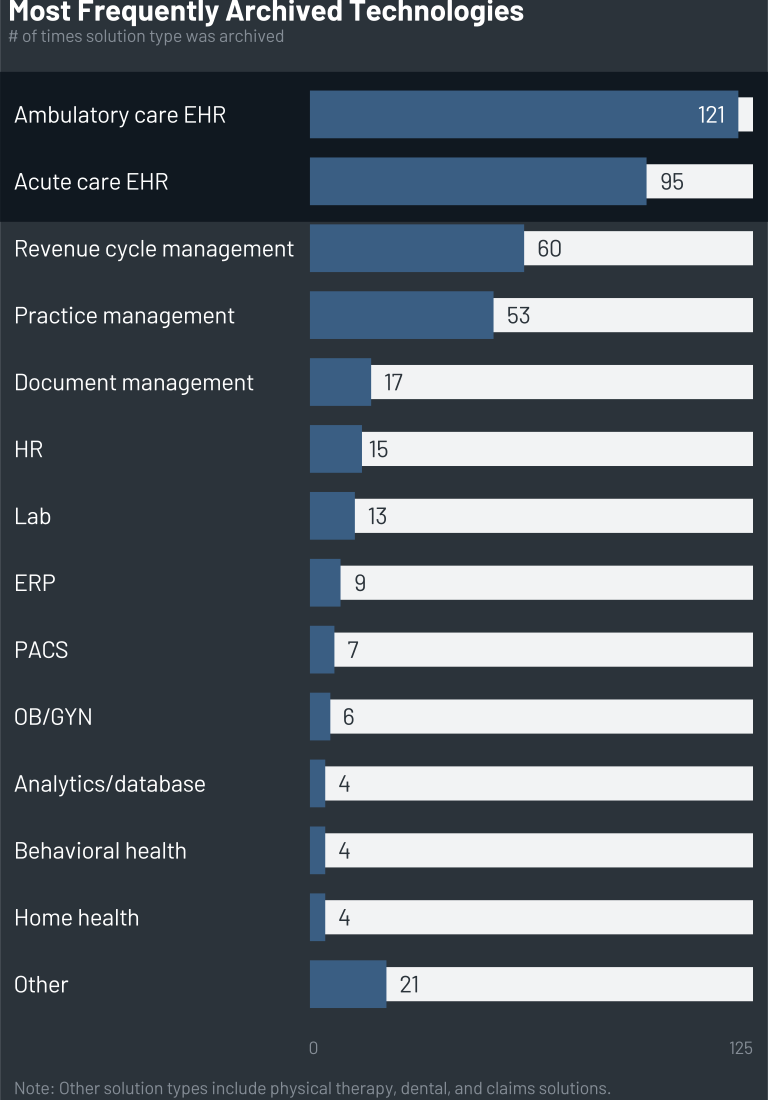
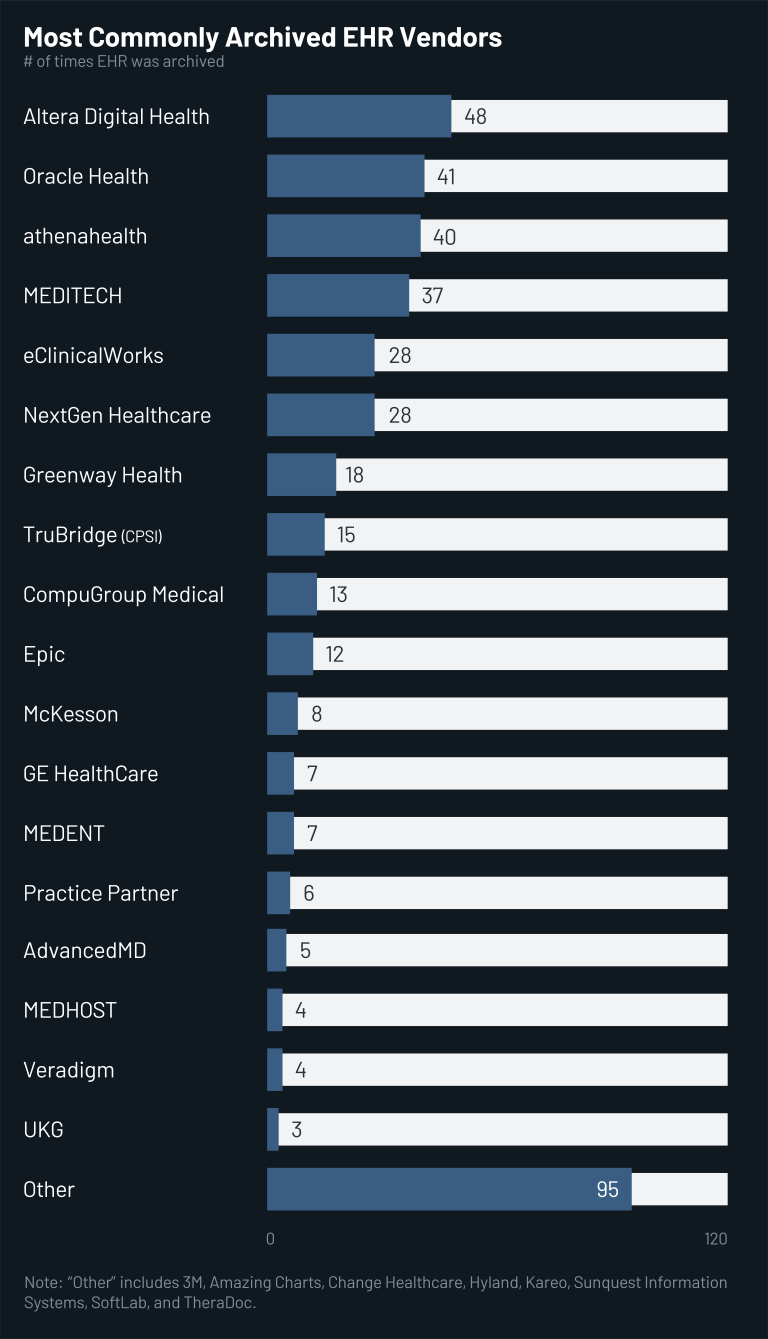
Healthcare organizations use data archiving vendors to archive a variety of solution types, most commonly legacy ambulatory and acute care EHRs. Despite this, respondents indicate that the type of solution being archived has little to no impact on an organization’s ultimate satisfaction and success. Rather, satisfaction and success depend on the data archiving vendor’s ability to meet implementation timelines, build strong integration, and improve archiving functionality. (See following section for more information on vendor performance in these areas.)
The Complexity of Data Archiving
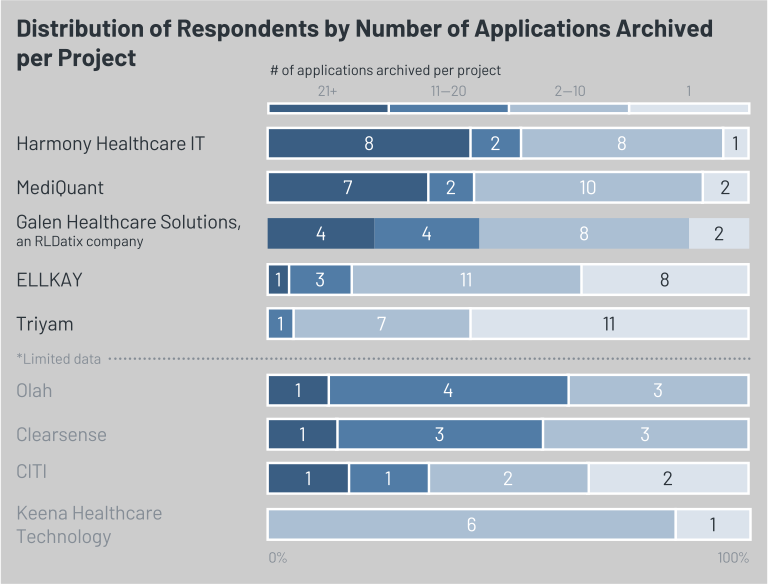
In general, healthcare organizations want a data archiving vendor that focuses on specific legacy solutions and has experience supporting similarly sized organizations. Additionally, organizations want to know their vendor can handle the complexity of their project—i.e., the number of applications being archived and the number of hospitals or clinics where the archive will be implemented. The chart to the right shows each measured vendor’s range of complexity based on the number of applications archived per validated project. Note that this report does not provide a complete view of the number of applications or the number of hospitals/clinics each vendor can support during archiving projects.
Vendors with Higher Complexity & High Customer Satisfaction
Customers of Galen Healthcare Solutions Receive Value from Vendor’s Professional Services; Harmony Healthcare IT Customers Highlight Partnership
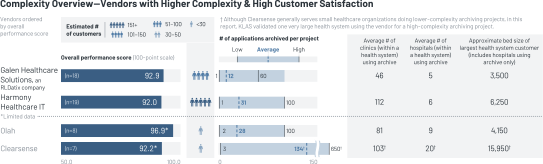
Galen Healthcare Solutions, Harmony Healthcare IT, Olah*, and Clearsense* are all validated for supporting higher-complexity archiving projects while maintaining high customer satisfaction. In addition to a data archiving solution, Galen Healthcare Solutions provides professional services (e.g., clinical optimization, HIT staffing, and technical services), which many respondents use and say increase their satisfaction with the archive. On average, respondent organizations within Harmony Healthcare IT’s large customer base archive 31 products per project. Respondents appreciate the strong uptime, consistent cost savings, and trusting vendor partnership; they also highlight that the vendor provides ongoing services as their needs evolve. Olah* (who often archives labor and delivery and perinatal applications) has a smaller customer base and mostly works with large health systems. The vendor’s CSMs and support staff are seen as knowledgeable and attentive, as they respond quickly to tickets and collaborate during the archive build process. Customers hope Olah will maintain this culture as they continue to grow. Clearsense* also has a smaller customer base, made up mostly of organizations doing midsize archiving projects; however, one respondent organization did a large, high-complexity project (the largest validated project in this report sample). Regardless of project size, respondents feel Clearsense provides strong account management and ongoing support.
*Limited data
Vendors with Lower Complexity & High Customer Satisfaction
Triyam Customers Appreciate Cost & Ability to Scale
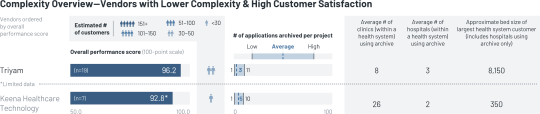
Triyam and Keena Healthcare Technology* typically do small, lower-complexity projects; these smaller-scale projects enable the vendors to more easily standardize processes for commonly archived solutions and manage project timelines, which contributes to customers’ high satisfaction. Interviewed customers of Triyam—the 2024 Best in KLAS winner for data archiving—are consistently satisfied, and many archive TruBridge (CPSI) software through Triyam as their organizations transition to different platforms. Respondents highlight the vendor’s experience with various technology types, ability to scale when building the archive, and price point. Keena Healthcare Technology* is validated most often for archiving eClinicalWorks and Veradigm software for ambulatory clinics, who are highly loyal to the vendor thanks to their product expertise and their clinical optimization and technical services.
*Limited data
Vendors with Higher/Lower Complexity & Below-Average Customer Satisfaction
MediQuant & ELLKAY Customers Want Increased Vendor Engagement
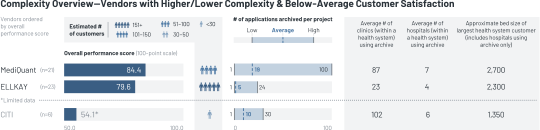
Both MediQuant and CITI* typically support higher-complexity archiving projects. MediQuant has a large customer base and focuses on archiving revenue cycle data. Customers appreciate that the archive is active, enabling them to work with the legacy data instead of just viewing it in a PDF. Less-satisfied respondents want the vendor to provide more engagement and ensure stronger uptime. For CITI*, recent leadership changes and challenges with insufficient resources have led to respondent frustration with the vendor’s ability to meet project timelines and tackle support requests. ELLKAY mainly serves large clinics that want to archive EHR and practice management data. Interviewed customers want more engagement regarding product updates and faster responses from support staff, especially during implementation.
*Limited data
Key Differentiators of Vendor Performance
Triyam, Galen Healthcare Solutions & Harmony Healthcare IT Consistently Meet Timelines & Provide Strong Data Integration
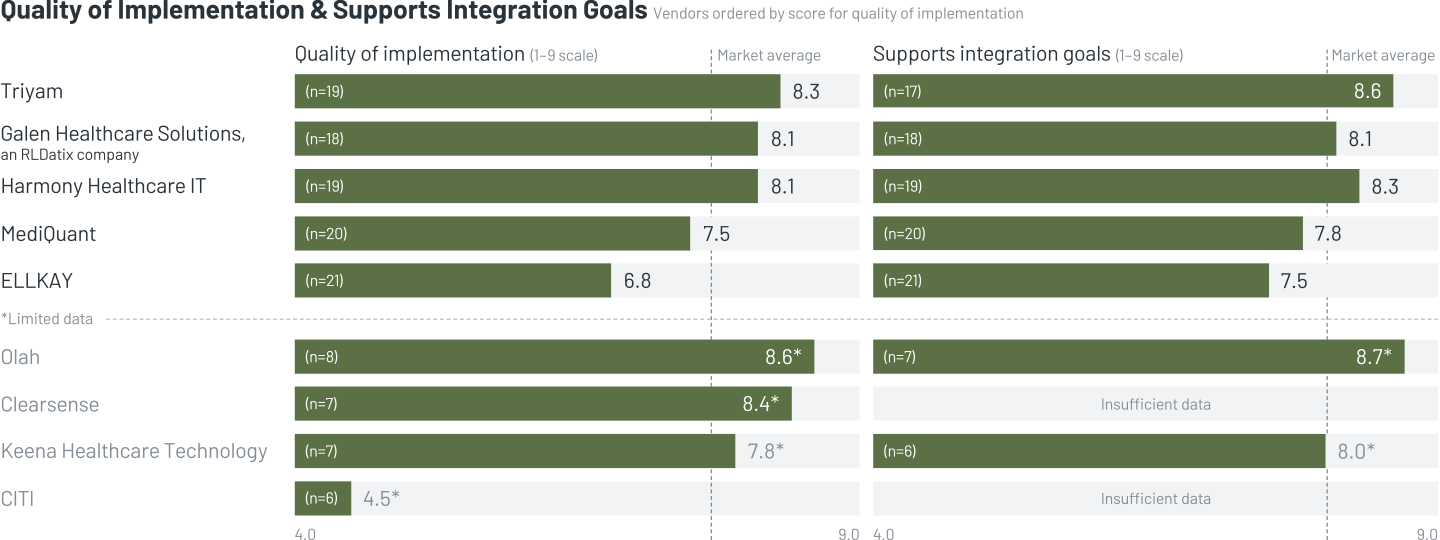
One key difference between data archiving vendors is their ability to hit timelines and ensure strong data accessibility via integration. Interviewed Triyam customers highlight the vendor’s partnership in those areas, saying Triyam is able to hit tight deadlines and communicates consistently. Galen Healthcare Solutions and Harmony Healthcare IT respondents feel their vendor provides strong project leadership and ensures integration is built correctly so that the data migration process is efficient. Olah* is praised for their flexibility with project scope, as they allow customers to add more archived systems as the implementation progresses; respondents also appreciate that they are able to access archived data through a link within their current EHR.
In contrast, customers of MediQuant and ELLKAY experience inconsistent implementation quality. MediQuant respondents say product glitches prevent timely implementations; they also note the archive’s ease of use and integration capabilities could be improved. Interviewed ELLKAY customers report recent go-live misses, saying the lack of resources often extends implementation timelines (which can result in unexpected costs).
*Limited data
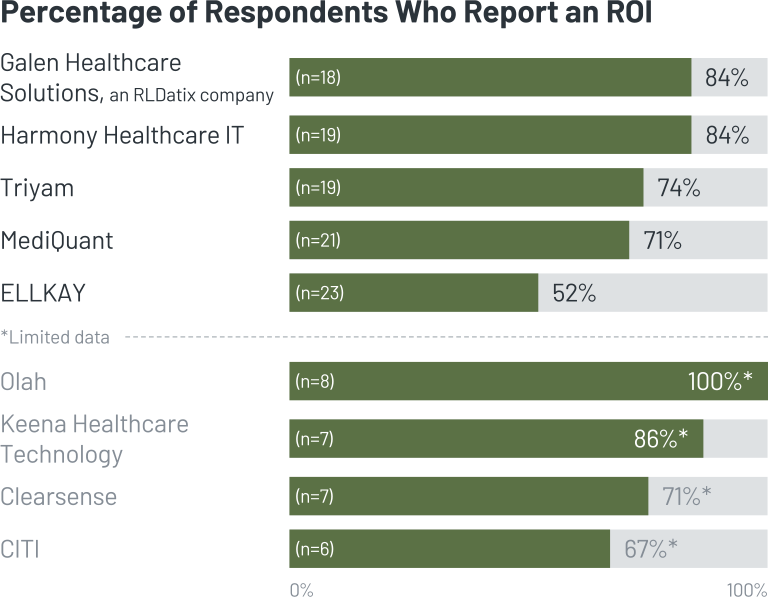
Satisfied Customers of Galen Healthcare Solutions, Harmony Healthcare IT & Olah* Report ROI from Efficient Data Access & Improved Cybersecurity
Healthcare organizations in need of a data archiving solution often look for the best bargain that meets their basic needs, but that may not always be the most strategic choice. Those who see data archiving as an investment and can articulate an ROI are more satisfied than organizations who simply seek to comply with government requirements to maintain legacy data (see chart below). Customers of Harmony Healthcare IT and Galen Healthcare Solutions receive value from outcomes like improved data accessibility and enhanced cybersecurity. In addition to those outcomes, Olah* respondents also highlight achieving cost savings. Triyam customers similarly appreciate cost savings, as they feel the vendor provides a low price point. Around 25% of respondents struggled to articulate an ROI and feel Triyam could do more to help them receive value from the archive. Some customers of MediQuant express concerns around value due to ad hoc fees from increases in implementation scope or resources.
*Limited data
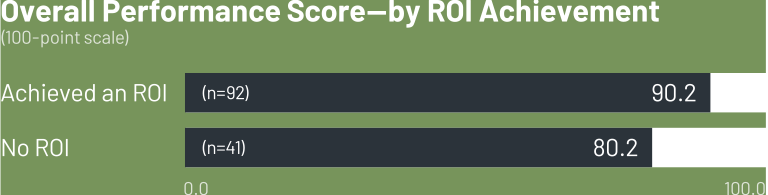
Data archiving is a high-performing segment, with the average overall performance score being 88.6 (on a 100-point scale)—almost 10 points higher than the overall software average from the 2024 Best in KLAS report. As such, healthcare organizations using a data archive are generally satisfied, and that satisfaction increases even further when their vendor helps them achieve an ROI from the data archive. In contrast, respondents who do not report an ROI are, on average, 10 points less satisfied with their vendor.
About This Report
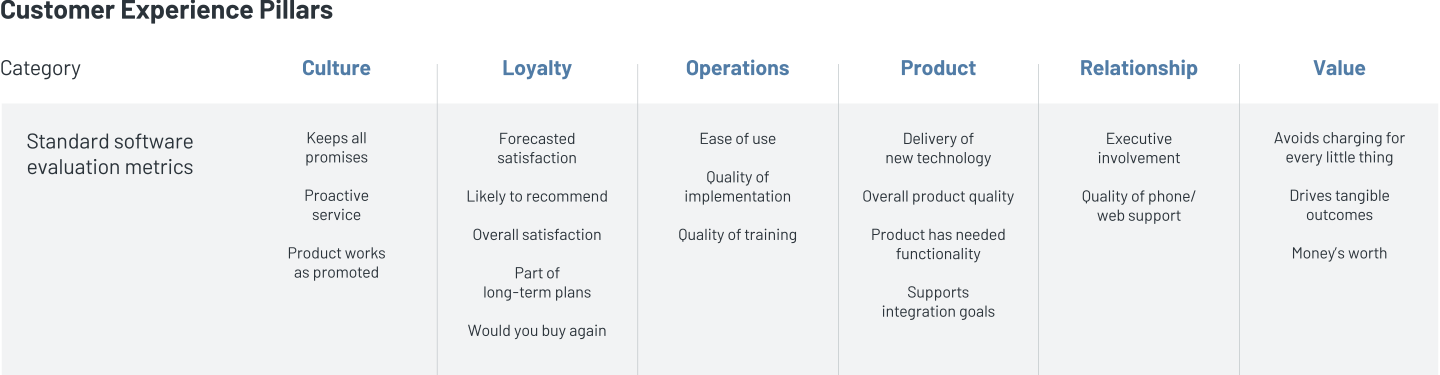
Each year, KLAS interviews thousands of healthcare professionals about the IT solutions and services their organizations use. For this report, interviews were conducted over the last 12 months using KLAS’ standard quantitative evaluation for healthcare software, which is composed of 16 numeric ratings questions and 4 yes/no questions, all weighted equally. Combined, the ratings for these questions make up the overall performance score, which is measured on a 100-point scale. The questions are organized into six customer experience pillars—culture, loyalty, operations, product, relationship, and value.
To supplement customer satisfaction data, KLAS included the following supplemental questions in the standard evaluation to gain insight into the complexity of their archiving projects, the ROI they have achieved, and the vendors and solution types being commonly archived. Data was collected between June 2023 to June 2024.
- What applications are you currently archiving?
- What ROI has your organization seen from using your archiving solution?
- How many applications do you currently archive with your vendor
- How many hospital/clinic sites in your organization currently use your vendor’s archiving solution?
Sample Sizes
Unless otherwise noted, sample sizes displayed throughout this report (e.g., n=16) represent the total number of unique customer organizations interviewed for a given vendor or solution. However, it should be noted that to allow for the representation of differing perspectives within any one customer organization, samples may include surveys from different individuals at the same organization. The following table shows the total number of unique organizations interviewed for each vendor or solution as well as the total number of individual respondents.
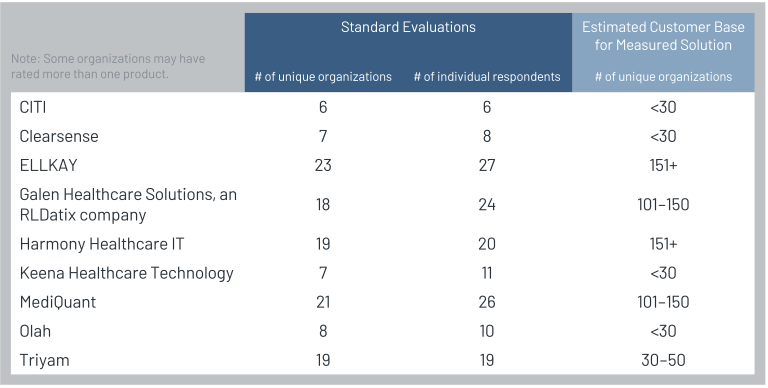 Some respondents choose not to answer particular questions, meaning the sample size for any given vendor or solution can change from question to question. When the number of unique organization responses for a particular question is less than 15, the score for that question is marked with an asterisk (*) or otherwise designated as “limited data.” If the sample size is less than 6, no score is shown. Where textual content relies on limited data, the vendor name is marked with an asterisk. Note that when a vendor has a low number of reporting sites, the possibility exists for KLAS scores to change significantly as new surveys are collected.

Writer
Natalie Hopkins

Designer
Breanne Hunter

Project Manager
Andrew Wright
This material is copyrighted. Any organization gaining unauthorized access to this report will be liable to compensate KLAS for the full retail price. Please see the KLAS DATA USE POLICY for information regarding use of this report. © 2026 KLAS Research, LLC. All Rights Reserved. NOTE: Performance scores may change significantly when including newly interviewed provider organizations, especially when added to a smaller sample size like in emerging markets with a small number of live clients. The findings presented are not meant to be conclusive data for an entire client base.