KLAS Contact

Contact KLAS
Contact KLAS
 2026 BEST IN KLAS
Preferences
Related Series

2021

2018
Related Segments

Managed IT Services 2024
Which Firms Are Best Equipped to Fill Help Desk & AMS Needs?

Author
Daniel Zeitner

Author
Jonathan Christensen

Author
Kevin Huang
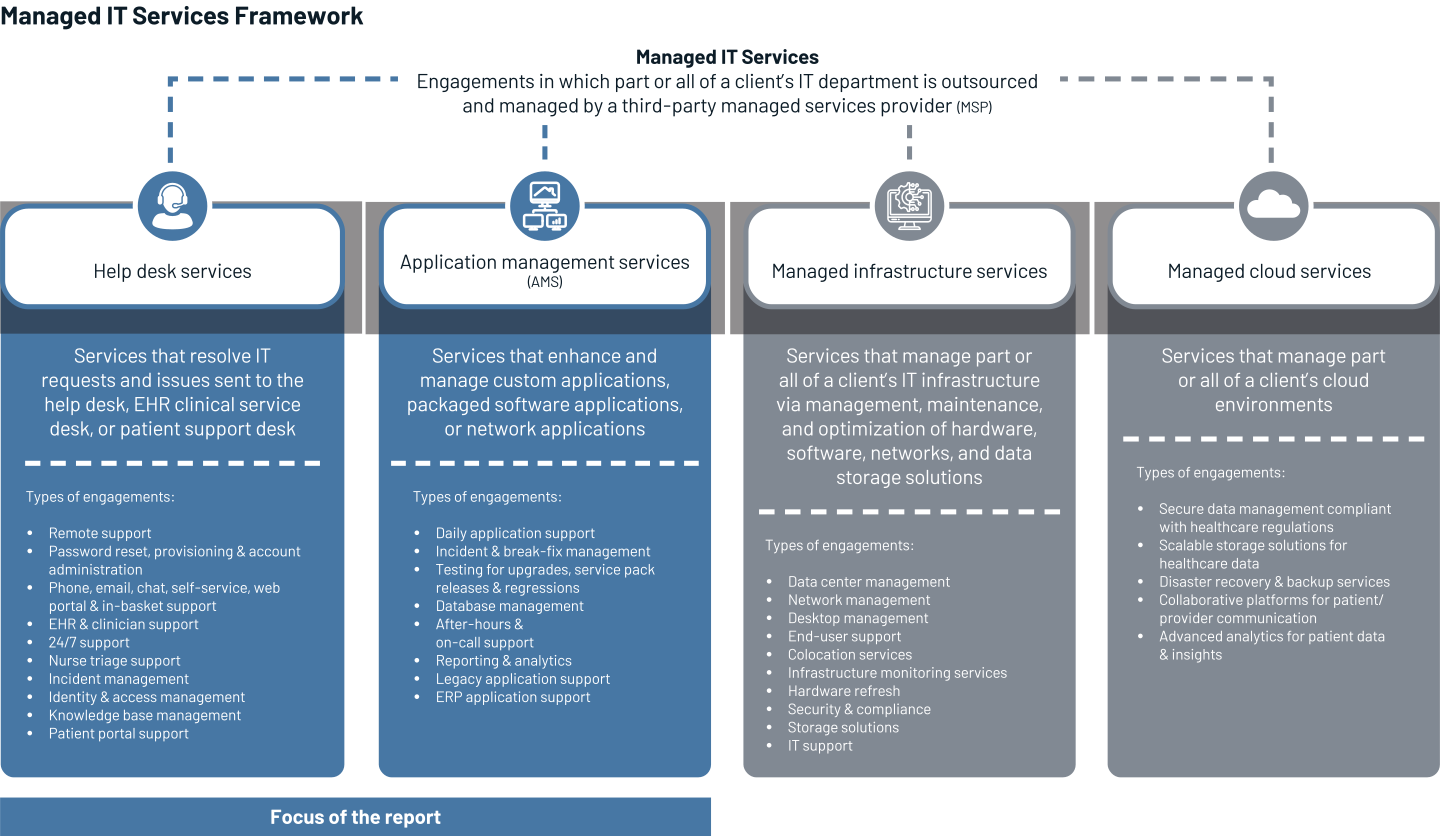
Due to staffing shortages and rising costs, healthcare organizations are increasingly looking to outsourced managed services firms to relieve the burden of hiring and maintaining IT staff—enabling organizations to reallocate and better utilize their in-house resources. This report—the first in a series to focus on managed IT services—examines which firms consistently deliver quality application management services (AMS) and help desk services to healthcare provider and payer organizations; it also shares insights into the managed IT services market, including the pain points driving organizations to adopt and expand use of IT outsourcing. KLAS intends to publish reports on the other two managed IT services verticals later in 2024.
Pivot Point Consulting, CereCore, GAVS Technologies & CTG Highlighted for High-Quality Services & Strong Partnership
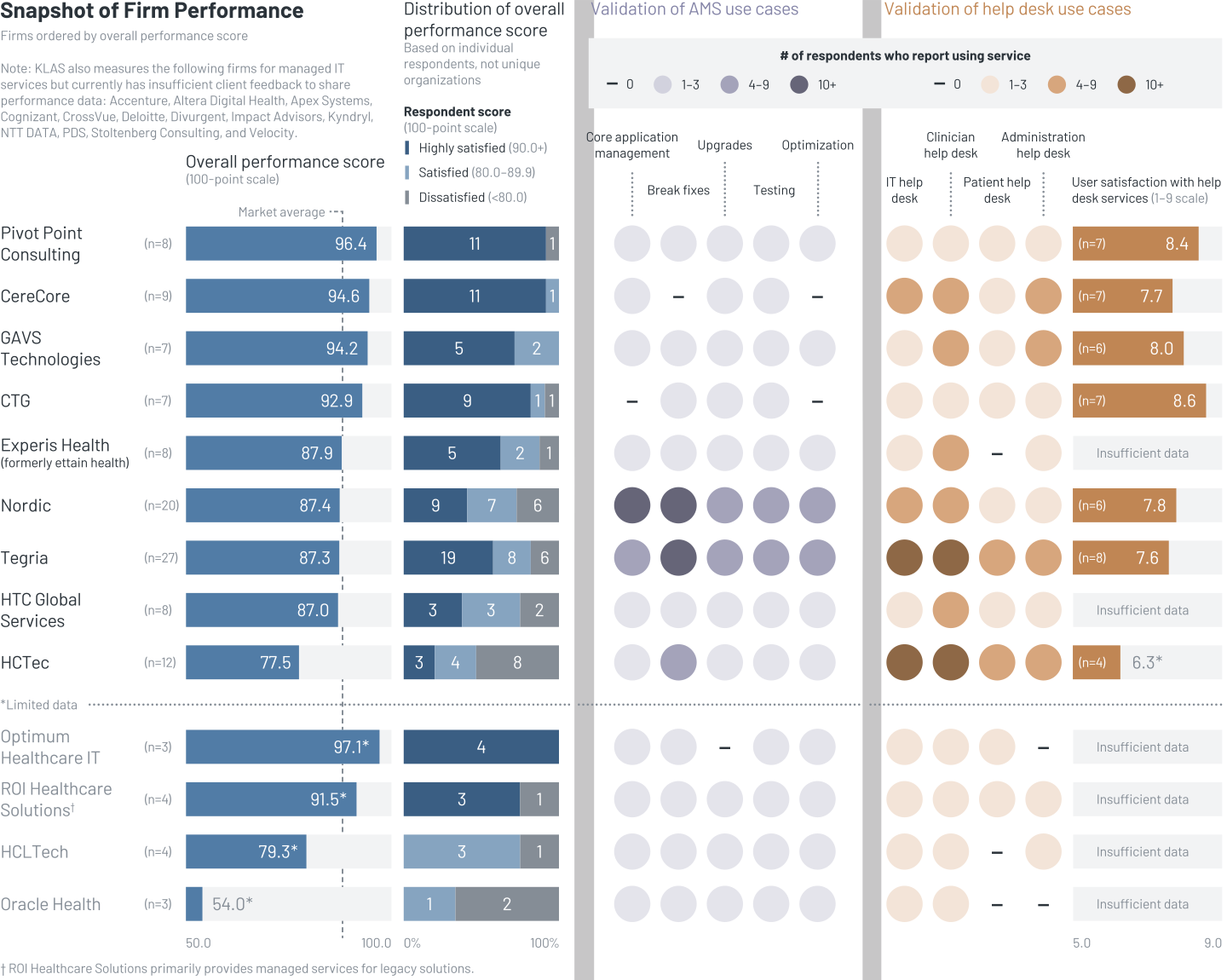
Interviewed clients of Pivot Point Consulting, CereCore, GAVS Technologies, and CTG report high satisfaction with their firm’s services. Pivot Point Consulting primarily serves Epic clients and is seen as a very communicative and knowledgeable partner. Respondents appreciate that the firm proactively resolves tickets and that staff turnover causes minimal disruption. Interviewed clients of CereCore similarly view the firm as a responsive, proactive partner that notifies them of any changes in IT performance metrics and provides strong first-call resolution. Some respondents note opportunities for improved staffing retention and onboarding. GAVS Technologies respondents praise the firm’s adaptable nature and strong client-first culture, describing the contacts and consultants as committed to their organization’s success. Challenges with staffing turnover, offshoring, and the firm’s strategic ability are noted by some clients. CTG clients are the most highly satisfied with the help desk experience for end users, citing the firm’s helpful staff, agility in resolving problems, and transparency around IT performance metrics. In general, respondents feel the firm meets their service-level agreements, and a couple of clients say the firm exceeds them.
Nordic & Tegria Able to Scale but Struggle with Staff Consistency
Both Nordic and Tegria are noted for their ability to scale AMS and help desk services to very large client organizations. Interviewed Nordic clients mention the firm’s strong partnership, quality resources, and involved executives. In recent years, overall client satisfaction has dropped 8 points (on a 100-point scale); respondents cite post-acquisition challenges with staff quality and turnover as reasons for the decline in satisfaction. Tegria respondents likewise feel the firm provides strong partnership and executive involvement, and they also appreciate the firm’s responsive service and performance transparency. Client satisfaction with Tegria has varied over the years due to struggles with acquisitions, staffing, and contract renewal.
Some HCTec & HCLTech* Clients Dissatisfied with Staff Quality; Oracle Health* Clients Report Poor Service Post-Acquisition
While a few respondents feel HCTec exceeds their expectations, client satisfaction has significantly dropped in recent years. Staff turnover has negatively impacted clients’ engagements; based on feedback from a limited number of clients, HCTec has the lowest score for end-user satisfaction with help desk services. Respondents note that the firm could better screen and retain resources and be more transparent about how they measure staff performance. The limited number of HCLTech* respondents are either very large health systems or payer organizations. Half of interviewed clients report inconsistent staff quality and executive partnership, though they note the firm is improving in these areas. Oracle Health* clients are the least satisfied in this report sample and attribute poor service to COVID-19 and the vendor’s acquisition of Cerner.
*Limited data
Most Respondents Plan to Maintain or Increase Use of Managed IT Services to Mitigate Cost & Staffing Challenges
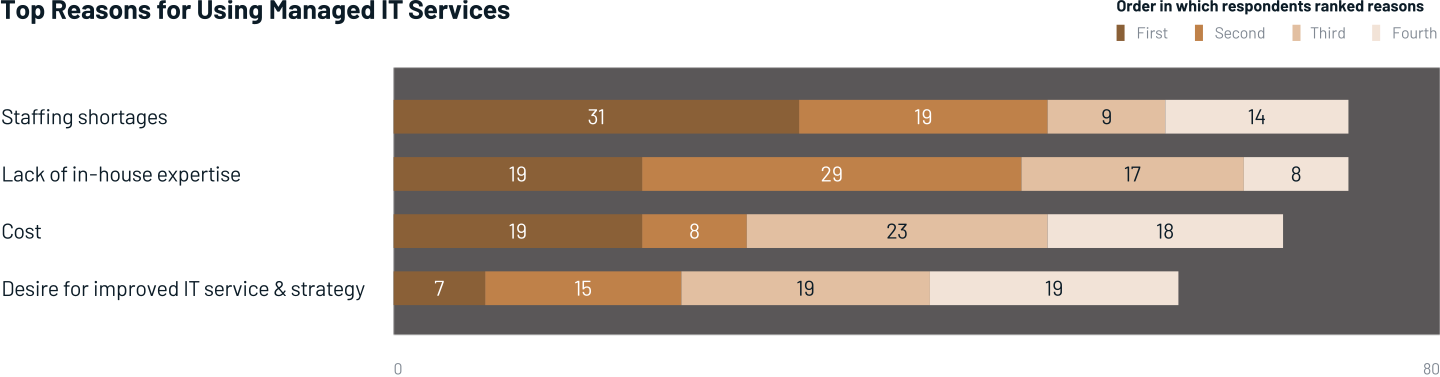
As mentioned previously, ongoing staffing shortages in the healthcare industry is one of the main drivers for organizations to use managed IT services. Healthcare organizations often struggle to find certified resources for their software solutions (especially boutique solutions), and outsourcing is a simpler way to access needed skills and expertise. Regarding how much interviewed healthcare organizations plan to use managed IT services in two to three years, most indicate that they plan to maintain their current level of adoption. Respondents who anticipate increasing use of these services (mostly midsize organizations with 200–1,000 beds) cite the value outsourcing brings in saving costs and relieving staffing burden. Respondents who report they will decrease their use of managed IT services—usually small (<200 beds) or very large organizations (1,001+ beds)—also cite cost as a motivation; one such respondent says they would continue using the managed IT services but that budgetary constraints have made the services cost prohibitive.
 “We want to look at using managed IT services, partly due to staffing limitations. From a strategic perspective, we want our IT staff to focus on application support, application development, and innovations instead of on keeping our system up or fixing computers.” —VP
“We don’t like to outsource too much if we don’t have to because most of the time, outsourcing is not as good of an experience as keeping things in-house. We will consider managed IT services when they make sense financially. But in general, we are looking at reducing our use of consulting firms because those services are pricey.” —Director

About This Report
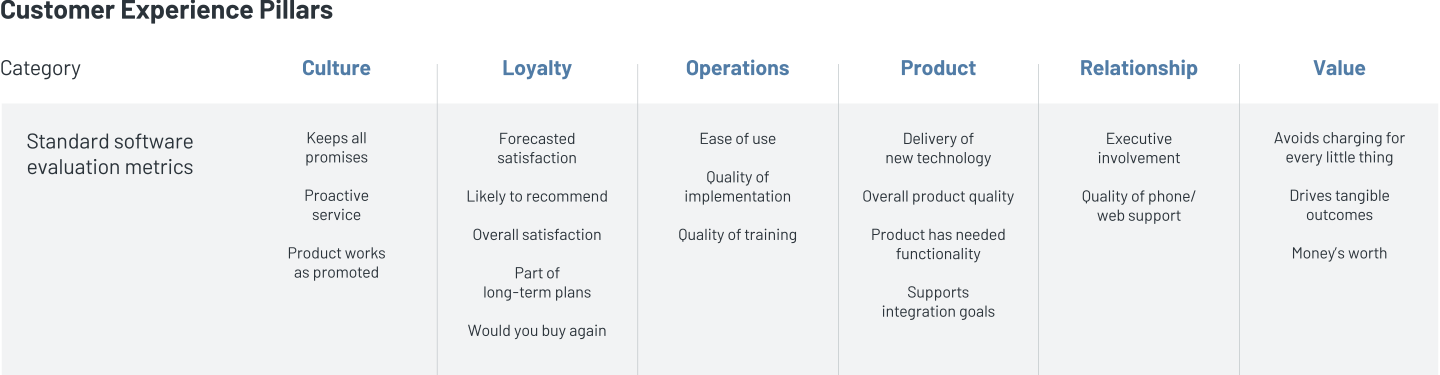
Each year, KLAS interviews thousands of healthcare professionals about the IT solutions and services their organizations use. For this report, interviews were conducted over the last 18 months using KLAS’ standard quantitative evaluation for healthcare services, which is composed of 9 numeric ratings questions and 3 yes/no questions, all weighted equally. Combined, the ratings for these questions make up the overall performance score, which is measured on a 100-point scale. The questions are organized into five customer experience pillars—loyalty, operations, relationship, services, and value.
Additionally, as part of the standard evaluation, respondents were asked to validate the areas in which they use their firm’s AMS and help desk services as well as rate user satisfaction with the firm’s help desk services (on a scale of 1–9). Not all respondents answered the latter question.
To supplement the client satisfaction data gathered with the standard evaluation, KLAS created a supplemental evaluation to understand clients’ future plans with their firm’s help desk and AMS offerings. KLAS asked interviewed participants (1) how or whether they anticipate their use of managed IT services changed in two to three years and (2) what factors drive them to use managed IT services. Data was collected from January 2023 to December 2023.
Sample Sizes
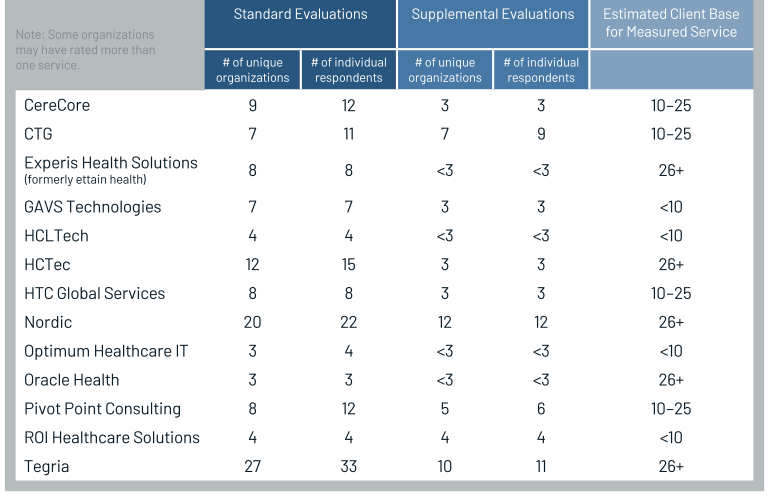 Unless otherwise noted, sample sizes displayed throughout this report (e.g., n=16) represent the total number of unique client organizations interviewed for a given firm or service. However, it should be noted that to allow for the representation of differing perspectives within any one client organization, samples may include surveys from different individuals at the same organization. The table below shows the total number of unique organizations interviewed for each firm or service as well as the total number of individual respondents.
Some respondents choose not to answer particular questions, meaning the sample size for any given firm or service can change from question to question. When the number of unique organization responses for a particular question is less than 6, the score for that question is marked with an asterisk (*) or otherwise designated as “limited data.” If the sample size is less than 3, no score is shown. Where textual content relies on limited data, the firm name is marked with an asterisk. Note that when a firm has a low number of reporting sites, the possibility exists for KLAS scores to change significantly as new surveys are collected.

Writer
Natalie Hopkins

Designer
Breanne Hunter

Project Manager
Sydney Toomer
This material is copyrighted. Any organization gaining unauthorized access to this report will be liable to compensate KLAS for the full retail price. Please see the KLAS DATA USE POLICY for information regarding use of this report. © 2026 KLAS Research, LLC. All Rights Reserved. NOTE: Performance scores may change significantly when including newly interviewed provider organizations, especially when added to a smaller sample size like in emerging markets with a small number of live clients. The findings presented are not meant to be conclusive data for an entire client base.