KLAS Contact

Contact KLAS
Contact KLAS
 2026 BEST IN KLAS
Preferences
Related Series

2018
Related Segments

Physician Scheduling 2023
Organizations Improve Scheduling Efficiency & Visibility despite Complexities

Author
Niel Oscarson

Author
Ciera Walker
As more healthcare organizations move away from manual processes for physician scheduling, they agree that using technology boosts scheduling efficiency and visibility. However, given the inherent complexity of scheduling, many organizations haven’t yet achieved the fully automated process they were hoping for. This report looks at two different types of vendors who offer physician scheduling solutions to their customers—those who focus primarily on clinical collaboration and those who focus primarily on workforce management—and shares the successes and barriers customers experience as they continually move toward greater efficiency. Also included are general market insights gleaned from respondents across solutions.
Vendors Focused on Clinical Collaboration
PerfectServe Customers Report Increased Ease of Use over Time & Highlight Strong Support; TigerConnect Solution Is Reliable, though Some View It as Cumbersome
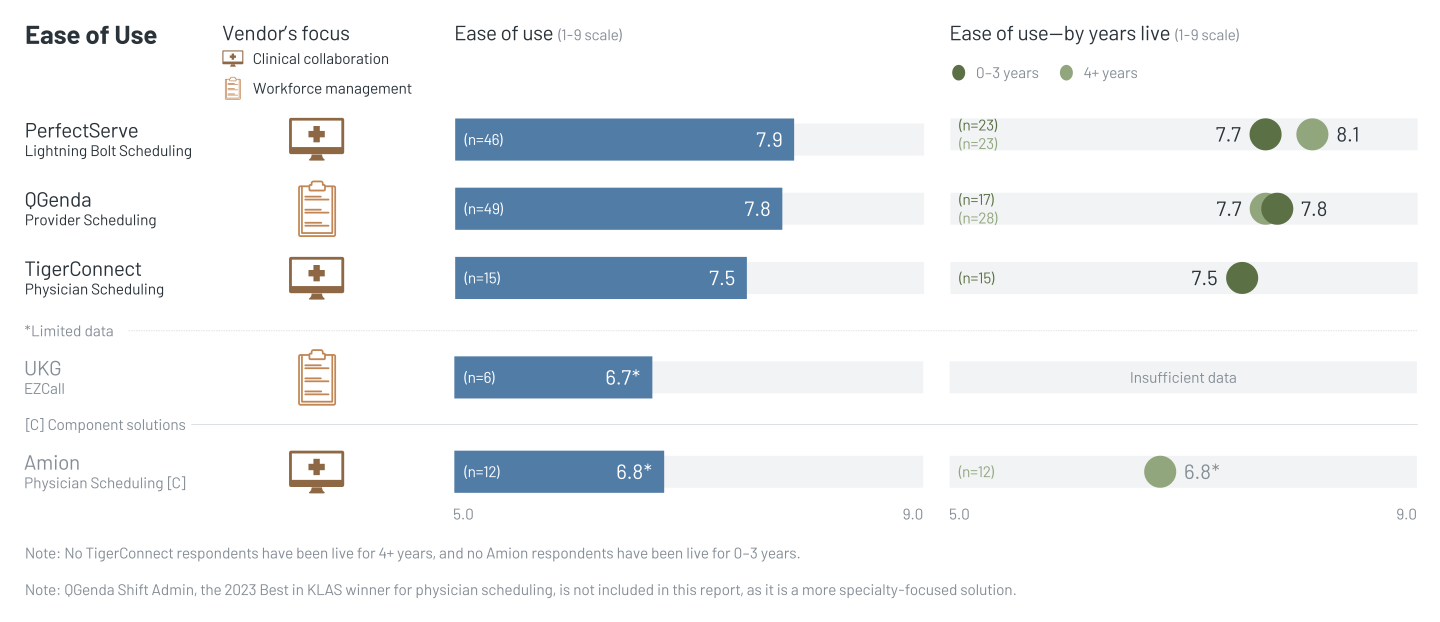
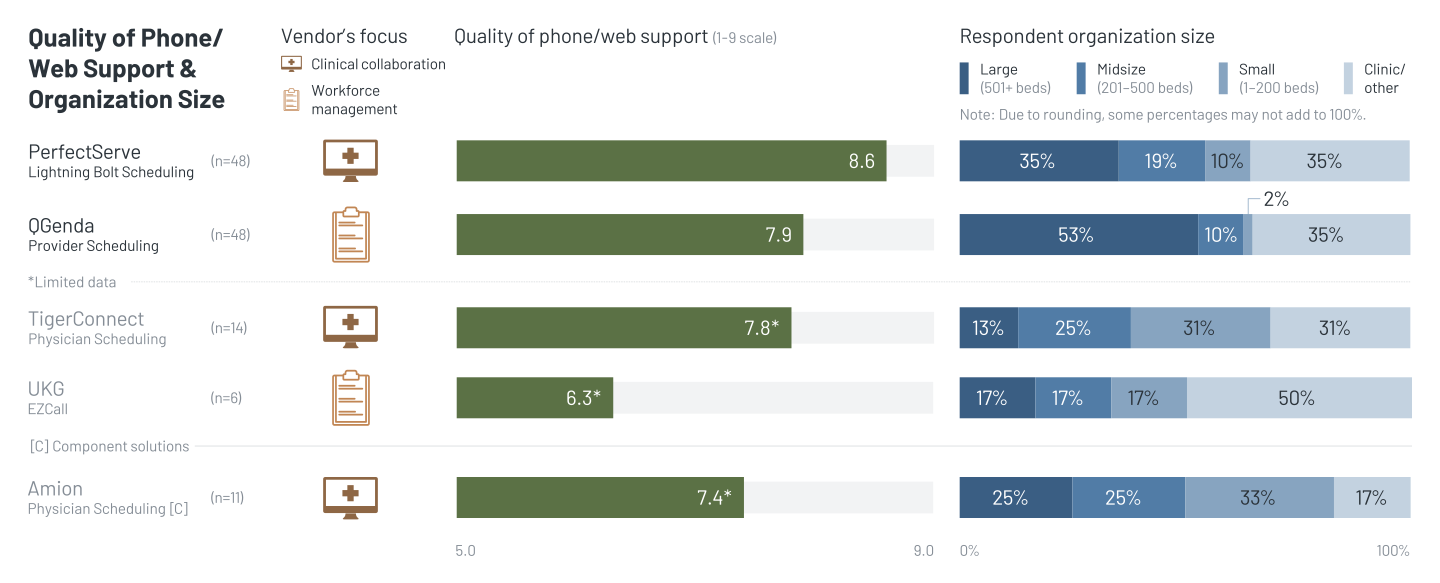
PerfectServe acquired Lightning Bolt in 2019, adding a physician scheduling tool to their clinical communications suite, and respondent organizations using the tool range from clinics to large organizations. Though physician scheduling tools tend to be complicated, PerfectServe is rated the highest in this report for ease of use, with respondents saying Lightning Bolt Scheduling becomes more intuitive the longer it is used. Positive outcomes include not only administrative benefits around scheduling but also clinical benefits, like better-balanced clinician workloads and improved care coordination. Additionally, respondents say PerfectServe’s support is responsive and helpful in addressing issues. Some customers feel the solution doesn’t automate tasks as well as expected and isn’t being developed very quickly, including around integration. TigerConnect also acquired a physician scheduling tool (Adjuvant’s Call Scheduler) in 2020 to enhance their clinical communications platform. Respondents appreciate having one solution for both clinical communications and scheduling and say the connection between the two is seamless. The scheduling piece is seen as reliable due to little downtime. However, some say it can be cumbersome to use and that some functionality (like third-party integration) was overpromised. Respondents also mention that although TigerConnect listens to customer feedback, product development can be slow.
In 2022, Amion* was acquired by Doximity, who offers physician-focused tools for areas like mobile-based telehealth, telephony, and social networking. Respondents report that Amion Physician Scheduling facilitates greater scheduling visibility. Both satisfied and dissatisfied respondents say the system navigation feels clunky and old-fashioned. Dissatisfied respondents further note the product development feels stagnant.
*Limited data
Vendors Focused on Workforce Management
QGenda Used by Large Organizations Enterprise-Wide; Solution’s Flexibility Can Have Drawbacks
QGenda offers workforce management solutions, including tools for nurse and physician scheduling, credentialing, and time and attendance. The vendor has the highest percentage of large-organization respondents in this report; over half are large organizations using the solution in several facilities across the enterprise. Respondents say QGenda Provider Scheduling drives outcomes, most notably increasing scheduling visibility and providing a single source of truth—these outcomes are critical for large organizations comprising multiple facilities. The solution is also flexible to accommodate scheduling complexity. However, many respondents (regardless of how long they have been live) say the flexibility can make the solution complicated and confusing to use. In addition, QGenda has historically been highlighted for their high-touch service, and though many respondents still mention the vendor’s attention and responsiveness, some report pain points with a new support model that requires customers to contact a generic support group instead of a designated representative. UKG* offers a scheduling solution, EZCall, in addition to workforce management tools for payroll, HR, and time and attendance. Customer respondents appreciate how EZCall meets their core expectations for managing physician schedules. Still, some experience challenges with vendor involvement (e.g., regarding communication, training, or support).
*Limited data
Market Insights
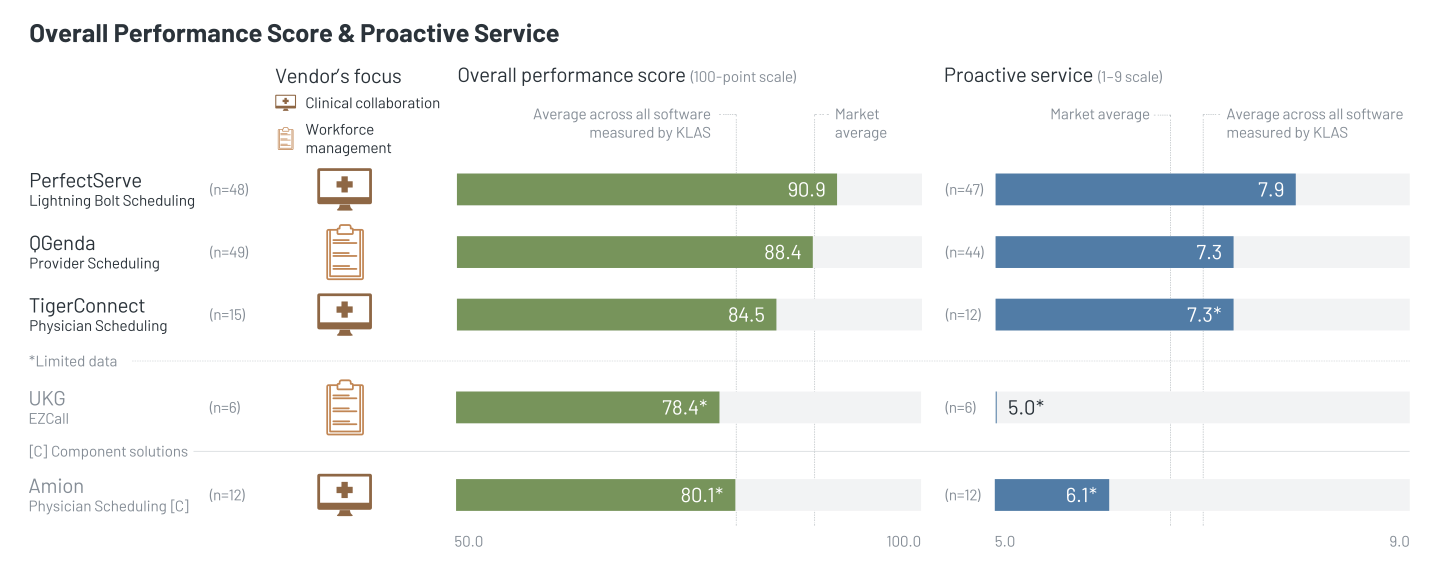
- In general, vendor communication tends to be reactive—when communication happens, respondent organizations are often the ones who initiate.
- While physician scheduling solutions are inherently more efficient than manual processes, respondent organizations say the solutions are complicated to use for day-to-day tasks, rule navigation, and cross-departmental scheduling. Organizations need a significant amount of initial and ongoing training due to their solutions’ steep learning curve.
- Respondents across vendors feel their organization’s schedule is too complex or unique for their solution, saying their solution is better for more straightforward schedules.
- Organizations are more likely to see the value and outcomes they want if they put the necessary time and data into their solution.
- Very few respondents plan to replace their solution, given that they often use their vendor for other solutions aside from physician scheduling.
About This Report
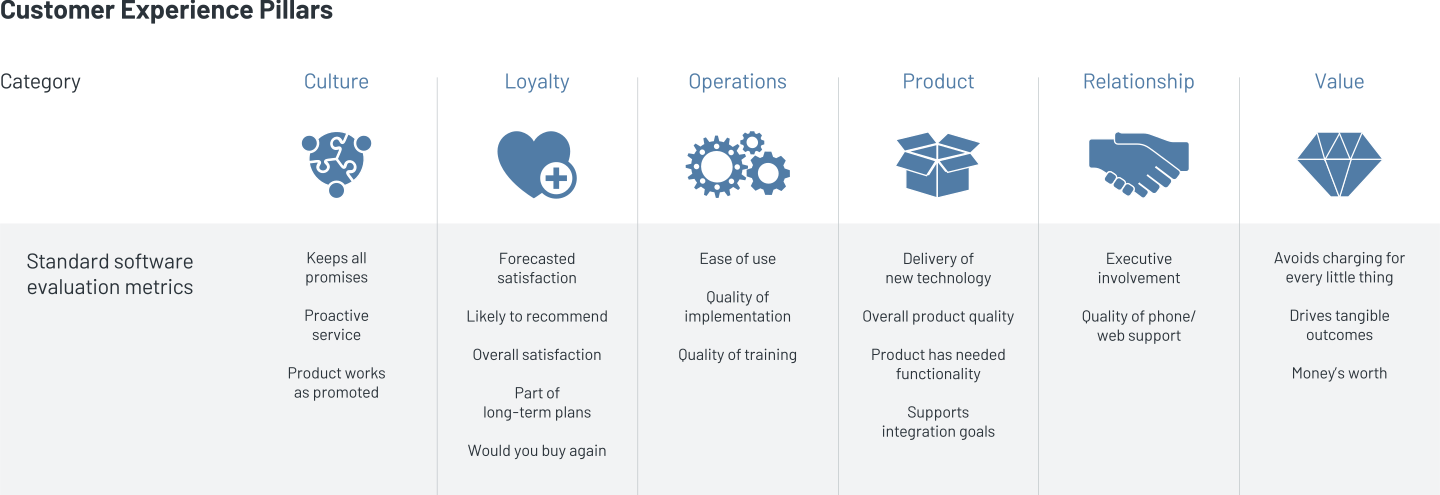
Each year, KLAS interviews thousands of healthcare professionals about the IT solutions and services their organizations use. For this report, interviews were conducted over the last 12 months using KLAS’ standard quantitative evaluation for healthcare software, which is composed of 16 numeric ratings questions and 4 yes/no questions, all weighted equally. Combined, the ratings for these questions make up the overall performance score, which is measured on a 100-point scale. The questions are organized into six customer experience pillars—culture, loyalty, operations, product, relationship, and value.
To supplement the customer satisfaction data gathered with the standard evaluation, KLAS also asked customers the following question specific to physician scheduling: what outcomes have you seen from using your solution?
Sample Sizes
Unless otherwise noted, sample sizes displayed throughout this report (e.g., n=16) represent the total number of unique customer organizations interviewed for a given vendor or solution. However, it should be noted that to allow for the representation of differing perspectives within any one customer organization, samples may include surveys from different individuals at the same organization. The table below shows the total number of unique organizations interviewed for each vendor or solution as well as the total number of individual respondents.
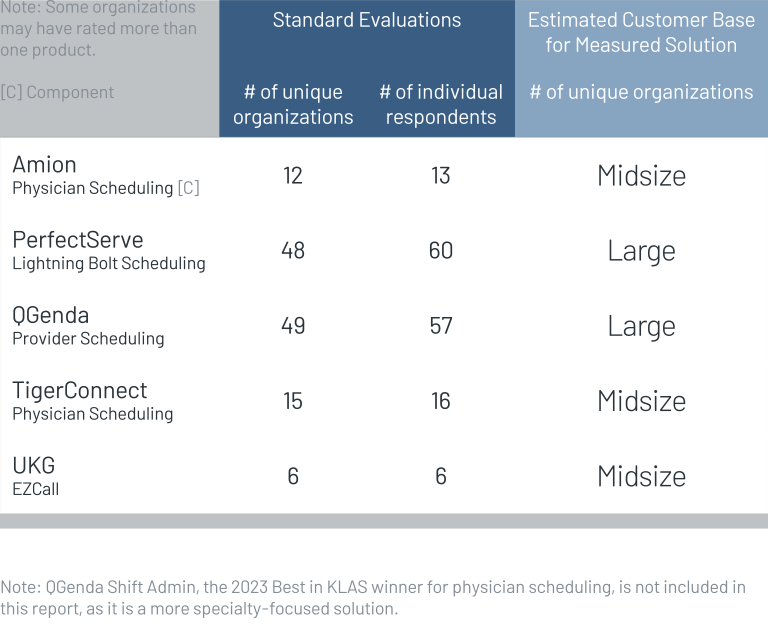 Some respondents choose not to answer particular questions, meaning the sample size for any given vendor or solution can change from question to question. When the number of unique organization responses for a particular question is less than 15, the score for that question is marked with an asterisk (*) or otherwise designated as “limited data.” If the sample size is less than 6, no score is shown. Where textual content relies on limited data, the vendor name is marked with an asterisk. Note that when a vendor has a low number of reporting sites, the possibility exists for KLAS scores to change significantly as new surveys are collected.
Product Designations Used in This Report
- Component [C]: Product that typically includes most but not all components that compose a complete system or that serves only a subset of the market.

Writer
Sarah Brown

Designer
Breanne Hunter

Project Manager
Sydney Toomer
This material is copyrighted. Any organization gaining unauthorized access to this report will be liable to compensate KLAS for the full retail price. Please see the KLAS DATA USE POLICY for information regarding use of this report. © 2026 KLAS Research, LLC. All Rights Reserved. NOTE: Performance scores may change significantly when including newly interviewed provider organizations, especially when added to a smaller sample size like in emerging markets with a small number of live clients. The findings presented are not meant to be conclusive data for an entire client base.