KLAS Contact

Contact KLAS
Contact KLAS
 2026 BEST IN KLAS
Preferences
Related Series

2023
Related Segments

Hospice 2024
Faster Innovation Needed to Better Meet Unique Needs

Author
Paul Hess

Author
Paul Warburton
Across the market, hospice agencies are frustrated that their HIT vendors aren’t prioritizing hospice care as they should, leading to low customer satisfaction that has continually decreased over time for most vendors. While several vendors have recently tried to address long-standing concerns through acquisitions or further development of their hospice product, most respondents want more to be done to allow for strong hospice care. To aid agencies in finding the best solution for their needs in a low-performing market, this report—an update to the Hospice 2023 report—examines which vendors best provide hospice-specific workflows, meet expectations for innovation and development, and support broad functionality through integration.
 The hospice care market is mostly made up of independent hospice agencies; a small subset is health system–owned hospice agencies. Primarily, MatrixCare, Netsmart, and WellSky serve independent agencies; Epic serves health system–owned agencies; and Homecare Homebase serves both.
Hospice Functionality Lagging across Market; MatrixCare Best Meets Unique Hospice Needs
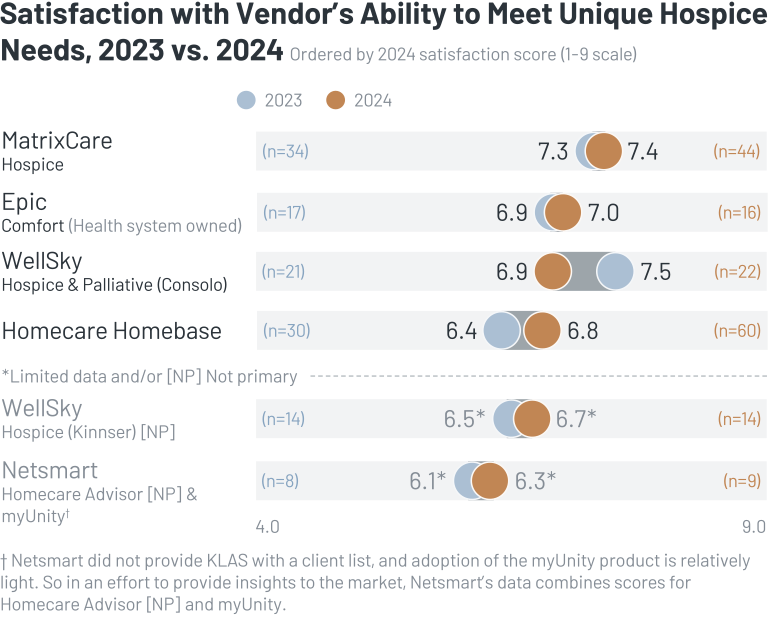 Across vendors, respondents acknowledge recent investments made into their hospice solutions (e.g., enhanced customization, updates to regulatory reporting, improved integration). Still, there is a general consensus that vendors need to make additional enhancements to better meet hospice-specific needs. MatrixCare respondents are most satisfied with their hospice-specific functionality, highlighting end-user benefits like the strong design and flexibility of the personalization component and the valuable insights from hospice reports. Respondents want easier patient tracking and order entry through additional referral-management and care-coordination technology. Epic sees relatively high customer satisfaction with their ability to meet hospice needs. They are the only measured vendor with a notable distinction in satisfaction between IT administrators and clinical end users. Administrators, whose input is weighed more heavily by health system–owned agencies, often value Epic’s consistencyband collaboration when working to improve the product; the 6 IT administrator respondents rated the solution’s ability to meet unique hospice needs 7.8* (on a 1–9 scale). In contrast, clinical end users note continued challenges, such as difficult care-plan coordination; the 10 clinical respondents rate the solution 6.5*. Though WellSky Hospice & Palliative (Consolo) was built for hospice care, respondents feel the solution has not been developed as expected to better meet their needs, leading to a significant drop in satisfaction over the last year. Specifically, many point to needed updates to the scheduling module and quality metrics reporting. Respondents are hopeful WellSky will make the needed improvements over time. Originally built for homecare, Homecare Homebase doesn’t yet feel optimal for hospice care for respondents, who note they are most often frustrated by the clinical reporting when pulling patient information. Still, they highlight the enhanced functionality/reporting for regulatory compliance (e.g., hospice election statement addendums).
*Limited data
Across Vendors, Customers Want Additional Innovation; Lack of WellSky Hospice (Kinnser) & Netsmart* Development Lessens Value
Beyond regulatory improvements, most hospice vendors are actively working to develop their products, but customers consistently want faster innovation to allow for more streamlined workflows and greater functionality, ultimately enhancing value. For independent and health system–owned agencies, respectively, MatrixCare and Epic drive the highest customer satisfaction with their delivery of new technology and their strong response to feedback. Additionally, MatrixCare is highlighted for their efforts in improving capabilities for regulatory compliance, AI, and messaging, and Epic for their efforts to make the product more intuitive for end users. Homecare Homebase and WellSky Hospice & Palliative respondents mention forthcoming improvements to data flow between modules, though they feel the speed of development is slow due to a lack of vendor resources.
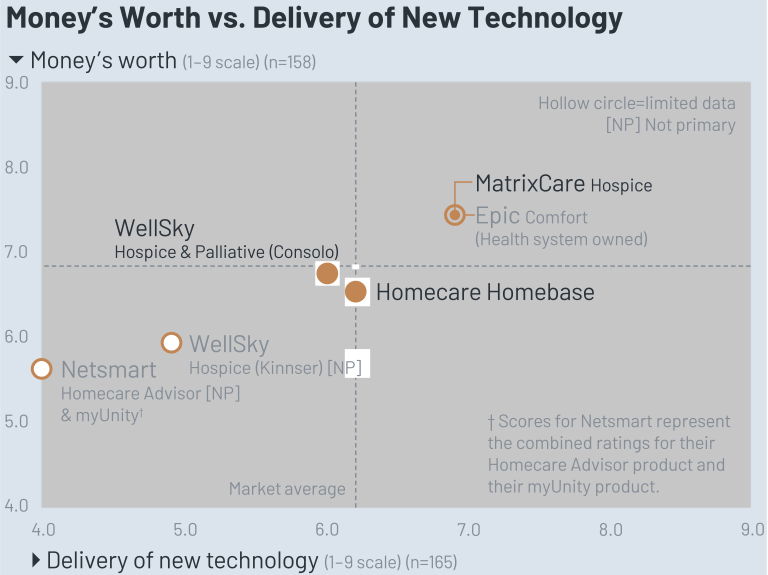 Interviewed WellSky Hospice (Kinnser) and Netsmart customers are not seeing expected product developments. WellSky Hospice customers want additional product enhancements as well as faster responses to requests. However, the vendor has announced that WellSky Hospice (Kinnser) is not their go-forward solution and will not be developed outside of maintaining regulatory compliance. Interviewed Netsmart* customers using non-primary Homecare Advisor as well as the go-forward myUnity platform feel that the vendor’s developments have not aligned with their promises. Mentioned missed promises include enhancements to integration (see next section) and to the mobile platform to facilitate offline documentation. Additionally, respondents generally want quicker resolutions to requests. As a result of missed expectations on development, respondents of WellSky Hospice and Netsmart report seeing less value in their products, leading to fewer planning to keep the solution long term (58% and 33%, respectively).
*Limited data
Customers Report Easy Integration between Epic Acute Care & Hospice Products; Strong Data Flow between MatrixCare Home Health & Hospice Solutions Also Noted
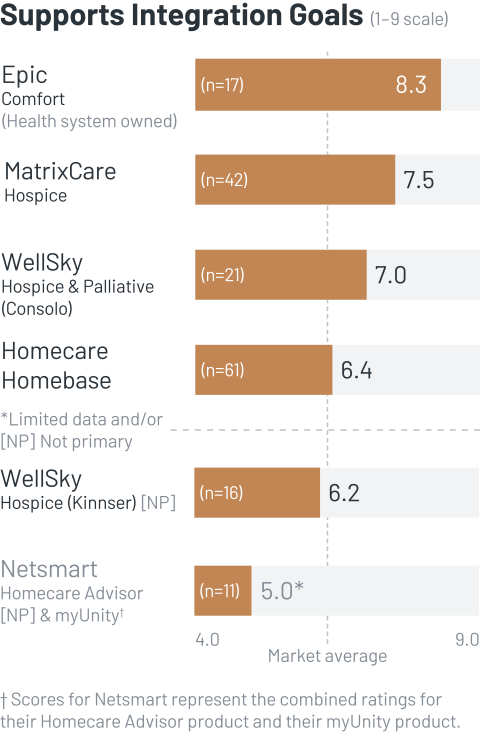
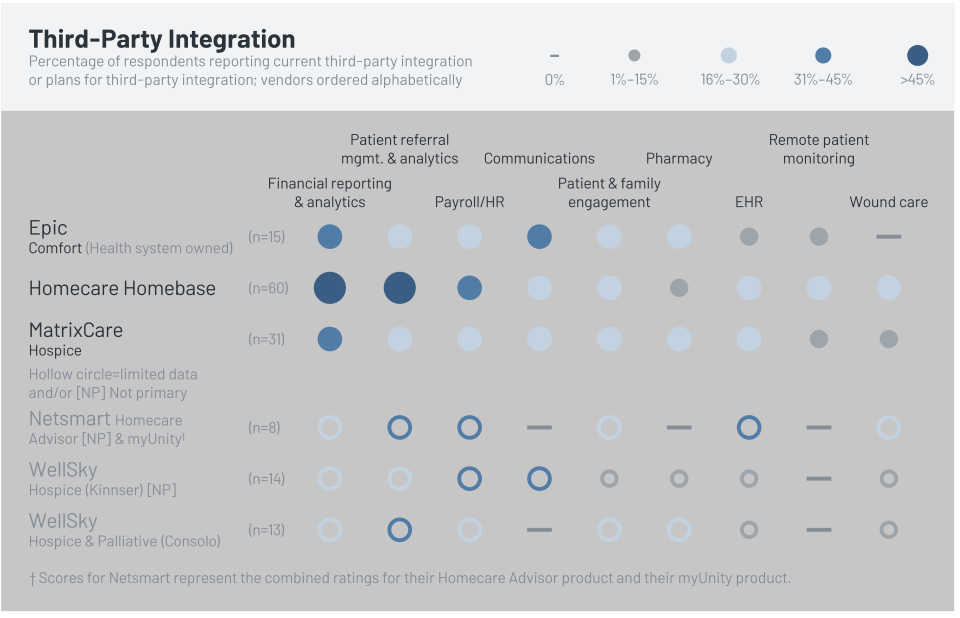
Regardless of the breadth of functionality a hospice product offers, hospice agencies need access to supplementary data from other solutions, so integration is critical. Epic sees the highest customer satisfaction with the solution’s integration capabilities, noting that data from other Epic solutions flows accurately and easily without the need for end users to use multiple tabs. Epic offers APIs to connect to third-party solutions, though API use is often out of the hospice care teams’ control, depending on larger health system decisions. MatrixCare is reported to provide strong integration between their hospice and home health solutions, which allows for easy use without opening multiple tabs. However, there is less reported flexibility with third-party integration, with the exception of integration with a few larger EHRs (i.e., athenahealth, Epic). WellSky Hospice & Palliative respondents report that full integration with other WellSky products hasn’t been realized, though they are largely confident that will come. While third-party integration is possible through HL7 interfaces, respondents feel it requires a large up-front and ongoing lift. Similarly, interviewed Homecare Homebase customers want greater flexibility in interfacing with third-party applications, as that currently requires significant effort. An exception is the strong reported integration with referral management and financial analytics tools. Over half of respondents are live with this integration, leading to increased customer satisfaction with the vendor’s financial reporting and patient tracking. WellSky Hospice respondents note that the vendor is working on the ability to integrate the solution with additional WellSky solutions. Netsmart* respondents say the vendor has promised significant improvements to the integration, though these have largely not been realized. Little integration between modules is reported, and respondents want to be able to interface with additional third-party tools.
*Limited data
For Most Vendors, Efforts to Improve Hospice Solutions Haven’t Prevented Decreasing Customer Satisfaction
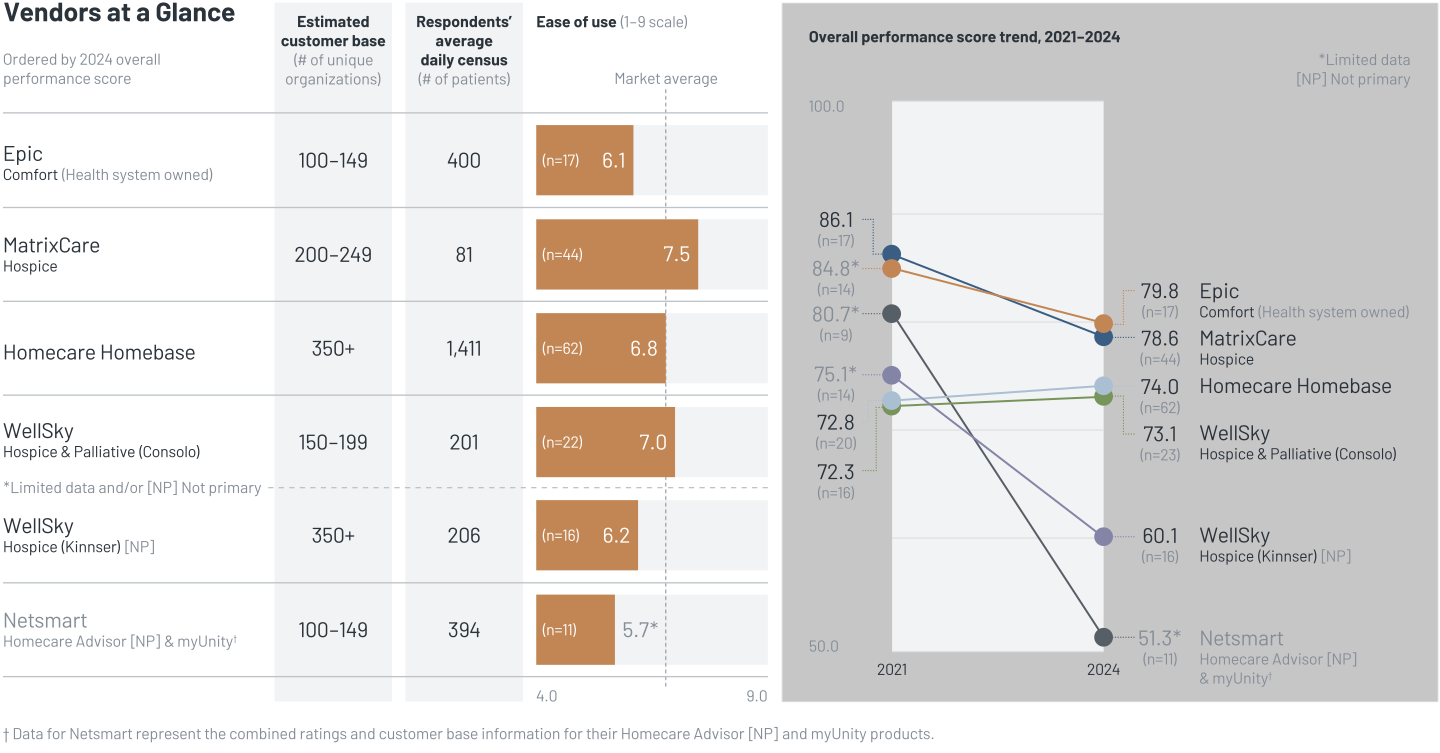
[NP] Not primary
Bottom Lines
| Primarily used by independent organizations | |
| MatrixCare Hospice | Leader in customer satisfaction with independent agencies due to ease of use and strong, consistent vendor-customer alignment in regulatory and requested updates. Satisfaction has decreased, as respondents want more enhancements and fixes to long-standing issues (e.g., functionality allowing for different permissions for volunteers vs. patients’ friends and family). |
| Netsmart Homecare Advisor [NP] & myUnity | Solutions meet respondents’ needs by providing core hospice functionality. Vendor resources are split across solutions, creating uncertainty and a general decline in customer confidence. Due to a lack of strong partnership and misaligned development, some respondents are hesitant to move to the go-forward myUnity until vendor further stabilizes the product. |
| WellSky Hospice (Kinnser) [NP] | Not WellSky’s go-forward solution. Respondents feel solution isn’t sufficiently intuitive and want more training. Some are concerned about solution’s longevity. Customer satisfaction has declined, and 40% of respondents don’t plan to keep solution long term due to lingering concerns and a lack of meaningful UI updates. |
| WellSky Hospice & Palliative (Consolo) | Respondents appreciate solution’s stability, thanks to vendor improvements to support responsiveness. The solution offers certified palliative EHR functionality, allowing for further tech stack consolidation for respondents. Ease of use drives customer satisfaction, though several respondents want better processes for training (e.g., improved videos, Zoom trainings) and implementation so there can be less downtime. Additionally, some want more advanced notice before upgrades and additional enhancements (e.g., a calendar feature). |
| Primarily used by health system–owned organizations | |
| Epic Comfort | Customer base continues to grow among Epic health systems that offer hospice care. Organizational leaders value broad vendor partnership and note consistency in development (i.e., with the mobile platform) and communication. Quality of end-user experience and implementation varies depending on internal organizational resources. |
| Used by either type of organization | |
| Homecare Homebase | Customers often have complex needs, as vendor supports many of the largest independent agencies, who choose the solution for its robust clinical and back-office functionality. Vendor’s focus on regulatory and financial needs drives organizational outcomes. Respondents note improvements to support over the last year, leading to a slight increase in customer satisfaction. However, some note that development resources have shifted to a new platform in another specialty, resulting in less innovation. Respondents also want more flexibility with customization. |
About This Report
Each year, KLAS interviews thousands of healthcare professionals about the IT solutions and services their organizations use. For this report, interviews were conducted over the last 12 months using KLAS’ standard quantitative evaluation for healthcare software, which is composed of 16 numeric ratings questions and 4 yes/no questions, all weighted equally. Combined, the ratings for these questions make up the overall performance score, which is measured on a 100-point scale. The questions are organized into six customer experience pillars—culture, loyalty, operations, product, relationship, and value.
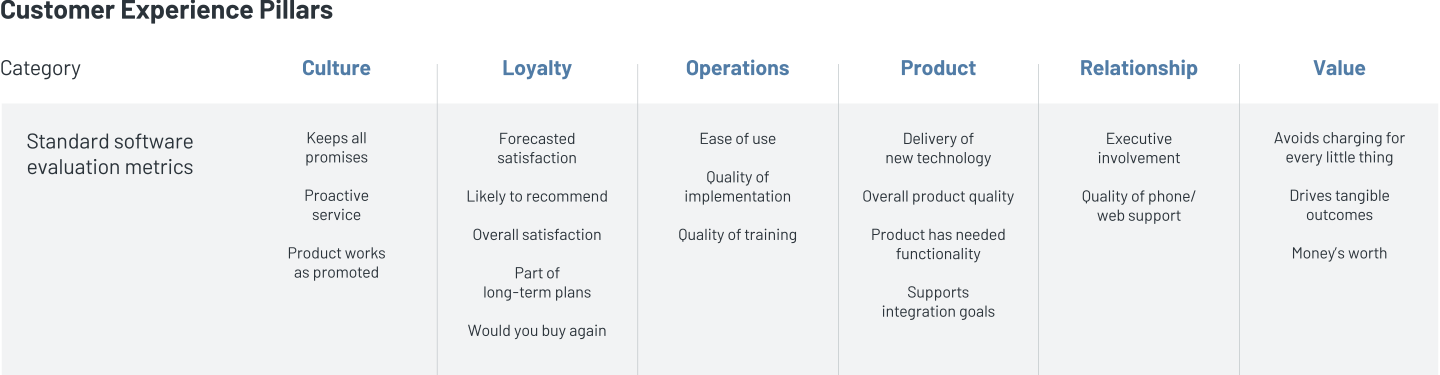
In addition to the questions in the standard evaluation, KLAS asked the following supplemental questions specific to the hospice care market:
- How well does your hospice solution meet the full and unique needs of hospice care?
- What third-party integrations are you connecting with or planning to connect with your EHR?
Sample Sizes
Unless otherwise noted, sample sizes displayed throughout this report (e.g., n=16) represent the total number of unique customer organizations interviewed for a given vendor or solution. However, it should be noted that to allow for the representation of differing perspectives within any one customer organization, samples may include surveys from different individuals at the same organization. The following table shows the total number of unique organizations interviewed for each vendor or solution as well as the total number of individual respondents.
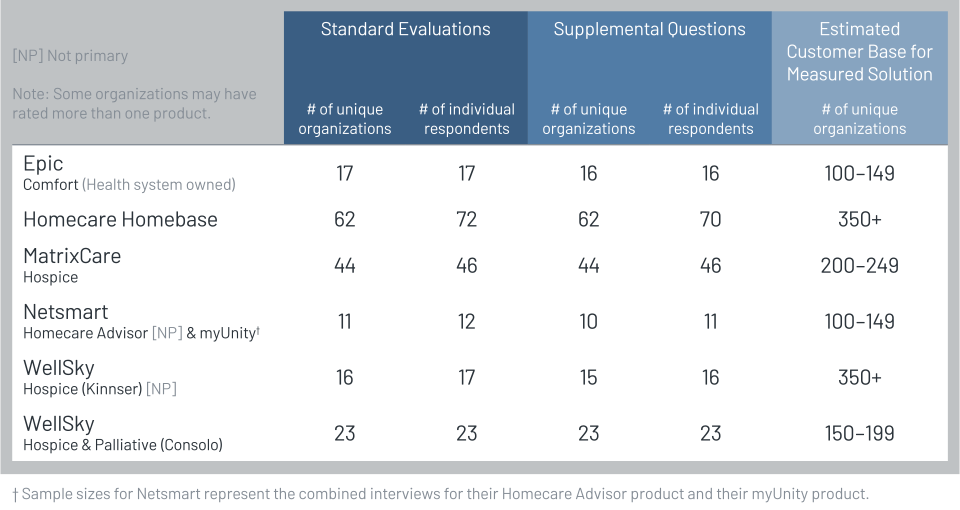 Some respondents choose not to answer particular questions, meaning the sample size for any given vendor or solution can change from question to question. When the number of unique organization responses for a particular question is less than 15, the score for that question is marked with an asterisk (*) or otherwise designated as “limited data.” If the sample size is less than 6, no score is shown. Where textual content relies on limited data, the vendor name is marked with an asterisk. Note that when a vendor has a low number of reporting sites, the possibility exists for KLAS scores to change significantly as new surveys are collected.
Product Designations Used in This Report
- Not Primary [NP]: Product that is not the vendor’s lead product in the market segment but can still be purchased and is still supported. In some cases, the product may not be actively sold in the listed market segment.

Writer
Carlisa Cramer

Designer
Nikki Christensen

Project Manager
Andrew Wright
This material is copyrighted. Any organization gaining unauthorized access to this report will be liable to compensate KLAS for the full retail price. Please see the KLAS DATA USE POLICY for information regarding use of this report. © 2026 KLAS Research, LLC. All Rights Reserved. NOTE: Performance scores may change significantly when including newly interviewed provider organizations, especially when added to a smaller sample size like in emerging markets with a small number of live clients. The findings presented are not meant to be conclusive data for an entire client base.