KLAS Contact

Contact KLAS
Contact KLAS
 2026 BEST IN KLAS
Preferences
Related Series
Consistent High Performers 2025

Author
Bradley Hunter

Author
Lance Merrell
KLAS’ reports—including the annual Best in KLAS report—share which software vendors and services firms excel in helping healthcare professionals improve various aspects of healthcare. While reports typically draw from data collected over the prior 12 or 18 months, we wanted to examine which companies deliver strong client satisfaction over a longer period of time. To answer this, KLAS is introducing the Consistent High Performers report, a new annual report recognizing vendors and services firms that maintain high client satisfaction on a three-year rolling basis for a specific offering. This inaugural report—intended to complement Best in KLAS—identifies the 2025 consistent high performers and how they are collectively rated across KLAS’ customer experience pillars. Additionally, the report draws from surveys administered to 25 consistent high performers, who shared similar best practices for maintaining high client satisfaction. KLAS hopes this report helps healthcare organizations identify future partners and prompts other HIT vendors and firms to implement these best practices.
If you are a KLAS member, contact your KLAS representative for deeper insights on the 2025 consistent high performers.

What Does It Mean to Be a 2025 Consistent High Performer?
For software:
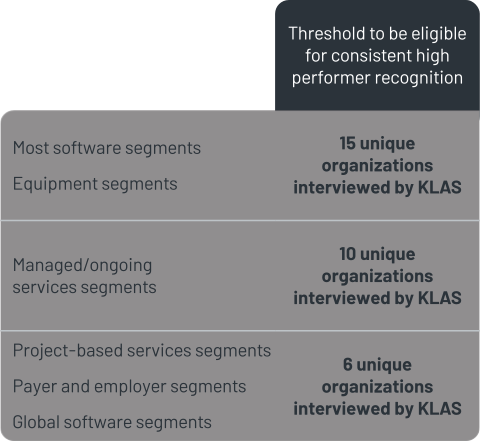
For three years in a row (December 2021–December 2024),† the overall performance score of a vendor’s product has been 90+ on a 100-point scale. Additionally, for each year, the product met required data thresholds (see accompanying table).
For services:
For three years in a row (July 2021–December 2024),† the overall performance score of a services firm’s offering has been 95+ on a 100-point scale. Additionally, for each year, the services offering met required data thresholds (see accompanying table).
† This comprises three consecutive data-processing windows for Best in KLAS. Overall performance scores are calculated by averaging all evaluations processed over 13 months for software solutions and 19 months for services.
2025 Consistent High Performers
Click each name to view KLAS performance data
Software
Access Fovea EHR Archive
ASM MD-Staff
Azara Healthcare DRVS
Bluesight PrivacyPro
Claroty xDome
ClosedLoop Healthcare's Data Science Platform
Dimensional Insight Diver Gateway
Doximity Dialer
Epic EpicCare Inpatient EHR
Experian Health Contract Manager & Analysis
FinThrive Insurance Discover
Galen Healthcare Solutions, an RLDatix Company VitalCenter Online Archival
Harmony Healthcare IT HealthData Archiver
InterSystems HealthShare Health Connect
Medsynaptic Medsynapse PACS (in Asia/Oceania)
Microsoft Dragon Medical One
pCare by Uniguest pCare
PCC Pediatrics
Performance Health Partners Safety, Risk, and Compliance Solutions
RevSpring PersonaPay
Rhapsody Corepoint
Sectra PACS (in Canada)
Vatica Health Prospective Risk Adjustment and Quality of Care Solution
VigiLanz Pharmacy Surveillance
Services
Chartis Digital Transformation Consulting
Chartis IT Planning and Assessment
Chartis Strategy, Growth, and Consolidation Consulting
Guidehouse Revenue Cycle Optimization
Guidehouse Strategy, Growth, and Consolidation Consulting
iMethods HIT Staffing
Tegria Clinical Optimization
tw-Security Security and Privacy Consulting Services
For Both Software Vendors & Services Firms, Loyalty & Relationship Are Strongest Metrics
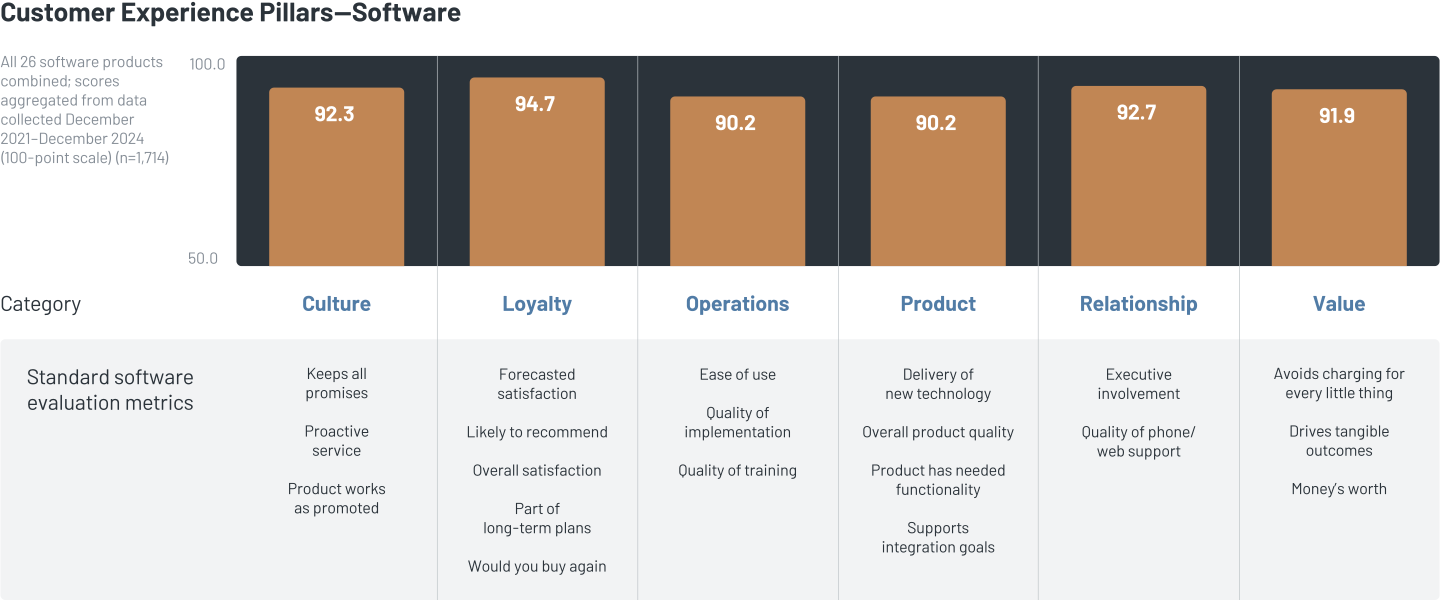
The software vendors that are consistent high performers represent a diverse group, including small and large companies, publicly traded and privately owned companies, and companies focused on acute, ambulatory, and/or post–acute care. Additionally, some vendors have made acquisitions or been acquired, and some are firmly opposed to participating in mergers and acquisitions. Despite these differences, customers of consistent high performers report high loyalty, with 98% of respondents saying they would buy their solution again. The strength of the vendor relationship is also a top driver for high satisfaction. In contrast, the lowest customer ratings relate to operations and product; for the customer bases of consistent high performers, operations and product are never the areas where satisfaction is highest, highlighting that strong technology alone cannot ensure customer satisfaction. Also of note, all the vendors cite customer-centric practices as the reason they have maintained high customer satisfaction year over year.
The services firms that are consistent high performers also represent a diverse group; there are healthcare-focused and cross-industry firms, ones that offer white-collar advisory work and ones that offer blue-collar staffing work, and firms with narrow offerings and broad offerings. Customer loyalty among these consistent high performers is very strong; 99.5% would engage their firm again. Clients also point to a strong sense of partnership with the services firms. As with the software vendors, services clients score the operations pillar lower.
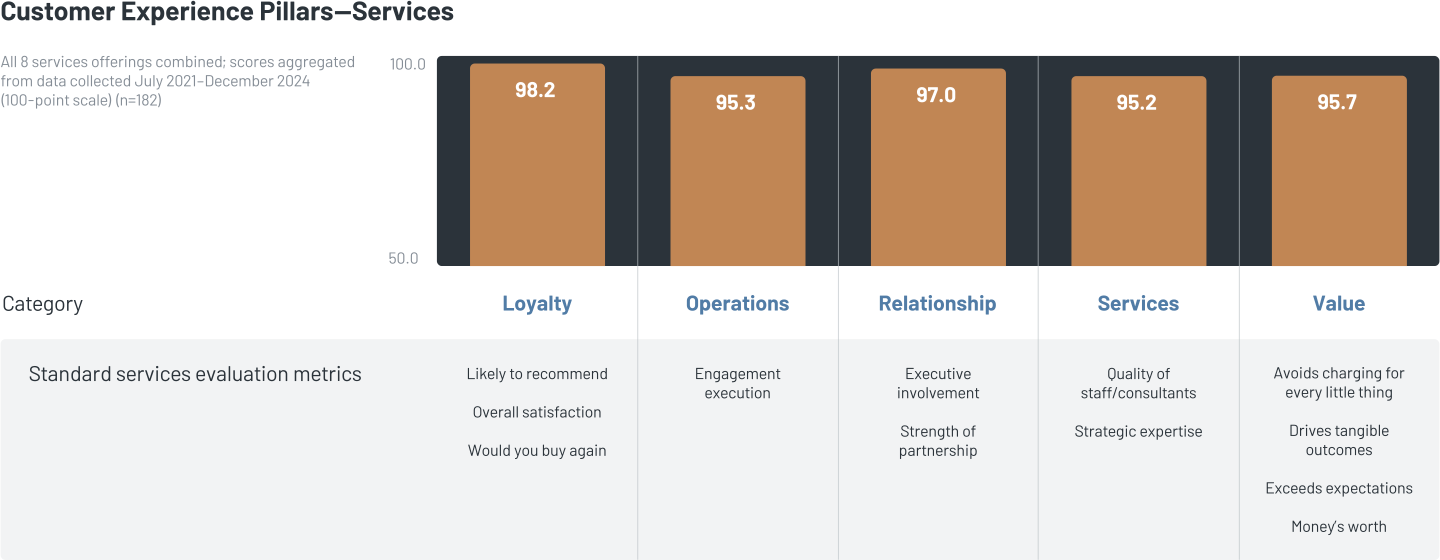
Note: Because consistent high performers surveyed by KLAS shared similar best practices, the practices in the following paragraphs are largely presented without distinction between software vendors and services firms.
Exceeding Client Expectations Is a Key Differentiator for Consistent High Performers
Over years of research, KLAS has found that the ability to exceed expectations is a key differentiator for high performers—both software vendors and services firms. The software vendors in this report are highlighted for strong partnerships, above-and-beyond customer service, and valuable outcomes relative to price. Meanwhile, the services firms exceed expectations by excelling in one or more of five areas: outcomes, cost, delivery speed, strategic guidance, and/or knowledge (e.g., out-of-scope work). Surveyed consistent high performers see several programs/initiatives as instrumental to exceeding client expectations; almost all of these practices relate to creating a company culture that prioritizes clients. The most frequently mentioned programs/initiatives are voice-of-customer feedback loops (e.g., surveys, user groups, reviews that drive continuous improvement) and partnership and co-innovation (e.g., joint road-mapping and outcome-based contracts).
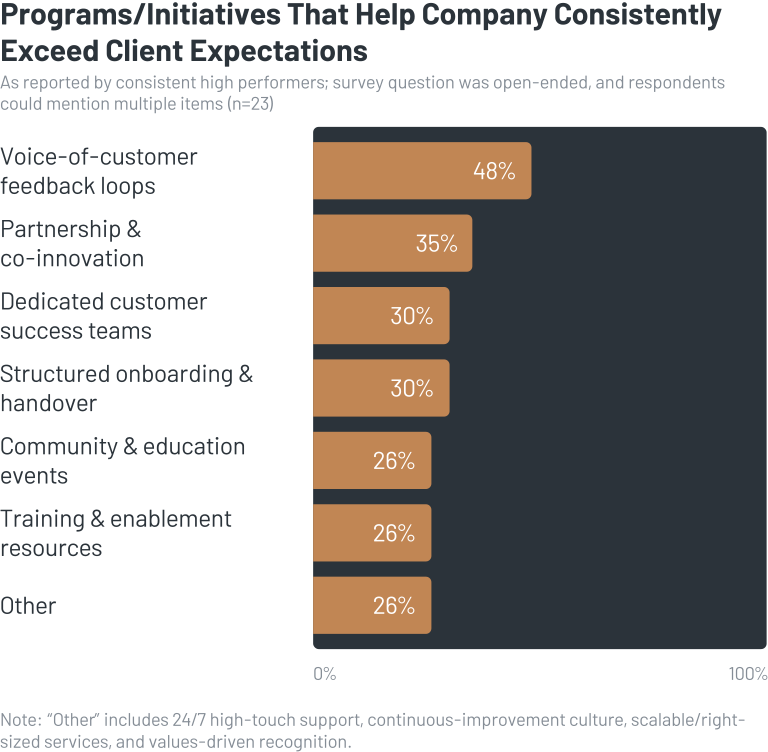
Insights from a Consistent High Performer
 “Client satisfaction is our top priority. We achieve this through our Voice of the Client (VoC) program. The VoC program gathers and analyzes client feedback through both in-person and virtual one-on-one meetings. This feedback helps us understand client needs, identify areas for improvement, and implement actionable insights. By maintaining an ongoing feedback loop, we continuously enhance our services and strengthen client relationships.”
Helping Clients Measure ROI Is an Important Part of Consistent High Performers’ Strategies
For customer organizations, ROI is a key priority for determining IT spending, according to the latest report KLAS published in collaboration with Bain. Nearly all consistent high performers—both software vendors and service firms—say that an important part of their strategy is to help clients measure ROI through either a dashboard or account managers. Software vendors and services firms who meet regularly with clients for business reviews say that discussing ROI reporting/monitoring is a core component of those meetings. In addition to emphasizing ROI, software vendors who are consistent high performers focus on tracking clinical outcomes, which helps them drive customer satisfaction; in this data set, money’s worth and the vendor’s ability to drive tangible outcomes are the metrics most correlated with customers’ overall satisfaction.
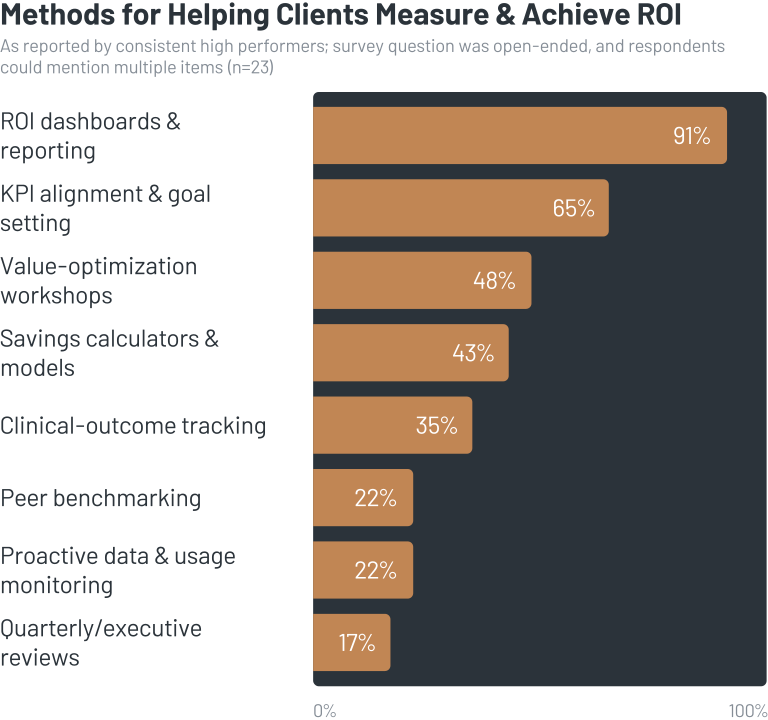
Insights from a Consistent High Performer
“We work closely with clients to define success metrics early in the engagement, aligning our offering to their strategic goals and knowing that many customers do not prioritize a hard dollar ROI as a key success metric. Through built-in analytics, regular business reviews, and outcome-focused reporting, we help clients track measurable results such as efficiency gains and cost savings, and we uncover hidden risks.”
Consistent High Performers Strive to Stay Ahead of Industry Trends
Most high-performing software vendors emphasize the need for strong customer collaboration. These vendors partner to understand customer needs and incorporate ways to meet those into their road map. Compared to all KLAS-measured vendors, high-performing software vendors are in the 93rd percentile for customers who say their product has needed functionality. High-performing services firms also work with clients to stay ahead of industry trends, but they more frequently cite collaboration (e.g., with KLAS, CHIME, HIMSS) as a key part of their strategy.
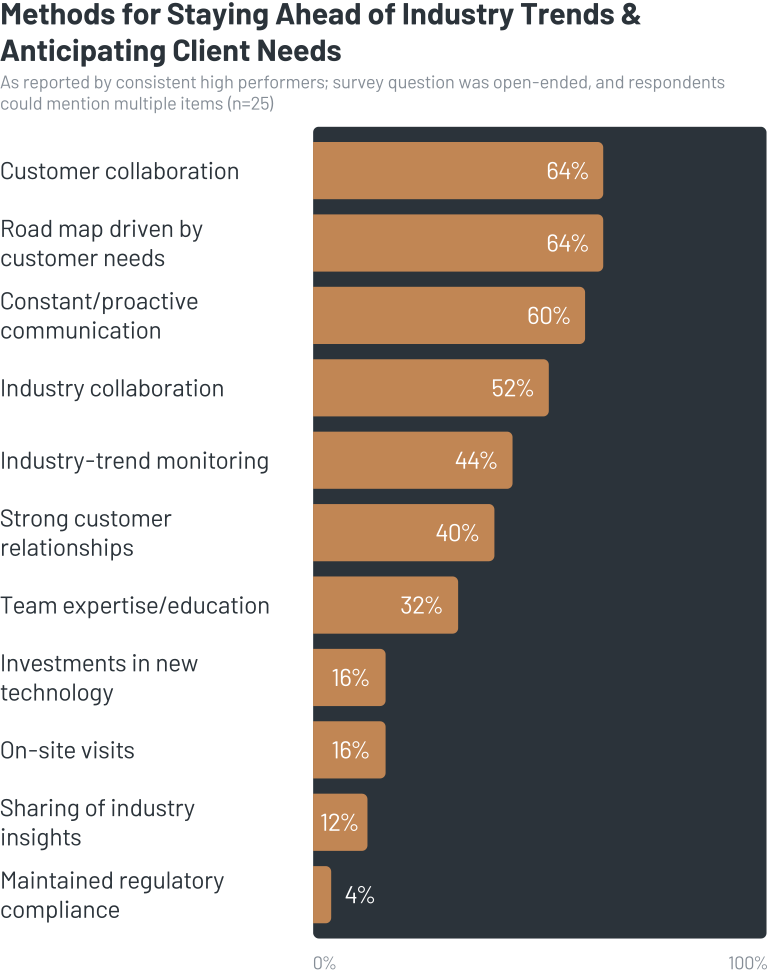
Insights from a Consistent High Performer
“We stay ahead of healthcare industry trends via partnerships with healthcare organizations, continuous feedback loops, and a commitment to responsible innovation. Our cloud platform is built to evolve with the sector, integrating AI, data, security, and workflow automation to meet emerging clinical and operational needs. We actively co-innovate with customers and partners, using insights from real-world deployments to shape our road map.”
Adoption & Training Are Closely Monitored by Consistent High Performers
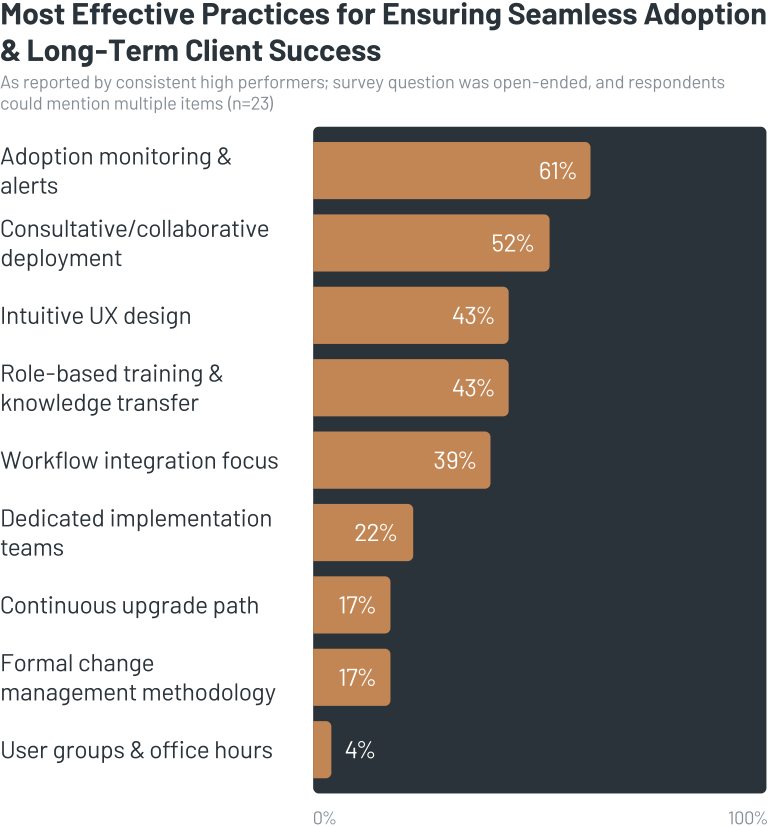
Many consistent high performers proactively monitor their customers’ adoption levels and other implementation and go-live metrics to ensure customers are on the right track. More specifically, high-performing software vendors with the highest scores for training say they focus on workflows for their training and implementations, which is valued by customers for both initial and ongoing trainings. High-performing services firms more frequently report using a formal change management methodology to facilitate long-term client success.
Insights from a Consistent High Performer
“Our internal teams use reporting to ensure clients use the products and raise the flag if adoption trends downward. Our relationship managers conduct client business reviews to present current KPI tracking and ROI. We ensure that healthy relationships are developed and maintained at all organizational levels by identifying key promoters and blockers during internal business reviews. We maintain awareness of anything out of character with the client that may need immediate attention or additional levels of internal engagement. We also proactively communicate about client-facing issues, support, and enhancement ETAs. We maintain an accurate health score that is driven by both data and awareness of partnership sentiment.”
Strong Customer Success Management Programs Increase Customer Satisfaction
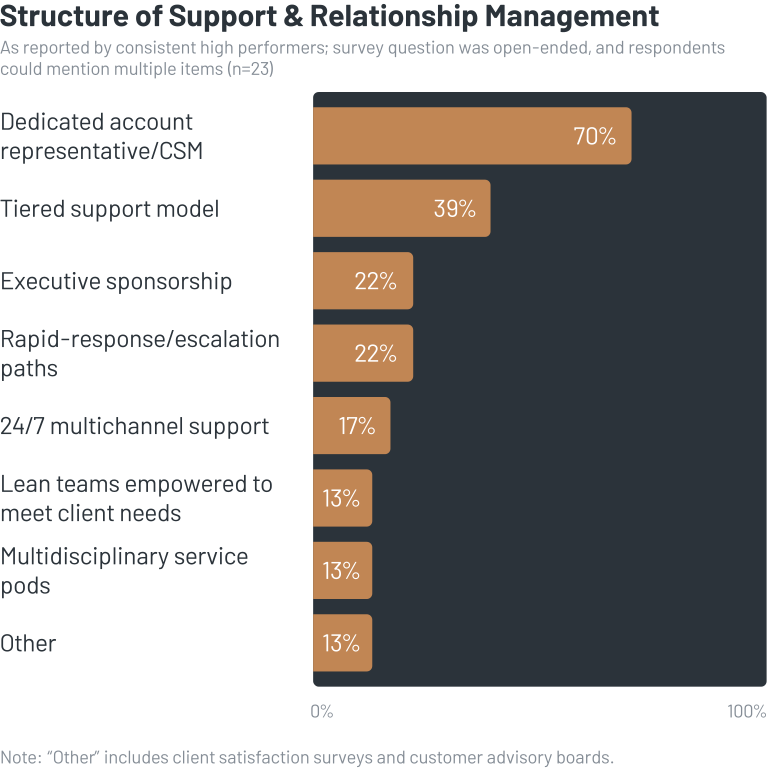
KLAS research shows that when organizations feel their vendor has a strong customer success manager (CSM) program, those customers are more likely to buy the offering again and recommend it to others. Nearly all consistent high performers—both software vendors and services firms—assign dedicated managers to their clients (software vendors use CSMs or account managers; services firms use project/engagement managers). Other common layers of support include tier-one and tier-two support, IT support contacts, executive sponsors, and clinical support.
Insights from a Consistent High Performer
“Our customers have a dedicated account manager that is responsible for client success. They act as the quarterback to understand client needs and ensure that the right resources are activated around new client requests and success measures. Account managers closely partner with sales, product leaders, and implementation teams to advocate for the client and coordinate resources. We have also invested in solution consultants as our subject matter experts on different product areas to ensure we are proactive and consultative in our engagements.”
Staff Turnover Is Less of an Issue for Consistent High Performers
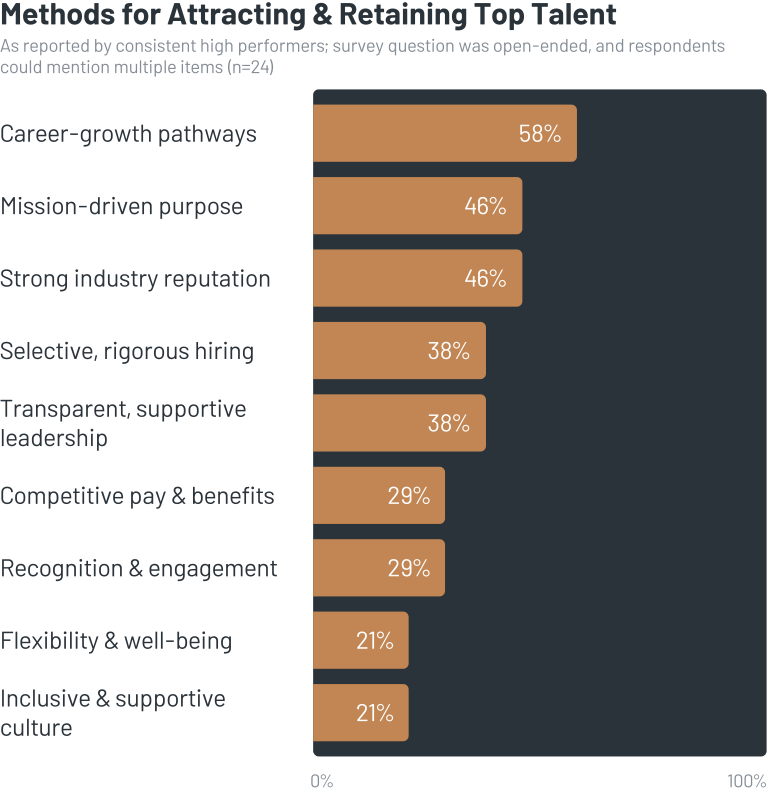
Turnover is a common problem that can decrease client satisfaction. For services firms in particular, turnover negatively impacts clients’ perception of staff and consultant quality—a standard KLAS metric that, for consistent high performers, is most correlated with overall client satisfaction. Notably, though, clients of consistent high performers—both software vendors and services firms—don’t often cite turnover as an issue. To maintain strong teams, most high performers use at least three distinct practices, with clear career-growth pathways being a common focus. Additionally, three-fourths of services firms say their industry reputation is a key factor in attracting top talent.
Insights from a Consistent High Performer
“We attract and retain top talent by fostering a mission-driven culture where every team member, whether in clinical, product, or engineering, can see the real-world impact of their work on patient outcomes. Our people are driven by purpose, empowered by autonomy, and supported by a collaborative, cross-functional environment. We invest in ongoing professional development, provide clear pathways for growth, and reward innovation and leadership. This combination of purpose, opportunity, and ownership helps us build a high-performing team committed to transforming healthcare through technology.”
About This Report
Data from this report comes from two sources: (1) KLAS performance data and (2) a survey administered to software vendors and services firms recognized by KLAS as consistent high performers.
KLAS Performance Data
Software
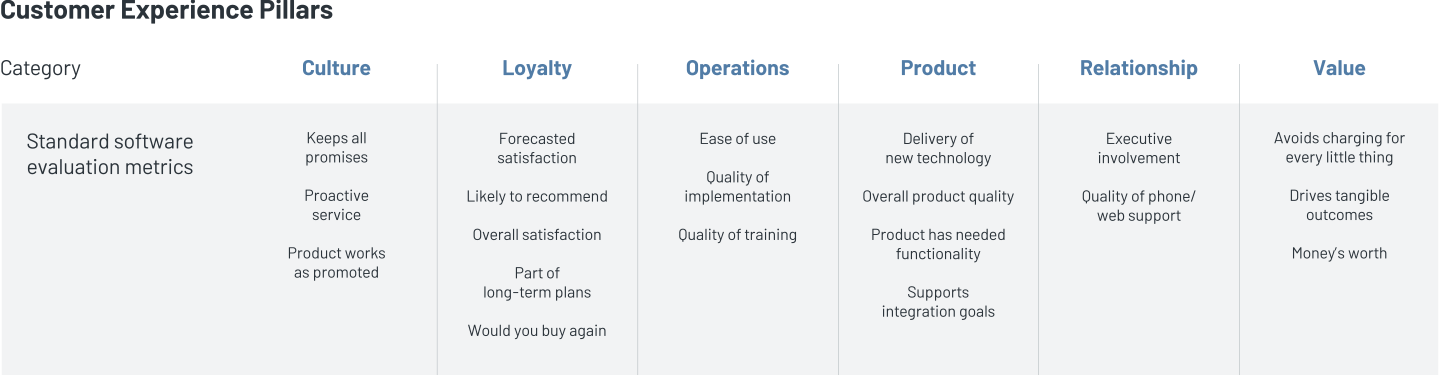
Interviews about software products were conducted between December 2021 and December 2024 using KLAS’ standard quantitative evaluation for healthcare software, which is composed of 16 numeric ratings questions and 4 yes/no questions, all weighted equally. Combined, the ratings for these questions make up the overall performance score, which is measured on a 100-point scale. The questions are organized into six customer experience pillars—culture, loyalty, operations, product, relationship, and value.
Services
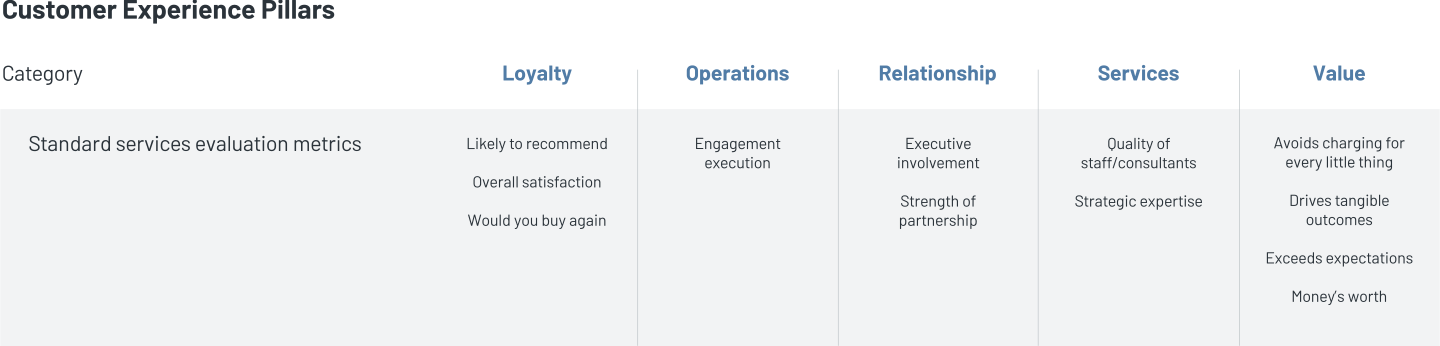
Interviews were conducted between July 2021 and December 2024 using KLAS’ standard quantitative evaluation for healthcare services, which is composed of 9 numeric ratings questions and 3 yes/no questions, all weighted equally. Combined, the ratings for these questions make up the overall performance score, which is measured on a 100-point scale. The questions are organized into five customer experience pillars—loyalty, operations, relationship, services, and value.
Sample Sizes
Sample sizes for performance data (e.g., n=16) represent the total number of unique customer organizations interviewed. However, it should be noted that to allow for the representation of differing perspectives within any one customer organization, samples may include surveys from different individuals at the same organization.
Vendor Survey Responses
For this report, KLAS asked consistent high performers the following questions:
- How do you stay ahead of industry trends and anticipate client needs?
- What key strategic decisions have allowed you to remain a top-performing solution for multiple years?
- What company programs, initiatives, or objectives help you consistently exceed client expectations?
- How do you help clients measure and achieve the ROI of your offering?
- What specific practices have been most effective in ensuring seamless adoption and long-term client success?
- How do you structure your support and relationship management?
- How do you attract and retain top talent in healthcare technology?
- What cultural or leadership practices have been most instrumental to your success?
- What do you believe sets you apart from other vendors in the healthcare space?
- What do you believe has contributed the most to your sustained success over time?
- What key lessons have you learned from past challenges, and how have they shaped your sustained success?
- How do you ensure alignment between what is promised during sales and what is delivered to clients?

Writer
Sarah Brown

Designer
Jess Wallace-Simpson

Project Manager
Andrew Wright
This material is copyrighted. Any organization gaining unauthorized access to this report will be liable to compensate KLAS for the full retail price. Please see the KLAS DATA USE POLICY for information regarding use of this report. © 2026 KLAS Research, LLC. All Rights Reserved. NOTE: Performance scores may change significantly when including newly interviewed provider organizations, especially when added to a smaller sample size like in emerging markets with a small number of live clients. The findings presented are not meant to be conclusive data for an entire client base.