KLAS Contact

Contact KLAS
Contact KLAS
 2026 BEST IN KLAS
Preferences
Related Series

2025

2022

2020

2019
2019
Related Segments

Healthcare AI 2024
Use Cases Expanding to Meet New Market Needs

Author
Benjamin Cassity

Author
Jennifer Hickenlooper
The use of artificial intelligence (AI) in healthcare is rapidly evolving. More healthcare organizations are adopting data science platforms and other AI solutions to help alleviate the challenges of today’s environment, with a particular focus on increasing operational efficiency. Based on the feedback of both payer and provider organizations, this report examines the clinical, financial, and operational use cases for which AI is being adopted as well as the outcomes being achieved.
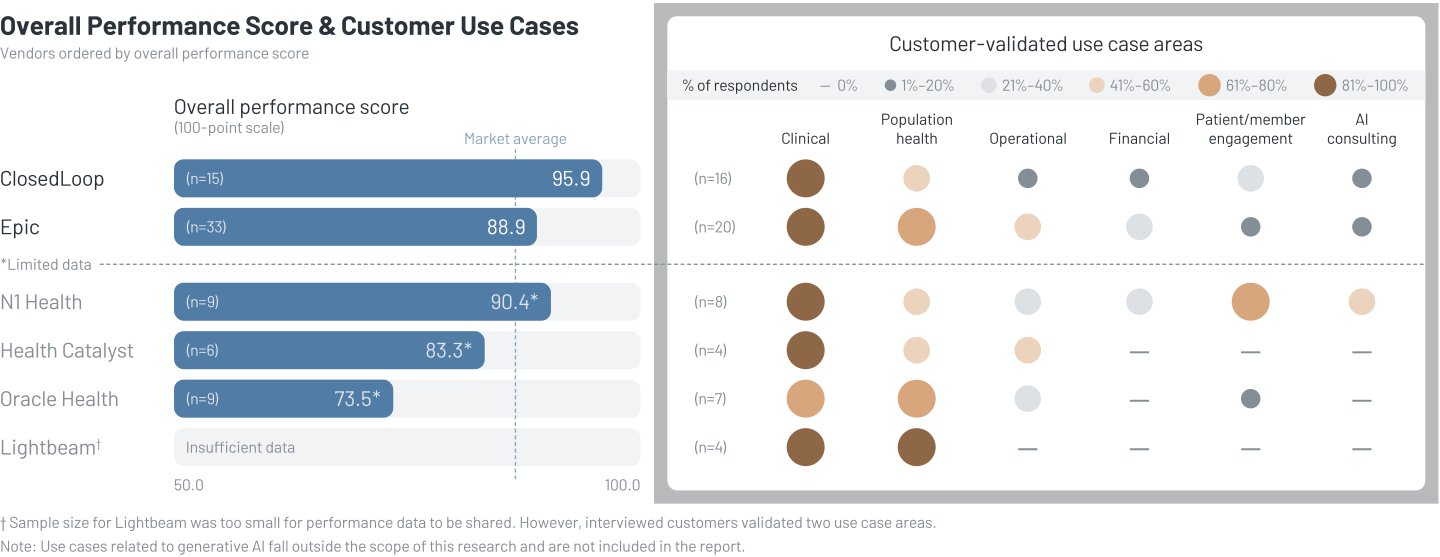
Partnership & Expertise from ClosedLoop Drive Consistent Outcomes for Health Plans, ACOs; N1 Health’s* Collaboration & SDOH Algorithms Achieve Results for Health Plans
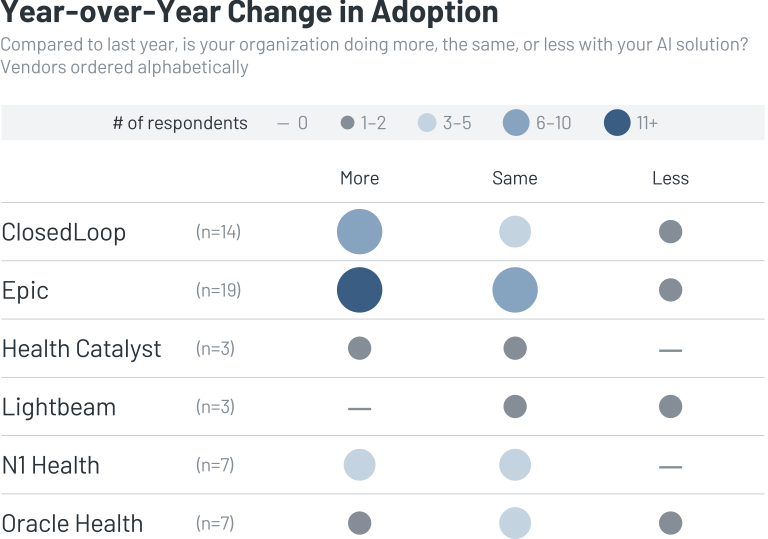
Interviewed customers of ClosedLoop—many of whom are ACOs and health plans—describe the healthcare-focused vendor as collaborative. They say ClosedLoop provides strong account managers who partner with customers to deliver initial and ongoing guidance, training, and expertise. Customers are paired with a data science specialist to help achieve adoption and outcomes. 50% of respondents have expanded the use cases for which they use the solution. Reported outcomes include identification of high-risk members for care management, reduction in hospital admissions, reduced costs due to fewer negative outcomes, increased drug adherence, and increased screening measures. The solution brings in SDOH data, and many customers highlight its excellent integration with both payer and provider systems. A few customers would like data from the system to be better integrated into EHR workflows. Customers are optimistic about future development, including an improved user interface.
N1 Health* respondents include payers and provider-owned health plans. The technology improves member engagement and risk capture by using SDOH algorithms to better target members. Most respondents mention strong partnership and feel the vendor is responsive and collaborative. Reported outcomes include higher-than-expected outreach numbers, improved risk capture, improved marketing campaigns, improved member engagement, improved Medicaid reimbursement, and more-creative strategies for approaching underprivileged populations. Two respondents report that outcomes have not been realized yet, due to being early in the process or to not having yet acted on the data. Additionally, some customers note that the growing customer base sometimes makes it difficult to get the support they need.
*Limited data
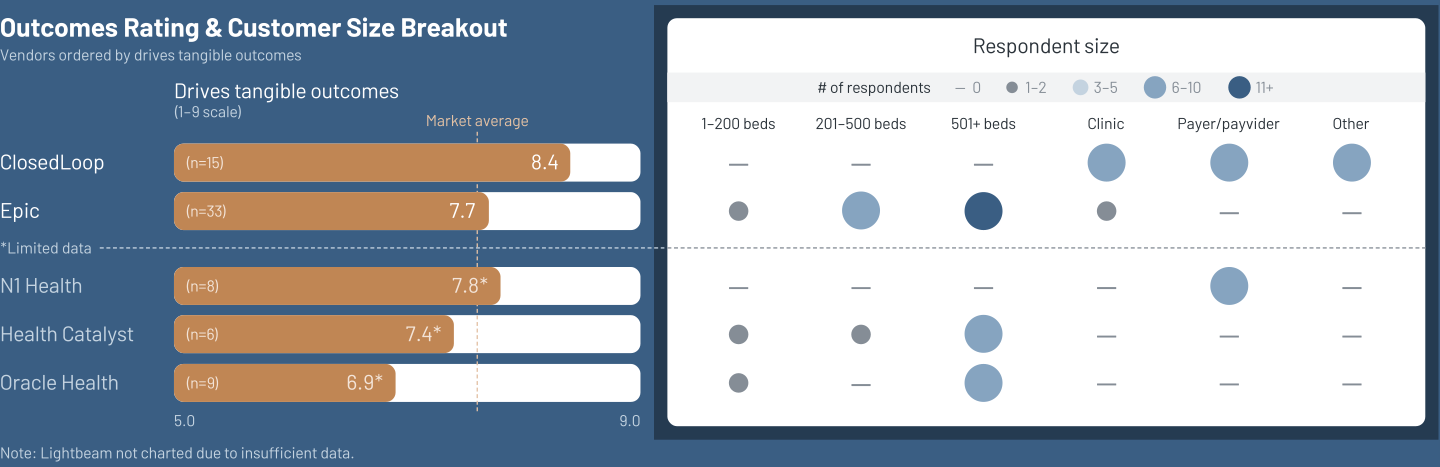
Epic Customers Expanding beyond Clinical Use Cases; Outcomes Lagging from Oracle Health* Due to Decline in Support
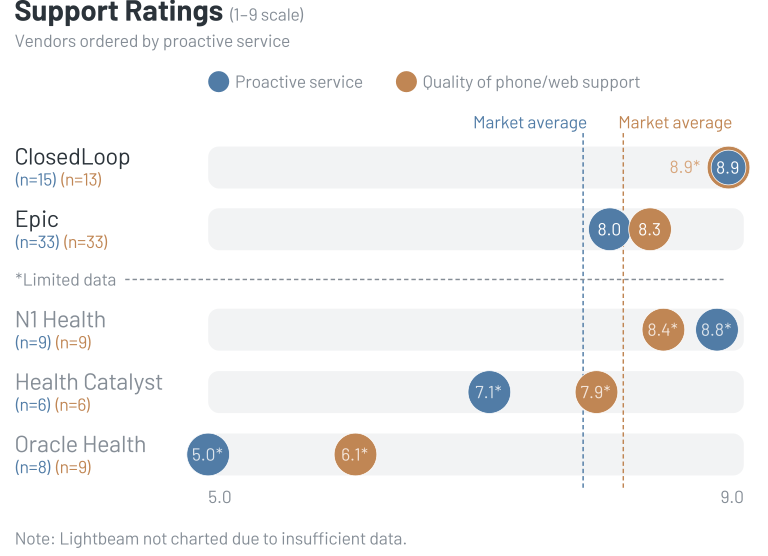 Epic’s and Oracle Health’s AI customer bases are comprised mostly of large health systems; most customers leverage the vendors’ prebuilt models rather than building custom models themselves. Epic customers have begun expanding outside their initial focus on clinical use cases to adopt operational and financial areas, and they report success with those models. As the information is embedded in the EHR workflow, customers report good adoption from employees. Reported outcomes include clinical documentation improvement, improved quality measures and patient outcomes, substance abuse prediction, improved denials management, identification of high-risk pediatric patients, reduced readmission risk, improved sepsis prediction, reduced no-shows, prioritization of work, objective and consistent communication of severity of illness, and improved risk capture. Customers report that previous gaps in support have been improved. They describe Epic as helpful and responsive and say they have a dedicated support person. Improvements to the documentation and training have made the solution easier to implement. Approximately one-fifth of respondents continue to report frustration with nickel-and-diming due to how Epic prices the models. Several customers also report that integrating outside data into EHR workflows is a challenge.
Feedback from Oracle Health* respondents is split. Regardless of their overall satisfaction, customers often report that it takes a significant internal lift to get the solution to work how they want. Outcomes reported by the more-satisfied customers typically center on clinical data and include readmission prevention (including for COPD patients), creation of disease-specific registries for research, improved stratification of patient interventions, and decreased patient falls. These customers also often mention optimism about Oracle Health’s plans to move to the cloud. Dissatisfied customers say support has continued to decline post-acquisition and feel they are left to their own devices to make the solution work. About half also feel nickel-and-dimed, with many saying this has increased since the acquisition.
*Limited data
Outcomes with Health Catalyst* Not What They Could Be Due to Gaps in Usability & Training
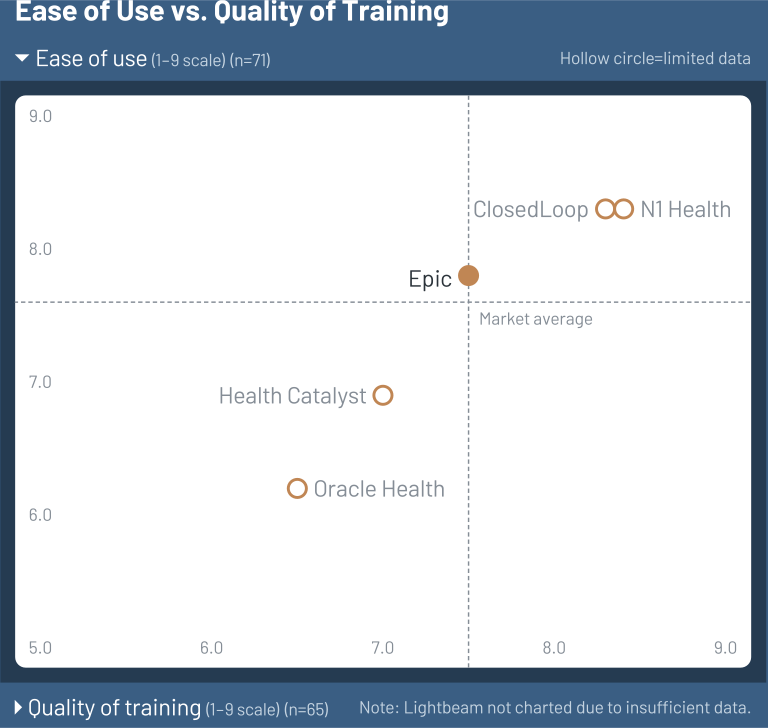
Health Catalyst* customers often note the product’s robust functionality and depth. They report outcomes such as improved depression screening in ambulatory care settings, improved targeting of surgical patients to reduce opioid use, the ability to assess the efficacy of a virtual post-surgery care model for cardiac patients, reduced mortality, reduced length of stay, reduced transfusions, reduced ED readmissions, and enhanced identification of high-risk patients. However, about half of respondents feel the outcomes they have achieved do not live up to the product’s potential due to gaps in support and training. These sentiments are shared across end users regardless of their data science background. This has contributed to a drop in overall performance score over the last two years. Two-thirds of respondents say they still receive good partnership from Health Catalyst; the remaining one-third report that the vendor has become less responsive and strategic.
*Limited data
Where Is Jvion?
Jvion was acquired by Lightbeam in May 2022. With the acquisition, Lightbeam plans to expand their approach by combining their population health analytics with Jvion’s predictive and AI capabilities. Jvion’s customer base has shrunk over the past year. KLAS interviewed five Jvion customers for this research, most of whom are large health systems. This sample size does not meet our required thresholds for performance details to be shared, though the Jvion product has historically underperformed.
Other Key Market Trends
 Data science platforms are most commonly used by larger organizations (500+ beds).
 Most interviewed organizations leverage data scientists to use and monitor the solutions.
 Provider organizations most commonly use AI technology from their EHR vendor, supplementing as needed with third-party vendors or homegrown solutions.
 Most organizations using their EHR vendor’s data science platform use prebuilt models rather than building their own.
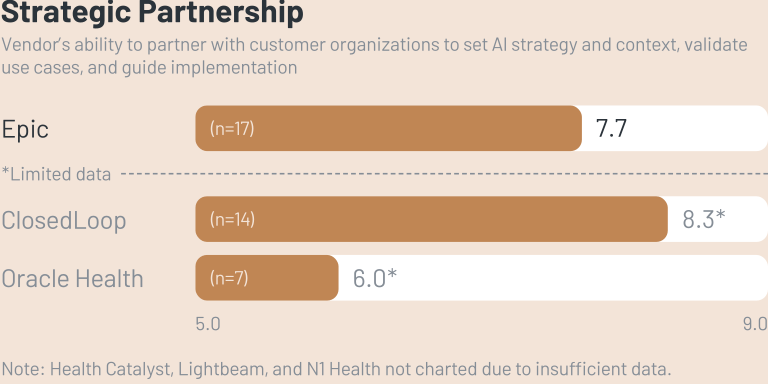
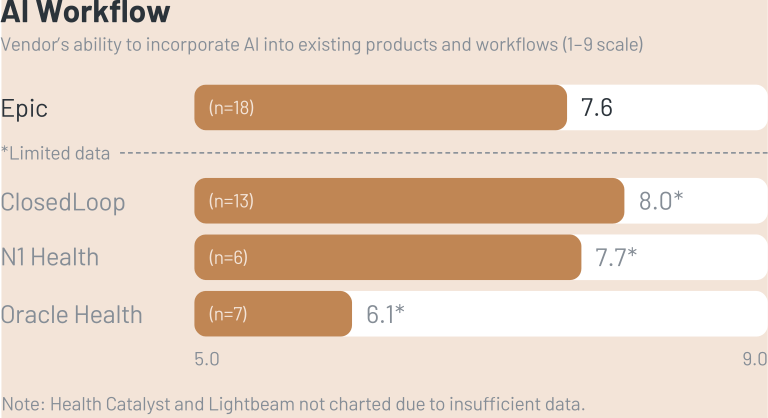
 Importance of workflow integration: Many respondents note the importance of training and ensuring the data is actionable and embedded within user workflows. Organizations continue to want guidance and partnership from their vendors to help them develop an AI strategy and encourage adoption. High-performing vendors—such as ClosedLoop, Epic, and N1 Health—tend to be rated higher in these areas than other vendors.
 Expansion of use cases: 50% of respondents report expanding into additional use cases, though the majority of outcomes for both health plans and provider organizations still relate to population health or finding high-risk patients. Adoption of operational and financial use cases is increasing as organizations look for ways to alleviate the staffing and financial challenges many health systems are facing.
About This Report
The data in this report comes from two sources: (1) KLAS’ standard quantitative evaluation for healthcare software, and (2) supplemental questions tailored specifically for the healthcare AI market.
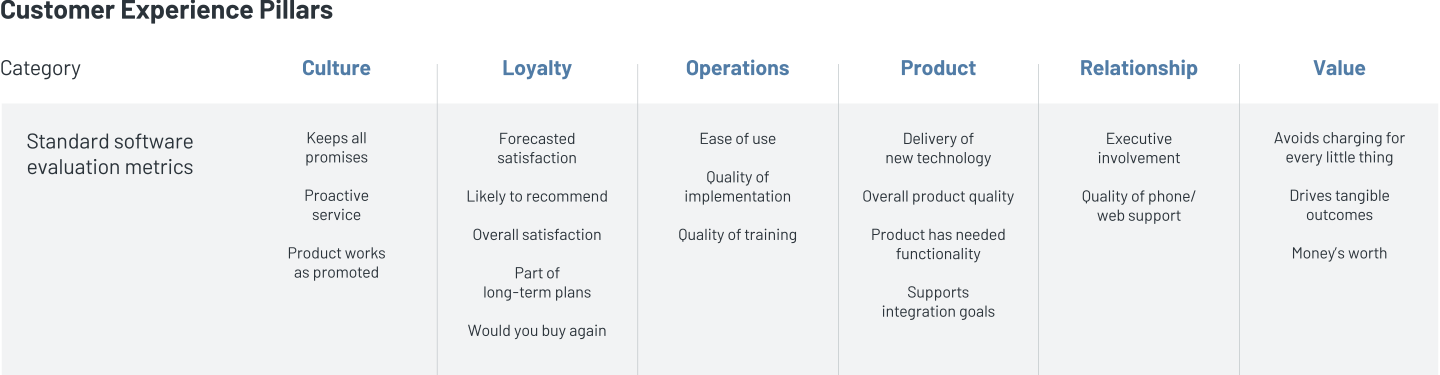
Each year, KLAS interviews thousands of healthcare professionals about the IT solutions and services their organizations use. For this report, interviews were conducted from December 2022 to February 2024 using KLAS’ standard quantitative evaluation for healthcare software, which is composed of 16 numeric ratings questions and 4 yes/no questions, all weighted equally. Combined, the ratings for these questions make up the overall performance score, which is measured on a 100-point scale. The questions are organized into six customer experience pillars—culture, loyalty, operations, product, relationship, and value.
To supplement the customer satisfaction data gathered with the standard evaluation, KLAS also created a supplemental evaluation to delve deeper into several questions specific to the healthcare AI market. This evaluation asked respondents to (1) identify the use cases for which they use their healthcare AI solution, (2) identify the specific outcomes they have achieved with the solution, (3) rate their vendor’s ability to incorporate AI into existing products and workflows, and (4) rate their vendor’s ability to help customers create an AI strategy and context, validate use cases, and guide implementation.
Sample Sizes
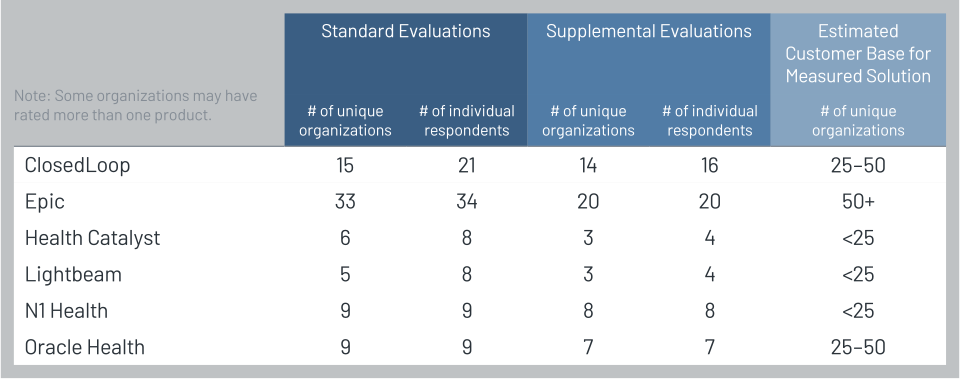
Unless otherwise noted, sample sizes displayed throughout this report (e.g., n=16) represent the total number of unique customer organizations interviewed for a given vendor or solution. However, it should be noted that to allow for the representation of differing perspectives within any one customer organization, samples may include surveys from different individuals at the same organization. The table below shows the total number of unique organizations interviewed for each vendor or solution as well as the total number of individual respondents.
Some respondents choose not to answer particular questions, meaning the sample size for any given vendor or solution can change from question to question. When the number of unique organization responses for a particular question is less than 6, the score for that question is marked with an asterisk (*) or otherwise designated as “limited data.” If the sample size is less than 3, no score is shown. Where textual content relies on limited data, the vendor name is marked with an asterisk. Note that when a vendor has a low number of reporting sites, the possibility exists for KLAS scores to change significantly as new surveys are collected.

Writer
Elizabeth Pew

Designer
Jess Wallace-Simpson

Project Manager
Andrew Wright
This material is copyrighted. Any organization gaining unauthorized access to this report will be liable to compensate KLAS for the full retail price. Please see the KLAS DATA USE POLICY for information regarding use of this report. © 2026 KLAS Research, LLC. All Rights Reserved. NOTE: Performance scores may change significantly when including newly interviewed provider organizations, especially when added to a smaller sample size like in emerging markets with a small number of live clients. The findings presented are not meant to be conclusive data for an entire client base.