
CMIO & CNIO Perspectives on the Clinician Experience 2026
Balancing Financial Pressures with Clinician Well-Being
Healthcare organizations today face intense challenges, from financial pressures to an uncertain political climate to clinician burnout and turnover rates that remain higher than pre-pandemic levels. Amid these concerns, executives must make critical decisions about how to support their organizations and prioritize the multiple goals of the Quadruple Aim, i.e., improve the patient experience, better manage population health, reduce costs, and improve clinician well-being. While the latter is widely recognized as important, it often receives less strategic attention. However, data from the KLAS Arch Collaborative shows that focusing on the clinician experience has a ripple effect that yields benefits in all four areas.
Access the feedback of
700,000+ clinicians worldwide
Access the feedback of
700,000+ clinicians worldwide
Here is my information:
To understand how much focus organizations put on the clinician experience, whether their efforts align with clinician concerns, and the consequences of not prioritizing clinician well-being, KLAS interviewed 42 CMIOs and CNIOs from 39 organizations across the US. The sample includes data from a variety of organization types and sizes, from critical access hospitals to large academic medical centers. This report explores their insights.
 A Note About the Report Sample
A vast majority of the organizations interviewed for this report are members of the KLAS Arch Collaborative, i.e., organizations that are actively focused on improving the EHR experience for their clinicians. Because of this, the findings may reflect a more proactive approach to clinician well-being than is typical across the broader industry.
Organizations That Prioritize Costs Above All Else See Highest Rates of Clinician Burnout
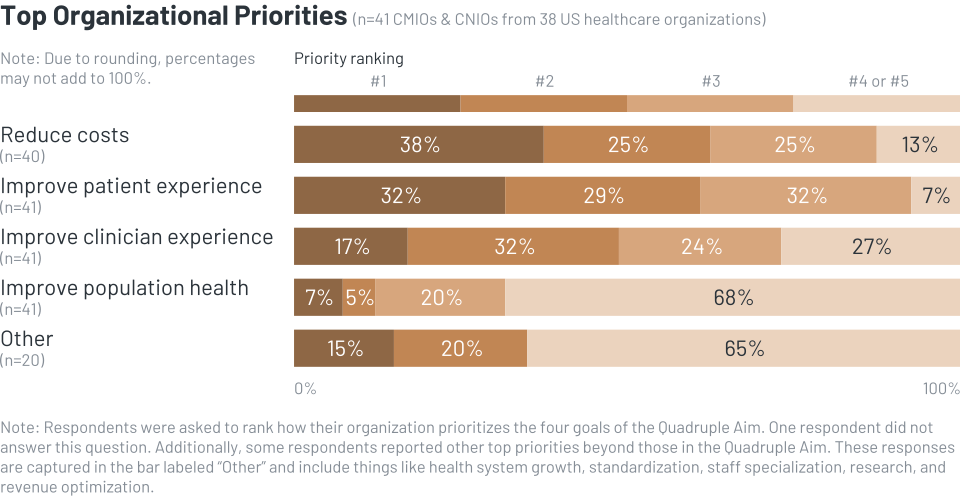 Healthcare organizations are operating under significant financial pressure, and many leaders understandably prioritize cost management to maintain stability. Explaining why their organization focuses on cost, one CMIO reported, “If we can’t keep the doors open, we can’t help anybody.” While clinician well-being is widely recognized as important, it typically comes in as a secondary priority behind reducing costs or improving the patient experience.
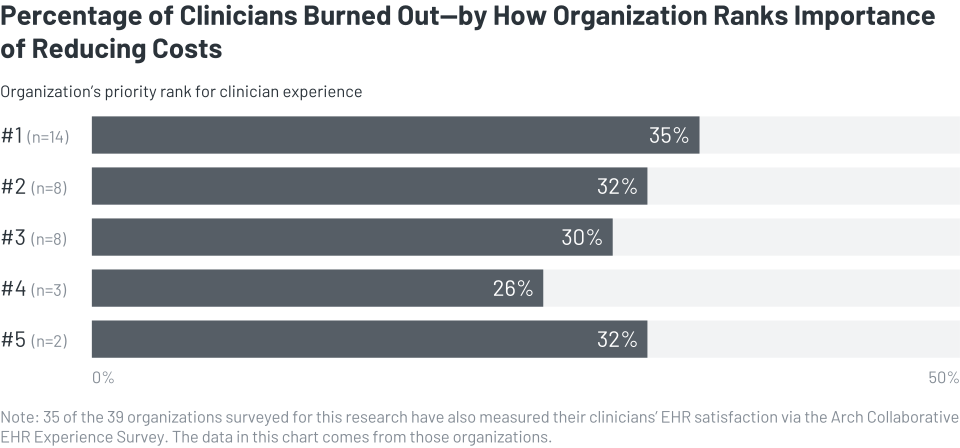
However, the findings indicate that organizations cannot afford to prioritize costs in ways that undermine the clinician experience. Organizations that prioritize cost reduction above all else tend to see higher rates of clinician burnout (see chart below), with some clinicians interpreting these efforts as coming at the expense of their well-being. This elevated burnout can spark a self-perpetuating cycle—burned-out clinicians are more likely to leave, resulting in staffing shortages and greater burnout for the clinicians that remain, resulting in yet more turnover.
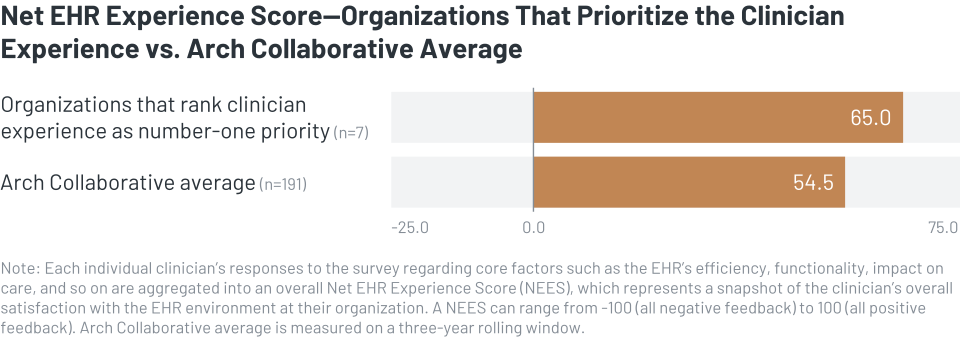
Conversely, clinicians at organizations that rank the clinician experience as priority number one report EHR satisfaction over 10 points higher than the Collaborative average (see chart below). And though satisfaction with the EHR is only one measure of the clinician experience, Collaborative data shows that clinicians with higher EHR satisfaction also have less burnout and less turnover, indicating that improving the clinician experience has a measurable ROI and a positive ripple effect on other organizational priorities.
Voice of the Clinician
Clinician quotes pulled from the Arch Collaborative’s broader EHR Experience Survey results
 “The leadership does not care about clinicians anymore; it is about the bottom dollar. Workloads constantly increase across multiple hospitals, but the pay never does, and that is why everyone is leaving. This hospital system no longer meets any of their goals and certainly does not put the patient or the clinician first.” —Physician
“The current leadership has no interest in our input and only wants control of how we practice, our hours, and every other aspect of our job through the EMR. I feel like we are being watched and documented. We are just hamsters on a wheel for this organization.” —Physician
Leadership & Clinicians Identify Many of the Same Top Pain Points but View Them Through Different Lenses
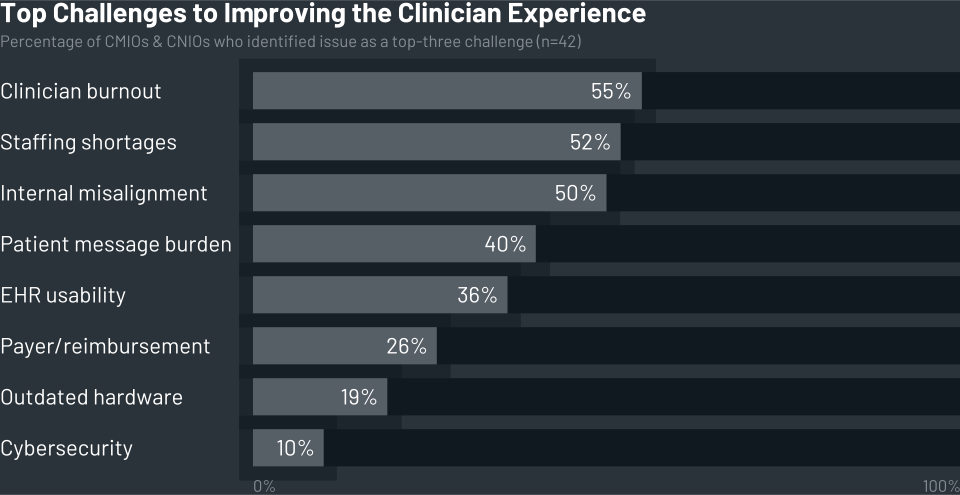
Leaders and frontline clinicians largely identify the same core challenges affecting the clinician experience; however, these issues are viewed through different lenses. CMIOs and CNIOs tend to describe challenges at a higher, more systemic level. When asked to identify the top hurdles to improving the clinician experience, both CMIOs and CNIOs identify clinician burnout, staffing shortages, internal misalignment, and patient message burden as significant concerns. Larger organizations are more likely to be concerned about burnout and staffing shortages, while smaller organizations are more likely to identify hurdles related to efficiency, such as EHR usability and message burden.
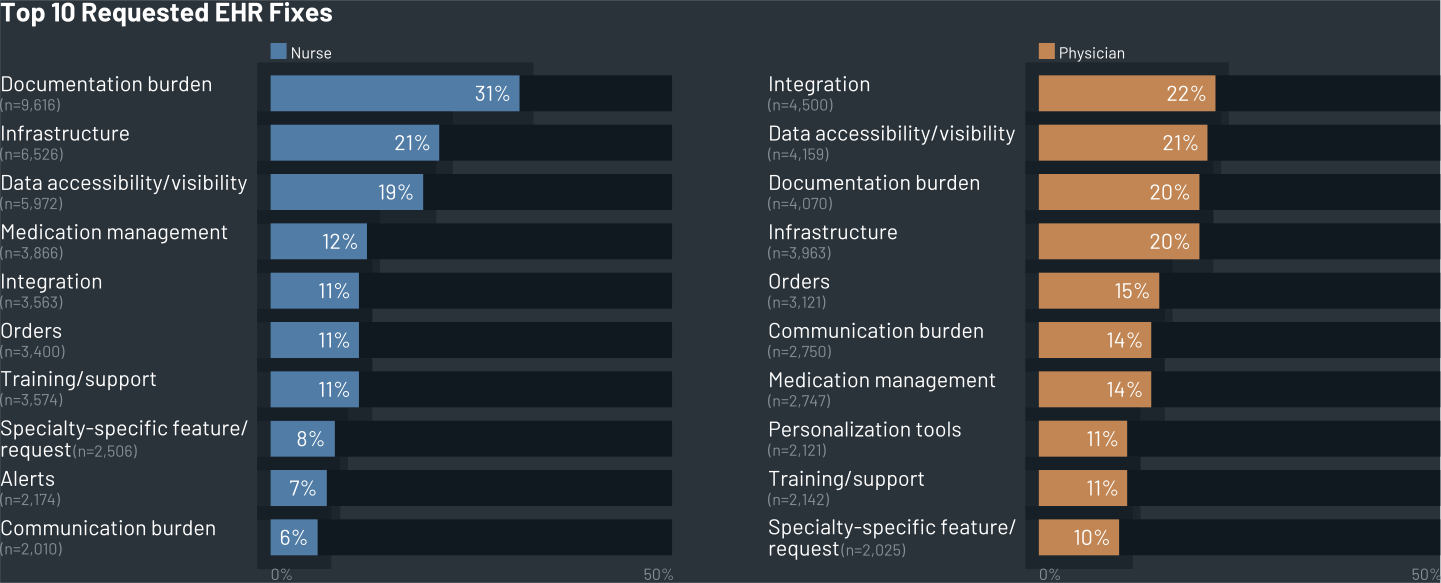
Nurses and physicians report similar challenges as their clinical leadership but often cite them as more concrete, day-to-day concerns. The Arch Collaborative’s EHR Experience Survey, which is administered to EHR end users, gives clinicians the opportunity to identify the top three things about the EHR they would fix if given the chance. Some of the top concerns across both nurses and physicians are integration, the documentation burden, and the accessibility and visibility of data.
Ambient Speech Is a Dominant Improvement Strategy; It Solves Many Clinician Pain Points but Is Not a Silver Bullet
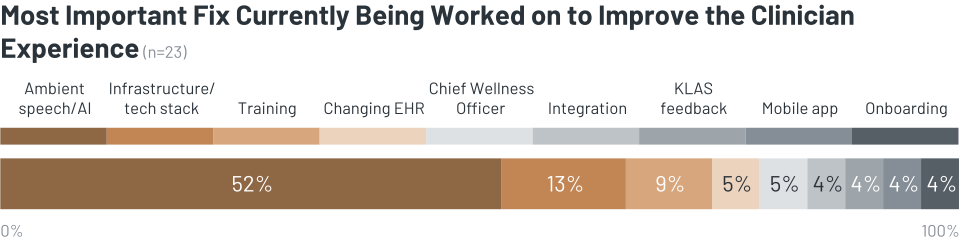 Regardless of the clinician challenge they are trying to solve, many organizations are betting on ambient speech and related AI tools to help. Many of the interviewed CMIOs and CNIOs pointed to such tools as the most important fix their organization is currently working on to improve the clinician experience. These technologies have proven to help with reducing the documentation burden and are also gaining traction as tools to improve data accessibility. Many interviewed CMIOs and CNIOs note that their organizations are looking to these tools to help mitigate the consequences of poor clinician well-being, including burnout, turnover, and poor patient experiences.
Voice of the Clinician
“Ambient listening is one of the most exciting things I have seen in my career. . . . This is the first time I have seen technology that is easy and makes a difference in the nurse experience and saves them time. The nurses are unanimously saying it is huge. I have never seen nurses thank us for bringing technology. With provider ambient software, the main beneficiary is the provider. With ambient software for nursing, the entire care team benefits. We are seeing more thorough documentation and timeliness; things are documented that historically never were. Things happen in conversations and are getting contributed into flowsheet rows. We have only scratched the surface. I am curious to see the downstream impact, like more reimbursement, better-quality metrics, and shorter length of stay.” —CNIO
Don’t Forget About Nurses!
When prioritizing strategies to improve the clinician experience, organizations must ensure that nurses receive equal attention as their provider colleagues. Some CNIOs shared the perception that proposed initiatives and fixes are often designed specifically for providers: “There is a lot of focus on the provider. Nursing is not always at the forefront. . . . Nursing is the largest workforce and is directly at the bedside. Nurses have more impact on patient experience and should receive equal balance and priority.”
Neglecting Clinician Well-Being Leads to Interrelated Issues of Increased Turnover, Decreased Patient Experience & Increased Costs
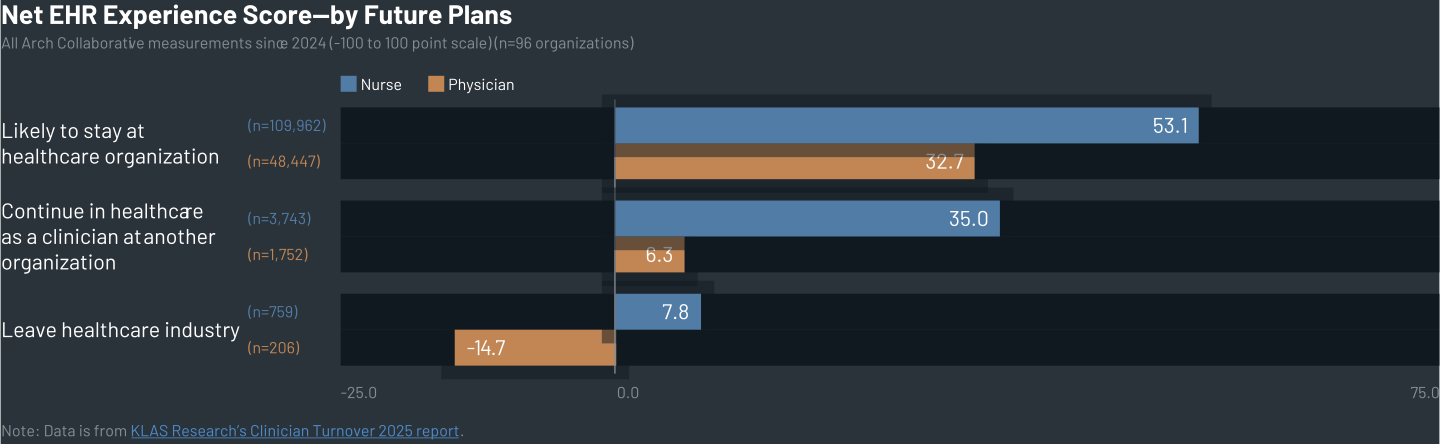
Both CMIOs and CNIOs report increased clinician burnout and increased clinician turnover as the top consequences of not prioritizing the clinician experience. As previous Arch Collaborative reports have shown, these challenges are interconnected—they have concrete, monetary costs and are also key drivers of a poor patient experience. Organizations that prioritize cost reductions at the expense of clinician well-being risk exacerbating staff shortages and increasing burden on clinicians, both of which result in negative impacts on the patient experience. At the same time, clinician satisfaction—particularly with the EHR—is closely tied to retention and to perceptions of organizational support. As such, investing in both the clinician experience and the technology that underpins care delivery is not only critical for workforce stability but also has meaningful long-term implications for a health system’s overall performance and financial sustainability.
Voice of the Clinician
CMIOs
“The consequences of not improving the clinician experience are additional frustration, turnover, and burnout and less-satisfied patients. The upside is improving all of those things.”
“The biggest consequences of not improving the clinician experience are burnout and separation. People leave their jobs, and we have to fill in or hire new people. That reduces access for patients, increases our backlog, and diminishes the satisfaction of the remaining physicians and the patients. Physician turnover is the biggest consequence.”
“The most detrimental thing is when clinicians leave and go elsewhere. . . . Burnout leads to frustration, and that can affect how providers interact with staff. Over time, it can translate into poorer patient care because people are just trying to survive and get through the day or the week. As frustration and pressure build, overall performance declines. We are always nagged to get things done and to do them someone else’s way.”
CNIOs
“The biggest consequences are burnout and turnover of clinicians. Nurses went into the profession to care for people, not to care for computers and documentation. We are losing the human connection because the documentation has become so burdensome.”
“Clinician burnout is a major issue. Clinicians aren’t focused on the right details because they are collecting so much data that we don’t actually use. If we aren’t using it, we shouldn’t be collecting it. They are overwhelmed by documentation and can’t easily identify what is truly important or required.”
“Not improving the clinicians’ experience will contribute to further staffing disparities. People won’t stay in their roles if burnout increases. Ultimately, that affects patient safety. If clinicians aren’t having a good experience or can’t positively and efficiently use the tools we provide, that impacts how those tools are used and ultimately trickles down to patient outcomes.”
What’s Next?
Organizations that prioritize cost reduction while still achieving high clinician satisfaction with the EHR tend to share several foundational practices, including accessible training and support, a culture that actively involves clinicians in decision-making, and consistent feedback loops that enable ongoing improvement. These patterns suggest that maintaining clinician satisfaction amid financial pressure is less about specific cost-cutting tactics and more about establishing strong organizational buy-in and ensuring clinicians feel heard. Encouragingly, the examples below from Arch Collaborative members demonstrate that meaningful improvements in clinician well-being can be achieved through targeted, lower-cost initiatives.
Click on a title to go directly to that case study.
 Leveraging Governance & EHR Education to Enhance Physician Wellness 2025
In response to rising physician burnout—exacerbated by increasing documentation burdens and inefficient workflows—Atlantic Health System implemented a comprehensive Wellness Informatics Program focused on improving physician satisfaction and operational efficiency. The strategy, rooted in both efficiency education and technological change, has resulted in measurable improvements to physicians’ EHR experience.
 Clickbusters: Reducing Interruptive Alerts to Enhance Clinician Efficiency 2025
Hackensack Meridian Health’s Clickbusters initiative offers a blueprint for clinician-led, data-informed alert optimization. Through shared governance, thoughtful prioritization, and agile execution, they significantly reduced clinician burden and enhanced the EHR experience, proving that major gains in efficiency and satisfaction are achievable—even in resource-constrained environments—when the right people, processes, and purposes align.
 Sustaining Pinnacle-Level Nurse EHR Satisfaction 2025
Houston Methodist used KLAS Arch Collaborative insights to strengthen nurse EHR satisfaction by creating a service transformation initiative, increasing the number of IT roles at the hospital level. As part of this initiative, nurse informaticists worked alongside bedside nurses, collaborated with clinical application analysts, and engaged in system-level governance to drive initiatives, such as a large-scale alert optimization project.
 Time Back for Patients 2025
After implementing Epic’s EHR in 2020, Seattle Children’s Hospital set out to overhaul nursing documentation by focusing on what matters most: nurse efficiency, patient care, and staff well-being. Through a two-year, data-driven project, anchored by frontline engagement and executive support, the organization streamlined workflows, reduced redundant tasks, and empowered nurses to play a central role in designing better documentation.
 Leveraging a Multidisciplinary Team to Optimize Nursing Documentation 2025
After receiving their initial Arch Collaborative survey results in early 2024, Wooster Community Hospital Health System prioritized an initiative to reduce nurses’ documentation burden by assembling a multidisciplinary team to work on the Freeing up Nurses’ Time Initiative (F.U.N.-Time Initiative). By engaging frontline nurses, prioritizing high-impact changes, and maintaining strong communication, the organization reduced inefficiencies, saved over 15,000 nursing hours annually, and significantly improved key experience metrics, demonstrating the impact of targeted, low-cost optimization efforts.
What Is the KLAS Arch Collaborative?
The Arch Collaborative is a group of healthcare organizations committed to improving the EHR experience through standardized surveys and benchmarking. To date, over 300 healthcare organizations have surveyed their end users and over 700,000 clinicians have responded. Impact reports such as this one seek to synthesize the feedback from these clinicians into actionable insights that organizations can use to revolutionize patient care by unlocking the potential of the EHR.
Report Non-Public HTML Body
Report Public HTML Body
Featured in Learning Tracks
Topics
Report Topics
Ambient Speech, Burnout Reduction & Clinician Wellness, Clinician Relationships & Communication, EHR GovernanceThis material is copyrighted. Any organization gaining unauthorized access to this report will be liable to compensate KLAS for the full retail price. Please see the KLAS DATA USE POLICY for information regarding use of this report. © 2019 KLAS Research, LLC. All Rights Reserved. NOTE: Performance scores may change significantly when including newly interviewed provider organizations, especially when added to a smaller sample size like in emerging markets with a small number of live clients. The findings presented are not meant to be conclusive data for an entire client base.