
Reducing Nursing Documentation Burden 2025
Addressing a Critical Pain Point for the Largest Clinical Profession
Nurses sharing their voices with the KLAS Arch Collaborative have conveyed a clear, consistent message: The documentation burden for nurses needs to be reduced. In many ways, nurses have become the shock absorbers as regulatory requirements for documentation have continued to expand. Highly adaptable nurses tend to persevere quietly with the additional burden, so their challenges often aren’t at the top of organizations’ priority lists. But this is an industry-wide problem that needs to be addressed now. Without meaningful change to reduce nurses’ pain points, ongoing workforce shortages will only worsen—40% of nurses intend to leave the profession by 2029, according to the NCSBN 2024 National Nursing Workforce study.
Access the feedback of
700,000+ clinicians worldwide
Access the feedback of
700,000+ clinicians worldwide
Here is my information:
The good news is that real, meaningful progress is possible with focused effort. This report highlights the strategies that have allowed multiple Arch Collaborative organizations to successfully streamline documentation and dramatically improve nurse EHR satisfaction.
 A Note About This Report’s Data
The findings in this report are based on the experiences of 80,147 acute care nurses (including those in inpatient units and EDs) surveyed through the Arch Collaborative from September 2022–September 2025. The keys to success are drawn from five measured organizations that made notable improvements to their nurses’ documentation experience in the last year. Though focused on acute care—where nurses most consistently report a heavy documentation burden—this report outlines many principles that can benefit nurses across all care settings.
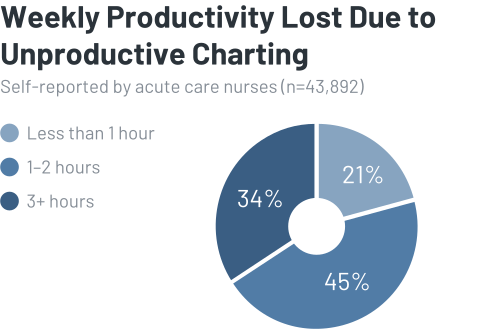
79% of Nurses Report Time Lost to Unproductive Charting; Reducing Their Documentation Burden Is an Urgent Need for Their Well-Being
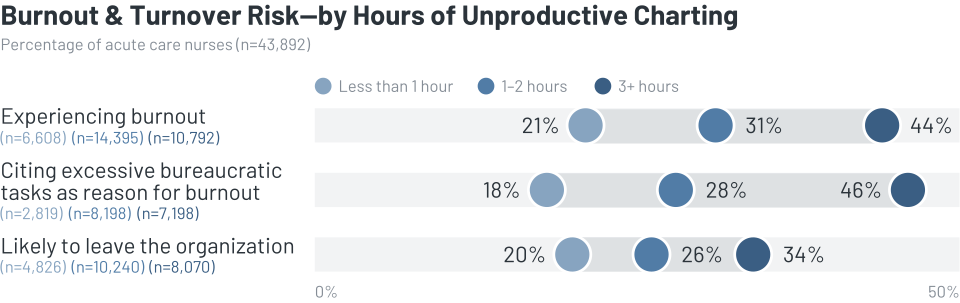
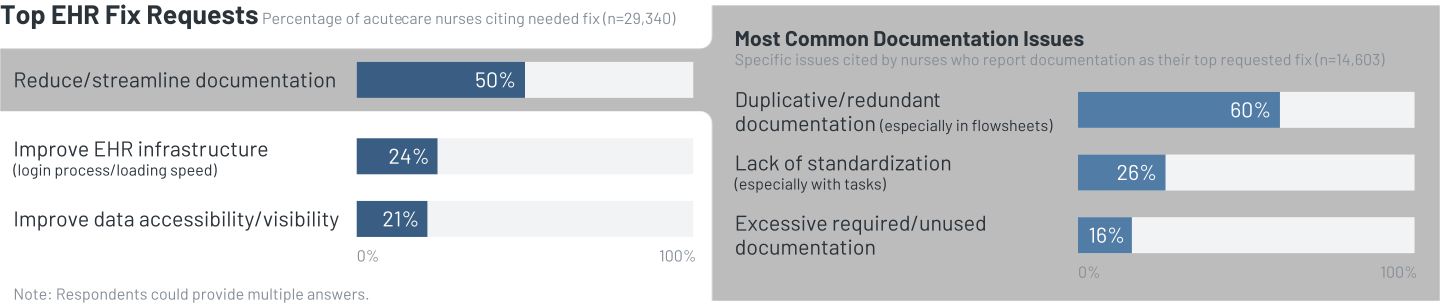
Acute care nurses ask for streamlined or reduced charting twice as much as any other EHR enhancement—an urgent call, as burnout and turnover risk are significantly heightened among nurses who report high amounts of unproductive charting (i.e., duplicative or unhelpful charting). Specifically, nurses feel documentation is often made harder because of bureaucratic tasks, inconsistent standards, duplicative flowsheets, and excessive required fields. These issues—consistently brought up by nurses over the last three years—not only reduce nurses’ ability and time to provide patient care but also often leave them feeling overwhelmed and overlooked. To that point, one nurse said, “It feels as though [we] are frequently forced to double chart and/or check two places for information, or important information will be missed. Then at the end, [we] are exhausted with very little to show for it, having spent much more time than it should have taken.” While workforce shortages, chaotic work environments, and aggressive patients remain major challenges for the industry, reducing documentation burden is a concrete, scalable method for health systems to improve nurse well-being and retention.
The Voice of the Nurse
Duplicative/
 “We are required to double chart by management. We are required to do chart assessments in the flowsheet, then write an end-of-shift skilled note about everything that happened in the shift and our assessment. When concerns were brought up and we asked for a policy on double charting, management informed staff that there is no policy and that double-charting was an expectation.”
“Stop putting the same thing to chart in multiple places on flowsheets. It just bogs things down and is distracting. It takes us away from the bedside. Fewer things to document in flowsheets would be great also.”
Lack of standardization (especially with tasks)
“It is frustrating that there are several different ways of doing one task. It would be much easier and more beneficial if there was only one way. It is also frustrating that professionals in different scopes see different information and screens. I spend way more time charting than I ever have, mainly because there are too many options in the flowsheets, so it takes me forever to read through and select what charting is necessary.”
“The variability in workflows and multiple ways to complete a task in the system can often lead to mistakes in documentation, missed tasks to complete, and other mistakes.”
Excessive required/unused documentation
“A lot of our charting feels like a waste of time because it doesn’t make a difference in the delivery of patient care and is not really ever looked at by anyone else. It seems like a lot of button pushing that takes away from direct patient care.”
“I would say the sheer amount of charting that I have to do in my shift can be too much sometimes. There are days in critical care where we are trying to save someone’s life and have to save all our charting for the end of the shift, and the number of bare-minimum requirements for nurse charting can become overwhelming. There are a lot of flow sheets to fill out.”
With Focused Effort, Organizations Can Dramatically Improve Nurse Documentation
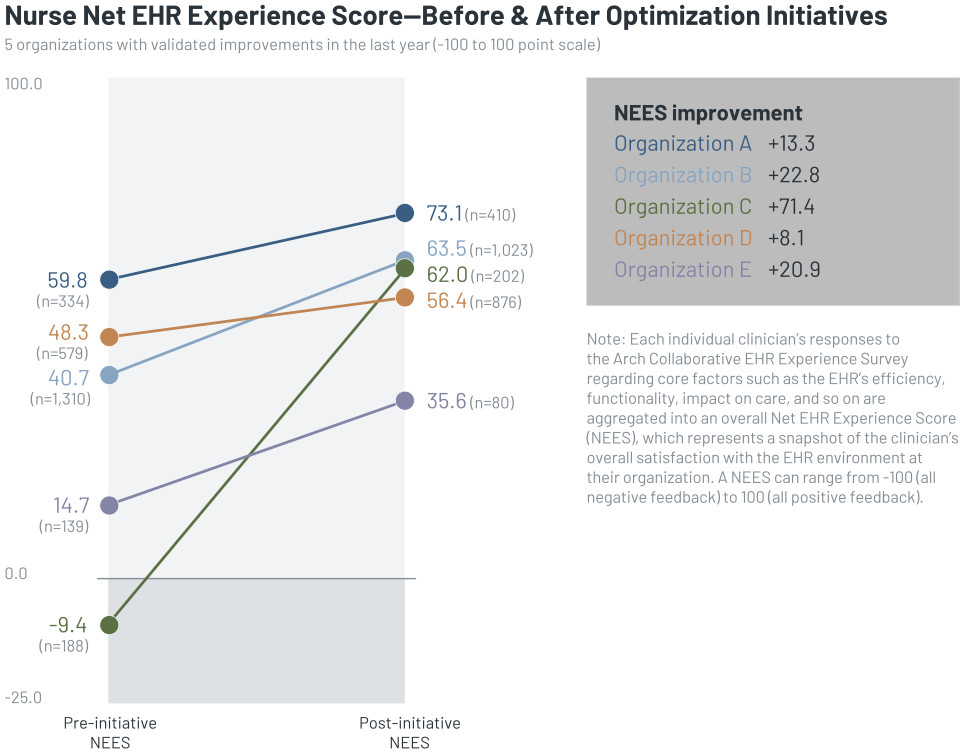
Healthcare organizations are increasingly responding to nurses’ call to simplify and streamline documentation. In recent years, multiple organizations in the Arch Collaborative—ranging from community health systems to large statewide health systems—have implemented optimization initiatives and have seen significant improvements to their nurses’ EHR satisfaction. These organizations demonstrate how with focused organizational effort, wide-scale change is attainable.
For deeper insights into these organizations’ initiatives, check out their case studies later in the report.
Keys to Successful Nursing Documentation Optimization Initiatives
Common across the five organizations’ initiatives are the following keys to successfully implementing nurse EHR experience projects; these keys offer a blueprint for other organizations to follow in their footsteps.
 Key 1: Secure Executive Sponsorship by Aligning Initiatives with Organizational Strategy
- Tie nursing documentation optimization initiatives to broader strategic priorities (e.g., clinical well-being, quality improvement, workforce retention) and support those initiatives with data from the Arch Collaborative.
- Engage executives early to ensure visibility, resourcing, and sustained accountability.
- Champion the initiative publicly; model support through regular communication and participation in key milestones.
 Key 2: Establish Multidisciplinary Governance Teams to Set Priorities, Coordinate Action & Foster Collaboration Between Nurses & Informatics
- Create a governance structure where clinical, operational, and IT leaders can collaborate.
- Define clear roles for nursing informaticists, analysts, educators, and frontline nursing representatives to ensure every perspective is heard and integrated.
- Use the group to set priorities, evaluate proposed changes, and oversee progress to remain aligned with goals.
- Maintain regular meetings that are outcome focused to sustain momentum and accountability.
 Key 3: Engage Frontline Nurses to Provide Feedback on Most Meaningful Changes
- Directly involve frontline nurses in shaping documentation improvements.
- Create formal channels (e.g., task forces, feedback surveys, superuser programs, office hours) to capture feedback and codesign workflow solutions.
- Encourage participation from multiple shifts and specialties to ensure diverse perspectives.
- Close the feedback loop by showing nurses how their input has led to tangible changes to reinforce engagement and ownership.
 Key 4: Assess Workflows Using Data, Feedback & Evidence-Based Best Practices
- Use both quantitative and qualitative insights to identify the highest-impact opportunities for reducing documentation.
- Leverage EHR utilization data and workflow analyzer tools to assess click counts and time-in-system metrics alongside nurse feedback to understand pain points.
- Validate proposed changes against evidence-based practices and regulatory standards to maintain compliance and safety.
Important Questions for Assessing Pain Points
- Is this a workflow problem, a training problem, or a technology problem?
- Does this documentation serve a clear clinical, regulatory, or quality purpose—or has it become redundant?
- Have tools already been implemented to help nurses with this documentation (e.g., personalization, mobile, AI)? If so, are they being used effectively?
- If changes are made, what downstream impacts could they have on other roles or workflows?
 Key 5: Deliver Quick Wins to Build Trust & Fuel Long-Term Engagement
- Start with meaningful, highly visible improvements that can be implemented and that quickly demonstrate impact to frontline staff (e.g., reducing redundant fields, simplifying documentation screens).
- Publicize successes to show progress and signal that nurse feedback is driving real change.
- Use early wins to build credibility and lay the groundwork for more complex improvements.
 Key 6: Provide Targeted Training to Reinforce Workflows & Tool Utilization
- As training gaps are uncovered through data and observation, deliver targeted education tailored to specific workflows where additional support is needed.
- Focus on increasing the use of efficiency tools (e.g., macros, copy forward, documentation by exception); clearly demonstrate how these features reduce redundant charting and enable real-time documentation.
- Refresh educational content regularly as workflows evolve.
- Equip preceptors and superusers to act as on-unit champions who model and reinforce best practices for efficient documentation.
 Key 7: Communicate Transparently to Drive Awareness & Continued Engagement
- Use proactive, multichannel communication (e.g., newsletters, leader huddles, dashboards, rounding) to keep staff informed and invested.
- Provide consistent updates on changes, timelines, and measurable results.
- Encourage two-way communication by inviting questions and sharing how nurse feedback has shaped decisions.
- Reinforce key messages often to maintain awareness and ensure alignment across roles and departments.
- Emphasize the “why” behind documentation practices when discussing changes; outline which practices are required for regulatory purposes and which are organizational preferences.
 Key 8: Consider the Timing of Changes
- Set a predictable rhythm for reviewing, approving, and implementing documentation changes so nurses know when to expect updates.
- Ensuring a consistent cadence builds trust, prevents change fatigue, and reinforces transparency by helping staff anticipate and prepare for upcoming adjustments.
Evaluate, Refine, Repeat
Treat documentation optimization not as a one-time project but as an ongoing commitment to supporting nurses and strengthening clinical workflows. After implementing an initiative, measure its impact through nurse feedback, make strategy adjustments as needed, and iterate to drive ongoing improvement.
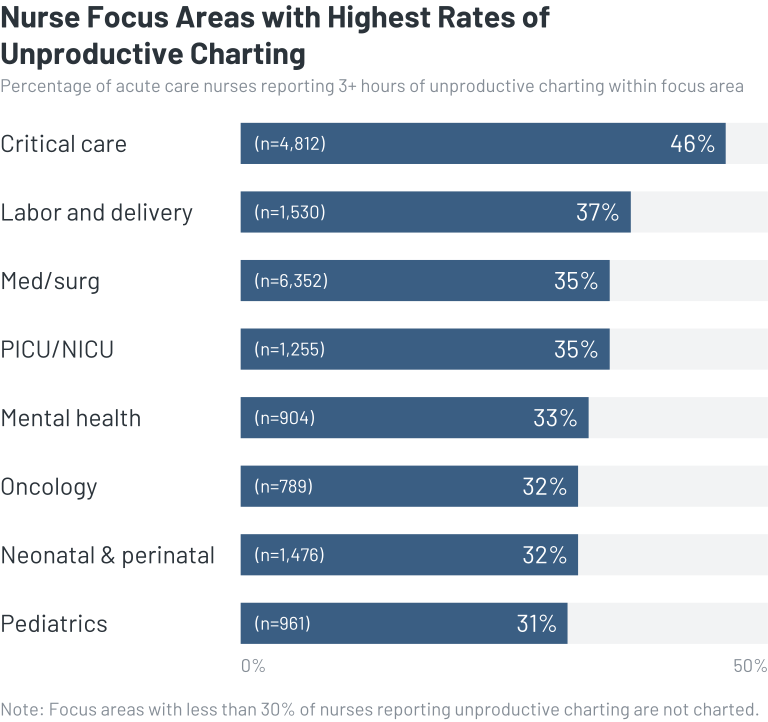
Where to Begin? Nurses Report the Highest Levels of Unproductive Charting for Critical Care and Labor & Delivery
While documentation struggles are common across all acute care areas, critical care nurses most frequently report losing excessive time to unproductive charting, as a significant amount of charting is required for monitoring and caring for very complex patients in high-intensity settings. Critical care as well as the other areas listed in the accompanying chart would be ideal places for organizations to start in their efforts to improve nurse documentation.
Flowsheets & Care Plans Are Top Areas of Needed Improvement for Nurses

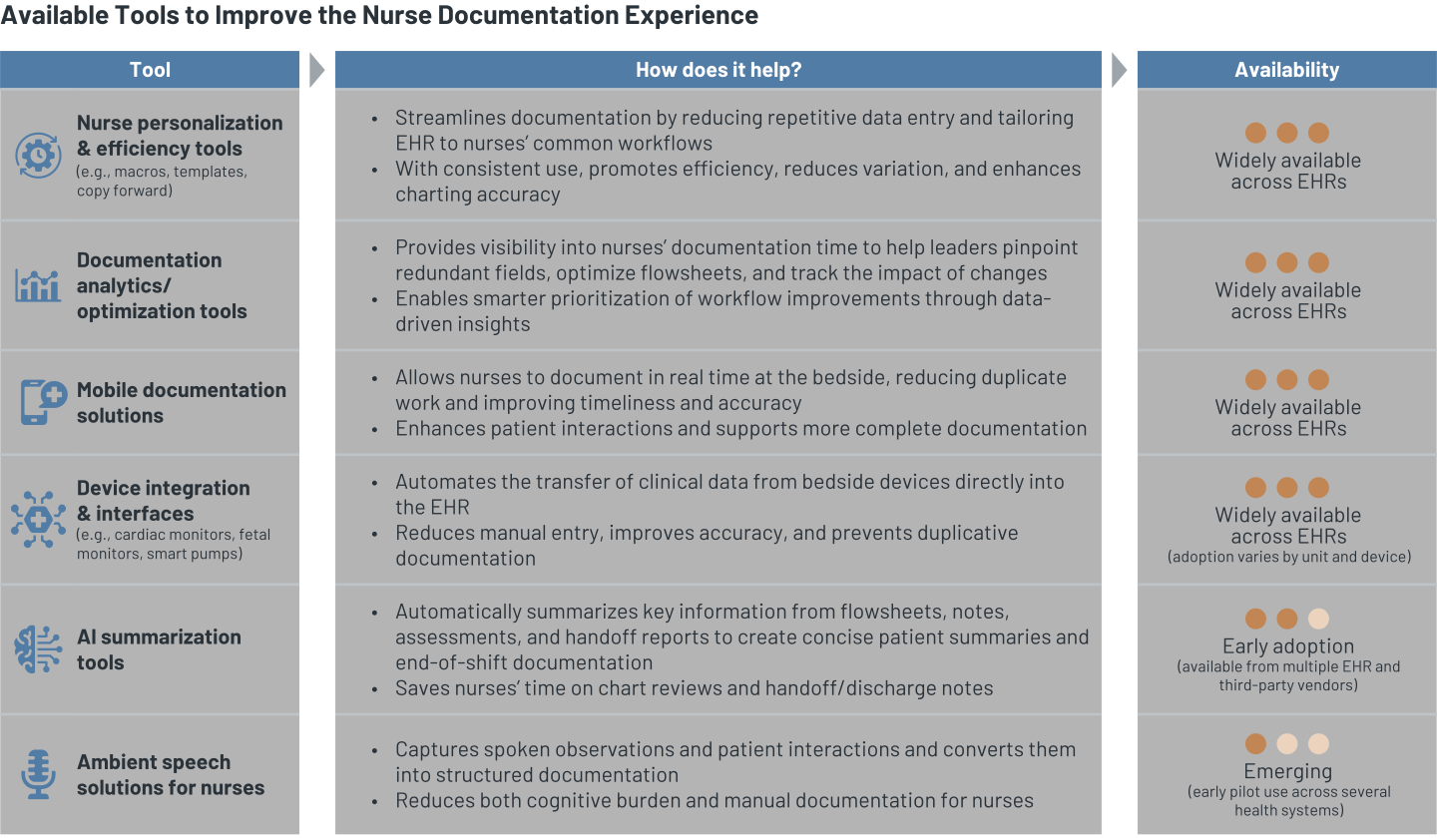
What Tools Are Available to Support Efforts to Improve Nurses’ Documentation Experience?
Reducing nurses’ documentation burden is not a technology problem alone. The most successful organizations pair technology initiatives with intentional workflow redesign, training, and governance to maximize improvements—treating technology as an enabler of efficiency rather than a replacement for thoughtful process improvements. Several technologies are either widely available or emerging in the market to support organizations’ efforts to improve the nurse documentation experience. Below are those that KLAS has validated as live or in pilot stages with healthcare organizations in the Arch Collaborative.
Need Help? Get Started by Measuring with the Arch Collaborative
Improving nurse documentation can seem overwhelming, but multiple partners are ready to support your efforts, including the KLAS Arch Collaborative, where you can measure your nurses’ current EHR experience. Nurse experience data can help you focus your efforts by identifying the departments in your organization most in need of help and the documentation areas that would make the most impact. KLAS can also support Arch Collaborative members with best practices and connect them with other organizations who have tackled similar issues.
Learn More from Recent Success Stories
The Arch Collaborative has published case studies on four of the five organizations referenced above to provide deeper insights into how they drove outstanding improvements in their nurses’ documentation experience.
Click on the link to read the full case study.
Mercy: Empowering Nurse Voices & Redesigning EHR Workflows for Enhanced Efficiency 2025
Mercy, a 50-hospital health system spanning several states, launched Project ANEW (Advancing Nursing Efficiencies and Workflows) to reduce documentation redundancy and improve nurse efficiency. Guided by evidence-based best practices and informed by Epic NEAT data and Epic’s Efficiency Workbook, Mercy’s team of nursing informaticists, analysts, and frontline nurses redesigned workflows to identify and remove unnecessary documentation. Through strong leadership support, evidence-driven decision-making, and direct engagement with bedside nurses, the organization saved an average of 32 minutes of charting per nurse per day and achieved an 8.1-point improvement in nurses’ NEES.

Wooster Community Hospital Health System: Leveraging a Multidisciplinary Team to Optimize Nursing Documentation 2025
Wooster Community Hospital Health System launched the Freeing Up Nurses’ Time (F.U.N.-Time) Initiative to reduce nursing documentation burden and improve EHR satisfaction with MEDITECH Expanse. Led by the CIO and supported by senior nursing leadership, the multidisciplinary task force—composed of frontline nurses, nursing leaders, and analysts—reviewed more than 150 nurse-submitted ideas and implemented high-impact workflow changes. By focusing on quick wins, transparent communication, and sustained frontline engagement, the organization eliminated 96 documentation fields, saved more than 15,000 nursing hours annually, and achieved a 20.9-point improvement in nurses’ NEES.
Children’s Hospital of Philadelphia: Empowering Nurses & Enhancing Care 2025
Children’s Hospital of Philadelphia improved nursing efficiency and documentation quality through an enterprise-wide optimization effort that placed frontline nurses at the center of redesign decisions. Partnering with Epic on their two-year Epic Refuel project, CHOP leveraged evidence-based practices and input from clinical nurse specialists, quality teams, and bedside nurses to eliminate redundant flowsheets, streamline care plans, and modernize documentation workflows. The initiative resulted in a 13.3-point improvement in nurses’ NEES and generated over $21 million in cost savings.

Seattle Children’s Hospital: Time Back for Patients—Optimizing Nurse Documentation
Seattle Children’s Hospital launched a two-year initiative to overhaul nursing documentation following its Epic go-live, focusing on eliminating redundancy, improving efficiency, and giving nurses more time with patients. Sponsored by the CNO and supported by a multidisciplinary team of nursing informaticists, analysts, trainers, and superusers, the organization used NEAT data and Epic’s Workflow Analyzer to identify high-impact opportunities for optimization. Through clear guiding principles, strong change management, and consistent frontline engagement, Seattle Children’s achieved a 71.4-point improvement in nurses’ NEES—the largest increase seen across Arch Collaborative organizations.
What Is the KLAS Arch Collaborative?
The Arch Collaborative is a group of healthcare organizations committed to improving the EHR experience through standardized surveys and benchmarking. To date, over 300 healthcare organizations have surveyed their end users and over 600,000 clinicians have responded. Reports such as this one seek to synthesize the feedback from these clinicians into actionable insights that organizations can use to revolutionize patient care by unlocking the potential of the EHR.
Where Does This Report’s Data Come From?
Data in this report represents 80,147 nurses working in an acute care environment—namely inpatient units or emergency departments—from 179 different organizations who measured their nurses’ EHR experience through the Arch Collaborative between September 2022 and September 2025. Questions asked on each survey varied, resulting in variation in the sample sizes of nurses who responded to each question charted and discussed in this report.
Best practices are presented from five specific organizations who have recently driven significant improvement in nurses’ EHR experience through optimization initiatives.
Report Non-Public HTML Body
Report Public HTML Body
This material is copyrighted. Any organization gaining unauthorized access to this report will be liable to compensate KLAS for the full retail price. Please see the KLAS DATA USE POLICY for information regarding use of this report. © 2019 KLAS Research, LLC. All Rights Reserved. NOTE: Performance scores may change significantly when including newly interviewed provider organizations, especially when added to a smaller sample size like in emerging markets with a small number of live clients. The findings presented are not meant to be conclusive data for an entire client base.