




KLAS Arch Collaborative Learning Summit 2025
Accelerating Progress to Improve the Clinician Experience
The KLAS Arch Collaborative is a community where shared insights are reshaping how healthcare organizations train, support, and engage clinicians. In a time where clinicians are often burdened by cumbersome workflows and staffing shortages, it is more important than ever to improve the EHR experience and, thus, clinician well-being. By bringing together healthcare organizations, healthcare IT vendors, and professional services firms, the Collaborative helps this improvement happen.
Access the feedback of
700,000+ clinicians worldwide
Access the feedback of
700,000+ clinicians worldwide
Here is my information:
In July 2025, KLAS hosted the eighth annual Arch Collaborative Learning Summit to support this community, inviting 311 leaders from 102 organizations to be vulnerable and share expertise and best practices. To help other organizations on their journey to EHR improvement, this overview provides summaries of the discussions and sessions that occurred during the summit (to view full presentations, click here).
Save the Date: Arch Collaborative Learning Summit 2026
KLAS is excited to announce that the next Arch Collaborative Learning Summit will be July 28–30, 2026, in Salt Lake City, Utah. This event is for Arch Collaborative members only. Please reach out to your KLAS client success manager for more information on the summit and how to register for the event.
Arch Collaborative Awards
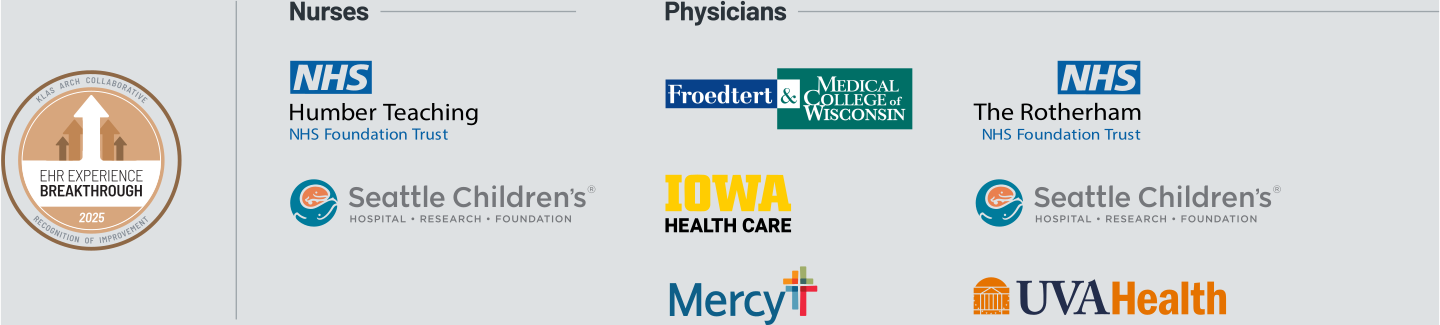
During the summit, KLAS was able to celebrate the 2025 Arch Collaborative Award winners, who are listed below. For more information on how to qualify for an EHR Experience Pinnacle Award or Breakthrough Recognition, click here.
EHR Experience Pinnacle Award Winners
The EHR Experience Pinnacle Award is given to Arch Collaborative members who have attained the highest Net EHR Experience Scores (NEES) †for nurses or physicians of all Arch Collaborative organizations. KLAS congratulates the 2025 award winners.
† Each individual clinician’s responses to the Arch Collaborative EHR Experience Survey regarding core factors such as the EHR’s efficiency, functionality, impact on care, and so on are aggregated into an overall Net EHR Experience Score (NEES), which represents a snapshot of the clinician’s overall satisfaction with the EHR environment at their organization. A NEES can range from -100 (all negative feedback) to 100 (all positive feedback).
Nurses
Organizations qualified for a Nurse award by achieving a NEES of 75.0 or higher

Physicians
Organizations qualified for a Physician award by achieving a NEES of 60.0 or higher

EHR Experience Breakthrough Recognition Winners
This recognition is given to Arch Collaborative members who have improved their NEES by 15 points or more between measurements. Congratulations to the following organizations:
Main Stage Summit Presentations & Panels
Click on the headers to access recordings of the presentations and panels
Summit Welcome
Summary:
There is an urgent need for the healthcare industry to accelerate change for clinicians: While Arch Collaborative data shows that self-reported burnout rates have decreased for both physicians and nurses, many clinicians still report levels of burnout. Among these clinicians, 30% of nurses and 32% of physicians cite staffing shortages as a contributor. If the clinician experience does not continue to improve, current staffing shortages will worsen, which will in turn worsen burnout. Based on projections from McKinsey, the US may face a critical shortage of 200,000–450,000 nurses and 38,000–120,000 physicians by 2034.
The Arch Collaborative EHR Experience Levels and Executive Scorecard can help organizations drive change: The Arch Collaborative offers powerful benchmarking and insights, but sometimes translating those insights into action can feel overwhelming. The following offerings can help organizations as they seek to improve the clinician EHR experience.
- EHR Experience Levels: The Arch Collaborative has seen many organizations make significant improvements to the EHR experience over time. However, actually making improvements can seem daunting, and many organizations don’t know where to start. The new EHR Experience Levels provide a simpler look at Arch Collaborative data, helping organizations better understand where they stand today.
- Executive Scorecard: The Executive Scorecard works in tandem with the EHR Experience Levels, providing an overview of clinicians’ current experiences and breaking down information into four key areas—net EHR experience, EHR infrastructure, EHR education, and EHR support. The scorecard also highlights financial risk caused by EHR-related burnout and provides actionable insights to inform strategies for improvement.
Looking Forward with Artificial Intelligence
Summary:
Ambient speech is propelling AI into the clinical workflow: Over the past 18 months, ambient speech technology has rapidly expanded and positively impacted clinician wellness, documentation efficiency, and patient interactions. Due to these early positive outcomes, many organizations are actively working to expand ambient speech pilots and establish enterprise adoption. (For more information on early outcomes being achieved, see KLAS’ Ambient Speech Outcomes 2025 report.)
How should organizations prepare clinicians for an AI-driven future? While most clinicians report that ambient speech and other AI tools are intuitive, summit attendees emphasized that long-term AI success will hinge on clinicians’ ability to critically evaluate and effectively leverage AI-generated content during care delivery. Now is a critical time for organizations to (1) establish a deliberate AI strategy and (2) build a foundation of AI literacy and trust among clinicians. Key focus areas include:
Baseline AI literacy: All clinicians, regardless of specialty or role, should have a foundational understanding of AI. Training should use clear, accessible language about AI’s strengths and limitations and address data quality, prompt creation, hallucination risks, and AI’s ability to support (but not replace) clinical judgment.
Consistent change management: Carefully consider the mindset and workflow changes that accompany AI adoption. Maintain transparency regarding expectations, goals, and progress. Focus on communicating benefits to clinicians and patients and celebrate wins. Engage non-IT clinician champions. Understand that different individuals will require different approaches.
Real-world training: Offer role-based training within clinical workflows, and emphasize the transparency and explainability of AI output and how to personalize it to clinician needs. Ongoing training and support resources should be available to clinicians.
Governance that involves clinicians: Create cross-functional AI governance structures that include clinical, IT, and legal/privacy teams. These structures will oversee selection of AI tools based on organization standards, data usage, appropriate clinical use, and ongoing evaluations.
Feedback channels: Ensure clinicians have an accessible structure to flag issues and suggest improvements. Health systems should close the loop and provide transparency regarding the performance of AI tools.
Where will AI move the needle next for clinicians? Most healthcare organizations are still early in their AI journey, and many summit attendees expressed optimism that AI solutions will quickly evolve in the coming months and years and help drive a better clinician experience. Near-term opportunities include:
- Auto-generated orders and coding (via ambient speech) to streamline downstream workflows.
- Reduced nursing documentation burden via AI-powered end-of-shift summaries, handoff notes, care plans, and flowsheet optimization.
- Consolidation and summarization of patient records (especially from outside organizations) to reduce manual review time and improve clinical accuracy.
- Generated drafts for patient and care team messages to reduce the administrative burden and enhance clarity/empathy of communications.
- Real-time training and support via AI chatbots and assistants.
- Predictive analytics that forecast clinical risks and operational needs to support proactive planning.
ROI of Clinician Experience
Summary:
What factors are driving technology investments?
- Internal champions: Initiatives often begin from within—especially from CMIOs who are frustrated with EHR usability.
- Competitive advantage: Systems see their focus on the clinician experience as a recruitment differentiator.
- Implementation pains: Large-scale rollouts can expose gaps in clinician support.
- Transparency & evidence: Arch Collaborative benchmarks can validate concerns and identify areas for focused improvement efforts.
How can organizations secure executive support and budget?
- Tailor messages to executive priorities: CEOs are often persuaded by performance improvements, and CFOs respond to potential reductions in denials and improvements to documentation and risk mitigation.
- Access grants: Grants can be leveraged to pilot support roles and secure future funding.
- Measure with the Arch Collaborative: Having the external validation from Arch Collaborative data can support board-level conversations.
How do organizations demonstrate ROI?
- Define ROI metrics early: Before implementation, be sure to define ROI metrics so that stakeholder expectations are aligned.
- Look for key outcomes: These include workforce stability, operational efficiency, reputation and recognition, and staff morale and trust. Remember that ROI isn’t purely financial—mission alignment and clinician well-being are critical but non-monetary ROI factors.
For more insights, see The ROI for Improving Your Clinicians’ Experience 2025.

Navigating Today’s Challenges to Accelerate Tomorrow’s Innovation
Summary:
This session provided a candid look at how healthcare organizations, vendors/firms, and payer organizations feel about today’s challenges—from regulatory and funding shifts to operational pressures—and how leading organizations are responding to these challenges.
- Reimbursement fears aren’t freezing budgets but redrawing them: Reimbursement alignment is influencing overall strategic decision-making more than ever. Most organizations aren’t anticipating IT budget cuts. Instead, they are shifting spending to vendor partnerships and tools that can provide fast, measurable ROI. Budgeting prioritizes resilience and steady growth over big bets.
- Value-based alignment is evolving into true revenue strategy: Organizations are rethinking payer partnerships, MA growth, and contract performance.
- Smaller healthcare organizations are reacting like large health systems but lack large-system resources: Many underresourced organizations are trimming their capital spending and adjusting staffing; however, this leaves them with limited teams, sparse analytics, and no margin for error.
- Policy shifts are no longer theoretical and are driving hard choices: Payment reforms are triggering reconfigurations. Some organizations are scaling back services; others are expanding high-reimbursement lines. These survival strategies have major implications for patients’ access to care.
- Pilots are everywhere; few organizations know how to scale: Amid staffing cuts, organizations are betting on AI and digital tools to ease the administrative burden. However, most remain in the pilot phase and lack needed funding, standards, or readiness to scale.
Franciscan Alliance Keynote Address
Summary:
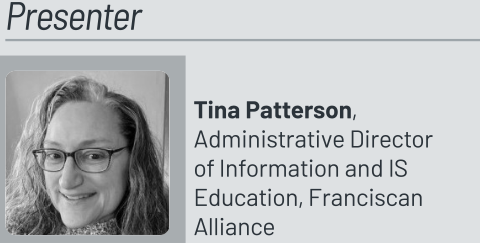
Over the course of their engagement with the Arch Collaborative, Franciscan Alliance has improved from a NEES of 49.5 to 70.3 (on a -100 to 100 point scale)—and for physicians specifically, from a NEES of 32.2 to 71.3. Clinician participation in the health system’s annual survey has more than tripled since their initial survey thanks to ease of access and incentives. Franciscan’s trek has occurred over several years and been driven primarily by clinical and physician informaticists. Changes and interventions have been a combination of build and educational changes, along with better marketing to coworkers.
Topic-Based Presentations
Click on the headers to access recordings of the presentations and panels
AI in Healthcare
From Pilot to Enterprise: How Cleveland Clinic Selected and Scaled an Epic-Integrated Ambient AI Platform
Summary:
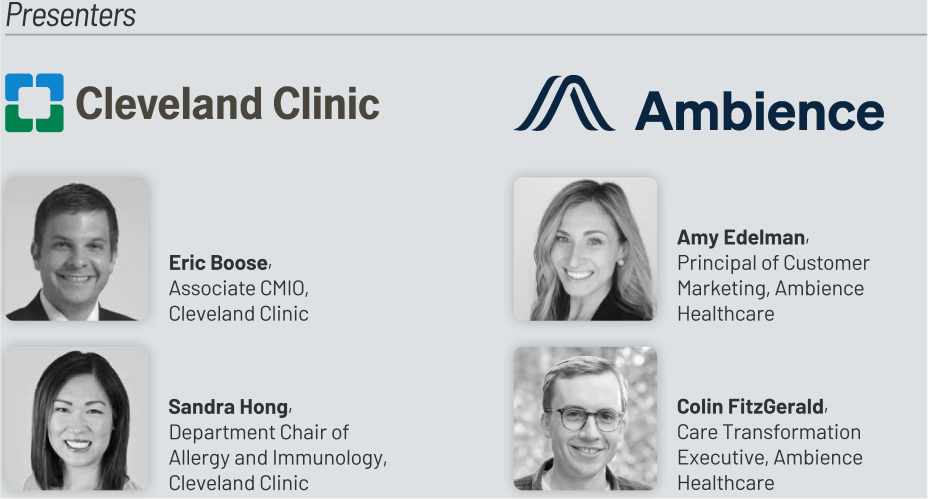
Cleveland Clinic rigorously evaluated five ambient speech vendors before selecting and scaling a solution enterprise wide and embedding it in Epic. In this session, clinical leaders from Cleveland Clinic outlined their selection rubric, success metrics, monitoring methods, and operational playbook. They also shared the impact of ambient AI on clinician efficiency and satisfaction, documentation quality, and revenue.
Implementation of an Ambient AI Solution in an Academic Medical Center
Summary:
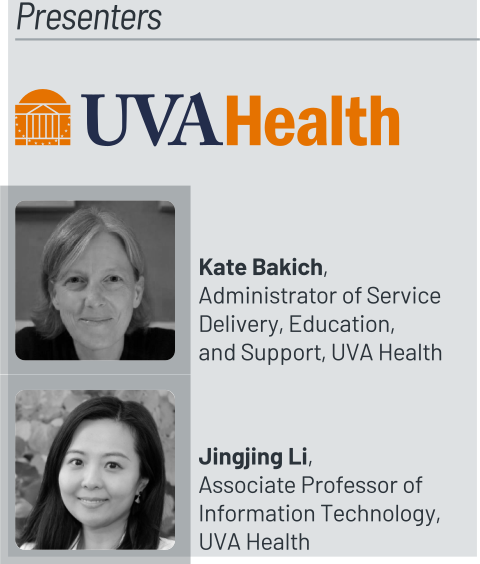
UVA Health is an integrated health system with a world-class academic medical center, three community hospitals, a specialty rehabilitation hospital, and a network of primary and specialty care clinics throughout Virginia. In response to ongoing concerns with the provider documentation burden, UVA Health embarked on a rapid implementation of Microsoft’s DAX Copilot ambient AI solution. Following a 10-provider pilot, UVA deployed the solution to over 600 primary and specialty care providers over a five-month period. This presentation focuses on key project decisions and early outcomes derived from qualitative and quantitative analysis.
From Implementation to Integration—Strategies for Clinician Engagement and Widespread Conversational AI Adoption in Healthcare
Summary:
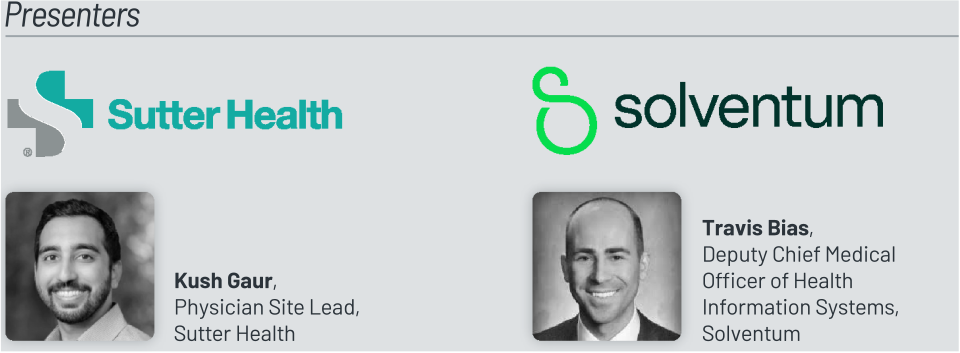
Conversational AI tools are transforming the clinician experience within EHR systems. During this session, Dr. Kush Gaur and Dr. Travis Bias explored the complex interplay between technological advancements and their effective adoption in clinical settings. Further, the leaders shared how Sutter Health’s informatics teams, in collaboration with Solventum’s experts, are pioneering a more efficient and user-friendly EHR environment that significantly enhances the clinician experience.
An Ambient Conversation: University of Iowa Health Care and Nabla’s Approach
Summary:
As the EHR has evolved, provider burden has generally increased. However, the University of Iowa Health Care (UIHC) saw a notable increase in their NEES between 2023 and 2025, increasing from 54.2 to 65.1 (on a -100 to 100 point scale). The adoption of ambient AI via Nabla has been identified as one of the leading contributors to this improvement, with documented higher levels of user satisfaction for several EHR experience metrics. This session explores how Nabla’s ambient AI technology helped the UIHC improve EHR satisfaction and reduce burnout among clinicians.

Ambient AI Adoption at One Year in a Rural Academic Health Network
Summary:
The University of Vermont Health Network evaluated a pilot study of two ambient AI vendors and later selected Abridge as their go-forward partner. After a rapid rollout within primary care over the summer of 2024, the technology was rolled out in waves to understand and maximize specialty adoption and usage rates. The initial pilot cohort of 50 primary care providers was followed for one year via a survey, which showed a sustained reduction in burnout and an improvement in professional fulfillment. Two smaller studies demonstrated non-inferior note quality and positive patient feedback on note quality. An area of continued exploration includes learners and the impact this technology will have on their competence, confidence, and capacity for learning.

The Role of AI in Advancing Physician Well-Being
Summary:
AI is rapidly transforming healthcare and has the potential to alleviate the administrative burden, reduce cognitive overload, and enhance clinical decision-making. How can these advancements be harnessed to support, rather than strain, the well-being of physicians? This session explores the evolving role of AI in addressing key drivers of physician burnout and promoting sustainable, satisfying clinical practice. Additionally, it shares insights into designing, implementing, and advocating for AI solutions that prioritize physician needs, elevate professional satisfaction, and build a more resilient healthcare workforce.
EHR Education
The Provider Efficiency Program—A Multimodal, Multidisciplinary Strategy for Optimizing EHR Usability
Summary:
LifeBridge Health’s informatics teams used data from both the Arch Collaborative EHR Experience Survey and the Oracle Health Lights On Network performance metrics to design a multimodal, multidisciplinary Provider Efficiency Program (PEP). Incorporating direct observations during patient care with personalized training, PEP targeted optimized workflows and effective use of existing tools. Significant qualitative and quantitative improvements have been sustained for all participants, and the program has been adapted based on lessons learned.

Enhancing Provider EHR Satisfaction Through Targeted, Engaging Training
Summary:
At a time when provider burnout is real, Parkview Health’s approach to EHR training is anything but business as usual. They have embraced a model rooted in personalization, active learning, and continuous support because one-off training doesn’t cut it anymore. This session shows how signal-driven coaching, note-bloat–busting documentation sessions, interactive escape room challenges, and even music and humor have helped providers engage, retain, and thrive.
Empowering Clinicians: Navigating EHR Changes and Upgrades with Confidence at M Health Fairview
Summary:
With the flurry and frequency of technology upgrades and changes, many health systems struggle to deliver high-quality education programs that support clinicians using the technology. However, when done well, self-directed training has proven to be a scalable solution that can help standardize and even improve the effective delivery of EHR training, enabling clinician proficiency and satisfaction. M Health Fairview, a pioneer in virtual learning, shared the benefits they have witnessed by using uPerform’s self-directed learning, including expedited onboarding, smooth go-lives and upgrades, digital at-the-elbow support, effective communication, and increased provider EHR satisfaction.
The Human Side of the EHR: Training, Tools, and Trust in Rural Healthcare
Summary:
During this presentation, leaders from Frances Mahon Deaconess Hospital discussed the journey their organization took to vastly improve their clinician satisfaction, starting with a NEES of 14.0 and increasing to 51.0 in just three years. Part of this journey involved better strategizing their initial onboarding education and ongoing education, which is an important factor in maintaining clinical efficiency, compliance, and provider engagement within a rural healthcare setting. This session helps identify key strategies for tailoring the EHR to the unique workflows and resource limitations of small rural healthcare organizations and also examines the relationship between EHR usability and end-user satisfaction.
From Off-The-Rack to Custom Fit: Transforming Physician Training with Amplifire
Summary:
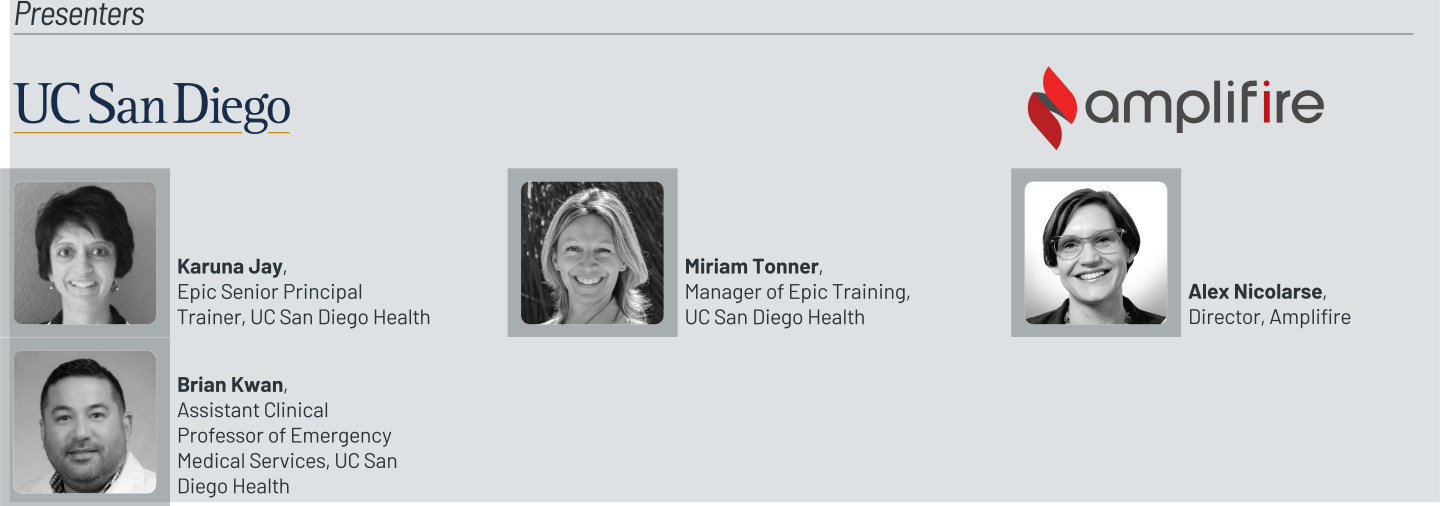
UC San Diego Health (UCSD) onboards approximately 1,000 new clinicians each year, and each must complete mandatory Epic training within two weeks of their start date. Due to limited staff and a lack of personalization for training, UCSD partnered with Amplifire to implement a high-quality, customized Epic training solution that could meet individual needs and scale efficiently. This presentation examines the data collected from UCSD’s Amplifire-based eLearning initiatives, providing a detailed look at EHR learner feedback and performance metrics and an understanding of how data-driven insights can inform and improve the design of self-directed learning programs.
Breaking the Training Plateau: How Dayton Children’s Is Transforming EHR Education
Summary:
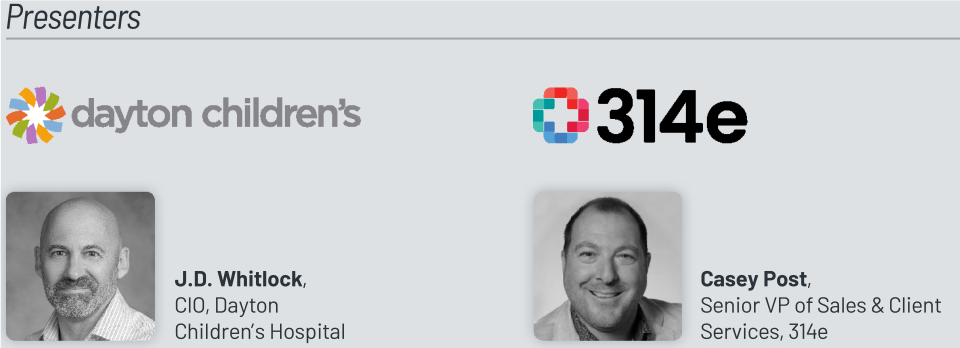
Despite notable gains in EHR satisfaction across multiple KLAS Arch Collaborative surveys, Dayton Children’s Hospital faced a persistent challenge—clinician satisfaction with training remained stagnant year over year. In response, the organization engaged a consultant to assess the root causes of this plateau. The outcome led to a series of recommendations, including the selection of technology solutions. In this session, leaders from Dayton Children’s and 314e shared the story of this transformation journey—from initial assessment to implementation to measurable impact—and explored how AI-driven microlearning has reshaped the clinician EHR experience.
Making Change Real—Bridging the Readiness Gap in EHR Adoption Through Integration Device Training
Summary:
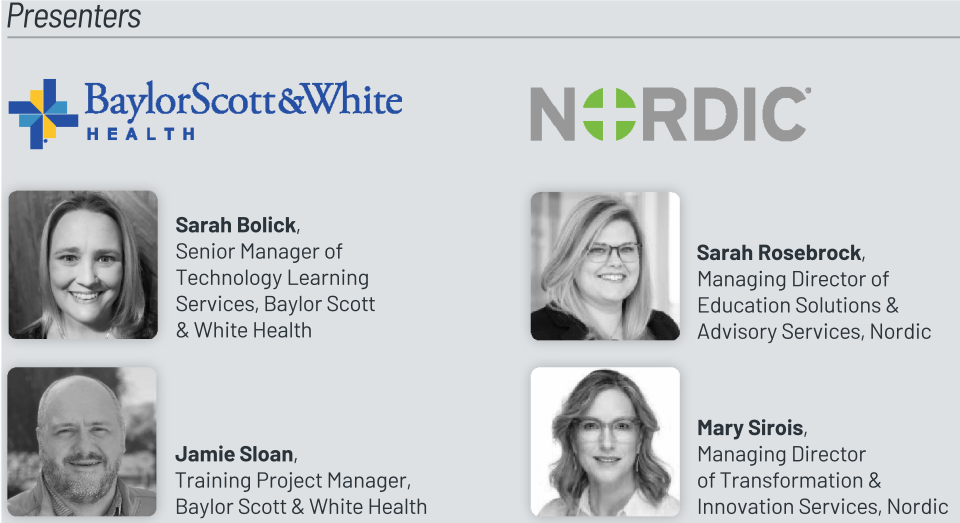
Baylor Scott & White Health, in partnership with Nordic, shared approaches and lessons learned in leveraging scenario-based learning and change management approaches to improve clinician readiness for and adoption of integrated real-time medical device data in the EHR clinical workflows.
Shared Ownership
Clinician-Centered by Design: How the Three Pillars of Success—Education, Governance, and Personalization—Led to Top 2% EHR Clinician Satisfaction
Summary:
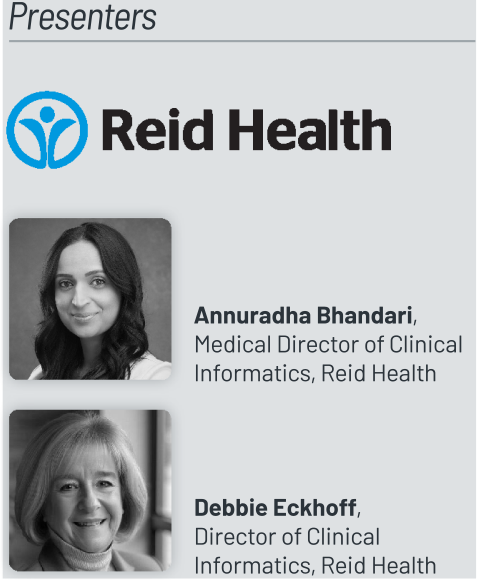
At Reid Health, achieving top 2% performance in clinician EHR satisfaction wasn’t the result of reacting to survey data; it was the product of building internal alignment before measurement. This presentation details how Reid Health used a culture-first approach—anchored in the Arch Collaborative’s pillars of education, governance, and personalization—to transform the clinician-EHR relationship. Guided by physician-led governance and cross-functional collaboration, Reid implemented an agile-based Epic Refuel initiative, embedded personalization at scale, and adopted ambient AI to streamline workflows and reduce documentation burden. Training was reimagined to reflect real clinical use, while governance structures elevated clinician voices to guide decision-making and prioritization. Designed for organizations ready to move from insights to execution, this session provides practical strategies for leveraging governance, personalization, and training to drive measurable improvement in EHR satisfaction.
Impactful Governance & Shared Ownership Drive Clinician EHR Success
Summary:
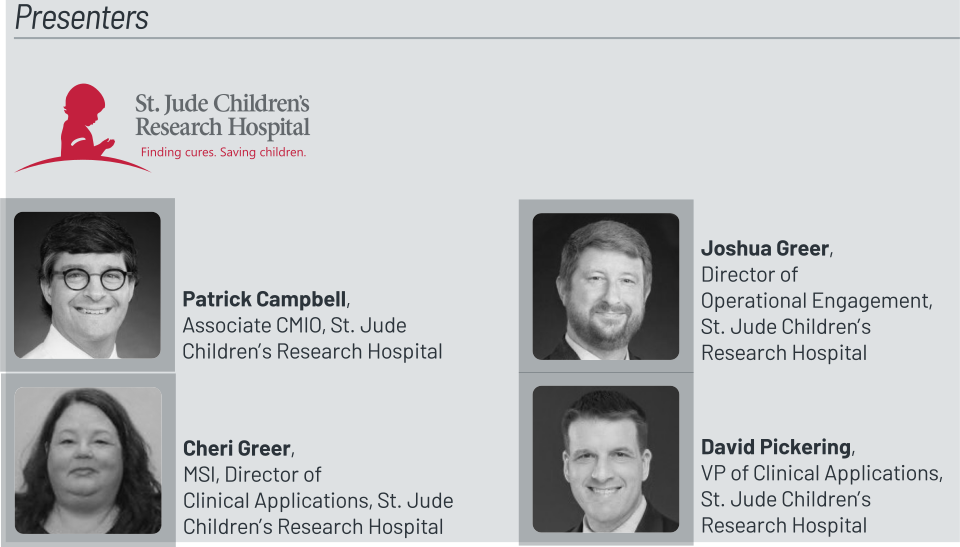
This presentation shares how St. Jude Children’s Research Hospital leveraged and continuously evolved their structured governance models to align clinical, operational, and IS stakeholders. The organization leveraged existing IT Service Management (ITSM) platforms for intake, tracking, and beyond, and they established sustained governance engagement and communication throughout the life cycle of the project.
Shared Ownership in Action—Building a Culture of Engagement, Governance, and Operational Excellence
Summary:
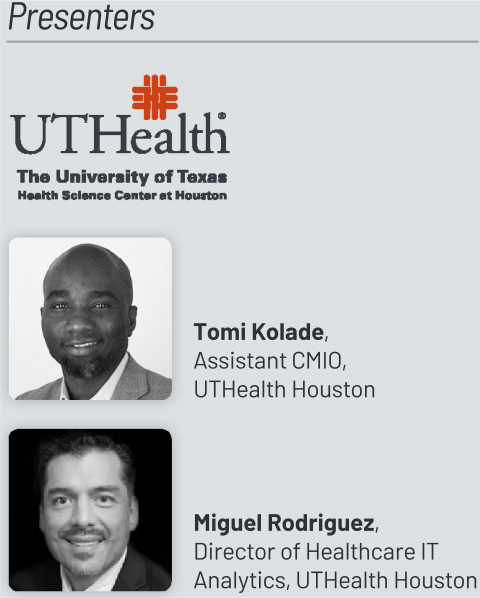
In this session, UTHealth Houston shared how they built a culture rooted in shared ownership, driving sustainable improvement in EHR utilization and patient care. The organization outlined the foundational strategies they used to align stakeholders, foster accountability, and embed excellence into everyday operations. These strategies include establishing shared vision and urgency, creating a strong governance structure, having physicians lead engagement, maintaining accountability through data, simplifying the user experience, and sustaining momentum.
Optimizing in Collaboration—A Path to Enduring Nursing EHR Satisfaction
Summary:
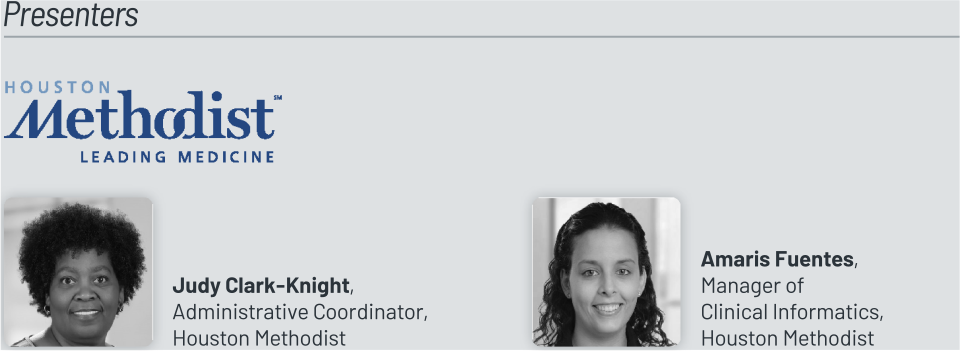
This presentation shares how Houston Methodist has used Arch Collaborative insights to improve their clinical end users’ experience.
Unlocking the Magic of Specialty Sprints: How to Implement a Successful Program
Summary:
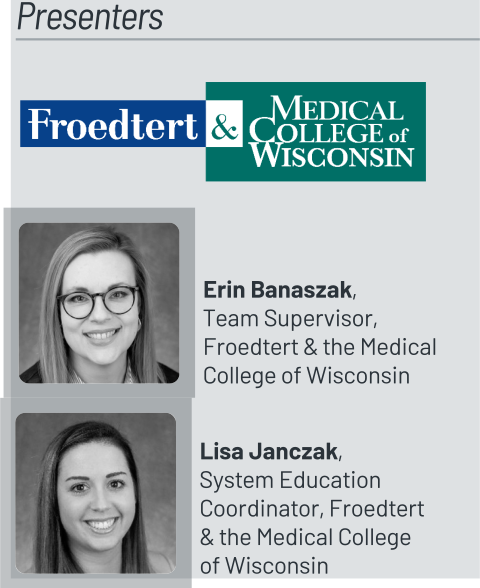
This presentation explores how to unlock the magic of Epic Specialty Sprints to drive measurable improvements in EHR engagement and satisfaction. Organization leaders discuss the foundational principles of Specialty Sprints, revealing the secrets to structuring and implementing them effectively. Key topics include identifying areas of low satisfaction, allocating resources strategically, and building the right teams to support each sprint.
KLAS Sessions
Click on the headers to access recordings of the presentations and panels
Change Management—The Key to Guiding Organizations to EHR Success
Summary:
Expand your vision of change management as a critical tool for delivering the benefits of rapidly evolving technology to clinicians. Collaborate with peers and discover how organizations have successfully navigated complex changes—including EHR implementations, upgrades, AI deployments, and ongoing optimizations—by leveraging strong governance structures, informatics teams, and superusers to maximize impact and ensure clinicians aren’t left behind as healthcare IT surges forward.
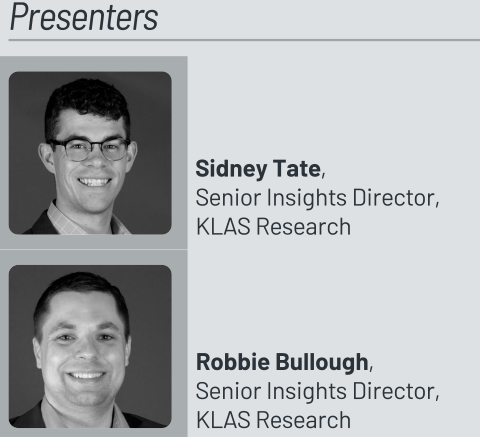
Nursing Best Practices
Summary:
Join us for a dynamic showcase of Arch Collaborative best practices and discover how top-performing health systems have transformed their nurses’ EHR experience. Gain actionable insights to streamline workflows, elevate efficiency, strengthen training programs, and alleviate nurse burnout with practical strategies you can deploy across your organization.
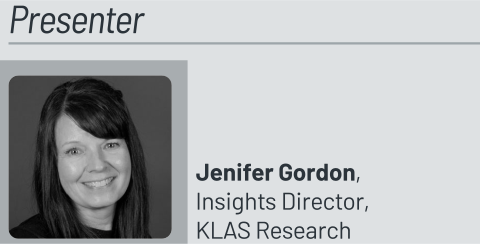
Physician Best Practices
Summary:
The 2025 Arch Collaborative Physician Guidebook is based on the feedback of more than 35,000 physicians who have measured their EHR satisfaction via the KLAS Arch Collaborative from 2022 to 2025. This data has enabled the Arch Collaborative to validate best practices used by healthcare organizations to make notable improvements to their physicians’ EHR satisfaction. This session shares impactful strategies across key areas of EHR success—infrastructure, education, governance, and personalization—and highlights innovative opportunities, including AI-driven solutions.
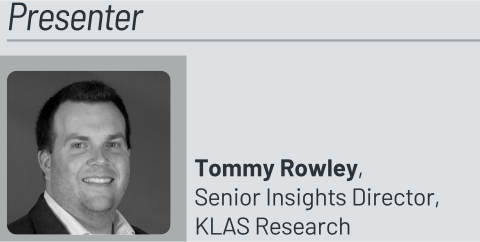
A Renewed Focus on Operational Efficiency and Workforce Management
Summary:
Healthcare organizations continue to face challenges like staffing shortages, narrowing margins, and operational challenges. In this session, KLAS shares data on how hospitals are facing these challenges and how innovative technology can lead to improvement in areas, including capacity optimization, workforce retention, advanced analytics, and patient workflows.
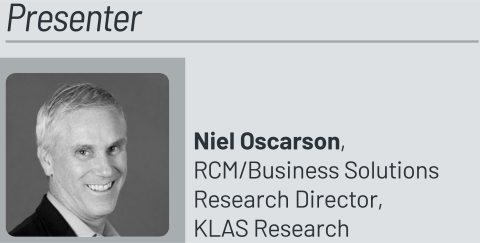
Other Sessions
EHR Vendor Presentations
Several EHR vendors actively participate in the Arch Collaborative. At the summit, Epic, MEDITECH, and Oracle Health gave presentations on how they use Arch Collaborative learnings to help customers improve the clinicians’ EHR experiences. To access recordings of these sessions, please reach out to your KLAS client success manager.
Product Demonstrations
Improving the EHR experience is a team effort—some healthcare organizations choose to rely on their internal teams, while others choose to seek external partners who can help them on their improvement journey. To make it convenient for healthcare leaders to assess and compare solutions targeted at improving the clinician experience, vendors who are Arch Collaborative members were able to purchase demo opportunities at the summit. The following vendors chose to host product demos at this year’s event:
- 314e
- Abridge
- Ambience Healthcare
- Evidently
- Nabla
- Onpoint Healthcare Partners
- Suki
- uPerform
- Wellsheet
Summit Workshops
During the summit, groups of attendees used what they had learned to design their ideal EHR education and governance structures within a realistic budget and without any preexisting limitations. What the attendees came up with will be used in KLAS’ iterative process to create frameworks for both EHR education and governance.
The following sets of questions were used during these workshops, and readers can consider their own answers as they create strategies in these areas. (Note that the purpose of these questions isn’t to provide a checklist of everything an organization should do for EHR education or governance but rather to guide discussion.)
EHR Education
- Who delivers the training, and how? (e.g., peer trainers, IT trainers, superusers, virtual modules, 1:1 coaching, embedded informaticists)
- How many trainers would you need? Where would they report?
- How would you structure application and workflow expertise within your training team?
- Who updates training content? How often?
- What training methods or modalities would you use? (e.g., simulations, gamification, in-system tips, on-demand videos, mobile access, 1:1s, classrooms)
- Do you centralize training, or decentralize it?
- When, how often, and how long does training occur? (e.g., before go-live, at hire, at 90 days, in quarterly refreshers)
- How do you get clinicians engaged to attend?
- How is training personalized for different types of clinicians? (e.g., new hires vs. seasoned staff, inpatient vs. outpatient, tech-savvy users vs. hesitant users)
- How do you assess skill, knowledge, and confidence before and after training?
- What would evaluation or certification look like?
EHR Governance
- How can your governance structure enable you to achieve your EHR goals?
- What do you consider governance structure essentials/best practices?
- What should representation look like at the C-level, director/manager level, and end-user level?
- How should committees and subcommittees be organized? (e.g., by topic, committee member clinical background, department/service line)
- How can you structure in a way that balances the solid vetting of plans with the ability to decide and act quickly?
- What items are essential to ensuring strong feedback loops between EHR leadership and clinical end users?
- How do you clarify your EHR road map to both leaders and end users? How proactive is your communication on coming changes/next steps in that road map?
- How do you most effectively gather end-user feedback? (e.g., surveys, rounding, ticketing systems, EHR-embedded feedback tools, regular time in governance meetings to address end-user concerns)
- What role are superusers playing?
- How do you ensure superusers are not only proficient EHR users but also essential champions in carrying out the overall EHR change management strategy?
- How do you get the right people involved?
- What have you seen be most successful in keeping engagement high outside of sporadic, intense events like major go-lives?
- What are key considerations with resource allocation?
- Do all aspects of EHR support need to be in-house, or can/should some be outsourced? Can technology augment or replace some elements of EHR support?
Summit Attendees
Healthcare Organizations
Ascension
Alberta Health Services
Allegheny Health Network
Baylor Scott & White Health
Beacon Health System
Children's Health
Children's Hospital of Orange County
Children's Hospital of Philadelphia
Children's National Hospital
Cleveland Clinic
CommonSpirit Health
CommUnityCare Health Centers
Community Health Care Association of New York State
Confluence Health
Connecticut Children's
Cook Children's Health Care System
Dayton Children's Hospital
Department of Veterans Affairs
eHealth NSW
Essentia Health
Frances Mahon Deaconess Hospital
Franciscan Health
Froedtert & the Medical College of Wisconsin
Gillette Children's
Health Choice Network
HealthLinc
HonorHealth
Houston Methodist
Intermountain Health
Jefferson Health
Kettering Health
LCMC Health
LifeBridge Health
Loma Linda University Health
M Health Fairview
Mayo Clinic
MD Anderson Cancer Center
Mercy Health
Michigan Medicine
Morris Hospital & Healthcare Center
Mountainlands Community Health Center
MultiCare
Northern Arizona Healthcare
Northfield Hospital + Clinics
OCHIN
OHSU Hospitals & Clinics
Olmsted Medical Center
Orlando Health
OU Health
Ozarks Healthcare
Parkview Health
Reid Health
SouthEast Alaska Regional Health Consortium
Stanford Medicine Children's Health
St. Jude Children's Research Hospital
St. Luke’s Health System
SUNY Upstate Medical University
Sutter Health
UC San Diego Health
University of Illinois Hospital & Health Sciences System
University of Iowa Health Care
University of Vermont Health Network
UTHealth Houston
UVA Health
Valley Children's Hospital
VCU Health
WellStar Health System
WVU Medicine
Vendors/Services Firms
314e
Abridge
Ambience Healthcare
Amplifire
athenahealth
AWS
CSI Companies
Eli Lilly and Company
Epic
Evidently
Goliath Technologies
Greenway Health
IKS Health
InterSystems
MEDITECH
MedPower
Microsoft
N4MATIX
Nabla
Nordic
Onpoint Healthcare Partners
Oracle Health
Phrase Health
ReMedi Health Solutions
Solventum
Suki
Tegria
uPerform
Wellsheet
Healthcare Associations & Media
Scottsdale Institute
American Medical Association
HIMSS
Healthcare IT Today
What Is the KLAS Arch Collaborative?
The Arch Collaborative is a group of healthcare organizations committed to improving the EHR experience through standardized surveys and benchmarking. To date, almost 300 healthcare organizations have surveyed their end users and over 600,000 clinicians have responded. Reports such as this one seek to synthesize the feedback from these clinicians into actionable insights that organizations can use to revolutionize patient care by unlocking the potential of the EHR.
Report Non-Public HTML Body
Report Public HTML Body
Featured in Learning Track
Topics
Report Topics
Ambient Speech, EHR Governance, EHR Personalization, Measured Improvement, Ongoing EHR EducationThis material is copyrighted. Any organization gaining unauthorized access to this report will be liable to compensate KLAS for the full retail price. Please see the KLAS DATA USE POLICY for information regarding use of this report. © 2019 KLAS Research, LLC. All Rights Reserved. NOTE: Performance scores may change significantly when including newly interviewed provider organizations, especially when added to a smaller sample size like in emerging markets with a small number of live clients. The findings presented are not meant to be conclusive data for an entire client base.