



Key Drivers of EHR Improvement 2025
Using Your EHR Experience Level to Identify the Most Impactful Goals
Every healthcare organization is on a journey to improve their clinicians’ experience with their EHR, and helping organizations progress in that journey is the mission of the KLAS Arch Collaborative and the purpose of our measurements. Feedback from healthcare leaders has revealed a clear challenge: Amid an abundance of competing priorities, it is often difficult to know which metrics matter most and what to prioritize first. Ultimately, success hinges on being able to not only identify your starting line but also set the right goals. To address this need, KLAS introduced the EHR Experience Levels as a new lens through which organizations can identify high-impact areas and prioritize their EHR initiatives.
Access the feedback of
700,000+ clinicians worldwide
Access the feedback of
700,000+ clinicians worldwide
Here is my information:
Using a track-and-field analogy, this report clarifies how to leverage your EHR Experience Level to focus on the areas that will be most impactful for your organization. It also explores how the EHR House of Success correlates with this framework to guide leaders on how to achieve their set goals.
Voices of Healthcare Organizations
 “We already get the data review report, and it highlights the things we need to work on. It just feels like generic information, and we want more information and direction on the route we should take to address and improve the gaps.” —Healthcare executive
“It can be hard to make a decision on what to do first, and sometimes getting a few of those easy wins launches us into a mindset that we can do some of these things.” —Healthcare executive
Setting Your Starting Line
The first step to improving EHR satisfaction is understanding your starting point. Your organization’s Arch Collaborative measurements—including your overall Net EHR Experience Score (NEES),† the 11 equally weighted metrics, and benchmarking percentiles—let you know where your clinicians’ satisfaction stands today. The recently introduced EHR Experience Levels framework builds on these metrics, ultimately providing a clear starting point for organizations looking to improve. For a full explanation of the levels, see the recent KLAS Arch Collaborative Executive Scorecard report.
† Each individual clinician’s responses to the Arch Collaborative EHR Experience Survey regarding core factors such as the EHR’s efficiency, functionality, impact on care, and so on are aggregated into an overall Net EHR Experience Score (NEES), which represents a snapshot of the clinician’s overall satisfaction with the EHR environment at their organization. A NEES can range from -100 (all negative feedback) to 100 (all positive feedback).
Setting Targets for Progress
Visualizing the Levels: From Hurdles to Vaults
Think of this journey like a track-and-field competition: At any given time, many events are taking place, each demanding something different of the athlete—precise technique, targeted training, and sometimes collaboration or specialized equipment. Through it all, athletes work toward their own goals and personal records, whether measured in speed, distance, or height.
Just as a coach surveys the field to decide how best to train their athletes for success, a healthcare organization seeking to improve clinician EHR satisfaction can take a similar approach. Without first assessing your current position, it can be overwhelming to look at the data and know where to begin or how much improvement is needed. Standard benchmarks can show where you stand among peers, but each organization faces different hurdles and heights that they must clear. The EHR Experience Levels provide additional clarity by showing you how your own metrics compare to those at the next level—revealing where you should focus your energy and how far you need to stretch to progress. By examining where the largest gaps in satisfaction exist, you can pinpoint the metrics that will most help your organization advance and make the greatest impact on clinician satisfaction.
To illustrate how metrics tend to vary in impact and what effort is required to improve them, we have grouped them into three categories—hurdles, relay races, and pole vaults.
Framework for EHR Progress: A Track-and-Field Comparison

When running hurdles, you cannot quickly finish the race unless you cleanly clear them. They are essential barriers that no organization can skip when seeking to improve the EHR experience. These metrics often show the largest gaps between below-average (Level 1) and exceptional (Level 6) performers, so focusing here can have the greatest impact on overall satisfaction.

Success in relay races requires teamwork and timing, hinging on both individual performance and seamless handoffs. Efforts here may require preparation and collaboration across multiple teams and infrastructure (e.g., servers, badges, Wi-Fi) but are achievable with the right coordination and focus.

The pole vault is a technically demanding event, requiring a combination of speed, strength, agility, timing, and balance. These are challenges the entire industry is still working to solve. The pole vault isn’t impossible to clear, but success requires broad external collaboration and remains a pain point even for Level 6 organizations.
Some organizations may find value in cross-training for multiple events—tackling several EHR initiatives at once—while others may choose to focus their energy on a single priority. In either case, the EHR Experience Levels help clarify where those efforts will have the greatest impact.
The Metrics That Matter Most for Physicians & Nurses
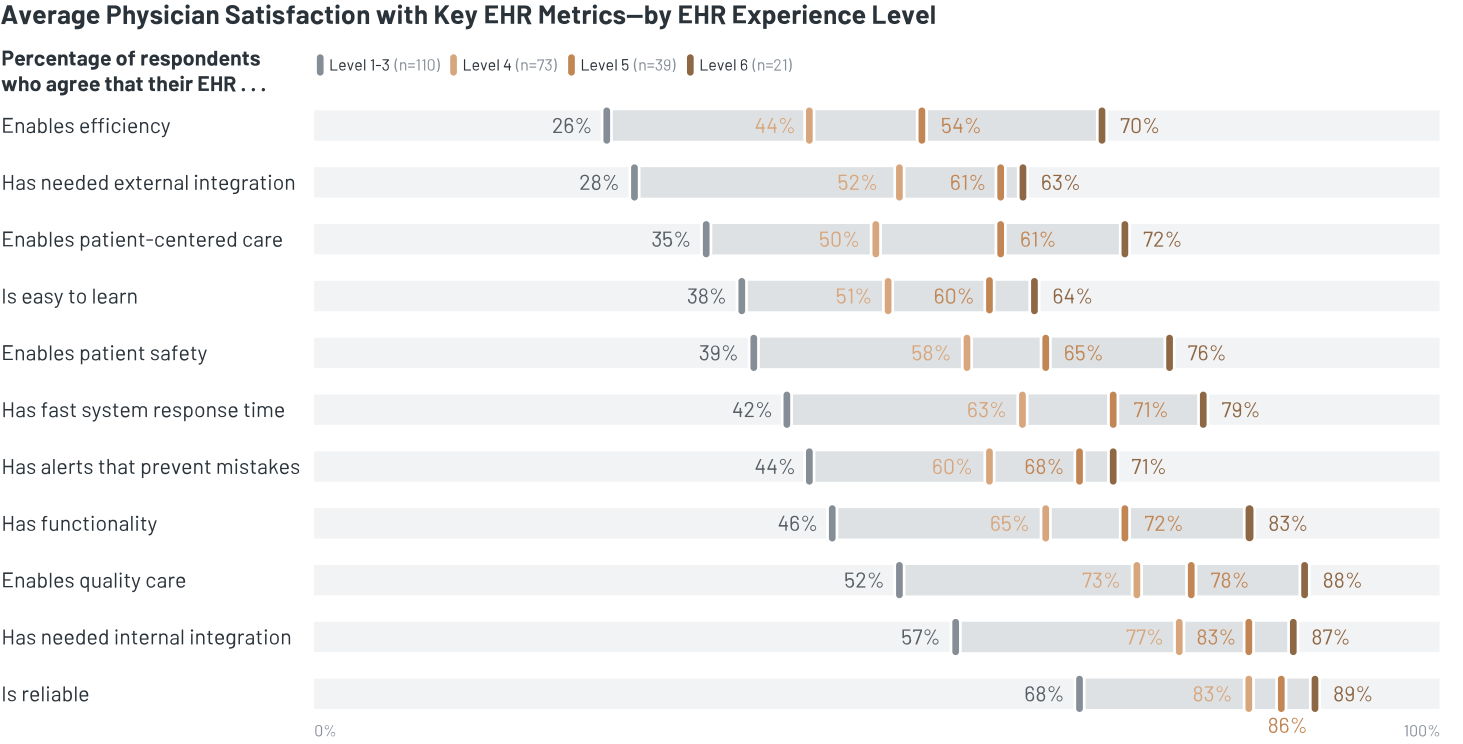
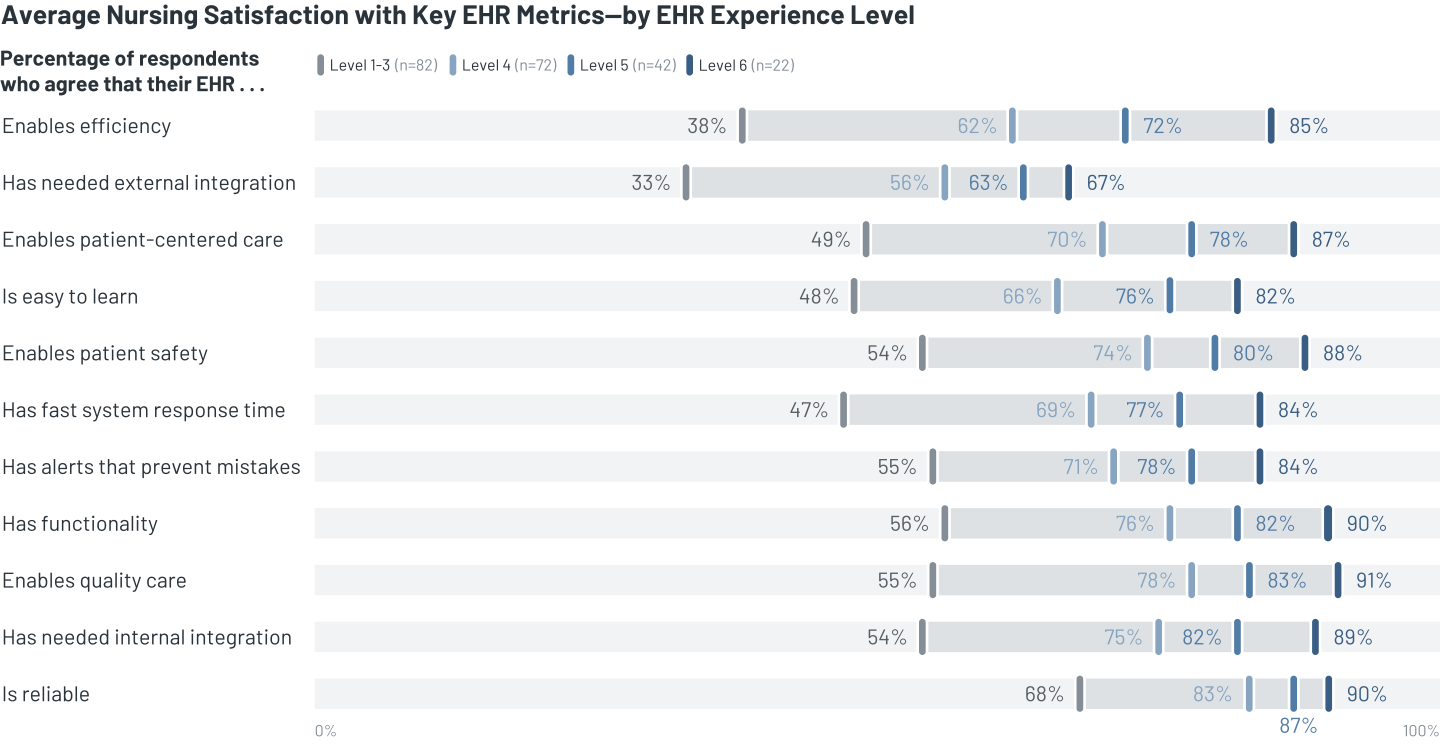
Across Arch measurements, three NEES metrics consistently emerge as the hurdles, relay races, and pole vaults that organizations should work on to make meaningful EHR improvement. For both physicians and nurses, efficiency is often the first hurdle to clear, and external integration is the pole vault that remains most difficult to solve. The relay race differs between clinical roles—for physicians, it is response time, and for nurses, it is patient-centered care.
Key Metrics for EHR Improvement
 Hurdle: Efficiency
Agreement that the EHR enables efficiency is the lowest NEES metric for physicians—and the first hurdle organizations need to overcome. Only 26% at Levels 1–3 agree their EHR enables efficiency, compared to 70% at Level 6, a 44-point gap. Closing this gap (often done through training and workflow optimization) has one of the greatest impacts on overall EHR satisfaction. A health system cannot move from Level 1 to Level 6 unless their physicians and nurses believe their EHR enables efficiency.
 Relay race: Response time & patient-centered care
Physicians:
In the relay race for physicians—improving system response time—everything depends on a strong start; a false start or dropped baton can derail any other efforts. Likewise, no amount of training or workflow optimization can compensate for a slow login for users. Physicians can identify where speed is lagging but need IT teams and vendors to join the race to diagnose root causes and make workflow/technical upgrades (e.g., reducing load times; investing in servers, Wi-Fi, or badge logins). Because EHR vendors play a significant role in system response time, adhering to their best practices (e.g., hardware inventory schedule) and requirements is crucial.
Nurses:
Patient-centered care is the relay race for nurses; their agreement that the EHR enables patient-centered care rises from 49% at Levels 1–3 to 87% at Level 6—a 38-point gain, including a 21-point leap between Levels 3 and 4. Cross-team collaboration is vital to improve nurses’ perception. Improved training, strong governance, and reduced duplicative charting help nurses connect documentation to patient outcomes rather than just reporting.
 Pole vault: External integration
External integration remains the most difficult perception to change. Even at Level 6, only 63% of physicians and 67% of nurses agree their EHR provides seamless access to outside information. Training and governance can improve perceptions of integration, but true interoperability requires technical proficiency and cross-entity alignment among vendors, governments, and health systems, making this one of the hardest challenges to solve.
Taking the Next Steps
Few athletes begin with the pole vault, and few healthcare organizations start at Level 6. Progress comes from identifying the metrics that will make the most impact to your organization through your EHR Experience Level and then making consistent, intentional efforts to improve those areas. Luckily, no organization has to make this journey alone. While this report focuses on goal setting, the Arch Collaborative offers a range of resources with both strategic guidance and practical tools to help leaders tackle the metrics they have decided on and reach new EHR Experience Levels. Some of these resources include:
Learning tracks
- Success Pathways
- EHR education: onboarding and ongoing
- Interoperability
- Governance & support
 Sustaining Progress: Leadership & the EHR House of Success
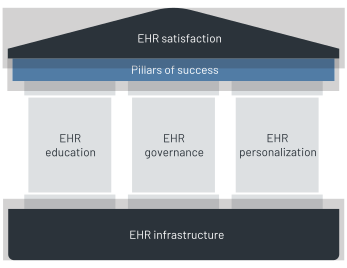
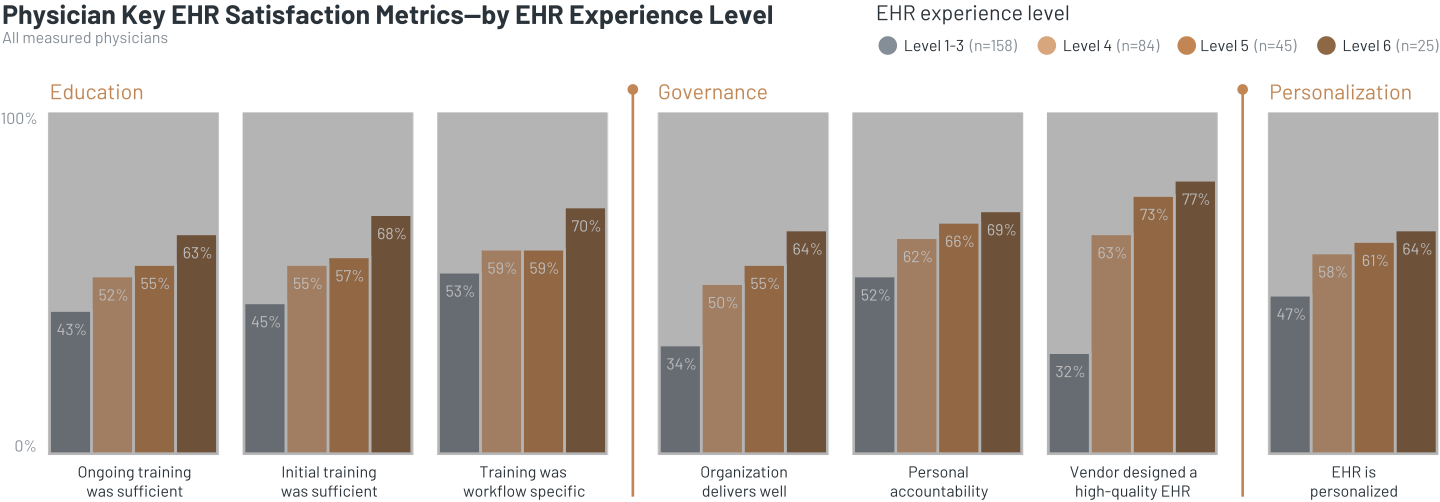
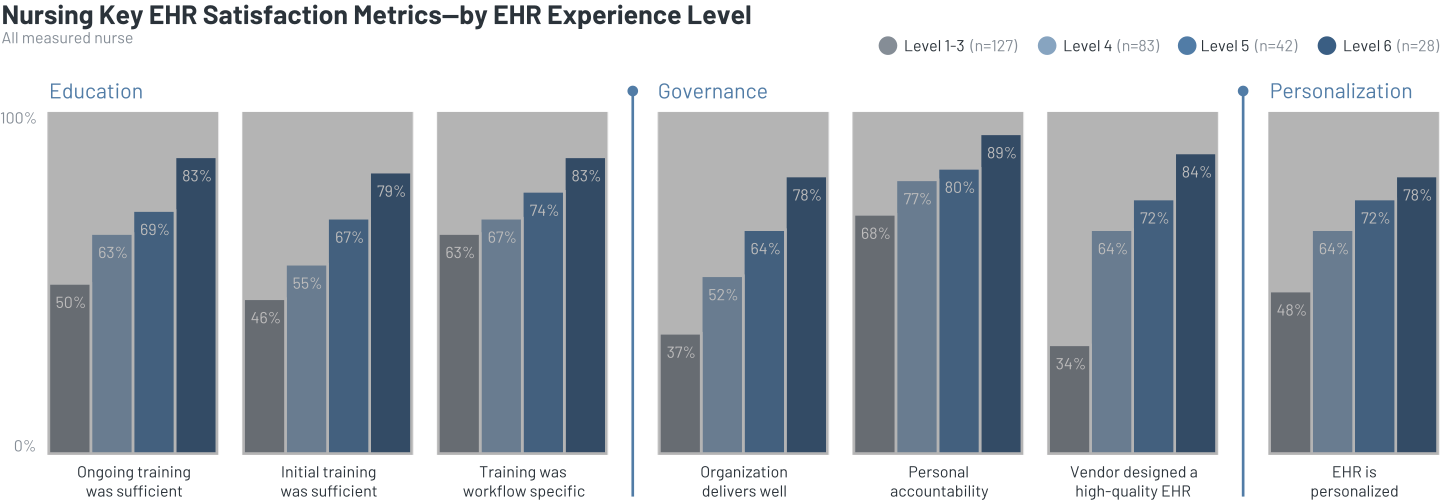
While an organization works to improve their highest-impact metrics, the pillars of the EHR House of Success—education, governance, and personalization—remain essential. The metrics in the previous section show an organization where to focus; the EHR House of Success guides leaders on how to achieve those goals, whether through technical upgrades, workflow optimization, or cultural alignment.
Healthcare leaders play the role of coach on this journey. Their job is to provide both strategy and support—setting clear targets, ensuring accountability, and reinforcing the pillars of the EHR House of Success. When leaders consistently emphasize education, governance, and personalization, they create conditions where their clinicians can thrive.
The following charts illustrate how these pillars correlate with the EHR Experience Levels. As organizations progress from Level 1 to Level 6, consistent gains can be seen in each area, reinforcing that these principles—and the leaders who sustain them—are critical to sustaining improvement.
The Pace of Improvement Varies
Improvement looks different for every organization, and both steady and rapid progress can lead to meaningful results. At the 2025 Arch Collaborative Learning Summit, Franciscan Health shared how intentional, incremental work over multiple years led to lasting gains in satisfaction, climbing three EHR Experience Levels and representing one of the most substantial improvements observed in the Collaborative. With a different approach, UTHealth Houston showed that focused initiatives with nurses can drive measurable improvements, rapidly elevating their NEES and EHR Experience Level over just two years.
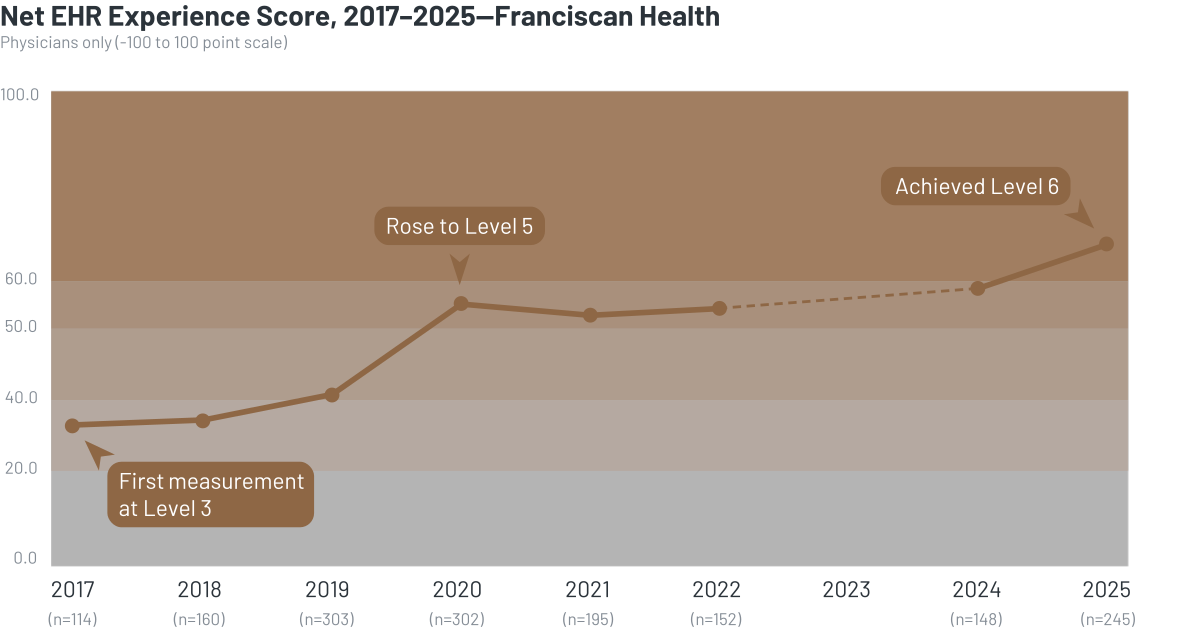
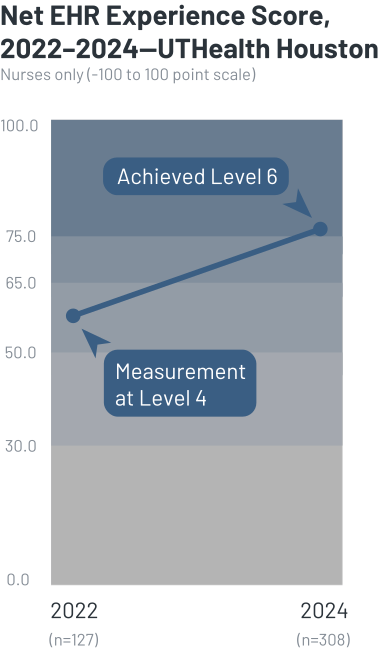
Together, these examples highlight that there is no single timeline for success. What matters most is committing to the work—whether through steady refinement or rapid, focused change—and using the Levels and House of Success as guides along the way.
Practice & Perfection: Steps to Take
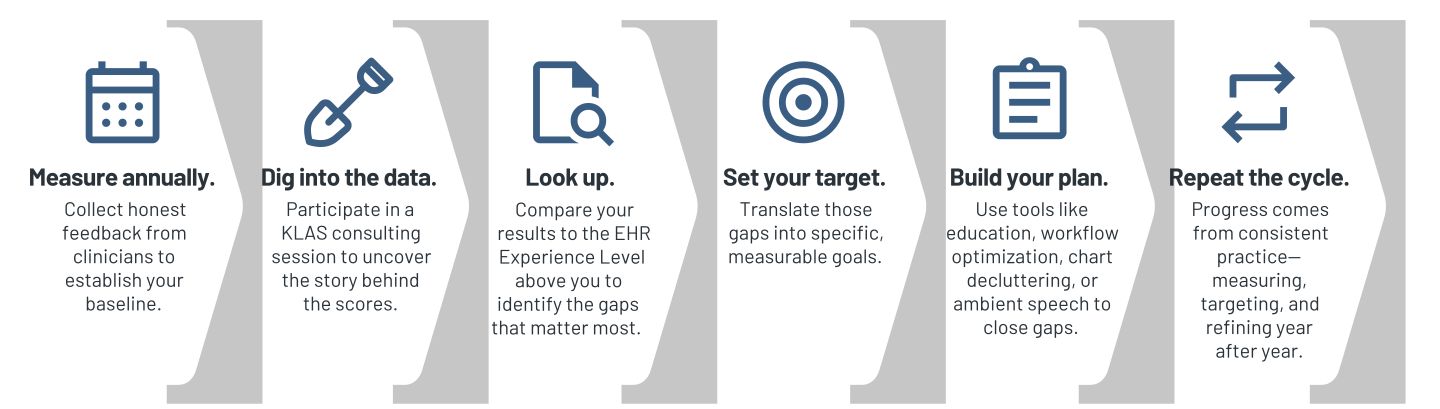
Examples of Setting Effective Goals with EHR Experience Levels
To tangibly illustrate the principles in this report, the following exercises demonstrate the potential benefits of using your EHR Experience Level in conjunction with standard benchmarking when setting goals. Better Care Health is a real Arch Collaborative member organization that has been anonymized for use in data visualizations. This proxy organization serves as an example to illustrate how organizations can interpret and act on their EHR satisfaction data.
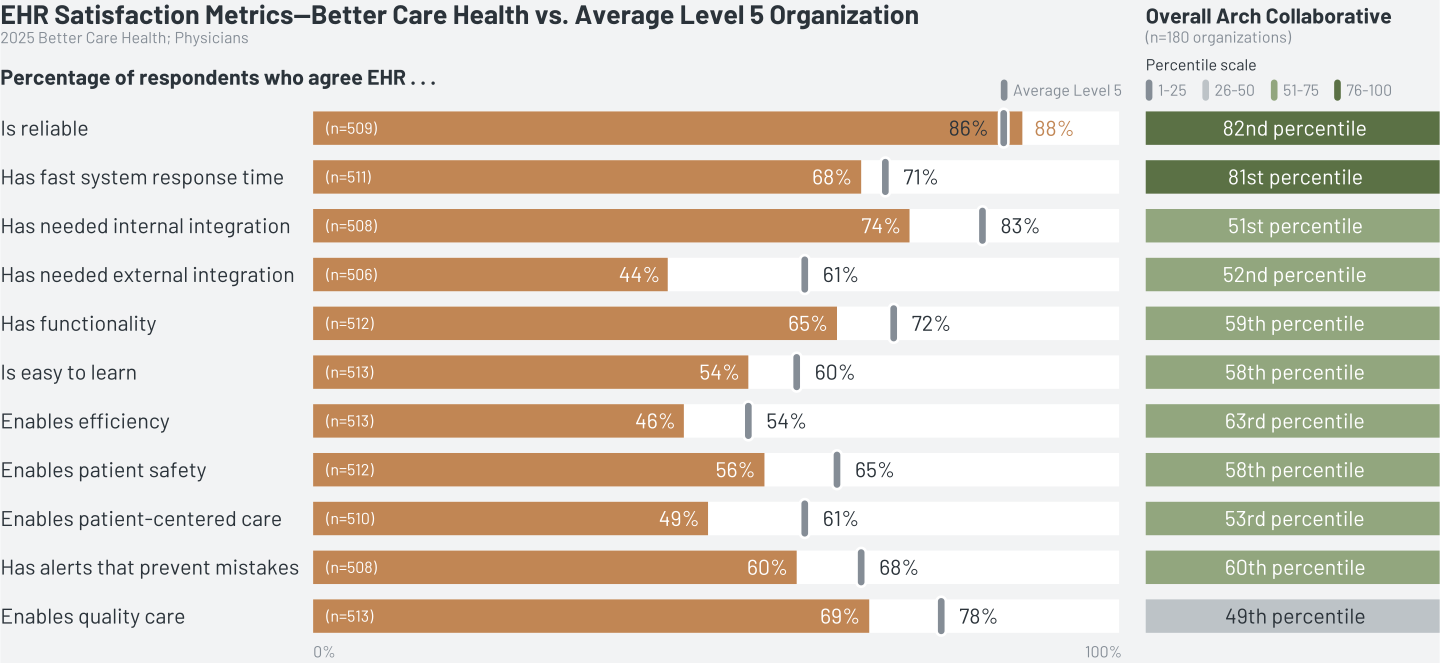
 Better Care Health Physicians—NEES 42.5, Level 4
At first glance, Better Care Health’s benchmarking results for physicians suggest that “enables quality care” should be the primary focus for improvement, as it is the only metric below the upper quartiles. While that insight is valuable, the organization’s EHR Experience Level provides a clearer picture of where improvement will have the most impact. When comparing their current Level 4 results to the average Level 5 organization, quality care remains an area of opportunity (9% gap), but the largest differences appear in external integration (17%) and patient-centered care (12%). Continued efforts in areas like quality care will support progress toward Level 6, but focusing on external integration and patient-centered care will drive the most significant gains.
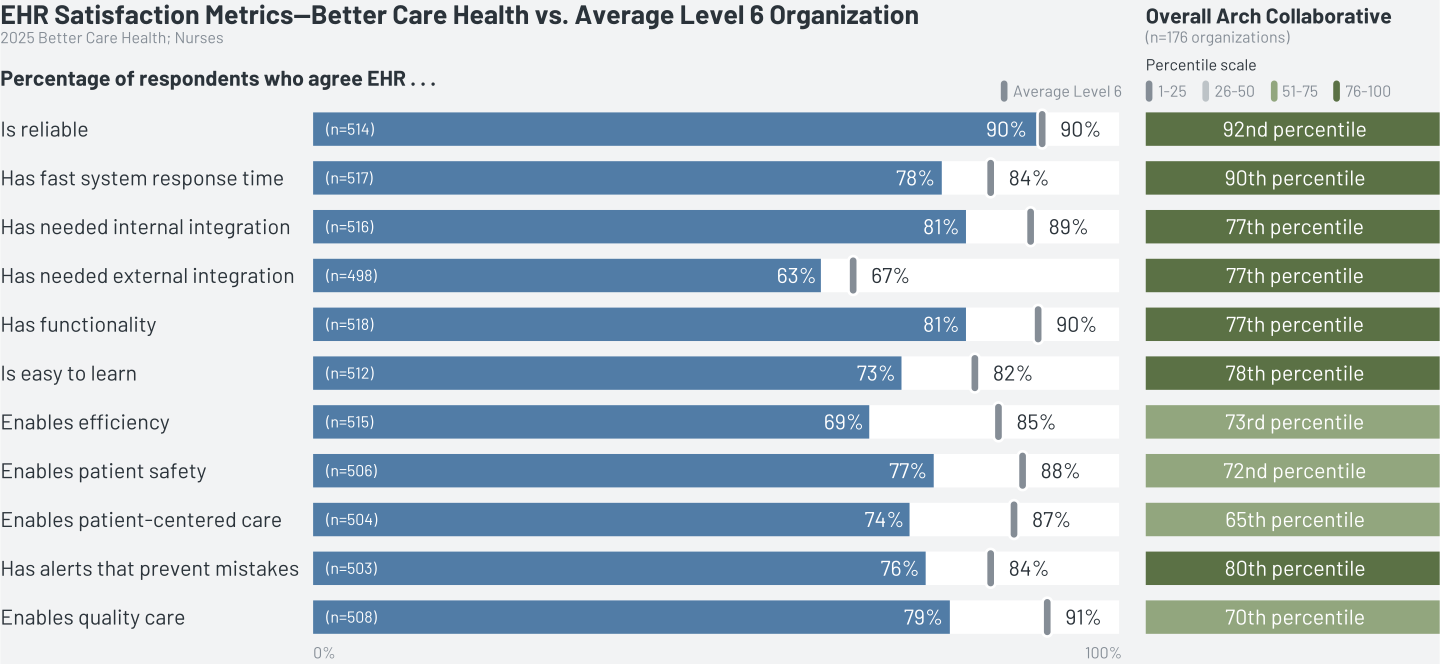
Better Care Health Nurses—NEES 67.2, Level 5
Better Care Health can perform a similar exercise for their nurses, who report higher overall satisfaction than the physicians. The nurses benchmark in the upper quartiles across all metrics, making it less clear at first where the organization should focus on improvement. Comparing their Level 5 results to the average Level 6 organization reveals the largest opportunities: efficiency (16% gap), patient-centered care (13% gap), and quality care (12% gap). While maintaining high-performing metrics such as reliability—already on par with Level 6—will support ongoing progress, concentrating on these three areas is most likely to accelerate the nurses’ advancement to Level 6.
About This Report
The Arch Collaborative is a group of healthcare organizations committed to improving the EHR experience through standardized surveys and benchmarking. To date, more than 300 healthcare organizations have surveyed their end users and over 600,000 clinicians have responded. Impact reports such as this one seek to synthesize the feedback from these clinicians into actionable insights that organizations can use to revolutionize patient care by unlocking the potential of the EHR.
Report Non-Public HTML Body
Report Public HTML Body
Topics
Report Topics
EHR Governance, EHR Implementation, EHR Personalization, Measured Improvement, Nursing EHR Success, Onboarding EHR Education, Ongoing EHR EducationThis material is copyrighted. Any organization gaining unauthorized access to this report will be liable to compensate KLAS for the full retail price. Please see the KLAS DATA USE POLICY for information regarding use of this report. © 2019 KLAS Research, LLC. All Rights Reserved. NOTE: Performance scores may change significantly when including newly interviewed provider organizations, especially when added to a smaller sample size like in emerging markets with a small number of live clients. The findings presented are not meant to be conclusive data for an entire client base.